


 Bangladesh Defense
Saif
Senior Member
- Joined
- Jan 24, 2024
- Messages
- 21,403
- Likes
- 9,715
- Nation

- Residence
- Axis Group


No support for ‘refined’ Awami League, party in wait-and-see mode
According to party sources, a strategic calculation had emerged within Awami League at the time — that Jamaat should not be allowed to come to power.
 en.prothomalo.com
No support for ‘refined’ Awami League, party in wait-and-see mode
Anowar Hossain
Dhaka
Published: 25 May 2026, 14: 47
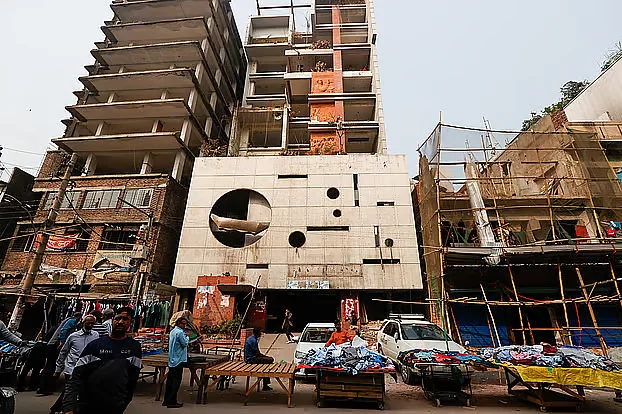
Central office of Awami League, the party ousted from power during the July uprising, is in a severely dilapidated condition. Prothom Alo
Awami League’s top leadership remains firm in its old stance, with no visible sign of changes either in leadership or in the party’s longstanding political position.
Within the party, however, there has been some discussion around the idea of a “refined” or “reformed” Awami League. Some see it as the most viable path for the party to survive politically and eventually return to active politics. But the party’s top leadership, particularly Sheikh Hasina, appears completely averse to the idea.
As a result, many leaders and activists remain uncertain about how the party can make a political comeback. Frustration is growing among some. Others believe Awami League’s opportunity could re-emerge if the current government makes major mistakes or becomes unpopular.
According to responsible party sources, ahead of the 13th parliamentary election held in February, the idea of bringing comparatively less controversial figures into leadership through a “refined” or reform process had been conveyed to Sheikh Hasina by friendly countries and well-wishers. The matter reportedly remained under discussion even after the election.
However, Sheikh Hasina is unwilling to step down as party president. At most, she had indicated the possibility of appointing one or more leaders as spokespersons in place of the general secretary. Even then, she preferred selecting figures from among leaders currently abroad and personally trusted by her, a proposal that reportedly failed to satisfy the party’s well-wishers.
As a result, most insiders now believe all reform initiatives are effectively “dead” for the time being.
Awami League’s recent activities and online discussions also offer insight into the party’s current direction. According to informed sources, since the fall of the Awami League government on 5 August 2024, the party’s more controversial and hardline elements have become the most active.
These figures, sources say, are unwilling to acknowledge mistakes or express remorse over past actions. Instead, they favour creating pressure and rebuilding organisational strength through sudden processions, isolated rally with slogans and provocative political activity inside the country. They are also reportedly trying to strengthen anti-government sentiment within the administration.
Under such circumstances, those within the party who had hoped for a “refined” Awami League or a fresh political beginning have largely fallen silent.
According to multiple relevant sources, Sheikh Hasina herself continues to determine the party’s political direction, with members of her family also involved in the process.
Within the party structure, presidium member Jahangir Kabir Nanak and joint general secretary AFM Bahauddin Nasim are said to be playing the most active role in organising leaders and activists inside the country and those remaining in hiding.
Meanwhile, coordination with party-aligned officials still working within different state institutions is reportedly being handled by a former influential minister now based in Kolkata.
Beyond that, a number of leaders, including former state minister for information Mohammad A Arafat and office secretary Biplob Barua — are involved in relatively “soft” activities such as maintaining contact with foreign entities and exchanging correspondence. Others are mainly participating in online discussions with the party chief and senior leaders.
A section of Awami League leaders believes that friendly countries and international well-wishers are somewhat dissatisfied with the party leadership’s unwillingness to pursue reform.
They do not believe any foreign power in the current global order will actively intervene to restore the Awami League to power. At the same time, they think a BNP-led government, if elected, may not be as strict toward the Awami League as the interim administration has been — but it would never allow the old Awami League under Sheikh Hasina’s leadership to return.
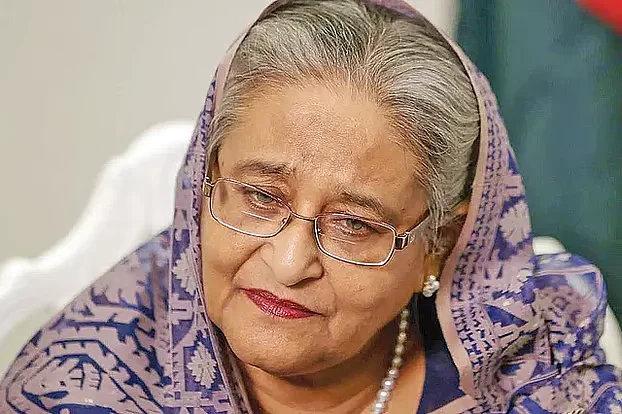
Former prime minister Sheikh Hasina File photo
In that case, one possible route would be waiting for another mass uprising — an idea many within the party themselves see as unrealistic. Another possibility being discussed is the emergence of deep divisions between a future BNP government and opposition forces such as Jamaat and the NCP. But so far, even that scenario appears to lack a strong basis.
As a result, some leaders feel the Awami League’s current politics has become largely directionless.
Under such circumstances, some within the party believe many Awami League leaders at the local level may switch to other political parties in order to survive politically ahead of local government elections.
Discussions with several Awami League leaders through different channels suggest that after the 13th parliamentary election in February, Sheikh Hasina repeatedly told party leaders and activists that those who wanted to continue in politics should return to the country — meaning they should face arrest, lawsuits and imprisonment if necessary.
So far, however, no one has responded to that call.
Party leaders say there is no guarantee of getting bail after returning and being jailed. Nor is there any sign of an understanding or initiative from the government that would provide any concession to the Awami League.
Multiple sources also said party leaders do not believe there is any international pressure on the government to rehabilitate the Awami League politically.
In this situation, leaders currently abroad are not considering returning home. Some, in fact, have moved to other countries after spending long periods in India, partly to avoid pressure to return to Bangladesh.
According to party sources, one influential former MP has moved to Malaysia, while another has gone to Cyprus. They fear that if relations between India and a future BNP government improve, India may no longer remain a safe option for them.
The Awami League remained in power for more than 15 and a half years before being ousted during the 2024 student-led mass uprising. Since then, party chief Sheikh Hasina and many senior leaders have gone into hiding abroad, while a significant number of leaders and activists inside the country remain in jail.
The interim government banned the party’s activities, and the BNP government has not lifted that ban. As a result, the Awami League has not only lost state power, but also much of its organisational strength, political standing and control over the streets.
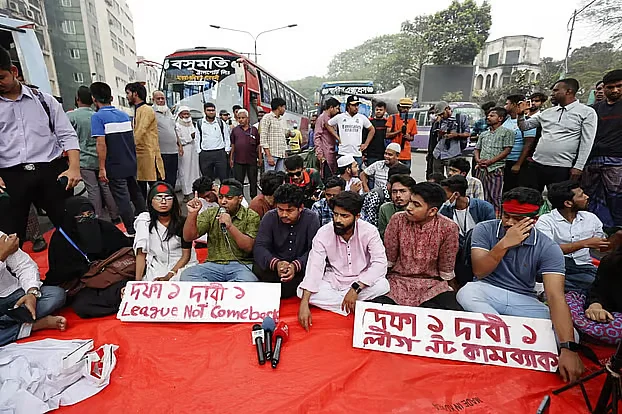
Young people who were active during the July uprising have been vocal in opposing Awami League’s return to politics. Prothom Alo
‘Refined Awami League’ seen as an alternative path
It is in this political reality that the idea of a “refined” or “reformed” Awami League emerged. The concept essentially refers to rebuilding the party by bringing forward comparatively acceptable, less controversial and “clean-image” leaders instead of figures accused of wrongdoing or burdened by political controversy.
The logic behind the idea is that the allegations, controversies and political liabilities surrounding the current leadership make a direct return to politics difficult. Many believe that if the party wants to regain acceptability — both internationally and among a significant section of the domestic public — it would need to send a visible message of change.
There is also the question of leadership succession. Awami League president Sheikh Hasina is now over 80 and has led the party for more than four decades. Political analysts believe her return to active politics is increasingly unlikely. As a result, changing the leadership is being seen by some as a possible way to reorganise the party for the future.
The idea of a “refined Awami League” first gained public attention in March last year, during the tenure of the interim government. Hasnat Abdullah, chief organiser (southern region) of the National Citizen Party (NCP) and now a member of parliament, made a Facebook post referring to a meeting with senior army officers.
In the post, he alleged that a new conspiracy was underway to bring back a “Refined Awami League.” According to him, the plan was entirely backed by India and involved bringing forward figures such as Saber Hossain Chowdhury, Shirin Sharmin Chaudhury and Fazle Noor Taposh.
The issue was widely discussed on social media for some time afterward. It resurfaced again after the BNP formed the government. This time, however, the discussion was more prominent in several India-based online media platforms and on social media.
The central message in those discussions was that Sheikh Hasina had no interest in the idea of a “refined Awami League” and that efforts in that direction were failing to gain traction.
Many disheartened by the uncertain future
Leaders staying abroad remain in frequent contact over the phone with party leaders, activists and journalists in Bangladesh. But when asked how they are doing, many respond with a sigh: “How can anyone be well in this situation?”
Whether in Delhi, Kolkata, London, New York, Brussels, Dubai, Singapore or Kuala Lumpur, most answers sound more or less the same.
This correspondent recently spoke with two central Awami League leaders now based in India and Europe. They said that when one is detached from politics, neither immense wealth nor a luxurious life brings real happiness.
Researcher and political analyst Altaf Parvez believes that if the Awami League wants to return to politics, it must publicly acknowledge and answer for its politics and governance during its more than 15 years in power.
According to them, the situation has become such that many do not even feel comfortable going outside freely. At the same time, not everyone living abroad is financially well off. Some leaders said many party figures staying in Kolkata and other Indian cities are facing financial difficulties.
According to multiple relevant sources, some former MPs with businesses in Bangladesh, leaders whose families live abroad and several senior politicians have privately told close associates that they may gradually withdraw from active politics. Former MPs and business-linked leaders are also considering returning home if they can receive assurances of bail after returning.
At one stage, discussions both at home and abroad suggested that a “refined” Awami League could emerge under figures such as former president Md Abdul Hamid, former minister Saber Hossain Chowdhury and former Narayanganj mayor Selina Hayat Ivy.
After the BNP government took office, former speaker Shirin Sharmin Chaudhury was arrested on 7 April. However, she was released on bail five days later, on 12 April. Her name, too, began circulating in speculation surrounding a possible reorganisation of the Awami League.
Taken together, some leaders had started to see a degree of hope in these developments — believing they might eventually create an opportunity for the party’s return to politics.
At the same time, however, a strong opinion persists within the party that no new organisational structure would be sustainable without Sheikh Hasina’s approval. A large section of grassroots leaders and activists still regard her leadership as final and unquestionable.
Now that it has become clear Sheikh Hasina has little interest in such initiatives, many within the party say they no longer see much reason for optimism.
BNP’s rise to power: Between hope and disappointment
Many within the Awami League had hoped that if the BNP came to power, the ban on the party’s political activities would eventually be lifted. There were also expectations that jailed leaders would secure bail, paving the way for those in hiding abroad to return home.
But after three months of BNP rule, much of that optimism has faded among Awami League leaders.
A section of the party had also hoped that pro-Awami League lawyers would participate in the Supreme Court Bar Association election and perform well enough to boost morale among party activists. However, nomination papers of Awami League-backed candidates were reportedly cancelled.
Many leaders now believe party activists and leaders may not even be allowed to participate meaningfully in future local government elections. As a result, the hope that the Awami League might gradually return to politics after the BNP assumed power has increasingly given way to disappointment.
Several senior Awami League leaders, speaking on condition of anonymity, said the political reality is that it would be difficult for the BNP to take the risk of easing restrictions on the Awami League at this stage.
According to them, although the ruling BNP and opposition forces such as Jamaat and the NCP differ on many political issues, their positions on the Awami League remain largely aligned.
Under such circumstances, party leaders say the Awami League has few options other than waiting to see whether the BNP government eventually comes under significant political pressure. In the meantime, they believe the party will have to continue trying to reorganise itself.
Although the Awami League made efforts through different channels to participate in the 13th parliamentary election, those attempts were unsuccessful. As a result, the election ultimately became a contest largely between the BNP alliance and the Jamaat-led bloc.
According to party sources, a strategic calculation had emerged within the Awami League at the time — that Jamaat should not be allowed to come to power.
From that perspective, the party quietly adopted a strategy of tacit support for the BNP-led alliance, sources said.
Some Awami League leaders now believe that, compared with the interim government period, the current political situation is relatively better. They argue that conditions could have become even harsher had Jamaat come to power.
Taken together, the Awami League’s current politics has largely turned into a politics of waiting. But there is no clear timeline to that wait. Discussions continue within the party about eventually returning to politics, yet no one appears to know what the path back actually looks like.
Researcher and political analyst Altaf Parvez believes that if the Awami League wants to return to politics, it must publicly acknowledge and answer for its politics and governance during its more than 15 years in power. According to him, the party will also have to confront allegations of criminal wrongdoing linked to the student-led mass uprising.
“No government can pardon criminal offences,” he said, adding that the Awami League does not appear prepared for any of these steps.
Speaking to Prothom Alo, Altaf Parvez said it appears that if the Awami League attempts to return through force or political muscle, then the BNP, Jamaat and the NCP would likely confront the party jointly.
“Such thinking would be harmful for the Awami League and disastrous for the country. It would bring back a confrontational situation,” he said.
Altaf Parvez also said he did not consider the interim government’s executive order banning Awami League activities to be the right decision. In his view, the BNP later repeated the same mistake.
Instead, he argued, the Awami League could have been politically exposed before the public. He pointed to Nepal as an example, saying that after the mass uprising there, no political party was banned. Former ruling parties were allowed to contest elections, and the public ultimately rejected them.
According to him, by banning the party’s activities, the Awami League has now gained space to portray itself as a victim.
Anowar Hossain
Dhaka
Published: 25 May 2026, 14: 47
Central office of Awami League, the party ousted from power during the July uprising, is in a severely dilapidated condition. Prothom Alo
Awami League’s top leadership remains firm in its old stance, with no visible sign of changes either in leadership or in the party’s longstanding political position.
Within the party, however, there has been some discussion around the idea of a “refined” or “reformed” Awami League. Some see it as the most viable path for the party to survive politically and eventually return to active politics. But the party’s top leadership, particularly Sheikh Hasina, appears completely averse to the idea.
As a result, many leaders and activists remain uncertain about how the party can make a political comeback. Frustration is growing among some. Others believe Awami League’s opportunity could re-emerge if the current government makes major mistakes or becomes unpopular.
According to responsible party sources, ahead of the 13th parliamentary election held in February, the idea of bringing comparatively less controversial figures into leadership through a “refined” or reform process had been conveyed to Sheikh Hasina by friendly countries and well-wishers. The matter reportedly remained under discussion even after the election.
However, Sheikh Hasina is unwilling to step down as party president. At most, she had indicated the possibility of appointing one or more leaders as spokespersons in place of the general secretary. Even then, she preferred selecting figures from among leaders currently abroad and personally trusted by her, a proposal that reportedly failed to satisfy the party’s well-wishers.
As a result, most insiders now believe all reform initiatives are effectively “dead” for the time being.
Awami League’s recent activities and online discussions also offer insight into the party’s current direction. According to informed sources, since the fall of the Awami League government on 5 August 2024, the party’s more controversial and hardline elements have become the most active.
These figures, sources say, are unwilling to acknowledge mistakes or express remorse over past actions. Instead, they favour creating pressure and rebuilding organisational strength through sudden processions, isolated rally with slogans and provocative political activity inside the country. They are also reportedly trying to strengthen anti-government sentiment within the administration.
Under such circumstances, those within the party who had hoped for a “refined” Awami League or a fresh political beginning have largely fallen silent.
According to multiple relevant sources, Sheikh Hasina herself continues to determine the party’s political direction, with members of her family also involved in the process.
Within the party structure, presidium member Jahangir Kabir Nanak and joint general secretary AFM Bahauddin Nasim are said to be playing the most active role in organising leaders and activists inside the country and those remaining in hiding.
Meanwhile, coordination with party-aligned officials still working within different state institutions is reportedly being handled by a former influential minister now based in Kolkata.
Beyond that, a number of leaders, including former state minister for information Mohammad A Arafat and office secretary Biplob Barua — are involved in relatively “soft” activities such as maintaining contact with foreign entities and exchanging correspondence. Others are mainly participating in online discussions with the party chief and senior leaders.
A section of Awami League leaders believes that friendly countries and international well-wishers are somewhat dissatisfied with the party leadership’s unwillingness to pursue reform.
They do not believe any foreign power in the current global order will actively intervene to restore the Awami League to power. At the same time, they think a BNP-led government, if elected, may not be as strict toward the Awami League as the interim administration has been — but it would never allow the old Awami League under Sheikh Hasina’s leadership to return.
Former prime minister Sheikh Hasina File photo
In that case, one possible route would be waiting for another mass uprising — an idea many within the party themselves see as unrealistic. Another possibility being discussed is the emergence of deep divisions between a future BNP government and opposition forces such as Jamaat and the NCP. But so far, even that scenario appears to lack a strong basis.
As a result, some leaders feel the Awami League’s current politics has become largely directionless.
Under such circumstances, some within the party believe many Awami League leaders at the local level may switch to other political parties in order to survive politically ahead of local government elections.
Discussions with several Awami League leaders through different channels suggest that after the 13th parliamentary election in February, Sheikh Hasina repeatedly told party leaders and activists that those who wanted to continue in politics should return to the country — meaning they should face arrest, lawsuits and imprisonment if necessary.
So far, however, no one has responded to that call.
Party leaders say there is no guarantee of getting bail after returning and being jailed. Nor is there any sign of an understanding or initiative from the government that would provide any concession to the Awami League.
Multiple sources also said party leaders do not believe there is any international pressure on the government to rehabilitate the Awami League politically.
In this situation, leaders currently abroad are not considering returning home. Some, in fact, have moved to other countries after spending long periods in India, partly to avoid pressure to return to Bangladesh.
According to party sources, one influential former MP has moved to Malaysia, while another has gone to Cyprus. They fear that if relations between India and a future BNP government improve, India may no longer remain a safe option for them.
The Awami League remained in power for more than 15 and a half years before being ousted during the 2024 student-led mass uprising. Since then, party chief Sheikh Hasina and many senior leaders have gone into hiding abroad, while a significant number of leaders and activists inside the country remain in jail.
The interim government banned the party’s activities, and the BNP government has not lifted that ban. As a result, the Awami League has not only lost state power, but also much of its organisational strength, political standing and control over the streets.
Young people who were active during the July uprising have been vocal in opposing Awami League’s return to politics. Prothom Alo
‘Refined Awami League’ seen as an alternative path
It is in this political reality that the idea of a “refined” or “reformed” Awami League emerged. The concept essentially refers to rebuilding the party by bringing forward comparatively acceptable, less controversial and “clean-image” leaders instead of figures accused of wrongdoing or burdened by political controversy.
The logic behind the idea is that the allegations, controversies and political liabilities surrounding the current leadership make a direct return to politics difficult. Many believe that if the party wants to regain acceptability — both internationally and among a significant section of the domestic public — it would need to send a visible message of change.
There is also the question of leadership succession. Awami League president Sheikh Hasina is now over 80 and has led the party for more than four decades. Political analysts believe her return to active politics is increasingly unlikely. As a result, changing the leadership is being seen by some as a possible way to reorganise the party for the future.
The idea of a “refined Awami League” first gained public attention in March last year, during the tenure of the interim government. Hasnat Abdullah, chief organiser (southern region) of the National Citizen Party (NCP) and now a member of parliament, made a Facebook post referring to a meeting with senior army officers.
In the post, he alleged that a new conspiracy was underway to bring back a “Refined Awami League.” According to him, the plan was entirely backed by India and involved bringing forward figures such as Saber Hossain Chowdhury, Shirin Sharmin Chaudhury and Fazle Noor Taposh.
The issue was widely discussed on social media for some time afterward. It resurfaced again after the BNP formed the government. This time, however, the discussion was more prominent in several India-based online media platforms and on social media.
The central message in those discussions was that Sheikh Hasina had no interest in the idea of a “refined Awami League” and that efforts in that direction were failing to gain traction.
Many disheartened by the uncertain future
Leaders staying abroad remain in frequent contact over the phone with party leaders, activists and journalists in Bangladesh. But when asked how they are doing, many respond with a sigh: “How can anyone be well in this situation?”
Whether in Delhi, Kolkata, London, New York, Brussels, Dubai, Singapore or Kuala Lumpur, most answers sound more or less the same.
This correspondent recently spoke with two central Awami League leaders now based in India and Europe. They said that when one is detached from politics, neither immense wealth nor a luxurious life brings real happiness.
Researcher and political analyst Altaf Parvez believes that if the Awami League wants to return to politics, it must publicly acknowledge and answer for its politics and governance during its more than 15 years in power.
According to them, the situation has become such that many do not even feel comfortable going outside freely. At the same time, not everyone living abroad is financially well off. Some leaders said many party figures staying in Kolkata and other Indian cities are facing financial difficulties.
According to multiple relevant sources, some former MPs with businesses in Bangladesh, leaders whose families live abroad and several senior politicians have privately told close associates that they may gradually withdraw from active politics. Former MPs and business-linked leaders are also considering returning home if they can receive assurances of bail after returning.
At one stage, discussions both at home and abroad suggested that a “refined” Awami League could emerge under figures such as former president Md Abdul Hamid, former minister Saber Hossain Chowdhury and former Narayanganj mayor Selina Hayat Ivy.
After the BNP government took office, former speaker Shirin Sharmin Chaudhury was arrested on 7 April. However, she was released on bail five days later, on 12 April. Her name, too, began circulating in speculation surrounding a possible reorganisation of the Awami League.
Taken together, some leaders had started to see a degree of hope in these developments — believing they might eventually create an opportunity for the party’s return to politics.
At the same time, however, a strong opinion persists within the party that no new organisational structure would be sustainable without Sheikh Hasina’s approval. A large section of grassroots leaders and activists still regard her leadership as final and unquestionable.
Now that it has become clear Sheikh Hasina has little interest in such initiatives, many within the party say they no longer see much reason for optimism.
BNP’s rise to power: Between hope and disappointment
Many within the Awami League had hoped that if the BNP came to power, the ban on the party’s political activities would eventually be lifted. There were also expectations that jailed leaders would secure bail, paving the way for those in hiding abroad to return home.
But after three months of BNP rule, much of that optimism has faded among Awami League leaders.
A section of the party had also hoped that pro-Awami League lawyers would participate in the Supreme Court Bar Association election and perform well enough to boost morale among party activists. However, nomination papers of Awami League-backed candidates were reportedly cancelled.
Many leaders now believe party activists and leaders may not even be allowed to participate meaningfully in future local government elections. As a result, the hope that the Awami League might gradually return to politics after the BNP assumed power has increasingly given way to disappointment.
Several senior Awami League leaders, speaking on condition of anonymity, said the political reality is that it would be difficult for the BNP to take the risk of easing restrictions on the Awami League at this stage.
According to them, although the ruling BNP and opposition forces such as Jamaat and the NCP differ on many political issues, their positions on the Awami League remain largely aligned.
Under such circumstances, party leaders say the Awami League has few options other than waiting to see whether the BNP government eventually comes under significant political pressure. In the meantime, they believe the party will have to continue trying to reorganise itself.
Although the Awami League made efforts through different channels to participate in the 13th parliamentary election, those attempts were unsuccessful. As a result, the election ultimately became a contest largely between the BNP alliance and the Jamaat-led bloc.
According to party sources, a strategic calculation had emerged within the Awami League at the time — that Jamaat should not be allowed to come to power.
From that perspective, the party quietly adopted a strategy of tacit support for the BNP-led alliance, sources said.
Some Awami League leaders now believe that, compared with the interim government period, the current political situation is relatively better. They argue that conditions could have become even harsher had Jamaat come to power.
Taken together, the Awami League’s current politics has largely turned into a politics of waiting. But there is no clear timeline to that wait. Discussions continue within the party about eventually returning to politics, yet no one appears to know what the path back actually looks like.
Researcher and political analyst Altaf Parvez believes that if the Awami League wants to return to politics, it must publicly acknowledge and answer for its politics and governance during its more than 15 years in power. According to him, the party will also have to confront allegations of criminal wrongdoing linked to the student-led mass uprising.
“No government can pardon criminal offences,” he said, adding that the Awami League does not appear prepared for any of these steps.
Speaking to Prothom Alo, Altaf Parvez said it appears that if the Awami League attempts to return through force or political muscle, then the BNP, Jamaat and the NCP would likely confront the party jointly.
“Such thinking would be harmful for the Awami League and disastrous for the country. It would bring back a confrontational situation,” he said.
Altaf Parvez also said he did not consider the interim government’s executive order banning Awami League activities to be the right decision. In his view, the BNP later repeated the same mistake.
Instead, he argued, the Awami League could have been politically exposed before the public. He pointed to Nepal as an example, saying that after the mass uprising there, no political party was banned. Former ruling parties were allowed to contest elections, and the public ultimately rejected them.
According to him, by banning the party’s activities, the Awami League has now gained space to portray itself as a victim.


