New Tweets

[🇧🇩] BIMSTEC for Regional Prosperity

G Bangladesh Defense
[🇧🇩] BIMSTEC for Regional Prosperity
31
2K
More threads by Saif

Let's see what comes out of the Modi-Yunus meeting at BIMSTEC - I have to admit I don't have high hopes of any breakthroughs in India-Bangladesh bilateral relations.

BIMSTEC people made a wise decision to give the Chairmanship of BIMSTEC to Dr. Yunus.

Indians are simply not happy that the Chinese are giving so much attention to Bangladesh and Dr. Yunus.
 
Analyze

Analyze Post

Add your ideas here:
Highlight Cite Respond

BIMSTEC: Yunus, Modi, other leaders join official dinner

1743725383595.webp

From left to right: Nepalese Prime Minister KP Sharma Oli, India Prime Minister Narendra Modi, and Bangladesh Chief Adviser Muhammad Yunus. Photo: CA Press Wing

Thailand Prime Minister Paetongtarn Shinawatra hosted an official dinner for BIMSTEC leaders today, where Chief Adviser Prof Muhammad Yunus and Indian Prime Minister Narendra Modi met each other, Chief Adviser's Deputy Press Secretary Abul Kalam Azad told UNB.

The Thai prime minister welcomed the BIMSTEC leaders and exchanged pleasantries at the Grand Ballroom of Shangri-La Hotel. She made a brief remark at the dinner which was followed by a toast.

Yunus posed for a photograph with Thai PM Shinawatra at the official dinner.

He arrived in the Thai capital on Thursday to join the 6th Bay of Bengal Initiative for Multi-Sectoral Technical and Economic Cooperation (BIMSTEC) Summit.

Yunus is scheduled to hold a number of meetings with BIMSTEC leaders on the sidelines of the BIMSTEC Summit on Friday, including meetings with Indian Prime Minister Narendra Modi, Bhutanese Prime Minister Dasho Tshering Tobgay and the Thai Prime Minister.

In his pre-departure statement from India, Modi said he will meet the leaders of the BIMSTEC countries to discuss ways for strengthening collaboration, keeping the interests of people in mind.

"I look forward to meeting the leaders of the BIMSTEC countries and engaging productively to further strengthen our collaboration with the interests of our people in mind," Modi said as he began his visit to Thailand and Sri Lanka on Thursday.

If Yunus and Modi hold talks on Friday, this will be the biggest India-Bangladesh diplomatic development since former Prime Minister Sheikh Hasina's ouster and the formation of an interim government led by Prof Yunus on August 8 last year, observers say.

BIMSTEC Secretary General Indra Mani Pandey will also meet the chief adviser.

Thailand's Minister for Social Development and Human Security (MSDHS) Varawut Silpa-archa and Thailand's Minister attached to the Prime Minister's Office Jiraporn Sindhuprai called on Yunus today.

Bangladesh sees this year's BIMSTEC Summit, scheduled to be held on April 4, as "very important" for the country as it will assume the chairmanship of the group for the next two years.

Dhaka also thinks the summit will provide them with an opportunity to present a "just and inclusive" Bangladesh in South and Southeast Asia, officials said this week.

Prior to this year's BIMSTEC Summit, the chief adviser delivered a keynote speech titled "BIMSTEC Young Generation Forum: Where the Future Meets" today.

The theme of the 6th summit, which is being held three years after the 5th summit in Colombo, is "Prosperous, Resilient, and Open BIMSTEC".

The summit, which aims at fostering collaboration among the member states to address the shared security and developmental challenges, will provide a new impetus to the efforts underway to realise the goal of a prosperous, resilient and open BIMSTEC, according to the BIMSTEC Secretariat.

Foreign Secretary Md Jashim Uddin said the summit will further "strengthen and deepen" the relationship between Bangladesh and other BIMSTEC member states and will play an important role in advancing regional peace and development.

"It goes without saying that this 6th BIMSTEC Summit is a new step for the new Bangladesh in the regional arena through BIMSTEC," he said, hoping that the 6th BIMSTEC Summit will be successful.​
 
Analyze

Analyze Post

Add your ideas here:
Highlight Cite Respond
  • Like (+1)
Reactions: Bilal9
Now the BIMSTEC meeting from the BJP-Hindutva-inspired Indian Ministry of External Affairs angle, meant for Indian local consumption. TLDR: Modi "schools Dr.Yunus" on what his "behavior" should be. This is the face of India under Modi now...

Bangladesh comments start here,


It is interesting to note that not only did the Indians not acknowledge border killings, or bring up Teesta water-sharing issues, they also warned Dr. Yunus that "rhetoric" from Bangladesh side could "vitiate" issues between both countries. These are essentially veiled threats by a bunch of unprofessional and ugly dalit-looking RSS clowns.

Well played Modi and Gang in the spirit of petty Indian style engagement with neighbors.

Now Bangladesh knows what path to follow for sure. Kheer denge ya tor denge, their choice.
 
Last edited:
Analyze

Analyze Post

Add your ideas here:
Highlight Cite Respond

BIMSTEC reaffirms its critical role in dealing with shared security, challenges
UNB
Published :
Apr 05, 2025 17:19
Updated :
Apr 05, 2025 17:19

Against the backdrop of an increasingly complex and uncertain global political and economic landscape, the just-held 6th BIMSTEC Summit has reaffirmed BIMSTEC's critical role in forging regional cooperation to enable the member states to deal with their shared security and sustainable development challenges, says its Secretariat.

With institutional reforms already underway, BIMSTEC is poised to evolve into a vibrant and dynamic regional organisation, advancing peace, prosperity and resilience in the Bay of Bengal region, said the Secretariat of the regional grouping on Saturday.

Leaders of the Bay of Bengal Initiative for Multi-Sectoral Technical and Economic Cooperation (BIMSTEC), in their statements at the 6th Summit in Bangkok, underlined the need to make progress in enhancing intra-regional trade and investment, connectivity and security.

The summit, the secretariat of the regional grouping said, provided a new impetus to the regional organisation to realise the goal of a "prosperous, resilient and open BIMSTEC".

The leaders also sought enhanced cooperation in the areas of tourism, cultural exchanges, climate action, green and renewable energy, sustainable agriculture, food security and disaster management.

The BIMSTEC leaders reiterated their commitment to it, identified the areas of priority for regional cooperation, and presented specific proposals and initiatives, said the BIMSTEC Secretariat on Saturday.

The 6th Summit of the Heads of State/Government of the Member States of BIMSTEC was held on Friday. It was preceded by 25th BIMSTEC Senior Officials' Meeting on April 2 and 20th BIMSTEC Ministerial Meeting on April 3.

The 6th Summit was attended by Chief Adviser of Bangladesh Prof Muhammad Yunus, Prime Minister of the Kingdom of Bhutan Dasho Tshering Tobgay, Prime Minister of Republic of India Narendra Modi, Chairman of State Administration Council and Prime Minister of Republic of the Union of Myanmar Senior General Min Aung Hlaing, Prime Minister of Nepal KP Sharma Oli, Prime Minister of Democratic Socialist Republic of Sri Lanka Dr Harini Amarasuriya and Prime Minister of the Kingdom of Thailand Paetongtarn Shinawatra.

The 6th Summit, themed "Prosperous, Resilient, and Open BIMSTEC", focused on fostering collaboration among the member States to address their shared security and developmental challenges.

Key Outcomes of 6th BIMSTEC Summit

● Adoption of Declaration of the 6th BIMSTEC Summit, which reflects the vision of the Leaders as well as their decisions and directives for future cooperation.

● Adoption of BIMSTEC Bangkok Vision 2030, the first ever Vision Document of BIMSTEC, which provides a comprehensive and practical roadmap for future cooperation amongst the member States to achieve the vision of Prosperous, Resilient and Open BIMSTEC.

● Signing of Agreement on Maritime Transport Cooperation. It's a significant step towards strengthening regional partnerships to enhance maritime connectivity, enabling more trade and travel amongst the member states.

● Signing of Memorandum of Understanding between BIMSTEC and Indian Ocean Rim Association (IORA), which institutionalises future partnership between IORA and BIMSTEC in key areas of shared interest.

● Signing of Memoranda of Understanding between BIMSTEC and United Nations Office on Drugs and Crime (UNODC), which formalises partnership between UNODC and BIMSTEC in areas of shared priorities.

● Adoption of Rules of Procedure for the BIMSTEC Mechanisms. The Rules of Procedure, together with the BIMSTEC Charter, lay a strong foundation of institutional framework for regional cooperation under BIMSTEC, ensuring greater efficiency and consistency.

● Adoption of the Report of Eminent Persons Group on the Future Direction of BIMSTEC, which contains a number of recommendations to reform and revitalize BIMSTEC.

● Endorsement of BIMSTEC Leaders' Joint Statement on the Impact of Earthquake which struck Myanmar and Thailand on March 28, 2025.

The BIMSTEC leaders expressed condolences, solidarity and commitment to supporting the affected countries and reaffirmed their commitment to collaborate in regional disaster management and to strengthen response mechanisms for natural disasters.

BIMSTEC Secretary General Indra Mani Pandey, in his report to the leaders, outlined the progress made since the 5th BIMSTEC Summit, which was held in Colombo in March 2022.

He sought their guidance to further advance the BIMSTEC agenda for the greater benefit of the region and reaffirmed the Secretariat's commitment to working closely with the member states to strengthen regional cooperation under BIMSTEC.

At the conclusion of the Summit, Bangladesh, a founding member of BIMSTEC, assumed its Chairmanship.

Chief Adviser Prof Yunus reiterated Bangladesh's commitment to working collaboratively with other member states to take BIMSTEC cooperation forward.

BIMSTEC comprises seven countries of the Bay of Bengal region: Bangladesh, Bhutan, India, Myanmar, Nepal, Sri Lanka and Thailand.​
 
Analyze

Analyze Post

Add your ideas here:
Highlight Cite Respond

Rebuilding trust in global trade: The case for multilateralism in the Trump era

1743906515150.webp

Regional cooperation through frameworks like the RCEP, BIMSTEC, and SAFTA could offer alternative avenues of market expansion for Bangladeshi products. PHOTO: PID

The global trading system, anchored by multilateralism and predictability for decades, has entered a phase of profound uncertainty. This crisis was hastened by the aggressive protectionist measures pursued under the administration of US President Donald Trump, which inflicted lasting damage on institutions such as the World Trade Organization (WTO) and undermined long-standing norms like non-discrimination and reciprocity. For developing countries and Least Developed Countries (LDCs), such as Bangladesh, the weakening of multilateral trade architecture presents deep structural challenges that threaten both economic security and development progress.

Trade liberalisation has been one of the defining achievements in the post-World War II era. Under the General Agreement on Tariffs and Trade (GATT) and later the WTO, countries committed to progressively reduce tariffs and remove trade barriers. Principles such as the most-favoured-nation (MFN) treatment and national treatment underpinned this cooperation, ensuring that countries treated all trade partners equally and foreign products no less favourably than domestic ones.

However, the Trump administration's unilateral tariffs on steel, aluminium, and Chinese goods marked a sharp departure, bypassing WTO mechanisms and challenging these foundational norms. Justified on national security grounds, the measures fuelled retaliatory responses and signalled a shift from multilateralism to power-driven bilateralism, disrupting global supply chains and undermining rule-based trade. The implications have been global in scope, with spillover effects that have rippled across borders and disrupted integrated supply chains.

Bangladesh's export-led economy, particularly its $40 billion ready-made garment (RMG) sector, has long benefited from multilateral trade rules and preferential schemes such as the Generalised System of Preferences (GSP). However, the recent wave of protectionism and unilateral tariffs exemplified by Trump's policies poses serious risks. Even if no direct tariffs on Bangladeshi goods were imposed, the country would still be vulnerable due to its deep integration in global value chains. For example, if Bangladesh exports fabric to a country assembling garments for the US, American tariffs on those final products can sharply reduce demand for Bangladeshi inputs. This exposure is heightened by the paralysis of the WTO dispute settlement system, leaving Bangladesh without effective legal recourse. Additionally, tariff escalation, where processed goods face higher duties than raw materials, discourages industrial upgrading and hinders diversification beyond low-skill manufacturing, limiting Bangladesh's ability to climb the value chain and sustain long-term development.

Trade is not only an economic tool; it is central to the realisation of sustainable development and the maintenance of global peace and security. The 2030 Agenda for Sustainable Development underscores the transformative potential of trade in achieving the Sustainable Development Goals (SDGs). Specifically, trade contributes to SDG 1 (No Poverty), SDG 2 (Zero Hunger), SDG 5 (Gender Equality), SDG 8 (Decent Work and Economic Growth), SDG 9 (Industry, Innovation, and Infrastructure), and SDG 10 (Reduced Inequalities).

Bangladesh's developmental success has been intricately tied to export-led growth. The disruption of multilateral trade norms and institutions, therefore, puts these hard-won gains at risk. Furthermore, there is a growing consensus that sustainable development cannot thrive in an environment of trade unpredictability and economic nationalism. When markets close, global supply chains fracture, and LDCs lose access to opportunities for growth and diversification. The ripple effects are not limited to economic indicators; they affect food security, public health systems, education, and social cohesion.

In addition, economic marginalisation and systemic inequality fuel social unrest, extremism, and forced migration, threatening peace and stability at the national and international levels. As trade disruptions deepen disparities, the prospects for global peace and cooperation diminish. Reinvigorating the multilateral trading system is thus not only about promoting commerce, but also about creating the conditions for durable peace.

The path forward must involve a reinvigoration of multilateralism. WTO reform, particularly the restoration of its dispute settlement mechanism, is essential. Countries should work to depoliticise appointments to the Appellate Body and ensure that future trade disagreements can be resolved through law rather than power.

Reaffirming the principles of MFN and national treatment must also be a priority. The widespread disregard for these norms has allowed powerful states to extract concessions through bilateralism, often at the expense of smaller economies. Restoring these rules will be critical to re-establishing trust and fairness in international trade.

In parallel, the trade agenda must better integrate development priorities. Special and differential treatment for LDCs should be preserved and enhanced. This includes not just preferential tariffs, but also capacity-building, technical assistance, and flexible transition periods, especially for countries like Bangladesh that are on the cusp of LDC graduation.

Bangladesh must also adopt a forward-looking trade strategy that reduces overdependence on traditional markets. Regional cooperation through frameworks like the Regional Comprehensive Economic Partnership (RCEP), Bay of Bengal Initiative for Multi-Sectoral Technical and Economic Cooperation (BIMSTEC), and the South Asian Free Trade Area (SAFTA) could offer alternative avenues for market expansion.

Domestic reforms are equally crucial. Enhancing product quality standards, addressing non-tariff barriers, modernising customs procedures, and improving logistical infrastructure will make Bangladeshi exports more competitive. Furthermore, by investing in education and innovation, the country can develop the human capital needed for higher-value industries.

Finally, as a soon-to-graduate LDC, Bangladesh should play a proactive role in WTO negotiations. It should align with other developing nations to push for inclusive reforms that prioritise development over domination.

Trump's tariff policies exposed the fragility of the multilateral trading system, revealing how quickly established norms can be cast aside. But they also highlighted the enduring relevance of multilateralism as a safeguard for smaller and less powerful countries. For Bangladesh, the stakes are not abstract; they involve livelihoods, national development, and economic sovereignty.

The future of sustainable development and global peace depends on restoring trust in fair and equitable trade. Trade must be reclaimed not merely as a tool of economic exchange but as a foundation for a more just, prosperous, and peaceful world.

Dr M Shawkat Alam is professor of international law at Macquarie University, Australia.​
 
Analyze

Analyze Post

Add your ideas here:
Highlight Cite Respond

Maritime transport cooperation deal to enhance port efficiency: BIMSTEC
FE Online Desk
Published :
Apr 06, 2025 19:33
Updated :
Apr 06, 2025 19:33

1743986434867.webp


The agreement signed on Maritime Transport Cooperation (AMTC) will enhance port efficiency, harmonize maritime policies, and streamline customs procedures, ensuring smoother movement of goods and services, said the BIMSTEC Secretariat on Sunday.

With AMTC in place, the Bay of Bengal Initiative for Multi-Sectoral Technical and Economic Cooperation (BIMSTEC) now has a “comprehensive framework” for seamless maritime transport, aimed at reducing logistical bottlenecks and deepening economic integration, reports UNB.

Beyond trade facilitation, AMTC seeks to boost investment in key maritime infrastructure, including ports, shipping lanes, and coastal logistics hubs, fostering regional economic growth and stability.

It also promotes cooperation in maritime safety, environmental sustainability, digitalization of shipping processes, and capacity-building.

The BIMSTEC agreement on Maritime Transport Cooperation (AMTC) was signed on the occasion of the 6th BIMSTEC Summit held in Bangkok, Thailand recently.

The Foreign Ministers of BIMSTEC member States signed the agreement, marking a transformative step towards enhancing maritime partnerships in the region.

BIMSTEC leaders welcomed the signing of the AMTC, recognizing its potential to enhance regional maritime connectivity, facilitate cross-border trade, and spur investment in port infrastructure, logistics, and related sectors.

They also directed relevant authorities to expedite its implementation.

BIMSTEC comprises seven countries of the Bay of Bengal region: Bangladesh, Bhutan, India, Myanmar, Nepal, Sri Lanka and Thailand.​
 
Analyze

Analyze Post

Add your ideas here:
Highlight Cite Respond

BIMSTEC, IORA sign MoU to deal with security, developmental challenges
FE Online Desk
Published :
Apr 06, 2025 20:17
Updated :
Apr 06, 2025 20:17

1743988897839.webp


The Bay of Bengal Initiative for Multi-Sectoral Technical and Economic Cooperation (BIMSTEC) and the Indian Ocean Rim Association (IORA) have signed a Memorandum of Understanding (MoU) on the occasion of the 6th BIMSTEC Summit held in Bangkok, Thailand, recently.

This partnership will also be instrumental in jointly addressing the security and developmental challenges in the region and beyond, said the BIMSTEC Secretariat on Monday.

BIMSTEC Secretary General Indra Mani Pandey and IORA Secretary General Sanjiv Ranjan signed the MoU on behalf of their respective organisations, reports UNB.

The signing of the MoU was welcomed by the BIMSTEC Leaders, marking a significant step in deepening inter-regional cooperation, said the BIMSTEC Secretariat on Sunday.

The signing of MoU formalizes future partnership between IORA and BIMSTEC in key areas of shared interest, including trade and investment facilitation, environment and climate change, maritime security and connectivity, science and technology, and people-to-people contact and tourism including blue economy and ocean management and fisheries management.

BIMSTEC comprises seven countries of the Bay of Bengal region: Bangladesh, Bhutan, India, Myanmar, Nepal, Sri Lanka and Thailand.

The Indian Ocean Rim Association (IORA) is an inter-governmental organization established on 7 March 1997.​
 
Analyze

Analyze Post

Add your ideas here:
Highlight Cite Respond

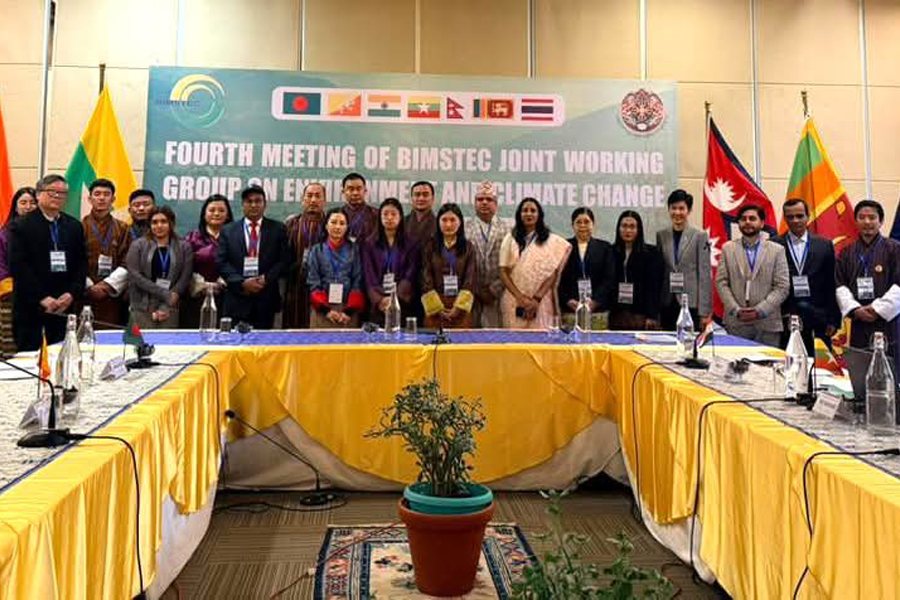
4th BIMSTEC meeting on environment and climate change held in Thimphu

FE ONLINE DESK
Published :
Jan 20, 2026 13:58
Updated :
Jan 20, 2026 13:58

1769043548531.webp


The fourth meeting of the BIMSTEC Joint Working Group on Environment and Climate Change (JWG-ECC) was held in Bhutanese capital Thimphu recently, emphasising regional cooperation and the mobilisation of climate finance.

The two-day meeting was hosted by Bhutan, the lead country for the Environment and Climate Change sector within the Bay of Bengal Initiative for Multi-Sectoral Technical and Economic Cooperation (BIMSTEC).

M. Mahbubul Alam, Director General of the Ministry of Foreign Affairs, led the Bangladesh delegation at the high-level meeting.

During the sessions, the working group finalised the Terms of Reference (ToR) for its future operations and reviewed the progress of various initiatives under the BIMSTEC Plan of Action.

A key focus of the discussions was "Climate Finance", specifically how member states can collectively mobilise and distribute resources to mitigate the growing impacts of global climate change.

Senior officials and representatives from the BIMSTEC Secretariat and all seven member states—Bangladesh, Bhutan, India, Myanmar, Nepal, Sri Lanka, and Thailand— participated in the deliberations.

The delegates underscored the urgency of adopting new regional initiatives to reduce climate risks and protect the unique ecosystems of the region.

Experts noted that Bangladesh’s active participation and the outcomes of this meeting would be instrumental in ensuring environmental security and sustainable development for countries situated along the Himalayas and the Bay of Bengal coastline.​
 
Analyze

Analyze Post

Add your ideas here:
Highlight Cite Respond

Latest Posts

Back
PKDefense - Recommended Toggle