Bangladesh Defense
Saif
Senior Member
- Joined
- Jan 24, 2024
- Messages
- 18,135
- Likes
- 8,556
- Nation

- Residence
- Axis Group

Geography’s Curse: India’s Vulnerable ‘Chicken’s Neck’
The Siliguri Corridor is a terrifyingly vulnerable artery in India’s geography.
thediplomat.com
Geography’s Curse: India’s Vulnerable ‘Chicken’s Neck’
The Siliguri Corridor is a terrifyingly vulnerable artery in India’s geography.
By Ankit Panda
If you’ve been following The Pulse here at The Diplomat recently, you may have noted a few recent pieces (including one by yours truly) on India’s North-Eastern states. In any discussion of the governance problems or border issues in India’s North-East, a commonly mentioned word is “isolation.” The North-Eastern states are politically and geographically distant from New Delhi, and certain parts of the region share more in common culturally with Burma than they do with Punjab, or even West Bengal. A quirk of South Asian political geography has made it quite challenging for New Delhi to effectively integrate the North-Eastern states: the Siliguri Corridor.
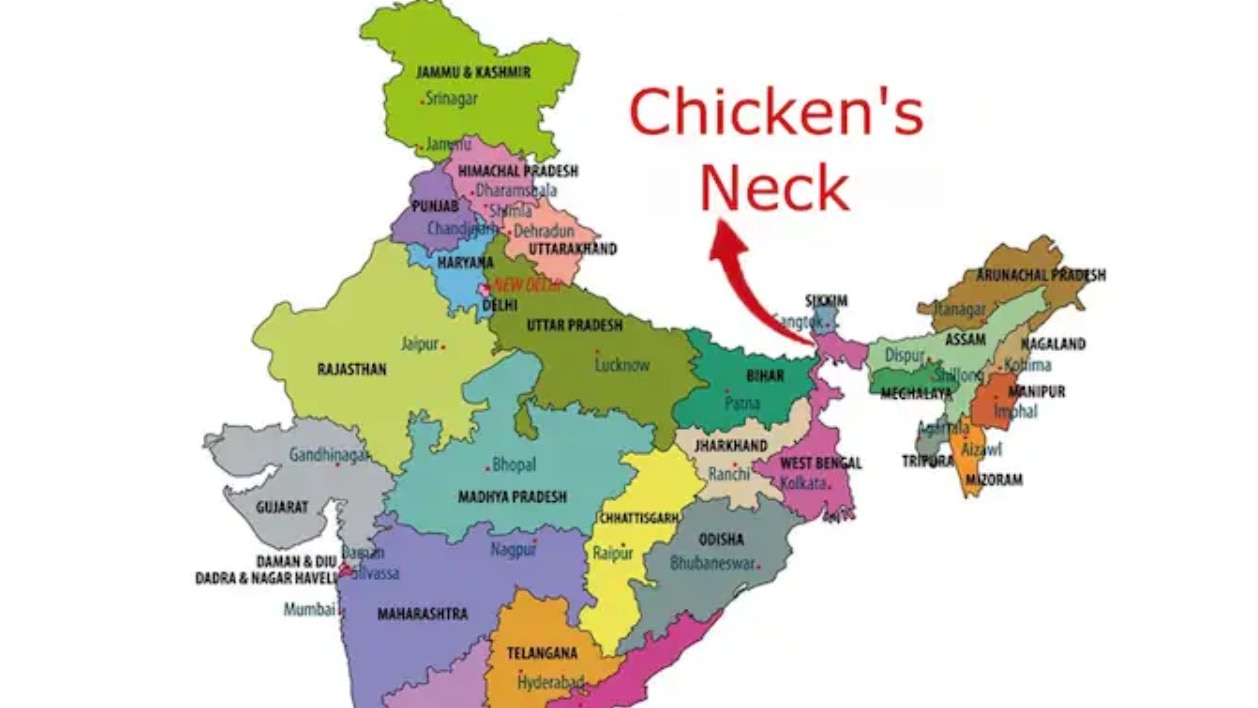
Like most of the borders in South Asia, the Siliguri Corridor – known also as the “Chicken’s Neck”– is a cartographic relic of the British decolonization process. As the British Empire withdrew and partitioned British India along religious lines to create the modern states of India and Pakistan (which was then divided into East and West Pakistan), it drew the lines that lead to the Siliguri in an attempt to maintain contiguity between Bengal and Assam. The creation of East Pakistan (which became Bangladesh in 1971) along religious lines necessitated the awkward choke point in India’s contemporary geography. The Siliguri, at its slimmest point, puts less than a marathon’s distance between the Bangladeshi and Nepalese borders (14 miles).
All land trade between North-East India’s 40 million denizens and the rest of the country traverses the Siliguri owing to the lack of a free-trade agreement between India and Bangladesh. In 2002, Nepal, Bhutan, and Bangladesh joined India in discussing a proposal to create a free-trade agreement that would have facilitated the movement of goods across the Siliguri corridor, but no such agreement has been established. Further reinforcing the strategic precariousness of the region is the fact that a single-line railway is all that carries rail-based freight across the Siliguri. The harsh topography of the region makes the railway and roads subject to damage from frequent landslides and natural disaster; India’s North-East is known for its record-breaking levels of rainfall.
As if natural disasters were not enough to send the Siliguri to the top of the list of India’s strategic anxieties, the corridor has a complex and troubled political history. The situation has somewhat improved since the pre-1971 era, when icy relations with China in the north and East Pakistan meant that the region was a constant source of cross-border tension. Since the 1962 war with China, Indian strategists have envisioned a future scenario where "the Chinese may simply bypass and drop Special Forces to choke vulnerable Siliguri Corridor and cut off the Northeast.” China’s diplomacy with Bhutan gives reason to take this possibility seriously; in 1996, China began a concerted diplomatic effort to yield a border claim with Bhutan in exchange for the Doklam Plateau. The territorial swap with Bhutan would place in China’s hands the key to India’s choke point in the Siliguri.
India’s fortunes in the Siliguri were slightly ameliorated when the tiny monarchy of Sikkim – situated just north of the Siliguri, between Nepal, China, and Bhutan – merged with India in 1975 to become its second-smallest state. Sikkim had long been a subject of controversy between India and China. In the early 2000s, China refused to acknowledge Sikkim as part of India, maintaining that it was an independent state. The decision to do so was sparked by a controversy around the 17th Karmapa of the Black Hat branch of Tibetan Buddhism. Nevertheless, in 2003, China granted de facto recognition of Sikkim as a part of India by ceasing to list it as a separate state on its official documents and maps.
In acknowledgement of its importance to India’s national security, the state maintains a heavy patrol presence in the Siliguri region. The Indian Army, the Assam Rifles, the Border Security Force, and the West Bengal Police all patrol the region. India’s Research and Analysis Wing (RAW) is known to closely observe Nepalese, Bhutanese, and Bangladeshi activity in the region as well. Among other issues, the Siliguri has been vulnerable to illegal Bangladeshi immigration into India. Certain analysts have also speculated that Pakistan’s Inter-Services Intelligence (ISI) has attempted to exploit the Siliguri via Nepal-based insurgents.
The Siliguri Corridor is a terrifyingly vulnerable artery in India’s geography. For Indians in the North-East, every look at a map is a sobering reminder of just how fragile their physical and economic tether to the rest of the country remains. Unlike so many of the problems India faces, the Siliguri Corridor’s vulnerability is a cruel endowment of political geography and essentially one it is stuck with. On the bright side, the current level of strategic vulnerability is far lower than it was in the past and can be further moderated with the establishment of a free-trade agreement between the states bordering the Siliguri.
The Siliguri Corridor is a terrifyingly vulnerable artery in India’s geography.
By Ankit Panda
If you’ve been following The Pulse here at The Diplomat recently, you may have noted a few recent pieces (including one by yours truly) on India’s North-Eastern states. In any discussion of the governance problems or border issues in India’s North-East, a commonly mentioned word is “isolation.” The North-Eastern states are politically and geographically distant from New Delhi, and certain parts of the region share more in common culturally with Burma than they do with Punjab, or even West Bengal. A quirk of South Asian political geography has made it quite challenging for New Delhi to effectively integrate the North-Eastern states: the Siliguri Corridor.
Like most of the borders in South Asia, the Siliguri Corridor – known also as the “Chicken’s Neck”– is a cartographic relic of the British decolonization process. As the British Empire withdrew and partitioned British India along religious lines to create the modern states of India and Pakistan (which was then divided into East and West Pakistan), it drew the lines that lead to the Siliguri in an attempt to maintain contiguity between Bengal and Assam. The creation of East Pakistan (which became Bangladesh in 1971) along religious lines necessitated the awkward choke point in India’s contemporary geography. The Siliguri, at its slimmest point, puts less than a marathon’s distance between the Bangladeshi and Nepalese borders (14 miles).
All land trade between North-East India’s 40 million denizens and the rest of the country traverses the Siliguri owing to the lack of a free-trade agreement between India and Bangladesh. In 2002, Nepal, Bhutan, and Bangladesh joined India in discussing a proposal to create a free-trade agreement that would have facilitated the movement of goods across the Siliguri corridor, but no such agreement has been established. Further reinforcing the strategic precariousness of the region is the fact that a single-line railway is all that carries rail-based freight across the Siliguri. The harsh topography of the region makes the railway and roads subject to damage from frequent landslides and natural disaster; India’s North-East is known for its record-breaking levels of rainfall.
As if natural disasters were not enough to send the Siliguri to the top of the list of India’s strategic anxieties, the corridor has a complex and troubled political history. The situation has somewhat improved since the pre-1971 era, when icy relations with China in the north and East Pakistan meant that the region was a constant source of cross-border tension. Since the 1962 war with China, Indian strategists have envisioned a future scenario where "the Chinese may simply bypass and drop Special Forces to choke vulnerable Siliguri Corridor and cut off the Northeast.” China’s diplomacy with Bhutan gives reason to take this possibility seriously; in 1996, China began a concerted diplomatic effort to yield a border claim with Bhutan in exchange for the Doklam Plateau. The territorial swap with Bhutan would place in China’s hands the key to India’s choke point in the Siliguri.
India’s fortunes in the Siliguri were slightly ameliorated when the tiny monarchy of Sikkim – situated just north of the Siliguri, between Nepal, China, and Bhutan – merged with India in 1975 to become its second-smallest state. Sikkim had long been a subject of controversy between India and China. In the early 2000s, China refused to acknowledge Sikkim as part of India, maintaining that it was an independent state. The decision to do so was sparked by a controversy around the 17th Karmapa of the Black Hat branch of Tibetan Buddhism. Nevertheless, in 2003, China granted de facto recognition of Sikkim as a part of India by ceasing to list it as a separate state on its official documents and maps.
In acknowledgement of its importance to India’s national security, the state maintains a heavy patrol presence in the Siliguri region. The Indian Army, the Assam Rifles, the Border Security Force, and the West Bengal Police all patrol the region. India’s Research and Analysis Wing (RAW) is known to closely observe Nepalese, Bhutanese, and Bangladeshi activity in the region as well. Among other issues, the Siliguri has been vulnerable to illegal Bangladeshi immigration into India. Certain analysts have also speculated that Pakistan’s Inter-Services Intelligence (ISI) has attempted to exploit the Siliguri via Nepal-based insurgents.
The Siliguri Corridor is a terrifyingly vulnerable artery in India’s geography. For Indians in the North-East, every look at a map is a sobering reminder of just how fragile their physical and economic tether to the rest of the country remains. Unlike so many of the problems India faces, the Siliguri Corridor’s vulnerability is a cruel endowment of political geography and essentially one it is stuck with. On the bright side, the current level of strategic vulnerability is far lower than it was in the past and can be further moderated with the establishment of a free-trade agreement between the states bordering the Siliguri.