[🇧🇩] China is a Time Tested Friend and a Strategic Partner of Bangladesh

[🇧🇩] China is a Time Tested Friend and a Strategic Partner of Bangladesh
317
13K
More threads by Saif

G Bangladesh Defense

Bangladesh-China relations reach highest level: Foreign minister

Dhaka, Beijing to explore ‘2+2’ dialogue mechanism in diplomacy, defence, says Khalilur Rahman

UNB, Dhaka
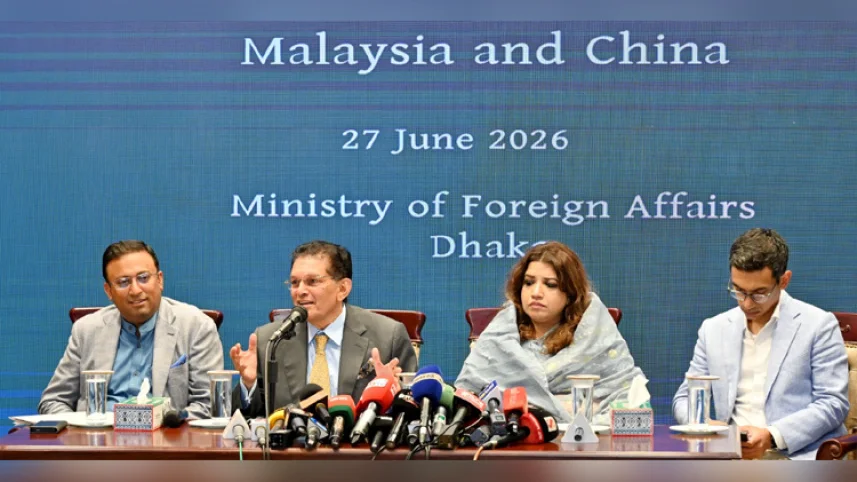
1782604956149.webp

Photo courtesy: Ministry of Foreign Affairs

Highlighting the success of Prime Minister Tarique Rahman’s recently-concluded visit to China, Foreign Minister Khalilur Rahman on Saturday said Bangladesh's relations with China have been elevated from a "comprehensive strategic cooperative partnership" to a "Bangladesh-China community with a shared future".

“This is the highest step in terms of China's bilateral engagement,” he told reporters at the foreign affairs ministry while outlining the achievements of the prime minister’s twin visits to Malaysia and China.

He said the photos and videos from the prime minister’s visits to Malaysia and China reflected Bangladesh’s growing importance and underscored the strengthening of Dhaka’s relations with Kuala Lumpur and Beijing.

State Minister for Foreign Affairs Shama Obaed, Prime Minister’s Adviser on Foreign Affairs Humaiun Kobir, Bangladesh Investment Development Authority (BIDA) Executive Chairman Ashik Chowdhury, Foreign Secretary Asad Alam Siam, and senior officials of the foreign affairs ministry were present at the media briefing.

Adviser Humaiun Kobir said the two sides signed a memorandum of understanding (MoU) at the party-to-party level to establish a formal partnership aimed at strengthening political cooperation.

Among the key achievements of the prime minister's visit to China are the launch of a strategic dialogue at the foreign minister level and the exploration of a "2+2" dialogue mechanism covering diplomacy and defence.

"We have not taken any decision yet (regarding "2+2" dialogue mechanism). It's still at the exploration stage...we will explore it," said Khalilur while responding to a question.

The "2+2" dialogue mechanism, typically a high-level format involving the foreign and defence ministers of both countries, was once a signature diplomatic tool of Western nations but is now actively utilised by China to strengthen strategic partnerships. Beijing uses this framework to deepen regional security cooperation, safeguard political systems, and coordinate diplomatic responses to external pressures.

Bangladesh and China signed 17 bilateral instruments, including MoUs, agreements, a joint action plan, and an agricultural trade protocol, to further strengthen bilateral relations.​
 

12 Chinese companies intend to invest over $9b in Bangladesh

UNB
Dhaka
Published: 28 Jun 2026, 21: 19

1782693127219.webp


Twelve Chinese companies have proposed to invest US$9.21 billion in Bangladesh, as the CEOs and heads of these 12 different companies, representing various subsectors, met with Prime Minister Tarique Rahman on 25 June in Beijing.

Bangladesh Investment Development Authority (BIDA) Executive Chairman Chowdhury Ashik Mahmud Bin Harun was present during the meeting with the Prime Minister and the leaders of the Chinese companies.

Shanghai SUS Environment Co., Ltd., one of the world's leading WTE investors and operators, has proposed to invest US$890 million in the development of Waste-to-Energy (WTE) plants, according to document seen by UNB.

China Future Energy Group Holding Limited, specialised in petroleum engineering and gas field investment, proposed to invest US$250 million in the exploration and development of gas fields.

China Civil Engineering Construction Corporation (CCECC), a Chinese state-owned contractor, investor and operator, has proposed to invest US$650 million in the development and operation of the Mongla Port Economic Zone to attract Chinese manufacturing industries, build a bonded warehouse for import purposes, and develop Mongla into a new logistics hub, generating 50,000 jobs.

Shenzhen Kaifa Technology Co. Ltd. proposed to invest US$250 million in the manufacture of electric smart meters in Bangladesh.

SF Express, China's largest logistics company, has proposed to invest US$180 million in cold-chain logistics and bonded warehouse facilities in Mongla to support e-commerce and export industries.

Huaxin Textile Industry Co. Ltd. has proposed to invest US$190 million in the expansion of recycled cotton/yarn production, the manufacture of cylindrical lithium batteries, and the construction of a 200 MW solar power plant for its own use in the Payra Port Industrial Zone.

Zhongxin Environmental Protection Group has proposed to invest US$1.65 billion in the establishment of an e-waste recycling and disposal industrial project in the Payra Port Industrial Zone.

CRRC Ziyan Co. Ltd. has proposed to invest US$190 million in the establishment of a rolling stock assembly plant through a joint venture with BMTF.

Sichuan Road & Bridge Group Co. Ltd. has proposed to invest US$4.5 billion in the Dhaka-Chattogram Highway PPP Project to enhance national connectivity and economic growth.

China Kepai Education Group has proposed to invest US$270 million to build a modern application-oriented university and vocational education industrial park designed to accommodate 30,000 students in the long run.

China Shandong Zhongxin Pharmaceutical Co. Limited has proposed to invest US$190 million to establish a large-scale Chinese medicinal herb cultivation industry in Bangladesh.

Ashik Chowdhury on Saturday said stability has been restored following the formal assumption of office by the newly elected government in Bangladesh, adding that this renewed climate of confidence had been effectively communicated to investors.

He highlighted that Bangladesh presented a five-year tax outlook for the first time, and they emphasised these aspects of stability to the investors.​
 

Dhaka-Beijing ties enter new phase amid corridor proposal

Raheed Ejaz
Dhaka
Updated: 28 Jun 2026, 17: 09

1782693421879.webp

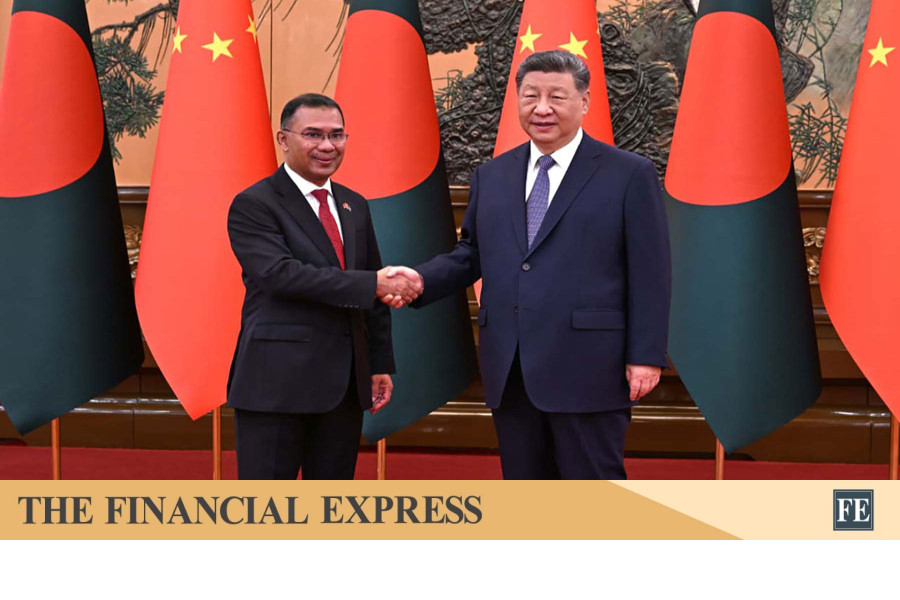
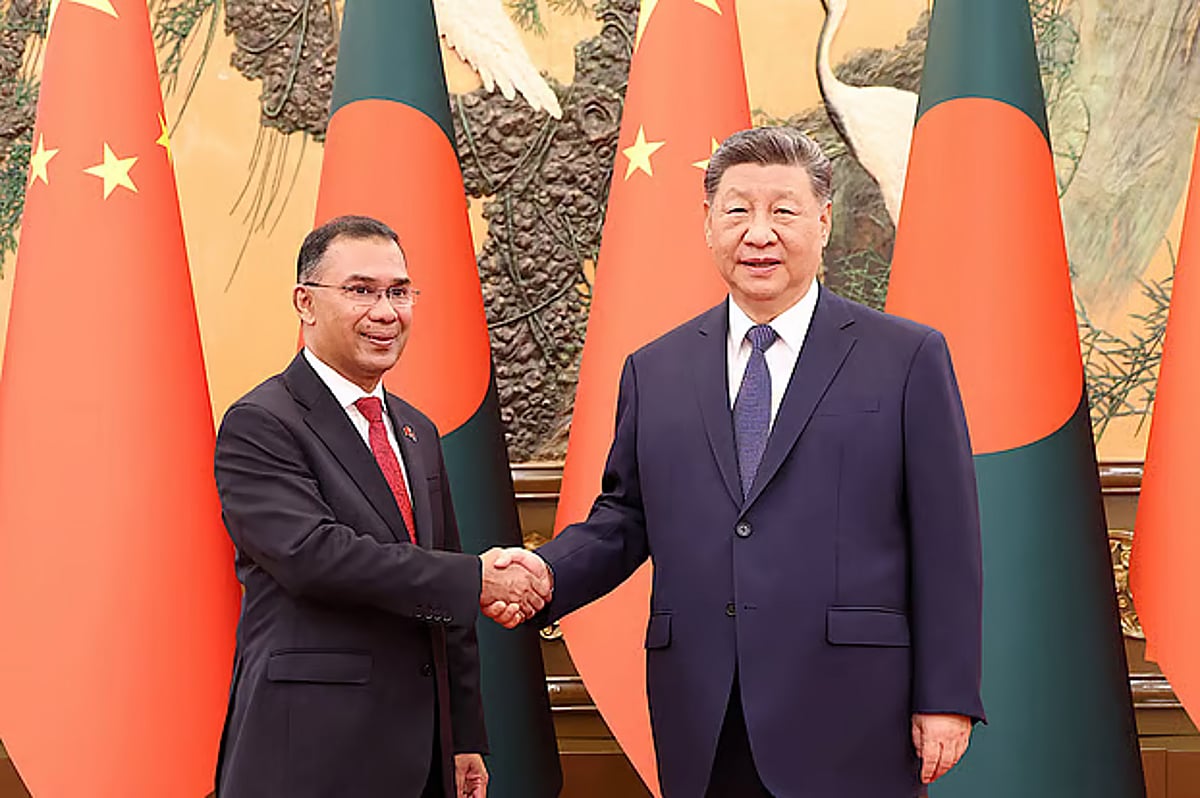
Prime Minister Tarique Rahman meets Chinese President Xi Jinping at the Great Hall of the People in Beijing, China, on Friday. PID

Bangladesh and China have signaled their intention to elevate their long-standing relationship of political trust and mutual respect to a new level. The message was clearly reflected in the joint communiqué issued following Prime Minister Tarique Rahman's visit to Beijing.

The two countries aim to upgrade their ties by establishing a partnership with a "shared future". China has also formally raised the idea of an economic corridor linking Bangladesh through Myanmar, although no final decision has yet been made on the proposal.

According to diplomatic analysts, there was limited time to prepare for the prime minister's visit. Even so, the joint communiqué issued afterwards is considerably more forward-looking than the joint statements released in 2024 and 2025.

Notably, this is only the third joint communiqué issued in the five-decade history of Bangladesh-China relations, following those in 1975 and 2005.

Unlike previous declarations, which focused largely on financial assistance and development projects, the latest communiqué places greater emphasis on advancing bilateral ties through political trust and mutual respect.

Diplomatic analysts believe that while several decisions taken during the visit are broadly positive, some ambiguities and challenges remain. They say Bangladesh will now need to work strategically and consistently to sustain the momentum in bilateral relations.

Responding to questions from journalists, Foreign Minister Khalilur Rahman said, “Bangladesh is currently examining China's proposed corridor. However, we have not yet taken any stance.”

Chinese corridor proposal under review

Speaking to journalists at the foreign ministry Saturday afternoon about the prime minister's recently concluded visit to China, Foreign Minister Khalilur Rahman was joined by State Minister for Foreign Affairs Shama Obaed Islam, the prime minister's foreign affairs adviser Humayun Kabir and Foreign Secretary Asad Alam Siam.

During talks with Prime Minister Tarique Rahman, Chinese President Xi Jinping proposed establishing an economic corridor stretching from Bangladesh to China via Myanmar to expand regional connectivity and economic cooperation.

Responding to questions from journalists, Foreign Minister Khalilur Rahman said, “Bangladesh is currently examining China's proposed corridor. However, we have not yet taken any stance.”

He said discussions had focused on expanding Bangladesh's connectivity through the China-Myanmar Economic Corridor. In particular, linking Kunming with Bangladesh's Chattogram and Mongla ports via Myanmar's ports could significantly reduce both transport costs and shipping time, thereby enhancing Bangladesh's overall capacity.

Khalilur Rahman also noted that Chinese President Xi Jinping attended the meeting with the Bangladeshi prime minister accompanied by China's finance minister, commerce minister and central bank governor, describing this as an indication of the importance Beijing attaches to bilateral relations.

The foreign minister said China does not maintain its highest level of bilateral partnership with every country. In Asia, only a handful of countries, including Thailand, Sri Lanka, Cambodia, Pakistan and Indonesia, enjoy such a relationship. Bangladesh has now joined that list.

He also said that, for the first time, the two countries had discussed conducting a joint technical study on the Teesta River management project. China has assured Bangladesh that it will provide as much support as possible for the project.

The foreign minister said China does not maintain its highest level of bilateral partnership with every country. In Asia, only a handful of countries, including Thailand, Sri Lanka, Cambodia, Pakistan and Indonesia, enjoy such a relationship. Bangladesh has now joined that list.

‘Please don't ask such questions; they are very embarrassing’

Responding to a journalist's question about the "immediate gains" from the visit, Foreign Minister Khalilur Rahman said, "You asked about immediate gains. Brother, please don't ask such questions; they are very embarrassing for us. He did not go there with a begging bowl. He went to define the direction, substance, stature, scope and depth of relations between the two countries. The rest will come later."

The foreign minister said no head of government sits down with another head of government carrying pen and paper. "Have a little self-respect. We have moved beyond that stage. Please believe me. These are very embarrassing questions."

How was the China visit?

The first invitation for Prime Minister Tarique Rahman's overseas visit came from India. Shortly after the February election, Indian Prime Minister Narendra Modi sent him a congratulatory letter that included an invitation to visit New Delhi.

Malaysian Prime Minister Anwar Ibrahim also extended an invitation, followed by Chinese Premier Li Qiang, who invited him to visit Beijing. In the end, rather than choosing India or China, Tarique Rahman selected Malaysia for his first state visit. After visiting Malaysia last week, he travelled to China.

Several Indian media outlets have described the Bangladeshi prime minister's China visit as a "significant turning point" in South Asian geopolitics. Leading Indian newspapers highlighted New Delhi's concerns over the proposed economic zone at Mongla Port, China's involvement in the Teesta project, the prospect of military cooperation, and the proposed China-Myanmar-Bangladesh Economic Corridor.

You asked about immediate gains. Brother, please don't ask such questions; they are very embarrassing for us. He did not go there with a begging bowl. He went to define the direction, substance, stature, scope and depth of relations between the two countries. The rest will come later-----Foreign Minister Khalilur Rahman.

This correspondent spoke to diplomatic sources in Dhaka and Beijing, as well as analysts, about the joint statements issued after the meeting of the two countries’ top leaders in 2024 and 2025 and the joint communiqué released following the visit this time.

Their observations, along with a review of the outcomes of all three visits, suggest that the structure and presentation of this year's 14-point joint communiqué indicate that China adopted a noticeably more flexible approach to its own demands than in the past. Observers believe Beijing was keen to keep Bangladesh within its sphere of influence.

Meanwhile, Bangladesh also placed greater emphasis on strengthening political engagement and opted for a more future-oriented approach. Overall, the joint communiqué reflects a relationship between Bangladesh and China founded on political trust and mutual respect.

Alongside decisions to elevate bilateral ties, China's decision to extend duty-free access from 98 per cent to 100 per cent of Bangladeshi products is being viewed as a significant step towards boosting trade and commerce.

Although many of the decisions taken during the visit are regarded as positive and forward-looking, some ambiguities and challenges remain. For example, Bangladesh expressed support for China's four global initiatives and signed a memorandum of understanding to join the Global Development Initiative (GDI), making its position on that initiative clear.

Alongside decisions to elevate bilateral ties, China's decision to extend duty-free access from 98 per cent to 100 per cent of Bangladeshi products is being viewed as a significant step towards boosting trade and commerce.

However, it remains unclear what discussions took place regarding the other three initiatives – the Global Security Initiative (GSI), the Global Civilisation Initiative (GCI), and the Global Governance Initiative (GGI). When one country endorses another country's initiatives, it generally signals an intention to become engaged with them.

According to diplomatic analysts, Bangladesh had never previously expressed strong support for China's reunification in declarations issued after top-level meetings. This is the first time it has done so. As a result, they believe the move could affect Bangladesh's long-standing relations with trusted partners such as Japan and South Korea.

Mohammad Sufiur Rahman, former Permanent Representative of Bangladesh to the United Nations Office in Geneva and Senior Research Fellow at the South Asian Institute of Policy and Governance at North South University, said the prime minister's China visit was highly significant despite being arranged with comparatively little preparation time.

He said the visit had produced many forward-looking decisions but also presented several challenges. “Bangladesh's real work begins after the visit. The country must now move forward in a planned manner to implement these decisions – including those that could not be advanced previously through political direction – and meet the challenges ahead,” he added.​
 

On China-Myanmar-Bangladesh economic corridor

Mir Mostafizur Rahaman

Published :
Jun 29, 2026 23:50
Updated :
Jun 29, 2026 23:51

1782789662999.webp


Prime Minister Tarique Rahman's China visit has understandably generated considerable enthusiasm in Bangladesh. Government leaders have portrayed the visit as a diplomatic breakthrough that ushers bilateral relations into a new era. The joint communiqué issued after the visit certainly contains several noteworthy announcements, including the elevation of bilateral ties, a new strategic dialogue mechanism, a joint feasibility study on the Teesta River Water Management Project, and Beijing's proposal for a China-Myanmar-Bangladesh Economic Corridor.

Yet, amid the celebration, a more measured assessment is warranted. Diplomacy is often about signalling intent as much as delivering immediate outcomes. The real significance of any high-level visit lies not in the number of memoranda signed or the lofty language of a communiqué, but in whether the agreements translate into tangible benefits over time.

A closer reading of the 15-point joint communiqué reveals that much of its content reiterates commitments already reflected in the communiqué issued following Chief Adviser Professor Muhammad Yunus's visit to China. Many of the commitments on trade, investment, development cooperation and people-to-people exchanges are continuation rather than entirely new initiatives.

That, however, should not reduce the importance of the visit. Diplomatic continuity is often a virtue. What matters is identifying the genuinely new elements and evaluating their strategic implications.

The first notable development is the decision to elevate bilateral relations from a "Comprehensive Strategic Cooperative Partnership" to jointly building a "China-Bangladesh community with a shared future in the new era." While the phrase carries considerable political symbolism in Chinese diplomacy, its practical implications remain to be seen. Beijing has adopted similar formulations with several partner countries as part of its broader vision of long-term strategic cooperation. Whether this upgraded relationship brings greater investment, technology transfer or market access for Bangladesh will ultimately determine its value.

Another important outcome is the agreement to establish a strategic dialogue mechanism between the two foreign ministers, alongside exploring a "2+2" dialogue involving foreign and defence officials. Such institutional mechanisms can improve communication and help manage expanding bilateral relations. However, Bangladesh will need to ensure that enhanced strategic engagement with one major power does not come at the expense of its carefully cultivated foreign policy of maintaining balanced relations with competing global actors.

The decision to initiate a joint feasibility study on the long-discussed Teesta River Comprehensive Management Project also deserves attention. For years, the Teesta issue has remained one of Bangladesh's most pressing water management challenges. While China has previously expressed interest in supporting the project, the latest announcement merely moves the initiative to the feasibility stage. Significant technical, financial and political questions remain unanswered, particularly given the river's transboundary nature.

However, the proposal that has generated the greatest interest is China's suggestion to establish a China-Myanmar-Bangladesh Economic Corridor. Although not formally incorporated into the joint communiqué, both governments acknowledged that Bangladesh would examine the proposal and assess its potential advantages and disadvantages.

This could prove to be the most consequential outcome of the visit.

From China's perspective, the logic is straightforward. A transport and economic corridor linking Yunnan Province to Myanmar and Bangladesh would shorten supply chains, improve overland connectivity to the Bay of Bengal, and diversify China's access to maritime trade routes. Such connectivity would complement Beijing's broader Belt and Road Initiative while providing strategic redundancy beyond the congested Malacca Strait.

For Bangladesh, the proposal carries both promise and complexity.

Economically, improved road, rail and logistics links could significantly reduce transportation costs and lead times with one of Bangladesh's largest trading partners. China remains the principal supplier of industrial raw materials, machinery and intermediate goods for Bangladesh's export-oriented manufacturing sector. Faster and more efficient connectivity could improve industrial competitiveness while attracting fresh investment into logistics, manufacturing and special economic zones.

A functioning corridor could also strengthen Bangladesh's ambition to become a regional connectivity hub linking South Asia and Southeast Asia. Improved infrastructure could stimulate development in the country's eastern regions while expanding access to regional markets.

Yet economics tells only part of the story.

Every transport corridor in Asia today carries geopolitical weight. Infrastructure no longer serves merely commercial objectives; it increasingly reflects strategic competition among major powers.

This is where the China-Myanmar-Bangladesh proposal becomes more sensitive.

The earlier Bangladesh-China-India-Myanmar (BCIM) Economic Corridor envisioned a broader regional framework connecting all four countries. Despite years of discussion, the initiative lost momentum largely because worsening India-China relations made meaningful cooperation increasingly difficult.

The proposed trilateral corridor effectively bypasses India. That, intentionally or otherwise, changes the regional strategic equation.

Bangladesh has consistently pursued a foreign policy centred on strategic balance. It enjoys deep economic ties with China while maintaining extensive political, security and economic cooperation with India. Any initiative perceived as tilting decisively towards one major power risks complicating this delicate equilibrium.

Some analysts have therefore suggested that Bangladesh should explore whether India could eventually be incorporated into a broader regional connectivity framework. Such an approach would preserve the economic benefits of enhanced connectivity while reducing perceptions of geopolitical exclusivity.

An inclusive regional corridor could also better complement India's own efforts to strengthen connectivity with Myanmar and Southeast Asia under its Act East policy. Rather than creating competing infrastructure networks, overlapping regional projects could reinforce one another and contribute to greater economic integration across the Bay of Bengal.

Whether such an inclusive arrangement is politically feasible is difficult to say. Current India-China relations leave little room for optimism. Nevertheless, regional connectivity tends to produce its greatest economic dividends when it remains open rather than exclusive.

There is another obstacle that receives comparatively less attention but may ultimately prove insurmountable.

No corridor can function without stability.

Myanmar continues to experience prolonged political turmoil and armed conflict following the 2021 military coup. Large parts of the country, including sections of Rakhine State, remain affected by insurgency, humanitarian crises and fragile governance. Transport infrastructure alone cannot overcome the absence of political stability and security.

Until Myanmar achieves a more predictable security environment, the commercial viability of any cross-border economic corridor will remain uncertain.

This reality reinforces why Bangladesh's cautious response is appropriate. Foreign Minister Khalilur Rahman's observation that Dhaka is examining both the advantages and the risks reflects prudent diplomacy rather than hesitation.

Infrastructure projects of this magnitude shape economic geography for decades. They deserve rigorous evaluation, transparent public discussion and careful assessment of financial sustainability, environmental impact, national security considerations and regional diplomatic consequences.

The excitement surrounding Prime Minister Tarique Rahman's China visit is understandable. Several announcements represent meaningful progress in bilateral relations, and the proposed China-Myanmar-Bangladesh Economic Corridor has the potential to reshape regional connectivity if circumstances permit.

But hype should not replace careful analysis.

The corridor offers undeniable economic opportunities. It also raises important geopolitical questions and faces significant practical obstacles. Bangladesh's challenge is neither to embrace the proposal uncritically nor reject it reflexively. Rather, it should evaluate the initiative solely through the lens of national interest, preserving its strategic autonomy while maximising economic opportunities.

Diplomacy succeeds not by choosing sides but by expanding choices. If Bangladesh can achieve that balance, the proposed corridor may eventually become more than a geopolitical headline -- it could become a genuine engine of regional prosperity.​
 

Prime Minister’s China visit: Symbolic success or beginning of a new strategic chapter?

Md Shahabul Haque
Updated: 29 Jun 2026, 15: 54

1782791210508.webp

Prime Minister Tarique Rahman meets Chinese President Xi Jinping at the Great Hall of the People in Beijing, China on 26 June. Prime Minister’s Office.

Prime Minister Tarique Rahman's first overseas tour, covering Malaysia and China, is significant for several reasons. The China visit, in particular, represents not merely a continuation of bilateral relations but also the possibility of opening a new chapter in Bangladesh's foreign policy. A state visit is rarely just a ceremonial event; it often signals a country's future diplomatic direction, economic priorities, and strategic positioning within the region.

To properly assess the prime minister's visit, however, three key questions must be answered: What did Bangladesh gain? What did China gain? And did the visit strengthen Bangladesh's balanced foreign policy?

Since diplomatic relations were established in 1975, political and economic cooperation between the two countries expanded rapidly during the presidency of Ziaur Rahman. Prime Minister Khaleda Zia's multiple visits to China later elevated the relationship further. In that sense, Tarique Rahman's visit to Beijing is the part of a long-standing trajectory of bilateral engagement.

Much attention has focused on the 17 memorandums of understanding signed during the visit. From a diplomatic perspective, however, the joint statement issued by the two countries is even more significant. Memorandums of understanding often await implementation, whereas a joint statement reflects the political commitment of both governments and outlines the future direction of their strategic relationship.

In the joint statement, Bangladesh and China pledged to further deepen their existing Comprehensive Strategic Cooperative Partnership while reaffirming their commitment to building a shared future. In Chinese diplomatic language, such terminology is far more than diplomatic courtesy; it signifies long-term cooperation in economic development, technology, infrastructure, and strategic affairs.

Another notable outcome of the visit is the initiative to establish an institutional framework for regular dialogue between the two countries at the foreign affairs and defence levels. Only a limited number of South Asian countries have such an arrangement with China. This indicates that bilateral relations are expanding beyond trade and development projects to include security and broader strategic cooperation.

Economically, the visit is equally significant. It has opened new avenues for cooperation in the expansion of Mongla Port, industrial zones in Anwara and Chattogram, agriculture, renewable energy, technology, logistics, and human resource development. The participation of nearly 80 leading Chinese companies in the Invest Bangladesh conference held in Beijing also sends a positive signal about investor interest in Bangladesh.

This is, however, where reality comes into focus. Foreign investment does not materialise through declarations alone. Investors seek policy stability, uninterrupted electricity and gas supplies, efficient ports, prompt administrative services, legal certainty, and a transparent tax regime. Ultimately, the economic success of the visit will depend on how effectively the government's announced 180-day reform programme is implemented.

Another important pillar of Bangladesh-China cooperation is the Belt and Road Initiative (BRI). Since Bangladesh formally joined the initiative in 2016, China has supported numerous projects, including the Karnaphuli Tunnel, power plants, roads, bridges, special economic zones, and digital infrastructure.

The BRI itself has also evolved. Its focus is no longer limited to large-scale infrastructure projects; greater emphasis is now placed on industrialisation, technology, green energy, agriculture, and production-oriented investment. The reference in the joint statement to "high-quality BRI cooperation" reflects this shift.

The visit also highlighted China's positive stance regarding Bangladesh's aspiration to join BRICS. According to the government's briefing, Bangladesh expressed its interest in becoming associated with the grouping, and China assured Dhaka of its support. Although BRICS membership cannot be determined by any single member state, China's backing constitutes an important diplomatic advancement for Bangladesh. If Bangladesh eventually joins the bloc, it could strengthen access to development financing, South-South cooperation, and closer ties with emerging economies.

At the same time, the possibility of Bangladesh becoming involved with the Shanghai Cooperation Organisation (SCO) also featured in discussions. Bangladesh is not currently a member of the organisation, but if it can secure observer or dialogue partner status, new opportunities may emerge for economic, security, and regional cooperation with Central and broader Asian countries.

From a geopolitical perspective, perhaps the most discussed issue was the prospect of connectivity among Bangladesh, China, and Myanmar. Many observers view it as a possible revival of the BCIM Economic Corridor. The initiative had largely stalled because of India's longstanding security concerns and broader regional strategic calculations.

Yet the path forward remains far from straightforward. The continuing conflict in Myanmar, instability in Rakhine State, and competition among major powers will continue to pose significant challenges. Therefore, this should be viewed as a future possibility rather than an imminent project.

Past experience, however, suggests that tangible progress matters far more than diplomatic commitments. Unless safe, voluntary, and dignified repatriation is ensured, the true value of such cooperation cannot be properly assessed.
A similarly cautious assessment is warranted regarding the Teesta Master Plan. China has expressed interest in supporting joint feasibility studies, providing technical assistance, and assisting with project planning.

However, it has not yet committed to financing or implementing the project. Consequently, it remains appropriate to view the initiative as a potential opportunity rather than a confirmed undertaking.

On the Rohingya crisis, China has also expressed its willingness to facilitate dialogue between Bangladesh and Myanmar. This is undoubtedly a positive development. Past experience, however, suggests that tangible progress matters far more than diplomatic commitments. Unless safe, voluntary, and dignified repatriation is ensured, the true value of such cooperation cannot be properly assessed.

Another important aspect of the visit is its reaffirmation of Bangladesh's balanced foreign policy. Deepening relations with China does not imply reducing the importance of other partners. The United States and Europe remain Bangladesh's principal export markets, Japan has long been one of its foremost development partners, and India is Bangladesh's closest neighbour and an important economic partner. Therefore, Bangladesh's most effective strategy is to continue pursuing a balanced, multi-dimensional foreign policy guided by national interests.

Tarique Rahman's visit to China is certainly not a failure. At the same time, it is to early to call it a transformative success. The visit's real significance lies not in the memorandums of understanding themselves but in the political language of the joint statement, the growing strategic trust between the two countries, China's positive support for Bangladesh's future engagement with BRICS, the evolving direction of BRI cooperation, and the foundations laid for future economic and diplomatic opportunities.

In diplomacy, declarations mark only the beginning. True success depends on implementation. Over the coming years, the real measure of this visit will be determined by how much Chinese investment increases, how many industrial zones are established, how much employment is generated, how far the Teesta Master Plan progresses, how Bangladesh advances its engagement with BRICS and potentially the SCO, and how effectively it maintains balanced relations with India, the United States, Europe, and Japan.

The visit may not have produced any dramatic or immediate transformation. Nevertheless, it undoubtedly represents an important step towards placing Bangladesh-China relations on a more structured and strategic foundation. The real question now is how quickly these political commitments can be translated into tangible economic cooperation, investment, employment generation, and broader diplomatic achievements.

*Dr. Md. Shahabul Haque is Professor, Department of Political Studies, Shahjalal University of Science and Technology, Sylhet.​
 

‘The proposed 2+2 dialogue mechanism should not be overinterpreted’

Porimol Palma

1782791992855.webp


Mohammad Sufiur Rahman, senior research fellow at the South Asian Institute of Policy and Governance in North South University and a former diplomat, speaks with Porimol Palma of The Daily Star about the outcomes of Prime Minister Tarique Rahman’s just-concluded visit to China.

How do you assess Prime Minister Tarique Rahman’s recent visit to China?

The visit should be viewed as part of a broader and continuing process of engagement between Bangladesh and China. Relations between the two countries have steadily deepened over the years; in that context, the visit marks another positive milestone. While there were also important visits in 2024 and 2025, this one appears to have a greater depth. The significance lies not merely in the number of agreements signed but in the quality of understanding and trust as reflected in the discussions and outcomes.

The depth of this visit appears to be reflected in the understanding of the future direction of bilateral relations and implementation. Not everything should be measured by quantity, especially that of investment commitments, business deals and financial aid. Looking at the language and structure of the joint communiqué, I presume that the negotiations were held with greater convergence, the desire to advance interdependence and the spirit of mutuality of interests. Its language indicates that the negotiation was relatively smooth.

Those experienced in drafting such documents can often sense whether difficult negotiations took place. In this case, there are hardly any visible signs of disjointed paragraphs and internal inconsistencies. In the last two outcome documents, there were a few disconnected elements and out-of-place sentences. That suggests good understanding of the priorities and positions of the other side, lesser demands from both sides, a strong desire towards accommodation and collaboration, and close coordination between the sides during the drafting process.

What does the communiqué indicate about the future relationship?

It refers to traditional friendship, (a growing) political trust, and pragmatic cooperation. The emphasis on pragmatic cooperation suggests that both sides are moving away from ideological considerations and instead focusing on practical areas of mutual benefits and complementarities.

The phrase “China-Bangladesh community with a shared future” is also significant. Although China has used similar terminology with other friendly countries such as the Maldives and Sri Lanka, this reflects a broader relationship than a conventional “comprehensive strategic cooperative partnership.” The concept of a “community” goes beyond government-level interaction. It potentially involves political parties, legislatures, and people-to-people exchanges. This indicates utilisation of a broader and more institutionalised engagement framework.

What is the significance of Bangladesh signing an MoU under China’s Global Development Initiative (GDI)?

Although the broader statement expressed support for China’s initiatives, the only specific initiative for which an MOU was signed was the Global Development Initiative (GDI). The exact text of the GDI agreement has not yet been made public, but signing an MoU indicates Bangladesh has moved beyond simply appreciating it or being a “friend of GDI,” which many countries already are. Bangladesh has effectively taken a step forward in relation to the GDI.

The GDI itself does not appear to impose strategic considerations or constraints on Bangladesh. Rather, it can potentially integrate various development initiatives already underway in areas such as education, healthcare, and human resource development. If the GDI serves as an umbrella framework connecting these sectoral efforts on development, their effectiveness may improve while reducing costs and duplication.

In contrast, support for China’s other initiatives appears more general and does not create immediate obligations or commitments. There is no mention of implementation at this stage. Constructive ambiguity has been maintained in those areas, preserving Bangladesh’s strategic space.

How do you view discussions on the Bangladesh-Myanmar-China economic corridor?

Discussions on the proposed Bangladesh-Myanmar-China economic corridor should be understood in the broader context of exploring new regional frameworks for enhanced economic engagement and connectivity options. Traditional connectivity frameworks such as Bangladesh-China-India-Myanmar corridor (BCIM) required India’s participation. With India not showing interest, discussions now seem to focus on alternative routes.

Practically speaking, land connectivity through Myanmar currently remains difficult through Sagaing or the Rakhine state because of the ongoing civil conflict there, as well as in the Shan state. Therefore, the most realistic option at present appears to be maritime connectivity between Chattogram and Myanmar’s Kyaukpyu port. This concept has sometimes been described as a Chinese proposal, but Bangladesh has also actively considered similar ideas. The specific points of transshipment perhaps remain absent from the joint communiqué because Myanmar is the most important stakeholder and decisions cannot be made bilaterally by Bangladesh and China.

There is no reason for external concerns regarding such connectivity arrangements. These routes would not replace existing routes but would simply create additional options for trade, transport and energy security for the participating countries. This could rather increase transparency by involving more actors in areas previously considered exclusive.

Some observers are concerned about the proposed “2+2” dialogue mechanism involving foreign and defence ministries. How do you interpret it?

The proposed “2+2” dialogue mechanism should not be overinterpreted. The communiqué states that both sides agreed to “explore” such a mechanism. This means it remains at an exploratory stage rather than being a finalised arrangement. This has become a common institutional arrangement among countries, and all neighbouring countries have such mechanisms with super powers and major powers. Those are not creating any unease.

Bangladesh can establish similar dialogue frameworks with multiple countries if it wishes to do so. Such arrangements help bring convergences among participating countries and remove irritants. They help preserve strategic flexibility and foreign policy autonomy. The direction itself appears positive because greater engagement can increase Bangladesh’s foreign policy options.

Singapore offers an example of how smaller states use extensive networks and partnerships to improve information-sharing and strengthen security. Security increasingly depends not just on military capability but also on advance information on potential challenges and threats, which contribute to preparedness. This development should, therefore, not be interpreted as Bangladesh moving closer exclusively towards China. Rather than representing a geopolitical tilt, it appears to reflect a desire to follow a balancing strategy.

Bangladesh’s foreign policy should expand options rather than narrow them. Strengthening engagement with China does not require reducing engagement with other countries. In recent months, Bangladesh and the US have considered many mechanisms and instruments in the domain of defence and security. If Bangladesh can simultaneously deepen engagement with China, maintain relations with the US, and eventually improve ties with India, that would reflect its maturity and strengthen its overall position.

What is your assessment of the Mongla port project and the related infrastructure cooperation?

The modernisation of Mongla port should not be viewed through a strategic competition lens only. Mongla, with much less draft, is different from projects such as Matarbari or Sonadia. Comparison with Hambantota is also misplaced. This is not a case of handing over ownership to China. The arrangement involves joint development and management, meaning Bangladesh retains control. The project could improve connectivity for western and northern Bangladesh while having the prospect of creating access for countries such as Nepal and Bhutan and even India. Building infrastructure and using infrastructure are separate issues, and Bangladesh can decide on its usage for various regional stakeholders and negotiate future arrangements independently.

Do you see any areas of inadequacy or shortcomings in the outcome of this visit?

Bangladesh’s firm support to efforts of the Chinese government in “achieving national reunification” may make the resident powers and stakeholders in the Pacific unhappy. This might require some explaining.

Bangladesh could have pursued further ways and means to reduce the trade imbalance, and the two partners could have considered an institutional mechanism to address this. Reducing trade costs and removing non-tariff barriers and measures merit priority.

Bangladesh has not succeeded in generating greater Chinese interests in the stabilisation of Rakhine and in creating a conducive atmosphere in north Rakhine. Merely facilitating the Bangladesh-Myanmar engagement has not produced anything concrete in the last eight years. The protracted situation demands creative engagement of regional countries, in particular China.​
 

Latest Posts

Back