[🇧🇩] China is a Time Tested Friend and a Strategic Partner of Bangladesh

[🇧🇩] China is a Time Tested Friend and a Strategic Partner of Bangladesh
314
13K
More threads by Saif

G Bangladesh Defense

Bangladesh-China relations reach highest level: Foreign minister

Dhaka, Beijing to explore ‘2+2’ dialogue mechanism in diplomacy, defence, says Khalilur Rahman

UNB, Dhaka
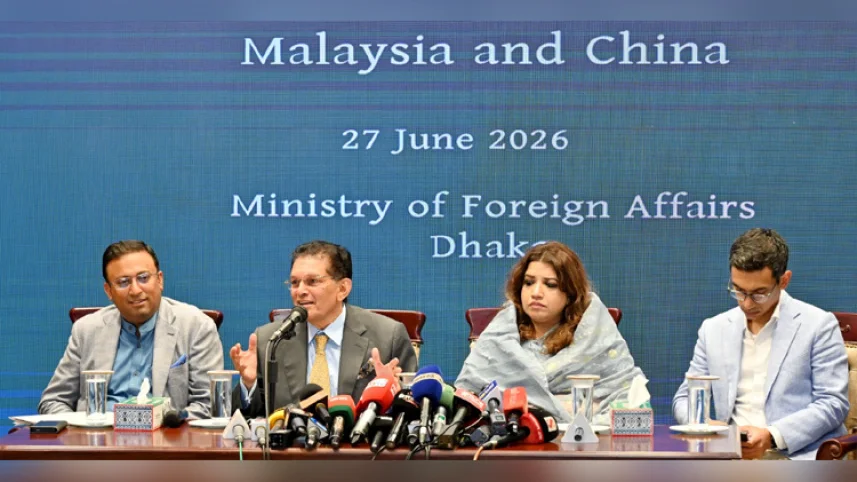
1782604956149.webp

Photo courtesy: Ministry of Foreign Affairs

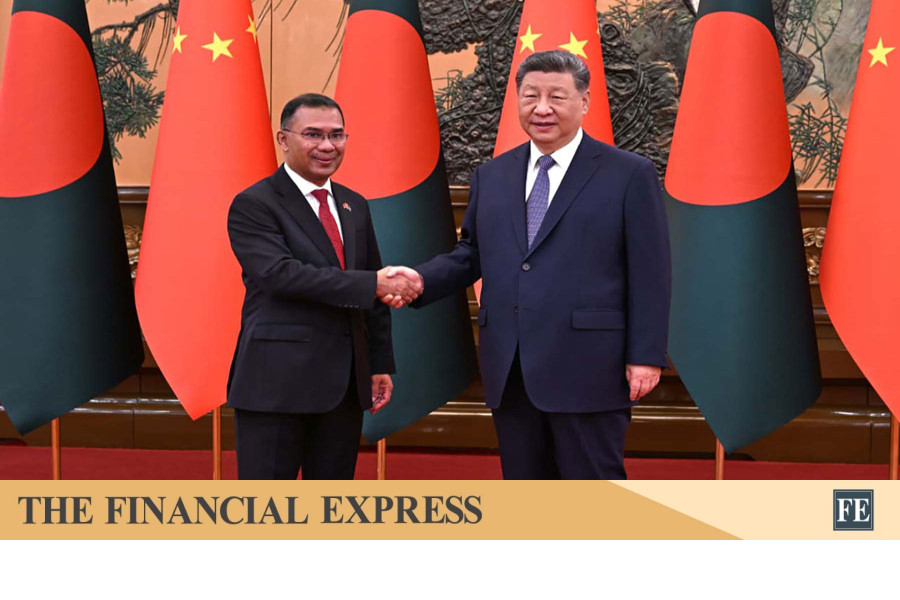
Highlighting the success of Prime Minister Tarique Rahman’s recently-concluded visit to China, Foreign Minister Khalilur Rahman on Saturday said Bangladesh's relations with China have been elevated from a "comprehensive strategic cooperative partnership" to a "Bangladesh-China community with a shared future".

“This is the highest step in terms of China's bilateral engagement,” he told reporters at the foreign affairs ministry while outlining the achievements of the prime minister’s twin visits to Malaysia and China.

He said the photos and videos from the prime minister’s visits to Malaysia and China reflected Bangladesh’s growing importance and underscored the strengthening of Dhaka’s relations with Kuala Lumpur and Beijing.

State Minister for Foreign Affairs Shama Obaed, Prime Minister’s Adviser on Foreign Affairs Humaiun Kobir, Bangladesh Investment Development Authority (BIDA) Executive Chairman Ashik Chowdhury, Foreign Secretary Asad Alam Siam, and senior officials of the foreign affairs ministry were present at the media briefing.

Adviser Humaiun Kobir said the two sides signed a memorandum of understanding (MoU) at the party-to-party level to establish a formal partnership aimed at strengthening political cooperation.

Among the key achievements of the prime minister's visit to China are the launch of a strategic dialogue at the foreign minister level and the exploration of a "2+2" dialogue mechanism covering diplomacy and defence.

"We have not taken any decision yet (regarding "2+2" dialogue mechanism). It's still at the exploration stage...we will explore it," said Khalilur while responding to a question.

The "2+2" dialogue mechanism, typically a high-level format involving the foreign and defence ministers of both countries, was once a signature diplomatic tool of Western nations but is now actively utilised by China to strengthen strategic partnerships. Beijing uses this framework to deepen regional security cooperation, safeguard political systems, and coordinate diplomatic responses to external pressures.

Bangladesh and China signed 17 bilateral instruments, including MoUs, agreements, a joint action plan, and an agricultural trade protocol, to further strengthen bilateral relations.​
 

12 Chinese companies intend to invest over $9b in Bangladesh

UNB
Dhaka
Published: 28 Jun 2026, 21: 19

1782693127219.webp


Twelve Chinese companies have proposed to invest US$9.21 billion in Bangladesh, as the CEOs and heads of these 12 different companies, representing various subsectors, met with Prime Minister Tarique Rahman on 25 June in Beijing.

Bangladesh Investment Development Authority (BIDA) Executive Chairman Chowdhury Ashik Mahmud Bin Harun was present during the meeting with the Prime Minister and the leaders of the Chinese companies.

Shanghai SUS Environment Co., Ltd., one of the world's leading WTE investors and operators, has proposed to invest US$890 million in the development of Waste-to-Energy (WTE) plants, according to document seen by UNB.

China Future Energy Group Holding Limited, specialised in petroleum engineering and gas field investment, proposed to invest US$250 million in the exploration and development of gas fields.

China Civil Engineering Construction Corporation (CCECC), a Chinese state-owned contractor, investor and operator, has proposed to invest US$650 million in the development and operation of the Mongla Port Economic Zone to attract Chinese manufacturing industries, build a bonded warehouse for import purposes, and develop Mongla into a new logistics hub, generating 50,000 jobs.

Shenzhen Kaifa Technology Co. Ltd. proposed to invest US$250 million in the manufacture of electric smart meters in Bangladesh.

SF Express, China's largest logistics company, has proposed to invest US$180 million in cold-chain logistics and bonded warehouse facilities in Mongla to support e-commerce and export industries.

Huaxin Textile Industry Co. Ltd. has proposed to invest US$190 million in the expansion of recycled cotton/yarn production, the manufacture of cylindrical lithium batteries, and the construction of a 200 MW solar power plant for its own use in the Payra Port Industrial Zone.

Zhongxin Environmental Protection Group has proposed to invest US$1.65 billion in the establishment of an e-waste recycling and disposal industrial project in the Payra Port Industrial Zone.

CRRC Ziyan Co. Ltd. has proposed to invest US$190 million in the establishment of a rolling stock assembly plant through a joint venture with BMTF.

Sichuan Road & Bridge Group Co. Ltd. has proposed to invest US$4.5 billion in the Dhaka-Chattogram Highway PPP Project to enhance national connectivity and economic growth.

China Kepai Education Group has proposed to invest US$270 million to build a modern application-oriented university and vocational education industrial park designed to accommodate 30,000 students in the long run.

China Shandong Zhongxin Pharmaceutical Co. Limited has proposed to invest US$190 million to establish a large-scale Chinese medicinal herb cultivation industry in Bangladesh.

Ashik Chowdhury on Saturday said stability has been restored following the formal assumption of office by the newly elected government in Bangladesh, adding that this renewed climate of confidence had been effectively communicated to investors.

He highlighted that Bangladesh presented a five-year tax outlook for the first time, and they emphasised these aspects of stability to the investors.​
 

Dhaka-Beijing ties enter new phase amid corridor proposal

Raheed Ejaz
Dhaka
Updated: 28 Jun 2026, 17: 09

1782693421879.webp

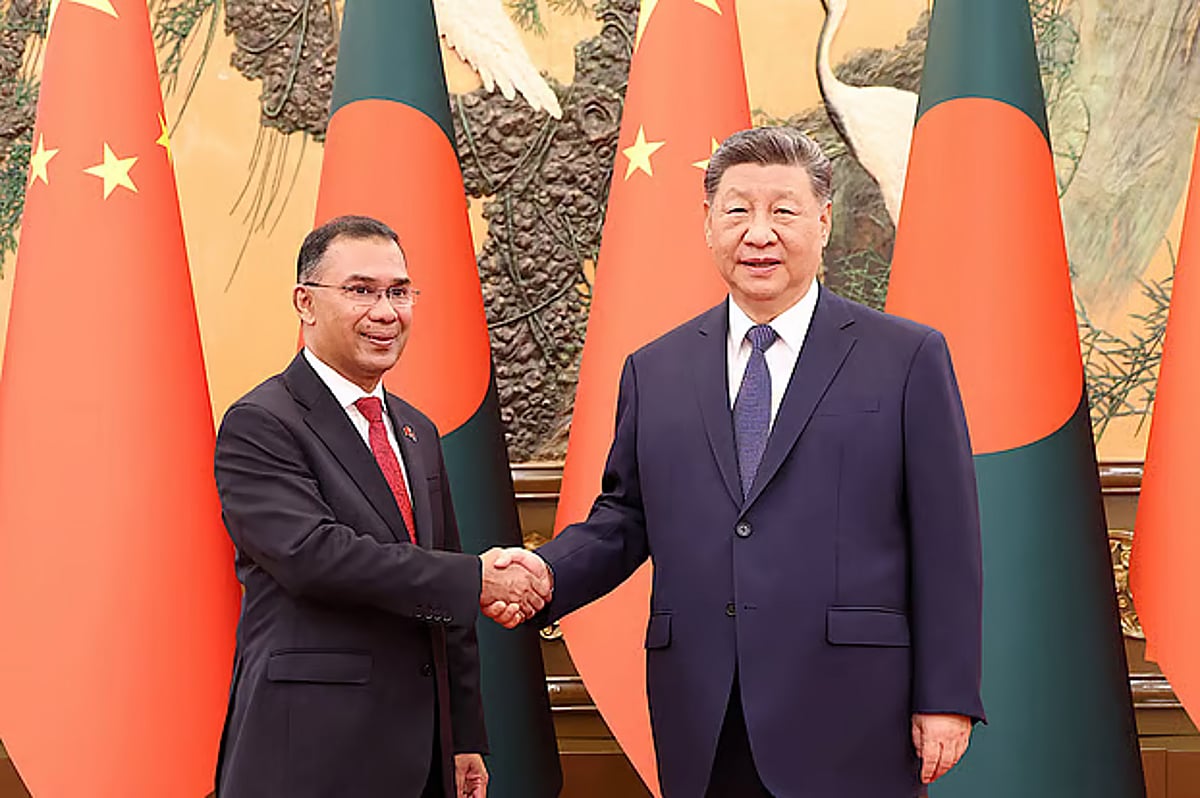
Prime Minister Tarique Rahman meets Chinese President Xi Jinping at the Great Hall of the People in Beijing, China, on Friday. PID

Bangladesh and China have signaled their intention to elevate their long-standing relationship of political trust and mutual respect to a new level. The message was clearly reflected in the joint communiqué issued following Prime Minister Tarique Rahman's visit to Beijing.

The two countries aim to upgrade their ties by establishing a partnership with a "shared future". China has also formally raised the idea of an economic corridor linking Bangladesh through Myanmar, although no final decision has yet been made on the proposal.

According to diplomatic analysts, there was limited time to prepare for the prime minister's visit. Even so, the joint communiqué issued afterwards is considerably more forward-looking than the joint statements released in 2024 and 2025.

Notably, this is only the third joint communiqué issued in the five-decade history of Bangladesh-China relations, following those in 1975 and 2005.

Unlike previous declarations, which focused largely on financial assistance and development projects, the latest communiqué places greater emphasis on advancing bilateral ties through political trust and mutual respect.

Diplomatic analysts believe that while several decisions taken during the visit are broadly positive, some ambiguities and challenges remain. They say Bangladesh will now need to work strategically and consistently to sustain the momentum in bilateral relations.

Responding to questions from journalists, Foreign Minister Khalilur Rahman said, “Bangladesh is currently examining China's proposed corridor. However, we have not yet taken any stance.”

Chinese corridor proposal under review

Speaking to journalists at the foreign ministry Saturday afternoon about the prime minister's recently concluded visit to China, Foreign Minister Khalilur Rahman was joined by State Minister for Foreign Affairs Shama Obaed Islam, the prime minister's foreign affairs adviser Humayun Kabir and Foreign Secretary Asad Alam Siam.

During talks with Prime Minister Tarique Rahman, Chinese President Xi Jinping proposed establishing an economic corridor stretching from Bangladesh to China via Myanmar to expand regional connectivity and economic cooperation.

Responding to questions from journalists, Foreign Minister Khalilur Rahman said, “Bangladesh is currently examining China's proposed corridor. However, we have not yet taken any stance.”

He said discussions had focused on expanding Bangladesh's connectivity through the China-Myanmar Economic Corridor. In particular, linking Kunming with Bangladesh's Chattogram and Mongla ports via Myanmar's ports could significantly reduce both transport costs and shipping time, thereby enhancing Bangladesh's overall capacity.

Khalilur Rahman also noted that Chinese President Xi Jinping attended the meeting with the Bangladeshi prime minister accompanied by China's finance minister, commerce minister and central bank governor, describing this as an indication of the importance Beijing attaches to bilateral relations.

The foreign minister said China does not maintain its highest level of bilateral partnership with every country. In Asia, only a handful of countries, including Thailand, Sri Lanka, Cambodia, Pakistan and Indonesia, enjoy such a relationship. Bangladesh has now joined that list.

He also said that, for the first time, the two countries had discussed conducting a joint technical study on the Teesta River management project. China has assured Bangladesh that it will provide as much support as possible for the project.

The foreign minister said China does not maintain its highest level of bilateral partnership with every country. In Asia, only a handful of countries, including Thailand, Sri Lanka, Cambodia, Pakistan and Indonesia, enjoy such a relationship. Bangladesh has now joined that list.

‘Please don't ask such questions; they are very embarrassing’

Responding to a journalist's question about the "immediate gains" from the visit, Foreign Minister Khalilur Rahman said, "You asked about immediate gains. Brother, please don't ask such questions; they are very embarrassing for us. He did not go there with a begging bowl. He went to define the direction, substance, stature, scope and depth of relations between the two countries. The rest will come later."

The foreign minister said no head of government sits down with another head of government carrying pen and paper. "Have a little self-respect. We have moved beyond that stage. Please believe me. These are very embarrassing questions."

How was the China visit?

The first invitation for Prime Minister Tarique Rahman's overseas visit came from India. Shortly after the February election, Indian Prime Minister Narendra Modi sent him a congratulatory letter that included an invitation to visit New Delhi.

Malaysian Prime Minister Anwar Ibrahim also extended an invitation, followed by Chinese Premier Li Qiang, who invited him to visit Beijing. In the end, rather than choosing India or China, Tarique Rahman selected Malaysia for his first state visit. After visiting Malaysia last week, he travelled to China.

Several Indian media outlets have described the Bangladeshi prime minister's China visit as a "significant turning point" in South Asian geopolitics. Leading Indian newspapers highlighted New Delhi's concerns over the proposed economic zone at Mongla Port, China's involvement in the Teesta project, the prospect of military cooperation, and the proposed China-Myanmar-Bangladesh Economic Corridor.

You asked about immediate gains. Brother, please don't ask such questions; they are very embarrassing for us. He did not go there with a begging bowl. He went to define the direction, substance, stature, scope and depth of relations between the two countries. The rest will come later-----Foreign Minister Khalilur Rahman.

This correspondent spoke to diplomatic sources in Dhaka and Beijing, as well as analysts, about the joint statements issued after the meeting of the two countries’ top leaders in 2024 and 2025 and the joint communiqué released following the visit this time.

Their observations, along with a review of the outcomes of all three visits, suggest that the structure and presentation of this year's 14-point joint communiqué indicate that China adopted a noticeably more flexible approach to its own demands than in the past. Observers believe Beijing was keen to keep Bangladesh within its sphere of influence.

Meanwhile, Bangladesh also placed greater emphasis on strengthening political engagement and opted for a more future-oriented approach. Overall, the joint communiqué reflects a relationship between Bangladesh and China founded on political trust and mutual respect.

Alongside decisions to elevate bilateral ties, China's decision to extend duty-free access from 98 per cent to 100 per cent of Bangladeshi products is being viewed as a significant step towards boosting trade and commerce.

Although many of the decisions taken during the visit are regarded as positive and forward-looking, some ambiguities and challenges remain. For example, Bangladesh expressed support for China's four global initiatives and signed a memorandum of understanding to join the Global Development Initiative (GDI), making its position on that initiative clear.

Alongside decisions to elevate bilateral ties, China's decision to extend duty-free access from 98 per cent to 100 per cent of Bangladeshi products is being viewed as a significant step towards boosting trade and commerce.

However, it remains unclear what discussions took place regarding the other three initiatives – the Global Security Initiative (GSI), the Global Civilisation Initiative (GCI), and the Global Governance Initiative (GGI). When one country endorses another country's initiatives, it generally signals an intention to become engaged with them.

According to diplomatic analysts, Bangladesh had never previously expressed strong support for China's reunification in declarations issued after top-level meetings. This is the first time it has done so. As a result, they believe the move could affect Bangladesh's long-standing relations with trusted partners such as Japan and South Korea.

Mohammad Sufiur Rahman, former Permanent Representative of Bangladesh to the United Nations Office in Geneva and Senior Research Fellow at the South Asian Institute of Policy and Governance at North South University, said the prime minister's China visit was highly significant despite being arranged with comparatively little preparation time.

He said the visit had produced many forward-looking decisions but also presented several challenges. “Bangladesh's real work begins after the visit. The country must now move forward in a planned manner to implement these decisions – including those that could not be advanced previously through political direction – and meet the challenges ahead,” he added.​
 

Latest Posts

Back