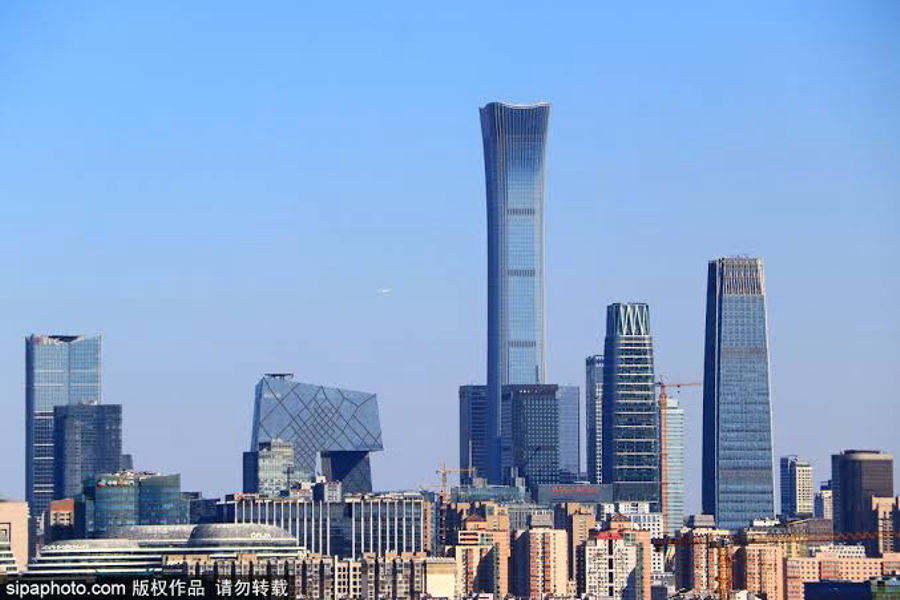
Chinese capital Beijing's GDP exceeded 5.207 trillion yuan (about 743.79 billion U.S. dollars) in 2025, up 5.4 per cent year on year, surpassing the 5 trillion yuan mark for the first time, according to the municipal statistics bureau.
thefinancialexpress.com.bd
Beijing's GDP surpasses 5 trillion yuan mark
Xinhua
Published :
Jan 21, 2026 08:57
Updated :
Jan 21, 2026 08:57
Chinese capital Beijing's GDP exceeded 5.207 trillion yuan (about 743.79 billion U.S. dollars) in 2025, up 5.4 per cent year on year, surpassing the 5 trillion yuan mark for the first time, according to the municipal statistics bureau.
Scientists have unearthed in southern China fossils of a multitude of marine creatures dating to more than a half billion years ago, showing a deep-water ecosystem thriving in the aftermath of the first mass extinction of the animal world. The Cambrian Period fossils, about 512 million years old,
thefinancialexpress.com.bd
Chinese fossils show marine animals thriving half a billion years ago
REUTERS
Published :
Jan 28, 2026 22:45
Updated :
Jan 28, 2026 22:45
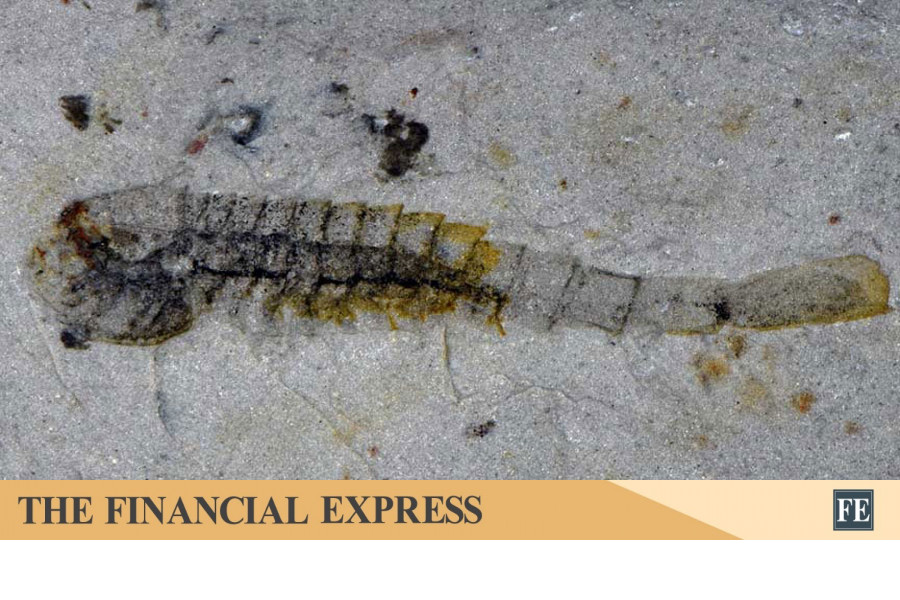
The fossil of the Cambrian Period marine arthropod Fuxianhuiid, with gut preserved, discovered in Hunan province in southern China and dating to around 512 million years, is seen in this photograph released on Jan 28, 2026. The scale bar is 2 mm. Photo : Han Zeng/Handout via REUTERS
Scientists have unearthed in southern China fossils of a multitude of marine creatures dating to more than a half billion years ago, showing a deep-water ecosystem thriving in the aftermath of the first mass extinction of the animal world.
The Cambrian Period fossils, about 512 million years old, are of invertebrates of various shapes and sizes, including an apex predator with menacing grasping appendages. They are exceptionally well-preserved sometimes down to the cellular level, revealing legs, gills, guts, eyes and even nerves.
The researchers collected more than 50,000 fossil specimens in mudstone from a single quarry, representing a highly diverse assemblage of organisms they call the Huayuan biota, named after the county in Hunan province where it is located. They examined a sample of 8,681 specimens and recognized 153 species - 91 of which were previously unknown - from 16 major animal groups.
The fossils date to a time when animal and plant life was still confined to the seas. They rival two other important fossil assemblages in providing a look at life in the Cambrian seas - the Burgess Shale biota of Canada's province of British Columbia and the Chengjiang biota of China's Yunnan province.
"The Huayuan biota was situated at a deep-water environment at the edge of the continental shelf of South China," said Han Zeng, a paleontologist at the Nanjing Institute of Geology and Paleontology, part of the Chinese Academy of Sciences, and lead author of the study published on Wednesday in the journal Nature.
"The Huayuan biota was a thriving ecosystem with animals distributed from the water column to the surface and inside of marine sediment. The animals have various feeding habits and motility," Zeng said.
The dominant groups among the fossils included: arthropods, the group that includes today's crabs, shrimp, scorpions, insects, spiders, centipedes and millipedes; cnidarians, which include today's jellyfish, corals and sea anemones; and sponges, which are among the oldest animals.
The top predators were several members of a group of primitive arthropods called radiodonts that had raptorial appendages - specialised limbs to grab prey while swimming through the sea. Another creature was covered with spines and looked vaguely like a cactus.
While the animals discovered were all invertebrates, the Huayuan biota does include diverse and abundant members of a subdivision of animals considered the closest relatives of vertebrates.
The Huayuan fossils provide the best view yet of a marine ecosystem in the aftermath of a mass extinction called the Sinsk event that occurred about 513.5 million years ago, thought to have been caused by volcanism that triggered rapid global climate change. This mass extinction interrupted a burst of evolution called the Cambrian explosion when nearly all the major groups of the animal kingdom had first emerged.
"The Huayuan biota provides the first insights into the impact of the Sinsk event on deeper-water faunas," said paleontologist and study senior author Maoyan Zhu of the Nanjing Institute of Geology and Paleontology.
The fossils indicate that the mass extinction did not hit deeper-water creatures as hard as their shallow-water counterparts, Zhu said.
The Burgess Shale animals date to about 508 million years ago, further removed from the Sinsk event than the Huayuan biota. Despite the vast distance separating the two sites, fossils of several of the same animals were found in the two locations.
"It surprised us when we found the Huayuan biota shared various animals with the Burgess Shale, including the arthropods Helmetia and Surusicaris that were previously only known from the Burgess Shale," Zeng said.
"As larval stages are common in extant marine invertebrates, the best explanation of these shared taxa shall be that the larvae of early animals were capable of spreading by ocean currents since the early days of animals in the Cambrian," Zeng said.
Almost a hundred new animal species that survived a mass extinction event half a billion years ago have been discovered in a small quarry in China, scientists revealed Wednesday. The treasure trove of fossils offers a rare glimpse into a cataclysmic event that brought a sudden end to the...
en.prothomalo.com
''Extraordinary'' trove of ancient species found in China quarry
AFP Paris, France
Published: 02 Feb 2026, 18: 42
Map showing the Gansu province in China
Almost a hundred new animal species that survived a mass extinction event half a billion years ago have been discovered in a small quarry in China, scientists revealed Wednesday.
The treasure trove of fossils offers a rare glimpse into a cataclysmic event that brought a sudden end to the greatest explosion of life in our planet's history.
The site where the fossils were found in the southern Chinese province of Hunan was "extraordinary," Han Zeng of the Chinese Academy of Sciences told AFP.
"We have collected over 50,000 fossil specimens from a single quarry that is 12 metres high, 30 metres long and eight metres wide," added the lead author of a new study in the journal Nature.
In this small space, the Chinese team uncovered more than 150 different species -- 91 of them new to science -- between 2021 and 2024.
Han described "wonderful experiences when we realised that those animals were right there on the rock."
"Many fossils show soft parts including gills, guts, eyes and even nerves," he added.
Among the species discovered were ancient relatives of worms, sponges and jellyfish.
They also found many arthropods -- a family that includes modern-day crabs and insects -- including spiny, stalk-eyed creatures called radiodonts which were the apex predator of the time.
The discovery is particularly exciting for scientists because of the period when these strange animals lived.
Evolution's big bang
Life first emerged on Earth more than 3.5 billion years ago -- but was little more than a layer of slime for most of our planet's history.
Then came the Cambrian explosion, known as evolution's "big bang", roughly 540 million years ago.
Suddenly, most of the major groups of animals alive today -- including vertebrates which would eventually include humans -- evolved and started populating the world's oceans.
This burst of life is thought to have been driven by a rise in oxygen in Earth's atmosphere.
Safety in the cellar
Michael Lee, an evolutionary biologist at the South Australian Museum not involved in the research, said "the new fossils from China demonstrate that the Sinsk event affected shallow water forms most severely".
A deep-water fish called coelacanth similarly survived the mass extinction that wiped out all the dinosaurs that did not evolve into birds, he pointed out.
"The deep ocean is one of the most stable environments through geological time, in a similar way to how the cellar of a house is buffered from daily and seasonal changes and has less temperature fluctuations than the attic," Lee told AFP.
Han said his team was also surprised that some of the animals in the quarry had also been found at Canada's Burgess Shale site, which dates from an early period of the Cambrian explosion.
This suggests that these animals were already able to travel halfway across the world at this early stage, he added.
The Sinsk event is not considered among the best-known "big five" mass extinctions in our planet's history.
However Han said there is evidence of 18 or more mass extinctions over the last 540 million years, calling for more attention to be paid to the immensely destructive events.
Scientists have warned that Earth is currently going through another mass extinction -- this one caused by humans.
Uncertainty also threatens to disrupt Chinese President Xi Jinping's flagship "Belt and Road" initiative
www.thedailystar.net
China calls for end to war in Middle East warning of economic impact
Uncertainty also threatens to disrupt Chinese President Xi Jinping's flagship "Belt and Road" initiative
Reuters, Beijing
Chinese Foreign Ministry spokesperson Lin Jian attends a press conference in Beijing, China April 10, 2025. Photo: Reuters
China called for an end to the war in the Middle East on Friday, warning of the impact on global energy, shipping and trade, with the near three-week conflict showing no sign of slowing.
"History and reality have repeatedly shown the world that force is not the solution to problems and armed conflict will only breed new hatred," Lin Jian, a spokesperson for China's foreign ministry said when asked whether Beijing had a message for Muslim communities as they mark the end of the holy month of Ramadan.
The "still widening war" in the Middle East harms the common interests of all countries, Lin said, repeating Beijing's position that all sides in the Gulf conflict should cease fighting and that energy flows from the region should be unimpeded.
The remarks came on the 23rd anniversary of the Iraq War, which began in 2003 when US-led forces invaded Iraq to oust Saddam Hussein, partly on claims that his government possessed weapons of mass destruction.
That war resulted in years of chaos and instability and created a power vacuum that led to the rise of the Islamic State terrorist group.
The US-Israeli war has uneven consequences for China. Analysts say the conflict gives Beijing an opportunity to cast itself as the more reliable superpower. However, the higher energy costs threaten its manufacturers and could trigger higher inflation if the conflict continues.
The uncertainty also threatens to disrupt Chinese President Xi Jinping's flagship "Belt and Road" initiative.
Parts of the project run through the region and help move Chinese goods to key export markets in the Gulf, North Africa and Europe at a time of heavy reliance on external demand due to depressed domestic demand.
The war has led to a meeting between Xi and US President Donald Trump to be delayed for about a month and a half. Trump's China trip had been seen as a chance for a reset in relations between the two economic superpowers that have been rattled by US tariffs.
Chinese startup DeepSeek released a new artificial intelligence model with ‘drastically reduced’ costs Friday, more than a year after it stunned the world with a low-cost reasoning model that matched the capabilities of US rivals.
www.newagebd.net
China’s DeepSeek releases new AI model
Agence France – Presse . Beijing, China 24 April, 2026, 22:18
This photo illustration shows the DeepSeek app on a mobile phone in Hong Kong on January 28, 2025. | AFP photo
Chinese startup DeepSeek released a new artificial intelligence model with ‘drastically reduced’ costs Friday, more than a year after it stunned the world with a low-cost reasoning model that matched the capabilities of US rivals.
The AI race has intensified the rivalry between China and the United States, with the White House on Thursday accusing Chinese entities of a massive effort to steal artificial intelligence technology. Beijing called the claim ‘baseless’.
Hangzhou-based DeepSeek burst onto the scene in January last year with a generative AI chatbot, powered by its R1 reasoning model, that upended assumptions of US dominance in the strategic sector.
DeepSeek-V4 ‘features an ultra-long context’, the company said in a statement on social media platform WeChat, hailing it as ‘world-leading... with drastically reduced compute (and) memory costs’ in a separate announcement on X.
V4 supports a context length of one million ‘tokens’ -- small components of text including words or punctuation -- putting it on par with Google’s Gemini.
Context length determines how much input a model is able to absorb to help it complete tasks.
The new V4 is released as two versions, DeepSeek-V4-Pro and DeepSeek-V4-Flash, with the latter being ‘a more efficient and economical choice’ because it has smaller parameters.
In terms of ‘world knowledge’, a benchmark for reasoning, V4-Pro trails only the latest Gemini model, DeepSeek said.
A ‘preview version’ of the open source model is now available, the company said, without indicating when a final version would be released.
Experts say V4’s arrival marks an ‘inflection point’ in terms of hardware and cost.
‘This addresses the long-standing issues of slower performance and higher costs associated with long context lengths, marking a genuine inflection point for the industry,’ Zhang Yi, the founder of tech research firm iiMedia, told AFP.
‘For end users, this will bring widespread, accessible benefits. For instance, if ultra-long context support becomes a standard feature, long-text processing is expected to move beyond high-end research labs and enter mainstream commercial applications,’ he said.
V4-Pro has 1.6 trillion parameters while the V4-Flash has 284 billion parameters, which refine models’ decision-making ability.
The model has also been ‘optimised’ for popular AI Agent products such as Claude Code, OpenClaw, OpenCode and CodeBuddy, the DeepSeek statement said.
It can also run on chips manufactured by Chinese tech giant Huawei, the company added.
Huawei -- sanctioned by the US since 2019 over national security -- said in a statement Friday that the full range of its Ascend SuperPoD products are supporting DeepSeek’s V4 series.
DeepSeek’s latest release is a ‘milestone’ for Chinese firms, said veteran AI industry analyst Max Liu.
‘It’s a good thing for the entire domestic AI industry. It can provide better models for domestic users and we can now expect a lot more things -- more products (and a) more competitive market,’ he told AFP.
‘This is no less shocking than when DeepSeek first came out’ if its new model indeed matches the performance of leading models from Western labs, he added.
Last year’s so-called ‘DeepSeek shock’ sparked a sell-off of AI-related shares and a reckoning on business strategy in what was also described as a ‘Sputnik moment’ for the industry.
The chatbot performed at a similar level to ChatGPT and other top American offerings, but the company said it had taken significantly less computing power to develop.
However, its sudden popularity raised questions over data privacy and censorship, with the chatbot often refusing to answer questions on sensitive topics such as the 1989 Tiananmen crackdown.
DeepSeek’s AI tools have been widely adopted by Chinese municipalities and healthcare institutions as well as the financial sector and other businesses.
This has been partly driven by DeepSeek’s decision to make its systems open source, with their inner workings public -- in contrast to the proprietary models sold by OpenAI and other Western rivals.
But the White House has accused Chinese firms of vying to ‘steal’ American technology, ahead of an expected summit between Donald Trump and Xi Jinping in Beijing next month.
‘The US has evidence that foreign entities, primarily in China, are running industrial-scale distillation campaigns to steal American AI,’ Trump’s science and technology chief advisor Michael Kratsios said in a post on X.Machine Learning & Artificial Intelligence
Distillation is a common practice within AI development, often used by companies to create cheaper, smaller versions of their own models.
‘The US claims are entirely baseless,’ Chinese foreign ministry spokesman Guo Jiakun told a news conference in Beijing. ‘They are a slanderous smear against the achievements of China’s artificial intelligence industry.’
CHINA is the world’s largest importer of crude oil, at about 11.8 million barrels per day, while its consumption stands at roughly 14.8 million barrels a day, according to the Energy Institute’s Statistical Review of World Energy 2025. However, in recent years, China has managed to level off the growth of its crude oil imports. Being the world’s most populous country, China is producing an expanding range of goods that go far beyond T-shirts, toys and tables. From semiconductors to solar panels, as well as ports, highways, railways, pipelines and fibre optic networks, its industrial base has significantly diversified. This raises an important question: how has China moderated its dependence on a resource long considered the lifeline of modern industry?
China has long been concerned about vulnerabilities in its crude oil supply chain. Around 90 per cent of its imported oil is transported by sea, much of it passing through the Strait of Malacca between Malaysia, Singapore and Indonesia. This route serves as a crucial shipping channel connecting Middle Eastern exporters with Asian importers. The so-called ‘Malacca dilemma’ is widely viewed in strategic discussions as a geographical vulnerability, as shipments could potentially be disrupted in the event of heightened geopolitical tensions, given the significant naval presence of the United States in the region. While such a scenario remains hypothetical, it has nonetheless influenced China’s efforts to reassess its reliance on oil, particularly in transport.
One of China’s most significant responses has been to reduce oil demand by accelerating its transition to electric vehicles and expanding renewable energy. According to the Centre for Strategic and International Studies, China has leveraged its large domestic market to scale up EV adoption. With substantial government support, including subsidies and tax incentives, Chinese automakers such as BYD have expanded rapidly, producing comparatively affordable models like the Seagull. Today, a significant share of global electric vehicle production comes from China, with domestic sales rising sharply from 331,000 in 2015 to 12.9 million in 2024. In contrast, electric vehicle adoption in the United States has grown more gradually, though differences in policy and market structure remain important.
The electric vehicle expansion is closely linked to China’s parallel investment in renewable energy. Without cleaner electricity sources, electrification would not significantly reduce reliance on fossil fuels. According to the China Energy Transition Review 2025, wind and solar accounted for 84 per cent of electricity demand growth in 2024, contributing to a modest decline in fossil fuel use. Moreover, China plays a dominant role in the supply chain of rare earth minerals essential for renewable technologies, accounting for a large share of global production and refining capacity. By aligning EV adoption with renewable energy expansion, China is gradually reducing the intensity of its oil dependence.
At the same time, China continues to diversify its oil import sources. It has increased imports from countries such as Russia, Iran, Malaysia and Canada, reflecting a combination of price considerations and supply flexibility. Imports of discounted oil, particularly from sanctioned producers, have played a role in this shift, although such practices remain subject to international scrutiny. Meanwhile, imports from traditional suppliers such as Saudi Arabia have declined in relative terms. These changes suggest a move towards a more diversified and market-responsive energy sourcing strategy rather than reliance on a single geopolitical alignment.
Additionally, China has built substantial oil stockpiles and expanded the role of smaller independent refineries, often referred to as ‘teapot’ refineries. These facilities tend to operate with greater flexibility and are often seen as harder to monitor within global regulatory frameworks. At the same time, national oil companies have introduced long-term plans to increase domestic oil and gas production, despite geological challenges that make extraction more complex. While domestic output remains limited, it contributes incrementally to reducing external vulnerability.
China’s trajectory reflects a gradual transition rather than a complete departure from oil dependence. The country is likely to remain a major oil importer in the foreseeable future. However, the pace of demand growth has slowed, and some projections suggest it may peak in the coming years before stabilising or declining. If so, this would mark a significant shift not only for China but also for global energy markets, with broader implications for economic and strategic balances worldwide.
Tamanna Tabassum, a Commonwealth master’s scholar, is an assistant professor at the Bangladesh Institute of Governance and Management.

 Chinese Defense