Home Watch Videos Wars Movies Login

[🇧🇩] Strategic Aspect of Bangla-Japan Relation

[🇧🇩] Strategic Aspect of Bangla-Japan Relation
93
5K
More threads by Saif

G Bangladesh Defense

Tokyo unhappy over WW II reference
Tasnim Mohsin 09 August, 2026, 00:31
1786241490474.webp


A passage in a joint communiqué issued over prime minister Tarique Rahman’s recent bilateral visit to Beijing has made Tokyo unhappy as Bangladesh has been drawn into an old rivalry between China and Japan.

In the passage, Bangladesh and China agreed to ‘firmly uphold the outcomes of the victory of World War II’ and oppose ‘any attempts for fascistic and militaristic revival’ in the statement issued on June 26, echoing the post-war order set out in the Cairo Declaration and the Potsdam Proclamation.

Although the passage does not directly refer to Japan, Japanese officials, according to diplomats both in Dhaka and Tokyo, believe that the statement targets them in the historic context.

Speaking on condition of anonymity, several officials from foreign ministry confirmed that Japan had expressed their dissatisfaction to the ministry officials in recent time.

References of this kind –invoking the ‘victory’ of the World War II and warning against a ‘militaristic revival’ –belong to a familiar vocabulary that Beijing has long used specifically to needle Tokyo over its wartime past.

The Cairo Declaration most commonly refers to the World War II statement outlining Allied goals against Japan. Its core aim was to demand the unconditional surrender of Japan. And the Potsdam proclamation ultimatum issued by the United States, Great Britain, and China demanded the unconditional surrender of Japan during World War II.

What had unsettled Japanese officials was not the phrase itself, but its appearance in a Bangladeshi document, foreign ministry officials pointed out.

‘Over the years, none of Bangladesh’s joint statements or joint communiqués included this issue. Suddenly, during a high-level visit, it has been brought up,’ a Japanese Embassy official in Dhaka told New Age seeking anonymity.

‘We do not understand why. Nor do we see what tangible benefit it will bring to Bangladesh, especially when it could have been avoided,’ the official mentioned.

A senior Bangladeshi foreign ministry official, speaking anonymously, said Japan had been consulted before the language was finalised, and that talks over the wording alone ran for more than five hours on the sidelines of the visit.

According to that account, it was Tokyo’s own intervention that softened the final text. Japan objected to the words ‘fascism’ and ‘militarism’ outright, arguing that terms ending in ‘ism’ implied a fixed ideology rather than a historical warning.

At Japan’s request, Dhaka persuaded Beijing to adjust the language to ‘fascistic and militaristic’ instead — a distinction that may read as semantic to outsiders, but was evidently significant enough to negotiate over for hours.

Asked directly what Bangladesh had gained from the wording, the same official said, ‘There are no direct benefits for Bangladesh. We could have avoided the issue, but once it was raised, we consulted Japan and tried to keep them informed throughout the process.’

Asked to confirm Japan’s dissatisfaction over the matter, another foreign ministry official said, ‘We have tried to convince them.’

Despite repeated attempts, New Age could not get a formal comment from the foreign ministry spokesperson.

‘China and Japan have a tendency to poke each other whenever they can,’ said M Humayun Kabir, former ambassador and president of the independent think tank Bangladesh Enterprise Institute.

‘During the then prime minister’s visit to Japan in April 2023, Tokyo also included such words in the joint statement that were seen as targeting China,’ he said.

‘This is an old rivalry between China and Japan, and Bangladesh should avoid getting drawn into it. Dhaka needs to be more cautious about the language used in future joint statements,’ Humayun added.

Bangladesh and Japan are due to hold the 7th Foreign Office Consultations at the foreign secretary level on August 12 in Dhaka.

A Bangladesh foreign ministry official said that Tokyo wants prime minister Tarique Rahman to visit Japan soon.

According to the official, Japan is expected to extend a formal invitation during the upcoming FOC. The two sides are also expected to discuss a range of bilateral and regional issues during the meeting.

The 6th round of FOC took place in Tokyo on May 15 last year.​
 
Analyze

Analyze Post

Add your ideas here:
Highlight Cite Respond

TACKLING ENERGY CRISIS: Bangladesh to seek Japanese funding
Tasnim Mohsin 12 August, 2026, 01:18

1786492788268.webp

Representational image.

Bangladesh is likely to seek Japanese financial support to tackle its energy crisis at the seventh round of Foreign Office Consultations between Dhaka and Tokyo in Dhaka today.

Japan, on the other hand, is likely to request Bangladesh to ensure that its major infrastructure projects taken under the ‘Big-B’ initiative continue uninterrupted.

Japan’s senior deputy minister for foreign affairs, Hiroyuki Namazu, is leading a seven-member delegation to Dhaka for a two-day visit, while foreign secretary Asad Alam Siam will lead the Bangladesh side at the consultations.

A senior foreign ministry official, speaking on condition of anonymity, said that securing energy supplies was currently the government’s priority and that Dhaka wanted to explore Japan’s newly announced financing framework for Asian countries to procure energy resources.

‘Japan can help Bangladesh address the crisis through funding. They have plans to finance Asian countries to procure oil and petroleum products, and Bangladesh wants to explore that opportunity,’ the official told New Age.

Japan announced in April that it would establish a financial framework worth about $10 billion to help Asian countries procure energy resources and strengthen their stockpiles amid rising prices and supply disruptions caused by tensions in the Middle East, according to Reuters.

Dhaka, however, will not go into today’s talks with a specific funding demand, the official said.

Tokyo has already committed $312 million to Bangladesh under its financing framework to strengthen economic resilience and ensure a stable energy supply. The Economic Relations Division signed two documents with Japan on June 9 for the soft loan.

Japan and Bangladesh in 2014 jointly launched ‘The Bay of Bengal Industrial Growth Belt’ BIG-B in short, to enhance bilateral economic cooperation.

Bangladesh was likely to seek greater Japanese cooperation in manpower export and education at the FOC, the official said.

The previous round of FOC between Bangladesh and Japan was held in Tokyo in May 2025.​
 
Analyze

Analyze Post

Add your ideas here:
Highlight Cite Respond

Dhaka, Tokyo reiterate commitment to deepening strategic partnership

Diplomatic Correspondent
Dhaka

1786576756240.webp

The 7th Bangladesh-Japan Foreign Office Consultations (FOC) is held in Dhaka on 12 August 2026. Courtesy: The Foreign Ministry

Bangladesh and Japan on Wednesday reaffirmed commitment to further deepening their strategic partnership.

The commitment came during the 7th Bangladesh-Japan Foreign Office Consultations (FOC) held today, Wednesday in Dhaka, the Ministry of Foreign Affairs said in a press release.

Foreign Secretary Ambassador Asad Alam Siam and Japanese Senior Deputy Foreign Minister Namazu Hiroyuki led respective delegations.

It said the consultations provided an opportunity for both sides to reaffirm their shared commitment to further consolidating and deepening the Bangladesh-Japan Strategic Partnership and to advancing mutually beneficial cooperation across a wide range of areas.

They had comprehensive, constructive and forward-looking exchanges on the entire spectrum of bilateral relations, including high-level exchanges and cooperation in trade and investment, energy security and green energy, the Economic Partnership Agreement (EPA), the BIG-B Initiative and defense cooperation.

The two sides also exchanged views on enhancing people-to-people contacts, repatriation of the Rohingyas sheltered in Bangladesh, regional and global issues, and cooperation in multilateral fora, including the United Nations.

Senior Deputy Minister Namazu Hiroyuki recognized the foundation of the enduring friendship between Bangladesh and Japan, laid by Shaheed President Ziaur Rahman and Former Prime Minister Begum Khaleda Zia. He briefed the Bangladesh delegation on Japan’s vision for a Free and Open Indo-Pacific (FOIP).

He also reaffirmed Japan’s continued cooperation with Bangladesh under the EPA, the BIG-B Initiative and the Official Security Assistance (OSA) framework and welcomed the recent handover of five patrol boats to the Bangladesh Navy.

The Foreign Secretary noted the progress achieved in Bangladesh-Japan relations over the years and hoped for further deepening and broadening the Bangladesh-Japan Strategic Partnership. He hoped that the Economic Partnership Agreement (EPA) will enhance Japanese investment in Bangladesh.

1786576810990.webp

Japanese Senior Deputy Foreign Minister Namazu Hiroyuki (L) and Foreign Secretary Ambassador Asad Alam Siam shake hands during the 7th Bangladesh-Japan Foreign Office Consultations (FOC) in Dhaka on 12 August 2026. Courtesy: The Foreign Ministry

He acknowledged Japanese support for Bangladesh’s development under the BIG-B Initiative including Matarbari Deep Sea Port and Power Project, the Dhaka Metro Rail and the Third Terminal of Hazrat Shahjalal International Airport.

He sought Japan’s continued support and cooperation in expanding bilateral trade and investment, as well as in promoting renewable energy and sustainable development.

The two sides emphasized on the importance to further strengthening people-to-people ties, including by expanding opportunities for Bangladeshi Specified Skilled Workers in Japan and enhancing educational, cultural and civil society exchanges.

Underscoring the importance of such exchanges in fostering greater mutual understanding and strengthening the bonds between the peoples, the Foreign Secretary requested to take more such exchange programs.

The Foreign Secretary also highlighted the significant humanitarian and socio-economic burden borne by Bangladesh in hosting over 1.1 million forcibly displaced Myanmar nationals.

He reiterated Bangladesh’s principled position that their safe, voluntary, dignified and sustainable return to Myanmar remains the only viable and lasting solution to the crisis. He thanked Japan for continued humanitarian support for the Rohingyas.

The two sides also exchanged views on regional and global issues of mutual interest and reaffirmed their shared commitment to upholding the principles of the United Nations Charter and to strengthening cooperation in multilateral fora. They expressed their readiness to maintain close coordination and mutual support on global issues of common interest.

The Japanese Minister conveyed Prime Minister Takaichi’s invitation to Prime Minister Tarique Rahman to visit Japan at a mutually convenient time. He also invited Foreign Minister Khalilur Rahman to visit Japan as the President of the 81st UNGA. Bangladesh also invited Prime Minister Takaichi to pay an official visit to Dhaka at a suitable time.

The next round of Bangladesh-Japan Foreign Office Consultations is expected to be held in Tokyo in 2027.​
 
Analyze

Analyze Post

Add your ideas here:
Highlight Cite Respond

Japanese deputy foreign minister calls on state minister for foreign affairs

Diplomatic Correspondent
Dhaka

1786576969435.webp

Japanese Senior Deputy Minister for Foreign Affairs Namau Hiroyuki called on State Minister for Foreign Affairs Shama Obaed Islam today, Wednesday. Courtesy: The foreign ministry

Japanese Senior Deputy Minister for Foreign Affairs Namau Hiroyuki called on State Minister for Foreign Affairs Shama Obaed Islam today, Wednesday.

The Japanese Senior Deputy Foreign Minister is on a two-day official visit to Dhaka to attend 7th Bangladesh-Japan Foreign Office Consultations (FOC), says the press release.

The State Minister welcomed the visiting Senior Deputy Minister and expressed satisfaction at the successful holding of the consultations.

Mentioning Bangladesh’s longstanding friendship with Japan, she reaffirmed our commitment to further advancing the Bangladesh-Japan Strategic Partnership.

Highlighting Japan’s longstanding contribution to Bangladesh’s development, the State Minister appreciated Japan’s continued support through the BIG-B Initiative and Official Security Assistance programme.

She also welcomed increased Japanese investment and enhanced economic cooperation, and expressed hope for expanded opportunities for skilled Bangladeshi workers in Japan.

1786577007228.webp

Japanese Senior Deputy Minister for Foreign Affairs Namau Hiroyuki called on State Minister for Foreign Affairs Shama Obaed Islam today, Wednesday.Courtesy: The foreign ministry

Senior Deputy Minister Namazu Hiroyuki expressed appreciation for Bangladesh’s warm hospitality and reaffirmed Japan’s commitment to strengthening its close and longstanding ties with Bangladesh, recognising Bangladesh as an important partner in South Asia.

Both sides expressed confidence that the Strategic Partnership would continue to deepen and expand in the years ahead.

Following the courtesy call, the State Minister hosted a dinner in honour of the visiting delegation.​
 
Analyze

Analyze Post

Add your ideas here:
Highlight Cite Respond

Japan invites Tarique
Diplomatic Correspondent 13 August, 2026, 01:23

1786578425118.webp

Tarique Rahman.

Japan has invited prime minister Tarique Rahman to visit the country at a mutually convenient time, as Dhaka and Tokyo held their seventh foreign office consultations in Dhaka on Wednesday.

Japanese senior deputy foreign minister Hiroyuki Namazu conveyed the invitation from Japanese prime minister Sanae Takaichi during the consultations, according to a press release issued by Bangladesh’s Ministry of Foreign Affairs.

Namazu also invited foreign minister Khalilur Rahman to visit Japan in his capacity as president of the 81st United Nations General Assembly.

Bangladesh, in turn, invited the Japanese prime minister to pay an official visit to Dhaka at a mutually convenient time.

A senior foreign ministry official who attended the meeting told New Age that Japan, a long-standing development partner of Bangladesh and now a strategic partner, had reaffirmed its commitment to further strengthening bilateral ties.

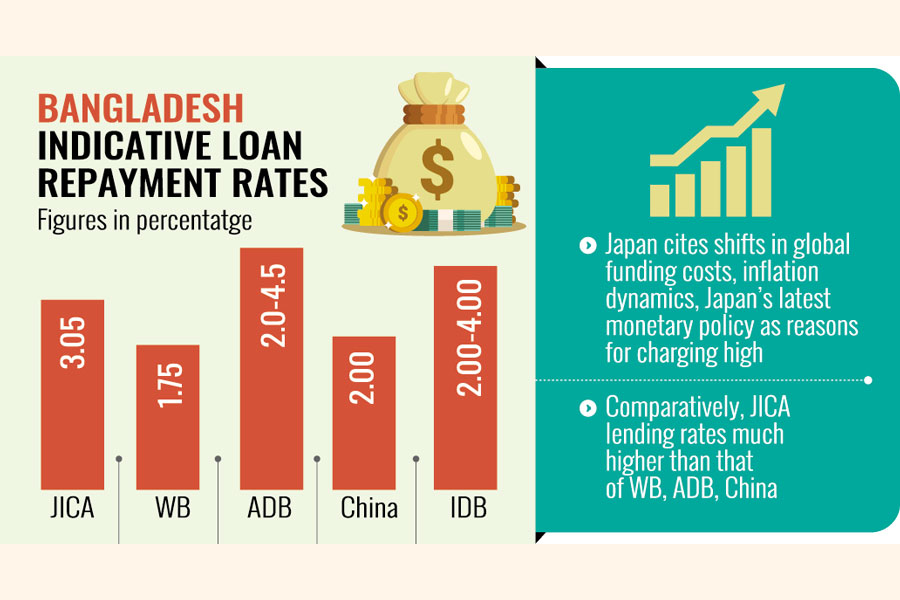
‘Bangladesh sought Japanese technology and financing in the field of green energy. Dhaka also raised concerns over the high interest rates on Japanese loans, the official said.

According to the official, Japan acknowledged that its lending rates were relatively high but explained that the rates were not specific to Bangladesh and applied more broadly.

Defence cooperation also featured prominently in the discussions, with Dhaka seeking greater access to Japanese defence equipment under Tokyo’s Official Security Assistance framework.

‘Bangladesh asked whether it could seek defence equipment according to its needs under the OSA framework. Japan gave a positive indication,’ the foreign ministry official said.

The development follows Japan’s recent handover of five patrol boats to the Bangladesh Navy under the OSA framework, the official added.

The two sides also exchanged views on Japan’s vision of a Free and Open Indo-Pacific and reaffirmed continued cooperation under the economic partnership agreement, the BIG-B Initiative and the OSA framework.

According to the foreign ministry press release, the seventh Bangladesh-Japan FOC provided an opportunity for both sides to review and advance cooperation across a broad range of areas.

Dhaka acknowledged Japan’s long-standing support for Bangladesh’s development through the BIG-B Initiative, including major projects such as the Matarbari Deep Sea Port and Power Project, Dhaka Metro Rail and the Third Terminal of Hazrat Shahjalal International Airport.

Bangladesh also sought Japan’s continued support for expanding bilateral trade and investment and promoting renewable energy and sustainable development.

The Rohingya crisis was also discussed during the consultations, alongside the export of skilled manpower to Japan, educational and cultural exchanges, and greater engagement between civil society organisations of the two countries. The two sides also exchanged views on regional and global issues of mutual interest.

The Bangladesh delegation was led by foreign secretary Asad Alam Siam, while Namazu led the Japanese delegation.​
 
Analyze

Analyze Post

Add your ideas here:
Highlight Cite Respond

From a trusted partner to a growth partner: The next chapter of Bangladesh–Japan economic relations
Bangladesh must convert Japan’s confidence into investment through faster decisions, policy continuity and world-class execution.

Tareq Rafi Bhuiyan Jun

1787700302431.webp

Tareq Rafi Bhuiyan Jun, President, Japan–Bangladesh Chamber of Commerce and Industry (JBCCI).


Japan’s role in Bangladesh goes far beyond that of a development partner. It is one of our most trusted, tested and long-standing friends. Since our independence, Japanese cooperation in infrastructure, power, transport, healthcare, education and human-resource development has become woven into the everyday lives of Bangladeshis. From the Jamuna Bridge to the Dhaka Metro Rail, many landmark national achievements bear the imprint of Japanese financing, technology, discipline and commitment to quality. The greatest asset in this relationship, however, is not the amount of money involved. It is mutual trust.

The global economy is now changing rapidly. Supply chains are being reorganised, Japanese companies are seeking new production bases and consumer markets, and Bangladesh is approaching its graduation from least developed country status. The Bangladesh–Japan Economic Partnership Agreement, signed in February 2026, is therefore much more than a trade agreement. It is a historic opportunity to elevate the relationship from one centred largely on development cooperation to a broader partnership in trade, investment, technology and joint production. The question is whether Bangladesh can align the speed of its decisions and implementation with the scale of this opportunity.

Approximately 350 Japanese companies are now operating in Bangladesh, and the number is gradually increasing. Their presence is expanding beyond garments and textiles into motorcycles and automobiles, electronics, healthcare, consumer products, chemicals, information technology, logistics and infrastructure. Japanese investment has a distinctive value. Japanese companies generally take a long-term view, train local employees, prioritise safety, quality and environmental responsibility, and help develop local suppliers. A Japanese factory brings more than capital; it introduces new standards of work, transfers knowledge and strengthens access to global markets.

Japanese infrastructure proposals may sometimes appear more expensive at the initial construction stage. But national infrastructure should not be judged only by the lowest quoted price; its cost and benefits must be assessed across the entire life cycle. Timely and dependable delivery, durable construction, high safety standards, lower maintenance requirements, advanced technology, and the transfer of knowledge to local engineers and companies can substantially outweigh an initial price difference. Bangladesh should therefore evaluate major projects not only by the ‘lowest upfront cost’ but also by the ‘highest lifecycle value’.

The Bangladesh Special Economic Zone at Araihazar is a visible symbol of this potential. It should not be treated merely as a land-allocation project. If uninterrupted utilities, effective waste management, efficient customs, skilled workers, quality housing and reliable road and port connectivity are ensured, it can become an exemplary industrial base for Japanese and other international manufacturers. The success of its first investors will be Bangladesh’s most persuasive advertisement to the next hundred companies.

From my years of working closely with Japanese businesses, I see genuine interest in Bangladesh. Our young population, expanding consumer market, competitive workforce and strategic location on the Bay of Bengal are compelling advantages. Yet a gap remains between interest and investment. That gap is primarily about policy predictability, the speed of decisions and coordination in implementation.

Japanese companies are generally reluctant to complain publicly. They wait patiently, collect information and assess risk. But indefinite delays in licences and approvals, inconsistent interpretations of tax and customs rules, sudden policy changes, difficulties involving foreign exchange and profit repatriation, uncertainty over contractual continuity, and weak coordination among agencies can slow investment decisions. Identifying these concerns is not criticism of Bangladesh; it is a practical reform agenda. A country that values an investor’s time will ultimately be valued more highly by investors.

Our ‘one-stop service’ must therefore become more than a website or an application counter. Each investor should have a responsible case manager, every approval should have a clear deadline, silence should be replaced by written decisions, and unresolved matters should have an effective escalation route. Solving the problems of existing investors—investor aftercare—is as important as attracting new ones. A satisfied Japanese company is Bangladesh’s most credible ambassador in Japan.

At this moment, three projects deserve the highest national priority: Matarbari Deep Sea Port, Dhaka’s expanding metro rail network, and the third terminal of Hazrat Shahjalal International Airport. These are not three separate construction projects. Together, they form the infrastructure backbone of Bangladesh’s future competitiveness. Matarbari will be our maritime gateway, Terminal 3 our aviation gateway, and the metro network the mobility and productivity backbone of the capital.

Matarbari can fundamentally transform Bangladesh’s logistics system. If large ocean-going vessels can call directly, dependence on transshipment through regional ports and on smaller feeder vessels will decline. This can significantly reduce both the time and cost of moving imports and exports. Garments and emerging export sectors will become more competitive, industrial raw materials can arrive more quickly, and Bangladesh can position itself as an important node in regional supply chains.

But constructing the port is not enough. Timely road and rail links, modern customs, a digital port community system, efficient operations, and planned industrial and logistics zones must be developed in parallel. Operational readiness from the first day—not merely the date of inauguration—will determine the port’s success. Matarbari should be seen not as a project in Cox’s Bazar, but as a transformation project for Bangladesh’s trade and industrial competitiveness.

Dhaka’s first metro line has already demonstrated how the right project can change people’s behaviour, their sense of time and their expectations of a city. MRT Line 6 is visible evidence of what Bangladesh can achieve with Japan. However, unresolved issues involving cost, procurement and implementation methods in MRT Line 1 and MRT Line 5 could cause serious delays. Prolonged uncertainty would increase both time and cost and could weaken confidence among the partners.

The priority should not be blame, but resolution. An empowered joint task force comprising Bangladeshi and Japanese policymakers, financing agencies, implementing authorities and technical experts should be mandated to reach a time-bound solution that balances realistic costs, competition, safety, technology and the conditions of the financing agreements. Every month of delay has an economic cost, and that cost must be visible in the decision-making process.

Terminal 3 can become the new international face of Bangladesh. Once a world-class building has been constructed, the most important task is to ensure world-class operations. Operational readiness, security, passenger service, baggage and ground handling, cargo management, cleanliness, technology and clear lines of responsibility must be tested well before opening. Bangladesh needs an arrangement that combines experienced international operators with local partners and ensures genuine knowledge transfer, so that passengers and airlines receive a reliable experience from the first day. An airport does more than process travellers; it sends an investor the first message about a country’s capacity and culture.

Bangladesh should consider establishing a high-level Japan–Bangladesh Flagship Project Delivery Council for these three initiatives. It should not become another bureaucratic layer. It should be a small, empowered platform designed to remove decision bottlenecks. A concise monthly dashboard should place milestones, risks, required decisions and accountable agencies before the national leadership. Making problems visible early—rather than concealing them—is how major projects save both time and money.

Several additional policy measures could produce rapid improvements in the business environment. First, Bangladesh needs an empowered Japan Investment Fast Track linking BIDA, BEZA, the National Board of Revenue, Bangladesh Bank and the relevant ministries. Second, significant tax, customs and investment-policy changes should be preceded by consultation, a reasonable transition period and protection of the legitimate rights of existing investors.

Third, commercial disputes and government-contract issues require a fast, impartial and time-bound resolution mechanism. Fourth, a dedicated EPA implementation cell should coordinate product standards, rules of origin, customs, trade in services and exporter preparedness. Fifth, Bangladesh must position itself not merely as a low-cost labour destination, but as a skills and technology partner.

Joint training centres can be developed for Japanese language, kaizen, industrial safety, mechatronics, welding, cold-chain management, healthcare, information technology and middle management. Universities and technical institutions need long-term partnerships with Japanese companies. Qualified Bangladeshi SMEs should also receive support to meet standards, obtain certification and financing, and enter the supply chains of Japanese corporations. This would multiply the local economic impact of every investment.

Our diplomatic relationship with Japan is exceptionally warm. Our economic management should rise to the same standard. In Japanese business culture, trust takes time to build, but once established it can sustain a relationship for decades. Conversely, when uncertainty persists, Japanese companies may quietly choose another destination without making public complaints. Competition is therefore not only about incentives; it is about credible execution. Vietnam, India, Indonesia and other economies are moving quickly to attract Japanese investment. Bangladesh must convert its own strengths into speed of decision and reliability of implementation.

For decades, Japan has shared financing, technology and knowledge with Bangladesh. The time has come to build a partnership in which Bangladesh also offers Japan a dependable production base, a large consumer market, capable young people, regional connectivity and opportunities for joint innovation. Our objective should not be merely to attract a few more Japanese companies. It should be to build the next phase of Bangladesh’s industrialisation with them.

The vessels calling at Matarbari, the aircraft arriving at Terminal 3, and the metro rail running through Dhaka can together tell the story of a new Bangladesh—a country that plans carefully, decides on time, upholds global standards and values long-term partners. The foundation of Bangladesh–Japan relations is already strong. What it needs now is speed. If we can provide that, Japan will remain not only one of Bangladesh’s foremost development partners, but can also become one of the principal partners in our industrialisation, export diversification and rise within the Asian economy.

* Tareq Rafi Bhuiyan is the president of the Japan–Bangladesh Chamber of Commerce and Industry (JBCCI) and managing director of NewVision Solutions Limited.​
 
Analyze

Analyze Post

Add your ideas here:
Highlight Cite Respond

Latest Posts

Back
 
G
O
 
H
O
M
E