Home Watch Videos Wars Movies Login

[🇧🇩] Telecommunication Industry in Bangladesh

[🇧🇩] Telecommunication Industry in Bangladesh
92
6K
More threads by Saif

G Bangladesh Defense

Govt has no plan to sell Teletalk, steps underway to upgrade services: Minister
1783900744734.webp


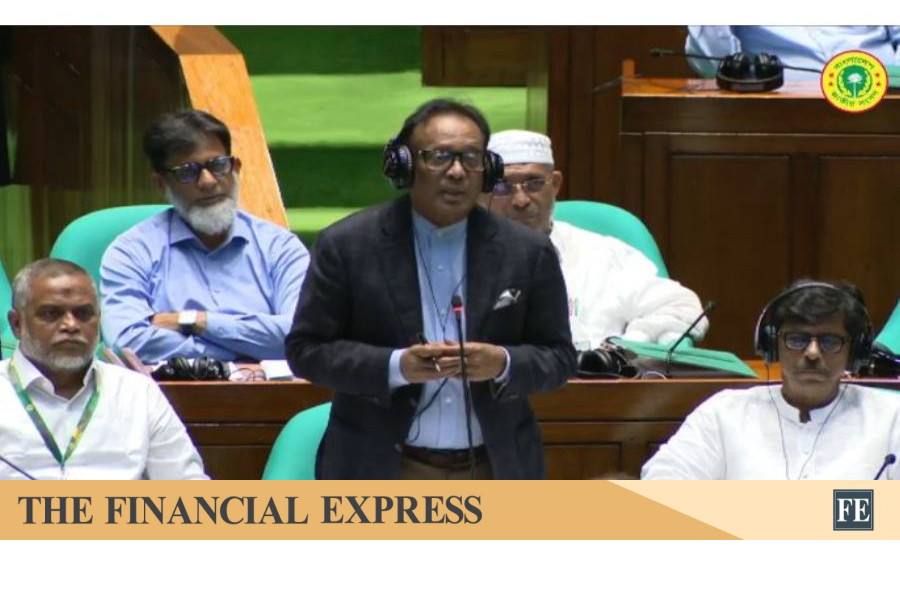
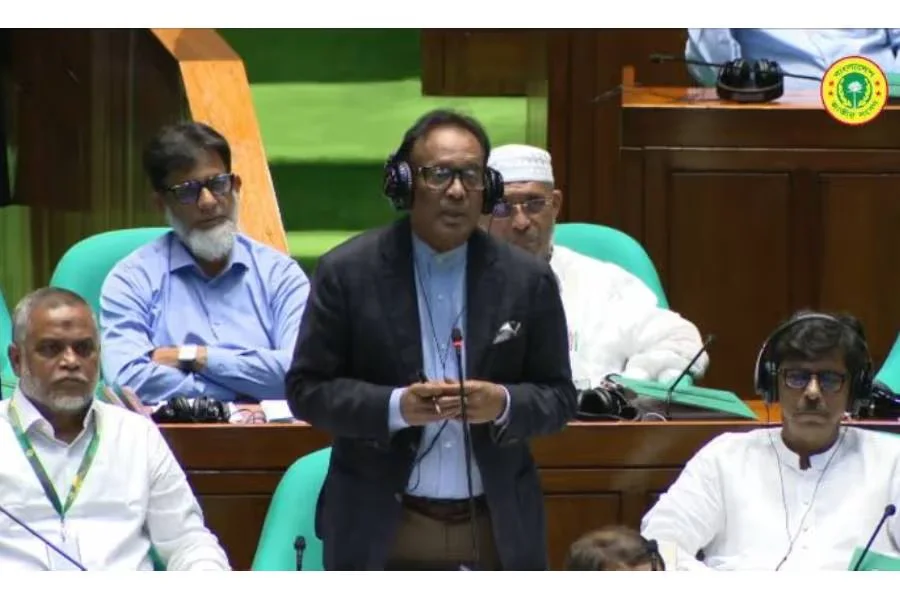
Posts, Telecommunications and Information Technology Minister Faqir Mahbub Anam on Sunday said the government has no plan to sell the state-owned mobile operator Teletalk, stressing that the company must remain under government ownership to ensure healthy competition in the country’s telecom market.

Replying to a supplementary question from BNP lawmaker in reserve seats Sanjida Yasmin during the question-answer session in the Jatiya Sangsad, the minister said initiatives are underway to expand Teletalk’s network and improve its service quality through government and foreign financing.

The House, presided over by Speaker Hafiz Uddin Ahmad, Bir Bikram, was informed that four mobile operators—Teletalk, Grameenphone, Robi and Banglalink—are currently operating in the country.

The minister said Teletalk requires more mobile towers to enhance its network coverage and service quality, which demands substantial investment.

“We must keep Teletalk in the market. It has to remain under government ownership,” he said, adding that without the state-run operator, private mobile companies might increase service charges at their discretion.

Responding to a question from reserved seat lawmaker Nadia Pathan Papon, the minister said the government is looking into the matter about the expiry of unused mobile data after seven-day or 15-day internet packages.

He said the Bangladesh Telecommunication Regulatory Commission (BTRC) has already held several rounds of discussions with mobile operators on the issue, but the operators have cited their business policies in support of the existing system.

The minister also said discussions have been held with mobile operators regarding call drops and assured the House that pressure on the operators would continue to safeguard consumers’ interests.

Replying to a question from Jashore-6 lawmaker Moktar Ali, the minister said work is underway to provide 109,004 broadband internet connections across the country under the Digital Connectivity Establishment Project.

He said broadband connectivity has already been provided to 57,000 institutions, including colleges affiliated with the National University, secondary and higher secondary schools, government primary schools, madrasas, technical educational institutions, community clinics, land offices and district courts.

The minister also said the government is planning to introduce expatriate help desks at Digital Centres to facilitate services for overseas Bangladeshis and make remittance transactions easier.

In reply to a question from Sherpur-1 lawmaker Rashedul Islam Rashed, he said the government would coordinate with Teletalk and other operators to improve network coverage in areas where mobile connectivity remains unavailable, provided specific information about those locations is supplied.

Participating in the discussion, Sylhet-5 lawmaker Abul Hasan said mobile network coverage remains extremely poor in the border areas of Zakiganj and Kanaighat.

In response, the minister said necessary measures, including the installation of additional towers, would be considered after receiving detailed information about the affected areas.

In a supplementary question, Lakshmipur-1 lawmaker Shahadat Hossain Selim said many post offices in his constituency have become dilapidated, while some have turned into places for drug addicts and miscreants.

The minister said there are more than 9,000 post offices across the country and most of them are in poor condition. Since renovating all of them simultaneously is not feasible, the government is carrying out renovation work in phases.

Replying to a question from Patuakhali-2 lawmaker Shafiqul Islam, the minister said the government is working to engage young people in artificial intelligence, freelancing and other internet-based professions to help protect them from harmful online activities.

He said training centres are being established at the upazila level to enhance the skills of young people and make them self-reliant. “Training has already started in several upazilas and will gradually be expanded to the remaining ones,”

In reply to a question from Naogaon-5 lawmaker Zahidul Islam Dholu, the minister said technology-neutral licenses have already been issued to mobile operators to facilitate nationwide expansion of 5G services.

He said spectrum in the 2.3 GHz and 2.6 GHz bands has already been allocated for 5G deployment, while a new spectrum in the 3.5 GHz band will be released in 2027.

Replying to a question from Chandpur-4 lawmaker Abdul Hannan, the minister said the Department of Information and Communication Technology has undertaken a five-year programme to train people as freelancers across the country.

He added that identity cards will also be issued to 200,000 freelancers.​
 
Analyze

Analyze Post

Add your ideas here:
Highlight Cite Respond
  • Like (+1)
Reactions: Bilal9

BTRC fines four mobile operators Tk 8.68cr

Using SIMs for VoIP link alleged

Staff Correspondent 27 July, 2026, 01:15

1785110250163.webp


Bangladesh Telecommunication Regulatory Commission has fined four mobile phone operators a combined Tk 8.68 crore after identifying 8,682 SIM cards that were allegedly used for illegal international call termination through Voice over Internet Protocol, intensifying the regulator’s ongoing crackdown on unauthorised telecom activities.

In separate notices issued on July 21 under the Bangladesh Telecommunication Regulation Act, 2001, the telecom regulator directed Grameenphone, Robi Axiata, Banglalink and state-owned Teletalk to pay the fines within 10 days of receiving the orders and submit documentary proof of payment.

The BTRC warned that failure to comply would invite further action under the telecommunications law and other applicable regulations.

According to the regulator, the penalties were imposed at the rate of Tk 10,000 for each SIM card found to have been used in illegal VoIP operations.

Robi Axiata received the highest penalty of Tk 5.93 crore for 5,935 SIM cards, followed by Banglalink with Tk 1.88 crore for 1,882 SIMs.

Teletalk was fined Tk 68.10 lakh for 681 SIM cards, while Grameenphone received the lowest penalty of Tk 18.40 lakh for 184 SIMs.

A BTRC official, speaking to New Age on condition of anonymity, said the SIM cards were seized during joint enforcement operations conducted by the National Telecommunication Monitoring Centre.

‘These operations are carried out jointly with the NTMC. During on-site inspections, we seize SIM cards being used for illegal VoIP activities in Cumilla and Chattogram,’ the official said.

The official said the law provides for a penalty of Tk 10,000 for every SIM card found to be involved in illegal VoIP operations, and the fines were calculated accordingly.

The raids are part of a continuing enforcement programme based on intelligence and information received from different sources, the official said.

Responding to questions over repeated violations by mobile operators, the official said the commission was following the due process prescribed under existing laws and licence conditions.

‘The operators have been instructed to pay the fines within 10 days. They will have the opportunity to submit their explanations, including any technical measures they had in place to prevent illegal call termination. The commission will assess those explanations before taking a final decision,’ the official said.

The BTRC official maintained that preventing illegal VoIP was a mandatory licensing obligation for all mobile operators and that penalties would continue whenever operators failed to prevent such misuse.

Robi Axiata, however, questioned the basis of the penalty.

Shahed Alam, chief corporate and regulatory officer of Robi Axiata PLC, said the company had not yet received any official notice from the BTRC and that media reports did not accurately reflect the actual situation.

‘Our preliminary review indicates that more than 95 per cent of the SIMs referred to had already been disconnected from the network long ago through Robi’s self-regulatory barring mechanism,’ he said.

He argued that merely finding barred SIM cards at alleged VoIP sites did not establish any regulatory breach by the operator and said any assessment should be based on verified evidence and proper technical analysis.

Shahed also said Robi remained firmly committed to preventing illegal VoIP activities and operated in full compliance with the regulator’s rules and guidelines.

Meanwhile, Bangladesh Mobile Phone Consumers’ Association president Mohiuddin Ahmed said the fines alone were insufficient and called for identifying those directly responsible for operating the illegal networks.

‘If thousands of SIM cards were used in illegal VoIP operations over a long period, this is not merely a licensing violation. It raises serious concerns over government revenue, national security and regulatory oversight,’ he said.

He called for an independent investigation involving the BTRC, NTMC, law enforcement agencies and the Anti-Corruption Commission to identify the individuals and networks behind the illegal operations, determine the extent of revenue losses and strengthen regulatory accountability.

While VoIP itself is a legitimate technology for transmitting voice calls over the internet, illegal operators bypass authorised international gateways by routing overseas calls into Bangladesh through SIM boxes loaded with local SIM cards.

The calls appear as domestic mobile calls, enabling operators to evade international termination charges and taxes, causing significant revenue losses to the government.​
 
Analyze

Analyze Post

Add your ideas here:
Highlight Cite Respond

Global AI demand surge puts dent in local handset production
Sojib Miah 10 August, 2026, 00:46

1786321017345.webp


Bangladesh’s local mobile handset industry is facing mounting pressure as surging global demand for artificial intelligence-related hardware pushes up memory chip prices and tightens supplies, forcing local manufacturers to scale back smartphone production despite continued demand on the domestic market.

Industry insiders said that the latest slowdown was largely a result of global supply constraints, rather than weaknesses in Bangladesh’s manufacturing capacity.

Rising component costs, inflation, higher operating expenses and cautious consumer spending have also prompted manufacturers to reduce production of 4G and 5G handsets.

Data from the Bangladesh Telecommunication Regulatory Commission showed that locally assembled handsets fell to 16.29 lakh units in June 2026, down 24.1 per cent from the 21.47 lakh units assembled in July 2025.

The decline was mainly driven by smartphones. Production of 5G handsets fell 45.1 per cent to 0.28 lakh units, while 4G smartphone production dropped 37.7 per cent to 4.73 lakh units.

Feature phone production also fell 15.6 per cent to 11.29 lakh units in June.

Despite the decline, feature phones accounted for nearly 70 per cent of total locally assembled handsets, while smartphones made up only about 30 per cent.

In July 2025, feature phones accounted for 62.63 per cent of local production, compared with 37.37 per cent for smartphones.

The contraction in Bangladesh mirrors a growing stress on the global smartphone market.

Reuters reported that global smartphone shipments are expected to fall 13.9 per cent this year to 1.08 billion units, marking the largest annual decline on record.

The downgrade has been linked to worsening memory chip shortages, geopolitical tensions and chipmakers’ growing focus on AI-related hardware.

Samsung has warned that global memory shortages could persist until 2028, underscoring the widening gap between AI-driven demand and consumer electronics requirements.

Xiaomi Bangladesh country manager Ziauddin Chowdhury told New Age that the fall in local production was primarily caused by higher global component prices rather than weak domestic demand.

‘This isn’t really a local issue. It is being driven by global factors, particularly rising chip prices,’ he said.

According to him, memory prices have been increasing by 10 to 15 per cent every quarter, raising the cost of integrated components and making manufacturers more cautious about production planning.

Some companies, he said, had deliberately slowed production while waiting for global component prices to stabilise.

Ziauddin, however, did not expect the production decline to trigger a major resurgence of Bangladesh’s grey market, arguing that memory costs had risen worldwide.

He said that recently announced fiscal measures, once fully implemented, would help create a more competitive market by reducing opportunities for excessive profit-taking.

Explaining the dominance of feature phones in local production, Ziauddin said that smartphone manufacturing costs had risen sharply over the past six months. Modern Android operating systems require substantially more memory than before, making low-cost smartphones increasingly difficult to manufacture profitably, he added.

‘Earlier this year, memory accounted for only about 15 to 20 per cent of the cost of a 4GB/64GB smartphone. Now it represents around 55 to 60 per cent of the total production cost,’ he said.

He attributed the increase to booming global investment in AI technologies.

Major memory manufacturers are prioritising high-bandwidth memory and enterprise-grade chips used in AI data centres because those products offer higher returns than conventional smartphone memory, he said.

‘Companies developing AI services earn recurring revenue from those chips, while handset manufacturers receive only one-time revenue from device sales. Naturally, suppliers are allocating more capacity to AI-related products,’ he said.

Despite the short-term slowdown, Ziauddin remained optimistic about the industry’s long-term prospects.

He said that smartphone demand would continue to grow as AI-powered services become increasingly integrated into everyday life.

Manufacturers, he added, were likely to offer more promotions, instalment facilities and affordability programmes to stimulate demand once supply conditions improve.

HONOR Bangladesh business head Abdullah Al Mamun said that the production decline reflected a combination of global and domestic economic pressures rather than any deterioration in Bangladesh’s manufacturing capability.

He said that higher chipset and memory prices, rising energy and logistics costs linked to geopolitical conflicts, inflation, cautious consumer spending and temporary business uncertainty had all weighed on production.

Mamun said that consumers had become increasingly price-sensitive, extending replacement cycles or choosing lower-priced and second-hand devices. Taxation and duty structures also continued to influence the economics of local manufacturing, he said.

He warned that the expanding grey market remained a concern because unofficial devices bypass taxes and regulatory requirements, creating unfair competition for legitimate manufacturers investing in local assembly and after-sales services.

Mamun called for stronger enforcement of the National Equipment Identity Register, continued incentives for 4G and 5G handset manufacturing, lower tax burdens, greater localisation of components and a stable long-term policy environment.

He said that Bangladesh had already established a solid foundation for handset production and could emerge as a competitive regional electronics manufacturing hub with consistent policy support, improved investment conditions and stronger collaboration among the government, industry and academia, despite current global market volatility over time.​
 
Analyze

Analyze Post

Add your ideas here:
Highlight Cite Respond

Mobile users complain of high call rates, poor network

Expiring unused data, SMS delays among issues raised at BTRC hearing

Star Business Report

1787182305034.webp


Mobile phone users at a public hearing yesterday raised concerns about high call rates, weak network coverage, data expiry and carry-forward facilities, SMS delays and mobile network disruptions during power outages.

The Bangladesh Telecommunication Regulatory Commission (BTRC) held the hearing, titled “Telecommunication Services and Regulatory Agency Activities”, at its headquarters at Agargaon in the capital. A total of 2,990 customers registered online to participate in the hearing. They included 1,047 professionals, 638 students and 172 women.

At the hearing, Rakib Raihan, a customer from Jamalpur, asked whether mobile operators would reduce call rates and whether state-owned operator Teletalk would expand its network in rural areas.

The BTRC said the current tariff for voice calls, set by the commission, ranges from Tk 0.45 to Tk 2. It said the process is underway to reduce the floor price of voice calls.

On Teletalk’s network expansion, Brig Gen Shafiul Azam Parvez, director general of the BTRC’s Engineering and Operations Department, said the state-owned operator is fulfilling its nationwide network rollout obligations through various projects.

From Gazipur, Towhid Hasan complained that customers receive many SMS messages without sender identification, making it difficult to tell whether a message is spam or genuine. He also said foreign OTP messages are sometimes delayed.

The BTRC said work was underway to gradually ensure that all SMS messages clearly identify their senders. It said delays in receiving foreign OTP messages could be caused by technical problems.

Another customer, Fuad Hasan Khan, asked about data carry-forward and radiation from mobile towers.

On radiation, the BTRC’s Engineering and Operations Department said it regularly measures electromagnetic field radiation from mobile towers in different parts of the country. The measurements showed that radiation levels are well below prescribed international and national safety standards.

Therefore, it said, the existing level of radiation is not harmful to the environment or public health.

On data carry-forward, the BTRC’s Systems and Services Department said data packages are not similar to ordinary consumable goods or services covered by warranties or guarantees.

It said data carry-forward is essentially a subscription-based service, with prices depending on the services included in a package. If a customer renews the same data package within the specified period, unused data from the previous package is carried forward to the next validity period.

The BTRC also said operators send customers reminders or notifications before their data validity expires.

Another customer, Anwar Sadat, complained that mobile operators sell separate bandwidth for different platforms. He also said mobile networks often do not remain operational during power outages.

The BTRC said operators offer internet access and access to various OTT platforms through different data packages to meet varying customer needs. To ensure transparency, the commission has already instructed operators to clearly state the facilities, conditions and limitations included in each package.

Regarding network disruptions during power outages, the BTRC said it has developed a platform to monitor the condition of mobile networks across the country.

The platform can identify which mobile towers are operational or not, as well as the location and time of any disruption. The BTRC said it uses the platform to monitor network conditions and issue instructions to mobile operators to keep services running.

The commission said customers can lodge complaints through its call centre on 100, the Grievance Redress System (GRS) and the BTRC’s web box.

Anyone can also submit questions or complaints in writing under the Right to Information Act.

From July 2025 to June 2026, the BTRC received 13,009 complaints. Of these, 11,279 complaints, or 86 percent, were resolved during the period.

Google News LinkFor all latest news, follow The Daily Star's Google News channel.
The commission said it is not fully satisfied with the current rate of complaint resolution and is working to resolve 100 percent of customer complaints quickly and effectively.

The BTRC said it has issued guidelines on quality of service and its methodology. Besides, the commission has developed a benchmark in line with international telecommunications guidelines. It would publish monthly quality of service data on its website soon.

The hearing was chaired by Mahmud Hossain, commissioner of the BTRC’s Spectrum Division, while Brig Gen Shahzad Pervez Mohiuddin, director general of the Systems and Services Department, moderated the session.

Brig Gen Mohiuddin said customers have raised 1,756 questions, opinions and complaints at the 2025 public hearing on service quality, high prices, weak network coverage, transparency and SIM management, among other issues. The highest number of complaints concerned tariffs, data validity, data carry-forward, network coverage, SIM registration, the National Equipment Identity Register (NEIR), licensing and service quality.​
 
Analyze

Analyze Post

Add your ideas here:
Highlight Cite Respond

5G-ready handsets gain ground as users upgrade

Mahmudul Hasan

1787701474419.webp


The share of 5G-enabled handsets on Bangladesh’s three major mobile networks rose from 5.74 percent in August 2025 to 8.29 percent in July 2026, showing that consumers are steadily moving towards next-generation smartphones despite limited 5G availability.

Grameenphone, Robi and Banglalink had a combined 14.68 million 5G-capable handsets on their networks in July, up 45.6 percent, or nearly 4.6 million, from 10.08 million in August last year, according to Bangladesh Telecommunication Regulatory Commission (BTRC) data compiled from the operators.

The growth far exceeded the 0.7 percent increase in total handsets, which rose from 175.75 million to 177.02 million over the 11 months. This suggests that most of the growth in 5G devices came from consumers replacing older phones rather than from a significant increase in the overall number of handsets.

However, the figures do not represent unique physical devices. Operators count handsets separately on their networks, meaning the same phone may be counted more than once if it uses SIM cards from different operators. Industry people said many users keep multiple SIMs for better call rates, data offers and network coverage.

Smartphones, including 3G, 4G and 5G devices, accounted for 65.15 percent of handsets in July, up from 62.68 percent in August last year. The share of feature phones fell from 37.32 percent to 34.85 percent.

Globally, 5G adoption is accelerating, with subscriptions reaching 3.1 billion in the first quarter of 2026, according to Ericsson. Bangladesh remains far behind mature 5G markets, but the rising number of compatible devices indicates that consumers are preparing for wider adoption.

Of Bangladesh’s four mobile operators, only Robi and Grameenphone commercially launched 5G on September 1, 2025. Neither has disclosed the number of customers using 5G or the number of sites upgraded for the technology.

ROBI LEADS IN 5G READINESS

Grameenphone had the largest number of 5G-capable handsets, at 6.19 million in July, up 44.3 percent from 4.29 million in August last year.

Tanveer Mohammad, chief corporate affairs officer of Grameenphone, said the operator has launched 5G services across all divisional headquarters, but “the wider 5G ecosystem in Bangladesh -- including device availability, practical use cases and industry readiness -- is still developing.”

He said a stronger and more reliable 4G network would help drive 5G demand. Grameenphone has also started deploying its 700 MHz spectrum to improve network quality, indoor coverage and nationwide reach.

“Looking ahead, we see significant potential for 5G not only in consumer services but also in enterprise and industrial applications,” he said, adding that the company would expand coverage as the ecosystem and demand grow.

Robi, meanwhile, had the highest share of 5G-capable handsets. It had 5.74 million such devices in July, up 46.9 percent from 3.91 million 11 months earlier, the fastest growth among the three operators.

As a result, 10.06 percent of Robi’s handsets were 5G-capable, compared with 7.53 percent at Grameenphone and 7.29 percent at Banglalink.

Shahed Alam, chief corporate and regulatory affairs officer of Robi Axiata, said Robi is carrying the highest volume of 5G traffic in the market as more customers adopt 5G devices.

“We aim to provide 5G coverage wherever there is sufficient demand and a meaningful number of 5G-enabled devices connected to our network. In many locations, we already have blanket 5G coverage, with speeds exceeding 100 Mbps,” he said.

Shahed said Robi’s focus was not simply on expanding coverage but on developing practical uses for 5G beyond social media and video streaming.

“We believe the real value of 5G lies in developing meaningful use cases beyond simply browsing social media or streaming videos,” he said, adding that the technology could create new digital experiences, businesses and services for consumers and the economy.

He also said Robi wants local innovators, developers and entrepreneurs to use 5G to develop solutions for local needs, creating an ecosystem where 5G is “not just a faster network, but a platform for innovation and new possibilities.”

Banglalink had 2.75 million 5G-capable handsets in July, up 46.1 percent from 1.88 million in August last year.

Google News LinkFor all latest news, follow The Daily Star's Google News channel.
Taimur Rahman, chief corporate and regulatory affairs officer of Banglalink, said the operator would consider launching 5G if spectrum prices are significantly reduced during the renewal process in November.

He said a successful rollout would also require lower spectrum prices, investor-friendly policies and regulations, and greater network sharing.

“Bangladesh cannot sustain some of the world’s highest spectrum prices and telecom taxes while having one of the world’s lowest ARPUs (average revenue per user),” he said.

“As 5G deployment requires significant investment, these issues must be addressed to ensure quality and affordability,” he added.

Banglalink plans to launch 5G initially in areas with high demand and a large concentration of 5G-capable devices. It also plans to explore enterprise solutions based on the technology as part of its initial rollout strategy.​
 
Analyze

Analyze Post

Add your ideas here:
Highlight Cite Respond

Latest Posts

Back
 
G
O
 
H
O
M
E