Home Login Watch Videos Wars

[🇧🇩] City Buses, Metro Rail, Urban Transport & City Road Infra

[🇧🇩] City Buses, Metro Rail, Urban Transport & City Road Infra
143
9K
More threads by Bilal9

G Bangladesh Defense

Do women need the separate metro rail carriage?​


1709940647458.webp

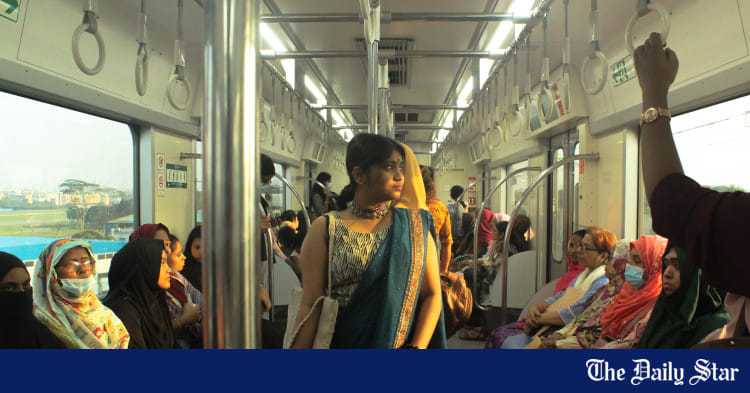
While the reasons behind having a women-only compartment might seem obvious to most, the existence of this seemingly magical compartment remains shrouded in mystery for some others. FILE PHOTO: PRABIR DAS

On February 20, Facebook was flooded with posts about how unbelievably crowded a metro rail platform was that day. One post in particular gained viral attention, narrating how hordes of men flooded into the women's compartment during the crowded commute and refused to leave. The writer of the post took pleasure in sharing that, in response, the women in the compartment rallied together, blocking the gates during stops to teach the men a lesson. She enthusiastically described the wholesome sense of girl power and unity that pervaded the compartment that day. This viral post triggered hundreds of other discussions, primarily centred around the question: why is there a separate women's compartment? And what purpose does it serve? Certain metro rail commuters thought it was unfair that women get to have a separate compartment even during peak hours, when men don't.

While the reasons behind having a women-only compartment might seem obvious to most, the existence of this seemingly magical compartment remains shrouded in mystery for some others. Before delving into that, let's take a closer look at what unfolded that day. According to multiple accounts, the metro rail platform was exceptionally crowded due to a delayed train. In a last-minute announcement, it was specified that the very last compartment was designated for women when usually it is the first compartment.
In Bangladesh, as per a 2018 research study by BRAC, a staggering 94 percent of women utilising public transportation reported instances of verbal, physical, and other forms of harassment. The severity and prevalence of sexual harassment in public spaces is one of the key deterrents to women's equal participation in higher education and the labour force.​

Initially, one might assume that the overcrowded setting led to confusion, with men inadvertently entering the women's carriage. However, as the train reached less crowded stations, and uncomfortable women (alongside the guards) requested the men to disembark or shift to other carriages, they adamantly refused to comply. The women in the compartment then resorted to blocking the gates and subsequently prevented the men from getting off at their stations. From that point onward, discussions unfolded regarding the perceived severity of the treatment these women imparted to the men that day. Some voiced their discontent, arguing that if the roles were reversed, men would not subject women to similar treatment. This debate eventually led to questioning the purpose of having a separate women's compartment.

In the online discourse, the separate compartment was painted as a privilege, prompting people to question why women, who are currently striving for equality, would desire such "special treatment." The conversation then expanded to include the debate about the need for designated seats for women on buses as well. Some argued that, in the past, men used to willingly offer their seats to women during crowded commutes, but this practice has dwindled as women now perceive themselves as equals to men.

But Bangladesh is not the only country to employ designated women's compartments in metro trains. In countries such as India, Indonesia, Japan, and Mexico, there are women-only spaces in trains. Countries such as the UAE have also taken initiatives to introduce pink taxis driven by women for female passengers in several cities. Some countries, such as Malaysia, also introduced women-only buses.

Creating these safe spaces for women is not restricted to public transport. One can find women-only community centres, banks, and clinics. "Safe space" is the keyword here as these places were not constructed to give women a leg up or provide them with an added privilege. What do the countries providing separate commuting spaces to women have in common? Women in all these countries face severe sexual harassment in public spaces and are victims of institutional discrimination.

In Bangladesh, as per a 2018 research study by BRAC, a staggering 94 percent of women utilising public transportation reported instances of verbal, physical, and other forms of harassment. The severity and prevalence of sexual harassment in public spaces is one of the key deterrents to women's equal participation in higher education and the labour force. In Bangladesh, buses have for long designated seats for women at the front, not with the assumption that women are less capable of standing but because standing in these crowded buses makes them more vulnerable to sexual harassment. Even then, these reserved seats are frequently disregarded by male passengers with little to no retaliation from other passengers. And, unfortunately, even with these designated spaces in place, women were found to be vulnerable to sexual harassment in buses predominantly occupied by men.

This is why when the Dhaka metro rail was inaugurated, and it was announced that a whole carriage would be reserved for women, relief seemed to spread among female commuters. Reports of women who typically relied on Uber rides or CNG-run auto-rickshaws for added safety now opting for the metro rail were common. However, the allure of this dedicated space is slightly diminished due to improper enforcement, as men continue to breach the designated compartment.

Access to safe public transportation and simply being in public without the fear of harassment constitute a fundamental human right, often denied to women in Bangladesh. In this context, the women-only compartment on the metro rail serves as a sanctuary, offering women a sense of security. Those who might have refrained from travelling due to fear of harassment now find solace in this designated "safe space." It's not an added privilege, but a necessity for ensuring women's basic rights.

So, let's ask ourselves this question: in 2024, do women still need a separate compartment on the Dhaka metro rail? In an ideal world, the answer would be "no." Not only does sex segregation of this sort not reflect privilege for women, it actually reflects gender inequality. However, in Bangladesh, where gender inequality and safety concerns for women persist, having a designated compartment is a step towards ensuring inclusivity of women in public spaces. On this International Women's Day, let's actively reinforce the presence of these existing "safe spaces" for women in our community to foster inclusivity.​

Tasnim Odrika is a biochemist and a writer.
 
Analyze

Analyze Post

Add your ideas here:
Highlight Cite Fact Check Respond

Mind the gap: Metro rail a relief for female commuters​


1710025715995.webp

Photo: Sumaya Mashrufa

Article 28 of Section 2 of the constitution of Bangladesh says "Women shall have equal rights with men in all spheres of the State and of public life."

If Dhaka is taken as a sample to examine how the sphere of the state and public life is treating women, the best optics is to look at public transportation. Mobility after all defines how far one can go.​

When metro rail was inaugurated with a designated female compartment, women flocked to stations.

Trina, a 25-year-old university student, said, "From the first moment I boarded the compartment, I knew I would never go back to the bus or any other public transportation for that matter."

In Dhaka's local buses, there is a designated area exclusively for female passengers. In 2008, the government mandated bus owners to allocate nine seats reserved for women, children, and individuals with special needs. In almost all the buses, a sign in Bangla reads "Mohila o protibondhi ashon 9 ta (Nine seats for women and disabled)".

The reality is, while these seats are intended for women, if a man occupies one of those seats, it is rare for a male commuter to comply with a woman's request to vacate it.

On the face of it, a city transport system that can offer its residents safe, affordable and quick access to their destinations doesn't immediately come with a gendered narrative. But space is very gendered, and spheres of state and public life are the manifestation of how a particular culture sees a certain section of people.

The fact is a bad commute is worse for women than men. Congestion and delays in traffic, and unaffordable and inaccessible public transportation are common inconveniences that affect both men and women. But on top of it all, women have to face the near-constant threat of sexual harassment. It invariably restricts job prospects or requires aviation-like coordinate plotting.

Another commuter, Muna, 22, said, "I don't know any women who haven't faced various degrees of sexual harassment while travelling by bus in Dhaka.

"Especially at night, you never close your eyes no matter how jaded," she added.

In the literal sense of equality, there shouldn't have to be reserved seats or compartments for a particular gender. But, considering the constant threat and hostility women face while commuting, the designated female compartment of metro rail, more than anything, is a sign of empathy.

It is crucial to include a gender perspective in transportation infrastructure. It is a world built by men for men. For generations, women have been minding the gaps and are trained from an early age to be mindful of how and where they occupy space.

Neighbourhoods, public transport, workplaces, schools, sports clubs, colleges, hospitals, and social institutions, no place bars harassment for women. Unsafe spaces include empty streets, poorly lit alleys, isolated bus stops, and public toilets. The list is never-ending.

"These things really can affect people's self-worth and general comfort in their daily lives," said Procheta, 28.

So, when the metro cruises through the mock-pastoral part of the city and the sun hits illuminating faces of women, all at ease, their guards down, it is an image to be cherished. It is as though for a brief time, before departures, all the women are living "Sultana's Dream."

There's the wage gap, the bonus gap, the promotions gap -- and then there's the commuting gap. Reaching every station, when the voice of the female announcer comes along saying, "Mind the gap!" it is as though she is speaking on behalf of all the women who had to constantly mind their spaces, she is taking that burden once and for all.

So, the female compartment comes as a sign that perhaps the city is not an unempathetic and outright hostile one.​
 
Analyze

Analyze Post

Add your ideas here:
Highlight Cite Fact Check Respond
  • Like (+1)
Reactions: Bilal9

Trillion-dollar investment needed in logistics to turn Bangladesh developed nation​


1710112608885.webp

Says Dhaka Chamber at its pre-budget discussion

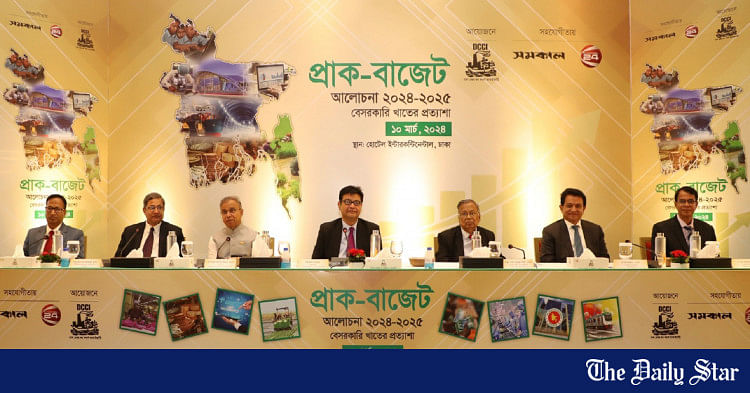
Abul Hassan Mahmood Ali, finance minister; Abu Hena Md Rahmatul Muneem, chairman of the National Board of Revenue; M Abul Kalam Azad, a lawmaker; AK Azad, also a lawmaker; Sheikh Mohammad Salim Ullah, secretary of the financial institutions division; Ashraf Ahmed, president of the Dhaka Chamber of Commerce and Industry (DCCI); and Md Habibur Rahman, deputy governor of the Bangladesh Bank, attend the chamber’s pre-budget discussion at the Hotel InterContinental in Dhaka today.Photo: DCCI

Bangladesh requires an investment of $245 billion in the logistics infrastructure sector by 2030 and $1 trillion by 2041 in order to become a developed nation, said the Dhaka Chamber of Commerce and Industry (DCCI) today.

"A one-dollar investment in the logistics infrastructure sector can give a return of $0.05 to $0.25 in the economy," it said.​

The chamber made the observations at the pre-budget discussion for the fiscal year of 2024-25 at the Hotel InterContinental in Dhaka, according to a press release.

Abul Hassan Mahmood Ali, finance minister, Abu Hena Md Rahmatul Muneem, chairman of the National Board of Revenue, M Abul Kalam Azad, a lawmaker, AK Azad, also a lawmaker, Sheikh Mohammad Salim Ullah, secretary of the financial institutions division, Ashraf Ahmed, president of the DCCI, and Md Habibur Rahman, deputy governor of the Bangladesh Bank, spoke at the event.

In a paper, the chamber said the size of the economy would have to be $2.5 trillion to become a developed nation by 2041. Besides, per capita income will have to be $12,650 and exports should rise to $350 billion.
The investment-to-GDP ratio will have to increase from 36 percent in 2030 to 40 percent in 2041, it said.

The DCCI called for ensuring good governance in the financial sector, implementing arbitration laws and giving responsibility to asset management companies to reduce bad loans.

The undisbursed portion of the stimulus packages unveiled for cottage, micro, small and medium enterprises should be distributed on easy terms considering the present economic situation.

The DCCI suggested increasing credit flows to the private sector and introducing premium treasury bonds and infrastructure bonds through the capital market in order to ensure long-term financing.​
 
Analyze

Analyze Post

Add your ideas here:
Highlight Cite Fact Check Respond
  • Like (+1)
Reactions: Bilal9

Metro Rail to ply 1hr more in Ramadan​

11 Mar 2024, 12:00 am0
Staff Reporter :

The Dhaka Mass Transit Company Limited (DMTCL) has introduced a new schedule for the Metro Rail in the upcoming Holy month of Ramadan.

According to the new schedule, the train service will be extended for an hour from both sides (Uttara Uttar and Motijheel) in the last 15 days of Ramadan.

MAN Siddique, managing director of DMTCL, provided the information at a press conference at its office in the capital’s Eskaton on Sunday evening.

He said, “The last train will leave Motijheel station at 9:40 pm, which is now at 8:40 pm, after leaving Uttara Uttar station at 9:20 pm. There will be a 12-minute gap
between each train in the extended time.”

“Commuters can bring drinking water with themselves in bottles of 250 ml measurement before and after the iftar time. However, the bottles must be kept at specific places. None can keep those anywhere,” he added.

In addition, commuters can stay in the “paid zones” for up to 75 minutes with their MRT passes for the month. MAN Siddique said, “The passengers would be tired.

In consideration of the situation, the opportunity to stay for up to 75 minutes has been kept. It is now 60 minutes.” The train service will be suspended on the day of Eid-ul-Fitr, he added.​
 
Analyze

Analyze Post

Add your ideas here:
Highlight Cite Fact Check Respond
  • Like (+1)
Reactions: Bilal9

Single runway mars prospect of HSIA third terminal​

GULAM RABBANI
Published :​
Mar 18, 2024 00:01
Updated :​
Mar 18, 2024 00:01


1710715132994.webp


Having a single runway is being considered a big barrier to maximise the potentiality of the third terminal at Hazrat Shahjalal International Airport (HSIA) in the capital.

Although there is a need to build a new independent runway at the HSIA, it is an impossible task as there is no sufficient space for it.

The HSIA currently handles about 10 to 11 million passengers annually, official sources said.

According to a survey by the Japan International Cooperation Agency (JICA), the number of passengers at the country's main airport is growing at an annual rate of about 7.88 per cent.

In order to face the growing demand of passengers, the Civil Aviation Authority Bangladesh (CAAB) is building a new terminal at the HSIA.

After the completion of the terminal, handling capacity of passengers will increase and then additional flights would be required definitely.

According to the JICA report, a demand of handling 0.2 million aircrafts by the HSIA will be created by 2030.

However, stakeholders said that it is not possible to handle such a large number of flights with a single runway.

As a result, the potential for huge revenue generation from the third terminal will be widely reduced due to having a single runway.

In order to maximise the potentiality of the third terminal, another independent runway is required for the HSIA. However, the fact is that it is an impossible task for the authority concerned as there is no sufficient space to build a new independent runway there.

Runways should be at least 1,034 metres apart for planes to take off or land simultaneously using the Instrument Landing System (ILS), according to rules set by the International Civil Aviation Organisation.

But, if another runway is built at the HSIA, there will be only a 300-metre space between the two runways.

In this circumstance, the government has planned to build a dependent runway at the HSIA to ease the pressure of possible increase of air traffic following the construction of the third terminal. The CAAB already conducted a feasibility study on the second runway and presented its findings to the Civil Aviation Ministry last year.

CAAB Chairman Air Vice-Marshal M Mafidur Rahman told the FE that physical work on the second runway is likely to begin at 2025 subject to required financial consolidation.

However, since the runways will be very close to each other due to space constraints, two planes will not be able to land or take off simultaneously.

Now planes often have to wait in queues on the taxiway for 30 to 40 minutes during takeoffs. Landing also gets delayed sometimes because of air traffic at the HSIA.

The long wait makes it hard for airlines to maintain flight schedules and it increases operational costs.

When the third terminal is opened, the frequency of flights will increase, and the situation will worsen.

In the meantime, some foreign airlines have sought permission to operate flights to and from Dhaka and some airlines have sent applications to CAAB for increasing their number of flights, sources said.

Aviation analyst Wing Commander (retd) ATM Nazrul Islam told the FE that a dependent runway cannot make a benefit proportionate to the cost of its construction.

He further said, "The airport should have had space for two independent runways. Not leaving the space was a big mistake."

ATM Nazrul Islam suggests utilizing the maximum capacity of the existing runway. Mafidur Rahman said a defended runway will also benefit us in many ways. The planned new runway's advantage is when one plane lands, another will be able to prepare for takeoff without delay.

Besides, if one runway is closed due to an emergency, the other will be available, explains the CAAB chairman. The CAAB is also working to make optimum utilization of the resources to handle the additional number of planes and passengers.

The CAAB chairman further said, "Dubai air port started its journey with a single runway and it handled 50 million flyers a year with a single runway. It was possible through efficient management. We handle only 11 million. If we can develop infrastructure and management, we will be able to serve 15 to 16 million passengers with the current runway."​
 
Analyze

Analyze Post

Add your ideas here:
Highlight Cite Fact Check Respond
  • Sad (0)
Reactions: Bilal9

Members Online

Latest Posts

Back
PKDefense
G
O
 
H
O
M
E