Bangladesh Defense
Saif
Senior Member
- Jan 24, 2024
- 21,435
- 9,743
- Nation

- Residence
- Axis Group


Rooppur set to begin production process April 7
Power supply to national grid expected within July
Rooppur set to begin production process April 7
Power supply to national grid expected within July
Ahmed Humayun Kabir Topu

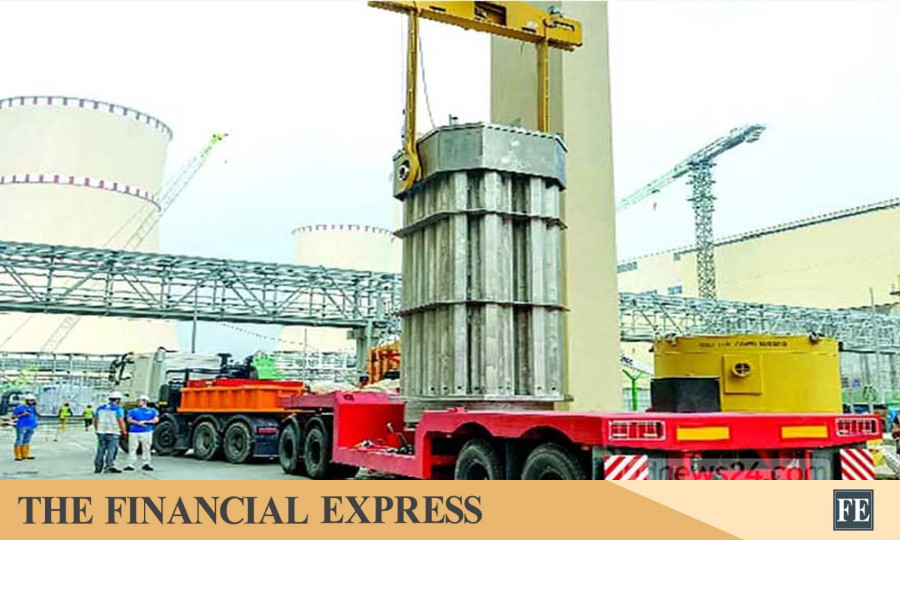
Photo courtesy: Rooppur Nuclear Power Plant project
Fuel loading at Unit‑1 of the Rooppur Nuclear Power Plant (RNPP) is scheduled to begin on April 7, marking a major milestone toward starting electricity production at Bangladesh’s first nuclear facility by mid‑year.
Fuel loading is the process of placing nuclear fuel rods into the reactor core. These rods contain uranium pellets that, once inside the reactor, will start the chain reaction that produces heat. That heat is then used to make steam, which spins turbines to generate electricity.
According to senior officials at the Ministry of Science and Technology, the Russian contractor overseeing the project has officially notified the government of the schedule.
Preparatory work on Unit‑1 is expected to finish by March 27, after which the government will formally announce commissioning of the plant.
"The Russian contractor officially informed the government last week that fuel loading will begin on April 7. We expect to start electricity production and supply a minimum of 300 megawatts to the national grid by July," Science and Technology Secretary Md Anwar Hossain told The Daily Star today.
He added that the unit is expected to reach its full 1,200 MW capacity by December, if the schedule is maintained.
Last Sunday, a delegation led by Science and Technology Minister Faqir Mahbub Anam Swapan and Prime Minister’s Adviser Rehan Asif Asad, also attached to the ministry, visited the site to review progress.
“During the visit, project authorities confirmed that all testing and inspections will be finalised by March 27, after which Unit-1 will receive its commissioning licence,” Secretary Anwar Hossain said.
He noted that the licence would pave the way for fuel loading once all preparations are complete.
Dr Md Zahedul Hasan, managing director of Nuclear Power Plant Company Bangladesh Limited (NPCBL), said about 2,000 tests have already been completed. “As of last week, 1,650 inspections were completed, and we expect to finish the remaining checks within the next two weeks,” he added.
He noted that while minor issues have arisen, no major faults were found and the small problems are being handled promptly.
The Bangladesh Atomic Energy Regulatory Authority (BAERA) is overseeing the inspection process to ensure that all safety standards comply with international guidelines.
During the official site visit, Science and Tech Minister Mahbub urged stakeholders to expedite completion while strictly following these safety protocols.
"Rooppur Nuclear Power Plant will play a pivotal role in Bangladesh’s energy security," the minister said.
According to project officials, the fuel loading process takes about one month, followed by roughly two months to reach the chain reaction stage required for power production.
Unit‑2 is expected to reach full capacity about a year after Unit‑1 begins producing its 1,200‑megawatt output in December. Together, the two units are projected to generate 2,400 megawatts by December 2027.
Unit‑1 is in the final stages of commissioning, while Unit‑2 is more than 70 percent complete.
Since construction began in 2017, 81 percent of the $12.65 billion project, which includes two VVER‑1200 reactors, has already been spent.
Originally slated for 2022, commissioning was delayed by three years. Last year, Bangladesh and Russia agreed to extend the timeline to late 2027 to complete both units.
"This is not like other development projects; we cannot compromise on anything. We must reach 100 percent completion before moving to the next step," a senior plant official said. "Ensuring safety in line with international standards is our top priority."
Power supply to national grid expected within July
Ahmed Humayun Kabir Topu
Photo courtesy: Rooppur Nuclear Power Plant project
Fuel loading at Unit‑1 of the Rooppur Nuclear Power Plant (RNPP) is scheduled to begin on April 7, marking a major milestone toward starting electricity production at Bangladesh’s first nuclear facility by mid‑year.
Fuel loading is the process of placing nuclear fuel rods into the reactor core. These rods contain uranium pellets that, once inside the reactor, will start the chain reaction that produces heat. That heat is then used to make steam, which spins turbines to generate electricity.
According to senior officials at the Ministry of Science and Technology, the Russian contractor overseeing the project has officially notified the government of the schedule.
Preparatory work on Unit‑1 is expected to finish by March 27, after which the government will formally announce commissioning of the plant.
"The Russian contractor officially informed the government last week that fuel loading will begin on April 7. We expect to start electricity production and supply a minimum of 300 megawatts to the national grid by July," Science and Technology Secretary Md Anwar Hossain told The Daily Star today.
He added that the unit is expected to reach its full 1,200 MW capacity by December, if the schedule is maintained.
Last Sunday, a delegation led by Science and Technology Minister Faqir Mahbub Anam Swapan and Prime Minister’s Adviser Rehan Asif Asad, also attached to the ministry, visited the site to review progress.
“During the visit, project authorities confirmed that all testing and inspections will be finalised by March 27, after which Unit-1 will receive its commissioning licence,” Secretary Anwar Hossain said.
He noted that the licence would pave the way for fuel loading once all preparations are complete.
Dr Md Zahedul Hasan, managing director of Nuclear Power Plant Company Bangladesh Limited (NPCBL), said about 2,000 tests have already been completed. “As of last week, 1,650 inspections were completed, and we expect to finish the remaining checks within the next two weeks,” he added.
He noted that while minor issues have arisen, no major faults were found and the small problems are being handled promptly.
The Bangladesh Atomic Energy Regulatory Authority (BAERA) is overseeing the inspection process to ensure that all safety standards comply with international guidelines.
During the official site visit, Science and Tech Minister Mahbub urged stakeholders to expedite completion while strictly following these safety protocols.
"Rooppur Nuclear Power Plant will play a pivotal role in Bangladesh’s energy security," the minister said.
According to project officials, the fuel loading process takes about one month, followed by roughly two months to reach the chain reaction stage required for power production.
Unit‑2 is expected to reach full capacity about a year after Unit‑1 begins producing its 1,200‑megawatt output in December. Together, the two units are projected to generate 2,400 megawatts by December 2027.
Unit‑1 is in the final stages of commissioning, while Unit‑2 is more than 70 percent complete.
Since construction began in 2017, 81 percent of the $12.65 billion project, which includes two VVER‑1200 reactors, has already been spent.
Originally slated for 2022, commissioning was delayed by three years. Last year, Bangladesh and Russia agreed to extend the timeline to late 2027 to complete both units.
"This is not like other development projects; we cannot compromise on anything. We must reach 100 percent completion before moving to the next step," a senior plant official said. "Ensuring safety in line with international standards is our top priority."