[🇧🇩] Corruption Watch

[🇧🇩] Corruption Watch
373
14K
More threads by Saif

G Bangladesh Defense

ACC urged to investigate graft allegation against Yunus, ex-health adviser
Staff Correspondent 14 April, 2026, 01:35
1776130155546.webp


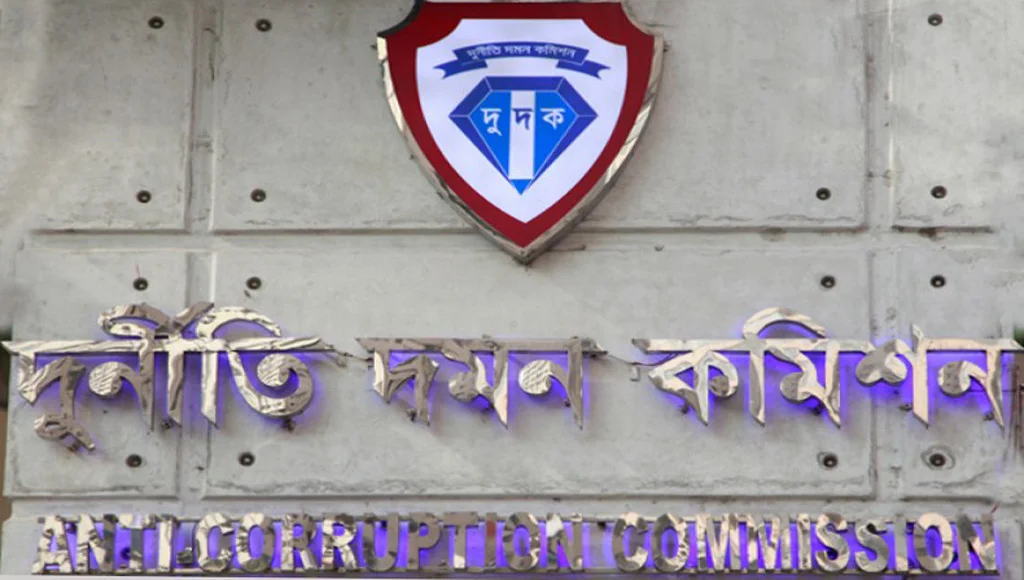
A Supreme Court lawyer on Monday submitted an application to the Anti-Corruption Commission, seeking a probe into alleged corruption by former interim government chief adviser Professor Muhammad Yunus and health adviser Nurjahan Begum in the procurement of vaccines and syringes.

Supreme Court lawyer Biplob Kumar Das lodged the complaint, citing reported irregularities in the procurement of vaccines and syringes for measles and other diseases, alongside recent child deaths across the country amid a measles outbreak.

In his complaint, Biplob said that nearly a hundred children had died amid the measles outbreak, describing the situation as alarming and a matter of grave public interest.

He said that various media reports indicated that a shortage of government-supplied vaccines for measles and other critical diseases contributed to the spread of infection and the rising number of child deaths.

Yunus Centre officials said that they came to know about the complaint through media reports.

They, however, declined to make any further comment on the issue.

According to the allegation, many citizens and health experts have raised questions in social and electronic media over the role of former chief adviser Muhammad Yunus and former health adviser Nurjahan Begum in this connection.

The current government led by the Bangladesh Nationalist Party has attributed the shortage of vaccines and syringes in the health ministry to problems created by the previous interim administration, it added.

The complaint also mentioned that the interim government introduced changes in the vaccine procurement process without making adequate preparations.

Despite having a substantial allocation of about Tk 42,000 crore in the health sector, the interim government reportedly failed to procure sufficient amount of vaccines and syringes in time and ensure proper immunisation coverage, the complaint said.

As a result, the measles outbreak has intensified, taking an epidemic form, with reports suggesting that more than a hundred children have died and thousands of others are undergoing treatment at hospitals across the country, it said.

The complaint also said that a lack of transparency in procurement, failure to disclose relevant information and alleged misuse of allocated funds indicated possible corruption and irregularities in the health sector.

It referred to reports published in newspapers and electronic media that pointed to irregularities in the vaccine and syringe procurement.

The complainant urged the ACC to conduct a thorough investigation into the matter in the public interest to safeguard the health sector and protect children’s lives.

He also urged the anti-graft agency to examine whether any irregularities or corruption were committed by the past interim government’s chief adviser, health adviser and other related officials, and to take necessary action based on the findings.

ACC officials acknowledged that the allegation was submitted to the ACC.

Following the fall of the Awami League government on August 5, 2024, in the wake of a mass uprising, the interim government was formed. Nobel laureate Professor Muhammad Yunus served it as chief adviser and Nurjahan Begum as health adviser from August 8, 2024, to February 17, 2026.​
 

Anti-graft work in limbo as no ACC in place
Solamain Salman 18 April, 2026, 00:45

1776475311379.webp


The operations of the Anti-Corruption Commission have nearly come to a halt as the country’s anti-graft agency has been running without its chairman and commissioners for over one and a half months following their resignation.

The government is yet to begin the process of forming a selection committee to appoint a new ACC, raising concerns about prolonged stagnation in anti-corruption efforts.

The commission has remained practically inactive since March 3, when its chairman Mohammad Abdul Momen and commissioners Mia Mohammad Ali Akbar Azizi and Hafiz Ahsan Farid stepped down, two weeks after the Bangladesh Nationalist Party-led government assumed office following the February 12 general election.

Officials said that the absence of the commission has left key anti-corruption functions in limbo, as decisions on launching new inquiries, filing cases, approving charge sheets and freezing assets of suspects require approval from the full commission.

As a result, ACC officials and employees are largely confined to routine work, while major policy and operational decisions remain stalled.

ACC secretary Mohammad Khaled Rahim told New Age on Friday that they were conducting routing works, including ongoing investigations and inquiries, as per laws in the absence of a full commission.

‘The ongoing investigations and routine activities are being carried out with our best efforts, but key decisions remain stalled due to the absence of the top officials,’ he said, adding that only higher authorities could say when a new commission would be appointed.

Senior officials said that neither the Anti-Corruption Commission Act 2004 nor the Anti-Corruption Commission Rules 2007 provide any guidance on how the organisation should function without a commission, effectively leaving it without legal authority to take crucial decisions.

Officials said that the agency was facing multiple operational challenges due to the leadership vacuum, including delays in processing complaints, stalled investigations and inability to take any key decision.

Experts warned that the situation had exposed longstanding structural weaknesses in the commission and raised questions about its functional independence.

Although the ACC was established as an independent institution, critics argue, its leadership has often been influenced by political considerations, resulting in frequent disruptions.

Since its establishment in 2004, seven commissions have been formed, but four failed to complete their full terms, often following political transitions.

Analysts said that such repeated changes had undermined continuity in anti-corruption drives and thus eroded public confidence.

Transparency International Bangladesh executive director Iftekharuzzaman said that the current situation reflected a broader pattern of political control over key institutions.

‘This is disappointing but not surprising, as it reflects the government’s clear agenda of ensuring that key institutions of accountability are led and controlled by individuals of their partisan choice,’ he told New Age.

He said, ‘What has happened to the Bangladesh Bank, NHRC, judicial reform, local government bodies, public universities, civil service and law enforcement agencies, with the ACC reflecting the syndrome of it’s “our turn”, in an instance that winner takes all,’ he said.

‘There is no indication if the government is disturbed that a frozen ACC with no visible attempt to appoint new leadership is fully contradictory to BNP’s election manifesto, 31-point state reform agenda and the July Charter. Nor does the government appear to be bothered about how to convince the people at large that what they have done with the ACC is not against public expectations,’ said Iftekharuzzaman.

ACC officials also noted that Section 10 of the ACC Act requires a 30-day notice before resignation or removal of commissioners — a provision frequently ignored in the past. Four of the seven commissions did not complete their tenure in compliance with this rule.

Discussions are going on regarding the appointment process of a new chairman and commissioners under the Anti-Corruption Commission (Amendment) Ordinance 2025, which introduced significant changes to the structure of the commission.

The law amended during the interim government increased the number of commissioners from three to five, reduced their tenure to four years, and mandates the inclusion of at least one woman and one ICT expert.

It also restructured the selection process through a seven-member committee headed by a senior judge of the Appellate Division of the Supreme Court of Bangladesh.

Other members would include a High Court judge, the comptroller and auditor general, chairman of the Bangladesh Public Service Commission, two lawmakers from both the treasury and opposition benches, and a citizen experienced in governance or anti-corruption.

The committee is tasked with inviting applications, scrutinising candidates, conducting interviews and recommending two names for each post to the president for appointing the ACC chairman and commissioners.

However, officials of the Cabinet Division said that the selection committee was yet to be formed even after one and half months, as the Cabinet Division was still waiting for ‘green signal’ from the government and formal approval of the amended ordinance before initiating the process.

Officials said that preliminary discussions had begun and the committee could be formed quickly once approval to the amended ordinance was given.

The Anti-Corruption Commission (Amendment) Ordinance 2025, issued by the immediate-past interim government on December 23, 2025, was placed in the 13th Jatiya Sangsad’s first session but had not been tabled as a bill within April 10 or the 30 days of the formation of the House.

A parliamentary special committee on April 2 placed its report before the House, recommending 16 ordinances, including the ACC (Amendment) Ordinance 2025, be subjected to further scrutiny and strengthening before being reintroduced at a later stage in a comprehensive form.

Three opposition members in the special committee, however, submitted notes of dissent regarding the decision.

The opposition members in the committee proposed an unchanged adoption of the ordinance, noting that it strengthened the selection committee for appointing top ACC officials and would make the commission accountable to the people and the Jatiya Sangsad, free from executive influence.

Expressing disappointment, former ACC director general Moyeedul Islam said, ‘We see a stalemate at the ACC for the past more than one month due to the absence of the chairman and commissioners which, has created a favourable situation for corrupt people.’

‘With the backlog of cases, complaints will increase manifold due to the delay in appointment of new commission which will ultimately hamper the anti-graft activities,’ he said.

Question will be raised about the goodwill and the electoral commitment of the new government if the anti-graft activities are hampered, he said.

The previous commission had started inquiry into some high profile corrupt people and groups, which now also stays stalled – a highly undesirable situation, he added.

The quick formation of a credible and independent commission, he also stressed, is essential to restore momentum in anti-graft activities and rebuild public trust in the commission.​
 

Loan defaulters have become part of political system: Rehman Sobhan

Special Correspondent
Dhaka
Updated: 19 Apr 2026, 21: 54

1776643319676.webp

Renowned economist Rehman Sobhan, chairman of the Centre for Policy Dialogue (CPD), speaks as a special guest at the session titled ‘Illusion about Reforms: The Story of Bangladesh’ on the last day of the annual economist conference of the South Asian Network on Economic Modeling (SANEM) on Sunday. Prothom Alo

Renowned economist Rehman Sobhan has said that loan defaulters have become part of the political system and are themselves creating obstacles to reform.

The problem is not individualistic but structural, he said adding reform is not just about enacting laws; rather it is a continuous process.

He said that initially laws are made, then the necessary administrative framework is developed for implementation. Next comes effective implementation of the laws and finally, evaluation of the outcomes.

On the last day of the three-day-long 9th annual economist conference of the South Asian Network on Economic Modeling (SANEM), Rehman Sobhan made these remarks while speaking as a special guest at the session titled ‘Illusion about Reforms: The Story of Bangladesh.’

The theme of this year’s conference is ‘Development Challenges and Policy Responses in a Changed World.’

The session, moderated by SANEM's Executive Director Selim Raihan, featured the keynote presentation by Debapriya Bhattacharya, Distinguished Fellow of the private research organisation Centre for Policy Dialogue (CPD).

Former Finance Secretary and Comptroller and Auditor General (CAG) of Bangladesh, Mohammad Muslim Chowdhury, was a designated discussant.

Renowned economist Rehman Sobhan commented that while political parties make big promises during elections, it’s not clear how much actual leadership or commitment they have towards implementing reforms.

He said, historically, major reforms succeed when they receive strong support from the public. For example, the 6-Point Movement reached the people as a framework for political and economic reform and received widespread support.

Currently, public campaigns like the 6-Points are very weak, said Rehman Sobhan, adding that political parties are failing to effectively communicate their manifestos to the public. Even many party members are not well informed about their own manifestos.

Rehman Sobhan raised questions about how many of the discussants have actually worked in the government or been directly involved in the reform implementation process.

Without such experience, understanding the real picture of reforms is challenging. Knowing who supports or opposes reforms, and why implementation often fails, is sometimes hard to comprehend without working in the government.

Many people view reforms as a theoretical or academic discussion matter, remarked Rehman Sobhan.

He said, "When I worked at the Planning Commission, my experience was different. I witnessed that getting laws enacted was not the biggest issue; rather, the real challenge was effective implementation."

Using police reform as an example, Rehman Sobhan stated that the true evaluation of reform is only possible when it starts delivering results. If it is said that the police will be made accountable and they must accept complaints mandatorily, then what should happen is verifying what happens a few years later. Journalists should visit police stations to file complaints and see how easily they are received – that would be the real test of the reform.

Rehman Sobhan commented that reform proposals from the World Bank or International Monetary Fund (IMF) are nothing new; they have been discussed for years and have been attempted to be implemented under various governments.

His question is, "What happens in reality? Governments initially show some progress because they want to receive financial aid installments. Similarly, development partner organisations have interests – they want to disburse their funding."

Rehman Sobhan reminisced about the significant initiatives taken in the 1990s concerning judicial reform.

He said, "At the same time, various development partners worked on budget reforms as well. But if we look at the current state of the judiciary, it becomes evident that the long-term impact of those efforts is quite limited. Similarly, key reforms in the budget system, such as the integration of the revenue and development budgets, have been discussed for decades but have not been implemented."

Rehman Sobhan mentioned that he has proposed introducing a performance-based budget system multiple times.

He argued that this would allow the government to inform the public about the outcomes of expenditures in different sectors. However, currently, only expenditure accounts are being presented without any analysis of the results.

Rehman Sobhan also gave examples from the health and education sectors.

He said every year, it is observed that allocated funds in these sectors are not spent fully. Yet, at the same time, there are complaints about low allocations in these sectors.

His question is, if the allocation is not utilised correctly, where is the problem then? There is very little deep analysis of why effective expenditure is not occurring in these sectors, even though people are receiving low-quality health services and there is dissatisfaction with the quality of education.

He mentioned that although exam results might be good, students' skills are often questionable in real-life scenarios. That's where the core issue lies – how the state machinery is functioning is the key question.

Referring to India's experience, Rehman Sobhan said, "There, major reforms such as the right to food, the right to education, or the right to work came through powerful citizen movements. But in Bangladesh, civil society is largely isolated and divided. We are unable to create united pressure in favour of major reforms."

Rehman Sobhan also believes that the role of the opposition is highly important for reforms.

He said that the opposition should not only engage in political opposition but should also focus on the implementation of reforms and ensure government accountability. On the other hand, if the government genuinely wants reform, it has to develop a strong internal accountability system. Merely announcing policies is not enough; there needs to be the capacity and willingness for implementation.

He described the democratic process as the ultimate test of reform and emphasised the need for free, fair, and inclusive electoral systems.

He remarked that a government becomes truly accountable only when it is prepared to accept the people's verdict based on its performance.

However, such examples are very rare in Bangladesh's political history.

He cited the power transfer by Sheikh Hasina through an election in 2001 as an important example. He concluded by stating that until such an accountable political culture is robustly established, the path to implementing reforms will remain challenging.​
 

Govt won’t tolerate market manipulation: Commerce Minister

Published :
Apr 21, 2026 18:58
Updated :
Apr 21, 2026 18:58

1776816236231.webp


Commerce Minister Khandaker Abdul Muktadir today (Tuesday) issued a stern warning, stating that the government will not tolerate any form of artificial crisis or market manipulation.

“No individual or group would be allowed to hold the market hostage in a nation of 180 million people,” he said, BSS reports.

The Minister made these remarks while talking to journalists after a routine review meeting on the price and supply situation of daily necessities at the Ministry of Commerce conference room in the city.

The Minister acknowledged that the current global climate, particularly the conflict in the Middle East, has placed significant pressure on energy and supply chains.

However, he reassured the public that the government is monitoring the situation closely and confirmed that the import status remains stable.

Addressing concerns regarding soybean oil, the Minister noted that while the supply of bottled oil is currently somewhat low, there is a sufficient supply of loose oil.

He warned that the government is actively monitoring reports of retailers charging above the fixed rates and promised that necessary actions would be taken against offenders.

Regarding inflation and price hikes, Muktadir characterized unjustified price increases as unacceptable.

He issued a direct message to traders, stating that speculation must not be used to influence the market and that any price adjustments must strictly reflect the actual impact of rising energy costs.

The Minister urged all stakeholders and the business community to maintain trust in the government's efforts.

He revealed that the administration is working toward establishing a permanent price-fixing mechanism to ensure long-term market stability in the future.

The meeting was attended by the Ministry of Commerce Secretary (Routine Duty) Md. Abdur Rahim Khan and other high-ranking officials.​
 

How unscrupulous business holds marginalised class to ransom

Nilratan Halder
Published :
Apr 24, 2026 00:18
Updated :
Apr 24, 2026 00:18

1776988451353.webp


At a time when price of rice has declined in the international market, in Bangladesh it has marked a substantial rise. While rice price has fallen by 19 per cent for some categories, it has gone up by 5.50 per cent in this country. Why the domestic market defies the global trend of price decline is no mystery. Farmers who grow paddy, however, are deprived of the benefit of the price bonanza. Business syndicates of millers and middlemen are responsible for the price hike. The authorities know it very well but fail to take any action or intervene in the market manipulated by the influential syndicates of traders. The monopoly business allows not only the traders of the staple but importers of other essentials to dictate terms.

This is frustrating. The social divide created over the years has favoured the privileged who control the market by maintaining their bonhomie with political leaders or themselves capturing parliamentary seats. No wonder that 67 per cent of lawmakers in the previous parliament were businesspeople. Even in the 13th parliamentary election, 59 per cent businesspersons have secured their seats in parliament. They have money and money talks both at the time of election and afterwards when they capture the assembly seats. They are unlikely to overlook their class interests in favour of the common people.

The malady is in the system of parliamentary democracy. Voters are given the impression that they are sovereign before a national election but once their representatives enter the parliamentary assembly, they know their business well. Thus essentials become costlier even when their price falls in international market. For example, the government may allow import of rice even when the country has a bumper yield. But the importers go for staggered imports so that they can make higher profit on rice imported at a low price. The supply line is not affected at all. The local millers and importers together have the best of both worlds. There is a clear case of such failed initiative on rice import during the interim government last year.

A closer look will reveal that the time to time drives launched against business malpractices are nothing but eyewash. Usually, the smaller fries at the retail level are the targets of such drives. The culprits who pull the string from behind remain untouched. This is exactly why the inflation margin is a few points higher than it should be. Consumers are fleeced and the opportunists take advantage of the situation to give rise to an oligarchic model of society. The social fabric turns archaic.

When opportunism reigns supreme in any society, not only does it create social inequality and disparities but also throttles innovation and creativity. This is the reason why this country depends on crafty businesses instead of creating a condition for the emergence of a Bill Gates or Elon Musk or their local editions here. Even when some high school or college students achieve some technological breakthroughs in some areas, they are not encouraged and patronised to proceed further for developing improved versions of their devices or machines and mass production at the industrial levels.

Thus the prospect of scientific and technological leap forward remains elusive for even the highly talented youths. In its place, misappropriation of funds, looting of money from banks and other negative or even criminal activities capture the newspaper and media headlines. True entrepreneurship hardly develops in such a vacuous environment. The chummy relations between politics and business grow from strength to strength.

There is no surprise that research and experiment receive paltry budget allocation when traders receive various incentives including tax holidays and subsidies. Non-performing loans (NPLs) are rescheduled where farmers or small entrepreneurs face humiliation for non-payment of a small amount of interests and loan. Yet crop insurance hardly receives attention of the political leaders.

Had some farmers not sent their next generation to work abroad, village economy would have stumbled by now. Agriculture is no longer profitable for farmers because of costly inputs. Then the middlemen and bulk traders eat the pie whereas growers have to dispose of crops early often at throw-away prices. It happens with potato, onions and more so with the perishable items. Only the farmers growing rice have been getting some benefits for their produce of late. Yet they are deprived of the atrocious level of profits made by business syndicates in some lean years.

Unrelenting inflation should be viewed against this broader perspective and then it will be clear why the price rise cannot be tamed. It is the educated and the privileged who have held the rest of the population a hostage and no government can overcome the in-built resistance from within. Without addressing the vicious cycle of opportunism, the common man's right cannot be advanced. The political parties which have so far been in power represent the higher middle class and the most privileged. They are unlikely to uphold the cause of the neglected and deprived segments of the population.

There is a need for rearranging the social order through election of people who are genuinely concerned about the welfare of the poor. Real opportunities have to be created for education of children from poor households. This can be done if distribution of national wealth becomes rational and in proportion to its need. Before this, however, their food security and moderately healthy life have to be ensured.​
 

Corruption control: Asian best practices and lessons for the BNP government

23 April 2026, 13:25 PM

M Adil Khan

Corruption is a scourge in most countries. Indeed, a recent World Economic Forum survey on ‘trust-in-government’ has revealed that 75% of the world's population does not trust their governments - the reason? Corruption.

Asian best practices

Notwithstanding the global upward trend in corruption, the good news is that several countries and territories, including those in Bangladesh’s Asian neighbourhood, such as Hong Kong, Singapore and South Korea, have introduced measures that have successfully combatted corruption.

Hong Kong: Civic engagement in corruption control

In the late seventies, during the British colonial period, Hong Kong had one of the most centralised administrations and the most corrupt police in the region.

In 1997, after Hong Kong was decolonised and the island was handed over to mainland China as an autonomous entity, the new Hong Kong government carried out several governance reforms, such as decentralisation and democratisation and devolution of authorities to the local councils, where police were put under the supervision of the local councils which are elected bodies where police was made accountable to public scrutiny through citizen groups attached to the councils.

1776991135200.webp


Image Corruption globally and in Asia

Corruption in Bangladesh is widespread and persistent, placing it among the 10 most corrupt countries in the world, according to Transparency International. Visual: Transparency International

Over the years, these measures, decentralisation and devolution of authority at the local councils and introduction of citizen-based oversight measures not only reduced corruption among the police but also improved their performance in delivering services efficiently and fairly.

Singapore: A multi-pronged civil service reform

Similarly, in the early seventies, Singapore had one of the most corrupt customs services and a very inept civil service.

Then, within a span of a few years, a combination of measures such as decentralisation of public services, merit-based recruitment, salary increases, downsizing and corporatisation of ministries and departments, performance-based remuneration and harsh punitive measures for malfeasance, transformed Singapore’s public administration from being the most corrupt and inept public administration to one of the most efficient and leading corruption-free countries in the world.

South Korea: The Personnel Verification System (PVS)

Among the countries that were once regarded as highly corrupt but have since become the least corrupt is the Republic of Korea (South Korea). Indeed, South Korea’s example in corruption control is both unique and exemplary.

South Korea’s aspirations for a corruption-free society began with the April Revolution, also called the April 19 Revolution of 1960, when a student-led mass uprising rose against the autocratic and kleptocratic government of President Syngman Rhee and toppled it, ushering in a cycle of reforms that, over the years, drastically reduced corruption in the country.

The unique aspect of Korea’s march to a corruption-free society was not achieved through one revolution, the April 19 Revolution. The April 19 Revolution of 1960 was the trigger that followed a series of uprisings and innovations until the revolution’s aspirations – a corruption-free democratic Korea - were realised fully.

South Korea’s corruption control measures included both systemic reforms and integrity tracking of senior public officials. These measures included, inter alia, improvements in the checks and balances in the decision-making processes of the government, including budgets, award of contracts, etc. and secondly, through the introduction of a unique system called Personnel Verification System (PVS) that involves integrity tracking, is based on the premise that governance reforms, improved checks and balances would have limited success if the quality and integrity of the public officials are not at par.

These days in Korea, all senior-level government appointments must go through the PVS integrity-tracking and approval such that a few years ago when the newly elected government nominated one of their leaders to take up a position of a minister, the PVS tracking found out that way back the nominated leader used his influence to get his son admitted in an elite school for which the son have had the required grades. These revelations of influence-peddling disqualified this individual from being appointed to the position of minister. Such is the effectiveness of the PVS that it is a proven deterrent to men and women of doubtful integrity from taking on important positions in government.

In sum, control of corruption in Korea was achieved through two intertwining arrangements: first, strengthened transparency and accountability in the government's decision-making processes; and second, the PVS, which prevents people of doubtful character from running the government.

Lessons for the BNP government

Bangladesh is no stranger to corruption. On the contrary, corruption in Bangladesh is rampant and consistent, such that Transparency International ranks Bangladesh among the 10 most corrupt countries in the world.

The time is ripe for the BNP government to reflect, to make democracy work for people, to build a just society, and, more importantly, to draw lessons from successful models of corruption control.

In Bangladesh, corruption has gone through several phases: initially, it was tolerated; then the scourge became institutionalised; then it gained respectability; and since 2009, corruption has become an entitlement, such that bribes – “speed money” – are regarded as required payments.

Interim Government’s Corruption Commission recommendations

The post-July 2024 Uprising Interim Government (IG), headed by Prof. Yunus, commissioned a White Paper to assess the magnitude of corruption and the institutional loopholes that create opportunities for corruption in the government, especially those that were widespread and occurred with impunity during the recently deposed decades-long Hasina regime.

The White Paper successfully revealed institutional loopholes that enable corruption and offered useful recommendations to address the malady.

The BNP Government and corruption control

In February this year, the Interim Government held a free and fair election in which the Bangladesh Nationalist Party (BNP) won with an overwhelming majority and has since formed the government.

BNP’s overwhelming majority in the Parliament has positioned the BNP government well to initiate reforms, including those related to corruption control.

In fact, before the election, one of BNP’s key pledges was to control corruption.

However, and sadly so, as they say, morning shows the day; it does not appear that the BNP government is paying much attention to any of the reform issues, including those related to corruption control. So far, they don’t seem to have taken on board the corruption control recommendations of the Interim Government’s Corruption Investigation Commission.

Moving forward, the newly elected BNP government must take on board the IG Corruption Commission’s revelations of corruption loopholes and follow through the recommendations that have the potential to combat corruption, and, at the same time, draw lessons from the Asia’s successful corruption control initiatives that are both curative and preventive such as South Korea’s Personnel Verification System (PVS), - the integrity checking system - that helps barring crooks taking up important positions in the government.

1776991277455.webp

The July Uprising was about revolting against a corrupt, arrogant, and self-preserving system, a system that eroded people's rights and dented their dignity and made abuse normal. Visual: Mahiya Tabassum


In this regard, it is also important to remind the newly elected BNP government that the July Uprising did not take place to invoke more of the same, nor did people sacrifice their lives to pave the way for the rotation of plundering governments.

The July Uprising was about revolting against a corrupt, arrogant, and self-preserving system, a system that eroded people's rights and dented their dignity and made abuse normal.

Indeed, the time is ripe for the BNP government to reflect, to make democracy work for people, to build a just society, and, more importantly, to draw lessons from successful models of corruption control and to help Bangladesh journey toward a corruption-free, fair society.

M. Adil Khan is a Professor at the School of Social Science, University of Queensland, Australia, and a former senior policy manager of the United Nations.​
 

Latest Posts

Back