[🇧🇩] Coastal/Inland Riverine Shipping & Passenger Logistics

[🇧🇩] Coastal/Inland Riverine Shipping & Passenger Logistics
22
2K
More threads by Bilal9

G Bangladesh Defense

Govt committed to ensuring security on waterways: Adviser Sakhawat
UNB
Published :
Dec 29, 2024 22:21
Updated :
Dec 29, 2024 22:21
1735525013485.webp


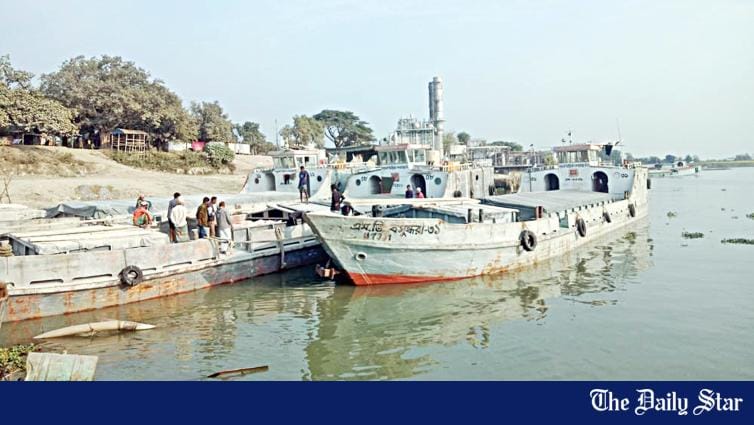
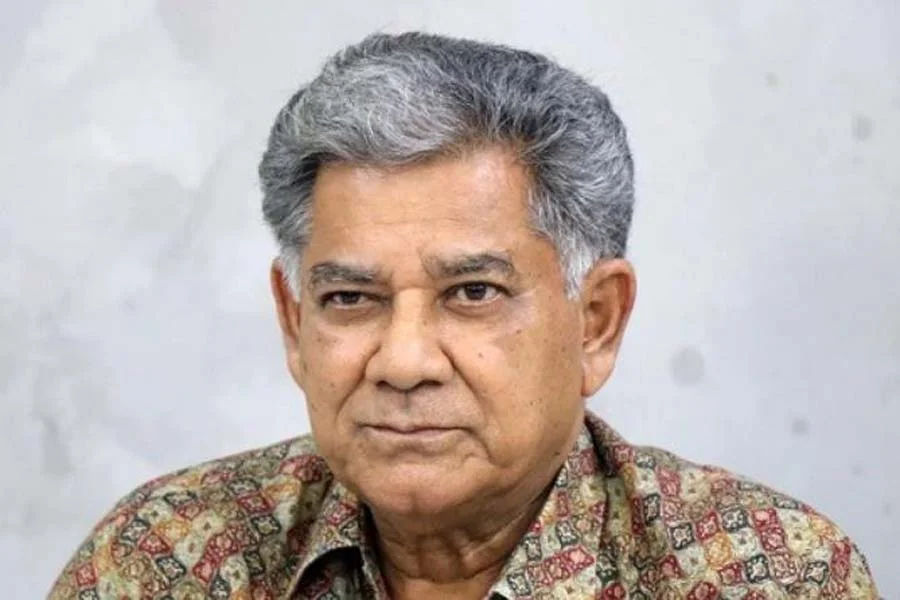
Adviser to the Ministry of Labour and Employment and the Ministry of Shipping, Brigadier General (retd) M. Sakhawat Hossain, has said that overall security will be ensured on all inland waterways with the cooperation of the River Police.

He made these remarks today during a meeting held at the Labour Building conference room to review the overall situation of inland vessel operations in Bangladesh.

The adviser expressed condolences for the seven lives lost on board the MV Al Bakhera on the Meghna River in Chandpur, and prayed for the eternal peace of their souls. He also expressed deep sympathy to the grieving families.

The adviser said that the district administration had already provided Tk 20,000 to each of the victim families, and the police had given Tk 10,000 for burial expenses.

He also said, "The RAB has already arrested one suspect in connection with the murders. An investigation is ongoing to determine if anyone else is involved in the crime."

He called for the continued operation of the shipping sector to keep the country's economy functioning. He also instructed the River Police to promptly receive complaints in accident-prone areas.

The meeting was attended by the Secretary of Labour and Employment, the Secretary of Shipping, and other officials.​
 

Baghabari port fading from inland water map as river silts up
1736125077080.webp

Established in the 1980s on the banks of Baral river, Baghabari river port currently offers a draft of only 7-8 feet during the dry season, which allows vessels with roughly 300 tonnes of cargo. PHOTO: AHMED HUMAYUN KABIR TOPU

Once a key supply hub for agricultural inputs and fuel to the greater northern region, Baghabari river port in Shahzadpur upazila of Sirajganj is now seeing more and more cargo vessels avoiding it due to years of neglect in navigability management and inadequate port facilities.

Fertiliser-laden vessels arriving from Chattogram now offload their consignments at Nawapara port in the southwestern district Jashore, from where the agricultural inputs are then transported to northern districts.

"I travelled to Baghabari port around one and a half years ago carrying imported fertiliser, but I was unable to reach the port directly due to navigability problems," said Md Eusuf Mollah, master of an inland water vessel.

"Now we use Nawapara port regularly instead of Baghabari to unload fertiliser," Mollah added.

He said that Nawapara port can accommodate vessels carrying 1,000-1,200 tonnes of cargo, a capacity that Baghabari cannot match.

Established in the 1980s on the banks of Baral river, Baghabari currently offers a draft of only 7-8 feet during the dry season, which allows vessels with roughly 300 tonnes of cargo.


1736125147616.webp


Although minor dredging of the nearby Jamuna channel was carried out in recent years, there has been no visible improvement in navigability in the Baral as water levels have been declining rapidly.

"Fertiliser vessels usually have a draft of 10-12 feet, but the current water level in the river is only 9 to 9.5 feet. Therefore, only ships with a draft of 7-8 feet can navigate this channel in winter," Md Asaduzzaman, in-charge of Baghabari port, told The Daily Star.

He said that during the monsoon, heavier vessels with drafts more than 10-12 feet can easily access the port.

Asaduzzaman said that over the years, both the size and the load capacity of inland vessels have increased, but the port's facilities have failed to keep pace.

These decades-old port facilities are inadequate for handling larger vessels, leaving the port yard largely empty during the dry season.

Port officials said some small cargo vessels carrying cement still arrive at the port, but fertiliser and coal-laden ships are less regular.

For hundreds of port workers, this decline in activity has put pressure on them to find alternative livelihoods.

"Around 400-500 workers had sufficient income at the port even a few years ago, now even 100-150 workers struggle to make their ends meet with the income here," said Md Jahangir Sardar, a local labour leader.

Many port workers have left the port in search of new jobs, Jahangir added.

The empty port yards have also impacted the buffer fertiliser warehouse at the port area, leaving it with insufficient stocks.

"We have a demand for 10,281 tonnes of fertiliser for Sirajganj district in January, but we currently have a reserve of 7,734 tonnes," said Md Abdullah Al Ansari, in-charge of the warehouse at the port.

Run under the Bangladesh Chemical Industries Corporation (BCIC), Ansari said the warehouse is receiving truckloads from Nawapara, but they do not arrive on time.

"Fuel-laden vessels can load a minimum of 10 to 12 lakh litres, but now each fuel-laden vessel carries a maximum of 8 to 9 lakh litres of fuel to reach the port," said Md Abul Fazal, in-charge of the Jamuna oil depot at Baghabari.

Baghabari fuel depot is one of the largest fuel depots in the northern districts, with a fuel reserve capacity of more than 7.5 crore litres.

"We have the capacity to unload three fuel ships daily at the three fuel jetties in the port, but they all arrive with reduced loads," he said, adding that if the Baral river channel is improved, fully loaded ships could be accommodated without any issue.​
 

Renewing inland water trade & transit protocol
Asjadul Kibria
Published :
May 18, 2025 00:27
Updated :
May 18, 2025 00:27

1747526667956.webp


Even before the independence of Bangladesh, the waterway was one of the key modes for the movement of freights with India like it was historically the case through the railway. Most of the railway network of Bangladesh was also built and developed in the British period, starting with a 53-km long broad-gauge track between Darsana and Jagati, in 1862. The record also shows that steam navigation in inland waterways began in the mid-nineteenth century with passenger services between Kolkata and key river ports of erstwhile East Bengal. The river routes were relatively cheap compared to road transport. Nevertheless, since the independence of Bangladesh in 1971, the importance of waterways started declining, as the country became focused more on developing roads and highways. The emphasis on roadways has also put the developmental issues of railway to the backburner. Bilateral trade with India also largely depends on roadways, although waterways are still used to carry freight.

In 1972, two countries signed the Protocol on Inland Water Transit and Trade (PIWT&T) in accordance with Article VIII of the Indo-Bangla bilateral trade agreement. The protocol was signed to make mutually beneficial arrangements for the use of their waterways for commerce between the two countries. The protocol also allowed the passage of goods between two places in one country and to third countries through the territory of the other. So far, it is one of the few Indo-Bangla bilateral deals that is still working.

The protocol was initially renewable every two years. Later, in 2015, with a few amendments, the deal became renewable every five years. The relevant section of the protocol said: "It shall automatically be extended for successive five years unless either Government terminates the protocol by giving a written notice of its intention to terminate to the other Government at least six months before end of term. In case of termination, it shall cease to operate on the expiry of the respective term. But termination shall not affect the actions taken or agreements reached pursuant to this protocol."

1747526687073.webp


Consequently, the protocol was formally renewed on May 20, 2020, extending the scope. Two new routes and five new ports of calls were included in the protocol, making the total number of routes and ports of calls ten and eight, respectively. As the renewed period of five years will end on Tuesday next, it is to see what the governments on both sides of the border do. Suppose the governments maintain silence and neither side gives any notice for termination. In that case, the protocol will get another five years of extension, with the current terms and conditions unchanged. The automatic renewal will be effective from May 21, 2025. So far, there has been no indication from any of the governments to terminate the deal, especially when the two countries' bilateral ties have come under serious strain.

In the face of a mass uprising, Sheikh Hasina, the autocratic prime minister of Bangladesh, resigned and fled to India for shelter. Since then, the two neighbouring countries' bilateral relations have deteriorated. New Delhi's unconditional support to Hasian and persistent intervention in the domestic affairs of Bangladesh during one and half decades of the Hasina regime made the people of Bangladesh angry and disappointed. Hasina unleashed a reign of terror and oppression in Bangladesh with the backing of India. Her regime brutally killed around 1,400 people during the student-led mass uprising when more than 20,000 were also injured. As Hasina took shelter in Delhi on August 5 last year, a new era of Indo-Bangla ties has also emerged where Bangladesh signalled for a balanced and mutually respectful relationship. As Hasina had turned the country almost into a 'vassal state' of India, her ouster irritated the Indian establishment. Even after nine months of the fall of Hasina, India is yet to accept the reality in Bangladesh, making it difficult to restore normalcy in bilateral relations.

Nevertheless, bilateral trade is going on as both countries are interdependent regarding many products and services, and it is not easy to shift the sources of imports within a short period. The trade and transit cargo movements under the inland waterway protocol routes have also continued, though the volume has declined. The Bangladesh Inland Water Transport Authority (BIWTA) statistics showed that the total volume of cargo carried under the protocol declined by 13 per cent to 4.13 million tonnes (MT) in FY23 from 4.74 MT in FY22. In FY24, the volume declined further by 2.50 per cent in FY24 to 4.02 MT. The official statistics also showed that during the first half (July-December) of FY25, the water vessels carried some 1.97 MT of cargo in various protocol routes. Despite adding new routes under the protocol five years ago, most of the routes remained unused.

The protocol's main objective is to reduce the cost of bilateral trade and allow India to transfer goods using Bangladesh's inland waterways. It is also known as a river transit facility.

Around 99 per cent of the cargo was carried under the inter-country trade arrangements, which means a negligible amount of cargo was transited through Bangladesh waterways from one part of India to another part. Another interesting feature of the cargo movement under the protocol is the dominance of Bangladeshi vessels, as around 99 per cent of the trip is conducted by Bangladeshi ships. It indicates that Bangladeshi water vessel owners have gained significantly in carrying bilateral trade cargo.

Against the backdrop, it is clear that the importance of the protocol is there, and both countries need to continue the arrangement for bilateral trade. The protocol also provides necessary transit routes for India to connect the northeastern region, known as the seven-sisters, with mainland India. Though the usage of transit routes is small, keeping them open is helpful for India in reducing the cost of transferring products from one part to another. Bangladesh also needs to continue the facility for the neighbouring country as the movement of transit cargo is still limited and does not bring additional pressure on the movement of local cargo vessels. It is to see whether both governments will go for auto-renewal of the protocol or amend the agreement.​
 

No disruption expected in river transport during Eid: Shipping Adviser

Published :
May 31, 2025 22:36
Updated :
May 31, 2025 22:36

1748736073691.webp


Like the previous Eid, holidaymakers are unlikely to face any trouble while travelling via waterways this time as well, said Shipping, Labour and Employment Adviser Brig Gen (retd) M Shakhawat Hossain on Saturday.

"Our government has improved the communication network in the southern region. During the last Eid, there were no problems with the waterways last Eid, and there won't be any this time either," he told journalists while visiting the Ilisha ferry terminal in Bhola during a two-day visit, UNB reports.

Responding to a query about launching government-run ferry services on the Bhola-Dhaka route, Shakhawat said, “There is currently a shortage of ferries. Some are outdated, while others are still operating on the Aricha-Daulatdia route. If we had enough ferries, there would be no issue in deploying them.”

He noted that government ferries are currently serving several locations facing transport difficulties. “We’ve deployed ferries in Maheshkhali and Sandwip and now Kutubdia has also requested one.”

The adviser said that some new ferries are expected to arrive later this year, and “we’ll be able to distribute them across different locations accordingly.”

Bhola Deputy Commissioner Md Azad Jahangir and Additional Superintendent of Police (Administration and Finance) Md Sohan Sarkar, along with other senior officials, were present during the visit.​
 

Imperative of revitalising logistics sector

Atiqul Kabir Tuhin
Published :
Jul 02, 2025 22:30
Updated :
Jul 02, 2025 22:30

It is time to prioritise the development and seamless operation of inland waterways and railways as key components of a balanced and efficient multimodal logistics network.

At a recent seminar hosted by the Dhaka Chamber of Commerce and Industry (DCCI), experts and business leaders highlighted how Bangladesh's outdated logistics system is undermining the country's global competitiveness, hampering export growth and overall economic momentum. As the country prepares to graduate from the United Nations' Least Developed Country (LDC) category, addressing these logistical shortcomings must be a top priority. Upon LDC graduation, Bangladesh will lose numerous preferential trade assistance and benefits under International Support Measures (ISM) for LDCs. These include crucial advantages like duty-free quota-free (DFQF) market access (like the EU's Everything But Arms scheme), relaxed rules of origin, and flexibilities under the TRIPS Agreement for intellectual property, especially for pharmaceuticals. At the same time, the country will see gradual withdrawal of "Special and Differential Treatment" (S&DT) provisions from various World Trade Organization (WTO) agreements, while new trade-related obligations will be imposed. These changes will drive up the cost of trade and investment. For example, one study projects that LDC graduation will result in an 8-12 per cent increase in duties on Bangladesh's exports to EU countries, directly raising overall export costs. In this context, the importance of strengthening the country's outdated logistics sector cannot be overemphasised to offset these anticipated increases in international trade costs and safeguard the nation's global trade competitiveness.

An efficient logistics system that reduces lead time and cost is what keeps the wheels of the commerce turning. From the delivery of raw materials to manufacturers to the final product reaching consumers, both domestically and globally, logistics plays a crucial role in ensuring that goods and services are delivered without a hitch, and in a cost-effective and timely manner. The global logistics market is valued at $10 trillion and it is inextricably linked to every economic activity. The sector is particularly vital for export-oriented countries like Bangladesh. Regrettably, the country is among the countries where logistics costs are among the highest. It was revealed at the DCCI seminar that logistics costs in Bangladesh is roughly 15 to 20 per cent of GDP, far above the global average of 8 to 10 per cent. This aligns with an earlier World Bank Group report titled 'Moving Forward: Connectivity and Logistics to Sustain Bangladesh's Success,' which showed sector-wise logistics service expenses in the country ranges from 4.5 per cent to a staggering 48 per cent of sales, which is far higher than that of other competing countries.

Bangladesh's stark inefficiency in logistics is also reflected in global rankings. Bangladesh currently ranks 88th out of 139 countries in the World Bank's Logistics Performance Index (LPI), trailing significantly behind regional competitors like India (38th) and Vietnam (43rd). Its performance is even more concerning in the "trading across borders" category, where it is ranked 176th out of 190 countries. The World Bank report projected that mitigating Bangladesh's excessive logistics cost via targeted short-term and mid-term reform measures could increase its export earnings by as much as 20 per cent. Even a modest 1 per cent reduction in transport costs or dwell time alone could raise exports by over 7 per cent.

Bangladesh's poor ranking at LPI stems primarily from weaknesses in its trade and transport infrastructure, including congested ports and poor road networks, which collectively lead to high logistics costs. Further hindering its performance are significant inefficiencies in customs and border management, insufficient adoption of digital tracking and tracing systems, and procrastination of shipments. These factors, alongside fragmented governance and an over-reliance on road transport, collectively undermine the country's logistical efficiency and global competitiveness.

To address this shortcomings, experts at the DCCI seminar called for modernising Chattogram and Mongla ports since about 92 per cent of the country's export takes place though the ports. They have also proposed some key reforms such as digital platforms to connect shippers and transporters, warehouse automation, digital customs solutions, and greener logistical practices to improve the overall performance of the sector. Moreover, the construction of a dedicated expressway exclusively for trucks and lorries from Chattogram port to Sitakunda was suggested as a potential game-changer for streamlining the transport of import and export goods.

An efficient logistics system, however, goes beyond just building better roads and transport system; it requires an integrated multimodal logistics network that seamlessly combines road, rail, and waterways. In Bangladesh, 77 per cent of goods are transported by road, 16 per cent by waterways, 6 per cent by railways, and 1 per cent by other means. Such an overreliance on roads is a major drawback. If a significant portion of goods loaded or unloaded at ports could be transported via launches or barges, rather than being almost entirely loaded onto trucks, it could reduce both transportation costs and logistical complexities, easing pressure on the road network while enhancing overall efficiency.

The National Logistics Policy, introduced in 2024, aims to significantly reduce this dependency on roadways to 60 percent by 2041, while increasing the share of goods transported via river routes and railways to 25 percent and 14 percent, respectively. But the policy remains unimplemented.

Bangladesh is crisscrossed by hundreds of rivers that could be used to transport goods in a cheap and environmentally friendly way. But this natural resource remains underutilised. Historically, rivers have been intertwined with the country's culture, trade and development. Almost all the major cities and industrial hubs have grown around the country's vast network of rivers and natural water resources. However, over time, this landscape has changed dramatically. The number of active rivers has dwindled, many have lost their vitality, and waterways - once the arteries of the nation's transport system - have gradually been replaced by roads as the dominant mode of transporting people and goods. This overreliance on road transport has come at a significant cost, reflected in growing traffic congestion, escalating road construction and maintenance expenses, and increasing environmental pollution. It is, therefore, time to prioritise the development and operation of inland waterways and railways as key components of a balanced and efficient multimodal logistics network.

 
Riverine RoPax (or roll-on/roll-off passenger vessels) ferry MV Carnival Cruises carried passengers and vehicles from Dhaka to Bhola's Elisha (town near Bay of Bengal) in just 4.5 hours. Introduction of RoPax ferries in this route has changed the passenger and cargo logistics for this area which is not connected by roads to the rest of Bangladesh.

 
Bangladesh Inland Water Transportation Corp. has initiated builds of about 6 or 7 mini passenger sea-cruise ships suitable for coastal marine use (within twenty miles of shore).

The first one off the yard in Narayanganj, floated and going through interior fitment is MV Shamudra Bilash. Next will be two more, Oasis of Bengal, and Neelkamal. There are 6 or 7 new hulls undergoing construction other than the first one (see videos)


Here are News reports with details:
-----------------------------------------------------------------------------------

BIWTC to launch 3 cruise ships to boost coastal, regional tourism​


Bangladesh not included in international cruise map​

International operators will show interest to come to Bangladesh after launching these vessels; Tourism ministry to remove obstacles to encourage private investors operate cruise ships​

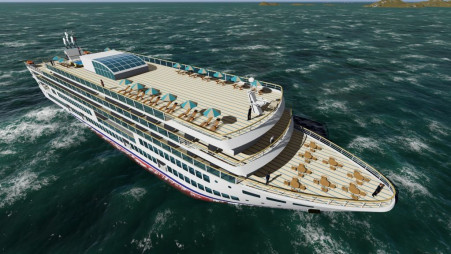
A model of the cruise ship to be launched by the Bangladesh Inland Water Transport Corporation for the first time in the country. The cruise liners, which will run in coastal belts and on the Chattogram-Kolkata route, are expected to boost coastal and regional tourism. PHOTO: COURTESY

A model of the cruise ship to be launched by the Bangladesh Inland Water Transport Corporation for the first time in the country. The cruise liners, which will run in coastal belts and on the Chattogram-Kolkata route, are expected to boost coastal and regional tourism. PHOTO: COURTESY BIWTC

Highlights:
  • Passenger capacity of each vessel: 160
  • Crew members: 74
  • Rooms for passengers: 70
  • Rooms for crew members: 18
  • Vessel length: 82M
  • Depth: 4M
  • The vessels will operate in coastal belts and on Chattogram-Kolkata route

The Bangladesh Inland Water Transport Corporation (BIWTC) is going to launch three cruise vessels for the first time in the country that would operate trips in the coastal belts and on the Chottogaram-Kolkata route.

"Initially we have given work order to Karnaphuli Ship Builders Limited to make three cruise vessels each with the capacity to carry 160 passengers and 74 crew members. Apart from night stay, the vessels will be able to carry more passengers for daylong tours," Khondaker Mahmudur Rahman Iman, chief planning manager, BIWTC, told The Business Standard.

Once the ships are launched, they hope that the other international cruise ship operators may show interest to come to Bangladesh which will increase the flow of foreign tourists in the country.

Tour operators said that the initiative would be a milestone for the country as still there is no cross-border cruise ship in Bangladesh and the country is not included in the international cruise line due to bureaucratic barriers.


Md Ziaul Islam, chief marine construction (ac) and project director, BIWTC told TBS, "All vessels will be of the same design and the same capacity. We will get these in the last quarter of 2023 according to the contract."
Each vessel will cost Tk77 crore, he added.

About the cost of travelling on these vessels he said, "The fare has not been fixed yet but the service will be like that of 5-star hotels. There will be three crew members for each passenger, so the expense will also be high."


He also said, along with sailing on the rivers these luxurious vessels can also travel inside 20 nautical miles of the sea. But it cannot travel in deep sea.


The vessel will travel from Dhaka to Chattogram, Khulna and Kolkata on river and sea routes, he added.

Currently, the MV Bay One, the first private sector luxury cruise ship in Bangladesh, is the only direct marine vessel operating on Chattogram's Karnaphuli River to the Bay of Bengal, and further south into the deep sea, all the way to the coral island of St Martin's route. It is the vessel of Karnaphuli Ship Builders that can carry 1,200 passengers at a time. However, it does not operate any international trip.


In the three ships of BIWTC, there will be a total of 70 rooms for passengers and 18 rooms for crew, according to the proposed design. Among the key features, the overall length of the vessels is 82 metres and depth 4 metres.

Difficulties to include Bangladesh on world cruise map

Journey Plus, a Bangladeshi tourism company, arranged the first ever trip by an international cruise liner in Bangladesh in 2017, and then again in 2019.

Journey Plus Chief Executive Tawfiq Rahman said, "We faced many difficulties including Bangladesh on the world's cruise map. But we did not get enough cooperation from the government".

"We did not take further initiative to arrange such a tour after 2019," he added.

Journey Plus arranged the 'Silversea Discover Expeditions' to bring 162 foreign tourists from 17 countries to Maheshkhali Island and the Sundarbans in 2017. They were on the Colombo to Kolkata Asia Expedition Cruise.

Journey Plus had to try several years to bring Silversea, a luxury cruise line headquartered in Monaco, to this region and to open new routes that would include Bangladesh.

Regarding launching international cruise ships like other countries in the world, State Minister for Tourism Mahbub Ali said that he would discuss with the home minister to bring the cruise ships operating on international routes to Bangladesh.

"We want that a foreigner who will come to Bangladesh will complete his immigration procedure on the ship so that they can visit all the tourism hot spots without facing hitches," he said.

Mahbub Ali said that they will take all initiatives so that private investors can operate cruise ships without any bureaucratic obstacles.

Focus to boost regional tourism through cruise line

Bangladesh and Sri Lanka are considering launching a cruise service between the countries to boost regional tourism.

A virtual meeting was held last year by the Bangladesh Tourism Board (BTB) with participation of the relevant stakeholders in this regard, said sources at the BTB.

BTB immediate past Chief Executive Officer Jabed Ahmed told The Business Standard, "We have a memorandum of understanding (MoU) on tourism with a number of countries. Now, we are going to sign an MoU regarding tourism with Sri Lanka too."

"We may include India in the cruise line considering the business viability," he said.

--------------------------------------------------------------------------------

BIWTC prepares to float three sea cruisers​

Mahfuz Ullah Babu
Mahfuz Ullah BabuOctober 1, 2025 7:22 pm

Photo: Courtesy
Share

State-owned Bangladesh Inland Water Transport Corporation (BIWTC) is gearing up to float three sea cruisers in the first half of 2026, deferred by a few months for furnishing works.

The ships – Shamudra Bilash, Oasis of Bengal, and Neelkamal – each will have star-rated amenities and amusement to carry over 300 tourists through the sea. They can sail from river ports and navigate within 20 nautical miles of the coast, BIWTC Chief Engineer and Project Director Md Ziaul Islam told TIMES of Bangladesh.

For the first time in Bangladesh, the three cruise ships will enable outbound tour packages to regional tourist destinations as well as inbound ones from countries like Thailand, Cambodia, Malaysia, Sri Lanka, Maldives, India, Pakistan, Iran, and the Gulf countries, said the corporation’s Communications Head Mohammad Nazrul Islam Misha.

Already built at the Karnafuly Dock in Narayanganj, the cruise ships were scheduled to be floated by the end of this year, said BIWTC Chairman Md Salim Ullah.

“However, for the sake of quality furnishing tasks, it may take a few more months,” he said.

According to the chairman, the ships will be chartered to private tour operators or the state-run Bangladesh Tourism Corporation for tour operations.


Misha said the government has been working on affordable Hajj through BIWTC ships, and the three cruise ships can also halve the travel cost compared to what Muslim pilgrims spend for air travel to Saudi Arabia.

Karnafuly’s Chairman and Managing Director Abdur Rashid told TIMES of Bangladesh that they are furnishing the ships with quality equipment, furniture, and appliances to please tourists, both domestic and international.

“As per the buyer’s requirement standards, we are procuring things both from local and international sources,” he added.

The initial cost of the three cruise ships was set at Tk232 crore, which may rise further, hinted BIWTC officials.
 
Last edited:

Latest Posts

Back