 Bangladesh Defense

Saif
Senior Member
- Joined
- Jan 24, 2024
- Messages
- 22,319
- Likes
- 9,875
- Nation

- Axis Group


Rooppur power plant: Equipment worth Tk 270 million purchased for Tk 2.14 billion
The Rooppur project had previously come under scrutiny over unusually high spending on pillows, furniture and construction materials. This time, the audit has raised questions over almost every stage of procuring power supply equipment—from the preparation of tender documents and bid evaluation...
 en.prothomalo.com
Rooppur power plant: Equipment worth Tk 270 million purchased for Tk 2.14 billion
Mohammad Mostafa
Dhaka
Published: 30 Jun 2026, 13: 08
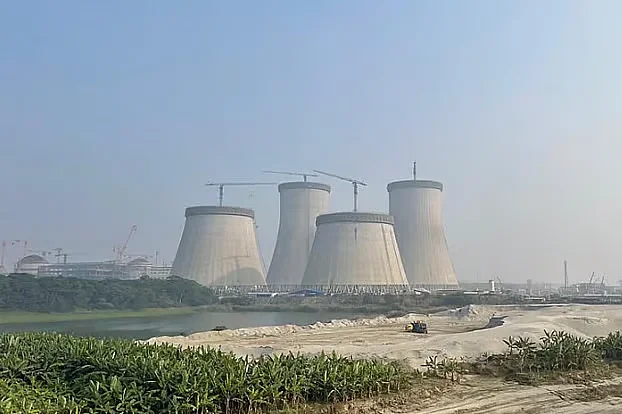
Rooppur Nuclear Power Plant Project File Photo
Following the controversial “pillow scandal,” fresh irregularities have emerged in procurement for the housing project at the Rooppur Nuclear Power Plant. This time, the Office of the Comptroller and Auditor General (CAG) has detected irregularities in the purchase of electrical substation equipment and generators for 11 residential buildings in the project’s “Green City” housing complex.
The audit found that the government paid nearly eight times the official price for the procurement. Equipment officially valued at around Tk 270 million was billed at Tk 2.1 billion, resulting in excess expenditure of approximately Tk 1.8 billion.
According to the CAG’s audit report, the government suffered substantial financial losses because the equipment was purchased at prices far higher than those fixed by the Public Works Department (PWD) and the official cost estimates.
The Rooppur project had previously come under scrutiny over unusually high spending on pillows, furniture and construction materials. This time, the audit has raised questions over almost every stage of procuring power supply equipment—from the preparation of tender documents and bid evaluation to the issuance of work orders, approval of bills and payment.
In September 2017, the office of the Executive Engineer of the Pabna Public Works Division invited tenders through the electronic Government Procurement (e-GP) system for external electrification work for 11 buildings.
A senior CAG official, speaking to Prothom Alo on condition of anonymity, said the audit found that the prices of several items had been set far above the government’s approved rates.
Although the total bid amount remained close to the official estimate, the prices of specific items were inflated several-fold. Failure to follow rules in bid verification, the formation of the estimation committee and bid evaluation resulted in significant financial losses to the government.
The official added that the audit recommended taking administrative action against those responsible and recovering the disputed amount for deposit into the state treasury.
Prices inflated through manipulation
The Public Works Department (PWD) implemented the construction of residential buildings under the Bangladesh Atomic Energy Commission’s Rooppur project. In September 2017, the office of the Executive Engineer of the Pabna Public Works Division invited tenders through the electronic Government Procurement (e-GP) system for external electrification work for 11 buildings.
The work included installing 1,600-kVA electrical substations, generators, lifts, air-conditioning systems, solar panels, security cameras, fire-fighting systems and internet connectivity. However, the audit calculated the financial losses primarily in relation to the electrical substation equipment and generators.
In contrast, the prices of several other items, including air-conditioning units, were quoted lower than the official estimates. As a result, the total bid value remained only 0.002 per cent below the official estimate.
After analysing the bids, auditors found that contractors had quoted abnormally high prices for electrical substation equipment and generators. In contrast, the prices of several other items, including air-conditioning units, were quoted lower than the official estimates. As a result, the total bid value remained only 0.002 per cent below the official estimate.
The audit report said that although the overall bid appeared acceptable on the surface, the prices of several key items had been inflated many times over.
Nearly Tk 180 million in excess spending on a single building
The pricing irregularities are particularly evident in the accounts for Building no. 7. The cost of the high-voltage control equipment for the building was estimated at Tk 45 million, although its official price under the Public Works Department’s schedule of rates was only Tk 1.032 million.
A distribution transformer was priced at Tk 44 million, despite having an official rate of Tk 4.04 million.
In the same building, low-voltage power control equipment was billed at Tk 30.2 million, whereas its official value was about Tk 1.631 million.
A power factor correction panel was priced at Tk 20 million, although its official value was less than Tk 1 million.
In addition, two generators were billed at Tk 56.8 million, while their official price was Tk 16.8 million.
Altogether, these five categories of equipment were billed at Tk 196 million for a single building, although their official value was only Tk 18.4 million. In other words, the excess expenditure on just one building amounted to approximately Tk 177.6 million.
Under the Public Procurement Rules, if a bidder quotes an abnormally high price for any item, the tender evaluation committee is required to seek a detailed explanation for the quoted price. If the prices of certain items are found to be abnormally inflated, the committee may also recommend increasing the performance security
Three contractors received an extra Tk 1.87 billion
According to the documents, Majid Sons Construction Ltd. was awarded contracts for five buildings. The company was paid about Tk 920 million, although the official value of the relevant equipment was approximately Tk 122.7 million. This resulted in excess payments of about Tk 797.3 million.
Sajin Enterprise was awarded contracts for four buildings. The company received Tk 824.9 million, while the official value of the equipment was Tk 98.2 million. Excess payments totalled about Tk 726.7 million.
Meanwhile, the MSCL-GKBPL joint venture carried out work on two buildings and received Tk 393.9 million, although the official value of the equipment was approximately Tk 49.1 million. This resulted in excess payments of around Tk 344.8 million.
In total, the three contractors were paid approximately Tk 2.13 billion, whereas the official value of the same equipment stood at Tk 269.9 million.
Rules ignored despite clear provisions
Under the Public Procurement Rules, if a bidder quotes an abnormally high price for any item, the tender evaluation committee is required to seek a detailed explanation for the quoted price. If the prices of certain items are found to be abnormally inflated, the committee may also recommend increasing the performance security.
However, the audit report states that no such measures were taken in this case.
The auditors also found no evidence that an authorised estimation committee had been formed to prepare the official cost estimate. Despite this, the estimates were prepared at rates higher than prevailing market prices and the Public Works Department’s schedule of rates, providing undue financial benefits to the contractors, the report said.
In response to the audit objection, the relevant department argued that the contractors’ quoted prices were within the limits of the official estimate. The auditors rejected this explanation, saying that compliance cannot be judged solely on whether the overall bid falls within the estimated cost. The reasonableness of the price of each major item must also be examined.
With many other mega projects currently underway in the country, it was imperative to conduct a thorough investigation into the alleged corruption and ensure exemplary punishment for those responsible-----TIB Executive Director Iftekharuzzaman.
According to the audit summary, the tender evaluation committee was chaired by Md Nazibur Rahman, then Additional Chief Engineer of the Rajshahi Public Works Zone. The member secretary was Mohammad Masudul Alam, then Executive Engineer of the Pabna Public Works Division. Another member was a Sub-Divisional Engineer, whose name was not mentioned in the records. The audit also identified Md Arifuzzaman Khandaker, then Executive Engineer of the Pabna Public Works Division, as the official who authorised the bill payments.
Masudul Alam was arrested by the Anti-Corruption Commission (ACC) in 2019 in connection with a case involving the purchase of furniture and other items at abnormally inflated prices. The ACC also questioned Nazibur Rahman, who chaired the tender evaluation committee.
The ACC also arrested Shahadat Hossain, owner of Sajin Construction, and Asif Hossain, owner of Majid Sons Construction, in connection with the case. G.K. Shamim, owner of GKBPL, was arrested by law enforcement agencies later that year on separate charges.
Recommendation to recover funds and take administrative action
The Rooppur Nuclear Power Plant, under construction in Ishwardi, Pabna, will comprise two 1,200-megawatt units, with a combined generation capacity of 2,400 megawatts. Construction of the first unit began in November 2017, while work on the second unit started the following year.
A residential complex known as “Green City” was built to accommodate officials and employees of the Bangladesh Atomic Energy Commission working on the project. The audit identified excess expenditure of nearly Tk 1.87 billion solely in the procurement of electrical equipment for the complex’s 11 residential buildings.
The audit report recommended taking administrative action against members of the tender evaluation committee, as well as the officials responsible for approving and disbursing the payments. It also recommended recovering the disputed Tk 1.86 billion from those responsible and depositing the amount into the state treasury.
Transparency International Bangladesh (TIB) has expressed concern over the purchase of electrical equipment at inflated prices, which resulted in excess payments of about Tk 1.87 billion in the country’s largest infrastructure project.
Describing the incident as “mega corruption,” TIB Executive Director Iftekharuzzaman told Prothom Alo on 28 June that reliable information confirmed the project had been subjected to large-scale financial plunder and corruption.
Iftekharuzzaman said that although the government had made political commitments to combat corruption, no specific governance or anti-corruption safeguards had been incorporated into the implementation of mega projects. He also said that internal resistance within sections of the bureaucracy could delay efforts to hold those responsible accountable.
He further said that, with many other mega projects currently underway in the country, it was imperative to conduct a thorough investigation into the alleged corruption and ensure exemplary punishment for those responsible. Otherwise, he warned, it would be impossible to send the right message against the misuse and plundering of public funds.
Mohammad Mostafa
Dhaka
Published: 30 Jun 2026, 13: 08
Rooppur Nuclear Power Plant Project File Photo
Following the controversial “pillow scandal,” fresh irregularities have emerged in procurement for the housing project at the Rooppur Nuclear Power Plant. This time, the Office of the Comptroller and Auditor General (CAG) has detected irregularities in the purchase of electrical substation equipment and generators for 11 residential buildings in the project’s “Green City” housing complex.
The audit found that the government paid nearly eight times the official price for the procurement. Equipment officially valued at around Tk 270 million was billed at Tk 2.1 billion, resulting in excess expenditure of approximately Tk 1.8 billion.
According to the CAG’s audit report, the government suffered substantial financial losses because the equipment was purchased at prices far higher than those fixed by the Public Works Department (PWD) and the official cost estimates.
The Rooppur project had previously come under scrutiny over unusually high spending on pillows, furniture and construction materials. This time, the audit has raised questions over almost every stage of procuring power supply equipment—from the preparation of tender documents and bid evaluation to the issuance of work orders, approval of bills and payment.
In September 2017, the office of the Executive Engineer of the Pabna Public Works Division invited tenders through the electronic Government Procurement (e-GP) system for external electrification work for 11 buildings.
A senior CAG official, speaking to Prothom Alo on condition of anonymity, said the audit found that the prices of several items had been set far above the government’s approved rates.
Although the total bid amount remained close to the official estimate, the prices of specific items were inflated several-fold. Failure to follow rules in bid verification, the formation of the estimation committee and bid evaluation resulted in significant financial losses to the government.
The official added that the audit recommended taking administrative action against those responsible and recovering the disputed amount for deposit into the state treasury.
Prices inflated through manipulation
The Public Works Department (PWD) implemented the construction of residential buildings under the Bangladesh Atomic Energy Commission’s Rooppur project. In September 2017, the office of the Executive Engineer of the Pabna Public Works Division invited tenders through the electronic Government Procurement (e-GP) system for external electrification work for 11 buildings.
The work included installing 1,600-kVA electrical substations, generators, lifts, air-conditioning systems, solar panels, security cameras, fire-fighting systems and internet connectivity. However, the audit calculated the financial losses primarily in relation to the electrical substation equipment and generators.
In contrast, the prices of several other items, including air-conditioning units, were quoted lower than the official estimates. As a result, the total bid value remained only 0.002 per cent below the official estimate.
After analysing the bids, auditors found that contractors had quoted abnormally high prices for electrical substation equipment and generators. In contrast, the prices of several other items, including air-conditioning units, were quoted lower than the official estimates. As a result, the total bid value remained only 0.002 per cent below the official estimate.
The audit report said that although the overall bid appeared acceptable on the surface, the prices of several key items had been inflated many times over.
Nearly Tk 180 million in excess spending on a single building
The pricing irregularities are particularly evident in the accounts for Building no. 7. The cost of the high-voltage control equipment for the building was estimated at Tk 45 million, although its official price under the Public Works Department’s schedule of rates was only Tk 1.032 million.
A distribution transformer was priced at Tk 44 million, despite having an official rate of Tk 4.04 million.
In the same building, low-voltage power control equipment was billed at Tk 30.2 million, whereas its official value was about Tk 1.631 million.
A power factor correction panel was priced at Tk 20 million, although its official value was less than Tk 1 million.
In addition, two generators were billed at Tk 56.8 million, while their official price was Tk 16.8 million.
Altogether, these five categories of equipment were billed at Tk 196 million for a single building, although their official value was only Tk 18.4 million. In other words, the excess expenditure on just one building amounted to approximately Tk 177.6 million.
Under the Public Procurement Rules, if a bidder quotes an abnormally high price for any item, the tender evaluation committee is required to seek a detailed explanation for the quoted price. If the prices of certain items are found to be abnormally inflated, the committee may also recommend increasing the performance security
Three contractors received an extra Tk 1.87 billion
According to the documents, Majid Sons Construction Ltd. was awarded contracts for five buildings. The company was paid about Tk 920 million, although the official value of the relevant equipment was approximately Tk 122.7 million. This resulted in excess payments of about Tk 797.3 million.
Sajin Enterprise was awarded contracts for four buildings. The company received Tk 824.9 million, while the official value of the equipment was Tk 98.2 million. Excess payments totalled about Tk 726.7 million.
Meanwhile, the MSCL-GKBPL joint venture carried out work on two buildings and received Tk 393.9 million, although the official value of the equipment was approximately Tk 49.1 million. This resulted in excess payments of around Tk 344.8 million.
In total, the three contractors were paid approximately Tk 2.13 billion, whereas the official value of the same equipment stood at Tk 269.9 million.
Rules ignored despite clear provisions
Under the Public Procurement Rules, if a bidder quotes an abnormally high price for any item, the tender evaluation committee is required to seek a detailed explanation for the quoted price. If the prices of certain items are found to be abnormally inflated, the committee may also recommend increasing the performance security.
However, the audit report states that no such measures were taken in this case.
The auditors also found no evidence that an authorised estimation committee had been formed to prepare the official cost estimate. Despite this, the estimates were prepared at rates higher than prevailing market prices and the Public Works Department’s schedule of rates, providing undue financial benefits to the contractors, the report said.
In response to the audit objection, the relevant department argued that the contractors’ quoted prices were within the limits of the official estimate. The auditors rejected this explanation, saying that compliance cannot be judged solely on whether the overall bid falls within the estimated cost. The reasonableness of the price of each major item must also be examined.
With many other mega projects currently underway in the country, it was imperative to conduct a thorough investigation into the alleged corruption and ensure exemplary punishment for those responsible-----TIB Executive Director Iftekharuzzaman.
According to the audit summary, the tender evaluation committee was chaired by Md Nazibur Rahman, then Additional Chief Engineer of the Rajshahi Public Works Zone. The member secretary was Mohammad Masudul Alam, then Executive Engineer of the Pabna Public Works Division. Another member was a Sub-Divisional Engineer, whose name was not mentioned in the records. The audit also identified Md Arifuzzaman Khandaker, then Executive Engineer of the Pabna Public Works Division, as the official who authorised the bill payments.
Masudul Alam was arrested by the Anti-Corruption Commission (ACC) in 2019 in connection with a case involving the purchase of furniture and other items at abnormally inflated prices. The ACC also questioned Nazibur Rahman, who chaired the tender evaluation committee.
The ACC also arrested Shahadat Hossain, owner of Sajin Construction, and Asif Hossain, owner of Majid Sons Construction, in connection with the case. G.K. Shamim, owner of GKBPL, was arrested by law enforcement agencies later that year on separate charges.
Recommendation to recover funds and take administrative action
The Rooppur Nuclear Power Plant, under construction in Ishwardi, Pabna, will comprise two 1,200-megawatt units, with a combined generation capacity of 2,400 megawatts. Construction of the first unit began in November 2017, while work on the second unit started the following year.
A residential complex known as “Green City” was built to accommodate officials and employees of the Bangladesh Atomic Energy Commission working on the project. The audit identified excess expenditure of nearly Tk 1.87 billion solely in the procurement of electrical equipment for the complex’s 11 residential buildings.
The audit report recommended taking administrative action against members of the tender evaluation committee, as well as the officials responsible for approving and disbursing the payments. It also recommended recovering the disputed Tk 1.86 billion from those responsible and depositing the amount into the state treasury.
Transparency International Bangladesh (TIB) has expressed concern over the purchase of electrical equipment at inflated prices, which resulted in excess payments of about Tk 1.87 billion in the country’s largest infrastructure project.
Describing the incident as “mega corruption,” TIB Executive Director Iftekharuzzaman told Prothom Alo on 28 June that reliable information confirmed the project had been subjected to large-scale financial plunder and corruption.
Iftekharuzzaman said that although the government had made political commitments to combat corruption, no specific governance or anti-corruption safeguards had been incorporated into the implementation of mega projects. He also said that internal resistance within sections of the bureaucracy could delay efforts to hold those responsible accountable.
He further said that, with many other mega projects currently underway in the country, it was imperative to conduct a thorough investigation into the alleged corruption and ensure exemplary punishment for those responsible. Otherwise, he warned, it would be impossible to send the right message against the misuse and plundering of public funds.


