[🇧🇩] Corruption Watch

Quick Reply ✓ Posted!
[🇧🇩] Corruption Watch
410
20K
More threads by Saif

G Bangladesh Defense

SOEs issue SOS calls

FE

Published :
Jul 06, 2026 23:58
Updated :
Jul 06, 2026 23:58​

1783389554276.webp


At a time when banking scam and money laundering were making screaming headlines, the debt incurred by state-owned enterprises (SOEs) was relegated to the back burner. Now the Finance Division under the Ministry of Finance has identified 19 of the 122 SOEs in precarious financial positions with a total debt burden of Tk2.2238 trillion. This news carried in this newspaper's Sunday edition is followed by another related one next day concerning the opening of 44 SOEs to private investment. Mounting debt liabilities of key enterprises operating across diverse sectors have virtually brought them on the verge of collapse. Their poor financial performance, as the Finance Division's review found, has rendered cost-recovery ratios far below sustainable levels. The energy sector in particular has more than half of the total debt liabilities. Bangladesh Power Development Board (BPDB) alone accounts for an outstanding debt build-up of Tk1.784 trillion followed by the Gas Transmission Company Limited (GTCL) with a debt liability of Tk141.31 billion.

A country's development, leading economists and experts in national development claim, is directly linked with energy consumption. In fact, it serves as the backbone of socio-economic progress. When the energy sector is in a shambles with mounting debt burden, a country has to pay for this lapse through its nose. The government has to come forward with public finance when such essential services fail to earn enough revenue against the expenditure they make. In this connection, the Bangladesh Investment Development Authority's (BIDA's) move to open 44 SOEs to private investment may make sense but the sectors involved here are not as integral as the BPDB or GTCL. Apart from the energy sector, enterprises in the transport, manufacturing, SME development and public service are far more important than the 44 SOEs offered for private investment. Loss-incurring SOEs in the vital areas, therefore, act as a thorn in the government's neck.

Then why do such enterprises fail to meet up the costs with their revenue income? Irregularities and inefficiency explain their mounting losses. Public entities in this country are mired in massive irregularities as regulatory oversights are next to nothing. When accountability is a casualty with a government allowing indulgence to people in high positions, as was the case during the past regime, employees and officials down the rank consider utility services a platform for serving their own interests. So, there is a need for restructuring the entities like BPDB, Bangladesh Petroleum Corporation and Titas Gas Transmission and Distribution PLC.

The bottom line is to bring about transparency, accountability and efficiency in the operation of SOEs. This calls for urgent reform. If private companies can generate power profitably---albeit on a small scale, why should SOEs incur massive losses? A report carried in a contemporary on a closed jute mill in Sirajganj claims that its security costs the government Tk0.6-0.7 million each month. This is how industries in the public sector are rendered non-viable and even when they are not running, they cost the government a sizeable amount. There is no guarantee that handing those over to private parties will address the problem. Such trials also ended up in looting of equipment and machines. So the need is to streamline the operating method and system of SOEs through comprehensive reforms.​
 
The govt. does not want to needle loan defaulters too much - because most of their own MPs (BNP in our case) and their friends are big schemers of securing loans without collateral. Gorai Golod. How does a bank official process a loan without collateral? I'm sure they are getting a cut of the money which I know. These people should be jailed - if not, much worse.

Loan defaulters should be treated much, much more harshly and also given long jail sentences and travel ban imposed (house arrest). The toughest treatment for bank loan defaulters can be found in the UAE, where legal consequences can include civil lawsuits, financial penalties, and even travel bans if the debtor is deemed a flight risk. Additionally, banks can pursue the provisional seizure of debtor funds (property collateral included) and impose fines for non-compliance with court orders.
The government should enact a law to bar the businessmen's entry into politics. If this can be done, loan defaulters will be vanished from the parliament. Most of the bank looters are connected to politics.
 

CIID detects undeclared garments, foils Tk 6m duty evasion

1785712065592.webp


The Customs Intelligence and Investigation Directorate (CIID) has foiled an attempt to evade nearly Tk 6 million (60 lakh) in customs duties and penalties by detecting a large quantity of undeclared garments in an imported consignment at Dhaka Custom House.

According to the CIID, a special team from its headquarters intercepted the consignment imported by M/S S.B Traders after receiving confidential information about possible misdeclaration, UNB reports.

The shipment, imported under Bill of Entry No. C-765485 dated July 30, 2026, was stopped just before clearance and subjected to a physical inspection.

During the inspection, officials found that the importer had declared 2,699 pieces of garments, while the actual quantity stood at 4,319 pieces, revealing an excess of 1,620 pieces, or 60.02 percent more than declared.

The inspection uncovered significant discrepancies across several product categories. Officials found 48 pieces of ordinary lehenga against the declared 29, 50 pieces of gorgeous lehenga instead of 13, 120 premium sarees against 112 declared, 803 super sarees instead of 112, and 900 medium sarees against the declared 179.

The CIID team also recovered 140 girls’ wear sets against 128 declared, 120 sherwanis instead of 18, and 124 T-shirts against the declared 94.

In another discrepancy, the importer declared 187 gowns, but inspectors found only 100 gowns along with an additional 87 ordinary lehengas, indicating that part of the consignment had been deliberately misdeclared.

The CIID said the operation prevented an attempt to evade customs duties and taxes amounting to Tk 31.71 lakh. Including an equivalent redemption fine, the total recoverable amount is estimated at nearly Tk 60 lakh.

A detailed report has been sent to Dhaka Custom House for necessary legal action.

The intelligence agency said it would continue surveillance and special operations against undeclared imports and customs duty evasion to safeguard government revenue and ensure transparency in import and export activities.​
 

42 loan defaulters face ‘money-laundering’ probe over Tk 2b debts

1786317707180.webp


Bangladesh Bank has launched investigations into alleged money laundering by 42 companies that have defaulted on bank loans worth more than Tk 2 billion each.

It has also instructed banks to sign agreements with eight international firms selected by the central bank to recover the allegedly laundered funds.

At a meeting on Sunday, Governor Mostaqur Rahman told 38 banks to engage the firms, which will work to have the funds frozen in the countries where they are believed to be held and bring them back to Bangladesh.

Central bank spokesman and Executive Director Arief Hossain Khan said the agreements would be signed after necessary preparations.

“Forty-two companies will be investigated. Each has defaulted on more than Tk 2 billion, and there are allegations of money laundering against them,” he told bdnews24.com.

The eight firms are Grant Thornton, RI Consortium, Baker McKenzie and PwC, BCG and HHR, EY and Dentons, Rahman Ravelli and Interpath, DLA Piper and Kroll, and Animus Associates.

They will receive commissions only after recovering the funds. Banks will be barred from making any other financial transactions with them.

Bankers said the bank with the largest exposure in a case will act as lead bank and coordinate legal action and the recovery effort on behalf of others.​
 

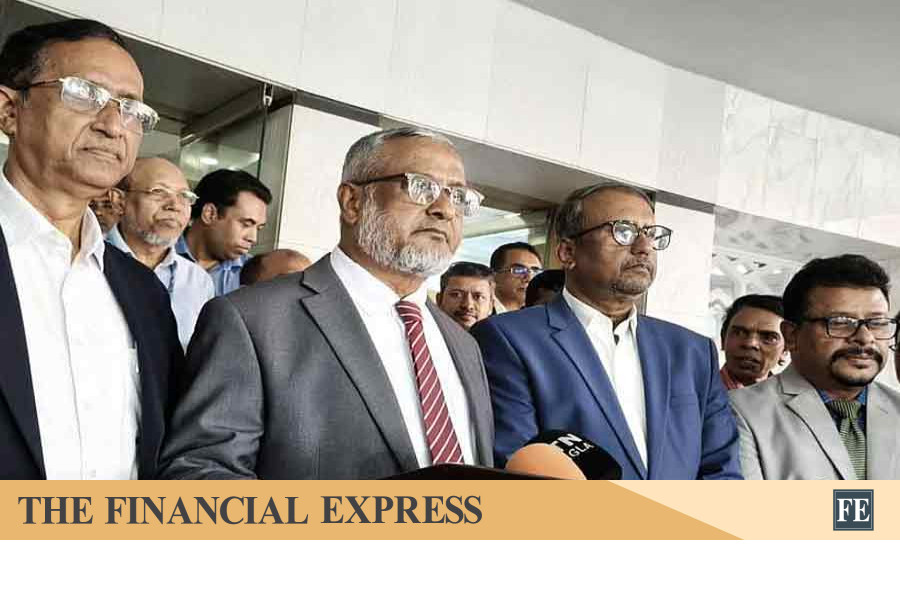
New ACC chairman pledges to work independently


1787180651227.webp


The new Anti-Corruption Commission (ACC) Chairman AKM Asaduzzaman has pledged to work independently and free from political influence.

He said on Wednesday the commission had begun.

The new commission, led by the retired Appellate Division judge, began work on Wednesday after the anti-graft agency remained without leadership for 166 days.

Asaduzzaman and commissioners Jahangir Alam Khan and Sajjad Hossain Bhuiyan arrived at the ACC headquarters in the morning.

From 10 am, they attended an introductory and exchange meeting with officials.

Speaking to reporters afterwards, Asaduzzaman said: “Many greetings to you all. [Wednesday] was our first working day at the ACC. We have started working. Please pray for us.”

“We want to fulfil people’s expectations and work for the country accordingly. We want to restore the ACC’s image and make every proper effort to free the country from corruption.”

He added, “Please pray for us. We have started working and, God willing, we expect to deliver good results in the days ahead. Thank you so much.”

Asked whether the commission could work independently despite criticism that the ACC failed to do so under elected governments, he said, “God willing, we are not under any pressure. We are working independently.”

Asked about controversy surrounding his appointment, Asaduzzaman said he did not secure the position through lobbying or special connections.

He added that those questioning his appointment also had their share of failures.​
 

PKDefense Forums: Country-by-Country Military Discussions

Log In Register Forums