Home Watch Videos Wars Login

[🇧🇩] Energy Security of Bangladesh

[🇧🇩] Energy Security of Bangladesh
515
17K
More threads by Saif

G Bangladesh Defense

Two more Palli Bidyut officials put on remand over destabilising power sector
Published :
Oct 19, 2024 20:59
Updated :
Oct 19, 2024 20:59

1729384443299.webp


A Dhaka court on Saturday placed two more officials of Palli Bidyut Samity (PBS) on a two-day remand each in a sedition case filed on charges of their involvement in destabilising the power sector.

Dhaka Metropolitan Magistrate Akhteruzzaman passed the order as police produced the duo before the court with a prayer for 10 days remand.

The remanded PBS employees are Deputy General Manager (DGM) Ali Hasan Mohammad Ariful Islam, 48, and Assistant General Manager of Brahmanbaria SK Shakil Ahmed, 31, according to a BSS report.

Earlier on Thursday, another court of Dhaka placed six PBS officers on a three-day remand each in two separate cases.

The six officers are Rajon Kumar Das, Asaduzzaman Bhuiyan, Dipak Kumar Singha, Rahat, Monir Hossain and Belal Hossain.

Of them, Belal Hossain was accused in a sedition case, while the five others were accused in the other case.

Bangladesh Rural Electrification Board (BREB) Director (admin) Arshad Hossain filed the cases against them with capital's Khilkhet Police Station on Thursday (October 17).​
 
Analyze

Analyze Post

Add your ideas here:
Highlight Cite Fact Check Respond
  • Like (+1)
Reactions: Bilal9

Renewable energy can play a major role in meeting challenges of environmental degradation: Speakers
UNB
Published :
Oct 19, 2024 22:27
Updated :
Oct 19, 2024 22:31

1729385436482.webp

Center for Atmospheric Pollution Studies (CAPS) and Pratichhabi, an organization working for the environment, jointly organized the seminar at Dhaka Reporters Unity. Photo : UNB

Speakers at a seminar on Saturday said that renewable energy can play a major role in meeting the challenges of environmental degradation caused by climate change.

They also said that the use of fossil fuels, such as oil, gas and coal, emits large amounts of carbon dioxide (CO₂) and other greenhouse gases, which are extremely harmful to the environment.

Center for Atmospheric Pollution Studies (CAPS) and Pratichhabi, an organization working for the environment, jointly organized the seminar titled "What to do to deal with environmental disasters and risks caused by climate change in the development and progress of Bangladesh" at Dhaka Reporters Unity.

With president of Pratichchbi, Mohammad Masudur Rahman, in the chair, the seminar was addressed by president of Bangladesh Institute of Planners (BIP) Dr. Adil Mohammad Khan, Professor of Electrical and Electronic Engineering Department at BIP SM Mustafa Al Mamun; Sharif Jamil, member secretary of Amara Raksha Dharitri; Professor of Mathematics and Natural Science Department at BRAC University M Mahbub Hossain, and Additional Secretary of the government, as well as gene scientist, Mohammad Mahfuzul Quader (Helal).

In the seminar, Ahmad Kamruzzaman Majumder, chairman of Atmospheric Pollution Study Center (CAPS), presented the keynote speech at the seminar.

Dr. Adil Mohammad Khan said that it is important to work to prevent climate change rather than talking about climate change in the current situation.

"It is up to us to change our destiny. To rebuild our new Bangladesh, we have to start from the streets. We need to change the strategy of urbanization and let the youth face the occupiers to bring about a positive change," he added.

Prof. Ahmad Kamruzzaman Majumdar said that the use of fossil fuels, such as oil, gas and coal, emits large amounts of carbon dioxide (CO₂) and other greenhouse gases, which are extremely harmful to the environment.

He observed that the amount of greenhouse gas emissions resulting from the use of fossil fuels is identified as one of the main causes of climate change.

"Therefore, renewable energy can play an important role in solving this crisis. A target has been set to reduce global carbon emissions by 90% by 2050, which can only be achieved through renewable energy", he added.

Sharif Jamil, Member Secretary of Dharitri Rakkhay Amara (Dhara) said that the people have to understand the environment in very simple terms.

"We have to understand the climate change and also realize its adverse effects. Only then can we become an environmentalist".

He said all the plans made about Bangladesh should be implemented and not just left as plans. We have to work to protect the coastal areas of our country from climate change.

Professor of Electric and Electronic Engineering Department SM Mostafa Al Mamun said that we are all victims of environmental disaster. We must work together to improve the way we have destroyed the environment for our own luxury.​
 
Analyze

Analyze Post

Add your ideas here:
Highlight Cite Fact Check Respond
  • Like (+1)
Reactions: Bilal9

Power sector must belong to us, not conglomerates and foreign actors
Moshahida Sultana

Do you find any newspaper opinion on power and energy these days that doesn't support using renewable energy to tackle energy crises and achieve zero emissions? With the heavy power and energy debt burden, everyone today argues for the promotion of renewable energy, notably solar, wind, and biogas. But even five years ago, it was difficult to persuade people that we needed to begin developing the infrastructure to promote solar.

After becoming heavily indebted to foreign countries by introducing coal, nuclear, and liquefied natural gas (LNG) into the energy mix, the country began to understand that the installed capacity exceeded our needs. As a result, people are well aware of the capacity charge, which gradually transfers their money to the private sector. Although the process began in early 2010, public sentiment against capacity charges grew in recent years, as increasing installed capacity failed to alleviate the crisis, owing mostly to the over-reliance on imported energy sources such as coal, LNG, and oil.

With the collapse of the autocratic regime and appointment of a pro-renewable power and energy adviser, there is no longer a need to emphasise the importance of renewable energy sources. Instead, the current challenge lies in effectively implementing this goal. With 6,604 MW (21.39 percent of the energy mix) coal-based, 6604 MW (21.39 percent) oil and diesel-based, and 12,194 MW (39.5 percent) natural gas and LNG-based power capacity, Bangladesh already has excess capacity. In addition, a 2,400-MW nuclear power plant is currently under construction and scheduled for commissioning in 2026. When we focus on adding new solar capacity, we also need to consider the existing capacity.

We must reflect on past events to understand the reasons behind the adoption of coal, oil, LNG, and nuclear power. This will enable us to clearly formulate short-term and long-term strategies to overcome the current crisis and break the vicious cycle of energy insecurity.

We can attribute the current situation to a series of incremental policies implemented to address crises at different stages. Since independence, the country has never had a clear vision for implementing a long-term power and energy plan. When the power sector reform in the 1990s failed to resolve the electricity crisis, despite Bangladesh's abundant gas resource potential at that time, the government recognised the necessity for a plan. As a result, Bangladesh commissioned Japan International Cooperation Agency (JICA) to create its first master plan in 2005. This plan included proposals to diversify energy sources by incorporating LNG and domestic coal extraction. The same agency prepared successive master plans in 2010, 2016, 2018 (a revised one), and 2022 (latest). The common policies suggested in those plans primarily focused on increasing reliance on imported energy.

Even throughout the 2010s, when the cost of solar was declining worldwide, the JICA plans did not stress on the need for solar adoption. Bangladesh adopted a systematic planning approach that led to its reliance on imported energy and energy infrastructure, such as oil, LNG, coal, and nuclear power. Japan particularly had an interest in promoting coal and LNG because of its strategic decision to create a market for coal technology as well as LNG trade and shipping.

Meanwhile, despite strong opposition from people, Bangladesh built the Rampal power plant near the Sundarbans. The autocratic government, backed by India’s strategic interest in coal projects, remained stubborn throughout the entire period. It initially emphasised the cost-effectiveness of coal, the environmental benefits of super-ultra-critical technology, and an environmental management programme to reduce environmental risks. But the administration failed to establish a firm consensus with society. Eventually, it turned out that coal became expensive, and coal supply got uncertain due to scarce foreign exchange reserves. The current predicament involves determining the course of action for this project, given the substantial financial investment.

I believe we should address not just the invested funds but also the project's future operational expenses, coal import payments, environmental management expenses, and above all, the impact of the coal power plant on the Sundarbans. The government may consider cancelling the project and replacing it with large utility-scale solar power. This will not only save the Sundarbans and foreign currency, but it will also set an example of a carbon-free initiative.

The Rooppur power plant is another questionable project that started during the Hasina government's tenure. A report from the website “Global Defense Corp” has raised a new controversy about embezzlement of about $5 billion from the $12.65-billion project. The report lacks credibility because it claims that funds were transferred to a foreign account without providing any tangible proof of embezzlement. The Russian ambassador has also denounced it as a rumour.

However, due to the questionable cost escalation, the report, coupled with the ambassador's subsequent reaction, prompts a review of the project's expenses. In February 2011, when the first agreement was signed, the initial estimated cost was $1.5 billion - $2 billion for each unit. In 2014, the Ministry of Science and Technology proposed a cost of $6 billion. In May 2016, the cost reached $12.65 billion. This unprecedented change within just five years is questionable. Therefore, the government's lack of accountability and transparency during the project's inception necessitates an investigation into this case.

The interim government can form an independent committee to investigate the cases of overpricing. All relevant authorities must examine the records of purchase orders, invoices, and money transfers in a transparent manner. Even the pillow corruption, despite its meagre amount, warrants scrutiny to prevent overpricing. It is a serious issue because people will have to pay the extra money to Russia in the future. The nation must witness a trial of all those involved in this project's corruption.

1729466658521.webp


Now, let us delve into the question of how the interim government will delegate decisions of phasing out existing plants and replacing them with solar and wind power. Can we just keep adding solar power plants and not care about the old establishments? Should we allow the market to determine which power plants to phase out? Mentionable, the need to balance demand and supply did not drive the construction of power plants during Hasina’s 15-year regime. The suppliers and their partners' rent-seeking motivations were primarily responsible. Conscious policy choice is necessary now, but this has become more difficult than ever because of the rapidly depleting foreign currency reserve and our diminishing ability to import expensive energy from the international market. We find ourselves firmly locked-in in the use of fossil fuels. The country has already invested billions of dollars and secured substantial loans for coal, LNG, and nuclear projects while neglecting exploration of domestic gas. Therefore, there is no scope for waiting to see the inefficient and expensive suppliers phasing out automatically without any government intervention.

Based on the aforementioned observations, I have identified several crucial tasks that the interim government can undertake. The first can be establishing a planning committee, which should include individuals from diverse backgrounds such as engineers, researchers, data analysts, accountants, and representatives from various organisations such as the Power Development Board (PDB), Sustainable Renewable Energy Development Authority (SREDA), Petrobangla, BAPEX, Power Cell, Hydrocarbon Unit, as well as academics, social scientists, entrepreneurs, politicians, civil society, and planners. Their job will be to deliver an immediate action plan to optimise energy use, subject to existing resource constraints (foreign currency and annual budget). This will allow us to maximise electricity generation by minimising foreign currency expenditure.

Even if the interim government does not assume responsibility for an extended period, it is its duty to establish an accountability structure and develop a check-and-balance mechanism to prevent various interest groups from exploiting the situation during a crisis. In the crisis period, we have witnessed various rental and quick rental owners take advantage of non-competitive bidding in the name of immediate crisis resolution, thereby benefiting from both subsidies and capacity charges. In this respect, we welcome the government's suspension of the quick enhancement of the Power and Energy Supply (Special) Act 2010.

However, this is not enough to ensure long-term energy security. To avoid having to rely on a foreign country to develop our own plan, the government must establish an institutional system for long-term planning. Our past experience shows that one incremental policy leads to another crisis, and a hurriedly taken incremental solution leads to the next crisis. Our power and energy sectors suffered a long, vicious cycle of crises. Only national capacity building may solve this problem in a systematic way. We need to develop the capacity of BAPEX with greater effort.

This year, the state-run oil, gas, and mineral corporation Petrobangla floated an offshore bid in 2024 to explore the country’s maritime area for hydrocarbons. This initiative, in response to the gas crisis, represents an attempt to explore domestic gas. Even if the interim government does not have the jurisdiction to sign a production-sharing contract, it may form an independent committee to explore whether, instead of signing a PSC with a foreign company, Petrobangla can lead the exploration by having full control over the management and contracting out some of the tasks to international companies. The same committee may reevaluate the contract with the Indian company ONGC and disclose the progress made since signing it in 2014. This committee must also re-evaluate the contracts with Gazprom, which was assigned to dig wells in the gas fields at a very high cost.

The government's decision to cancel S Alam Group's proposal to install Eastern Refinery Limited (ERL) Unit-2 is definitely a praiseworthy initiative. However, this should not lead to any other private company getting the contract. The public sector should have full control over the construction and management of the second refinery unit.

I welcome the government suspending a recent amendment of Bangladesh Energy Regulatory Commission (BERC) Act, which restricted people’s voice in price change. In addition to this, the government should also restructure BERC and identify a mechanism through which it can ensure democratic institutional practices in the decision-making process.

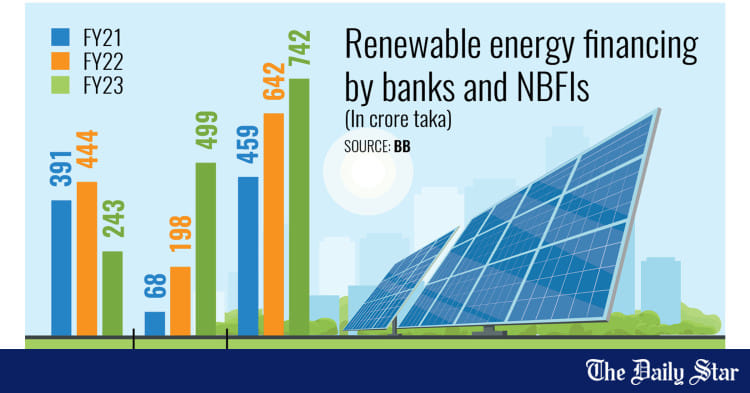
The interim government prioritises renewable energy generation, but it is also important to remember that implementing renewable energy should not come at the expense of the environment and society. The zero-carbon target should encourage no enforced evictions or unlawful use of agricultural land. Bangladesh needs to re-evaluate all the power and energy sector agreements with private and foreign entities and publish a report on why the cost of solar has been high. We learn from various sources that the cost of land, high tariffs, and costly panels are some of the reasons for the high cost of solar. However, there is no clear data on the existing solar plants to explain why the cost is high for utility-scale solar power. Should the government demonstrate a serious commitment to solar adoption, we must analyse the cost components of all existing solar plants to determine the justification of the existing purchasing power agreements.

Let us delve into the question of how the interim government will delegate decisions of phasing out existing plants and replacing them with solar and wind power.

Can we just keep adding solar power plants and not care about the old establishments?

A lack of societal trust stemming from previous unsuccessful rooftop projects can explain people's reluctance to install solar rooftops. The existence of syndicates selling low-quality rooftop solar panels also lowered public trust. The government needs to devise a strategy to cultivate this trust. We can encourage more people to use rooftop solar in residential, administrative, and industrial buildings by setting some good examples.

Society has been suffering from collective trauma for many years. People are deeply frustrated by the revelation of money leakage and costly and low-quality services. For an interim government to bring back trust is a real challenge. However, it is not impossible if the government stays on the right track and restructures the institutions to ensure mechanisms of accountability and transparency. Only by doing so can the government value the lives of hundreds of martyrs and many more injured in the July uprising. The debt to the martyrs is now much higher than the debt to the foreign countries and their banks. While taking future decisions we must not forget that.

Moshahida Sultana is assistant professor of Department of Accounting and Information Systems, University of Dhaka.​
 
Analyze

Analyze Post

Add your ideas here:
Highlight Cite Fact Check Respond
  • Love (+3)
Reactions: Bilal9

Dearth of reliable energy a major concern for businesses
Experts say

The shortage of reliable energy is a big concern for Bangladesh due to the country's dwindling natural gas reserves and the escalating global prices of fossil fuels, according to energy experts, as they advocated for alternatives such as renewables and liquefied petroleum gas (LPG).

At a meeting held yesterday at the Pan Pacific Sonargaon Dhaka, the experts said the nearly identical commercial energy usage in FY22 and FY23 shows the acuteness of the energy shortage faced by the industrial sector.

"For a developing country, this is not a positive sign for industrialisation," said Ijaz Hossain, former dean of the Bangladesh University of Engineering and Technology (Buet), during a presentation at the event organised by the Foreign Investors' Chamber of Commerce & Industry (FICCI).

"Despite an increase in the number of factories and their production, gas supply to the industrial sector has remained constant over the past decade. This demonstrates the acute energy crisis in industrial units," he added.

Referring to Petrobangla data, Hossain warned that if the current gas consumption continues, the country's gas supply could be depleted by 2030.

According to him, discovering new gas wells is urgent.

The energy expert said without drilling at least ten new wells annually, Bangladesh may become heavily reliant on imported liquefied natural gas (LNG).

According to Hossain, Bangladesh is also losing around 10 percent of the national grid supply to illegal connections, which equates to $1 billion per year.

"This is simply theft," he added. "It has become extremely shocking."

The energy expert suggested that if illegal gas connections to domestic households were factored in, the estimated losses would be even higher.

He suggested replacing the domestic gas supply with LPG gradually, even by offering subsidies to encourage its use.

Regarding renewable energy, the former Buet teacher said Bangladesh is likely the only country worldwide where the share of renewable electricity in total electricity generation has decreased over time.

He said the contribution of renewables to national power generation declined from 11 percent in 1990 to 1.33 percent in 2023.

"Importing energy is more expensive than importing food," said Hossain. "If the government allowed around 1 percent of farmland for solar panels, around 50,000 megawatts of electricity could be generated."

At the programme, Energy Adviser Muhammad Fouzul Kabir Khan criticised the previous government's energy tariffs.

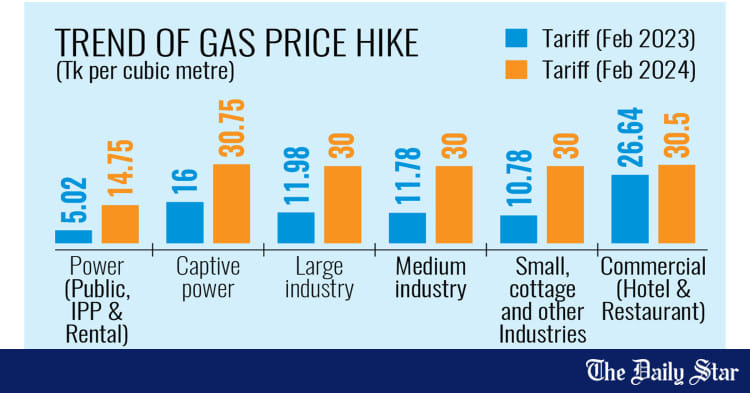
"The previous government set exuberant tariffs by claiming the sector was in emergency. But how long can an emergency persist?" he questioned.

"We have dismantled the corrupt practices established by the previous government over the past 15 years," he claimed. "The previous government bypassed the Bangladesh Energy Regulatory Commission (BERC) for setting prices, but we have restored the commission's authority.'

Khan mentioned that the current government is revising renewable energy policies. It is developing a renewable energy park in Jabalpur, where the government will provide land and transmission lines to the private sector.

The government's primary objective is to reduce subsidies in the power sector by lowering the cost of power procurement, he said.

Zaved Akhtar, president of FICCI, said investment decisions by entrepreneurs are heavily influenced by the availability of reliable energy solutions.

He called for a comprehensive roadmap for renewable energy development.

Similar to Hossain, Badrul Imam, an honorary professor at the Department of Geology at Dhaka University, suggested that Bangladesh should prioritise gas exploration, as it has not invested sufficiently in this area.

M Rezwan Khan, a professor emeritus at the Department of Electrical and Electronic Engineering at United International University, proposed allowing industries to install solar panels on their factory premises.

Mollah Amzad Hossain, editor of the Energy & Power Magazine and Nowshad Ali, country manager of GE Vernova Bangladesh, were also present.​
 
Analyze

Analyze Post

Add your ideas here:
Highlight Cite Fact Check Respond

Bangladesh needs greater focus on renewable energy
Staff Correspondent 20 October, 2024, 22:40

1729468802936.webp

Power, energy and mineral resources adviser Muhammad Fouzul Kabir Khan, former BUET dean and chemical engineering department professor Ijaz Hossain, GE Vernova Bangladesh country manager Nowshad Ali, Dhaka University honorary professor Badrul Imam, former United International University vice-chancellor and professor emeritus M Rezwan Khan and Energy and Power Magazine editor Mollah Amzad Hossain are present at a luncheon meeting hosted by the Foreign Investors’ Chamber of Commerce and Industry at the Pan Pacific Sonargaon in Dhaka on Sunday. | Press release photo

Energy experts at a meeting in the capital Dhaka on Sunday urged the interim government for taking pragmatic actions for renewable energy projects amid growing demands for power and energy as the country has been losing its gas reserves fast.

Speaking at the meeting on urgent energy challenges in Bangladesh and sustainable energy options, they said that the government should make investments in rooftop solar photovoltaic (PV) projects flexible, rein in gas supply for domestic use and accelerate exploration of natural gas.

The Foreign Investors’ Chamber of Commerce and Industry organised the meeting at a Dhaka hotel where investors requested the government for accessible industrial lands, net metering system and congenial atmosphere for investment.

Addressing as chief guest, power, energy, and mineral resources adviser Muhammad Fouzul Kabir Khan said that the government had taken several steps to ‘dismantle the whole architecture of corruption’ in the country.

‘Instead of independent power producer or IPP options, we are encouraging the merchant power policy mechanism to break monopoly in the sector,’ Fouzul said.

He added that the government would provide investors with land and transmission facilities in Jamalpur district-based solar power park.

Presenting his keynote paper, former dean of engineering at Bangladesh University of Engineering and Technology, Ijaz Hossain, said, ‘Bangladesh stands on a very difficult juncture as the country’s gas reserves will deplete by 2031.’

He warned that Bangladesh’s energy supply chain would be ruined if the government continued importing expensive liquefied natural gas to feed domestic consumers and CNG-run three-wheelers, depriving industries.

GE Vernova Bangladesh’s country manager Nowshad Ali moderated a panel discussion where professor emeritus of United International University M Rezwan Khan, while replying to a question, recommended that processing investments in rooftop solar PV and net metering systems should be made flexible.

‘About 8,000MW power could be generated if solar PVs cover the existing industrial unit rooftops. The amount could be raised to 12,000MW if the government relaxes the terms and conditions on rooftop power installations,’ Rezwan said.

Dhaka University’s honorary professor Badrul Imam put emphasis on low-carbon emitting energy sources while Energy and Power Magazine editor Mollah Amzad Hossain requested the interim government to review its recent decision that suspends developing several letters of intent-secured renewable power plants.​
 
Analyze

Analyze Post

Add your ideas here:
Highlight Cite Fact Check Respond
  • Love (+3)
Reactions: Bilal9

Members Online

Latest Posts

Back
 
G
O
 
H
O
M
E