Home Watch Videos Wars Login

[🇧🇩] Energy Security of Bangladesh

[🇧🇩] Energy Security of Bangladesh
515
17K
More threads by Saif

G Bangladesh Defense

New gas reserve found in another Sylhet well
UNB
Published :
Oct 22, 2024 20:10
Updated :
Oct 22, 2024 20:19

1729644749950.webp


A new gas reserve has been found in another well in Sylhet Gas Field, Managing Director of Sylhet Gas Fields Limited (SGFL) Mizanur Rahman said on Tuesday.

He said the new gas was found at the Well No. 7 of the gas field after completion of the drilling.

He said the field is expected to produce 7-8 million cubic feet of gas per day (MMCFD). “The new gas was discovered at a depth of 1,200 meters in the well.”

He also noted that on August 14, gas was found from a similar structure of the well at the depth 2010 meters from which primarily 6 to 7 MMCFD is being produced.

“Now the new gas is an addition to the previous one, “ he said adding, “We hope that new gas will be possible to add to the national grid shortly.”

The BGFL officials said that following drilling of a number of wells, some 60-70 MMCFD gas was obtained which is now being supplied to the national grid.

Earlier, on May 24 of this year, 21 MMCFD gas was found in well No. 8 of Kailashtila gas field in Sylhet after drilling to a depth of 3,440 meters in the well.

Before this, on January 27, a new gas structure was found in well No. 2 of Rashidpur under Sylhet gas field which has a reserve of about 157 billion cubic feet (BCF).

The gas fields operated under the SGFL have been supplying more than 100 MMCFD gas to the national grid.

The officials said they have been working to increase the production level to 150 MMCFD by completing a few more projects this year.

If all the work is completed by 2025 as per the time set by the government, it will be possible to add 250 MMCFD gas to the national grid from the fields under the SGFL alone, said a top official.​
 
Analyze

Analyze Post

Add your ideas here:
Highlight Cite Fact Check Respond
  • Love (+3)
Reactions: Bilal9

Gov to buy two cargoes of LNG from spot market

1729812096878.webp

Bulk carrier M/V Razoni, carrying a cargo of 26,000 tonnes of corn, leaves Ukraine’s port of Odessa, en route to Tripoli in Lebanon, yesterday, amid Russia’s military invasion launched on Ukraine. Photo: AFP

The advisory committee on government purchases yesterday approved the import of two cargoes of liquified natural gas (LNG) from the spot market.

Switzerland-based MS TotalEnergies Gas & Power Ltd will supply each million British thermal units (MMBtu) of the first consignment at $13.94 and the second at $13.57.

Each cargo is equivalent to 33.60 lakh MMbtu.

The first consignment will cost Tk 657.61 crore and the second Tk 640.15 crore, according to the meeting minutes.

"The committee approved the purchase after getting quotations from the companies, which signed the Master Sale and Purchase Agreements with Petrobangla in line with the Public Procurement Rules 2008," the minutes read.

The government also approved the purchase of 30,000 tonnes of muriate of potash (MOP) fertiliser.

Around 30,000 tonnes of MOP will be supplied by Russian Company JSC Foreign Economic Corporation "Prodintorg" at a price of $289.75 per tonne.

Finance Adviser Salehuddin Ahmed, who is currently in the US to take part in the annual meetings between the World Bank and the International Monetary Fund, joined virtually.​
 
Analyze

Analyze Post

Add your ideas here:
Highlight Cite Fact Check Respond
  • Like (+1)
Reactions: Bilal9

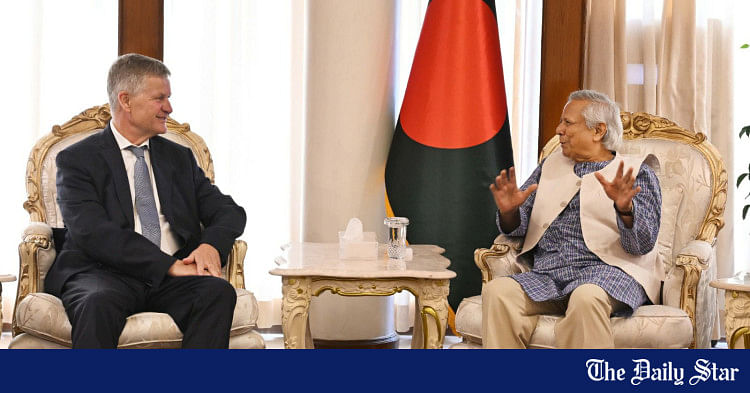
‘They got capacity charges for 16yrs. Not anymore’
Says Energy Adviser Fouzul Kabir Khan about power plants

1729899958924.webp


A retired bureaucrat, Muhammad Fouzul Kabir Khan has been tasked with heading three significant ministries for the economy: power, energy and mineral resources; road transport and bridges; and railways.

The Daily Star sat down with him for a comprehensive interview on his plans for the three ministries, which are mired in allegations of mismanagement and corruption by the previous Awami League-led government.

The Daily Star: What has your experience been so far?

Adviser:
People have heard stories of development over the years -- that the per capita income has soared, the GDP growth is high, the economy has grown and so on. But people could not relate themselves to those big numbers -- their way of life was contrary to the numbers.

The Awami League government had created a chain of corruption. Those who belonged to the chain were the beneficiaries only. As a result, people wanted an overhaul of the system -- an end to all types of corruption. So, our main focus is on what people want and what their expectations are.

DS: What is the situation in the power sector now?

Adviser:
A network of corruption was created here too and the anchor of that architecture was the Indemnity Act of 2010 (Quick Enhancement of Electricity and Energy Supply-Special Provisions).

The decisions made under this act were without proper scrutiny -- some were given all the benefits. So, we decided that we would not continue that act. We have formed an independent committee to review all the deals signed under this act.

We have suspended new projects that were taken up under this act and we are scrutinising projects that have started or nearing completion.

We are floating tenders and following the Public Procurement Rules 2008 in taking up new projects or procurements.

DS: What is the fate of the power plants that have been taking capacity charges without producing electricity?

Adviser:
We are not extending any agreement with such power plants. We have said that no plant will get a tenure extension. Some came to me saying that if we don't extend the tenure, it may create problems in particular areas. But we asked them how a deal signed for five years was extended to 16 years. You enjoyed capacity charges for 16 years -- not anymore. Due to those quick rental plants, the power tariff has increased.

DS: How do you see the power sector when you leave your position?

Adviser:
The main problem in this sector is the lack of energy supply. Our gas production is declining. We are emphasising gas extraction through BAPEX. The plan is to drill 50 wells next year and 100 wells the year after.

Our next strategy will depend on the success of the drilling process. If we get at least 1-2 trillion cubic feet of gas reserves, we will take a strategy. If not, we will import liquefied natural gas.

If needed, we will set up two more floating storage regasification units. One will be installed in the south and another in Moheshkhali. But we will go through the tendering process.

We are also trying to figure out how we can import fuel at a cheaper rate. Besides, we are trying to reduce the subsidy burden of the Bangladesh Power Development Board without increasing the power tariff.

Initiatives have been taken to float tenders for 40 renewable energy projects and those will reduce the power tariff.

DS: What is the current debt status of the power and energy sector?

Adviser:
When we took charge, several companies wrote to us that if we don't pay their dues within a certain period, they will stop the supply. India's Adani Power also stressed their payments.

There were dues of about $1.2-1.5 billion only in the energy sector. That has now dropped to $700 million. The situation is fairly satisfactory now.

DS: You have curtailed the power of the ministry in setting fuel prices to make Bangladesh Energy Regulatory Commission stronger, but prices of some products like diesel, petrol and jet fuels are still being set by the Bangladesh Petroleum Corporation. Is there any plan to let BERC deal with such products in future?

Adviser:
We need to think more about it. Sometimes, the fuel price shoots up in the global market and sometimes it drops drastically. There is a method for fuel pricing -- if the price goes up too much in the global market, the government may want to keep it normal by providing subsidies. But if the responsibility is given to BERC, they will go for manual pricing and the public interest may be compromised. We will discuss it more.

DS: Electricity customers are fed up with the charges of prepaid and postpaid meters. Do you have any plans?

Adviser:
I am facing questions on this from even my relatives. All types of consumers are fed up with this meter charge. We told BERC to identify the problem first -- let's see what we find.

DS: People want to know the status of the mega projects and their future.

Adviser:
I have been visiting such project sites myself. I get disappointed everywhere as public interest was not considered while taking most of those million-dollar projects. Most of them were taken up considering the vested interests of some groups.

It was never considered how the projects would serve the people and how many people would they serve. For example, the Padma rail link project was taken at a cost of Tk 40,000 crore. I asked the officials what their revenue target was and they said about Tk 1,400 crore a year. When I wanted to know the current revenue, I found that the project fetched Tk 37 crore in the first six months.

Although the revenue will increase when the line connects Jashore from Bhanga, but how much? It may rise to Tk 80 crore or Tk 100 crore, but where will Tk 1,400 crore come from?

Let us have a look at another project in the Matarbari area of Cox's Bazar. There was supposed to be a port and an export processing zone (EPZ) built in the area and those would require electricity. It's very logical.

But when I visited the area, I saw that there was no port or EPZ. However, the power plant has already been completed. Why is this? It's because someone involved with the corruption network wanted a power plant and got it. Where is the public interest here for a Tk 42,000 crore project? It remains on paper only.

DS: How do you define such projects and what will be their fate when they are already completed?

Adviser:
All are vendor-driven development in the name of public interest. The vendors wanted work and the government awarded them. There was no collaboration between the projects. For instance, there is a power plant but the transmission line is yet to be completed. If there is a pipeline, the gas supply is absent. We are trying to create a linkage between the completed projects to get the result with lower costs.

DS: Let's talk about the transport sector.

Adviser:
It's the same, the characters of the projects are no different. The cost of repairing a road is huge. Though they followed the PPR and initiated a good practice of e-tendering, we have seen some loopholes in the process. E-tenders have changed the culture of using muscle power to win tenders. But the people to whom the tenders are submitted or who lead the process have become corrupt -- this has been acting as a bigger deterrent than muscle power.

DS: Can you provide us with examples?

Adviser:
Some of the project directors let the vendors know the base price of the quotation. Some tender notices are designed in a way that a pre-selected vendor is awarded. As a result, the winners of the tenders are the same partisan people who were involved with the government.

Besides, there is a clause that requires experience. As a result, strategies were adopted to benefit those who are experienced. And for the next project, the conditions are set in such a way that only those blessed ones are eligible. This is how oligarchs were created in every sector.

DS: Does it mean that the PPR will be reviewed?

Adviser:
Yes, we have formed a committee of advisers including Wahiduddin Mahmud, AF Hassan Ariff, Syeda Rizwana Hasan and Adilur Rahman Khan. I am also there to review the PPR. We are now reading working papers.

DS: Extension of project tenure has become a regular occurrence.

Adviser:
It has become a culture. There are some arguments to increase the tenure but most of them are illogical. We have taken a position here: projects must be completed within the allotted time.

DS: What is the condition of the railway?

Adviser:
There are problems related to the train schedule and routes. Many complain about not getting tickets online. We have taken the initiative to probe if there are irregularities in the ticketing app Shohoz. We have a shortage of locomotives and carriages, and deficiencies in lines. There are unnecessary projects here, too.

DS: One metro rail has been built in Dhaka. What will be the fate of the other metro projects taken by the previous government?

Adviser:
There are no plans to cancel metro initiatives. However, the project costs will be reviewed.

We are trying to set the right people in the right places. Interestingly, the former managing director of Dhaka Mass Transit Company MAN Siddique has created a rule that nobody except former secretaries will be able to hold the post and he didn't create his successor. This is a technical place -- how can a former secretary be effective here?

Those who have knowledge about metro rail operations will lead the management of the metro rail company in Dhaka. There are many Bangladeshis abroad. We will form a technical committee to find the right person.

DS: There is little time and public expectation is huge from this government. The results are not visible yet.

Adviser: People don't see the work behind the scenes. The results will be visible soon -- people will feel it.​
 
Analyze

Analyze Post

Add your ideas here:
Highlight Cite Fact Check Respond
  • Love (+3)
Reactions: Bilal9

We agree with the power adviser
Capacity charge payments to idle power plants must stop


1729987704743.webp

Visual: Star

We are pleased to note that the interim government has decided to terminate agreements with power plants that have been collecting capacity charges without producing electricity. In an interview with this daily, Muhammad Fouzul Kabir Khan, who currently oversees three ministries under the interim government, said that this decision was made in the public interest—a sentiment we fully support. For years, we have voiced concerns about the previous government's costly decision to pay idle power plant owners through capacity charges, wasting significant taxpayer funds and channelling resources into the hands of individuals politically connected with the former Awami League regime.

The adviser expressed his surprise at how a five-year agreement was extended to 16 years. He also revealed that a network of corruption had developed within the power sector, rooted in the structure of the Quick Enhancement of Electricity and Energy Supply Act of 2010. This indemnity law, originally intended to provide short-term relief from power shortages, ultimately became a permanent arrangement. As a result, decisions made under this act lacked proper scrutiny, enabling one-sided benefits for power plant owners at the expense of public interest. According to some estimates, from 2009 to the fiscal year 2023-24, Tk 1,37,000 crore has been paid for capacity charges or rentals without utilising the production capacity. Clearly, the country could ill afford such waste. And even our current economic predicament can, to a large extent, be attributed to this. Which is why the decision by the interim government to not extend any agreement with such power plants was extremely necessary.

Furthermore, according to the adviser, such criminal networks have also established themselves in other sectors of the country. This is what made the Awami League's megaprojects—undertaken without proper consideration of their true benefits—so costly for the public. Such corruption has made nearly all public projects much more expensive than they should have been, while simultaneously creating a corrupt culture that is proving difficult to change.

Despite the enormity of the task of rooting out such corruption, it is essential for the current government to reform these sectors urgently. Given the economic constraints that Bangladesh already faces, it cannot afford to continue losing such exorbitant funds to corrupt practices.

In line with that, while the government's decision not to pay capacity charges is a positive step, it should go further and repeal the power indemnity law that has drained the economy. The government should also amend the regulatory commission law to restore its right to hold meaningful public hearings before any increase in energy prices. At the same time, the commission should work to eliminate inefficiency and corruption to ensure an uninterrupted energy supply without any further unjustified price increases.​
 
Analyze

Analyze Post

Add your ideas here:
Highlight Cite Fact Check Respond
  • Love (+3)
Reactions: Bilal9

Beza may build solar parks in Mirsharai EZ

1730164204208.webp


The Bangladesh Economic Zones Authority (Beza) is considering utilising unused land to establish solar power parks at the Mirsharai Economic Zone in Chattogram, the largest industrial enclave in the country.

The agency aims to establish the renewable energy project under a public-private partnership (PPP) model, said Ashik Chowdhury, the newly appointed executive chairman of both Bangladesh Investment Development Authority (Bida) and Beza.

Beza has already allocated around 5,400 acres out of 16,800 acres for the establishment of factories among 156 investors.

As per the plan, factories will be established on 55 percent or 9,240 acres of the land. Another 25 percent, or 4,200 acres, will be used for roads, utilities, lakes and vegetation while the remaining 20 percent will be left vacant for lakes and afforestation.

Chowdhury said the agency wanted to ensure that investors who have already availed land can execute their plans.

"We are looking at development on a phase-by-phase basis. Once the phasing plan is confirmed, we will consider solar projects," he said.

This means that a portion of the 3,840 acres available for establishing factories could be repurposed for solar power parks.

"There is no benefit in leaving the land unused for 15 years, Chowdhury said, adding that they have already shared the idea with the Ministry of Power, Energy and Mineral Resources and received a positive response.

Beza could provide land while the Bangladesh Power Development Board and a development partner could implement the project through a joint venture, he added. Financial support will be sought from the multilateral lenders, the Beza executive chairman added.

Although they are still in the planning stage and costs are yet to be estimated, Chowdhury was keen to install the solar panels by 2027.

Besides, investors there can install their own solar panels, he said.

Beza will first decide which project to press for implementation in the next five years on the basis of prioritisation. "We will make a clear plan in this regard," he said.

"Likewise, we will implement the projects phase by phase," said Chowdhury, adding, "I want to make honest and clear promises that investors can trust."

"I do not want to make any promises that are not fulfillable," he stressed.

He also said they would determine specific points around the zone where investors would be able to avail of all utility services, starting with electricity, from 2028.

"We will give investors a clear picture of where they can set up their industries. That's why I want to make honest and clear commitments like phase 1, phase 2 and phase 3," he added.​
 
Analyze

Analyze Post

Add your ideas here:
Highlight Cite Fact Check Respond
  • Love (+3)
Reactions: Bilal9

Members Online

Latest Posts

Back
 
G
O
 
H
O
M
E