New Tweets

[🇧🇩] Energy Security of Bangladesh

G Bangladesh Defense
[🇧🇩] Energy Security of Bangladesh
546
19K
More threads by Saif


Is renewable deployment suffering from fossil fuel lock-in?​

Technological lock-in refers to the situation of persistent failure to switch to a new technology as replacing the incumbent technology becomes highly expensive

1708213605082.png

VISUAL: REHNUMA PROSHOON

While the peak electricity supply reached 15,604MW in Bangladesh at the beginning of summer, many areas, mostly outside Dhaka, have been facing long hours of load-shedding and disruption of economic activities. The reason behind the current crisis is not the lower installed capacity, but the inability to buy imported energy to run the existing power plants and interrupted services due to technical inefficiency. It is tragic to see that while people are suffering from the crisis, over 40 percent of installed capacity remains idle. It is even more tragic that the new capacity addition of 660MW from the trial operation of Rampal and import of 748MW from Adani's Godda coal-based power plant could not be of any use to reduce people's suffering. On top of that, more committed power plants including Matarbari, Banshkhali, Rooppur nuclear power plant, and the second unit of Payra are waiting to be finished.

The question is no longer whether Bangladesh has the installed capacity to meet the electricity demand. Rather, the question is whether Bangladesh will be able to pay for the imported energy to fulfil its demand amid the US dollar crisis coupled with high international prices and dwindling foreign exchange reserves.

The excruciating summer temperature and the deteriorating power crisis in Bangladesh brought back the agenda of solar electricity. In this respect, recent policy developments need attention. The draft renewable energy policy set a target to increase the renewables' contribution to 40 percent by 2041. So far, the feasibility of the target has been discussed mainly from the technical and economic perspectives. Previous debates mostly focused on grid capacity, intermittent supply, battery use, demand management, etc. Another concern has been the high cost of solar power, until the cost declined globally over the last decade. Now, the new experiences of integrating renewables to the grid are widely known. Significant spillover of knowledge around the world made solar technology accessible to countries like Bangladesh. However, while the fossil fuel lock-in as a barrier to clean energy technology adoption is widely discussed in the West, it is yet to receive much attention in Bangladesh.

Technological lock-in refers to the situation of persistent failure to switch to a new technology as replacing the incumbent technology becomes highly expensive. Although the term has been used by economists, historians and sociologists since the 1980s, scholars have started to use "lock-in" in relation to fossil fuel use and the difficulty to switch to renewable energy. Others use the term carbon lock-in to describe a force that prolongs fossil fuel use despite knowing the risks of fossil fuels and having cost-effective alternatives. As a consequence, low-carbon technology diffuses at such a slow rate that the cost to society and the environment becomes too high.

Currently, many countries that are willing to phase out coal are finding it difficult to replace it, because it has already established a deep-rooted connection to society, institutions, and the economy. When a technology is adopted, it is not only about the energy it uses, it is also about the employment it creates, and the dependency it creates with the infrastructure, industry, and society. It is now very difficult for coal-dependent countries like Germany, India, Indonesia, and China to replace coal because it is expensive to replace the technology. The coal phaseout in those countries are slow, not only because the strong coal lobby resists phaseout, but also because it is expensive to compensate the workers, employ them elsewhere, and reorganise the infrastructure, economy, and institutions for clean energy use.

Considering the electricity overcapacity in Bangladesh created over the last decade, I want to say that Bangladesh, with its decisions to build coal power plants and an expensive nuclear power plant, has already started to feel the symptoms of technology lock-in. Even if Bangladesh wants to replace the existing technology with renewable technologies in the future, the possibility is getting weaker every day.

The investment of billions of dollars in LNG infrastructure, coal, and nuclear power plants over the last decade has already made the incumbent projects irreplaceable. It has already become difficult to implement a clean energy plan because of the existing overcapacity. Financing new renewable energy projects will most likely create some level or redundancy in the committed and existing installed capacity. Bangladesh's installed capacity of renewables is 966MW, which is 3.6 percent of the total installed capacity (26,700MW). The actual contribution to solar electricity supply is less than one percent (Ember 2023). By 2026, Bangladesh needs to install more than 1,500MW from renewable sources to reach the 10 percent target. The question is: don't we have to pay capacity charges to the idle plants? Obviously, we will have to pay unless the old ones are phased out.

Currently, the existing on-grid installed capacity of solar power is 367.81MW. There are 550MW solar park projects committed; all are at the implementation stage. The 200MW solar power plant in Gaibandha is operating on trial. Although there are more at the planning stage, there is little understanding of whether they will be implemented or not.
Considering the electricity overcapacity in Bangladesh created over the last decade, I want to say that Bangladesh, with its decisions to build coal power plants and an expensive nuclear power plant, has already started to feel the symptoms of technology lock-in. Even if Bangladesh wants to replace the existing technology with renewable technologies in the future, the possibility is getting weaker every day.​
The rising overcapacity is a concern not only because it is expensive now, but also because it will potentially reduce our ability to switch to cheaper alternatives. According to the new draft renewable energy policy, the targets to increase the renewable electricity supply are 2,500MW by 2026 (first phase), 8,000MW in 2026-2030 (second phase), and 24,000MW in 2030-2041 (third phase). The targets assume total installed capacity will be more than double (60,000MW) the current installed capacity (26,700MW) by 2041. It is also assumed that Bangladesh's GDP will grow above seven percent average. The Russia-Ukraine war, dollar crisis, rising inflation, forex reserve crisis, and poor economic performance do not seem to increase the demand as high as the predicted growth level. So, the new addition by committed power plants will more likely increase the burden as more plants need to remain idle.
The current gap between predicted and actual demand has questioned the reliability of the demand estimation. Even the past electricity demand estimation of the 2016 Master Plan was based on the assumption of 10 percent demand growth. The draft Integrated Energy and Power Master Plan (IEPMP) 2022 estimated that if the existing and committed power plants (gas, oil, coal, nuclear, and import) start production, by 2030 the total installed capacity will be 35,261MW. Based on various scenarios, the maximum demand in the same year will range from 31,709MW (low) to 41,890MW (high). After allowing for 10-15 percent reserve margin, the existing and already committed power plants will most likely satisfy the low scenario predicted demand, at the cost of limiting solar growth.

The existing coal-based capacity is 1,661MW, and committed capacity is 8,256MW. If more coal-based power plants are planned without considering the potential lock-in in the future, the electricity sector will again face a crisis. The persistent gap between actual generation and installed capacity has flagged the problem. It should ring the alarm now, rather than later when it will be even more difficult to replace the incumbent technologies. The government should learn from the crisis, revise the demand growth estimation based on more realistic assumptions, stop fossil fuel-based power plants, invest more on renewable deployment, and save the country from potential carbon lock-in. Expressing intention to transition to clean energy is not sufficient to save us from carbon lock-in.

Moshahida Sultana Ritu is associate professor of economics at the Department of Accounting and Information Systems, University of Dhaka.

 
Analyze

Analyze Post

Add your ideas here:
Highlight Cite Respond
  • Like (+1)
Reactions: Bilal9

Nuclear fusion: A big step towards clean, limitless energy​


1708213914764.webp


The 35-nation International Thermonuclear Experimental Reactor (ITER) under construction in Cadarache, France is the world’s largest tokamak fusion reactor. Pictured here is the facade of the Tokamak Complex in October 2022. PHOTO: ITER

The declining reserves of fossil fuels and their detrimental effects on the environment have thrust nuclear power into the limelight. However, the 1986 Chernobyl and 2011 Fukushima accidents involving fission-based nuclear reactors that are in use now have heightened our doubts about nuclear technology's ability to provide a safe way of generating clean power.

Within the context of climate change, nuclear fusion is an attractive alternative because it does not produce greenhouse gases (GHG). Besides, unlike fission, fusion has a low burden of long-lasting dangerous radioactive waste. Fusion's by-product is helium, which is a non-toxic, non-radioactive gas used to inflate children's balloons.

So what is nuclear fusion? It is a process in which two lighter nuclei, typically isotopes of hydrogen such as deuterium and tritium, combine together under extreme conditions to form a heavier nucleus, releasing inexhaustible amounts of energy. A "fusion reactor" buried deep in the Sun's interior produces, in one heartbeat, the energy equivalent of 100 billion nuclear bombs.

Major challenges:

The quest to make fusion a viable power generation option has turned out to be extraordinarily difficult.

Yet, since the 1950s, scientists have been working tirelessly to develop a fusion reactor with the following goals in mind: 1) achieve the required temperature of more than 100 million degrees Celsius to ignite a self-sustaining fusion reaction, 2) contain and control the staggering levels of heat generated in the plasma, which is an ultra-hot soup of gases in which the electrons are completely detached from the atomic nucleus, 3) keep the plasma together at this temperature long enough to get useful amounts of energy out of the reaction, and 4) obtain more energy from the reaction than is used to heat the plasma to the ignition temperature.

The breakthroughs:

In August 2021, researchers at the National Ignition Facility (NIF) at the Lawrence Livermore National Lab in California were able to ignite a fusion reaction that lasted for a fraction of a second by pumping laser beams into a tiny chamber containing deuterium and tritium. A year later, researchers in South Korea were able to keep the reaction going for 30 seconds at temperatures beyond 100 million degrees Celsius.

The energy yield of both the experiments was modest and less than the energy needed to ignite the reaction.

Physicists have also devised two competing techniques to control the hot plasma and keep it away from the walls of the container. They are magnetic confinement and inertial confinement. The one that is preferred by fusion researchers is a magnetic confinement device called "tokamak." This workhorse of fusion is a doughnut-shaped chamber in which magnetic fields keep the plasma in perpetually looping paths without touching the walls.

The energy gain breakthrough:

On December 13, 2022, the US Department of Energy announced that scientists at the NIF had managed for the first time ever to achieve a "net energy gain" – producing more energy in a fusion reactor than was required to drive the process. In particular, it produced three million joules of energy, with about two million joules going into the reaction. (To put the unit of energy into perspective, the kinetic energy of a one tonne car moving at 100 mph is one million joules.) In the past, the energy input far exceeded the energy output from a fusion reaction.

So what does this mean for the possibility of creating effectively unlimited amounts of clean energy? Fusion researchers denote the ratio of output energy to input energy with the letter Q. Although in this experiment Q=1.5, fusion reactors will have to reach a threshold of Q=10 before energy generation can be considered practical for commercial use.

While the amount of energy released in the experiment at the NIF is barely enough to boil water for a few cups of coffee, in some ways, it is a scientific milestone in the sense that scientists and engineers, after "more than 60 years of research, development, engineering and experimentation," achieved a Q-value of greater than one.

Moreover, once vetted by outside experts, this landmark achievement will be a big step forward towards clean, limitless energy – at least four million times more energy than is produced by burning coal or oil, according to the UN's International Atomic Energy Agency. More importantly, it promises to stimulate interest in fusion-related research, and possibly leverage funds for building fusion reactors.

Future outlook:

Considered to be the holy grail of energy, nuclear fusion has the magic wand that will most certainly solve our lingering energy problem.

Having said that, significant challenges still remain. Researchers are now actively working on improving laser technology and reactor design at several laboratories in the US and around the world. But the high cost of research and very expensive hardware limit most of the work to multinational consortia.

The 35-nation International Thermonuclear Experimental Reactor (ITER) under construction in Cadarache, France is the world's largest tokamak fusion reactor. Since its inception in 2006, ITER has progressed in fits and starts. It is beset with technical delays, a labyrinthine decision-making process, and cost estimates that have soared from EUR 5 billion to around EUR 20 billion.
Regardless, ITER will move the world a step closer to creating energy that is inherently safe and clean, using controlled thermonuclear fusion.

Ultimately, though, the achievement of fusion energy production with Q greater than one does not necessarily mean a green energy revolution is imminent. It will probably be years, likely a decade or so, before fusion power bears fruit. And it is also not clear if fusion will ever be cheap enough to radically transform our power grid.

Dr Quamrul Haider is a professor of physics at Fordham University in New York, US. He is also one of the authors of the book Nuclear Fusion ‒ One Noble Goal and a Variety of Scientific and Technological Challenges.
 
Analyze

Analyze Post

Add your ideas here:
Highlight Cite Respond
  • Love (+3)
Reactions: Bilal9

Power production from coal up, several oil plants shut​

M AZIZUR RAHMAN
Published :​
Feb 18, 2024 00:10
Updated :​
Feb 18, 2024 00:10

1708215374828.webp


Energy transition leads Bangladesh to plan substantial cut in import of petroleum products in 2024 as gasoil demand falls amid increasing switch to power production from coal-fired plants, sources said.

State-run Bangladesh Petroleum Corporation's (BPC) has projected import of around 6.51 million tonnes of refined petroleum products during January-to-December period this year, down 15.34 per cent from the 2023 imports, they said.

Bangladesh is currently going through an energy transition by way of reducing dependence on petroleum products of both diesel and furnace oil to generate electricity, which is trimming down its fuel consumption.

The country has already shut down six privately owned gasoil-fired power plants having the total generation capacity of around 1,000 megawatts. The laid-down plants are Jessore 100MW and Daudkandi 200MW owned by Bangla Track, Awarahati 100MW and Brahmangaon 100MW owned by Aggreko, APR Energy's Pangaon 300MW, and Paramount's Baghabari 200MW plant. The shutdown came in 2023, according to official data available with state-owned Bangladesh Power Development Board (BPDB).

The power authority also grounded several furnace-oil fired-power plants and softened deals with several others under 'no electricity, no pay' mechanism, in a change from the previous binding take-or-pay provision, to reduce the fuel consumption, said a senior BPDB official.

"The country, on the contrary, is relying more on coal and imported LNG for future power generation," he added.

Four coal plants with an aggregate capacity of around 3,365 megawatts are already in operation. The 1,234MW Maitree Super Thermal Power Project, SS Power's 1,224MW plant, Barisal Electric Power Co's 307MW plant and the 1st unit of Matarbari 1200MW plant initiated electricity generation in 2023. And the second unit of the Matarbari coal plant is expected to come online this coming March, the official lists the advances in the switch.

"These coal-fired power plants in Bangladesh alone will require around 45,000 tonnes of imported coal per day," says the official.

Experts say the import dependence for coal could be cut through mining domestic deposit of the fossil fuel discovered in huge volumes in the northern Dinajpur district. Currently coal is extracted at Barapukuria by a Chinese company.

On the other hand, the state-run oil corporation has projected to import around 4.29 million tonnes of diesel, 630,000 tonne of Jet A-1 fuel, 350,000mt octane, 1.15 million tonnes of furnace oil and 90,000 tonnes of marine fuel during January-December 2024.

The BPC will source around half of its total refined oils through international tenders, and the rest through government negotiations with state-run oil suppliers across the world, said the BPC official.

Separately, the country's private sector is likely to import around 3.0 million tonnes of furnace oil to generate electricity in their plants, said the BPDB official.

The state-run oil corporation will import around 1.5 million tonnes of crude oil in 2024, about 7.14 per cent higher than the crude-import volume during 2023, according to BPC.

Newly opened single-point mooring facility to import and store a significant volume of crude oil that prompted the BPC to import higher volume of crude to refine in the country's lone refinery -Eastern Refinery in Chattogram, said the BPC official.

The company imports crude from Saudi Aramco and Abu Dhabi National Oil Company (ADNOC) to refine at its sole refinery.
 
Analyze

Analyze Post

Add your ideas here:
Highlight Cite Respond
  • Like (+1)
Reactions: Bilal9

More gas likely to be found in Kailashtila field: Nasrul​

United News of Bangladesh . Sylhet | Published: 20:09, Feb 17,2024​
facebook sharing button

225730_148.jpeg

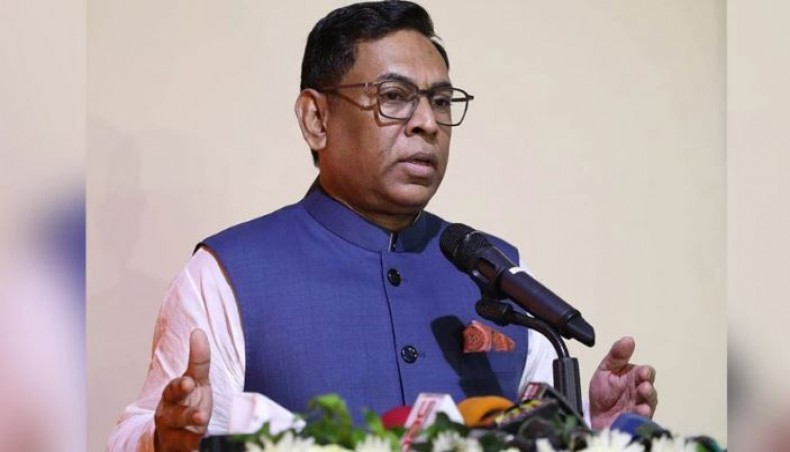
State minister for power, energy and minerals resources Nasrul Hamid. -- File photo.

State minister for power, energy and minerals resources Nasrul Hamid hoped that 1.6 TCF (trillion cubic feet) more gas would be found at the Kailashtila gas field in Golapganj upazila of Sylhet.

It will be confirmed once the drilling is completed within the next four months, he said.

The state minister made the remarks after visiting the Kailashtila well number-8 on Saturday.

Nasrul said that the Kailashtila field previously had 3 TCF reserves and more gas reserve would be found once the current search wells are drilled.

‘We are waiting for you to take initiative. The ministry does not undertake any project. We want everyone to show their capability. Sylhet gas field has moved forward, taking on more projects. We want others to come forward as well,’ he said.

Mizanur Rahman, managing director of Sylhet Gas Fields Limited, said that seven wells were drilled in Kailashtila earlier, and gas was found in every well.

It is expected to find more than 1 TCF of gas after digging at 3,500 meters of the well, he said.

The drilling of the Kailashtila-8 well started on January 11 this year. The work is expected to be completed in 120 days. State-owned Bangladesh Petroleum Exploration and Production Company is digging the well.

Besides, there is an existing transmission only one and a half kilometres away and a usable process plant at a distance of two and a half kilometres. Although gas is surplus in many areas, including Bhola, and Zakiganj, it cannot be used as there is no transmission.​
 
Analyze

Analyze Post

Add your ideas here:
Highlight Cite Respond

Industries in Dhaka, Gazipur, N'ganj still reeling from acute gas crisis​

UNB
Published :​
Feb 18, 2024 20:46
Updated :​
Feb 18, 2024 21:21

1708301743792.webp


Industries in Dhaka, Gazipur, and Narayanganj continue to be afflicted by an acute gas crisis, even though Titas Gas Transmission and Distribution Company, the state-owned distributor of natural gas, claims the situation has improved.

As reported in the media previously, garments and textiles firms in the industrial belt of these central districts have been suffering from an acute gas crisis for the last few months.

“The factories are in dire straits,” a top-level manager of a group of textile factories in Gazipur told UNB

Most of the industries in Gazipur do not get adequate supply of gas during their operational periods, the most crucial hours during which their machines need to be running. Inadequate supply manifests in the form of low pressure gas flow, he added.
Low pressure gas flow is akin to low voltage electricity - many appliances won't run, even though an electric charge is present.

The textiles group official said that due to the lack of gas supply, production in various factories is being disrupted and they are on the verge of shutting down.

In the ongoing gas crisis, important machines like generators and broilers in the dyeing section of the factories are not being run. This has been posing a great risk for the industries to continue their production and pushing them towards huge financial losses.

“Many industries would not be able to pay the salaries and festival bonuses during the coming Eid if the situation does not improve,” said an industry owner.

Industry insiders said there are more than 300 factories in Kaliakoir and other areas in Gazipur.

All these industries have been suffering from the nagging gas crisis and some of them have already suspended their productions.

Each of the industries has more than 1000 workers. But following the gas crisis, they have to reduce their production target while some of them use CNG at a higher cost to continue their operations.

A similar situation is prevailing in the Mirpur, Tongi and Narayanganj areas, said Mohammad Hatem, Executive President, of Bangladesh Knitwear Manufacturers and Exporters Association (BKMEA).

He said that despite increasing the price, the government is not able to provide adequate gas.

“Production in garment factories has come down to half due to non-availability of gas. Many buyers meanwhile are pushing for air shipments as the normal schedule for shipments has failed in keeping the commitment,” he said adding, some buyers are asking for discounts on the rates.

“Some customers are upset and cancel the order in such a situation,” he noted.

Recently the Bangladesh Chamber of Industries (BCI) has also alleged that no industry in the country is able to run at its full potential due to the gas crisis.

A Bangladesh Chamber Of Industries delegation, led by its president Anwar-ul Alam Chowdhury (Parvez), raised the allegation when it met Industries Minister Nurul Majid Mahmud Humayun at his ministry office.

The lone chamber for industries said the prices of electricity and gas were increased on the pretext of increasing prices on the international market in the hope that the government would ensure their continuous supply.

“But despite the declining trend of energy prices in the international market, it is being heard that the prices of electricity and gas will be increased again,” BCI said in a statement.

It demands for a sustainable solution to the problem. “If a long term plan is given to the industrial sector in terms of power and gas supply, it can move forward accordingly."

Titas Gas general manager Arpana Islam admitted the gas crisis. But she claimed that the situation has improved to some extent recently following measures to increase the gas supply.

She advised to talk to Petrobangla when asked whether there is any possibility in near future to further improve the gas supply situation.

Petrobangla official statistics reveal that in the last one month the total gas supply across the country has increased by just 100 million cubic feet per day (MMCFD) or so, leaving a deficit between production and supply of about 1500 mmcfd.

The Petrobangla data shows that on February 16 it produced 2671 mmcfd gas including its import from abroad against a demand for more than 4000 mmcfd.

The TItas Gas data also shows that about 30 power plants now remained out of operation due to gas shortage.​
 
Analyze

Analyze Post

Add your ideas here:
Highlight Cite Respond

Dark nights, hot days feared in long summer​

Emran Hossain | Published: 00:00, Feb 20,2024​
facebook sharing button

225946_188.jpg


This summer, due in less than two weeks, is feared to be long and hot, with almost nonstop load-shedding returning in February, the final month of winter.

Authorities forecast that they will need to increase power supply by 75 per cent by April, the hottest month, compared with what is now supplied—about 10,000MW.

Ensuring such a steep increase in power generation is very challenging for the government, particularly due to its shrinking fuel import capacity amid the worsening dollar crisis.

In the past summer, Bangladesh saw load-shedding exceed 3,000MW mainly because of the fuel crisis, as the maximum temperature crossed 40C on many days between April and June.

This summer is set to be different from any other summer people have ever experienced, as they are set to witness power prices go up frequently amid dark nights and hot days.

‘We cannot say there will be no load-shedding this summer,’ said Mohammad Hossain, director general, Power Cell, reminding the country of its dollar crisis.

He said that Power Cell had a plan outlining how much power would be generated using what fuel when power demand would peak at 17,500MW in April.

The Power Cell plan considers the installed generation capacity to be 26,311MW, far above projected peak demands of 15,100MW during the day and 17,500MW at night.

During the evening peak, the plan proposes to generate 38.62 per cent from gas, using 60 per cent of the gas-based power generation capacity of 11,133MW.

Over 80 per cent of coal-based power generation capacity of 5,036MW will be used, the Power Cell plan said, generating 4,100MW of the evening peak.

Coal will meet 23.42 per cent of the evening peak power demand.

Over 65 per cent of the furnace oil-based power generation capacity of 6,191MW will be used during the evening peak hour at 9:00pm, meeting over 23 per cent of the demand, the Power Cell plan said.

Over 90 per cent of about 2,600MW of import capacity would be used during the evening peak hour.

‘The plan is very hard to implement, given the past year’s records,’ said Hasan Mehedi, member secretary, Bangladesh Working Group on Ecology and Development.

For instance, he said, Bangladesh’s gas-based electricity production has dropped since 2021, the year gas accounted for 59.3 per cent of overall electricity generation.

In 2022, gas generated 53.8 per cent of power, followed by 50.8 per cent of electricity produced last year.

‘Bangladesh will not be able to supply enough gas anyway, neither from local sources nor through imports,’ he said.

Last year, Bangladesh’s half of the gas power capacity remained unused, adding to the capacity charge burden.

The Power Cell estimated that it needed 1,300mmcfd of gas to implement its plan, which is about 400mmcfd more than what could be supplied last year.

Bangladesh requires 2360mmcfd to fully use its gas power capacity, according to Petrobangla.

The contribution of furnace oil to electricity production, on the other hand, dropped to 21 per cent last year from 27.4 per cent the year before because of a fuel shortage.

Furnace-oil-based power plants are privately operated, and the government’s debt to private power plants stood at nearly Tk 21,500 crore last year due to the dollar crisis.

Power sector insiders said that the release of bonds might help the situation to some extent by allowing private power producers to keep their power plants in operation, but its effectiveness was yet to be seen.

The government also loaned over $2 billion for oil and gas imports in a bid to minimise the power crisis during the summer, when days are getting hotter every year because of the impacts of climate change.

‘More measures, such as shutting down shopping malls early on working days, could be taken to minimise power shortages,’ said Shafiqul Alam, lead energy analyst, the Institute of Energy Economic and Finance Analysis.

Power outages are likely to be severe in the evening when power demand increases in households in cities and villages for irrigating rice fields.

‘Everything depends on the government’s handling of the fuel crisis,’ he said.

The government’s summer power generation plan excludes diesel.

Coal power generation is expected to double compare with last year this summer.

The coal price is expected to remain stable in 2024, but the persisting dollar crisis might stand in the way of fully using coal power capacity, energy experts said.

In 2023, Bangladesh’s maximum generation during peak hours was 15,648MW, which was reached only once on April 19.

On the day of maximum generation, according to data released by the Power Grid Company of Bangladesh, 40 per cent of power came from using gas, followed by 35 per cent from furnace oil, 15 per cent from coal, and the rest from imports or renewable sources.

In the energy mix considered for this summer generation planning by the Power Cell, gas accounts for 42.31 per cent of the installed capacity, furnace oil for 23.53 per cent, coal 19 per cent, import 10 per cent, diesel 2.3 per cent and solar less than three per cent.

The PGCB data showed that authorities were struggling to generate even 10,000MW in February, with load-shedding almost round the clock. Over the past two days, only four hours were load-shedding-free, the PGCB data showed.

Load-shedding in fact returned in late January, the coldest month when power demand remained below 10,000MW. The load-shedding frequency increased this month, with it already reaching 500MW.

Ordinary people might not appear much bothered by frequent winter power cuts, but they cause losses to agriculture and businesses.

The irrigation-intensive boro, Bangladesh’s main rice crop, saw its cultivation face a setback because of cold temperatures in January.

Last year, jute fibre extraction faced problems because of a natural water shortage, forcing many farmers to create artificial ponds with water lifted from the ground using electricity.

The power price has increased by 300 per cent since 2009, along with a 500 per cent increase in its generation capacity.

The increased expenditure means channelling public money into private pockets as huge power overcapacity generates massive sums of capacity charges every year.

This would be the third year of an acute power outage since the government officially introduced rotating power cuts on July 19, 2022.

The government had initially promised not to roll out power cuts unannounced but failed to keep them because the shortage was far greater than expected, plunging parts of Bangladesh into darkness for up to 10 hours a day in the past year.

 
Analyze

Analyze Post

Add your ideas here:
Highlight Cite Respond

ExxonMobil officials in Bangladesh as govt prepares March bidding round​

Delegation from US supergiant IOC meets Nasrul Hamid​

United News of Bangladesh . Dhaka | Published: 17:56, Feb 21,2024
facebook sharing button

twitter sharing button
226051_151.png

whatsapp sharing button

Bangladesh government is planning to float an international tender in March for hydrocarbon exploration in the country’s maritime areas, where it would like US oil giant Exxon Mobil to participate and show its hand in the bidding round.

The US oil major was conveyed the government’s advice when a delegation of the company, led by its Opportunity Manager Jonathan Wilson, met State Minister for Power, Energy and Mineral Resources Nasrul Hamid at his office in the ministry on Tuesday (yesterday).

Nearly a year ago, in March 2023, an ExxonMobil spokesperson had confirmed to Upstream, a trade publication in the oil and gas industries, that: ‘ExxonMobil has held initial discussions with Petrobangla regarding Bangladesh’s plans for an exploration round.’

The US giant is understood to be particularly interested in the gas potential of Bangladesh’s deep-water open blocks and also perhaps its onshore acreage.

Wilson had written a letter to the state minister expressing his company’s interest.

Petrobangla chairman Zanendra Nath Sarker at the time said, ‘ExxonMobil has placed a primary proposal to negotiate on offshore blocks in deep sea as well as for some onshore blocks. The proposal is now under consideration.’

Before the general election in January this year, ExxonMobil was trying to persuade the government policymakers to accept its offer on an unsolicited basis to allow it for exploration work.

But that proposal was not accepted by the government. Now with greater clarity in the post-election scenario, the US company is once again showing its interest in exploring Bangladesh’s offshore blocks, according to well-placed sources at Petrobangla.

Certainly the presence of Jonathan Wilson himself in Dhaka now attests to that as well.

ExxonMobil is one of the handful of companies in the world that has the technical expertise and deep pockets that Bangladesh needs to boost its exploration and production sector following several disappointing licensing rounds and the exit of some other international players in recent years.

‘As part of the move, the company officials met the State Minister,’ a source at the Energy and Mineral Resources Division, requesting anonymity due to the inherently sensitive nature of dealing with international oil companies, told UNB.

Meanwhile, the government has taken a decision to float international tender in the first week of March, for its offshore blocks.

Earlier, on July 26 last year, the Cabinet Committee on Economic Affairs approved the draft ‘Bangladesh Offshore Model Production Sharing Contract (PSC) 2023’ in order to invite international bidding for hydrocarbon exploration in offshore areas of the country.

The final approval for the draft Model PSC 2023 was given under a plan to invite the bidding round. It was speculated a September bid might be in the offing, but that eventually fell through as the election was too close and at that stage there was still too much uncertainty to be cleared up.

Now the Prime Minister’s Office has recently given a go-ahead to the Energy Division’s plan for inviting the bidding round in March. Notably the PMO’s was the last approval that was missing for a September round, so the fact that it is now comfortable to give the green light signals positive engagement from the very top.

Farhana Sharon, general manager of the Petrobangla, informed that the organisation is taking necessary steps to invite the bidding round as per approval of the PMO.

According to official sources, the new Model PSC was prepared as part of a plan to invite international bidding for offshore deep and shallow water gas blocks, to make Bangladesh more attractive to international oil companies.

Under the initiative, the gas price was tagged with the price of Brent Crude in the international market to ensure flexibility.
‘Under the plan, we’re going to offer the price of gas at 10 percent of Brent Crude,’ the Petrobangla official said.

The official said if Brent Crude is traded at USD $75 per barrel, the gas price would be USD 7.5 per thousand cubic feet (MCF). The gas price will always remain linked to the international oil price, he said, referring to the new provision of the Model PSC 2023.

British oil & gas consultancy Wood Mackenzie has been advising the Bangladesh government and Petrobangla on the latest PSC revisions.

Official sources said the country has a total of 48 blocks, of which 26 are located offshore. Of the 26 offshore blocks, 11 are located in shallow sea (SS) water while 15 are located in deep sea (DS) water areas.

Of the offshore blocks, 24 remain open for IOCs while two blocks — SS-04 and SS-09 – are under contract with a joint venture of ONGC Videsh Ltd and Oil India Ltd where drilling work has recently started.

Bangladesh’s offshore area remains unexplored despite the settlement of its dispute with neighbouring Myanmar and India over maritime boundary almost nine years ago.

Currently, about 2300 mmcfd gas is being produced from 22 gas fields in the country, while about 600 mmcfd gas is being imported from abroad to meet the demand of about 4000 mmcfd, leaving a deficit of about 1200 mmcfd daily.​
 
Analyze

Analyze Post

Add your ideas here:
Highlight Cite Respond

Importance of clean energy​

MATIUR RAHMAN
Published :​
Feb 21, 2024 23:39
Updated :​
Feb 21, 2024 23:39

1708564858216.webp


Clean energy refers to energy sources and technologies that produce minimal or no harmful emissions and have a lower environmental impact compared to traditional fossil fuels. These energy sources are renewable, abundant, and sustainable, offering significant benefits for mitigating climate change, reducing air pollution, and promoting environmental sustainability.


Renewable energy sources are derived from natural processes that are continuously replenished, such as sunlight, wind, water (hydropower), biomass, and geothermal heat. These sources are considered clean because they produce little to no greenhouse gas emissions or air pollutants during electricity generation.

Solar energy is harnessed from sunlight using photovoltaic (PV) panels or concentrated solar power (CSP) systems. Solar power is abundant, widely available, and emits no greenhouse gases or air pollutants during electricity generation.

Wind energy is generated by harnessing the kinetic energy of wind using wind turbines. Wind power is a clean and abundant energy source that produces no greenhouse gas emissions or air pollutants during electricity generation.

Hydropower, or hydroelectric power, is generated by harnessing the energy of flowing water, such as rivers and streams, using turbines. Hydropower is a clean and renewable energy source that produces no greenhouse gas emissions during electricity generation, although it can have environmental impacts on local ecosystems and communities.

Biomass energy is derived from organic materials, such as wood, agricultural residues, and organic waste, through processes such as combustion, fermentation, or gasification. While biomass is renewable, its environmental impact depends on factors such as the source of biomass and the efficiency of conversion technologies.

Geothermal energy is obtained from the heat stored beneath the Earth's surface, typically through the use of geothermal power plants or geothermal heat pumps. Geothermal power is clean, and reliable, and emits minimal greenhouse gases or air pollutants during electricity generation.

Nuclear energy is generated from nuclear reactions, typically through nuclear fission. While nuclear power plants produce electricity without emitting greenhouse gases, concerns about nuclear waste disposal, accidents, and proliferation make the classification of nuclear energy as "clean" controversial.

Clean energy technologies also include energy efficiency measures and energy storage systems, which help optimize energy use, reduce waste, and enhance the integration of renewable energy sources into the electricity grid. Overall, clean energy plays a crucial role in transitioning to a low-carbon economy, combating climate change, and promoting sustainable development.

Clean energy holds significant importance for Bangladesh due to the country's unique socio-economic and environmental context. Bangladesh is one of the most vulnerable countries to the adverse impacts of climate change, including sea-level rise, increased frequency of natural disasters, and changing weather patterns. Transitioning to clean energy sources, such as solar, wind, and hydroelectric power, can significantly reduce greenhouse gas emissions, contributing to global efforts to mitigate climate change and safeguard Bangladesh's environment and economy.

The use of traditional biomass, such as wood and cow dung, for cooking and heating purposes, contributes to indoor and outdoor air pollution in Bangladesh, leading to respiratory illnesses and premature deaths, particularly among women and children. Clean energy technologies, such as biogas stoves, solar cookers, and improved cookstoves, offer cleaner and healthier alternatives, improving air quality and public health outcomes.

Bangladesh heavily relies on imported fossil fuels, such as oil and natural gas, to meet its growing energy demand. This dependence makes the country vulnerable to price fluctuations and supply disruptions in the global market. Investing in domestic renewable energy sources, such as solar and wind power, enhances energy security by reducing reliance on imported fuels and diversifying the energy mix.

A significant portion of Bangladesh's population, particularly in rural areas, lacks access to reliable electricity. Clean energy solutions, such as decentralised solar microgrids and off-grid solar home systems, offer affordable and sustainable energy options for rural communities, supporting economic development, livelihood opportunities, and poverty alleviation efforts.

Investing in clean energy infrastructure and technologies can stimulate economic growth and create employment opportunities across the value chain, from manufacturing and installation to maintenance and operations. Renewable energy projects attract investments, drive innovation, and promote the development of a green economy, contributing to sustainable development and prosperity in Bangladesh.

Bangladesh is prone to cyclones, floods, and other natural disasters, which can disrupt energy infrastructure and access to electricity, exacerbating vulnerabilities and hindering recovery efforts. Distributed renewable energy systems, such as solar mini-grids and battery storage solutions, enhance the resilience of energy infrastructure, ensuring access to electricity during emergencies and supporting disaster preparedness and response efforts.

Rapid urbanisation in Bangladesh has led to increased energy demand, congestion, and environmental degradation in cities. Clean energy initiatives, such as promoting energy-efficient buildings, sustainable transport systems, and renewable energy-powered public infrastructure, support sustainable urbanisation and enhance the quality of life for urban residents while reducing environmental impacts.

Clean energy is essential for Bangladesh's sustainable development, offering opportunities to mitigate climate change, improve air quality, enhance energy security, alleviate poverty, stimulate economic growth, enhance disaster resilience, and promote sustainable urbanisation. By prioritising investments in renewable energy and adopting policies that facilitate the transition to a low-carbon economy, Bangladesh can build a more resilient, inclusive, and prosperous future for its citizens.

Dr Matiur Rahman is a researcher and development worker.​
 
Analyze

Analyze Post

Add your ideas here:
Highlight Cite Respond

Members Online

Latest Posts

Back
PKDefense - Recommended Toggle