New Tweets

[🇧🇩] Energy Security of Bangladesh

G Bangladesh Defense
[🇧🇩] Energy Security of Bangladesh
574
20K
More threads by Saif


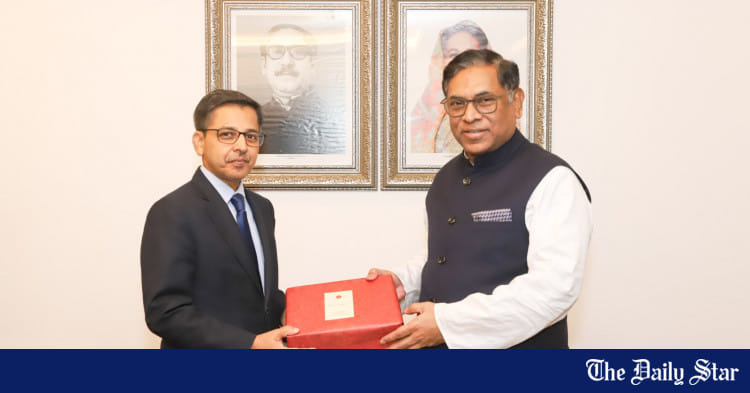
Bangladesh wants to import 9,000MW electricity from neighbours: Nasrul​


1709596901761.webp

Photo: Collected

State Minister for Power, Energy, and Mineral Resources Nasrul Hamid today said Bangladesh and India have a huge opportunity to work together for the development of the power and energy sector.

"We want to import 9,000MW of electricity from neighbouring countries. The process to import hydro-electricity from Nepal and Bhutan has advanced," Hamid said when the Indian High Commissioner to Bangladesh Pranay Verma called on him at his office in the ministry.

He also informed the Indian envoy a deal is likely to be signed next month to import 40MW of hydropower from Nepal.

He said that the import of 500 MW of electricity from Nepal through Indian company GMR is almost final while the import of renewable energy is also in progress. The import and export from Meghalaya, Tripura, or Assam can be discussed.

He said the process of importing LNG and gas through H-Energy is almost final.

"We want to increase the connectivity with neighbouring countries including India. We need Indian cooperation in this regard," the minister said.

Nasrul Hamid said power trade will get momentum if there is a dedicated line from Nepal to Bangladesh. This will also benefit India.

He also said it is essential to have a stakeholders' meeting of both sides every month to increase the area of cooperation. "We can also work together on bio-fuel," he added

He observed that the demand for LPG is increasing. It should be considered actively as to how Bangladeshi private investors can work in India in these sectors.

The high commissioner said India's cooperation with Bangladesh in the power and energy sector is growing.

Import of hydropower from Nepal to Bangladesh is ongoing, he said, adding India is also importing about 600 MW of electricity from Nepal.

The issues on high voltage transmission lines, renewable energy, import-export of electricity, R-LNG, fuel capacity enhancement, energy efficiency, and future regional connectivity was discussed at the meeting.​
 
Analyze

Analyze Post

Add your ideas here:
Highlight Cite Respond

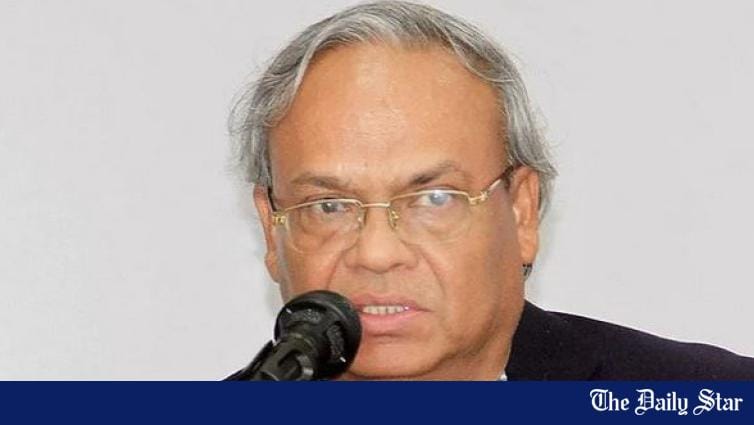
Power sector in deep crisis: Rizvi​


1709597047202.webp

Ruhul Kabir Rizvi. File photo

BNP Senior Joint Secretary General Ruhul Kabir Rizvi today said the country's power sector has plunged into a deep crisis.

Talking to reporters at BNP's Nayapaltan office, Rizvi said Awami League General Secretary Obaidul Quader's recent remarks on the power situation contradict what Prime Minister Sheikh Hasina has said on the issue.​

The BNP leader said Quader claimed that hundred percent of the country's people are getting electricity supply, but the PM a few days ago stated that load-shedding on a small scale should remain in the country.

He said people of the country are suffering from load-shedding from morning to evening even though the temperature remains at a tolerable level.​
 
Analyze

Analyze Post

Add your ideas here:
Highlight Cite Respond
  • Like (+1)
Reactions: Bilal9

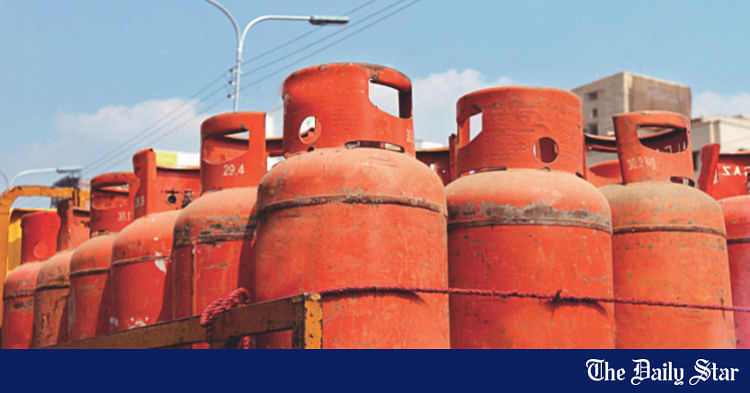
Price of 12kg LPG cylinder hiked by Tk 8​


1709597209791.webp

File photo: Collected

The Bangladesh Energy Regulatory Commission (BERC) today raised the price of liquefied petroleum gas (LPG) by Tk 0.66, setting the new rate at Tk 123.52 per kg, up from the previous Tk 122.86.

This price change will be effective from 6:00pm today, indicating a slight increase in household and commercial expenses.

BERC at a press briefing today said that the price for a standard 12kg LPG cylinder will now be Tk 1,482, up from the previous Tk 1,474. This adjustment follows a rational scale across various LPG cylinder sizes, ranging from 5.5kg to 45kg, addressing the need for a proportional price revision across different consumer segments.

Furthermore, the price for "auto gas", the LPG variant used in motor vehicles, has also seen a revision, now priced at Tk 68.05 per litre, a slight increase from Tk 67.68.

Notably, LPG prices marketed by the state-owned LP Gas Company will remain unchanged. This exception is attributed to its local production and the company's minimal market share, which is less than five percent.

The decision to adjust LPG prices comes in the wake of rising costs in the international market, specifically tied to the increase in the Saudi CP (contract price), which serves as a benchmark for local operators importing LPG primarily from the Middle East.​
 
Analyze

Analyze Post

Add your ideas here:
Highlight Cite Respond
  • Sad (0)
Reactions: Bilal9

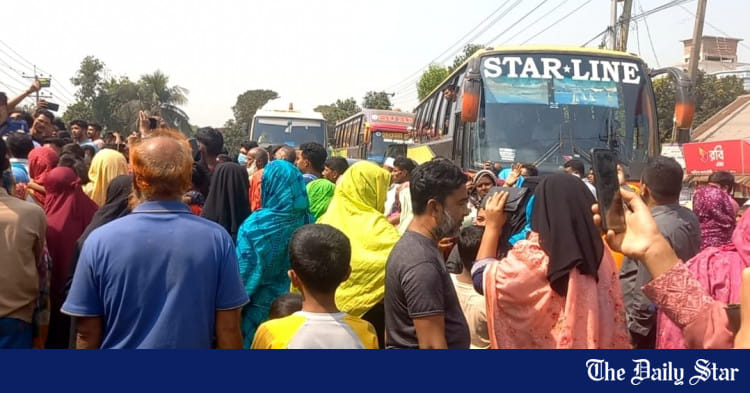
Congestion on the Dhaka-Ctg highway as locals protest gas supply cut​


1709685714578.webp

Photo: Collected

Heavy traffic jam was reported on the Dhaka-Chattogram highway as residents of Munshiganj's Gazaria protested the suspension of gas supply in the area by blocking it.

According to locals, they occupied the busy road for 2 hours starting around noon creating heavy traffic jam on the highway. Around 2:00pm, after receiving assurance from administration, they moved from the highway easing the traffic congestion.

However, later, around 4:00pm, they again took position on the highway. The responsible officials are trying to convince them to move from the highway, reports our local correspondent.

According to locals, the Titas Gas Authority stopped gas supply to most areas of Gazaria Upazila from February 25th. They said the decision came without any notice or prior announcement.

They said the protest started when, around 11:30am, the Titas Gas Authority came to disconnect the "illegal transmission lines" in the Dori Bausia area of Bausia Union.

Gazaria Upazila Nirbahi Officer Kohinur Akhtar said, "Traffic became normal when we persuaded them and removed them from the road."

However, as of 5:00pm, thousands of men and women from several nearby villages again gathered on the highway creating heavy traffic jams.

Gazaria Bhaberchar Highway Police Officer-in-Charge, Md Humayun Kabir said, "Most of the agitators are women. They have been suffering due to a lack of gas. They want a quick solution. They were removed from the highway. But they are back again. It is causing traffic jam on the highway. We're trying to convince them to move away from the highway."​
 
Analyze

Analyze Post

Add your ideas here:
Highlight Cite Respond

Bangladesh to invite bids for offshore oil and gas exploration​

REUTERS
Published :​
Mar 06, 2024 00:01
Updated :​
Mar 06, 2024 00:01

1709688820778.webp
Representational image

Bngladesh will invite international bidding for oil and gas exploration in 24 blocks in the Bay of Bengal on March 10 in an effort to boost domestic energy production, the chairman of state-owned Petrobangla told Reuters on Tuesday.

Bangladesh has been battling with energy shortages, with its gas reserves fast depleting and a spike in fuel prices following the Ukraine war.

"The deadline for submission of offers for the 24 offshore blocks will be the first week of September and after evaluations, we are hoping to finalise the deals by the end of this year," said Zanendra Nath Sarker.

"We're making plans to reduce supply shortages to keep gas-fired power plants and industries running," he said in an interview with Reuters in his office.

Petrobangla also plans to import 48 liquefied natural gas (LNG) cargoes from the spot market this year, upon approval from the government, up from 23 cargoes last year, other than cargoes from long-term deals, Sarker said.

Five cargoes from spot market will be imported in April while seven cargoes had been imported over the last two months, he added.

"We have also taken initiatives to drill 100 new gas wells in the country between 2025 and 2028 to boost local production," he said.

The move comes at a time when the South Asian country's gas reserves are set to completely deplete by 2033 if no new major discoveries are found.

Bangladesh has struggled to pay for imported oil and gas because of dwindling local reserves since the Russian invasion of Ukraine, forcing the country to turn last year to the International Monetary Fund for a $4.7 billion bailout.

"The dollar crisis in recent times is a global problem. But the government is giving priority to the energy and power sectors. So it will not be a barrier," Sarker said.

Bangladesh's offshore remains largely unexplored despite the settlement of a dispute in favour of Dhaka with neighbouring Myanmar and India over the maritime boundary.​

Two shallow water blocks are under contract for exploration with a joint venture of ONGC Overseas Limited and Oil India Limited where drilling has recently begun, officials said.
 
Analyze

Analyze Post

Add your ideas here:
Highlight Cite Respond
  • Like (+1)
Reactions: Bilal9

Bangladesh's Energy Backtrack​

Decoding the Integrated Energy and Power Master Plan 2023

1709765803692.png

The freshly approved IEPMP seems to chalk out the coal transition from imported to domestic coal rather than transitioning from fossil fuel to renewable or clean energy. FILE PHOTO: RAJIB RAIHAN

The Ministry of Power, Energy, and Mineral Resources (MPEMR) published the Integrated Energy and Power Master Plan (IEPMP) 2023 on November 27 last year. The IEPMP was passed after revising the draft seven times.

The final draft has been widely disseminated among stakeholders. But despite multiple revisions, the IEPMP fails to demonstrate a coherent plan to attain renewable energy transition while ensuring energy security. Instead, an overwhelming presence of different advanced technologies (such as nuclear, carbon capture and storage units, hydrogen, and ammonia) have been observed. The majority of these technologies commit to clean coal and are yet to be tested for their effectiveness in reducing carbon emissions. Such a shift in narratives creates confusion among the masses regarding the government's renewable energy stance. This type of jargonal change hints at the government's willingness to keep fossil fuel use, especially of coal, alive.

Renewable energy targets in IEPMP

The progress in renewable energy deployment in Bangladesh has been sluggish for quite some time. According to SREDA, the renewable energy generated power in Bangladesh is 1,202 MW, and the total share stands at 4.1 percent. The lion's share of current renewable energy is from solar (both off-grid and on-grid), as 968 MW is generated from solar energy in Bangladesh. However, aligning with the prime minister's announcement, the newly launched IEPMP sets the clean energy target at 40 percent of the total installed generation capacity (23,500 MW) by 2041. Unfortunately, the new IEPMP faultily revised renewable energy to clean energy, where targets are set as 18 percent by 2030 and 40 percent by 2041. The share of renewable energy within the clean energy mentioned in the IEPMP is not even half. By 2030, of the 18 percent clean energy, 5.7 percent (1,726 MW) will be renewable, and by 2041 of the 40 percent clean energy, only 8.8 percent (5,157 MW) will be from renewable energy sources. Now, the billion-dollar question is: what makes up the remaining 12.3 percent by 2030 and 31 percent by 2041?

Emphasis on technology for clean energy goals

The IEPMP mentions the use of advanced technology and fuel cells to achieve clean energy targets. It includes coal-fired power plants with Carbon Capture and Storage (CCS) technology, nuclear, coal co-fired with ammonia, and hydrogen co-fired with gas (LNG) as clean energy sources. The plan explicitly mentions that to achieve the goal of 40 percent of electricity generated from clean energy sources, it will be necessary to introduce hydrogen (H2) at six percent and ammonia (NH3) at two percent.

The rationale of the MPEMR behind introducing these technologies is that Bangladesh will not be able to achieve the clean energy goals via traditional renewable energy sources. This itself seems to contradict the estimation of renewable energy potential in Bangladesh presented in the final IEPMP. According to the renewable energy generation deployment plan under the Advanced Technology Scenario (ATS), 9,500 MW can be generated from solar and 7,575 MW can be generated from wind. Biomass can generate 165 MW, with 230 MW of hydropower. Hence, a total of 17,470 MW can be generated from traditional renewable energy sources by 2041, which is almost 30 percent of the total power demand.

Timeline of hydrogen and ammonia introduction

The freshly approved IEPMP lays out the plan to introduce ammonia co-firing as early as 2035 and coal co-firing as early as 2037. Gas-fired power plants with 20 percent hydrogen co-firing will be starting in 2037. Later, it will be upgraded to 50 percent in 2045 and 100 percent hydrogen firing starting in 2040. The plan will introduce blue hydrogen first, but it has not yet confirmed whether green hydrogen will be introduced or not. In the case of ammonia, coal-fired power plants with 20 percent NH3 co-firing will be starting in 2035 and will be upgraded to 50 percent in 2040. After 2037, the introduction of CCS into ammonia co-firing should also be considered to further reduce CO2 emissions.

Environmental and financial feasibility of hydrogen and ammonia

Hydrogen and ammonia co-firing with gas and coal are not 100 percent clean and do emit carbon. Fuel cells such as hydrogen and ammonia are only environment-friendly and emit zero carbon if they are green; that is, constructed from renewable sources. Hence, only if green hydrogen and ammonia are used for power generation will Bangladesh be able to keep up with the energy transition commitment. Even if the MPEMR ends up using green hydrogen and ammonia for electricity generation, it will not be financially viable. Several pieces of literature have already demonstrated that the levelised cost of electricity (LCOE) from these sources is much higher than in traditional renewable energy sources. The IEPMP itself demonstrates that the LCOE from ammonia is USC 17/kWh and USC 14/kWh for hydrogen. In contrast, the LCOE for solar will be USC 2.7/kWh in 2030 and USC 2.1/kWh in 2050. The required investment amount of the generation capacity installations till 2050 in the IEPMP is estimated at $157 billion. The total investment for power generation from clean energy is $64.4 billion, of which it's $29.7 billion for wind (46 percent), $20.1 billion for nuclear (31 percent), $7.2 billion for solar (12 percent), and $6.9 billion for hydrogen and ammonia (11 percent).

Lack of renewable energy planning

CCS, ammonia, and hydrogen technologies are costly and will require hefty investment to be introduced in Bangladesh. There is no detailed plan of the necessary financial estimates for investment and maintenance of renewable or clean technologies that could be used to attain the goal of low carbon emissions. Additionally, there is no accurate policy framework for renewable energy subsidies yet. Several government decisions on renewable energy, such as the decision to phase out diesel-based power plants, as well as medium-term plans for installing solar PVs in agriculture, irrigation, and primary schools are not mentioned or reflected in the IEPMP. No feasibility study is proposed for renewable energy-related implementation in various spheres of the economy.

On the other hand, in the section that highlights power policies, renewable or clean energy policies are completely absent. Instead, a plan for the hydrogen/ammonia fuel supply system is highly emphasised. The government is planning a demonstration test essential for evaluation in Bangladesh for ammonia co-firing and studies on plant locations, transmission, and fuel supply for hydrogen. The schedule for CCS implementation for gas-fired plants and the need for preliminary studies on suitable sites and CCS technologies are already in the works.

De facto coal transition

Through advanced coal-intensive technologies, the government is trying to keep coal alive and further expand the domestic use of imported LNG. The new IEPMP unreasonably assumes that domestic coal production will continue to increase by 2050. This is mainly for ammonia co-fired with coal and CCS technologies to clean coal. Overall, the freshly approved IEPMP seems to chalk out the coal transition from imported to domestic coal rather than transitioning from fossil fuel to renewable or clean energy. This indicates that the government is willing to start walking in the opposite direction of renewable energy targets.

Dr Khondaker Golam Moazzem is research director at Centre for Policy Dialogue (CPD).

Helen Mashiyat Preoty is research associate at CPD.
 
Analyze

Analyze Post

Add your ideas here:
Highlight Cite Respond
  • Like (+1)
Reactions: Bilal9

Govt reduces fuel price; diesel now Tk 108.25, Octane Tk 126​


1709852570546.webp

Representational image. File photo

The government has slightly reduced the fuel oil price today following the automated price formula.

From 12:00am, the diesel and kerosene price will be Tk 108.25 per litre, while the petrol price will be Tk 122 and Octane price will be Tk 126.

The ministry of Power, Energy and Mineral Resources today issued a gazette notification in this regard.

Comparing the previous prices, diesel and kerosene price has been decreased by Tk 0.75, Octane dropped by Tk 4 and petrol by Tk 3.

A ministry press release said that after the latest adjustment of fuel oil price in August 2022, the premium cost of fuel import, transport cost, insurance and bank interest increased a lot due to the impact of coronavirus pandemic, Russia-Ukraine war, and tension in Middle East.

It said, from now on the fuel price will be adjusted every month following the new guideline.

The government introduced the automated fuel pricing mechanism on February 29 as per one of the conditions for the $4.7 billion loan from the International Monetary Fund.​
 
Analyze

Analyze Post

Add your ideas here:
Highlight Cite Respond

Petrobangla invites offshore bidding for oil, gas exploration​


1710113574203.webp

Photo: Collected

Petrobangla, the oil, gas and mineral corporation, has floated the offshore bidding tender, inviting international oil and gas companies to explore the Bangladesh maritime area in the Bay of Bengal.

The tender, named "Oil and Natural Gas Exploration Under Bangladesh Offshore Bidding Round 2024", was published in local newspapers and websites of concerned government entities including Bangladeshi missions abroad today, giving six months' time until September 9, 2024 for submission of the bids.

As per the floated tender, a total of 24 offshore blocks — of which nine are shallow blocks — and 15 deep sea blocks are available for the bidding round.

The nine shallow sea blocks are SS-01, 02, 03, 05, 06, 07, 08, 10 and 11, and 15 deep sea blocks are DS-08, 09, 10, 11, 12, 13, 14, 15, 16, 17, 18, 19, 20, 21 and 22.

The bidder, singly or in association with other companies, can bid for one or more blocks.

Contracts will be signed with the successful bidders in line with the Bangladesh Offshore Model Production Sharing Contract 2023, said the tender.

The features of the proposed contract include full repatriation of profit, no signature bonus or royalty, uncapped attractive gas price linked with international marker, oil price to be determined on the basis of the fair market value prevailing in South and Southeast Asia.

It entails no duty for equipment and machinery imported for petroleum operations while the contractor's corporate income tax liability will be borne by Petrobangla, and bank guarantee for performance of the minimum exploration programme.

There will be provision for assignment of interest and share-transfer and 100 percent cost recovery with a yearly cap of 75 percent.

The contractor must have a mandatory work programme consisting of 2D seismic survey and mandatory purchase of available 2D multi-client seismic data against bidded blocks to get relief from mandatory work obligations proportionately.

They will have minimum work obligation in each of the exploration periods while biddable work programme commitment over and above the mandatory programme.

Companies interested in bidding and purchasing of Promotional and Data Sales Packages may contact the Director, Production Sharing Contract, Bangladesh Oil, Gas & Mineral Corporation (Petrobangla) Petrocentre, 3 Karan Bazar, Dhaka-1215, said the bidding tender.​
 
Analyze

Analyze Post

Add your ideas here:
Highlight Cite Respond
  • Like (+1)
Reactions: Bilal9

Latest Posts

Back
PKDefense - Recommended Toggle