โ˜• Support Us โ˜•
[๐Ÿ‡ง๐Ÿ‡ฉ] - Energy Security of Bangladesh | Page 48 | PKDefense

[๐Ÿ‡ง๐Ÿ‡ฉ] Energy Security of Bangladesh

Reply (Scroll)
Press space to scroll through posts
G Bangladesh Defense
[๐Ÿ‡ง๐Ÿ‡ฉ] Energy Security of Bangladesh
475
15K
More threads by Saif


Bangladesh to be 2nd-largest LNG importer in South Asia by 2035: IEA
Bangladeshโ€™s faster regasification expansion and declining domestic gas fields to drive higher imports

1763001899909.webp

Representational photo: Collected

Bangladesh's liquefied natural gas (LNG) imports are likely to outpace Pakistan's by 2035, making it the second-largest importer in South Asia after India, according to a projection by the International Energy Agency (IEA).

Pakistan and Bangladesh together would import around 75 billion cubic metres (bcm) of LNG in 2035, up roughly 60 percent from 2024 levels, projected the intergovernmental organisation, which provides policy recommendations, analysis, and data.

"In the Stated Policies Scenario, LNG imports in other developing Asiaโ€”primarily Pakistan and Bangladeshโ€”increase from 45 bcm in 2024 to 80 bcm in 2035," the IEA said in its latest World Energy Outlook 2025, published yesterday.

The Stated Policies Scenario reflects reading of country-specific energy, climate and related industrial policies that have been adopted or put forward, even if not yet codified in law.

Though the report did not specifically state the share of each country, the outlook data and infrastructural trends showed that Bangladesh would import around 42-44 bcm of LNG in 2035, while Pakistan would import around 33-36 bcm.

In 2024, Pakistan still imported slightly more LNG than Bangladesh. But by the early 2030s, the IEA projections suggest Bangladesh will pull ahead, driven by faster depletion of local gas and larger regasification capacity.

In India, LNG imports have been growing in recent years, driven by opportunistic buyers and strong potential growth in demand, especially in industry, as per the report.

In 2035, India would import 50 bcm of LNG, up from 35 bcm at present, it added.

Both Bangladesh and Pakistan are already dependent on LNG for power generation and industrial feedstock.

However, Bangladesh's expansion of regasification capacity and faster gas-field depletion are expected to lift its import needs beyond Pakistan's over the next decade, the projection suggested.

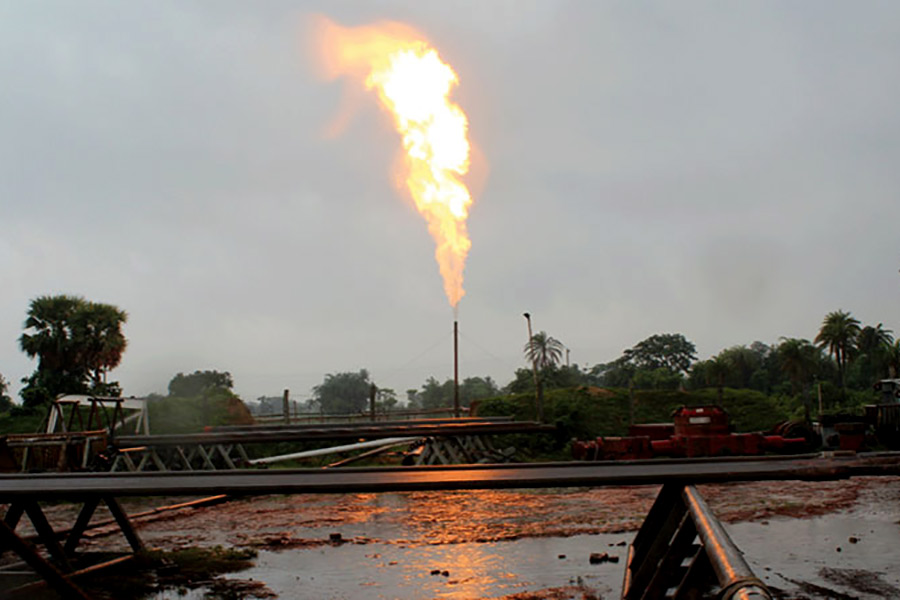
In Bangladesh, most onshore gas fields are in decline, while new exploration has lagged, driving a steady rise in LNG dependence for electricity generation, fertiliser production, and industries.

The country operates two floating storage and regasification units (FSRUs) and is expected to expand by two more floating and one land-based terminal.

In contrast, Pakistan has been facing financing constraints that have delayed terminal expansion and reduced LNG purchases in recent years.

In countries with mature domestic gas production, such as Thailand, Indonesia, Malaysia, Pakistan, and Bangladesh, LNG is a logical replacement for declining domestic gas, the outlook said.

The report said Asia will remain the key driver of global LNG demand growth amid slowing domestic gas production, accounting for more than 75 percent of total imports by 2035.

"These include Southeast Asia, where LNG imports rise from 35 bcm today to 135 bcm in 2035," it said.

"Lower-priced LNG flows to other parts of the world where affordability is a key consideration, notably India and other parts of South and Southeast Asia," it said, adding that the price would be 40 percent lower than today by that time.

The weighted average gas import prices in emerging markets and developing countries in Asia would be around $7.5 per million British thermal units (MMBtu) in the 2030โ€“2035 period.

For importers like Bangladesh, this glut offers an opportunity to secure long-term supplies at more competitive prices, though the agency warns that excessive dependence on imported gas could expose developing economies to volatility in global markets.

"Even at prices near to the short-run marginal cost of supply, LNG remains a premium fuel in a number of markets in Asia," it said.

"Abundant supply may offer these countries significant optionality for security-of-supply reasons and may help them manage periods of system stress," it said.

"โ€ฆbut the economics of LNG make it difficult to penetrate these markets as a baseload fuel in the long run," it warned.
 
newagebd.net/post/power-energy/282653/energy-security-hinges-on-policy-consistency-experts

Energy security hinges on policy consistency: experts
19 November, 2025, 22:45

The countryโ€™s energy security hinged on policy consistency to attract domestic and foreign investments under a transparent regulation, experts said at a seminar on Wednesday in the capital.

The discussants, comprising policymakers, business leaders and energy experts, also said that the long-term predictable policy could only ensure the much-needed investment in the sector as well as the uninterrupted power to hungry industries.

The seminar titled โ€˜Enabling Bangladeshโ€™s Growth and Prosperity: Developing a Sustainable Power Sector Investment Climateโ€™ was organised by Policy Exchange Bangladesh and the Economic Reporters Forum with support from EMA Power, an investment platform focused on power projects in emerging markets.

Cautioning that without long-term reforms and greater private sector engagement, the speakers said the country could face a major power crisis in the next decade.

Bangladesh Energy Regulatory Commission chairman Jalal Ahmed, speaking as chief guest in the event, highlighted challenges, including over capacity, falling gas supply, lack of diversified fuel solutions and bureaucratic delays in project clearance, plaguing the sector.

Identifying sustainability of power sector depended on renewable energy and referring examples of Pakistan and India on booting renewable energy sources, Jalal Ahmed said that about 4,000 factories could generate huge power through rooftop solar initiatives.

He urged inclusion of industrial renewable energy in long-term planning to meet the countryโ€™s growing energy demand.

M Tamim, vice-chancellor of the Independent University Bangladesh, Park Young-sik, South Korean ambassador in Dhaka, Abdul Awal Mintoo, vice-chairman of Bangladesh Nationalist Party, Mahdi Amin, an adviser to the Acting chairman of Bangladesh Nationalist Party, and Mobarak Hossain, member of Shura Council of the Bangladesh Jamaat-e-Islami, participated in the discussion as guests of honour.

M Tamim described the high cost of energy in the country as a major limitation for industrial competitiveness.

He warned that the country might face energy shortages until 2029 and stressed the need for a long-term policy approach to ensure supply stability.

BNP vice-chairman Abdul Awal Mintoo noted that political stability was inseparable from economic progress.

He put emphasis on restoring investorsโ€™ confidence to overcome the economic challenges compounded by the lack of energy security.

The country has attained the capacity of generating around 28,000 to 29,000 Megawatts power every day, but half of it remained unutilised due to a weak grid, costly fuel and idle plants.

Despite billions of dollars invested, energy security remains one of the largest concerns, said Mahdi Amin.

Highlighting the past experiences of some mega projects suffered from a culture of impunity, he said that the future policy must be transparent and sustainable.

Predictable policies, transparent regulation and long-term investment confidence were termed by the Jamaat Shura Council member as pre-conditions to strengthen the energy sector.

He emphasized capital investment, energy storage, regional power trade and modernization of institutional frameworks for depoliticising the power sector and enhancing efficiency of it.

Earlier in the day, two panel discussions were held, where Imran Karim, chairman of Confidence Power Rangpur Limited, Kamran T Rahman, president of the Metropolitan Chamber and Commerce Industries, Mahmud Hasan Khan Babu, president of Bangladesh Garment Manufacturers and Exporters Asssociation, Shamsul Alam, energy adviser of Consumer Association of Bangladesh, participated, among others.

Stakeholders expressed optimism that continued reforms and coordinated action among government, private sector and development partners could unlock Bangladeshโ€™s significant economic potential and secure a sustainable, prosperous future.

Vice-chairman of AK Khan Group and Business Initiative Leading Development chairman Abul Kashem Khan and ERF president Doulot Akter Mala gave introductory remarks.

Abu Chowdhury, director of EMA Power Investment Limited and chairman of EPV Thakurgaon Limited, made a power-point presentation.​
 

Gas supply reduced across Titas Gas network until Friday morning

Published :
Nov 20, 2025 22:12
Updated :
Nov 20, 2025 22:12

1763687714842.webp


Authorities have warned of low gas pressure in the distribution network of Titas Gas until Friday morning due to reduced liquefied natural gas (LNG) supply.

According to an emergency message from Titas on Thursday, the gas supply is decreasing due to โ€œurgent maintenance workโ€ at the LNG terminal, bdnews24.com reports.

โ€œAs a result, gas pressure will be low at all customer ends in the Titas Gas-affiliated areas until 6am on Friday.โ€

Petrobangla Director (Operations) Md Rafiqul Islam told bdnews24.com, โ€œAn LNG terminal is undergoing 18 hours of maintenance, which has reduced the gas supply by about 250 million cubic feet. The maintenance is expected to be completed by midnight.โ€

Petrobangla has announced that around 900 million cubic feet of gas are being supplied daily from two floating LNG terminals at sea.​
 

Well driiling and seismic survey in country's gas fields suspeneded

FE ONLINE REPORT
Published :
Nov 23, 2025 17:58
Updated :
Nov 23, 2025 17:58

1763947949891.webp


All types of drilling and seismic survey operations of state-run gas exploration companies have been suspended for 48 hours until 8 am on November 25 as a precautionary measure due to earthquake concerns.

State-run Petrobangla announced on Sunday the suspension of exploration activities to ensure the safety of the manpower involved in such jobs as well as for the sake of public interest, said a company press release.

If everything goes well, the drilling and seismic survey operations will resume at 8 am in the morning on November 25.

Until the suspension, the exploratory and work-over drillings were being carried out at Srikail-5, Habiganj-5, Kailashtila-1, Beanibazar-2, Sylhet-11, Sylhet-10X, and Rashidpur-11 wells.

Seismic survey operations were being carried out at Sonargaon in Narayanganj.

Earlier on Sunday morning, Power and Energy Adviser Fouzul Kabir Khan said the 48-hour suspension has been imposed, considering the safety of the people involved with exploration as well as of the drilling rigs, as four earthquakes have already occurred within a very short span of time.

Dhaka and its adjoining districts have already been struck by four earthquakes in just 31 hours after the first one on Friday morning.

At least 10 people were killed and hundreds were injured after a powerful 5.7-magnitude earthquake jolted Bangladesh on 21 November, damaging multiple buildings in Dhaka and other districts.​
 
newagebd.net/post/power-energy/283671/experts-say-energy-security-is-a-must-for-industrial-development

Experts say energy security is a must for industrial development
Staff Correspondent 29 November, 2025, 23:25

Experts on Saturday said energy security is the key to sustainable industrial development and drafting a robust โ€˜Industrial Energy Efficiency Policyโ€™ is critical to ensure sustainable industrial competitiveness.

They also said that Bangladesh has been facing a substantial performance gap in energy utilisation when compared to international standards and indicators.

Improving energy efficiency, particularly in the industrial sector, the countryโ€™s largest energy consumer, would offer the most viable solution to bridge the gap between ambitious energy targets and current realities, they added.

They were speaking at a seminar titled โ€˜Bangladesh Industrial Energy Efficiency Policy: A Draft for Sustainable Progressโ€™, organised jointly by the Dhaka Chamber of Commerce and Industry and the South Asian Network on Economic Modeling, at the DCCI Auditorium in the capital.Dhaka real estate

At the discussion, professor Selim Raihan of the University of Dhaka, the executive director of SANEM, delivered the keynote.

He said that Bangladesh is in the 83rd position among 126 countries at the Energy Trilemma Index by the World Energy Council, which is measured by the performance on energy security, energy equity, and environmental sustainability.

Moreover, the World Economic Forum (WEF) recently assessed 120 countries worldwide on their decarbonisation efforts and ranked them in the Energy Transition Index, where Bangladesh ranked 109th.

โ€˜Despite the existence of high-level frameworks like the Energy Efficiency and Conservation Master Plan 2016 and the Integrated Energy and Power Master Plan 2023, Bangladesh lacks a dedicated regulatory policy for energy efficiency,โ€™ he added.

He also said that energy efficiency is not clearly or uniformly defined for industrial applications; as a result, industries are not uniformly incentivised to adopt energy-efficiency practices.

He also said that through focused group discussions and key informant interviews of business leaders as well as government stakeholders, they identified some focused areas including energy efficiency awareness, energy auditing, energy conservation, financing and incentives, stakeholder collaboration, grid modernization, and enforcement and communication.

In his welcome remark, DCCI president Taskeen Ahmed said that ensuring an uninterrupted energy supply to Bangladeshโ€™s industrial sector has become a major challenge, severely hampering production, investment, and overall economic growth.

He also said that although the industrial sector contributes over 35 per cent to the countryโ€™s GDP, it is alarming that this large sector, representing 19 per cent of the countryโ€™s total gas consumers, is currently facing an existential crisis.

He said that after the record 178 per cent gas price hike in financial year 2023-24, the recent additional 33 per cent increase in gas prices has reduced the production capability of textiles, steel, and fertiliser sectors by 30 per centโ€“50 per cent.

Moreover, due to this surge in gas prices, many SMEs have been compelled to significantly scale down their operations.

Under such circumstances, he said that ensuring an uninterrupted energy supply and policy priority are a must for sustainable industrialisation.

He also emphasised on reducing dependence on fossil fuels, expanding the usage of renewable energy, establishing a detailed sustainable energy framework and preventing wastage to save the countryโ€™s industrial sector and economy.

In his speech as the chief guest, Jalal Ahmed, chairman of the Bangladesh Energy Regulatory Commission, said that although experts have often warned that Bangladesh would no longer have domestic gas reserves after 2030, there has been no significant progress in either offshore or onshore gas exploration.

โ€˜As a result, the country is unable to utilise its own gas resources rather depends heavily on imported gas,โ€™ he added, saying that as the energy sector is deeply interconnected with the entire economy, the government continues to provide subsidies in this sector.

He also said that the current efficiency level in the energy sector is around 30 per cent, and the overall shortages, particularly in the electricity sector, could be significantly reduced by improving this.

โ€˜If the RMG sector prioritises renewable energy use, the situation could improve more rapidly,โ€™ he added.

M Rezwan Khan, chairman of the Power Grid Bangladesh PLC, said that without revising the existing tariff structure, the ongoing problems of this sector cannot be resolved.

He also said that electricity tariffs must be differentiated between peak and off-peak hours.

There is a common misconception that flaws in the electricity supply system are responsible for load shedding; however, he clarified, a major cause of electricity shortages is the governmentโ€™s insufficient funds for fuel purchases.

Manwar Hossain, chairman of Anwar Group of Industries, said that the government must prioritise the supply of electricity to industries, as inadequate energy supply is causing nearly 50 per cent production disruption, which is very alarming for the economy.

Mohammed Amirul Haque, president of the Bangladesh Cement Manufacturers Association, said that the LPG sector could play an effective role in ensuring countryโ€™s energy security.

โ€˜However, instead of financial incentives, the sector faces nearly 10 per cent taxation, which the government needs to reconsider,โ€™ he added.

Mostafa Al Mahmud, president of the Bangladesh Sustainable and Renewable Energy Association, said that despite declining gas production, demand continues to rise, and the countryโ€™s energy demand is increasing by 20 per cent annually.

He said that although Bangladesh has supportive policies, the implementation situation is not promising.

โ€˜Since 50 per cent of the countryโ€™s electricity is used in industries, mandatory energy audits are essential,โ€™ he added.

Vidiya Amrit Khan, vice president of the Bangladesh Garment Manufacturers and Exporters Association, said that renewable energy contributed only 4 per cent to the national grid, which is concerning since global buyers place high importance on sustainability.

She also said that although green funding is available for buildings, such support is absent for renewable energy, and financing in the energy sector remains extremely difficult.

SM Monirul Islam, deputy CEO of IDCOL, said that gaps in implementing existing policies are exacerbating the challenges in the industrial sector.

He emphasised the need to introduce green bonds to ensure adequate financing.

Selim Raihan recommended that the government introduce diploma and certification programs at educational institutions, encourage standardisation, enhance technological support, and establish a central data repository system.

He also urged solving the challenges relating to audits, financing and incentives, grid modernisation, and resolving sector-wise challenges.​
 

Correlation between energy crunch and industrial production

Published :
Dec 01, 2025 23:54
Updated :
Dec 02, 2025 01:32

1764637826983.webp


Energy consumption has historically been a vital indicator of robust economic activities and improved living standards. But when this input turns irregular and insufficient, driving up its costs to an outrageous level, the manufacturing sector can hardly be sustainable. Bangladesh, according to seasoned business leaders and expert economists, is right now in such a crisis. Industries built a few decades ago were told by political leaders leading the country that the country was floating on natural gas, a comparatively cheap source of energy. But now the projection is that by 2030, the country will exhaust its gas reserves completely. At a parley titled, "Bangladesh Industrial Energy Efficiency Policy: A Draft for Sustainable Progress" participated by business leaders and economists, speakers made it amply clear that outrageous pricing of gas has compelled some industries to slash production and a few others turned completely non-viable. Production in the country's major sectors including textiles, steel and fertilisers has declined by 30-50 per cent.

This is depressing news. Gas price hiked, as claimed by the DCCI president, by 178 per cent in January 2023 has recently been subjected to yet another price escalation by 33 per cent. Intriguingly, small, cottage and some other industries in the SME sector saw the highest ever increase in gas price, with the prices surging to Tk 30 a cubic meter from Tk 10.78. Naturally, production in several industrial units has either stagnated or was forced to suspend. Once moribund, the textile industry here got a new lease of life on account of the flourishing readymade garment (RMG) industry. In fact, it turned out to be a backward linkage industry to the latter. There are several manufacturing units, other than textile, that need natural gas for operation and started thriving, courtesy of the RMG. Now if the vital input, gas that is, is in short supply, there is a negative chain reaction in the industrial sector.

The withdrawal of subsidy has made gas costly. But now the country's overwhelming dependence on imported liquefied natural gas is also a vulnerable factor for industrial slump. At a time when the international fossil fuels' market is down by 15 per cent, the domestic prices in Bangladesh have no reflection of this price fall. Crude oil spot price drops by 15 per cent globally and the projection is that gas price too could fall by 15 per cent over the next five years. This is likely to go in Bangladesh's favour but the problem here is that prices here hardly match the global level, particularly when the market value is down.

The Bretton Woods institutions' recipe for subsidy withdrawal in underdeveloped countries is not always suitable. Bangladesh has to swallow the bitter pills because it had hardly any better option when it was desperately running short of funds. The country's industrial base is not large enough and therefore cannot defy the recipes suggested by the International Monetary Fund (IMF) and the World Bank (WB). Where the country grossly failed is the exploration of natural gas---either onshore or offshore. It should have developed the Bangladesh Petroleum Exploration and Production Company Ltd (BAPEX) as a highly efficient entity to explore at least its onshore gas reserves, if not the offshore ones. The energy crunch now threatening to deal a grievous blow to its industries could be avoided.​
 

Members Online

Latest Posts

Latest Posts