โ˜• Support Us โ˜•
[๐Ÿ‡ง๐Ÿ‡ฉ] - Indo-Bangla Relation: India's Regional Ambition, Geopolitical Reality, and Strategic Options For Bangladesh | Page 54 | PKDefense

[๐Ÿ‡ง๐Ÿ‡ฉ] Indo-Bangla Relation: India's Regional Ambition, Geopolitical Reality, and Strategic Options For Bangladesh

Reply (Scroll)
Press space to scroll through posts
G Bangladesh Defense
[๐Ÿ‡ง๐Ÿ‡ฉ] Indo-Bangla Relation: India's Regional Ambition, Geopolitical Reality, and Strategic Options For Bangladesh
535
22K
More threads by Saif


BNP will prioritise ending 'India's hegemony': Mirza Fakhrul
Staff CorrespondentChapainawabganj
Published: 15 Nov 2025, 16: 27

1763256669172.webp


BNP secretary general Mirza Fakhrul Islam Alamgir speaks to newspersons after paying visit to the rubber dam built over the Mahananda River in Chapainawabganj. Prothom Alo.

Bangladesh Nationalist Party (BNP) secretary general Mirza Fakhrul Islam Alamgir has said that if his party comes to power with the peopleโ€™s mandate, it will place special priority to the issues of Farakka and the Teesta.

He said fair water sharing and border killings will receive greater emphasis, and the party will give stronger priority to stopping what he described as โ€˜Indiaโ€™s hegemonyโ€™ over Bangladesh.

The BNP secretary general made the remarks while speaking to newspersons following a visit to the rubber dam built over the Mahananda River in Chapainawabganj.

Mirza Fakhrul further said India is a neighbouring country and can easily maintain good relations with Bangladesh if it chooses to.

He added, โ€œIndia helped during the 1971 Liberation War. They need to support Bangladesh much more. But unfortunately we have seen the opposite. The Modi government has pressured Bangladesh. They have taken everything and given us nothing.โ€

Mirza Fakhrul Islam Alamgir came to Chapainawabganj to join a public rally organised as part of the โ€˜Save Padma, Save the Country; Bangladesh Firstโ€™ movement.

The rally will be held on Saturday afternoon at the grounds of Nawabganj Government College.​
 

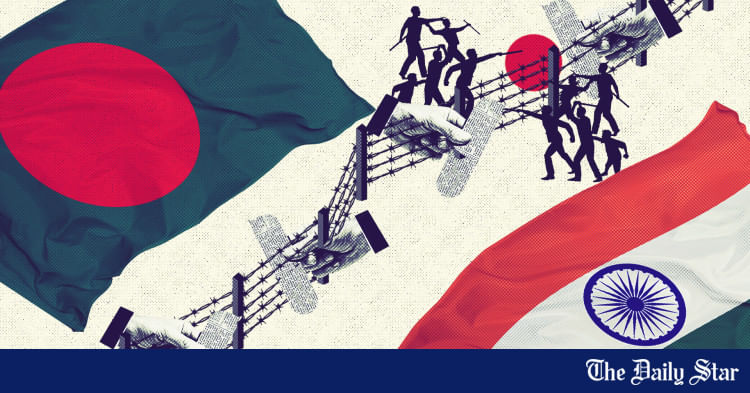
How India and Bangladesh are reinforcing each otherโ€™s extremes

1763430436031.webp

VISUAL: ANWAR SOHEL

When Sheikh Hasina's long reign finally ended in 2024, Bangladesh found itself at an uncertain crossroads not just of leadership but also of identity.

The void she left behind has seen the familiar symbols of Islamic politics resurface with increasingly assertive confidence. What was once confined to the periphery of religious activism is now finding its way into mainstream political conversation. And while this development owes partly to fatigue with what some view as Hasina's secular authoritarianism, it also carries the shadow of a larger regional transformation: the rise of Hindutva in India.

To understand this resurgence, one must first understand the paradox of Hasina's secularism. During the course of her rule, Awami League "transformed" secularism from an ideal of freedom into a rhetoric of control. It came to be associated with censorship, patronage, and the systematic weakening of any political opposition. When power became synonymous with a single party, the moral authority of its secular project collapsed. Into that disillusionment stepped those who could offer moral clarity, or at least the illusion of it. Islamist groups, with their grassroots welfare networks and uncorrupted image, provided a counter-narrative: faith as justice, religion as purity, and politics as moral restoration. But this internal crisis has been quietly amplified by what has been happening across the border.

As India wraps itself in the saffron robe of majoritarian nationalism, the ideological heat radiates beyond its territory. Bangladesh is often receptive or vulnerable to Hindutva's language of cultural supremacy, which asserts that India's soul is "intrinsically" Hindu and that minorities must either adapt or fade. Here, it stirs both anger and anxiety. Each time an Indian leader invokes the term "Hindurashtra," or a television channel in Delhi debates "Bangladeshi infiltrators," the emotional boundary between the two nations hardens. And in that tightening, the call for Islamic identity in Bangladesh finds further strength.

For many young Bangladeshis, the contrast feels almost inevitable. If India is unashamedly Hindu, why should Bangladesh not be proudly Muslim? If our neighbours can blend faith with nationhood, why must we keep away from our own religious heritage? These are not militant questions; they are identity questions, but they are precisely the kind of questions that Islamist politics thrives on. The danger is not in the question itself, but in the answers that populists are waiting to provide. The politics of reaction has long been a South Asian trait; we define ourselves by what we are not or what we stand against. In the 1970s, Bangladesh defined itself against Pakistan's theocracy. Today, it risks defining itself against India's Hindutva.

The two stances mirror each other more than either side would admit.

Each claims to protect faith from persecution, and each uses that fear to consolidate power. The saffron in Delhi feeds off the green in Dhaka, and vice versa. The border has thus become a mirror reflecting their extremes.

Social media has intensified this cycle. Hindutva-linked accounts amplify stories of "Hindu persecution" in Bangladesh, often distorted or fabricated, to fuel outrage at home. In response, Islamist voices in Bangladesh share clips of Indian mobs attacking Muslims, portraying them as proof that secularism is a lie and that only an Islamic order can ensure dignity. Each side validates the other's deepest suspicions in a digital duet of resentment.

None of this is to absolve Bangladesh of its responsibilities. The rise of Islamic politics here is rooted, to a large extent, in domestic discontent emanating from unemployment, inequality, corruption, and the absence of credible secular leadership. But to ignore the external dimension is to miss half the story. Majoritarianism, like any ideology of exclusion, is contagious.

When a community asserts religious supremacy, its neighbours feel compelled to do the same. In South Asia's fragile mosaic, identity insecurity spreads faster than ideology itself.

The tragedy is that both nations once shared a vision of pluralism where faith coexisted with freedom, and culture transcended creed. Bengal's history is full of saints, poets, and reformers who championed a syncretic ethos that bound Hindu and Muslim communities in a shared cultural life.

Today, however, the bridges built over centuries are being dismantled, and increasingly replaced by walls of rhetoric and flags of faith. But identity imposed by fear and intimidation is no identity at all.

For Bangladesh, the path ahead is delicate. It cannot afford to let the failure of one secular elite hand victory to another form of absolutism. Nor can it remain blind to the ways regional politics shape domestic sentiments. True secularism must be rebuilt from within through justice, accountability, principled politics, and respect for faith, but without surrendering to it as a state.

For India, too, there is a warning. Hindutva's triumphalism may rally votes, but it corrodes the region's delicate balance. The more India defines itself by exclusion, the more it empowers its neighbours' exclusionary politics in return. A Hindu India and an Islamist Bangladesh are not opposites; they are reflections of the same insecurity, dressed in different colours.

South Asia does not need another partition of the mind. What it needs is an honest reckoning with the dangerous symmetry that has emerged across its borders. Until both nations learn that faith cannot be the foundation of citizenship and that pride cannot replace pluralism, the crescent and the saffron will continue to glare at each other, serving neither nation's future.

Arman Ahmed is a research analyst specialising in geopolitics and international relations.​
 

National security advisor off to Delhi a day early
Diplomatic Correspondent Dhaka
Published: 18 Nov 2025, 20: 21

1763515602138.webp

National Security Advisor Khalilur Rahman Prothom Alo

National Security Advisor Khalilur Rahman was scheduled to go to Delhi on Wednesday to attend the meeting of National Security Advisors of the Colombo Security Conclave (CSC).

Abandoning that plan, he went to the Indian capital today, Tuesday.

An Indian diplomatic source informed Prothom Alo that Khalilur Rahman arrived in Delhi after 6:30 PM.

A senior official from India's National Security Council Secretariat welcomed him at the Indira Gandhi International Airport in India.

Diplomatic sources in Dhaka and Delhi told this correspondent that the seventh conference of the CSC National Security Advisors will be held next Thursday (20 November) at Hyderabad House in Delhi.

The alliance's security advisors' meeting will start in the morning and conclude after lunch. Khalilur Rahman is scheduled to leave Delhi for Dhaka in the afternoon of the same day.

National Security Advisor Khalilur Rahman went to Delhi at a time when the International Crimes Tribunal has sentenced the ousted Prime Minister Sheikh Hasina, convicted of crimes against humanity, to death. The interim government has already requested India to hand over Sheikh Hasina, who is currently sheltered in Delhi, to Bangladesh.

Foreign Affairs Advisor Md Touhid Hossain told reporters that a letter is being sent to India requesting her repatriation in accordance with the extradition treaty.

All in all, there is curiosity about whether National Security Advisor Khalilur Rahman will discuss the relationship between the two countries with his Indian counterpart, National Security Advisor Ajit Doval, during his stay in Delhi.

Ajit Doval invited Khalilur Rahman last month to attend the Colombo Security Conclave National Security Advisors' conference. His visit marks only the second visit by an advisor of the interim government to India in over a year. Earlier this year, Energy Advisor Muhammad Fouzul Kabir Khan visited India in February to participate in the India Energy Week.​
 

Khalilur Rahman holds a meeting with Ajit Doval in Delhi
Diplomatic Correspondent Dhaka
Published: 19 Nov 2025, 19: 59

1763600398469.webp


Bangladeshโ€™s National Security Adviser Khalilur Rahman and Indiaโ€™s National Security Adviser Ajit Doval. Khalilur Rahman is visiting Delhi to attend a conference at the invitation of Ajit Doval.

Bangladeshโ€™s National Security Adviser Khalilur Rahman has held a meeting with Indiaโ€™s National Security Adviser Ajit Doval in Delhi.

Khalilur Rahman, visiting Delhi to attend the National Security Advisersโ€™ conference of the Colombo Security Conclave (CSC), met with the delegation led by Ajit Doval along with his own delegation.

During the meeting, discussions were held on the activities of the Colombo Security Conclave as well as various important bilateral issues between Bangladesh and India.

On Wednesday evening in Delhi, the Bangladesh High Commission shared this information on their official X handle.

Khalilur Rahman extended an invitation to Ajit Doval to visit Bangladesh.

Khalilur Rahman went to Delhi on Tuesday to attend the seventh conference of National Security Advisers of the Colombo Security Conclave (CSC).

He will participate in the conference tomorrow, Thursday, at Hyderabad House in Delhi.​
 

We donโ€™t afford to allow any exogenous or indigenous forces: Dhaka tells CSC

UNB
Published :
Nov 20, 2025 18:28

1763687873175.webp


Bangladesh on Thursday pledged its readiness to work hand in hand to ensure a โ€œstable, secure, peaceful and prosperousโ€ Indian Ocean region and to confront the common challenges, stressing that they do not afford to allow any exogenous or indigenous forces.

โ€œWe do not afford to allow any exogenous or indigenous forces to challenge the security and well-being of our community and any part thereof,โ€ said National Security Adviser (NSA) Dr Khalilur Rahman while delivering the country statement at the 7th meeting of the National Security Advisers (NSAs) of the Colombo Security Conclave (CSC) in New Delhi.

Dr Rahman said they continue to stand ready to find common grounds to address common issues based on mutual trust and openness.

Bangladesh, India and other Member States sat together in New Delhi to promote closer cooperation on vital matters of security and strengthen partnership for enhancing regional security in the Indian Ocean region.

India hosted the 7th meeting of the National Security Advisers (NSAs) of the Colombo Security Conclave (CSC).

Indian NSA Ajit Doval hosted his counterparts from Member States including Maldives, Mauritius, Sri Lanka and Bangladesh.

Seychelles participated as an Observer State, and Malaysia was invited as a Guest.

Dr Rahman who led the Bangladesh delegation at the CSC said Bangladesh looks at the Conclave to evolve into an open, inclusive regional multilateral organisation, driven by a vision of open regionalism.

He said Bangladesh recognises the importance of the five identified pillars of the Conclaveโ€™s work and the important role that CSC can play along these pillars in enhancing collective security, regional stability and shared prosperity for all members of the region.

Dr Rahman said Bangladesh has been steadfastly playing its dual role in this regard and they are working alongside regional nations to enhance maritime safety and security, combat piracy and other organised maritime crimes and terrorism, as well as to ensure cybersecurity.

โ€œBangladesh has consistently condemned global terrorism. We have a zero-tolerance policy towards all forms of terrorism, under any circumstance,โ€ he said.

With growing digitalisation and technological developments, including artificial intelligence, Dr Rahman said, the menace of cybercrime is affecting all their countries. โ€œCybersecurity is thus a high priority in Bangladesh.โ€

Of late, he said, they have been facing constant barrage of misinformation and disinformation. โ€œWe are committed towards securing our own cyberspace, critical infrastructure and technology, not only for the safety of our citizens.โ€

However, he said, national actions are not enough and they have already heard this point from other speakers of this forum.

โ€œWe need to articulate and implement our collective actions in facing up to the challenges of cybersecurity, misinformation and disinformation, and I look forward to CSCโ€™s actions in this regard,โ€ Dr Rahman said.

โ€œAs we navigate the complexities of regional security, let us reaffirm our commitment to uphold the principles of mutual trust and respect, mutuality of interests and sharing of benefits,โ€ he added.

Dr Rahman expressed sincere thanks to the National Security Adviser of India for convening the seventh NSA-level meeting in New Delhi of the Colombo Security Council, and for the warm welcome and hospitality accorded to Bangladesh delegation.

Bangladesh also noted the impressive report of the Secretary General of CSC on the activities of the Organization.

Dr Rahman noted that Bangladesh has been participating in some of the CSC activities and will continue to do so in the future, based on the principles enshrined in the Charter of the organization, namely sovereignty, equality, territorial integrity and non-interference.

In keeping with this vision and objective, the 7th meeting of the NSAs is seen an opportunity for the participants to review the activities under the different pillars of cooperation, namely- maritime safety and security; countering terrorism and radicalisation; combating transnational organised crime; cyber security and protection of critical infrastructure and humanitarian assistance and disaster relief, and discuss the roadmap and action plan for 2026, said the host country- India.

Earlier, National Security Adviser (NSA) Dr Khalilur Rahman on Wednesday met his Indian counterpart Doval in New Delhi.

โ€œThey discussed work of the CSC (Colombo Security Conclave) and key bilateral issues,โ€ said an official at the Bangladesh High Commission in New Delhi.

Dr Rahman invited Doval to visit Bangladesh at his convenience.

Dr Rahman reached New Delhi on Tuesday night at the invitation of National Security Adviser of India Ajit Doval to attend this regional forum.

The 6th meeting of the NSAs of CSC was held in December 2023 in Mauritius, and Member States met again during the Signing Ceremony for the Founding Documents of CSC in Sri Lanka in August 2024.

The Deputy National Security Advisers (DNSAs) of CSC countries have also been meeting at regular intervals.

The CSCโ€™s core objective is to promote regional security by addressing transnational threats and challenges of common concern to the Member States.

NSA Dr Rahmanโ€™s participation at the Colombo Security Conclave in New Delhi is in continuation of the interim governmentโ€™s efforts to foster mutually beneficial regional cooperation, Bangladesh said.

The interim government emphasises regional cooperation as a priority and has actively participated in meetings of various regional bodies.

In April this year, Chief Adviser Prof Muhammad Yunus was elected Chair of BIMSTEC. He has been working hard to reactivate SAARC, said the press wing.

NSA Dr Rahman earlier led a Bangladesh delegation to the China-Indian Ocean Region Forum in Kunming, China.

Bangladesh was officially welcomed in 2024 as the fifth Member State of the Colombo Security Conclave (CSC), a grouping that includes India, Sri Lanka, Mauritius and the Maldives. Seychelles participates with observer status.​
 

Bangladesh-India emotionally connected through shared sacrifices of 1971: High commissioner

Pranay Verma stresses bilateral ties through capacity-building and cooperation

1764639080479.webp

Photo: Collected

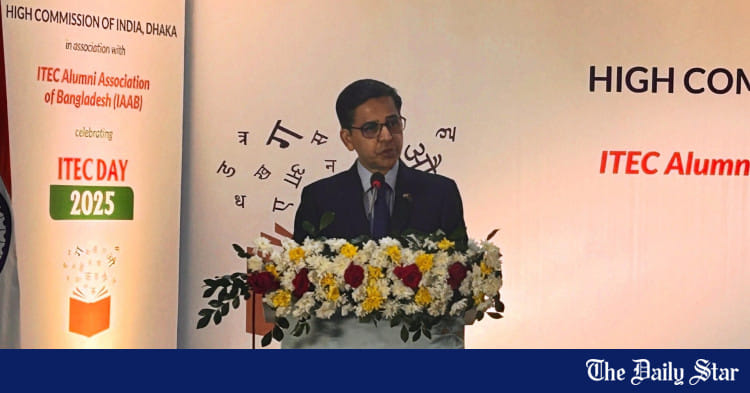
Indian High Commissioner to Bangladesh Pranay Verma on Monday said that the shared sacrifices of Bangladesh and India during the Liberation War of 1971 connect the two countries emotionally and remain a constant inspiration in advancing bilateral relations.

"The two countries share history, language, culture, and geographyโ€ฆ Our ties also derive strength from the shared belief that the progress and prosperity of our two countries are intertwined," he told participants at the Indian Technical and Economic Cooperation Day (ITEC Day 2025).

The event was jointly organised by the High Commission of India in Dhaka and the ITEC Alumni Association of Bangladesh (IAAB) at the High Commission premises, with around 150 alumni, including government officials and business representatives, in attendance.

Verma described ITEC as India's flagship programme for human resource development and capacity-building worldwide, noting that Bangladesh, as a close neighbour and friend, is one of India's closest development partners.

He said more than 5,000 professionals from Bangladesh have undergone ITEC programmes over the years, serving as bridges of friendship and collaboration, as well as channels for knowledge exchange between the two countries.

"It is an excellent example of India's commitment to cooperation based on the needs and aspirations of partner countries. It is shaped by our belief that strengthening national capacities is the most essential element of progress and prosperity of our partners," he said.

Verma added that projects ranging from infrastructure and connectivity to community development embody the people-to-people connection between the two nations. "Today, we are also firming our ties with our alumni to renew our relationship and showcase our partnership," he said.

Instituted in 1964, ITEC has offered India's development experience and technological progress to more than 160 countries. Each year, over 12,000 training slots are provided to partner countries through more than 300 courses in premier Indian institutes across diverse fields.​
 

Members Online

Latest Posts

Latest Posts