New Tweets

[🇧🇩] Energy Security of Bangladesh

G Bangladesh Defense
[🇧🇩] Energy Security of Bangladesh
556
19K
More threads by Saif


Energy is existential, not a talking point

SYED FATTAHUL ALIM
Published :
Mar 16, 2026 00:18
Updated :
Mar 16, 2026 00:18

1773619924580.webp


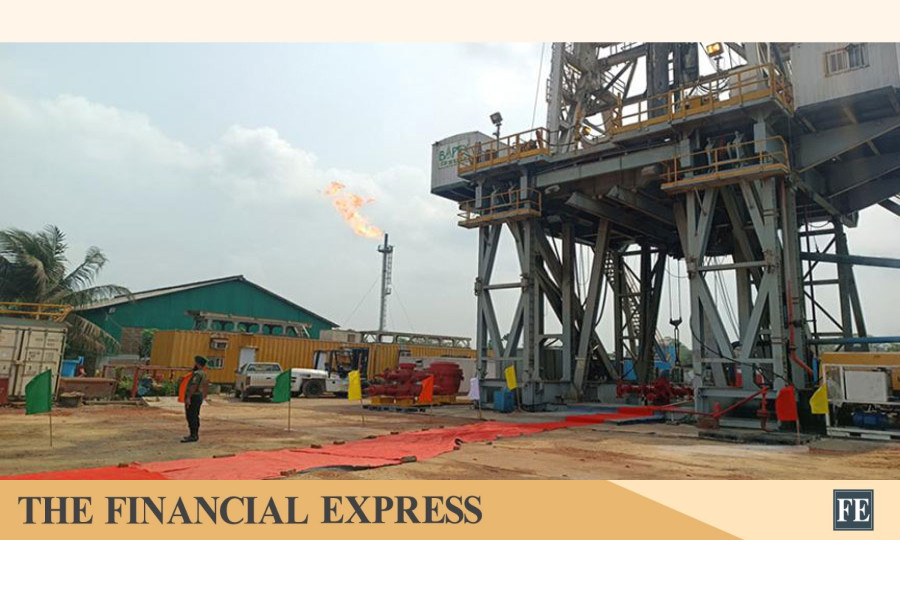
As the country is facing an acute crisis of natural gas that fires mainly power plants, industries and residential plus commercial gas ovens, the state minister for power, energy and mineral resources, Anindya Islam Amit, recently said that the government hoped to meet a significant portion of the country's gas demand from domestic sources. He expressed such optimism while speaking at an event marking gas supply to the national grid from a newly drilled well at the Srikail gas field at Muradnagar upazila in Cumilla. The gas discovered in Bangladesh Petroleum Exploration and Production Company Limited (BAPEX)'s Srikail-5 appraisal and development well is expected to add 8.0 to 10 million cubic feet per day (mmcfd) of gas to the national grid for the next 10 years.

Considering the country's demand for natural gas at around 3,800 mmcfd, the total domestic production of about 1,740 mmcfd so far meets less than 50 per cent of the demand. Even after importing LNG, the total national supply of natural gas stands at around 2,550 mmcfd. So, there is still a shortfall of over 1,000 mmcfd. Under the circumstances, such reassuring words from the minister could not come at a more critical time. In fact, energy, or for that matter gas, crisis is nothing new in Bangladesh. But at the present moment the entire world is facing a grave energy crisis, thanks to the ongoing Middle East war when Iran is subjected to carpet bombing on its civilian as well as military and energy infrastructures by Israel and the USA. In retaliation, Iran, too, has launched its energy war by effectively closing the Straight of Hormuz between Iran and Oman's Musandam Peninsula choking over 20 per cent of world's fossil energy flow. Though Iran appears positive about the passage of Bangladesh-owned fossil-fuel-carrying vessels through the Strait of Hormuz, there is no reason to be complacent about that.

For the energy facilities of Gulf countries like Qatar and Oman where Bangladesh imports its liquefied natural gas (LNG) from have been battered by Iran's retaliatory attacks. Qatar has reportedly halted its LNG production. As there is still no sign that the war is going to end any time soon, the uncertainty about the supply of LNG and oil from the Gulf nations remains. So, supply crunch on such a scale is highly concerning. As a fallout from the closure of Strait of Homuz, global energy market has turned volatile with the Bent crude, the global benchmark, settling at US$103.14 a barrel on March 13 up by 2.7 per cent on the day and 69.5 per cent since December 31, 2025. Retail gasoline prices in the USA has meanwhile gone up by 30 per cent since the beginning of 2026, according to the digital financial media house, TheStreet, in its March 14 issue.

The bad news is that the danger to the global supply is not remaining limited to the closure of the Strait of Hormuz. The way Iran's and the Gulf nations' energy infrastructures are being attacked and destroyed, the world is going to see a severe shortage of fossil fuels soon. It all reminds one of the global oil shock of 1973 triggered by the oil embargo imposed by the Organization of Petroleum Exporting Countries (OPEC) in protest against the US's support to Israel during the so-called Yom Kippur war between Israel and the Arab countries. But the present situation is worse than that. In 1973, the situation was at least under OPEC's control.

But now, there is no control over the war as the global superpower, the US, which is directly involved in the conflict, appears to be relentless. So, is Iran. Now, it is not simply energy, but the entire world is virtually on the brink. Even so, let us concentrate on our own energy issue. The impact of the global energy crunch on Bangladesh which is basically an energy-starved nation cannot be overstated. For Bangladesh roughly meets 70 per cent of its natural gas demand through imported LNG. Similarly, 90 per cent of its fuel oils need is also met through import. Though so far, discovery of some 29 to 30 gas fields has been reported and some 20 to 22 of those gas fields are producing gas, still 70 per cent of our domestic natural gas comes from only two gas fields--Bibiyana in Habiganj and Titas in Brahmanbaria. So, despite the optimism expressed by the state minister for energy that Bangldesh would be able to achieve significant self-reliance in energy within the next five years, there is still a serious need to check hard facts on the ground. Energy is not just one of the so many issues that are talked about. It should now be the central issue. Because, after food, energy is the second most critical issue in life. That is true of any nation, let alone Bangladesh. But the country is still overwhelmingly dependent on imported fossil enegy. Lacking any long-term energy policy, the past governments left the country to a reactive, adhocist approach to the all-important subject of energy.

But with few exportable natural resources or manufactured goods except readymade garments (RMG), the country's potential for earning hard currency is very limited. But without giving any thought to where the hard currency to buy energy from abroad would come from, the successive governments have only made matters worse by increasing the country's dependence on imported energy. But even if we had a strong industrial base with enough manufactured goods to export with substantial foreign currency reserves that would still not guarantee any security on energy. Consider the case of Japan or South Korea whose entire energy source is practically dependent on import. Small wonder that despite their industrial might, they are highly vulnerable to the fluctuations in the global energy market as well as geopolitical instability. In that case, the level of energy insecurity the country is in does not need further explaining. Now, with only two gas fields meeting the lion's share of the nation's demand for natural gas, the addition of the newly discovered gas field of Srikail in Cumilla is no doubt a positive development. But efforts should be on to discover more gas fields to generate substantial amount of natural gas to make the country energy-secure.​
 
Analyze

Analyze Post

Add your ideas here:
Highlight Cite Respond

Some past energy deals were ‘unequal’: Rashid Al Mahmud Titumir

Although Bangladesh has significant trade with China, there is now a greater need to expand investment-based industrialisation, he added.

Special Correspondent
Dhaka
Published: 16 Mar 2026, 20: 08

1773709397636.webp

Prime minister’s adviser on economy and planning Rashed Al Mahmud Titumir File photo

The prime minister’s adviser on economy and planning, Rashed Al Mahmud Titumir, has emphasised the need to strengthen development cooperation with neighbouring countries in South Asia.

Stating that some agreements signed in the energy sector in the past were “unequal”, he said that future initiatives would be taken in a way that safeguards Bangladesh’s national interests.

Rashed Al Mahmud Titumir made the remarks on Monday while speaking to journalists at the Secretariat after holding separate meetings with Chinese Ambassador Yao Wen and Indian High Commissioner Pranay Kumar Verma.

He said the fallen government had left the economy in a damaged state and that it now required renewed momentum.

According to him, the government aims to move away from a debt-driven model and towards investment-led growth to revitalise the economy.

Rashed Al Mahmud Titumir further said discussions were underway with several countries, including India and China, to strengthen cooperation in investment, industrialisation and the energy sector.

Increased investment, he noted, would boost production, generate employment and raise government revenue. That revenue could then be used to expand spending on health, education and other public services.

During his meeting with the Indian ambassador, discussions focused on the progress of ongoing bilateral projects as well as the implementation of India’s Line of Credit (LoC) extended to Bangladesh.

Rashed Al Mahmud Titumir said the government would review the current status of projects taken in the past, assess how many had been implemented and consider the way forward.

He added that although Bangladesh has significant trade with China, there is now a greater need to expand investment-based industrialisation.

“We want to move from a culture of loans to a culture of investment,” he said, noting that talks with the Chinese ambassador had mainly centred on investment and industrial development.

Referring to Chinese President Xi Jinping’s visit to Bangladesh in 2016, the prime minister’s adviser said that projects worth around $20 billion had been discussed at the time. So far, however, work has progressed on projects valued at about $8.2 billion.

He said discussions were also held on the possibility of forming a joint working group involving the Chinese government as well as Chinese state-owned and private companies.

Asked whether any specific assurances had been received regarding increased investment, Rashed Al Mahmud Titumir said bilateral relations advance on the basis of mutual respect and trust.

Since the incumbent government assumed office, he added, international partners have begun to regain confidence.

The government’s goal is to attract investment that will support long-term industrialisation, job creation and environmentally sustainable development, he emphasised.​
 
Analyze

Analyze Post

Add your ideas here:
Highlight Cite Respond

Bangladesh seeks LNG partnerships, new terminal

Energy minister highlights supply risks via Strait of Hormuz, invites global investment to secure long-term energy supplies

M AZIZUR RAHMAN

Published :
Mar 17, 2026 08:53
Updated :
Mar 17, 2026 08:53

1773794284248.webp


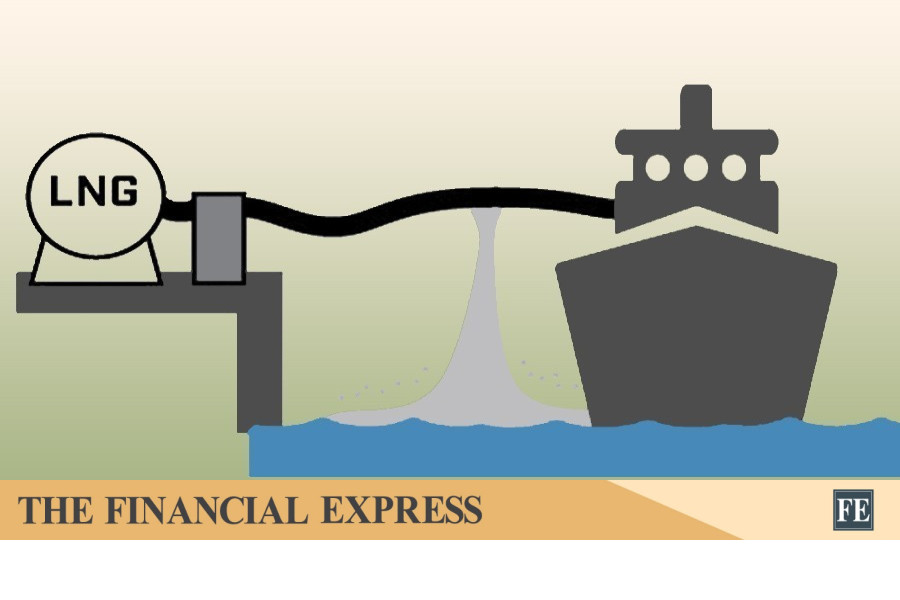
Bangladesh is seeking long-term partnerships to diversify its energy-import sources and plans to establish a land-based liquefied natural gas (LNG) terminal to strengthen supply security, as geopolitical tensions threaten key global shipping routes.

Energy, Power and Mineral Resources Minister Iqbal Hassan Mahmood Tuku said disruptions in LNG shipments through the Strait of Hormuz have exposed vulnerabilities in Bangladesh's energy supply chain, prompting the government to accelerate efforts to secure alternative sources and attract fresh investment in the sector.

"We are seeking long-term partnerships for diversified sources to ensure a stable energy supply arrangement," he was quoted as saying at the inaugural Indo-Pacific Energy Security Ministerial and Business Forum in Tokyo on Sunday.

"A large share of Bangladesh's liquefied natural gas (LNG) imports passes through the Strait of Hormuz," the minister said, adding that current disruptions along this route pose a major threat to Bangladesh's energy security.

"Cancellation or non-delivery of cargoes under long-term LNG contracts forces Bangladesh to procure LNG from the spot market at significantly higher prices," he said.

"For Bangladesh, higher LNG and oil prices substantially increase fiscal pressure, while rising electricity generation costs affect the competitiveness of domestic industries," he added.

Delivery of seven LNG cargoes to Bangladesh has already been affected following a force majeure declared by QatarEnergy and disruptions along the Strait of Hormuz.

Speaking at the forum, the minister said the Bangladesh government has adopted a targeted 180-day action plan alongside a comprehensive five-year plan after assuming office about a month ago.

"One of our key priorities is to promote increased investment in Bangladesh's energy sector. I would like to highlight several areas where we are seeking investment," Mr Tuku said.

The government plans to launch both onshore and offshore bidding rounds this year with updated financial and commercial terms designed to attract investors, he said.

These terms include full depreciation of profit, government payment of investors' taxes, competitive pricing linked to international benchmarks and long-term fiscal stability, he added.

The minister also said the government is committed to actively assisting contractors in obtaining licence approvals, land access and operational support through a coordinated investor-friendly approach.

"Alongside these developments, Bangladesh is planning to establish a land-based LNG terminal to strengthen long-term energy security and support the country's growing energy demand," he said.

"The project will be implemented under a public-private partnership (PPP) initiative," he said.

With government support for land development, port access and other logistical facilities, the project would provide investors with a bankable structure, long-term offtake agreements and stable returns, he added.

Officials said Bangladesh lifted rationing of oil distribution to consumers ahead of the Eid holidays on March 15 after imposing restrictions for around 10 days through petrol pumps to cope with supply constraints.

The government had also restricted decorative lighting in shopping malls and announced early closure of public universities ahead of the upcoming Eid-ul-Fitr.

Bangladesh currently imports around 7.5 million tonnes of LNG annually to meet domestic demand amid a sharp decline in domestic natural gas production.

The country also imports about 7.5 million tonnes of refined and crude oil combined each year to meet fuel demand.

In addition, around 2.0 million tonnes of liquefied petroleum gas (LPG) are imported annually by the private sector to meet demand for cooking, transport and some industrial uses.​
 
Analyze

Analyze Post

Add your ideas here:
Highlight Cite Respond

Solar could help save $3 billion in LNG costs in 25 years: IEEFA

The international institute releases report on Iran tensions and Asia’s energy crisis

16 March 2026, 20:39 PM
UPDATED 17 March 2026, 13:15 PM
Star Business Report

1773796935578.webp


Bangladesh could save nearly $3 billion in liquefied natural gas (LNG) import costs over 25 years by developing 1 gigawatt (GW) of solar power capacity, according to a new report by the Institute for Energy Economics and Financial Analysis (IEEFA).

The report, titled “Iran tensions underscore the urgency of Asia’s renewables pivot for macroeconomic stability”, warns that escalating geopolitical tensions are once again exposing the economic vulnerabilities of countries heavily dependent on imported fossil fuels.

According to the report, ongoing tensions involving Iran have triggered sharp increases in global energy prices, with crude oil prices rising 51 percent and LNG prices increasing by as much as 77 percent in recent weeks.

The surge is placing renewed pressure on energy-import-dependent Asian economies, including Bangladesh.

IEEFA said that if the crisis continues, energy prices could rise even further, potentially driving up inflation, putting pressure on foreign exchange reserves, and weakening overall macroeconomic stability across the region.

“In such a volatile global energy environment, accelerating the transition to renewable energy is no longer optional but essential for economic resilience,” the report said.

Bangladesh relies heavily on imported LNG to meet its growing energy demand. A significant share of the country’s LNG supply comes from Qatar and Oman under long-term agreements. However, the country also purchases LNG from the spot market during supply shortages.

According to the report, Bangladesh recently bought a spot LNG cargo at $28.28 per million British thermal units (MMBtu)—almost three times the benchmark Japan-Korea Marker (JKM) price recorded last month.

IEEFA said such price volatility demonstrates how reliance on imported LNG can quickly translate into fiscal pressure for developing economies.

Energy analysts say Bangladesh remains particularly exposed due to limited domestic gas reserves and a long-standing dependence on imported fossil fuels.

A similar situation unfolded during the 2022 global energy crisis triggered by the Russian invasion of Ukraine. Although Bangladesh reduced LNG consumption during that period, the country’s overall import bill nearly doubled because of soaring prices.

The report also warns that rising global fuel prices can create a self-reinforcing economic cycle. As international energy prices increase, the local currency tends to weaken against the US dollar, raising the cost of energy imports even further. This can push inflation higher, increase production costs for businesses that operate in dollar-denominated markets, and raise the burden of servicing foreign debt.

To mitigate these pressures, governments across Asia have introduced various short-term policy measures, including fuel subsidies, retail price caps, and tighter monetary policies. However, IEEFA cautioned that such interventions provide only temporary relief and could strain public finances if maintained for long periods.

Several Asian economies have already taken steps to manage rising energy costs. Thailand has capped diesel prices and is considering reducing fuel taxes to ease consumer pressure. Meanwhile, refiners in China, Thailand and India have temporarily restricted exports of crude and refined petroleum products to protect domestic supplies. The central bank of the Philippines has also warned that it may tighten monetary policy if oil prices climb above $100 per barrel, reflecting concerns about inflationary pressure.

The report emphasises that heavy reliance on fossil fuels leaves countries exposed to geopolitical shocks and global market volatility. In Bangladesh, electricity generated from LNG is already three to four times more expensive than electricity produced from solar or wind energy, according to IEEFA.

Beyond cost savings, expanding renewable energy would improve energy security and shield the economy from unpredictable fluctuations in global fuel prices.

The duration of the current geopolitical tensions remains uncertain. US President Donald Trump recently said the conflict could last “four to five weeks” and called for Tehran’s “unconditional surrender.” At the same time, Qatar’s energy minister has warned that prolonged instability could push global oil prices as high as $150 per barrel, potentially triggering another wave of global inflation.

Energy analysts say such scenarios would place substantial pressure on import-dependent economies like Bangladesh.

IEEFA concludes that renewable energy is no longer only an environmental objective but also a strategic economic priority. Scaling up investments in solar, wind and energy storage technologies, the report says, could help Bangladesh reduce its vulnerability to global energy shocks while strengthening long-term economic and energy security.

“In an increasingly uncertain geopolitical landscape, countries that accelerate the transition to renewable energy will be better positioned to protect their economies from future energy crises,” the report added.​
 
Analyze

Analyze Post

Add your ideas here:
Highlight Cite Respond

Why Bangladesh needs a balanced energy security strategy

17 March 2026, 00:41 AM
Fahmida Khatun

1773797089506.webp

Commuters wait in long queues at a refilling station in Dhaka, amid the government’s decision to ration fuel in the face of global energy supply disruption, on March 12, 2026. PHOTO: MEHEDI HASAN

The global energy market is again in turmoil, this time because of the US-Israel war in Iran. The Middle East has long been the central hub for worldwide energy supply. About a quarter of the global seaborne oil trade is carried through the Strait of Hormuz alone, according to UNCTAD. At the same time, Qatar and the UAE are major suppliers of liquefied natural gas (LNG). Any military escalation in this region therefore threatens the stability of the entire global energy supply chain.

This situation is especially worrisome for countries like Bangladesh that are heavily dependent on imported energy. Our electricity, industry, transportation, and agriculture sectors all rely on imported energy such as crude oil, refined petroleum, and LNG from the Middle East. The ongoing war has caused significant swings in global oil prices. Fears of supply outages led Brent crude to temporarily rise to about $119 per barrel before falling back slightly. These price hikes put immediate economic strain on import-dependent nations like Bangladesh. A prolonged conflict in the region could severely impact the country’s energy security, put pressure on foreign exchange reserves, increase inflation, and threaten long-term economic stability.

The immediate effect on the country’s economy would likely be an inflation spike. In February, overall inflation stood at 9.13 percent. A spike in fuel prices means transportation, agricultural costs, electricity production, and industrial processes becoming more expensive. This leads to higher food prices and consequently a higher inflation rate. This impact is felt quickly in Bangladesh because diesel is extensively used for food transport, irrigation, and power generation in a number of industries.

A second significant impact involves import costs and forex reserves. As of March 12, our gross reserves stood at $29.64 billion (according to the BPM6 method). A sharp increase in international oil prices could rapidly raise the country’s import costs, further straining the reserves and risking exchange rate instability. The trade deficit, on the other hand, might expand even more, adding to the already deteriorated export performance in the July-January period of FY2026 which registered a negative year-on-year growth of (-)1.93 percent.

The fiscal implications are significant as well. Bangladesh has historically used energy subsidies to shield consumers from volatile global prices. Such subsidies come at a cost. They put significant strains on the government budget, and the fiscal deficit might also grow, limiting financial flexibility. Indeed, the government’s fiscal space has been shrinking over the last several years. As a result, the tax-GDP ratio dropped to 6.8 percent in FY2025 from 7.4 percent in FY2024.

At the same time, the total subsidy expenditure stayed high, estimated at around 2.2 percent of GDP in FY2025. The energy sector—mainly the state-owned Bangladesh Power Development Board (BPDB)—received most of these subsidies. Increasing fuel import costs raised electricity generation costs, yet end-user tariffs remained unchanged to prevent further inflation. The government also paid off some overdue amounts owed to independent power producers. Additionally, fertiliser subsidies continued to be substantial and remittance incentives were expanded amid rising inflows.

Given the current high energy prices in the international market, if Bangladesh adjusts domestic fuel prices to match global rates, it could cause a quick increase in inflation and living costs. Therefore, policymakers must carefully balance maintaining the country’s fiscal health with ensuring price stability.

In this context, it is crucial to seek alternative energy sources. We primarily import oil and LNG from Saudi Arabia, the UAE, Kuwait, and Qatar. Diversifying these sources can help reduce reliance on geopolitical stability. In the short term, importing refined diesel from India and China could be viable, especially with the Bangladesh-India Friendship Pipeline providing key infrastructure support.

Financing high-cost energy imports may also become a major challenge for Bangladesh. In this regard, international trade finance mechanisms could play an important role. The Islamic Trade Finance Corporation has been providing trade finance support to the country, particularly for oil and gas imports. The financial capacity of Petrobangla and Bangladesh Petroleum Corporation (BPC) is a key factor here. Petrobangla is not fully self-funded and has occasionally struggled while importing LNG due to forex issues. Meanwhile, despite being relatively strong financially, the BPC has also experienced periods of foreign currency shortages, resulting in significant payment arrears to international suppliers.

As a result, sustained high energy prices could put considerable pressure on these organisations. In this context, a $350 million support from the World Bank to help Petrobangla with LNG imports starting in 2026 will be beneficial. This funding will be provided through a World Bank-backed guarantee, allowing commercial banks to offer finance. Additionally, Bangladesh might explore government-to-government credit agreements with supplying countries.

Given these realities, implementing a balanced fuel pricing policy is crucial. A sharp increase in fuel prices by the government could rapidly drive up inflation in the transportation, agriculture, and food supply sectors. On the other hand, keeping prices artificially low through extended subsidies would increase fiscal deficits. A better solution might be a gradual price adjustment system, where luxury fuel users encounter larger price hikes while vital sectors like agriculture and public transportation receive targeted support.

Understanding Bangladesh’s specific energy usage is vital. Diesel predominantly powers agricultural irrigation, transportation, industrial generators, and certain power plants. Petrol and octane are mainly for private vehicles and motorcycles. Furnace oil is used in specific power plants, whereas LNG and natural gas are crucial for electricity, industry, and fertiliser production. Consequently, an interruption in diesel supply could quickly affect agriculture, transportation, and food distribution systems. In this context, Bangladesh must implement several immediate and medium-term policy actions. Short-term measures should include increasing strategic fuel reserves, securing alternative supply sources, and prioritising energy distribution for essential sectors. Simultaneously, reducing reliance on the unpredictable spot market by expanding long-term supply agreements would improve supply stability. Over the medium term, strengthening energy storage infrastructure, promoting energy efficiency, and boosting investment in renewable energy are key steps to enhance resilience.

The current crisis also underscores another key issue: lack of domestic energy exploration efforts. It is crucial to expand exploration activities in the country, particularly in the Bay of Bengal, including joint projects between Bangladesh Petroleum Exploration and Production Company Limited (Bapex) and international energy firms. The government has already announced plans to drill several exploration wells in the coming years. If these plans are carried out effectively, they could help reduce the country’s reliance on imported energy.

The ongoing conflict in the Middle East has once again exposed the weaknesses in Bangladesh’s energy security. An energy infrastructure that relies heavily on imports, coupled with limited forex reserves and tight fiscal capacity, makes the economy vulnerable to global energy market fluctuations. This crisis should be viewed not just as a temporary issue but also as a prompt to revisit the country’s long-term energy approach. By diversifying energy sources, enhancing financial mechanisms, and increasing investment in domestic exploration and renewable energy, Bangladesh can strengthen its energy independence and economic resilience against possible global energy disruptions in the future.

Dr Fahmida Khatun is an economist and executive director at the Centre for Policy Dialogue (CPD).​
 
Analyze

Analyze Post

Add your ideas here:
Highlight Cite Respond

Latest Posts

Back
PKDefense - Recommended Toggle