New Tweets

[🇧🇩] Energy Security of Bangladesh

G Bangladesh Defense
[🇧🇩] Energy Security of Bangladesh
570
20K
More threads by Saif


Bangladesh has one month's fuel reserves, government working to increase stock: Cabinet Secretary

UNB
Published :
Mar 25, 2026 23:49
Updated :
Mar 25, 2026 23:49

1774483865906.webp


Bangladesh currently has about a month’s supply of fuel, Cabinet Secretary Nasimul Ghani said on Wednesday, noting that the country normally maintains a 15-day reserve.

Ghani made the remarks during a briefing at the Press Information Department following a Cabinet meeting chaired by Prime Minister Tarique Rahman at the Secretariat. He said the government is taking steps to further increase fuel reserves to ensure stability amid the ongoing international energy crisis.

Asked about the Prime Minister’s response to the ongoing international energy crisis, the Cabinet Secretary said, “The Prime Minister reviewed all available government resources, assessed progress, and examined the steps taken by the ministries. I can briefly say that the reserves are sufficient.”

Commenting on panic buying, Ghani said, “Excess fuel purchased unnecessarily could go to waste. The situation should normalize in a few days once public confidence returns. Under the government’s plan, the reserves are being increased further.”

Regarding the rise in jet fuel prices, Ghani explained, “The international price of jet fuel has increased. Airlines operating here also follow the international rate, so the price movement is aligned with global trends.”

He confirmed that the one-month reserve includes all types of fuel and added that the Cabinet Committee on Purchase has approved the acquisition of two cargoes of LNG.

Ghani also said that fuel not immediately available under contracts is purchased from the spot market, and decisions have to be made quickly, often within 10 hours of the cargo’s arrival.

Responding to rumors about a fuel price hike, he said, “I am not aware of any such plan, and there are no signs of it at this stage.”

The Cabinet Secretary reiterated that fuel is being procured from multiple sources to maintain and expand the country’s reserves.​
 
Analyze

Analyze Post

Add your ideas here:
Highlight Cite Respond

Bangladesh to receive 192k tonnes of LNG in 10 days to bolster energy supply

UNB
Published :
Mar 26, 2026 22:33
Updated :
Mar 26, 2026 22:33

1774569822419.webp


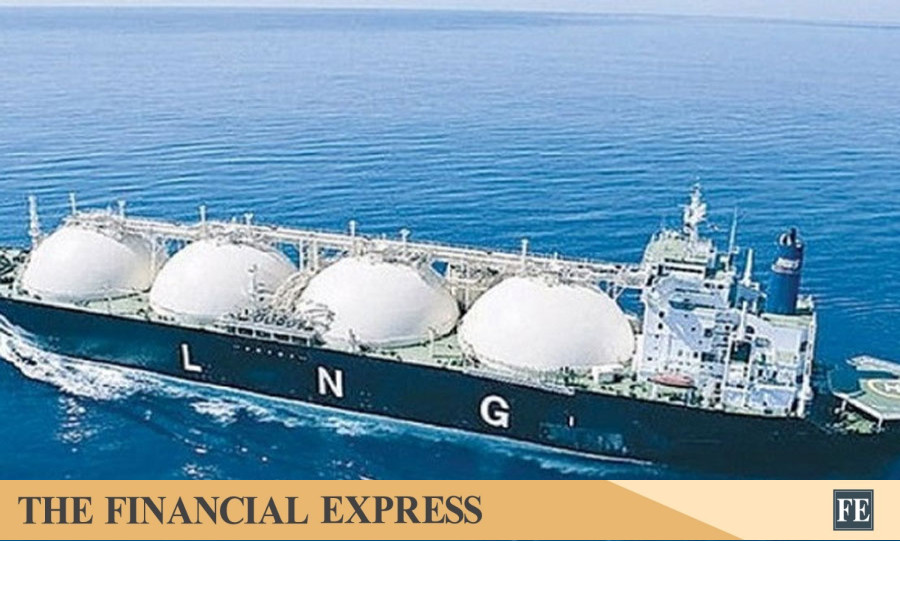
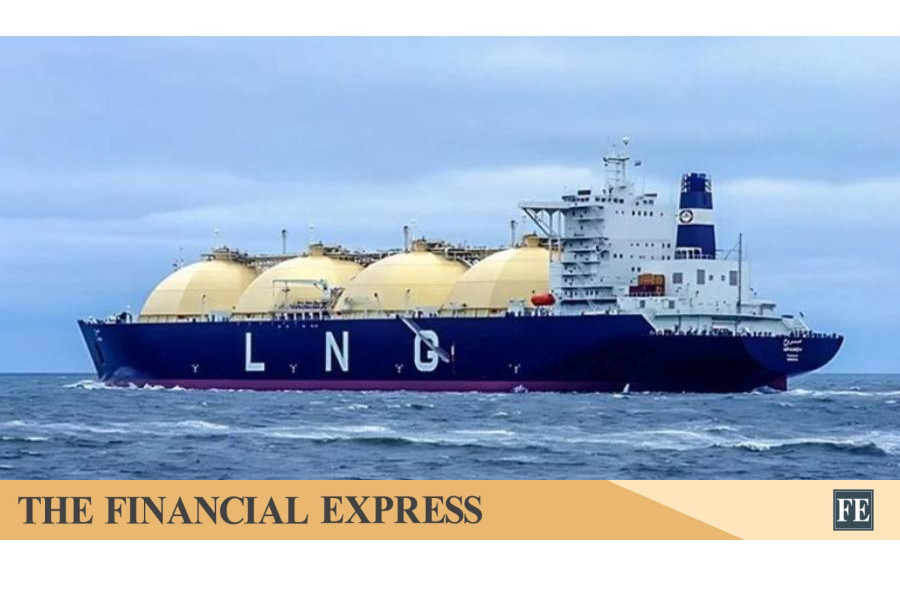
Amid ongoing tensions in the Middle East, state-run Petrobangla has imported approximately 192,000 tonnes of Liquefied Natural Gas (LNG) to ensure an uninterrupted energy supply across the country.

According to Petrobangla, the consignments from Australia, Indonesia, and the USA are scheduled to arrive via three separate vessels within the next ten days.

The Liberian-flagged tanker ‘HL Puffin’ has already arrived at Chattogram port carrying approximately 62,000 tonnes of LNG from Australia, port authorities confirmed. Petrobangla stated that preparations are underway to discharge the fuel at the Floating Storage and Regasification Unit (FSRU) of RPGCL located in Moheshkhali, Bay of Bengal.

Chattogram Port sources revealed that another LNG carrier, ‘New Brave’, is expected to reach the port on March 27. The Liberian-flagged vessel is transporting nearly 61,500 tonnes of LNG from Indonesia.

Furthermore, a third vessel, ‘Celsius Galapagos’, is slated to arrive in Bangladesh on April 4. Flying the flag of the Marshall Islands, this tanker is bringing approximately 70,000 tonnes of liquefied gas from the United States.

Chattogram Port Authority (CPA) Secretary Md. Omar Faruk said that the conflict in the Middle East has triggered a global energy crisis, the impact of which is also being felt in Bangladesh.

He emphasized that the port is prioritizing the berthing and discharging of energy vessels to maintain a steady fuel supply.

"One ship with 62,000 tonnes has already arrived. Another is expected this Friday, and a third consignment from the US will reach us by April 4," he added.​
 
Analyze

Analyze Post

Add your ideas here:
Highlight Cite Respond

Energy supply volatility & challenges for Bangladesh

Mushfiqur Rahman
Published :
Mar 26, 2026 23:10
Updated :
Mar 26, 2026 23:10

1774571067177.webp


The Middle East crisis surrounding Iran-Israel-USA war has been showing little signs of easing. It has been causing losses of thousands of human lives and billions of dollar worth of property. Already the world energy market has been facing serious supply chain disruptions triggering sharp rise in the prices of Octane, petrol, diesel, Jet fuel, LPG, LNG and other petroleum products.

Countries in South-East and South Asia have been compelled to introduce fuel rationing for consumers. The developed and industrially advanced economies have been expressing their concerns of looming economic crisis, inflation pressure and lower growth of economy due to the escalation of war and the rise of oil price. Many countries have already introduced energy conservation measures including 'work from home' and 'reduction of vehicular movement on the road to reduce fuel usage' as emergency measures to combat oil demands. Iran has warned that it would strike energy and water infrastructure (the Gulf states are heavily reliant on desalinisation plants for their sweet water supply from these plants) across the Gulf if US President Trump follows through his threat to attack (issued on March 21, 2026) its electricity infrastructures. It may be mentioned that the President Trump set a deadline (of 2345GMT (7:45 PM Bangladesh Time), March 23, 2026) to attack Iran's electricity infrastructure unless the authorities in Iran fully reopen the Strait of Hormuz within next 48 hours.

International Energy Agency (IEA) considers that the Middle East conflicts have severely damaged at least 40 energy assets in the Gulf region and they would not be immediately restored for energy supply. IEA Executive Director Fatih Birol said, 'the growing fallout could be seriously compounded through interruptions of the vital arteries of the global economy, including petrochemicals, fertilizers, sulfur and helium.'

Bangladesh has been suffering from manifold economic crises including high inflation, poor investment, massive unemployment and social stresses for last couple of years. The war in the Middle East has virtually blocked the Strait of Hormuz and growing fuel prices have been threatening further economic and social crises in the country. In Bangladesh, fuel oil supply shortages have been felt as several fuel pimps remain closed over two weeks. The pumps which are operating so far have been handling several kilometer-long queues for vehicles wanting to buy fuel oil. LGED Minister and the Ruling BNP Secretary General Mirza Fakhrul Islam Alamgir raised alarm that the war had been casting serious damage for our country. He felt that the prices for fuel oil and other commodities would increase in the days to come. Bangladesh government has been searching for alternative supply sources for fuel oil and LNG. However, the sources are limited and supply chain disruptions in the Middle East squeezes alternative markets for oil and gas.

Bangladesh imports major share of LNG from Qatar and Oman, the two countries in the Gulf. Both the countries are heavily dependent for exports through the Strait of Hormuz. In addition, Qatar, the main LNG exporter has suffered from the air borne attacks (at the Ras Laffan Gas processing industry in Qatar) and was compelled to temporarily shut its LNG production. Moreover, the missile attacks had damaged its LNG production plan and the plant's 17 per cent capacity had been damaged. Restoration of the LNG plant's capacity would take several months after the war ends. On the other hand, domestic natural gas production in Bangladesh has been steadily declining and declined to approximately 1,900 MMCFD (against the daily average demands for 3,800 MMCFD). LNG price has nearly doubled in the spot market (also significantly dependent on the Middle East supply). Petrobangla sources inform that Bangladesh has purchased 2 LNG cargos from the spot market in a desperate effort at over US$28 per MMBTU, while another at US$24 per MMBTU in the first week of March 2026. The price for LNG was below $10 per MMBTU on March 1, 2026. Energy Secretary Saiful Islam said to local media that the global LNG market became unstable following the damage at the Qatar's energy facilities. He added, 'we are buying spot LNG at an exorbitant price, which is almost 2.5 times higher than the price four days ago'. Petrobangla had to go to the spot LNG market as the QatarEnergy was scheduled to supply under contract with Petrobangla 40 out of the country's planned 115 LNG cargoes this year. But the war has pushed the supply to uncertainty. QatarEnergy had formally notified Petrobangla on March 2, 2026 the force majeure. Qatar plays a critical role in the global LNG market accounting for approximately 20 per cent of global LNG supply and the disruption of LNG supply from Qatar has already triggered sharp price spikes in global gas market.

Import of LPG (98 per cent of Bangladesh LPG demand has been met by Middle East based shipments) is also dependent mainly on the Gulf area supply through the Strait of Hormuz. Freight costs have been rising for LPG imports too.

BPC reserves of crude oil is not huge. Eastern Refinery (ERL), the sole refinery under Bangladesh Petroleum Corporation (BPC) has a capacity to refine 1.5 million tons of crude oil. The ERL can process light crude supplied by Kingdom of Saudi Arabia and United Arab Emirates. Again, the supply comes through the Persian Gulf and the Strait of Hormuz. Due to crisis in the region crude oil supply has become uncertain. The existing reserve for diesel, petrol, octane, furnace oil has been declining (ERL productions can meet approximately 20 per cent of Bangladesh's total fuel oil demand and the balance is imported as finished products). The finished petroleum products are imported from different supply sources of the East Asian, South Asian and Middle Eastern countries. However, the Strait of Hormuz alone supplies approximately 20 per cent of all kinds of petroleum products in the global market. Hence, the crisis and blockade in the Strait of Hormuz destabilised supply chain pushing the petroleum product price in the market.

Published information indicates that Bangladesh had a demand of 6.83 million tonnes of petroleum products during FY 2024-2025. ERL supplied 1.25 million tones and the balance was met by imports (during FY2024-2025 BPC imported 1,520,994 metric tons of crude oil and 4,704,985 metric tonns of refined oil). Installed storage capacity for petroleum products in the country is approximately 1.57 million metric tonnes. It has been felt that a second refinery would greatly ease and diversify country's petroleum product supply chain. The government has been actively trying to materialise the ERL expansion project to double its present refining capacities. BPC intends to install the ERL Unit 2 with a crude oil refinery capacity 3.0 million tonnes per annum by 2030 with an estimated cost of 2.89 billion US dollars (approximately 354.65 billion taka). An Islamic Development Bank (ISDB) mission has in principle agreed to provide Bangladesh a loan of US$ 1.0 billion in phases for implementing the project. The loan Agreement is expected to be signed in April this year. The project is planned to be implemented within 2030.

Mushfiqur Rahman is a mining engineer. He writes on energy and environment issues.​
 
Analyze

Analyze Post

Add your ideas here:
Highlight Cite Respond

Latest Posts

Back
PKDefense - Recommended Toggle