[🇧🇩] Energy Security of Bangladesh

[🇧🇩] Energy Security of Bangladesh
589
20K
More threads by Saif

G Bangladesh Defense

Bangladesh asks for US approval to import Russian oil, refined fuel amid global disruptions

bdnews24.com
Published :
Apr 01, 2026 21:57
Updated :
Apr 01, 2026 21:57

1775100526513.webp


Bangladesh has requested the United States to grant a special waiver to purchase refined diesel and other petroleum products from Russian sources due to global supply chain disruptions.

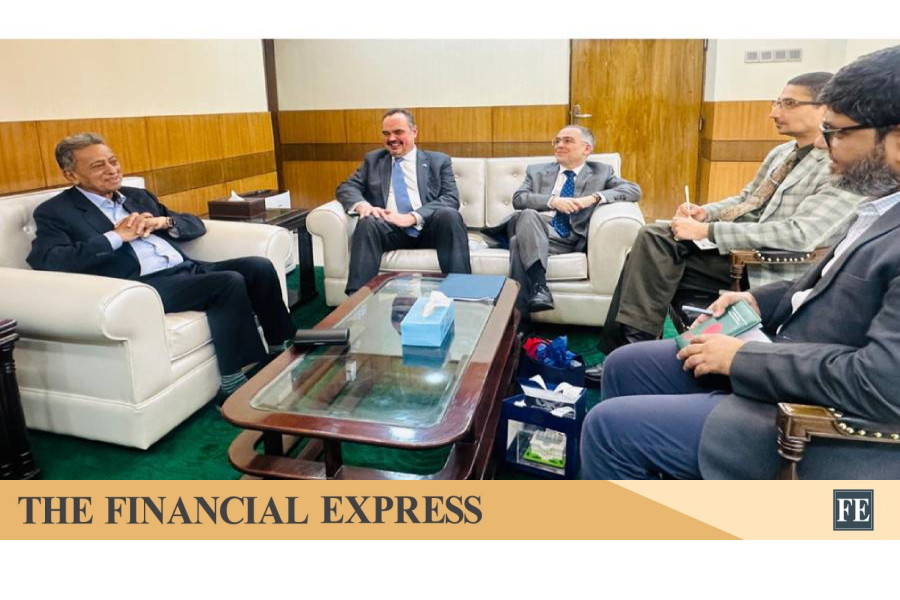
Foreign Minister Khalilur Rahman presented the appeal to US Energy Secretary Chris Wright during a meeting at the Energy and Mineral Resources Division on Tuesday, according to the Bangladesh Embassy in Washington.

Khalilur explained the “energy-related challenges Bangladesh is going through due to supply chain disruptions” in the meeting, the embassy said.

“He requested the US to provide Bangladesh special waiver to buy refined diesel and other petroleum products from Russian sources,” it added.

The minister emphasised that the request aims to protect farmers ahead of the coming planting season and prevent any adverse impact on harvests and national food security.

He also noted that Bangladesh had been unable to benefit from an earlier limited global waiver on Russian oil, as no tankers were bound for the country at the time.

The two sides discussed alternative options to procure refined oil from third countries, bypassing direct Russian crude.

Secretary Wright acknowledged Bangladesh’s energy challenges and expressed Washington’s commitment to support Bangladesh in ensuring energy security.

“He said the US will positively consider the requests of Bangladesh and assured that he and his team would work closely with the relevant departments of the US government to this end,” the embassy said.

Longer-term cooperation on sustainable energy solutions and potential increased procurement of US energy products were also discussed.​
 

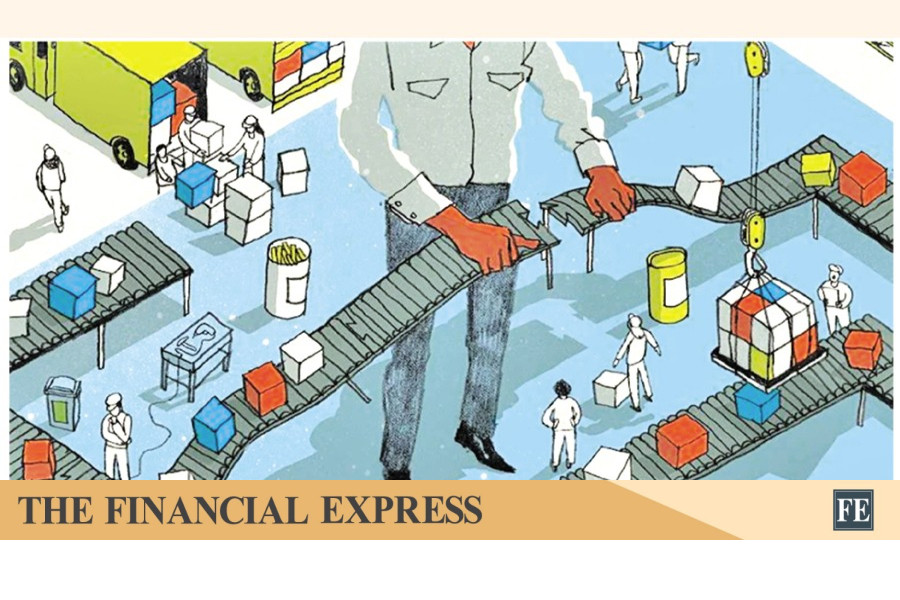
Bangladesh must rethink its supply chains

Ferdoush Saleheen and Md Mamun Habib

Published :
Apr 02, 2026 00:04
Updated :
Apr 02, 2026 00:04

1775102031004.webp


Nearly one-fifth of the world's oil, around 18 to 19 million barrels a day, passes through the Strait of Hormuz, accounting for about 20 per cent of global petroleum consumption -the same route that carries Bangladesh's imported fuel. The tensions in the Gulf may seem distant from Bangladesh; however, the country's economy is heavily reliant on energy supplies, maritime trade routes, and, most importantly, over five million of our remittance fighters deployed in the Gulf countries.

Over 80 per cent of Bangladesh's crude oil imports, around 6 to 7 million tonnes of petroleum annually, come from the Middle East, rendering the country vulnerable to geopolitical disturbances. Bangladesh had to purchase LNG shipments from the spot market at nearly three times the earlier prices this year, according to Reuters. Price spikes quickly through the economy, and costs escalate for power generation, transport services, and petroleum import businesses. However, energy is merely the first supply chain shock.

The second supply chain shock comes through global logistics and maritime trade routes. Bangladesh's export economy, mainly the readymade garments (RMG) industry, earned over $47 billion in 2023-24, representing for 84 per cent of overall exports. This sector relies on shipping lanes and air cargo networks connecting South Asia to Europe and North America via Gulf logistics hubs like Dubai and Doha.

Geopolitical tensions delay goods transit and raise freight costs at key centres. Due to airlines rerouting flights across the Middle East, hundreds of South Asian air cargo shipments and containers have been suspended. Delays can harm Bangladesh's export-driven economy, where on-time delivery develops buyer trust.

Remittances constitute a third layer of vulnerability in the supply chain system. Every year, Bangladeshi labourers who live and work in Gulf countries send back billions of dollars home. The number of these workers exceeds five million.

Through the year 2025, Bangladesh was the beneficiary of more than $32 billion in remittances, with approximately half of those remittances coming from the economies of the Gulf region. These revenues contribute to the maintenance of domestic demand and the strengthening of foreign exchange reserves.

More than five million Bangladeshi migrant workers are currently employed across GCC countries, with the largest concentration in Saudi Arabia and the United Arab Emirates (UAE), forming one of the largest labour diasporas in the region. Global volatility can impact Gulf labour markets. Poor host nations' economies or tight migration policies may reduce remittances. This would reduce household income and Bangladesh's product and service demand. Therefore, consumer demand could change quickly.

Markets may shrink as consumers avoid spending beyond basic necessities. Bangladesh imports nearly $70 billion annually, of which energy imports constitute the major share. The Bangladeshi taka has depreciated by over 25 per cent against the US dollar since 2022. The country has already experienced the COVID-19 pandemic, the post-COVID period, and the Russia-Ukraine war, and their impacts were significant. Many people lost their jobs, survived on savings, and the cost of doing business rose due to taka depreciation and tight liquidity in the banking sector. Companies could not open letters of credit (LCs) due to foreign currency shortages. All these were experienced recently. Before fully recovering from these shocks, Bangladesh's economy may not be ready for another major disruption.

When taken as a whole, these interrelated dangers demonstrate that Bangladesh's problem is not limited to the management of crises that are temporary in nature. The architecture of its supply chains must be redesigned. In the course of several decades, global supply chains were developed with efficiency in mind. Businesses and nations concentrated their efforts on lowering costs and decreasing inventory. However, pandemics and global battles have proved that efficiency is no longer enough. From now on, resilience must rule.

A strong supply chain needs various features. Strong finances help enterprises and governments weather price shocks. Governments, corporations, and logistical providers can coordinate disaster responses. Even with problems, exports continue due to fast and reliable ports and transportation networks.

Visibility also matters. Real-time product flow, energy, and logistical data speeds decision-making. Continuous advancements provide supply network flexibility. Sustainability decreases dependency on unpredictable fossil fuel markets, while strong employment rules protect logistics workers.

Service excellence, the ability to reliably deliver goods to foreign buyers, is still the ultimate test of supply chain efficiency. Therefore, the current tensions in the Gulf should be regarded as a strategic warning. Global integration has been the foundation upon which Bangladesh's economic prosperity has been built; nevertheless, this integration also creates vulnerability to geopolitical concerns that are further away. In the absence of increased supply chain resilience, future disruptions will continue to have a ripple effect on energy markets, export logistics, and domestic demand.

It is necessary not only to handle the current crisis but also to make preparations for the next disruption. The transformation of Bangladesh's vulnerability into long-term competitiveness can be accomplished by the diversification of energy sources, the development of logistics infrastructure, the improvement of supply chain visibility, and investment in robust systems.A nation's economy may ultimately be determined by the strength of its supply chain, which is becoming increasingly important in a world that is becoming increasingly unstable.

With over $30 billion in annual remittances, $47 billion in garment exports, and more than 80 per cent of its fuel imported through Gulf energy corridors, Bangladesh's economic stability is closely tied to the security of Middle Eastern trade routes.

Dr Ferdoush Saleheen, Head of the Department of Maritime Logistics and Supply Chain Management at Sharjah Maritime Academy, UAE. ferdoushsaleheen@gmail.com. Dr Md Mamun Habib, is a Professor and Head of Department of Management at the School of Business and Entrepreneurship (SBE), Independent University, Bangladesh​
 

Time to strategise the long-term cost of energy stability

Tasneem Tayeb

1775103473333.webp


Vehicles wait in long queues to purchase fuel at a refilling station in Kalshi Road, Mirpur, Dhaka on March 29, 2026. PHOTO: PALASH KHAN

Amid the ongoing Middle East crisis, Bangladesh has so far largely avoided an energy shock. Supply has been maintained through imports and stock management, enforcement against hoarding has been visible, and prices have remained stable. This is not incidental but the reflection of a deliberate effort by the government to contain immediate pressure and keep conditions manageable, and for now, it is working. But stability under these conditions comes with trade-offs, for it is not being secured; rather, it is being financed, deferred, and redistributed across the system.


The current approach reflects a calculated choice. Supply and price stability is being prioritised. The last major price adjustment in 2022 moved quickly through transport, production and household budgets. Inflation followed and lingered. That experience has left a lasting imprint on the economy, its rippling effects still visible in prices and household budgets. There is limited space for another abrupt correction.

Google News LinkFor all latest news, follow The Daily Star's Google News channel.
The country’s energy system depends, in part, on imported liquefied natural gas (LNG). When global prices rise, the cost of securing supply rises with them. Maintaining continuity under those conditions requires additional intervention, and that carries a cost of its own. It is absorbed within the system, including through external financing.

Bangladesh is under a programme with the International Monetary Fund (IMF) amounting to roughly $5.5 billion, disbursed in phases, aimed at supporting external balances, fiscal stability, and policy reform. In addition, the Asian Development Bank (ADB) and other partners have also extended support, including policy-based loans. While these are not designed to finance energy imports directly, they create fiscal constraint at a time when energy-related costs are rising. More recently, the government has sought over $2 billion in additional financing linked to fuel and LNG purchase.


Bangladesh continues to rely on the spot LNG market to meet part of its demand. Spot purchases are volatile: prices move quickly during supply disruptions and cargoes secured at higher rates add to the cost. External financing can only absorb that pressure for a certain period. It lingers in the shadows of crisis management, gathering weight over time until it emerges unannounced in forms the system is not designed to absorb.

Foreign exchange reserves, the gross amount standing at around $30-35 billion as of February 24, 2026, provide some room. But that room provides buffer space only while inflows, particularly from exports and remittances, keep pace with external payments. Energy imports are among the first to draw on it. Part of that cost is absorbed within fiscal space, sometimes through subsidies, sometimes through state-linked entities carrying losses. These don’t always appear immediately in headline figures, but they build gradually. What is changing is how that pressure accumulates and is distributed through the system.

Per a recent report by this daily, fuel prices have been kept unchanged for several consecutive months even as import costs have risen sharply. In March alone, the government covered over Tk 5,000 crore in subsidies, with diesel import cost rising to Tk 198 per litre, nearly double the retail price of Tk 100. That gap will not disappear, but will eventually move into public finances, and from there into the taxation system.


One may recall that exports have softened in recent months, with Bangladesh recording a 1.9 percent year-on-year decline in export earnings during the July-January period of the current fiscal year, alongside weaker RMG shipments to key EU markets—around four percent—during the same period.

At the same time, logistics disruptions linked to the Middle East crisis have affected cargo movement through key routes. More than half of the country’s air cargo is routed through Gulf hubs, leaving it exposed to interruption involving major regional carriers. As capacity has tightened, freight costs have risen sharply. Air freight rates from South Asia to Europe have increased by up to 70 percent, reaching around $4.37 per kg, with some exporters reporting even higher costs as shipments are rerouted or shifted from sea to air. Shipping lines have also introduced fuel surcharges and war-risk premiums, while longer diversions have extended delivery timelines. For a system built on cost discipline and reliability, that matters.


Part of the pressure is already embedded within the system. Payments for installed power capacity that is not always utilised continue to add to the overall burden. Recent estimates suggest that, taken together, these overlapping pressures—from energy imports to structural costs within the power sector—are adding hundreds of millions of dollars in monthly obligations. The same set of pressures is now working through both sides of the external account. Higher import costs increase demand for foreign currency. Softer exports and rising logistics costs weaken inflows. Remittance flows from the Middle East carry their own uncertainty.

Bangladesh has seen similar phases before. External financing has provided breathing space during periods of stress, often tied to expectations around revenue mobilisation, pricing discipline, and stronger financial governance. Those expectations are not new. Meeting them has proven difficult to sustain, particularly where the adjustment moves through households and the formal economy.

Revenue has historically been harder to manage than it appears to be. Bangladesh’s tax-GDP ratio remains among the lowest in comparable economies, hovering around seven to eight percent in recent years. Efforts to expand it continue to face structural constraints, including a narrow base and heavy reliance on indirect taxes. When pressure builds, the response tends to follow the easier path. Rather than widening the base, the system leans more on those already within it—through tighter enforcement and greater reliance on indirect taxation, including VAT and supplementary duties.

The burden does not spread evenly. It falls more heavily on individual taxpayers, compliant businesses, and consumers already within the system, while large segments remain outside effective coverage. Indirect taxes, by design, apply uniformly across transactions. In practice, that uniformity does not translate into socioeconomic equity. That raises costs within the formal economy without necessarily improving the overall resilience. Over time, this approach tightens the system, rather than strengthening it. The pressure shifts again—into margins, into pricing, and into parts of the economy where it is less visible but still felt.

What this points to is not a policy gap but a structural one. Stability cannot be managed reactively. It depends on knowing where the cost sits and how it is carried over time. Without that strategy, stability risks becoming a way of holding pressure in place rather than resolving how it is managed sustainably.

The current approach has kept conditions stable for now, at least on the surface. But it also risks something closer to Friedrich Nietzsche’s idea of recurrence, where what is unresolved does not disappear; it returns, again and again, in the same form. The current trade-off cannot hold indefinitely. It is high time to strategise how the cost is absorbed and where, accepting that the economy will be pressured, while keeping the impact as contained as possible.

Tasneem Tayeb is a columnist for The Daily Star.​
 

Amid energy crisis, govt shortens office and shop hours

UNB
Published :
Apr 03, 2026 01:09
Updated :
Apr 03, 2026 01:09

1775174768844.webp


The government has decided to revise office hours in view of the global energy crisis.

Under the new schedule, offices will run from 9:00am to 4:00pm, instead of the existing 9:00am to 5:00pm.

Besides, all shops, markets and shopping malls will have to close by 6:00pm.

However, hotels, pharmacies, essential service outlets and kitchen markets will remain outside the purview of this restriction.

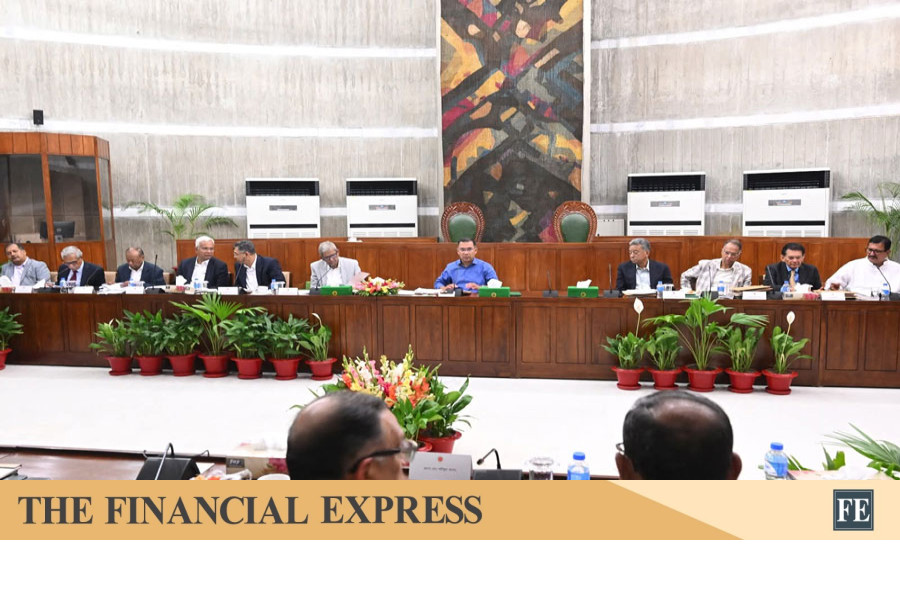
The decisions were taken at a Cabinet meeting held on Thursday night. Cabinet Secretary Nasimul Ghani briefed reporters on the decisions after the meeting.

The meeting, chaired by Prime Minister Tarique Rahman, began at around 8:45pm at the Cabinet Room of the Jatiya Sangsad complex and continued until about 11:30pm.

Cabinet meetings are usually held at the Secretariat on Thursdays. However, as the current session of Parliament is underway, the meeting was held at the Parliament complex after the day’s sitting.​
 

Energy cost overrun amid US-triggered Gulf turmoil

Extra Tk 45b sought to foot bloated LNG-import bills only for April

M Azizur Rahman

Published :
Apr 03, 2026 00:19
Updated :
Apr 03, 2026 00:19

1775175111289.webp


Ballooning energy cost overruns set budget amid the Gulf crisis as a hefty subsidy worth around Tk 45 billion or US$370 million is sought only to meet LNG-import bills for a single month of April.

Officials say the state-run Petrobangla has placed the subsidy demand with the Ministry of Finance (MoF), as global fuel prices spike and reserves a limited.

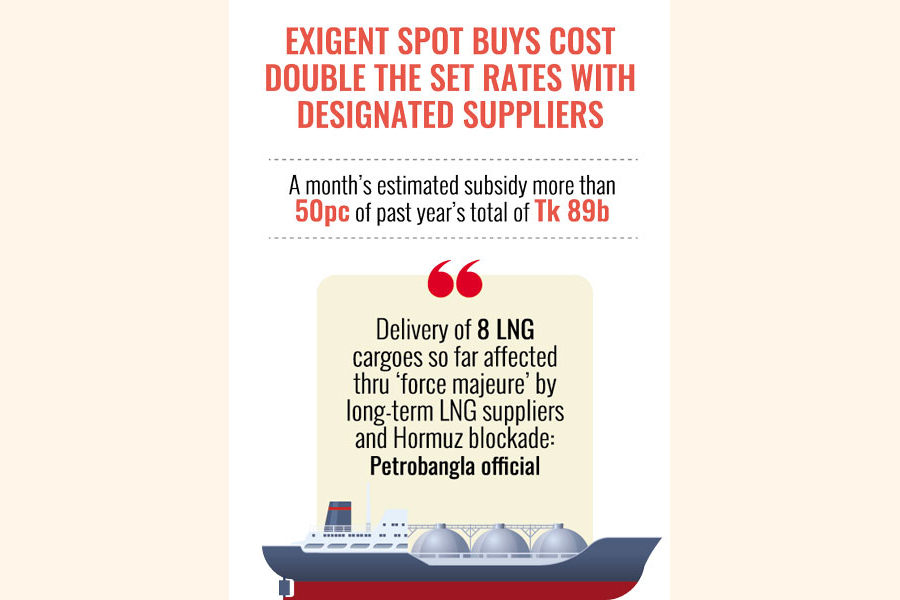
The April subsidy amount, as sought by the corporation, is more than 50 per cent of the entire subsidy amount worth Tk 89 billion it got from the MoF in the previous fiscal year (FY) 2024-2025.

"We sought the subsidy as we shall be importing eight liquefied natural gas (LNG) cargoes from volatile spot market out of total nine LNG cargoes we have planned to import in April," Petrobangla director for finance AKM Mizanur Rahman told The Financial Express on April 2.

State-run Rupantarita Prakrtik Gas Company Ltd (RPGCL), a subsidiary of Petrobangla, bought seven LNG cargoes from spot market through tenders and another spot cargo scheduled to be delivered in March has been shifted to April, he said.

The RPGCL, a wholly owned subsidiary of Petrobangla and responsible for LNG trading in Bangladesh, palpably runs a rough course for supply disruptions in the wake of the Mideast mayhem triggered by US-Israel attacks on Iran.

Average LNG-import costs of the eight spot LNG cargoes to be delivered in April range up to around US$21 per million British thermal unit (MMBTu). Hadn't the war happened and the Strait of Hormuz not restricted, Bangladesh would import most of the LNG cargoes from long-term suppliers at a cost of around $9.0 per MMBTu to $11 per MMBTu, he said.

Bangladesh imported two LNG cargoes from spot market in March after a hiatus of over two months, to tide over LNG-supply uncertainty stemming from the Middle East war, he mentions.

To foot increased bills for the must-have fuel to supplement the supply of domestic natural gas in March, the Ministry of Finance provided Tk 10 billion to Petrobangla.

"If the war doesn't stop and the Strait of Hormuz remains restricted for Bangladesh-bound LNG cargoes, Petrobangla's subsidy requirement to import LNG in the current fiscal year, or FY 2025-2026 (July-June), might go all-time high," says the Petrobangla official.

Petrobangla had previously received state subsidies worth around Tk 25 billion in FY 2019-2020, Tk 35 billion in FY 2020-2021, Tk 34.97 billion in FY 2021-2022, Tk 60 billion in FY 2022-2022, Tk 63.32 billion in FY 2022-2024, and Tk 89 billion in FY 2024-2025 on account of LNG imports, he says.

Bangladesh had trimmed LNG buys from the spot market until February after starting the import under new long-term sales and purchase agreements, or SPAs, from Qatar and the US from January along with previous suppliers, the official elaborates on the fuel-supply lines.

Riding on LNG supplies from new sources, Petrobangla had a plan to buy only a dozen cargoes from spot market in 2026 compared to the import of 49 spot LNG cargoes in 2025.

But halt in delivery from the long-term suppliers and a couple of short-term suppliers of Saudi Arabia and Oman forced Petrobangla to go for LNG purchases from spot market extensively.

Delivery of a total of eight LNG cargoes has so far been affected for Bangladesh due to the 'force majeure' by the long-term LNG suppliers as well as restrictions on the passage of ships through the Strait of Hormuz, he mentions.

Since Bangladesh's LNG imports began in 2018, the country has imported approximately 35.878 million tonnes (mt) of LNG through 579 cargoes as of February 2026, according to RPGCL data.

Bangladesh's overall natural gas supplies currently hover around 2.53 billion cubic feet per day, inclusive of 822 million cubic feet per day of regasified LNG, according to official Petrobangla data as of March 30.​
 

Securing Bangladesh’s energy future
1 April 2026, 19:34 PM

Shahid Shamsu

1775180285549.webp


In recent weeks, energy has been one of the most discussed topics—whether in the news, seminars, articles, or the global stock market—not just for Bangladesh but for the rest of the world. Securing energy resources is key, as it determines how the economy will prosper in the years ahead.

Before exploring our potential energy opportunities, I would like to briefly share our current state based on the chart above. The green area in the chart reflects Bangladesh's domestic gas production, which in recent years has included both national companies—Bangladesh Gas Fields Company Limited (BGFCL), Sylhet Gas Fields Limited (SGFL), Bangladesh Petroleum Exploration & Production Company Limited (BAPEX)—and international oil companies such as Chevron.

In the last six fiscal years, gas production has declined by about 30 percent. This sharp decline has led to increased dependence on liquefied natural gas (LNG) imports. Based on Petrobangla’s daily production report (available on the Energy and Mineral Resources Division site), the trend continues in 2026, with domestic gas production in the range of 1,700–1,750 mmcfd.

According to the Hydrocarbon Unit, Energy and Mineral Resources Division (EMRD) annual report (2024–2025), major sector gas consumption was as follows: power (41 percent), industry (19 percent), captive (17 percent), domestic (11 percent), fertilizer (6 percent), and the remainder by CNG and commercial.

Steps to strengthen energy security

Onshore:


It will be important to develop a comprehensive asset plan and carry it through to reach the full potential of each gas field. Some fields may require workovers, debottlenecking, new compressor projects, or better management of production losses through predictive maintenance.

Robust planning and the use of technology can also improve the efficiency of turnarounds—for example, by using robots for tank inspections, drones for flare inspections, and reducing the number and duration of shutdowns. In the oil and gas industry, we often say that every barrel matters.

In addition, each asset should carry out an exercise to identify any additional resources that could potentially be converted into reserves and ultimately into production, without applying constraints such as gas pricing, costs, budget limits, or other resourcing challenges. Running an unconstrained exercise like this helps shift the mindset from “what cannot be done” to “what we can do.”

The opportunities identified through this process, even those not currently economically viable under existing terms or blocked by other constraints, should be prioritized and escalated for discussion so that those barriers can be addressed quickly.

LNG spot prices are currently several times higher than domestic gas. Given this gap, onshore opportunities should be accelerated with urgency as part of our broader energy security strategy.

Offshore:

We will need to entice IOCs with the right fiscal incentives; otherwise, every bid round will fall behind in terms of timeline. Several technological advancements have taken place in recent years, including modern OBN (ocean bottom node) seismic, the use of AI for faster prospect maturation and better imaging, the first high‑pressure (20K PSI) wells drilled in the anchor project, future cost‑effective tieback opportunities when discoveries are too small for standalone facilities, and advanced remote operations. Offshore projects remain some of the longest and most complex in the oil and gas portfolio.

LNG:

It is important to understand how the LNG trade flow is shaping up now. The majority of the world’s LNG demand is in Asia. In other regions, Europe used to be dependent on Russia. Since the Russia-Ukraine war, Europe has rapidly shifted and started relying on LNG from the U.S. According to the American Petroleum Institute (API), Europe has become the largest destination for U.S. LNG, with a record 67 percent going to the EU and UK between January and April 2025. This trend is most likely to continue in the near future.

Reuters reported that about 90 percent of Australia’s LNG exports go to Japan, South Korea, and China. LNG expansion from the African region will likely target Europe and other Asian countries.

According to the IEA, Bangladesh, India, and Pakistan imported almost two-thirds of their total LNG supplies through the Strait of Hormuz in 2025. As our contracted LNG is now impacted, we are increasingly dependent on the spot market.

According to various newspaper reports, it is encouraging to see that Bangladesh is managing to secure several LNG cargoes for April. Going forward, as Bangladesh continues to compete for LNG with other Asian countries, it would be a good strategy to limit our exposure to spot prices. Along with Qatar, which will likely remain a longer-term, affordable supplier, we must secure backup options by arranging term contracts from non-Middle Eastern countries.

A Hybrid Approach

To ensure Bangladesh's energy security, we will need a hybrid approach that includes:
  • Extending the onshore production plateau through both national companies and IOCs.​
  • Addressing power needs by providing incentives for solar and accelerating other renewable energy.​
  • Expanding storage capacity for crude oil and refined products.​
  • Attracting IOCs to explore offshore blocks.​
  • Balancing gas demand and supply through longer-term LNG contracts sourced from different regions.​

Shahid Shamsu is an oil and gas professional with more than 20 years of experience. Views expressed in this article are the author’s own.​
 

Latest Posts

Back