Home Watch Videos Wars Movies Login

[🇧🇩] Energy Security of Bangladesh

[🇧🇩] Energy Security of Bangladesh
782
30K
More threads by Saif

G Bangladesh Defense

LNG unloading resumes, pressure normalises: Amit


1790381058584.webp


State Minister for Power, Energy and Mineral Resources Aninda Islam Amit on Friday said the gas pressure had become normal by this afternoon, as unloading of liquefied natural gas (LNG) resumed at 7:18am.

“LNG cargoes have resumed gas transfer to the two floating storage and regasification units (FSRUs) in the Bay of Bengal after temporary disruption on Thursday due to adverse weather,” he said, replying to a question.

After a meeting of the District Hospital Health Management Committee at Jashore Circuit House, the state minister also said that the gas supply is expected to help normalise the gas pressure soon.

Highlighting the ongoing development activities in the health sector in Jashore, he said residents of Jashore would be provided with full-fledged coronary care unit (CCU) services within the stipulated timeframe.

He said the government is working to ensure exclusive healthcare services, including for heart diseases, so that patients are not forced to travel to Dhaka or other districts for treatment.

The state minister said the government would also work to provide advanced healthcare services in remote and disadvantaged areas within the next few months.

Deputy Commissioner Mohammad Ashek Hasan chaired the meeting, while reserved seat lawmaker Sabira Nazmul, General Hospital Superintendent Dr Md Hossain Shafayat, Civil Surgeon Dr Md Masud Rana and senior officials concerned attended.

The state minister also said the government would take initiatives to readjust fuel prices after declining energy prices in the global market.

“If global energy prices remain stable or come down, we will try to readjust fuel prices in the country as soon as possible to provide relief to people,” he said.​
 
Analyze

Analyze Post

Add your ideas here:
Highlight Cite Respond

Is profit-sharing enough to revive Phulbari?


1790465656129.webp


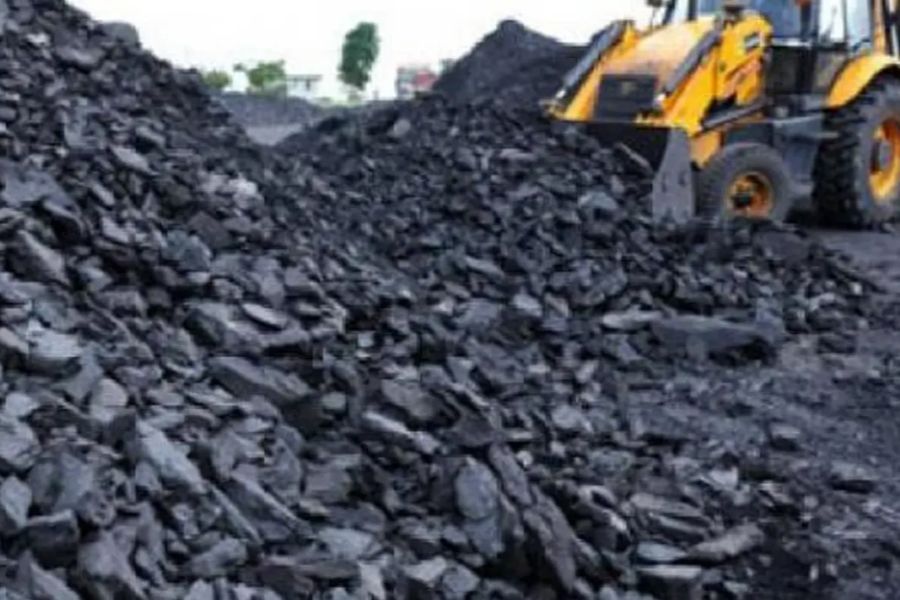
Nearly two decades after protests halted the Phulbari coal mine, the government has now seized on the long-stalled project as a possible remedy for the country's worsening fuel crunch. The package on the table relies on an open pit extraction method and a profit-sharing model with local landowners to overcome the resistance that stalled the project. Under the proposal, landowners would lease out their land in return for regular payments and a share of the mine's profits. They would also reclaim their plots when the lease period ends and have access to jobs in and around the mine while their communities would gain new housing, piped water and an uninterrupted supply of electricity. This marks a departure from the earlier approach under which affected people were largely expected to accept compensation for losing their land and little else. The government appears to have learned that compensation and rehabilitation alone are unlikely buy consent and has adopted a framing calculated to blunt both local anger and international criticism. Nor is it difficult to discern the motivation of the government. Phulbari is estimated to contain 572 million tonnes of coal, of which about 475 million tonnes is considered mineable and its development could reduce the country's dependence on imported coal at a time when imported energy has grown costlier and less certain.

Even as the promise of financial gain and infrastructure development sounds appealing, the choice of open-pit extraction carries risks that the new package does little to address. Open-pit mining does not simply borrow land for a few decades and hand it back in the same condition. It requires the removal of the earth above the coal seam, along with the farms, homes and other structures standing on it. Land returned decades later would be handed back as a void, utterly unrecognisable to the landowners who once farmed it. More significantly, the mine would radically alter the lives of the people living above the coal reserve. Families would be forced to leave places where they have lived and farmed for generations, as villages, markets, schools and ponds that define their world are swept away. Meanwhile, the water table on which the entire agricultural region depends would sink as excavation moves further underground. The proposed mine site sits on some of the most fertile farmland in the northwest, land that feeds a large part of the country, and open-pit mining would do away with it for good.

The proposed profit-sharing arrangement raises a further set of questions about who the beneficiaries will be and how those benefits will be calculated. Share of the profits is undoubtedly attractive, but calculating the actual net profit of a massive mining operation involves numerous variables and accounting methods that can easily be manipulated to reduce the payout to local landowners.

It is also worth remembering that this is not the first time Phulbari has been presented as the answer to the nation's energy question. Asia Energy, the local arm of the British company GCM Resources, completed a feasibility study and submitted a development scheme long ago, but its plan collapsed in the face of fierce local resistance, most notably the protests of 2006 in which lives were lost. A deal that could not win the people's trust then cannot expect it now merely because the profit-sharing language has grown more generous. Policymakers must recognise that any attempt to bypass genuine ecological safeguards and public accountability will only invite renewed social conflict.​
 
Analyze

Analyze Post

Add your ideas here:
Highlight Cite Respond

Fuel price adjustment & wider economic interests

1790551319223.webp

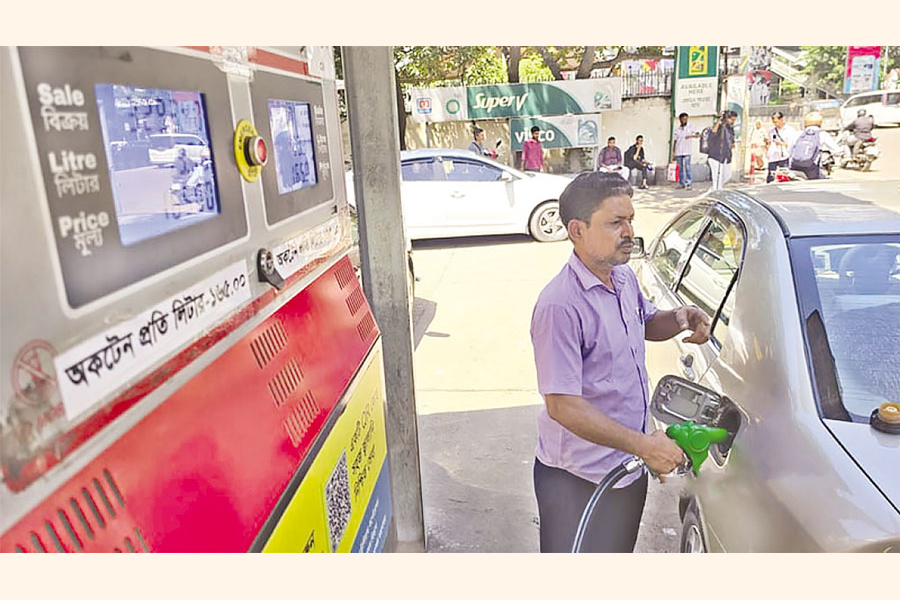
Filling stations start to sell fuel at newly hiked prices on Monday — bdnews24.com Photo

Bangladesh government’s decision to raise retail prices of fuel oil including diesel, petrol, octane and kerosene—by Tk 20 per litre on September 21, 2026, has once again highlighted the country’s challenging energy economic realities. Bangladesh remains fully import dependent for fuel oil. It is compelled to import most of its fuel oil in refined form due to its limited domestic refining capacity (Eastern Refinery can refine approximately 1.2 million tonnes of imported crude petroleum annually). Currently, Bangladesh imports approximately 7 million tonnes of crude and refined petroleum (including diesel, octane, jet fuel, furnace oil, lubricant and others) annually. Annual spending on petroleum imports fluctuates heavily based on global market prices. During last fiscal year Bangladesh spent approximately 10.6 billion US dollars on fuel imports. With the country’s primary energy supply heavily dependent on imports, the government has limited immediate alternatives to ensure an uninterrupted supply of fuel oil.

The abrupt fuel price hike has triggered a domino effect across the economy, multiplying the hardships faced by ordinary people. A rise in fuel prices never remains confined to petrol stations; it drives up costs across transport, agriculture, industry and services. This, in turn, fuels inflation, reduces purchasing power and weakens the competitiveness of exporters. Higher transport fares and rising prices of everyday essentials not only increase people’s financial burden on citizens but also contribute to widespread frustration.

Consequently, the government has raised bus fares by Tk 0.17 per kilometre, while long-distance bus fares have already increased by Tk 50–100. Local buses on the Dhaka–Chattogram route are charging an additional Tk 5–10. Truck freight rates have surged by Tk 2,000–8,000. Furthermore, private container depot operators have imposed a 9.85 per cent fuel surcharge on container handling.

The government has announced fare increases for buses, minibuses and launch services, but not for air-conditioned buses, goods-carrying trucks or covered vans. This has left considerable room for operators to impose their own charges. Some are reportedly charging an additional Tk 50 to Tk 200 for each trip, while truck and covered-van operators are imposing even higher increases. Truck owners, for example, have reportedly been charging an additional Tk 4,000–6,000 on some routes.

The increase in fuel prices is also affecting the handling of import-export containers, as the machinery and vehicles used at private inland container depots are largely diesel-powered.

The higher price of diesel will be an additional burden on farmers who are already struggling with a fertiliser shortage. As reported, around 15-24 per cent of total diesel consumed in Bangladesh (about 0.97- 1.25 million tonnes of diesel annually) are used in agriculture. Diesel is required not only for irrigation but also to operate machinery used for land preparation, planting, harvesting, threshing and transporting agricultural produce.

The increase in diesel prices will therefore affect almost every stage of agricultural production, putting further pressure on farmers and food production while potentially worsening food insecurity and inflation.

At a time when inflation is already high (reaching 8.26 per cent in August 2026) and wages are rising at a slower pace, higher transport costs are likely to push up food prices and service charges, placing an even greater burden on ordinary people.

For lower-income households, higher fuel costs are particularly difficult to absorb because a larger share of their income is spent on essential goods and services, whose prices are heavily influenced by transportation and energy costs.

Media reports suggest that the chairman of Bangladesh Petroleum Corporation (BPC) wrote to the Energy Division about the corporation’s financial crisis and mounting losses. In the BPC letter dated September 8, two factors were identified as the main causes of BPC’s financial difficulties. The first was that domestic fuel prices had not been adjusted regularly in line with global prices. The second was a change in the method of assessing duties and taxes on petroleum products introduced in June 2025.

Under the new system, duties and taxes on imported petroleum products are calculated based on their actual import or invoice value rather than a fixed tariff value. As a result, when international fuel prices rise, the amount of duty payable also increases, contributing significantly to BPC’s losses. According to BPC, the change has increased its tax burden by around Tk 15–20 per litre compared with the previous system.

Following the rise in international fuel prices amid the conflict in the Middle East, the import duty and taxes rose to Tk 38.64 per litre in March, Tk 38.90 in April, Tk 29.74 in July, and Tk 32.44 in August. In September, the duty is expected to be around Tk 38–40 per litre.

Government officials have described fuel price adjustments as “the only acceptable option” to prevent a massive fiscal deficit, ease pressure on the treasury and reduce the government’s subsidy burden. According to published reports, BPC’s accumulated losses amounted to more than Tk 22,875 crore between March and August 2026 as conflicts in the Middle East disrupted energy supply chains and increased energy procurement and shipping costs.

Officials have also argued that adjusting domestic fuel prices was necessary to prevent cross-border smuggling to neighbouring countries where fuel prices are higher. At the same time, the government has faced the challenge of reducing subsidies on fuel imports while preserving resources for social safety-net programmes.

Against this backdrop, the government has chosen to impose additional costs on the public in order to reduce BPC’s annual losses by Tk 10,000 crore.

Some economists argue that the government could seek to balance the expenditure burdens through stricter austerity measures and more disciplined public spending (government has repeatedly announced and introduced austerity measures including reducing fuel and electricity consumption in public offices by 30 per cent, halting new vehicle procurement and restricting foreign travels) while directing resources that generate broader economic and social benefits.

Dhaka University professor and economist Selim Raihan has highlighted the concerns that the government ministries frequently fail spending and savings targets because there is little or no quarterly or half yearly oversight to ensure compliance. Moreover, efforts to cut expenditures foreign training, vehicle purchases and hospitality budgets often face resistances from bureaucrats and administrative bodies.

At the same time, the government has decided to implement a new pay scale for government employees. Published reports suggest that the new pay scale is expected to increase government expenditure by Tk 1,05,380 crore over three years: Tk 37,372 crore in the current year, Tk 44,838 crore in 2027 and Tk 23,170 crore in 2028.

The government has also committed thousands of crores to major and costly purchases, (including several Boeing passenger aircrafts, fighter jets and other equipment. This raises a broader question about government’s spending priorities. On the one hand, the government considers reducing BPC’s annual losses by Tk 10,000 crore by raising fuel prices, imposing additional costs on households and businesses. On the other hand, it has committed expenditures many times larger through higher government salaries, major equipment purchases and infrastructure projects.

The central issue, therefore, is not simply BPCs financial discipline or the need to balance its budget. It is also a question of government priorities: how limited public resources should be allocated, which expenditures should receive precedence, and how the burden of economic adjustment should be distributed between the government, businesses and ordinary citizens. Ultimately, the challenge is to reconcile the financial sustainability of the energy sector with the wider economic interests of households, businesses, farmers and the national economy.

Mushfiqur Rahman is a mining engineer. He writes on energy and environment issues.​
 
Analyze

Analyze Post

Add your ideas here:
Highlight Cite Respond

Amit urges global firms to join Bangladesh offshore bidding round
Bangladesh offers 26 Bay of Bengal blocks as government highlights offshore potential and investment opportunities


1790726300153.webp

State Minister for Power, Energy and Mineral Resources Aninda Islam Amit addresses the World Energies Summit in London on Tuesday, September 29, 2026. Photo: Collected

State Minister for Power, Energy and Mineral Resources Aninda Islam Amit on Tuesday urged international oil and gas companies to participate in the Bangladesh Offshore Bidding Round 2026.

He made the call while addressing the Ministerial Address on the Strategic Stage of the two-day World Energies Summit in London, where he highlighted Bangladesh’s growing energy demand, offshore energy potential and improved investment framework.

The state minister also highlighted the government’s commitment to increasing the exploration and production of domestic gas and energy resources amid the country’s rapidly growing energy demand, according to a press release.

At the event, which will end on Wednesday, Bangladesh’s growing energy demand, offshore energy potential and improved investment framework were presented before international investors.

The state minister invited international oil and gas companies to participate in the Bangladesh Offshore Bidding Round 2026, under which a total of 26 blocks in the Bay of Bengal have been opened for investors, including 11 shallow-water blocks and 15 deep-water blocks.

Chairman of Invest Bangladesh Chowdhury Ashik Mahmud Bin Harun presented an overview of Bangladesh’s overall investment climate, highlighting macroeconomic stability, the growing momentum of investment and the government’s supportive policies for international investors.

The presentation also highlighted Bangladesh’s relatively unexplored offshore potential, availability of modern seismic data and the competitive commercial terms of the Offshore Model Production Sharing Contract 2026.

The Bangladesh delegation called upon international energy companies to review the geological and seismic data and directly contact the Bangladesh government and Bangladesh Oil, Gas & Mineral Corporation (Petrobangla) to participate in the ongoing bidding round.

On the first day of the summit, the Bangladesh delegation also held meetings with four international oil companies on the sidelines.

During the meetings, the delegation highlighted the benefits of the ongoing offshore bidding round and requested the companies to participate in the bidding process.

On the final day of the summit on Wednesday, meetings will be held with four more major companies from around the world.​
 
Analyze

Analyze Post

Add your ideas here:
Highlight Cite Respond

Private investment in rooftop solar


1790810343514.webp


The energy crisis is no longer merely a matter of households struggling with shortages of gas and electricity; it is a threat to the country’s economic future. It is because energy security has a direct bearing on industrialisation, investment, employment generation and export competitiveness. Acute shortages of gas and electricity have recently crippled production in hundreds of factories. Energy experts therefore opine that the government and the private sector have to work in tandem to find a sustainable and long-term solution to the energy crisis.

According to the Bangladesh Power Development Board (PDB), the country’s grid-connected power generation capacity stood at 28,919 megawatts (MW) as of June 2026, while total capacity, including captive and off-grid generation, was 32,332 MW. However, actual generation is far below the installed capacity due to shortages of primary fuels including gas, coal and furnace oil. Reports suggest that overall electricity generation during this summer has been hovering around 13,000–14,000 MW against demand of roughly 16,000–17,000 MW. This 4000 MW shortfall triggered widespread loadshedding across the country in August. The gap between installed capacity and actual generation lays bare the fact that the challenge in the power sector is not merely to increase generation capacity. Rather, the priority should be to ensure the availability of primary fuel and address technical and transmission constraints so that existing power plants can operate close to their available capacity.

Recent PDB data also underscore another major weakness in the country’s energy sector: its heavy dependence on fossil fuels. Of the country’s total installed power generation capacity, around 44 per cent is gas-based, around 24 per cent is coal-based and around 23 per cent is furnace-oil-based. By contrast, solar power accounts for only about 1.94 per cent and wind power a mere 0.22 per cent. And the result is that power generation is frequently hampered by dwindling supplies from local gas fields, as well as disruptions in LNG imports caused by global price volatility, supply chain disruptions or technical glitches.

Moreover, when the prices of LNG, coal and oil rise in the international market, they not only increase the cost of power generation but also put pressure on the country’s foreign-currency reserves. Meanwhile, inadequate gas supply, low gas pressure, load-shedding and rising energy prices ultimately increase the cost of production. This is all the more concerning for export-oriented sectors, as higher production costs can erode their global price competitiveness.

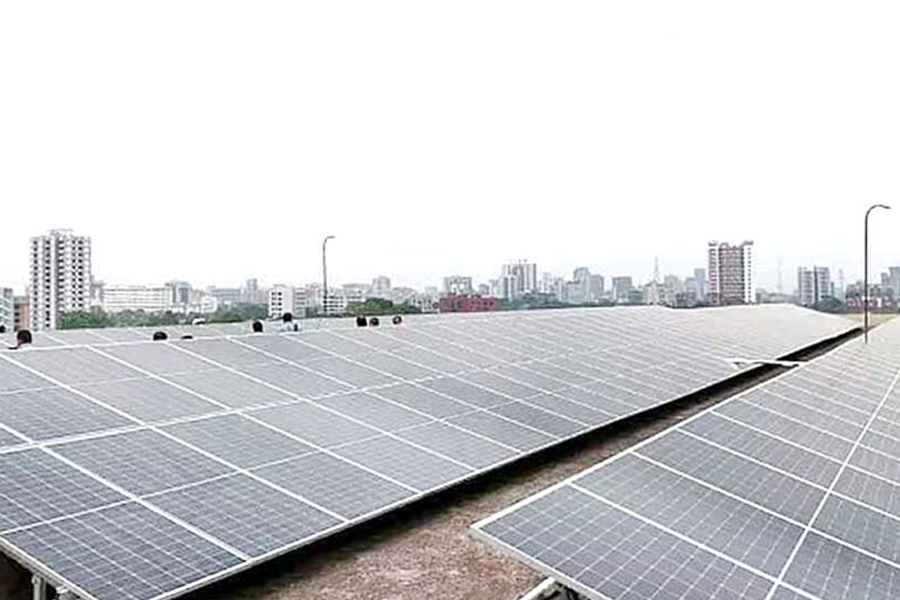
Against this backdrop, diversifying the country’s energy mix, particularly by expanding renewable sources such as solar power, is not only a choice but an imperative. Neighbouring countries have already demonstrated the potential of solar energy to reduce dependence on conventional fuels. Pakistan, for instance, has rapidly expanded solar generation, with installed solar capacity reportedly exceeding 6,000 MW and meeting a substantial share of its electricity needs. The country estimates that greater reliance on solar power could save billions of dollars annually by reducing fuel imports. India, too, has significantly expanded its renewable-energy capacity, with renewable sources now contributing tens of thousands of megawatts to its power system. Bangladesh, by comparison, has less than 1,600 MW of solar generation capacity. For years, the scarcity of land has been cited as a major obstacle to large-scale solar expansion. However, a study by the Sustainable and Renewable Energy Development Authority (SREDA) estimates that rooftop spaces on industrial, commercial and residential buildings in urban areas alone could support 7,000–8,000 MW of electricity generation. Energy experts therefore see rooftop systems as a faster and cost-effective way to boost renewable energy capacity without requiring large tracts of land for utility-scale renewable projects.

Encouragingly, the government has set a target of meeting 20 per cent, or 5,000 MW, of total electricity demand from renewable sources by 2030, with the share rising to 30 per cent by 2040. Of late, the government has also announced a host of measures to revitalise the renewable energy sector. These include reducing the import duty on solar equipment to 1 per cent from 17 per cent, installing rooftop solar systems on government buildings, and providing incentives for rooftop solar installations in the private sector. The government has also approved the Net Metering Guideline 2025. Under the programme, consumers generating surplus electricity will be able sell it directly to the government at Tk10.50 per kilowatt.

However, financing is crucial. Installing rooftop solar systems initially requires substantial investment. The government can either subsidise solar panels and battery storage systems or direct banks and financial institutions to offer low-interest loans for such installations. At the same time, the tax policy for solar panels, inverters, battery storage and related technologies should be designed in a way that makes them more affordable.

Another important factor is policy continuity. Rooftop solar system installations require considerable upfront investment, and businesses will commit this fund only when they have confidence that the policy environment will remain supportive over the lifespan of a solar system. Policies related to net metering and surplus power sales must be transparent and predictable over the long term. Frequent policy changes or uncertainty over these arrangements could discourage private investment. A stable policy framework, therefore, is essential to encourage large factories and commercial establishments to invest in rooftop solar. If such establishments can meet even 25 per cent of their electricity needs from solar power, the combined effect could make a significant contribution to reducing pressure on the national grid and lowering dependence on conventional energy sources. A strong public-private partnership can transform the private sector from a passive energy consumer into an active energy producer, helping the government build a more reliable, resilient and sustainable energy system in the long term.​
 
Analyze

Analyze Post

Add your ideas here:
Highlight Cite Respond

Petrobangla sees no LNG shortage as 19 cargoes due in Oct-Nov


1790810657567.webp


Petrobangla has secured 19 LNG cargoes for October and November, ensuring uninterrupted supply and ruling out any shortage during the two-month period, officials from Bangladesh Oil, Gas and Mineral Corporation Petrobangla) said.

Of the total, 10 cargoes are scheduled to arrive in October and the remaining nine in November. So, there will be no shortage of Liquefied Natural Gas (LNG) during October and November, they said.

Talking to BSS, Petrobangla Chairman Md Abdul Mannan said there is no problem regarding LNG-carrying cargoes for November as the required nine cargoes have been confirmed.

He said necessary LNG cargoes have been secured for October as well, with a total of 10 cargoes scheduled for import. This ensures preparedness for LNG supplies over the coming months.

Mannan said, “We are consistently trying to ensure the necessary LNG supplies for the upcoming three-month period. This approach eliminates the risk of any gas supply shortages from LNG availability.”

Petrobangla oversees LNG imports with the approval of the Energy Division.

Meanwhile, Rupantarita Prakritik Gas Company Limited (RPGCL), a subsidiary of Petrobangla, is responsible for tasks such as LNG importation, cargo scheduling, contract negotiation and implementation, and terminal operations.

Sources at Petrobangla and RPGCL told BSS that the import of a total of 19 LNG cargoes has been confirmed for October and November.

Of the total, 10 cargoes scheduled for October. So, three will be sourced from the spot market, two under long-term contracts, and five under short-term contracts.

Additionally, nine cargoes of LNG are scheduled for import in November. Of those, six will be brought under long-term agreements and three under short-term agreements.

These cargoes have been sourced from various countries, including the United States, Nigeria and Angola.

They said LNG is being procured from diverse sources to meet domestic demand. The cargoes will arrive according to schedule and subsequently be supplied to the national gas grid.

According to RPGCL data, each cargo contains about 32 lakh million British Thermal Units (MMBtu) of LNG. Based on this, the import of about 60.8 million MMBtu of LNG has been secured across the 19 cargoes scheduled for October and November.

The imported LNG arrives at the country’s LNG terminals via sea routes, where it undergoes a process known as regasification - converting the LNG back into a gaseous state.

Following regasification, the gas is supplied to the national gas grid through pipelines.

Petrobangla Director (Finance) Mizanur Rahman said the secured shipments include cargoes under both long-term and short-term agreements, alongside purchases from the spot market.

With imports secured to meet demand, no major disruptions in LNG supply are anticipated over the coming months, he said.

Petrobangla officials said the imported LNG is supplied to the national gas grid after regasification, after which the gas is used in various sectors of the country.

Qatar-based QatarEnergy and OQ Trading of Omani supply LNG to Bangladesh under long-term agreements. Besides, OQ Trading supplies LNG to Bangladesh under short-term contracts.

Bangladesh also imports LNG from the spot market as required.​
 
Analyze

Analyze Post

Add your ideas here:
Highlight Cite Respond

Bangladesh invites global firms to bid for 26 offshore blocks
Staff Correspondent 29 September, 2026, 22:14

1790813230574.webp

Press Release Photo

Bangladesh has invited international oil and gas companies to participate in its 2026 offshore bidding round for 26 blocks in the Bay of Bengal, the energy ministry said.

The invitation was made at a ministerial session of the World Energies Summit in London on Tuesday, according to a press release issued by the ministry.

State minister for power, energy and mineral resources Aninda Islam Amit said Bangladesh’s energy demand was increasing with economic growth and that the government was working to expand exploration and production of domestic gas and other energy resources.

He urged international oil and gas companies to participate in the Bangladesh Offshore Bidding Round 2026.

Under the bidding round, 11 shallow-water and 15 deep-water blocks in the Bay of Bengal have been opened to international investors.

Invest Bangladesh chairman Chowdhury Ashik Mahmud Bin Harun presented an overview of Bangladesh’s economy at the session, highlighting the country’s macroeconomic conditions, investment flows and government measures to facilitate international investment.

His presentation also highlighted Bangladesh’s offshore exploration prospects, available seismic data and the commercial terms offered under the Offshore Model Production Sharing Contract 2026.

At the event, the Bangladesh delegation encouraged international energy companies to review the available geological and seismic data and contact the government and Petrobangla directly to participate in the bidding round.​
 
Analyze

Analyze Post

Add your ideas here:
Highlight Cite Respond

Latest Posts

Back
 
G
O
 
H
O
M
E