[🇧🇩] Energy Security of Bangladesh

[🇧🇩] Energy Security of Bangladesh
804
31K
More threads by Saif

G Bangladesh Defense

Solar power, solar irrigation top govt priority in clean energy push: State Minister

1791934151197.webp


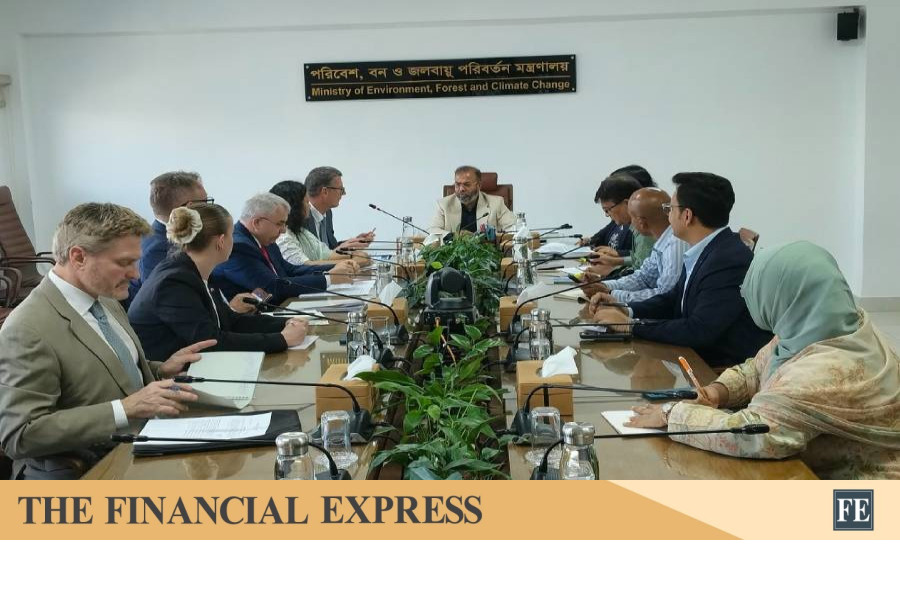
The government has been giving top priority to expanding solar power and solar-based irrigation from the very beginning to protect the environment and ensure alternative energy, Environment, Forest and Climate Change State Minister Shaikh Faridul Islam said Tuesday.

“Emphasis is being placed on boosting environmental protection and climate resilience through the expansion of solar power, increased use of electric vehicles, closure of polluting brick kilns, excavation and restoration of canals, and the initiative to plant 250 million trees,” the state minister said.

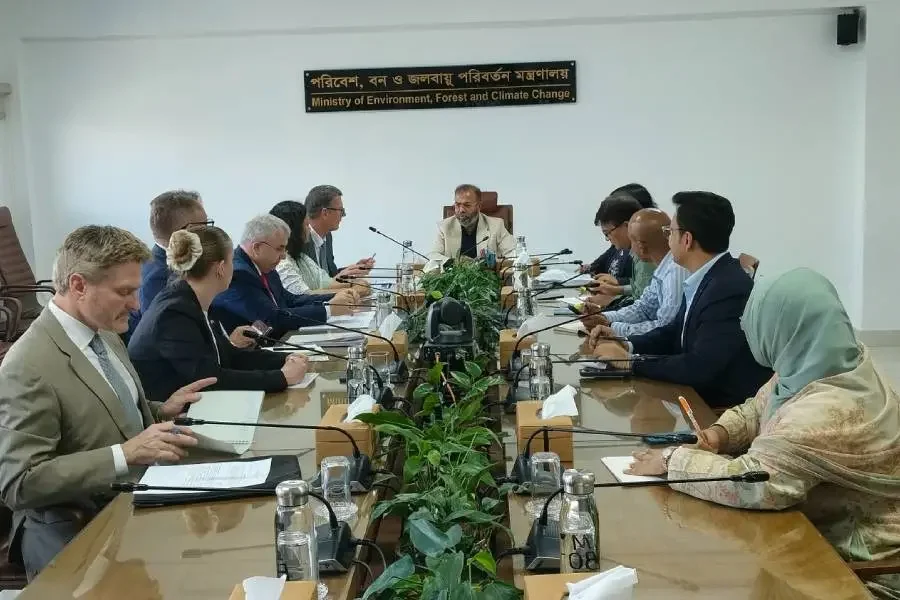
The state minister made the remarks at a meeting with the European Union Delegation and representatives of several European countries at the conference room of the Ministry of Environment, Forest and Climate Change.

The meeting was organised as part of the EU’s outreach programme on clean energy, climate priorities and COP31.

Describing the expansion of solar energy as a key priority of the government’s clean energy agenda, Faridul said the opportunities for installing rooftop solar systems on residential buildings, factories and government establishments, and for expanding solar-powered irrigation in suitable areas, must be utilised.

He said it is possible to diversify energy supply while reducing dependence on conventional fuels.

The government is also stressing quality technology, adequate financing, skilled manpower and regular maintenance to scale up solar power, he added.

On curbing air pollution, the state minister said it is imperative to shut down illegal and environmentally harmful brick kilns and to enforce environmental regulations effectively.

The government is working to cut pollution in brick production and promote eco-friendly blocks and alternative building materials, he said.

He said the government is also determined to tackle pollution from construction dust and vehicle emissions, and to ensure integrated waste management.

Speaking about the tree plantation drive, Faridul said saplings of suitable species are being planted at suitable locations to turn the 250-million-tree initiative into long-term environmental gains.

Priority must be given to native species as plantation efforts are advanced across forest areas, coastal belts, roadsides, and appropriate institutional and community spaces, he said.

“Planting alone is not enough. Nurturing, protection and ensuring the survival rate of trees are equally important,” he said, urging greater participation from local communities, educational institutions, youth and the private sector.

Highlighting climate risks, the state minister said floods, cyclones, heavy rainfall, heatwaves and salinity are putting pressure on people’s lives and livelihoods, agriculture, water resources and infrastructure.

To cope with these impacts, the government’s adaptation efforts focus on disaster preparedness, early warning, coastal protection, afforestation, water management and climate-resilient infrastructure, he said, adding that local needs and the requirements of vulnerable communities must be prioritised in implementation.

On the carbon credit framework, he said a robust structure is crucial to attract investment in emission reduction and carbon removal activities. Such a framework must have clear provisions for project approval, measurement of emission cuts, reporting and independent verification, and safeguards against double counting of the same reductions, he said. The government is working on a carbon credit framework, he added.

Faridul also said coordination among relevant ministries, local government bodies, the private sector and development partners is essential to implement these initiatives.

The EU and European partners can play an important role in clean energy, green transport, air pollution control, climate-resilient water management and building capacity in the carbon market, in line with Bangladesh’s national priorities, he said.

Ahead of COP31, the state minister outlined Bangladesh’s adaptation needs and climate finance priorities, stressing that international cooperation must be translated into actionable programmes that deliver visible benefits for people’s lives, livelihoods and the environment.​
 

Green energy shift needs private, foreign financing

SANEM’s Selim Raihan says at policy dialogue

Star Business Report

1791937134344.webp


Economist Selim Raihan has called for greater involvement of the private sector and international partners, including global buyers and investors, in financing Bangladesh’s green energy transition and supporting green growth. He made the remarks at a policy dialogue in Dhaka yesterday.

Bangladesh needs $230 billion between 2023 and 2050 to adapt to climate change, but the required funding has yet to be secured, said Raihan, a professor of economics at the University of Dhaka and executive director of the South Asian Network on Economic Modeling (SANEM).

Mobilising such a large amount would be challenging, making private investment and international financing essential to meeting the country’s climate goals and supporting the transition to cleaner energy, he said.

Selim made the remarks while presenting a keynote paper at SANEM’s policy dialogue titled “Can Green Growth Drive Bangladesh’s Next Phase of Development?” at the Sheraton Dhaka in the capital.

Businesspeople, economists and government officials attended the event, where discussions also focused on rooftop solar integration, grid stability, battery storage and disposal, and financing green growth through green bonds and carbon markets.

Monzur Hossain, member (secretary) at the General Economics Division of the Bangladesh Planning Commission, said the government was focusing on generating solar electricity from rooftops, particularly in areas along riverbanks.

However, integrating rooftop solar power into the national grid could create instability and imbalances, he said. Establishing isolated grids in some areas could be one solution, and work was underway to address the challenges.

While the government was considering these issues in its commercial projects, private-sector initiatives involving direct electricity sales to the government required strict quality control to protect public interests, Monzur added.

Md Fazlul Hoque, administrator of the Federation of Bangladesh Chambers of Commerce and Industry (FBCCI), also raised concerns about the practical challenges of implementing solar power projects, particularly battery storage and disposal.

Installing solar systems without batteries can reduce costs, but electricity generated during the day cannot be used at night unless it is stored, he said. However, lower nighttime demand warrants an assessment of whether battery-free systems could remain viable.

Fazlul also highlighted the environmental and technical challenges of battery disposal, particularly in the garment sector, where compliance requirements are stringent.

“Where will the batteries be disposed of? This is a major issue. It is highly technical and potentially very risky,” he said.

Drawing on his 12 years of experience with solar energy projects, Fazlul said implementing solar power initiatives was far more complicated than it might appear.

Fahmida Khatun, distinguished fellow at the Centre for Policy Dialogue (CPD), said green growth had become imperative for Bangladesh rather than a matter of choice.

“For Bangladesh, it is no longer a matter of choice; it has become an imperative,” she said.

The key challenge is to advance green growth through domestic policies and actions alongside international engagement, Fahmida added.

She also urged Bangladesh to explore green bonds and carbon markets to mobilise financing, saying both remained underutilised.

“Financing is an important issue. Bangladesh could explore green bonds and opportunities in carbon markets, areas that we have not explored sufficiently,” she said, adding that greater emphasis on market-based mechanisms was necessary because public resources were limited and faced competing demands.​
 

DESCO swings to profit as it cuts leakage, secures foreign-exchange gain


1792020293876.webp


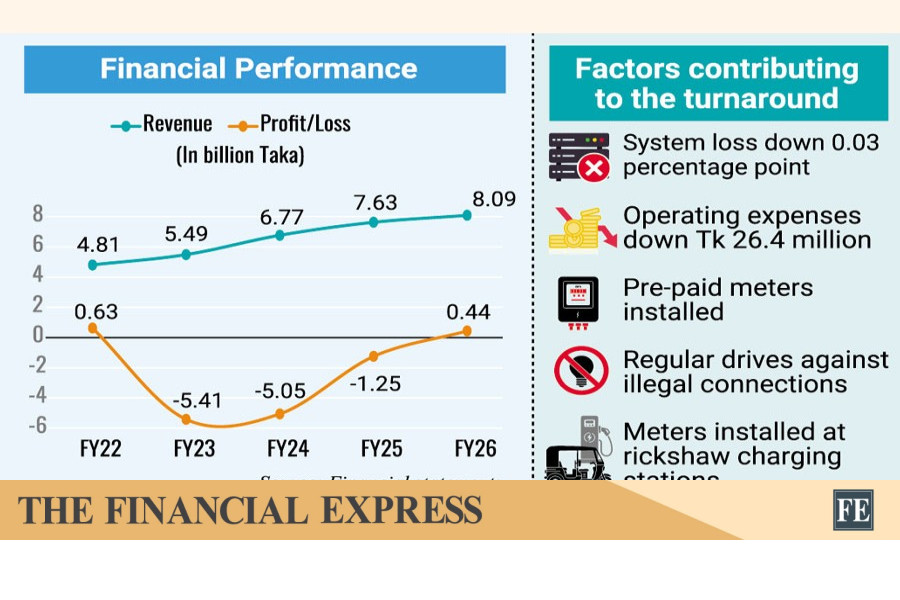
Dhaka Electric Supply Company (DESCO) achieved a significant financial turnaround in FY26, returning to profit after experiencing substantial losses over the previous three financial years.

It reported a profit of Tk 401.54 million in FY26, as opposed to a loss of Tk 1.25 billion in FY25, backed by a reduction in system loss and an increase in income from fixed deposit receipts (FDRs). Also, foreign exchange losses fell significantly in FY26 compared to the previous year, driving up earnings.

According to company officials, DESCO's system losses were cut to 5.47 per cent in FY26 from 5.5 per cent in the previous year. The installation of prepaid meters helped reduce losses by 0.03 percentage points.

"After years of losses, what we mainly did was we slashed costs. We cut back on administrative and operating expenses. The main impact was on exchange losses—foreign exchange losses. We reduced those," said DESCO's Managing Director Brig. Gen. Shameem Ahmed.

Moreover, the rise in prepaid meters played a vital role in boosting sales revenue.

The number of prepaid meters was 877,835 in Dhaka as of June last year, which rose to 955,036 by June this year. Also, DESCO cut illegal connections, which resulted in revenue growth.

DESCO has 24 offices operating across Dhaka. They snapped illegal connections in rickshaw garages, settlements, bazaars and markets. That also reduced leakage.

The preventive measures helped the company secure additional revenue of more than Tk 4.32 billion from electricity sales in FY26, according to DESCO.

The company has substantial foreign-currency loans, including loans from development partners such as the Asian Development Bank (ADB) and the Japan International Cooperation Agency (JICA).

It suffers foreign exchange losses if the local currency depreciates against the dollar.

DESCO's foreign-exchange fluctuation loss was Tk 2.43 billion in FY24, which declined to Tk 1.69 billion in FY25. In FY26, the company recorded a foreign exchange gain of Tk 44.2 million.

Mr Ahmed said the dollar price had gone up in the middle of FY26 and then dropped slightly, resulting in the gain.

Higher revenue, improved operating efficiency and better cost management strengthened operating margins.

The company's managing director said DESCO's revenue recovery was supported by changes in electricity consumption patterns across different tariff slabs, rather than simply by an increase in electricity rates.

The key point is that customers in higher-consumption slabs potentially allowed DESCO to recover costs more effectively.

Consumption in the lower slabs, up to 400 units, is described as being priced below DESCO's bulk electricity purchase rate, suggesting that revenue from these categories does not cover the costs of electricity procurement. By contrast, when consumption exceeds 600 units, the revenue generated covers the associated costs.

Higher consumption in the upper slabs forged a more favourable relationship between electricity sales revenue and the cost of electricity purchase.

In addition to improved profitability, DESCO recorded stronger operating cash flow. Net operating cash flow per share (NOCFPS) increased from Tk 15.93 in FY25 to Tk 17.99 in FY26.

This indicates strong cash management alongside the return to profit. Better customer collections, working-capital management and changes in the payment method contributed to the increased cash flow.

DESCO's balance-sheet position also improved, with net asset value (NAV) per share rising from Tk 35.33 in FY25 to Tk 39.23 in FY26, an increase of 11.04 per cent. This reversed the downward pressure on NAV in the previous three years.

However, FY26 NAV remains approximately 40.5 per cent below FY22 NAV of Tk 65.96, suggesting that the recovery in shareholders' net assets remains incomplete.

The board of directors of DESCO has recommended a 5 per cent cash dividend for FY26 for ordinary shareholders. So, shareholders, excluding sponsors, will receive Tk 0.50 for each share of Tk 10.

Overall, DESCO's financial performance in FY26 demonstrates a meaningful recovery in earnings, net assets and operating cash generation.

The key challenge is to convert this one-year recovery into sustained profitability, stronger financial resilience and consistent shareholder returns.​
 

Bangladesh plans 442MW solar plant in Rampal at estimated cost of Tk2,500 crore

The project will use 685 acres without new land acquisition, target completion by 2030 and cost Tk5.66 crore per MW


1792023197974.webp

Representational image. Photo: AI Generated

The government plans to build a 442-megawatt (MW) solar power plant in Rampal, Bagerhat, at an estimated cost of Tk2,500 crore, using existing land near the coal-fired power plant without acquiring additional land.

The project is expected to be completed by 2030 and will cover approximately 685 acres in Block B of Rampal. Electricity is expected to enter the national grid through existing transmission infrastructure serving the nearby coal-fired power complex, according to sources familiar with the proposal.

Planning Commission information shows that the project was included in the green pages of the Annual Development Program (ADP). A ministry source said it had received approval from the Executive Committee of the National Economic Council (ECNEC) and was awaiting Cabinet Division approval before a government order could be issued.

The government initially plans to finance the project from its own resources, although assistance from development partners may be considered later.

The proposed facility could expand utility-scale renewable energy generation in a region associated with coal-based electricity. However, the solar project does not, by itself, signal the closure or replacement of the existing coal-fired power plant.

At an estimated Tk2,500 crore for 442MW of capacity, the project’s initial investment amounts to approximately Tk5.66 crore per MW. Its final economic viability will depend on electricity generation, procurement costs, maintenance, grid integration and equipment replacement.

Dr Khondaker Golam Moazzem, research director at the Centre for Policy Dialogue (CPD), told Dhaka Tribune that shifting from coal-based planning toward solar power represented a significant political and economic change. He stressed the importance of assessing generation costs and ensuring timely, quality implementation.

Dr Ijaz Hossain, former professor and dean of the Faculty of Engineering at Bangladesh University of Engineering and Technology (BUET), said using government-owned land for solar power was a positive approach, given Bangladesh’s land scarcity and the need to expand domestic energy sources.

Using existing land and transmission infrastructure could reduce some development costs. However, the government needs to disclose the detailed project cost, procurement arrangements, financing structure and expected cost of electricity to establish its long-term value.

The construction schedule, procurement process and commissioning timeline have yet to be independently confirmed.

The project’s location makes environmental safeguards particularly important because Rampal is near the Sundarbans, one of the world’s largest mangrove forests.

Solar power produces substantially less direct air pollution during operation than coal-fired generation. However, large installations can still affect land use, drainage, habitats and local ecosystems, particularly during construction.

Professor Adil Mohammed Khan, executive director of the Institute for Planning and Development (IPD) and a faculty member at Jahangirnagar University, told Dhaka Tribune that solar expansion could benefit the environment and the Sundarbans if the project included life-cycle planning for the reuse and safe disposal of panels and batteries.

The government should make the project’s environmental impact assessment, Department of Environment clearance, site boundaries and distance from protected areas publicly available.

After solar plant approval in very recent meeting at ECNEC, chaired by Prime Minister Tarique Rahman, approved the project subject to eight-hour battery storage, requiring a revised DPP to determine the final cost; electricity generation costs were previously estimated at Tk6 per unit without storage and Tk9 with four-hour storage.

The environmental impact assessment (EIA) and required environmental clearances are currently under way, according to the information provided.

Planning State Minister Md Zonayed Abdur Rahim Saki said: “Ensuring the economic viability, timely implementation and environmental protection of the Rampal solar power project is important for the government.”

Environmental responsibilities will continue beyond the plant’s commissioning. Solar panels, inverters and other electrical equipment will eventually require maintenance, replacement, recycling or safe disposal.

Panels commonly operate for around 25 years or longer, while battery lifespans vary according to technology and operating conditions.

If batteries are included in the Rampal project, the government should clarify their technology, replacement schedule and end-of-life management arrangements. Responsibilities for recycling and disposal should also be established, alongside the associated costs.

The proposed 442MW plant could strengthen Bangladesh’s renewable energy capacity while making use of existing land and infrastructure. Its success, however, will depend on transparent spending, reliable grid integration, timely implementation and credible environmental safeguards.​
 

Latest Posts

Back