
 Bangladesh Defense
Saif
Senior Member
- Jan 24, 2024
- 21,680
- 9,794
- Nation

- Residence
- Axis Group

Solar power, solar irrigation top govt priority in clean energy push: State Minister
The government has been giving top priority to expanding solar power and solar-based irrigation from the very beginning to protect the environment and ensure alternative energy, Environment, Forest and Climate Change State Minister Shaikh Faridul Islam said Tuesday. “Emphasis is being placed
Solar power, solar irrigation top govt priority in clean energy push: State Minister
The government has been giving top priority to expanding solar power and solar-based irrigation from the very beginning to protect the environment and ensure alternative energy, Environment, Forest and Climate Change State Minister Shaikh Faridul Islam said Tuesday.
“Emphasis is being placed on boosting environmental protection and climate resilience through the expansion of solar power, increased use of electric vehicles, closure of polluting brick kilns, excavation and restoration of canals, and the initiative to plant 250 million trees,” the state minister said.
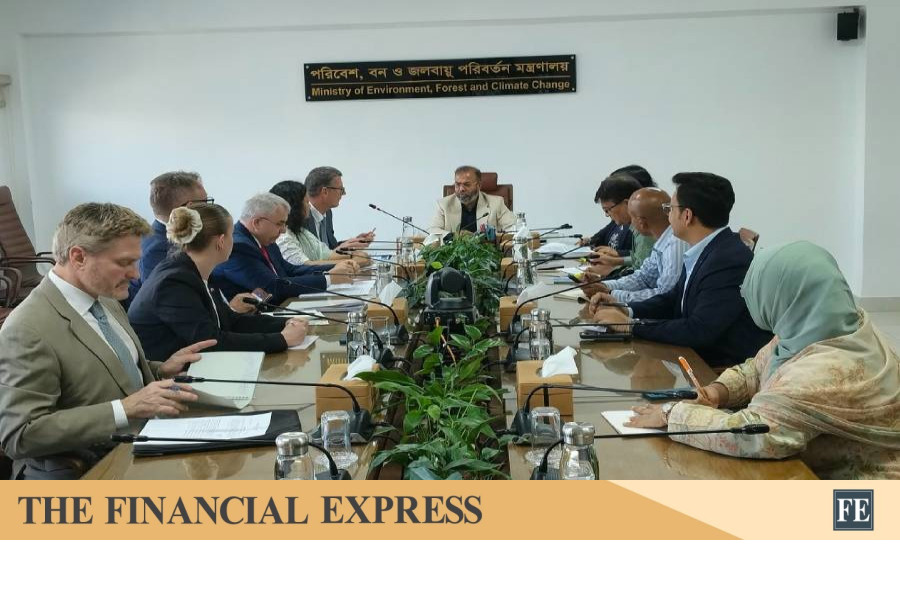
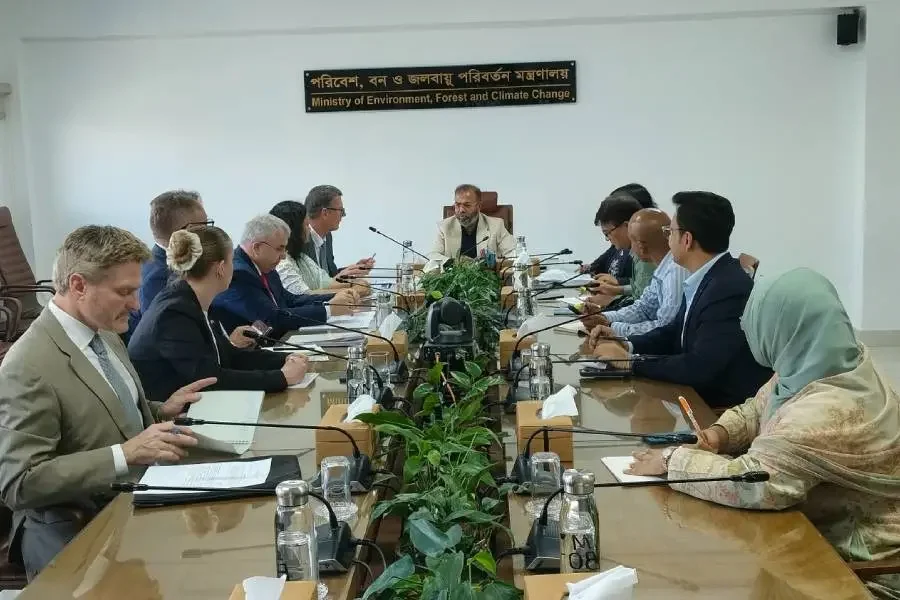
The state minister made the remarks at a meeting with the European Union Delegation and representatives of several European countries at the conference room of the Ministry of Environment, Forest and Climate Change.
The meeting was organised as part of the EU’s outreach programme on clean energy, climate priorities and COP31.
Describing the expansion of solar energy as a key priority of the government’s clean energy agenda, Faridul said the opportunities for installing rooftop solar systems on residential buildings, factories and government establishments, and for expanding solar-powered irrigation in suitable areas, must be utilised.
He said it is possible to diversify energy supply while reducing dependence on conventional fuels.
The government is also stressing quality technology, adequate financing, skilled manpower and regular maintenance to scale up solar power, he added.
On curbing air pollution, the state minister said it is imperative to shut down illegal and environmentally harmful brick kilns and to enforce environmental regulations effectively.
The government is working to cut pollution in brick production and promote eco-friendly blocks and alternative building materials, he said.
He said the government is also determined to tackle pollution from construction dust and vehicle emissions, and to ensure integrated waste management.
Speaking about the tree plantation drive, Faridul said saplings of suitable species are being planted at suitable locations to turn the 250-million-tree initiative into long-term environmental gains.
Priority must be given to native species as plantation efforts are advanced across forest areas, coastal belts, roadsides, and appropriate institutional and community spaces, he said.
“Planting alone is not enough. Nurturing, protection and ensuring the survival rate of trees are equally important,” he said, urging greater participation from local communities, educational institutions, youth and the private sector.
Highlighting climate risks, the state minister said floods, cyclones, heavy rainfall, heatwaves and salinity are putting pressure on people’s lives and livelihoods, agriculture, water resources and infrastructure.
To cope with these impacts, the government’s adaptation efforts focus on disaster preparedness, early warning, coastal protection, afforestation, water management and climate-resilient infrastructure, he said, adding that local needs and the requirements of vulnerable communities must be prioritised in implementation.
On the carbon credit framework, he said a robust structure is crucial to attract investment in emission reduction and carbon removal activities. Such a framework must have clear provisions for project approval, measurement of emission cuts, reporting and independent verification, and safeguards against double counting of the same reductions, he said. The government is working on a carbon credit framework, he added.
Faridul also said coordination among relevant ministries, local government bodies, the private sector and development partners is essential to implement these initiatives.
The EU and European partners can play an important role in clean energy, green transport, air pollution control, climate-resilient water management and building capacity in the carbon market, in line with Bangladesh’s national priorities, he said.
Ahead of COP31, the state minister outlined Bangladesh’s adaptation needs and climate finance priorities, stressing that international cooperation must be translated into actionable programmes that deliver visible benefits for people’s lives, livelihoods and the environment.
The government has been giving top priority to expanding solar power and solar-based irrigation from the very beginning to protect the environment and ensure alternative energy, Environment, Forest and Climate Change State Minister Shaikh Faridul Islam said Tuesday.
“Emphasis is being placed on boosting environmental protection and climate resilience through the expansion of solar power, increased use of electric vehicles, closure of polluting brick kilns, excavation and restoration of canals, and the initiative to plant 250 million trees,” the state minister said.
The state minister made the remarks at a meeting with the European Union Delegation and representatives of several European countries at the conference room of the Ministry of Environment, Forest and Climate Change.
The meeting was organised as part of the EU’s outreach programme on clean energy, climate priorities and COP31.
Describing the expansion of solar energy as a key priority of the government’s clean energy agenda, Faridul said the opportunities for installing rooftop solar systems on residential buildings, factories and government establishments, and for expanding solar-powered irrigation in suitable areas, must be utilised.
He said it is possible to diversify energy supply while reducing dependence on conventional fuels.
The government is also stressing quality technology, adequate financing, skilled manpower and regular maintenance to scale up solar power, he added.
On curbing air pollution, the state minister said it is imperative to shut down illegal and environmentally harmful brick kilns and to enforce environmental regulations effectively.
The government is working to cut pollution in brick production and promote eco-friendly blocks and alternative building materials, he said.
He said the government is also determined to tackle pollution from construction dust and vehicle emissions, and to ensure integrated waste management.
Speaking about the tree plantation drive, Faridul said saplings of suitable species are being planted at suitable locations to turn the 250-million-tree initiative into long-term environmental gains.
Priority must be given to native species as plantation efforts are advanced across forest areas, coastal belts, roadsides, and appropriate institutional and community spaces, he said.
“Planting alone is not enough. Nurturing, protection and ensuring the survival rate of trees are equally important,” he said, urging greater participation from local communities, educational institutions, youth and the private sector.
Highlighting climate risks, the state minister said floods, cyclones, heavy rainfall, heatwaves and salinity are putting pressure on people’s lives and livelihoods, agriculture, water resources and infrastructure.
To cope with these impacts, the government’s adaptation efforts focus on disaster preparedness, early warning, coastal protection, afforestation, water management and climate-resilient infrastructure, he said, adding that local needs and the requirements of vulnerable communities must be prioritised in implementation.
On the carbon credit framework, he said a robust structure is crucial to attract investment in emission reduction and carbon removal activities. Such a framework must have clear provisions for project approval, measurement of emission cuts, reporting and independent verification, and safeguards against double counting of the same reductions, he said. The government is working on a carbon credit framework, he added.
Faridul also said coordination among relevant ministries, local government bodies, the private sector and development partners is essential to implement these initiatives.
The EU and European partners can play an important role in clean energy, green transport, air pollution control, climate-resilient water management and building capacity in the carbon market, in line with Bangladesh’s national priorities, he said.
Ahead of COP31, the state minister outlined Bangladesh’s adaptation needs and climate finance priorities, stressing that international cooperation must be translated into actionable programmes that deliver visible benefits for people’s lives, livelihoods and the environment.

