Donate ☕
201 Military Defense Forums
[🇧🇩] - Everything about Hasina's misrule/Laundered Money etc. | Page 29 | PKDefense
Home Login Forums Wars Watch Videos
Serious discussion on defense, geopolitics, and global security.

[🇧🇩] Everything about Hasina's misrule/Laundered Money etc.

Reply (Scroll)
Press space to scroll through posts
G Bangladesh Defense
[🇧🇩] Everything about Hasina's misrule/Laundered Money etc.
261
8K
More threads by Saif

Sheikh Hasina was a classic autocrat: M Sakhawat Hossain
Published :
Aug 05, 2024 22:03
Updated :
Aug 05, 2024 22:03


1722901534183.png

Sheikh Hasina was a classic autocrat who dismissed the people, and this disdain has led to her current predicament, according to Brigadier General (Retd) M. Sakhawat Hossain, an election analyst and former military officer. In a special interview with UNB news agency over the phone, he expressed these views.
He stated that today's events were inevitable and were bound to happen. "We have seen similar situations in Tunisia, Libya, and Syria. Popular uprisings are unstoppable. The student quota reform movement could have been resolved easily, but due to Prime Minister Sheikh Hasina's stubbornness, so many people lost their lives."

Hossain criticised the media's portrayal of the casualties, claiming that the true number is closer to 400, with a significant portion being students and young people. He questioned the whereabouts of the remaining bodies, mass graves, and the extent of innocent lives lost. "She has gone, but who will answer for this?" he asked.

He accused the ruling government of carrying out the "most heinous massacre" and of misleading the public by blaming criminals while those responsible were, in fact, their own countrymen. "Such things should not happen in a free country," he remarked.

Hossain also noted that for the past 15 years, people have been unable to vote properly, with widespread election fraud. He stated that Sheikh Hasina should have understood her and her party's unpopularity, and questioned who would be held accountable for the bloodshed. He criticized the severe lack of good governance, which he believes Sheikh Hasina failed to provide.

Furthermore, he alleged that Sheikh Hasina has created criminal gangs within the country and turned the police and Rapid Action Battalion (RAB) into her personal enforcers.

Reflecting on the plight of the family members of the so-called Father of the Nation, he questioned why they had to face such a tragic fate, attributing it to Hasina's arrogance and pride. He drew a parallel with the 2009 BDR mutiny, where 57 army officers were killed, and questioned who would answer for that incident as well.

He criticised Sheikh Hasina's control over TV media and her suppression of free speech, citing it as a reason he avoided talk shows. He claimed he had urged the Prime Minister in various meetings to ensure good governance, but was labelled as an 'agent of the opposition' for his criticisms.

"Today, Sheikh Hasina has fled the country, and now the army has had to take responsibility for the nation's situation," he concluded.​
 
Last edited:
Analyze

Analyze Post

Add your ideas here:
Highlight Cite Fact Check Respond
  • Like (+1)
Reactions: Bilal9

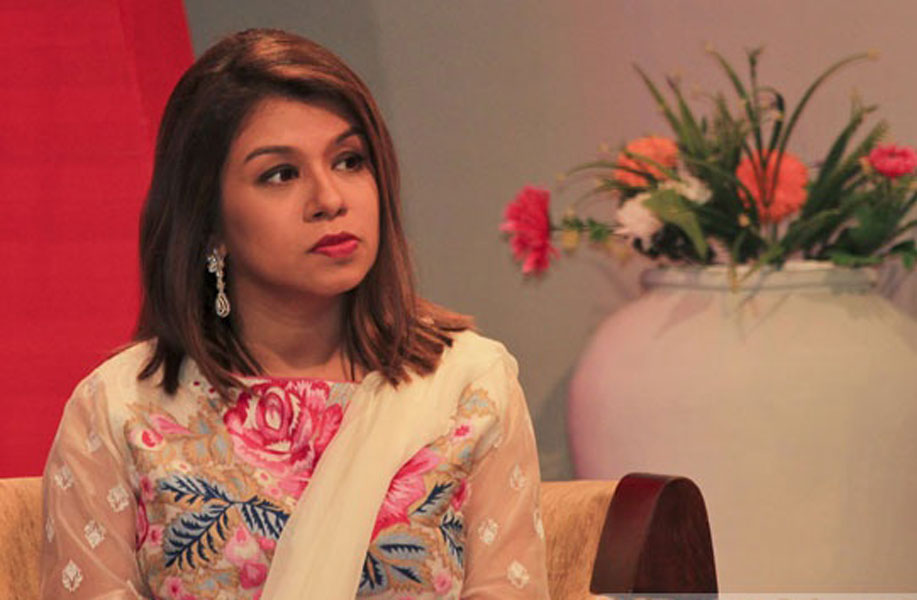
টিউলিপ ও তার পরিবারের বিরুদ্ধে ৫৯ হাজার কোটি টাকা দুর্নীতির অভিযোগ


Analyze

Analyze Post

Add your ideas here:
Highlight Cite Fact Check Respond
More damning evidence. The scale of the theft boggles the mind.

I believe Hasina's contemporaries' allegations that she wanted to destroy our nation, because we killed her family.

So plain in front of our eyes, but so easy to fool the people of Bangladesh. They keep getting fooled again and again.

 
Analyze

Analyze Post

Add your ideas here:
Highlight Cite Fact Check Respond
  • Like (+1)
Reactions: Saif

Making and unmaking Hasina
Dismantling the systemic corruption

Mohammad Enamul Hoque
Published :
Dec 31, 2024 21:21
Updated :
Dec 31, 2024 21:21

1735693330727.webp


The political journey of Sheikh Hasina, one of Bangladesh's most polarising leaders, was deeply intertwined with allegations of corruption, authoritarianism, and misuse of state resources. Her tenure has been marred by systemic complicity and unchecked power, sustained by a network of enablers across various sectors of society. The complicity of her allies, who have personally or professionally benefited from unethical practices, highlights a broader issue within Bangladesh's institutions. While some have faced consequences, many remain entrenched in positions of influence, continuing to erode public trust and reinforce corrupt systems.

To dismantle this entrenched network of complicity, several commissions have been established to investigate Hasina's and her collaborators' alleged misdeeds. Numerous committee reports have already been published, shedding light on corruption within the Hasina regime. These commissions must operate with transparency and impartiality while identifying the individuals and groups responsible for undermining democratic principles and economic stability. The task is immense, requiring a thorough examination of years of systemic corruption and collusion. Addressing this entrenched culture demands innovative and decisive measures that go beyond traditional accountability mechanisms.

One innovative solution to address systemic corruption is the introduction of the "Dalal Tax." The term "Dalal" refers to individuals who actively supported or benefited from corrupt practices. This concept, derived from the Bengali term for brokers or intermediaries who enable corrupt practices, seeks to impose lifelong penalties on individuals who have directly or indirectly facilitated corruption.

The Dalal Tax aims to address the pervasive issue of political corruption by establishing clear objectives.

First, it seeks to enforce accountability by holding individuals responsible for their involvement in enabling corrupt practices. By targeting enablers, the policy emphasises the importance of individual roles in upholding integrity and discourages the normalisation of unethical behaviour.

Second, it serves as a deterrent, sending a strong warning against future complicity in political corruption. The tax is designed to create significant consequences for those who engage in or facilitate dishonest activities, making such actions less appealing.

Third, it holds symbolic value, signalling a decisive stand against corruption and collusion. This public declaration reinforces the idea that malfeasance will not be tolerated, fostering trust in governance and rule of law.

Last but not the least, the tax seeks to exclude individuals subjected to its penalties from participating in public life, including elections or influential roles. This measure reduces their ability to further harm the country's institutions and ensures that key positions are held by individuals committed to ethical governance.

Together, these objectives form a comprehensive framework for combating corruption and promoting a culture of transparency and accountability.

For the Dalal Tax to work effectively, it is essential to identify those who supported or benefited from corruption. This includes government officials, bureaucrats, and judiciary members involved in unethical policymaking and administration; corrupt bankers involved in illicit money transfers; and share market players accused of fraud; academics who sided with political groups to influence decisions; and civil society members who endorsed corrupt actions for personal gain.

Business leaders who profited from favourable policies or contracts and media figures who protected corrupt regimes through biased reporting must also be investigated.

Establishing responsibility requires thorough investigations using financial audits, document reviews, and interviews. Transparency and fairness in this process are vital to building and maintaining public trust.

Implementing the Dalal Tax effectively requires careful planning and a strong legal foundation. The first step is to establish laws that formalise the tax while ensuring they align with constitutional standards and include necessary safeguards. It is important to clearly define who will be subject to the tax, using specific criteria and solid evidence to support these decisions. The tax rates should be proportional, taking into account the individual's income and their role in corrupt activities. Transparency is key, with the names of those taxed and the evidence of their involvement made public. To ensure fairness, a process must be in place for individuals to appeal their inclusion and contest the evidence against them.

The Dalal Tax is more than a punitive measure; it represents a commitment to meaningful reform and sustainable change. Its primary objective is to rebuild public trust by affirming that no one is beyond accountability and that justice will prevail. By curbing the influence of corrupt individuals in governance, it aims to fortify institutions and foster a culture where accountability is the norm.

The tax also seeks to inspire ethical governance, encouraging leaders and officials to prioritise transparency and integrity in their actions. Beyond its practical effects, it carries a powerful symbolic message, demonstrating a decisive stand against corruption. Penalising those involved in malfeasance emphasises the importance of justice and strengthens confidence in public administration. Furthermore, by barring those penalised from holding influential positions or participating in elections, the tax ensures that leadership is entrusted to individuals who value ethical conduct and good governance.

While the Dalal Tax is an ambitious proposal, it is not without potential drawbacks. Critics may argue that it could be used as a tool for political retribution or infringe on individual rights. To address these concerns, independent oversight bodies must monitor the implementation process. Transparency, fairness, and adherence to due process are crucial to preserving the policy's legitimacy.

Another challenge is ensuring that the tax does not disproportionately affect certain groups or become a political weapon. Clear guidelines, robust evidence, and impartial investigations are essential to maintaining credibility and fairness.

This lament for Sheikh Hasina's legacy is, at its heart, a lament for Bangladesh-a country whose aspirations for democracy and integrity have been undermined by systemic complicity. The Dalal Tax, ambitious and fraught with challenges, represents a cry for change, a call to reckon with the failures of the past, and a striving for a more just future. It offers a path, however imperfect, to reaffirm the principles of transparency, equity, and ethical governance.

By implementing this tax, Bangladesh may send a powerful message that collusion and corruption have lasting consequences. This step can pave the way for a more transparent, accountable, and equitable future, where public trust in institutions is restored and ethical governance becomes the norm.

Dr Mohammad Enamul Hoque is Senior Lecturer, University of Western Australia, Australia.​
 
Analyze

Analyze Post

Add your ideas here:
Highlight Cite Fact Check Respond

Tulip given London flat by developer with links to AL: FT report

1735971577887.webp


Tulip Siddiq, Sheikh Hasina's niece and currently the UK's city minister and economic secretary to the treasury, was gifted a two-bedroom apartment in central London by a person connected to the recently ousted Bangladeshi government, reports the Financial Times.

According to UK-based news outlet, the property near King's Cross, was transferred to Tulip in 2004 for free. Land Registry records, reviewed by the Financial Times, reveal that the property was purchased in January 2001 for £195,000. A neighbouring flat in the same building sold for £650,000 (around Tk 9.8 crore) in August 2023.

Tulip's mother, Sheikh Rehana, Hasina's younger sister, had been dubbed as the heir apparent after Sheikh Hasina. Rehana is reported to be the only other politician who fled Bangladesh with Hasina August 5, 2024 faced with a public uprising. Tulip's brother, Radwan Mujib, was also closely involved with Awami League, and acted as a spokesperson of sorts during visits of foreign dignitaries to Bangladesh.

The FT report said that the donor, Abdul Motalif, is a developer and an associate of figures linked to Tulip Siddiq's aunt, Sheikh Hasina, former prime minister of Bangladesh and leader of the Awami League party. Sheikh Hasina's government was ousted on August 5 last year.

"Any suggestion that Tulip Siddiq's ownership of this property, or any other property is in any way linked to support for the Awami League, would be categorically wrong," a spokesperson for the minister said.

Abdul Motalif confirmed to the Financial Times in a phone call that he bought the King's Cross property but declined to comment on what he did with it. "Following financial support provided by Tulip's parents to an acquaintance during a challenging time in his life, he subsequently transferred a property he then owned into Tulip's ownership as an act of gratitude for her parents' support," said a person familiar with the matter.

Electoral roll data cited by the Financial Times shows that Siddiq lived in the property during the early 2000s, and her siblings resided there for several years afterward. Tulip has declared rental income from two properties, including the King's Cross flat, in her parliamentary financial interests.

The Financial Times report added that the timing of the gift has drawn scrutiny due to Tulip Siddiq's ties to the Awami League, whose members face multiple corruption allegations. Bangladesh's Anti-Corruption Commission launched an inquiry recently after a political rival of Sheikh Hasina accused her family, including Tulip Siddiq, of receiving funds from a Russia-backed nuclear power project. Both Tulip Siddiq and Sheikh Hasina deny these allegations.

The report further highlights that Abdul Motalif, now 70, resides in south-east London. Electoral roll data shows that he previously allowed Moin Ghani, a lawyer who later represented the Awami League government, to live in the King's Cross flat. Additionally, he shared a south-east London address with Mojibul Islam, the son of a former Awami League MP, from 2014 to 2024. Both Motalif and Mojibul confirmed that they were registered at the address.

The flat's transfer occurred before Tulip Siddiq became an MP in 2015, meaning she was not obligated to disclose it at the time. Records indicate that in 2018, Tulip Siddiq extended the lease on the property for £90,000. The Financial Times also reports that Siddiq and her husband jointly purchased another flat in her Hampstead and Highgate constituency for £865,000, which is now mortgage-free.

Tulip Siddiq faced a reprimand from the parliamentary standards commissioner last year for failing to declare rental income on the Hampstead flat. Meanwhile, since 2022, Tulip Siddiq has been living in a £2.1 million London home owned by Abdul Karim, an executive member of the UK Awami League. The Financial Times report mentioned that Tulip Siddiq pays market rates for the property and has declared her relationship with Abdul Karim to parliamentary authorities.

Sheikh Hasina and the Awami League have been accused of corruption, rigging elections, and suppressing dissent, with rival parties and human rights groups calling her government authoritarian. In contrast, UK Prime Minister Sir Keir Starmer has expressed confidence in Tulip Siddiq, with Downing Street stating last month that it had seen no evidence of wrongdoing on her part.

The Financial Times report also points out Tulip Siddiq's past involvement with the Awami League, including her work within its EU and UK lobbying unit and election strategy team. UK-based affiliates of the Awami League campaigned alongside Tulip during several British general elections, including the 2022 vote that brought the Labour Party to power.

"Had it not been for your help, I would never have been able to stand here as a British MP," Tulip Siddiq said at a 2015 London event honouring Sheikh Hasina, as quoted by the Financial Times.​
 
Analyze

Analyze Post

Add your ideas here:
Highlight Cite Fact Check Respond

BFIU seeks bank account details of 21 more journalists


1736123055179.webp


The Bangladesh Financial Intelligence Unit (BFIU) today sought the bank account details of 21 more journalists.

A senior official of BFIU confirmed the matter to The Daily Star.

The 21 journalists are -- Saiful Alam, editor of the Daily Jugantor; Pranab Saha, sacked editor of DBC News, Hasan Zahid Tusher, former deputy press secretary to ousted prime minister Sheikh Hasina, M Shamsur Rahman, editor-in-chief and CEO of Independent TV; Mamun Abdullah, head of news at Independent TV; Animesh Kar, special correspondent of Independent TV; Md Ruhul Amin Russell, managing editor of Bangladesh Pratidin; and Mahmud Hasan, deputy editor of Bangladesh Pratidin.

The rest journalists are -- Daily Khola Kagoj senior reporter Zafar Ahmed, who is now working at BanglaNews, Daily Jatiya Orthoniti Editor MG Kibria Chowdhury, Amader Somoy and Amader Orthoniti Chief Reporter Deepak Chowdhury, Ekushey TV's Head of Input Akhil Kumar Poddar, Ekattor TV journalist Jhumur Bari, Ekushey Sangbad Editor Ziadur Rahman, Daily Kalbela special correspondent Angur Nahar Monty, My TV Chairman Nasir Uddin Sathi, SA TV journalist Rashed Kanjan, BSS Senior Reporter Shahnaz Siddiqui, Ekushey TV journalist Rashed Chaudhry, SA TV Head of News Mahmud Al Faisal, and Samakal journalist Rama Prasad.

Earlier, the BFIU summoned the bank account details of 12 journalists.​
 
Analyze

Analyze Post

Add your ideas here:
Highlight Cite Fact Check Respond
⤵︎

Latest Posts

Latest Posts