Donate ☕
201 Military Defense Forums
[🇧🇩] - Everything about Hasina's misrule/Laundered Money etc. | Page 5 | PKDefense
Home Login Forums Wars Watch Videos
Serious discussion on defense, geopolitics, and global security.

[🇧🇩] Everything about Hasina's misrule/Laundered Money etc.

Reply (Scroll)
Press space to scroll through posts
G Bangladesh Defense
[🇧🇩] Everything about Hasina's misrule/Laundered Money etc.
261
8K
More threads by Saif

Sheikh Hasina was a classic autocrat: M Sakhawat Hossain
Published :
Aug 05, 2024 22:03
Updated :
Aug 05, 2024 22:03


1722901534183.png

Sheikh Hasina was a classic autocrat who dismissed the people, and this disdain has led to her current predicament, according to Brigadier General (Retd) M. Sakhawat Hossain, an election analyst and former military officer. In a special interview with UNB news agency over the phone, he expressed these views.
He stated that today's events were inevitable and were bound to happen. "We have seen similar situations in Tunisia, Libya, and Syria. Popular uprisings are unstoppable. The student quota reform movement could have been resolved easily, but due to Prime Minister Sheikh Hasina's stubbornness, so many people lost their lives."

Hossain criticised the media's portrayal of the casualties, claiming that the true number is closer to 400, with a significant portion being students and young people. He questioned the whereabouts of the remaining bodies, mass graves, and the extent of innocent lives lost. "She has gone, but who will answer for this?" he asked.

He accused the ruling government of carrying out the "most heinous massacre" and of misleading the public by blaming criminals while those responsible were, in fact, their own countrymen. "Such things should not happen in a free country," he remarked.

Hossain also noted that for the past 15 years, people have been unable to vote properly, with widespread election fraud. He stated that Sheikh Hasina should have understood her and her party's unpopularity, and questioned who would be held accountable for the bloodshed. He criticized the severe lack of good governance, which he believes Sheikh Hasina failed to provide.

Furthermore, he alleged that Sheikh Hasina has created criminal gangs within the country and turned the police and Rapid Action Battalion (RAB) into her personal enforcers.

Reflecting on the plight of the family members of the so-called Father of the Nation, he questioned why they had to face such a tragic fate, attributing it to Hasina's arrogance and pride. He drew a parallel with the 2009 BDR mutiny, where 57 army officers were killed, and questioned who would answer for that incident as well.

He criticised Sheikh Hasina's control over TV media and her suppression of free speech, citing it as a reason he avoided talk shows. He claimed he had urged the Prime Minister in various meetings to ensure good governance, but was labelled as an 'agent of the opposition' for his criticisms.

"Today, Sheikh Hasina has fled the country, and now the army has had to take responsibility for the nation's situation," he concluded.​
 
Last edited:
Analyze

Analyze Post

Add your ideas here:
Highlight Cite Fact Check Respond
  • Like (+1)
Reactions: Bilal9

How big is the challenge of loan recovery from S Alam Group?
MOHAMMAD MUFAZZAL AND FARHAN FARDAUS
Published :
Aug 22, 2024 00:34
Updated :
Aug 22, 2024 00:34

1724373463344.webp


S Alam Group and its associates took out loans from Islami Bank ten times its equity whereas a single party or group should not be given more than 25 per cent of a bank's capital in loans.

The Bangladesh Bank enforced the exposure limit in a directive issued in 2022 but overlooked its violation by Islami Bank.

The group that has become infamous for defaulting on huge amounts of loans exceeded the exposure limit with four other banks too -- Social Islami Bank, Janata Bank, Union Bank, and Global Islami Bank.

Altogether, S Alam Group borrowed Tk 953.31 billion from six banks whereas the lenders' aggregated equity is Tk 200.35 billion. First Security Islami Bank is the only one among the six banks which lent 10 per cent, within the limit, of its capital to the group.

This is the backdrop against which the securities regulator imposed restrictions on purchase, sales and transfer of shares by entities of S Alam Group, its owners and family members of the banks.

The move will help recover loan money - at least partially, said Md. Moniruzzam, managing director of Prime Bank Securities.

"The government will have to set rules to sell out the shares of S Alam Group and his associates," he added.

However, the loan amounts are much higher than the banks' total equity, which means the money, if recovered, from selling S Alam's stakes in the banks will be negligible.

The problem was made worse as the lenders kept on rescheduling loans over the years, taken by S Alam Group and its associates.

Banks usually keep 1 per cent general provision against regular loans while they are supposed to keep 100 per cent provision against bad loans. Loans become sour when 12 installments are missed in a row.

Thanks to rescheduling, defaulted loans of S Alam Group were shown as regular loans. So, any support from the provision against the loans is unlikely.

Moreover, the central bank's relaxation of loan classification policy and rescheduling process made it harder to understand the magnitude of the problem.

Lets' consider an example to illustrate the matter in hand.

Suppose, a listed bank X has equity worth Tk 22, the amount invested by owners.

Deposits received by the bank amount to Tk 200 and S Alam Group took out a loan worth Tk 42 from this bank.

If the borrower defaults on loan repayments, the equity will be Tk 20 in the negative, meaning shareholders' equity will get wiped out.

In consequence, the actual value of the deposits will come down to Tk 180 from Tk 200.

In that case, depositors will have to sacrifice 10 per cent of their funds kept under the custody of X unless the government takes any measure to compensate for the loss.

The bank's provisioning, if any, against the bad loan can be an instrument to tackle the negative impact on the depositors. If the bank can get a support worth Tk 20 from the provision account, depositors will remain unaffected.

Apart from the lack of proper provisioning, the Shariah-compliant banks are facing absence of other support mechanisms as well.

The scheduled banks are required to maintain cash reserves equivalent to 4 per cent of total deposits and 13 per cent statutory liquidity with the Bangladesh Bank.

Statutory liquidity remains invested in government bonds.

The banks which maintain these compliances properly get support from the tools during a crisis period.

But Shariah-compliant banks maintain compliances at a reduced ratio for their limited scope of operations.

Hence, Islami Bank, Social Islami Bank, First Security Islami Bank, and Global Islami Bank will not have the support at this critical juncture.

Besides, industry experts are skeptical about the collateral used for the loans since in most cases S Alam Group had its own men deployed in the boards of the banks when the loans were sanctioned. The business conglomerate had forcefully taken over control of the boards of Islami Bank and Social Islami Bank. Its ownership of First Security Islami Bank and Global Islami Bank is also marred by corrupt banking practices.

S M Galibur Rahman, head of research & strategic planning of Shanta Securities, said the loans granted to S Alam Group had been approved based on political grounds rather than project merits.

"We expect the new governor will ensure the proper reporting and provisioning in accordance with international standards," he said.

The banking commission, a proposed body, is expected to take proper steps to solve the issue of non-performing loans.

Asif Khan, chairman of EDGE Asset Management, said an audit is required to address the problems with the troublesome banks.

If the equity of a bank is wiped out, depositors may not get back a portion of their money.

To revive a bank, small depositors should be paid back fully while large ones can be offered equity against deposits.

"A further inclusion of fresh funds and management efficiency can turn a troublesome bank into a profitable entity. This is the strategy that helped Eastern Bank to get in the good books of the financial sector."​
 
Analyze

Analyze Post

Add your ideas here:
Highlight Cite Fact Check Respond
ডাইনি হাসিনার মুখের গন্ধ | শেখ হাসিনার ফানি কার্টুন। শেখ হাসিনা বনাম ইবলিশ শয়তান :p:D

 
Analyze

Analyze Post

Add your ideas here:
Highlight Cite Fact Check Respond

‘Bring back Islami Bank’s misappropriated funds’
Says a customers' forum of Shariah-based banks

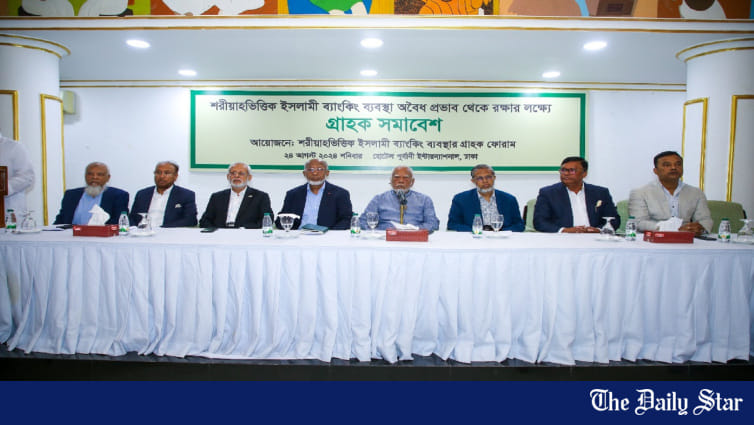
1724542112850.webp


Customers of Shariah-based banks yesterday urged the authorities concerned to bring back funds of Islami Bank Bangladesh which have allegedly been misappropriated by S Alam Group and ensure legal steps against the group's owner Mohammed Saiful Alam and those who abetted him.

The customers, arriving from different parts of the country and under the banner of "Shariah-Based Islamic Banking Customer Forum", made the demand by organising a conference at the Hotel Purbani International in Dhaka.

The demands come against the backdrop of the Bangladesh Bank dissolving the Islami Bank Bangladesh board on August 22.

Documents show S Alam Group owns as much as 82 percent stakes in Islami Bank Bangladesh, but the conglomerate maintains it has 32 percent stakes.

The central bank took over S Alam's shares against its liabilities and the shares would be returned if the conglomerate repays the amount it owes to the Shariah-based bank.

Between 2017 and June this year, the Chattogram-based conglomerate and its associates' companies took Tk 74,900 crore, which is 47 percent of Islami's total outstanding loans as of March.

Documents pieced together by The Daily Star show that most of the loans were taken by bypassing banking rules and regulations.

Nearly 10 crore people of the country are directly and indirectly associated with Islamic banking and about 80 lakh expatriates from the Middle East send remittances to the country through Islamic banks, said speakers at yesterday's conference.

But over the years, the remittance inflow has decreased significantly, they alleged.

The small and medium enterprise sector and economy have been severely affected by the misappropriation of a huge amount of funds of Islami Bank Bangladesh, said Mohammad Abdul Majeed, former secretary and chairman of the National Board of Revenue (NBR).

The speakers proposed appointing Islami Bank Bangladesh customers as its directors alongside those who were there prior to the group taking on its stakes.

They also demanded reinstatement of officials sacked by S Alam and termination of employment of around 10,000 people employed by S Alam.

Some customers also urged rescheduling their loans for 10 years, citing that they have suffered financially.

In the event, the customers also announced formation of a 15-member committee to run the forum.

Abdul Haque, former director of the Federation of Bangladesh Chambers of Commerce and Industry (FBCCI) and a businessperson in the automobile sector of the country, was made the convener of the forum.

This forum will work to "bring back the lost glory and accountability of Islamic banks", monitor their activities and protect the interests of customers.

Economist Prof Abu Ahmed was the chief guest at the event.

S Alam is apparently on the run. He did not receive calls yesterday.​
 
Analyze

Analyze Post

Add your ideas here:
Highlight Cite Fact Check Respond

Govt cancels MoU with S Alam for modernising state sugar mills

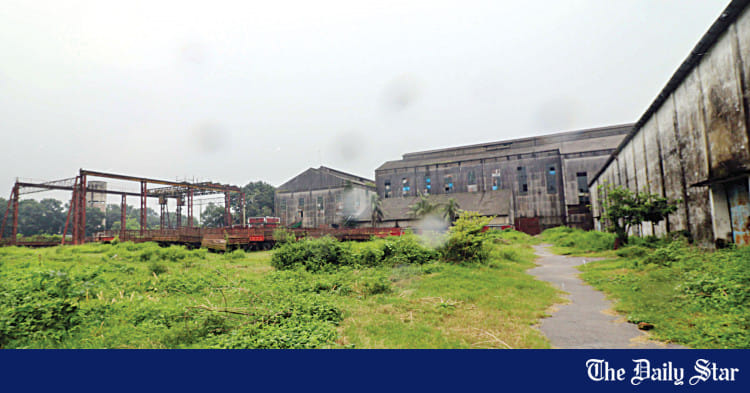
1724543813320.webp

A view of the state-owned Setabganj Sugar Mills in Dinajpur. The government decided to close down some sugar mills at the end of 2020 as they were continually incurring losses and were in desperate need of modernisation. Photo: Star/file

A memorandum of understanding (MoU) signed between the Bangladesh Sugar and Food Industries Corporation (BSFIC) and S Alam & Co, aimed at modernising ailing state-run sugar mills, has been cancelled by the government.

The agreement was signed on July 4 with initial plans to conduct a feasibility study before implementing projects to boost sugar production.

"The Ministry of Industries (MoI) cancelled the MoU that was signed with S Alam yesterday," said Zakia Sultana, senior secretary to the MoI.

According to her, the MoU was non-binding, for which it was possible to cancel it.

However, she did not offer any reason for the cancellation. Currently, just nine of the 15 sugar mills under the BSFIC are operational.

The government decided to close down the six others at the tail end of 2020 as they were continually incurring losses and were in desperate need of modernisation.

In a government order issued on December 2, 2020, the BSFIC said production at the state-owned sugar mills in Pabna, Shyampur, Panchagar, Setabganj, Rangpur and Kushtia would be halted until further notice.

That same month, companies from Japan, Thailand and the United Arab Emirates placed their final proposal to the MoI for a project that would see them team up to upgrade and ensure profitability of the six shuttered mills and export by-products.

Sutech Engineering Co of Thailand, Sharkara International of the UAE and Sojitz Machinery Corporation of Japan planned to invest Tk 5,000 crore under a joint venture.

With the Japan Bank for International Cooperation and Exim Bank of Thailand keen to finance the project, final approval from the Prime Minister's Office was expected by 2022.

However, this never materialised.

With the government moving slowly to implement the joint venture, S Alam and Co convinced the MoI to sign the MoU for modernising the mills, the BSFIC officials alleged.

According to the MoU, sugarcane production would have been boosted through the training of farmers in the use of different technology.

Alongside that, modern sugarcane processing plants, 6 MW agrovoltaic solar power plants, by-product processing plants and packaging factories would have been constructed.

Furthermore, cold storage and agricultural product processing industries would have been developed.

The concern voiced by the BSFIC officials aligns with numerous allegations against Mohammad Saiful Alam, head of S Alam and Co, which are going around in the aftermath of Sheikh Hasina's resignation as prime minister on August 5.

The Bangladesh Securities and Exchange Commission (BSEC) on Tuesday barred S Alam, his family members and the companies they own from transferring or selling their shares in six banks.

Meanwhile the Anti-Corruption Commission (ACC) decided to resume its investigation into S Alam in connection with money laundering.

An investigation by The Daily Star found that S Alam had built a US $1 billion empire in Singapore. On August 4, 2023, a report was published by the same daily highlighting the allegations.

Nine days later, the ACC launched an investigation in line with instructions from the High Court to find out if S Alam had taken money out of the country without approval from the central bank.

However, the Appellate Division of the Supreme Court scrapped the suo moto rule that had ordered the investigation in February this year. It added that the ACC could take legal steps of its own accord.

As such, the ACC decided to resume its investigations on August 22.

The ACC sources said all relevant records regarding the allegations will be collected, including how much money he borrowed from banks, what assets he might have acquired illegally, and in which sectors the money was invested.​
 
Analyze

Analyze Post

Add your ideas here:
Highlight Cite Fact Check Respond

Writ challenges laws for Bangabandhu's family members

1724628293662.webp

Sheikh Hasina and Sheikh Rehana.

A writ petition was filed with the High Court yesterday challenging the legality of the Protection of Family Members of the Father of the Nation Act 2009 and the Special Security Forces Act 2021.

Supreme Court lawyer and Assistant Secretary General of Human Rights Support Society (RSS) Mohammad Moniruzzaman filed the petition as a public interest, saying that the two laws are contradictory to the constitution as those have ensured the facilities of protection and security for only the father of the nation and former prime minister Sheikh Hasina and their family members.

Other family members of the father of the nation are ordinary citizens like others of the country and providing such facilities for their family members are discriminatory and unconstitutional.

Advocate Moniruzzaman told the Daily Star that the HC may hold a hearing of the petition on Tuesday.

Law secretary, home secretary, finance secretary, Special Security Forces's director general and former Prime Minister Sheikh Hasina, her sister Sheikh Rehena, her (Hasina) son Sajib Wazed Joy and daughter Saima Wazed Putul, her family members Redwan Mujib Siddique Bobby, Tulip Siddique and Azmina Siddique Rupanti have been made defendants in the writ.

In the petition, Moniruzzaman prayed to the HC to pass an order on the government to recover the benefits and facilities already enjoyed by the family members of the Father of the Nation and to direct the respondents concerned to stop providing special security arrangements for them.

In the petition, he sought an order from the HC for the authorities concerned to prepare a report on the state's expenditure on all the benefits and properties enjoyed by the family members of the Father of the Nation and submit it to the court.​
 
Analyze

Analyze Post

Add your ideas here:
Highlight Cite Fact Check Respond

Members Online

⤵︎

Latest Posts

Latest Posts