Donate ☕
201 Military Defense Forums
[🇧🇩] - Everything about Hasina's misrule/Laundered Money etc. | Page 39 | PKDefense
Home Login Forums Wars Watch Videos
Serious discussion on defense, geopolitics, and global security.

[🇧🇩] Everything about Hasina's misrule/Laundered Money etc.

Reply (Scroll)
Press space to scroll through posts
G Bangladesh Defense
[🇧🇩] Everything about Hasina's misrule/Laundered Money etc.
261
8K
More threads by Saif

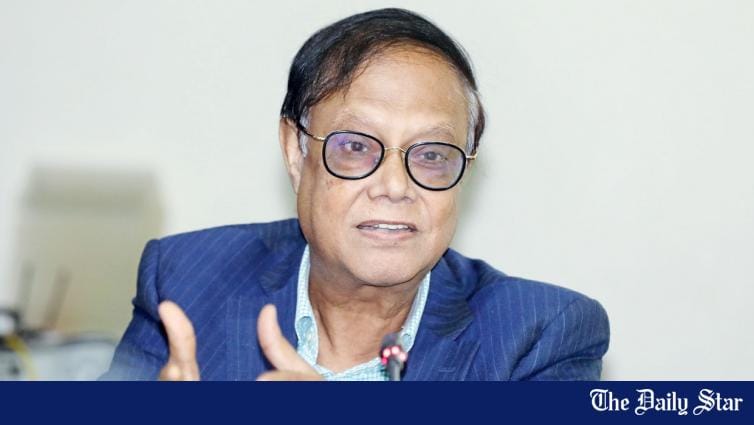
Sheikh Hasina was a classic autocrat: M Sakhawat Hossain
Published :
Aug 05, 2024 22:03
Updated :
Aug 05, 2024 22:03


1722901534183.png

Sheikh Hasina was a classic autocrat who dismissed the people, and this disdain has led to her current predicament, according to Brigadier General (Retd) M. Sakhawat Hossain, an election analyst and former military officer. In a special interview with UNB news agency over the phone, he expressed these views.
He stated that today's events were inevitable and were bound to happen. "We have seen similar situations in Tunisia, Libya, and Syria. Popular uprisings are unstoppable. The student quota reform movement could have been resolved easily, but due to Prime Minister Sheikh Hasina's stubbornness, so many people lost their lives."

Hossain criticised the media's portrayal of the casualties, claiming that the true number is closer to 400, with a significant portion being students and young people. He questioned the whereabouts of the remaining bodies, mass graves, and the extent of innocent lives lost. "She has gone, but who will answer for this?" he asked.

He accused the ruling government of carrying out the "most heinous massacre" and of misleading the public by blaming criminals while those responsible were, in fact, their own countrymen. "Such things should not happen in a free country," he remarked.

Hossain also noted that for the past 15 years, people have been unable to vote properly, with widespread election fraud. He stated that Sheikh Hasina should have understood her and her party's unpopularity, and questioned who would be held accountable for the bloodshed. He criticized the severe lack of good governance, which he believes Sheikh Hasina failed to provide.

Furthermore, he alleged that Sheikh Hasina has created criminal gangs within the country and turned the police and Rapid Action Battalion (RAB) into her personal enforcers.

Reflecting on the plight of the family members of the so-called Father of the Nation, he questioned why they had to face such a tragic fate, attributing it to Hasina's arrogance and pride. He drew a parallel with the 2009 BDR mutiny, where 57 army officers were killed, and questioned who would answer for that incident as well.

He criticised Sheikh Hasina's control over TV media and her suppression of free speech, citing it as a reason he avoided talk shows. He claimed he had urged the Prime Minister in various meetings to ensure good governance, but was labelled as an 'agent of the opposition' for his criticisms.

"Today, Sheikh Hasina has fled the country, and now the army has had to take responsibility for the nation's situation," he concluded.​
 
Last edited:
Analyze

Analyze Post

Add your ideas here:
Highlight Cite Fact Check Respond
  • Like (+1)
Reactions: Bilal9

74pc Bangladeshis victimised of graft by law enforcers during AL reign: UN
BSS
Published :
Feb 18, 2025 21:06
Updated :
Feb 18, 2025 21:06

1739925639969.webp


Three in every four Bangladeshis (74.4 per cent) were victims of corruption by law enforcement officials during the 15-year corrupt reign of the fallen Awami League government, according to a recent report of the United Nations (UN) rights office.

"Corruption at the highest levels has been mirrored by widespread corruption and extortion at lower levels of the bureaucracy and security apparatus," the Office of the UN High Commissioner for Human Rights (OHCHR) fact-finding report read.

The Office of the OHCHR released its Fact-Finding Report titled "Human Rights Violations and Abuses related to the Protests of July and August 2024 in Bangladesh" last week from its Geneva office.

The OHCHR revealed that ousted prime minister Sheikh Hasina and her Awami League mounted dominance over political institutions, the justice and security sectors, and the wider bureaucracy during her 15 years in office.

"This capture radiated into the broader economy, in the form of clientelism, crony capitalism and corruption," the report said.

The fallen government prioritised large businesses and export industries, in particular the garment sector, as well as major infrastructure projects, rather than developing a wider industrial basis and fostering smaller and medium enterprises.

The UN fact-finding report unearthed how the AL government manipulated data with a doubling of the per capita gross domestic product since 2013, where the overall distribution of economic gains was increasingly uneven in reality.

Income and consumption inequality, as well as income concentration among the richest five percent in the country, increased markedly between 2010 and 2022.

Bangladesh has a very low tax base relying heavily on indirect taxes, which increases the burden on middle- and low-income people disproportionally.

"The concentration of economic power and wealth and the related negative impacts on the enjoyment of economic, social and cultural rights have also been driven by large-scale corruption in public procurement and the capture and control of banks, energy providers and other key sectors of the economy by oligarchs close to the Awami League," the UN report said.

The report found that politically connected clients plundered money from several large banks through loan schemes, which were massive enough in scale to threaten the country's macroeconomic stability.

"A considerable part of these and other illegally acquired gains were reportedly transferred out of the country and invested in foreign jurisdiction for the benefit of corrupt Bangladeshi senior officials and Bangladesh oligarchs linked to them," it revealed.​
 
Analyze

Analyze Post

Add your ideas here:
Highlight Cite Fact Check Respond

NBR’s intelligence unit finds Tk 2.42 trillion transactions in S Alam’s accounts
bdnews24.com
Published :
Feb 19, 2025 20:58
Updated :
Feb 19, 2025 20:58

1740010735387.webp


The intelligence unit of the National Board of Revenue (NBR) has uncovered financial transactions amounting to Tk 2.42 trillion in the accounts of prominent businessman Md Saiful Alam, commonly known as S Alam, and his family.

Ahsan Habib, director general of the Central Intelligence Cell (CIC) shared these findings during a workshop titled Enhancing Mutual Cooperation to Prevent Tax Evasion and Money Laundering, at the Rajaswa Bhaban in Dhaka’s Agargaon on Wednesday.

He described the “vast scale” of the transactions, saying: “Seven officers working across 10 computers for a month still could not complete data entry.”

According to him, Tk 360 billion remained in bank accounts as balances over the past five years until Jun 30, generating Tk 67.81 billion in interest.

“Most of this was not declared,” Habib said, adding that investigations are ongoing.

The CIC chief also alleged that S Alam’s two sons engaged in fraudulent activities to launder Tk 5 billion, with the help of a bank.

“They used forged documents to legalise Tk 5 billion. The bank in question has still not provided us with the necessary information,” he said.

“During our investigation, we found that on Dec 21, the Patiya branch of SIBL (Social Islami Bank Limited) issued pay orders, which were cleared later. But legally, the deadline for such transactions had passed on Jun 30,” he added.

He claimed that the bank’s head office manipulated records to backdate the transactions and that further irregularities are being scrutinised.

Habib revealed that steps are being taken against those involved in these malpractices.

“Today, we froze Tk 1.21 billion belonging to a chairman of a currently operating bank.”

He also spoke of major irregularities in the banking sector, citing a case where Tk 150 million worth of diamonds was seized from a locker.

“One of the richest men in Bangladesh, his wife was trembling as she handed over the gold and diamonds. An officer asked her, ‘why are you so scared? You have no shortage of money’.”

The CIC chief pledged to reveal all financial misconduct that took place under the previous Awami League government.

“I have numerous blank cheques from different banks. I have sensitive information. Either I will be killed, or I will expose everything. I will spread the information across the country, to students, to journalists,” he said.

Md Khairul Islam, Commissioner of the Large Taxpayers Unit, supported these claims, though he refrained from naming individuals.

“From many account statements, we see massive amounts being withdrawn daily. But when we ask where the money is going, they have no answer.”

NBR Chairman M Abdur Rahman Khan issued a stern warning to bank officials, saying they are legally bound to cooperate with tax authorities.

“If you fail to assist the tax authorities, you will be considered defaulting assessees, and all legal measures will be taken against you,” he said.

He criticised banks for charging unnecessary fees and warned that strict actions would be taken against those failing to provide information.

“We need a lot of data for intelligence operations, and banks are our primary source. The system must be automated so that information can be retrieved using National ID numbers,” he said.​
 
Analyze

Analyze Post

Add your ideas here:
Highlight Cite Fact Check Respond

Asset recovery should not stop for political reasons: BB governor
Laundered assets may be seized this year

The process of recovering laundered assets should not be interrupted due to political reasons, Bangladesh Bank Governor Ahsan H Mansur said yesterday.

"Regardless of which government comes to power in the future, this initiative should not be stopped," he said.

While it may be possible to seize laundered assets within this year, completing the legal process and recovering the stolen assets may take at least five years, he mentioned.

The central bank governor made these remarks while addressing a seminar titled "Macroeconomic Challenges and Banking Sector Reforms", organised by the Economic Reporters' Forum (ERF) at its office.

Mansur acknowledged that recovering laundered assets is a significant challenge but one that is achievable.

He pointed out that countries like Malaysia, Angola, and Nigeria had successfully recovered laundered assets, though it took at least five years in each case.

Discussing the asset recovery process, he stressed that there is no reason for pessimism and expressed optimism about the country's efforts.

"We have already received considerable assistance from various countries, and joint investigation teams have been formed. However, this is not something that can be completed in one or two years.

"It is critical that the next government continues these efforts in the right direction. If the process is interrupted, success will not be achieved," he noted.

The governor also highlighted the need for strong measures to address the challenges facing the banking sector.

He mentioned that a draft of the Bank Resolution Act had already been prepared and that weak banks would be recapitalised, ensuring full protection for depositors.

He cited Islami Bank Bangladesh, which was among the hardest hit with one family allegedly taking away 87 percent of the bank's total loans.

Despite this, he pointed out that the bank has since recovered due to public trust and is now receiving significant deposits and issuing loans.

On the country's economy, the BB governor mentioned that the nation has always faced challenges, but never before has it encountered such a combination of issues.

While Sri Lanka faced only a Balance of Payments (BoP) crisis, Bangladesh has experienced significant money laundering alongside problems like BoP deficits, inflation, revenue shortfalls, and currency devaluation.

However, he provided some positive news: the current account of the BoP, which reflects the sum of a country's net exports, income, and transfers, has turned positive, and inflation is on the decline.

He also mentioned that interest rates on treasury bills and bonds have started to decrease, noting that the rate, which had risen to as high as 12.5 percent, is now down to 9.5 percent.

"This indicates that the central bank's policies are starting to work. It will take about 1 to 1.5 years to see the complete results," he added.

Addressing the bleak investment scenario in the country, Mansur said that the lack of investment was not solely due to high interest rates. Rather, he said the main issue was the low deposit growth, which increased by only 7.5 percent.

He also pointed out that the days when managing directors of banks could sit idly and still make profits are over.

"In the future, they will need to lend to the private sector to generate income," he said, adding that even if the Bangladesh Bank does not reduce the interest rate, the rate will decrease as market conditions change.

Regarding foreign exchange reserves, the governor gave assurances that there is no need to worry. Thanks to the crackdown on money laundering, remittances from expatriates have increased, showing a 24 percent growth so far.

He projected that remittances would exceed $30 billion by the end of this fiscal year. He also mentioned that exports are on the rise.

"Overall, after the political changeover, the exchange rate has remained stable without selling a single dollar from the reserves," he stated.

He also responded to questions about the dollar rate of Tk 122 per USD, saying, "We have maintained that the rate will not be determined by Dubai. Our banks will buy dollars at the rate we set."

Currently, the open market rate is Tk 123.50 per USD, while banks are offering it at Tk 121.50 per USD. With an additional 2.5 percent incentive, the rate becomes Tk 124 per USD, meaning banks are getting a better rate.

"Over time, the dollar rate will be determined by the market, but that will not happen immediately," the governor concluded.

Mustafizur Rahman, senior fellow at the Centre for Policy Dialogue, said, "We have never before faced such a combination of challenges in the post-independence period."

He stated that while most people would view controlling inflation as the primary challenge, the focus should instead be on increasing people's purchasing power by boosting investment.

"Major reforms must be made to the banking sector and the National Board of Revenue. Direct taxes should be increased in place of indirect taxes," he emphasised.

Regarding banking reforms, he noted that the Ministry of Finance should move away from its tendency to interfere with the Bangladesh Bank.

The economist also stressed that the interim government must make tangible progress in recovering laundered money to set a precedent for the next administration.

Mohammad Ali, managing director of Pubali Bank, said everything should be integrated in real-time to ensure good governance and transparency.

He raised concerns about the eKYC (Electronic Know Your Customer) system, questioning, "If a fugitive opens an account and begins transactions through this system, who will take responsibility?"

The seminar was chaired by ERF President Doulot Akter Mala and conducted by ERF Co-General Secretary Manik Muntasir.​
 
Analyze

Analyze Post

Add your ideas here:
Highlight Cite Fact Check Respond

Asset recovery should not stop for political reasons: BB governor
Laundered assets may be seized this year

1740180864432.webp

Ahsan H Mansur. File photo

The process of recovering laundered assets should not be interrupted due to political reasons, Bangladesh Bank Governor Ahsan H Mansur said yesterday.

"Regardless of which government comes to power in the future, this initiative should not be stopped," he said.

While it may be possible to seize laundered assets within this year, completing the legal process and recovering the stolen assets may take at least five years, he mentioned.

The central bank governor made these remarks while addressing a seminar titled "Macroeconomic Challenges and Banking Sector Reforms", organised by the Economic Reporters' Forum (ERF) at its office.

Mansur acknowledged that recovering laundered assets is a significant challenge but one that is achievable.

He pointed out that countries like Malaysia, Angola, and Nigeria had successfully recovered laundered assets, though it took at least five years in each case.

Discussing the asset recovery process, he stressed that there is no reason for pessimism and expressed optimism about the country's efforts.

"We have already received considerable assistance from various countries, and joint investigation teams have been formed. However, this is not something that can be completed in one or two years.

"It is critical that the next government continues these efforts in the right direction. If the process is interrupted, success will not be achieved," he noted.

The governor also highlighted the need for strong measures to address the challenges facing the banking sector.

He mentioned that a draft of the Bank Resolution Act had already been prepared and that weak banks would be recapitalised, ensuring full protection for depositors.

He cited Islami Bank Bangladesh, which was among the hardest hit with one family allegedly taking away 87 percent of the bank's total loans.

Despite this, he pointed out that the bank has since recovered due to public trust and is now receiving significant deposits and issuing loans.

On the country's economy, the BB governor mentioned that the nation has always faced challenges, but never before has it encountered such a combination of issues.

While Sri Lanka faced only a Balance of Payments (BoP) crisis, Bangladesh has experienced significant money laundering alongside problems like BoP deficits, inflation, revenue shortfalls, and currency devaluation.

However, he provided some positive news: the current account of the BoP, which reflects the sum of a country's net exports, income, and transfers, has turned positive, and inflation is on the decline.

He also mentioned that interest rates on treasury bills and bonds have started to decrease, noting that the rate, which had risen to as high as 12.5 percent, is now down to 9.5 percent.

"This indicates that the central bank's policies are starting to work. It will take about 1 to 1.5 years to see the complete results," he added.

Addressing the bleak investment scenario in the country, Mansur said that the lack of investment was not solely due to high interest rates. Rather, he said the main issue was the low deposit growth, which increased by only 7.5 percent.

He also pointed out that the days when managing directors of banks could sit idly and still make profits are over.

"In the future, they will need to lend to the private sector to generate income," he said, adding that even if the Bangladesh Bank does not reduce the interest rate, the rate will decrease as market conditions change.

Regarding foreign exchange reserves, the governor gave assurances that there is no need to worry. Thanks to the crackdown on money laundering, remittances from expatriates have increased, showing a 24 percent growth so far.

He projected that remittances would exceed $30 billion by the end of this fiscal year. He also mentioned that exports are on the rise.

"Overall, after the political changeover, the exchange rate has remained stable without selling a single dollar from the reserves," he stated.

He also responded to questions about the dollar rate of Tk 122 per USD, saying, "We have maintained that the rate will not be determined by Dubai. Our banks will buy dollars at the rate we set."

Currently, the open market rate is Tk 123.50 per USD, while banks are offering it at Tk 121.50 per USD. With an additional 2.5 percent incentive, the rate becomes Tk 124 per USD, meaning banks are getting a better rate.

"Over time, the dollar rate will be determined by the market, but that will not happen immediately," the governor concluded.

Mustafizur Rahman, senior fellow at the Centre for Policy Dialogue, said, "We have never before faced such a combination of challenges in the post-independence period."

He stated that while most people would view controlling inflation as the primary challenge, the focus should instead be on increasing people's purchasing power by boosting investment.

"Major reforms must be made to the banking sector and the National Board of Revenue. Direct taxes should be increased in place of indirect taxes," he emphasised.

Regarding banking reforms, he noted that the Ministry of Finance should move away from its tendency to interfere with the Bangladesh Bank.

The economist also stressed that the interim government must make tangible progress in recovering laundered money to set a precedent for the next administration.

Mohammad Ali, managing director of Pubali Bank, said everything should be integrated in real-time to ensure good governance and transparency.

He raised concerns about the eKYC (Electronic Know Your Customer) system, questioning, "If a fugitive opens an account and begins transactions through this system, who will take responsibility?"

The seminar was chaired by ERF President Doulot Akter Mala and conducted by ERF Co-General Secretary Manik Muntasir.​
 
Analyze

Analyze Post

Add your ideas here:
Highlight Cite Fact Check Respond

Freeze ordered on Tk 8,133cr S Alam shares
Staff Correspondent 24 February, 2025, 00:07

1740355014890.webp

S Alam Group chairman Mohammad Saiful Alam.

ACC sues ex-state minister Russel, ex-MP Shah-e-Alam

The Dhaka metropolitan senior special judge court on Sunday ordered the freezing of shares worth Tk 8,133 crore owned by S Alam Group chairman Mohammad Saiful Alam and his family members.

Dhaka metropolitan senior special judge Mohammad Zakir Hossain passed the order following a petition submitted by the Anti-Corruption Commission.

ACC deputy director Tahasin Munabil Haque submitted the petition through ACC public prosecutor Ruhul Islam Khan.

This is the third time the court has issued an order to freeze shares owned by Saiful Alam and his associates, with the total value now exceeding Tk 16,000 crore.

The anti-graft agency is conducting a probe into allegations of money laundering against Saiful Alam and his family members who have allegedly transferred about $1 billion to different countries, including Singapore, the British Virgin Islands and Cyprus.

The ACC on Sunday also filed two separate cases against former state minister for youth and sports Md Zahid Ahsan Russel and former lawmaker Md Shah-E- Alam Talukdar on charges of amassing assets beyond their known sources of income.

The ACC in the petition told the court that Saiful Alam and his associates misappropriated large sums of money, including loans obtained by using false information from various banks.

The misappropriated funds are being laundered or converted into other assets by Saiful Alam and his family members, it said.

The court’s order includes the freezing of shares owned by Saiful Alam, his family members and 227 related companies and individuals.

Earlier, on February 12, the court ordered the freezing of shares valued at Tk 5,109 crore owned by Saiful Alam and his family members in 42 companies.

On January 16, the court also ordered the freezing of over 32 million shares worth Tk 3,000 crore controlled by Saiful Alam and his family members in 24 companies.

On January 14, the court ordered the confiscation of assets, including land, flats, plots and buildings in areas, including Gulshan, Dhanmondi and Uttara, valued at Tk 200 crore owned by Saiful Alam and his family members. The court also froze 68 bank accounts linked to Saiful Alam and his family members.

Apart from these, the court on December 19, 2024, ordered the freezing of 125 bank accounts in Saiful Alam’s and his family members’ names.

On October 7, the court imposed a travel ban on Saiful Alam and 12 other family members, including his wife, children and brothers.

The ACC on Sunday filed a case against Zahid Ahsan Russel, also a former Awami League lawmaker from the Gazipur-2 constituency, on charges of amassing illegal assets worth Tk 3.65 crore and suspicious transactions of Tk 17.50 crore in his five bank accounts.

The ACC also found assets worth Tk 20.36 lakh of Russel’s wife Tahera Khadiza, which she amassed allegedly beyond known sources of income. The ACC issued a notice asking her to submit her wealth statement to the commission, said ACC director general Md Aktar Hossain at a press briefing in the capital Dhaka on Sunday.

The commission filed a case against former AL lawmaker from the Barisal-2 constituency Shah-E-Alam Talukdar on charges of amassing illegal wealth worth Tk 1.78 crore and suspicious transactions of Tk 25.64 crore in his bank accounts.

The ACC also found evidence that Shah-e-Alam’s wife, Atiya Alam Mili, allegedly amassed illegal assets worth Tk 55.75 lakh and it issued a notice to her for submitting wealth statement to the commission.​
 
Analyze

Analyze Post

Add your ideas here:
Highlight Cite Fact Check Respond

Members Online

⤵︎

Latest Posts

Latest Posts