New Tweets

[๐Ÿ‡ง๐Ÿ‡ฉ] Everything about the interim government and its actions

G Bangladesh Defense
[๐Ÿ‡ง๐Ÿ‡ฉ] Everything about the interim government and its actions
213
7K
More threads by Saif


TIB says interim administration failed to take stand against corruption

bdnews24.com
Published :
Dec 07, 2025 21:53
Updated :
Dec 07, 2025 21:53

1765155047821.webp


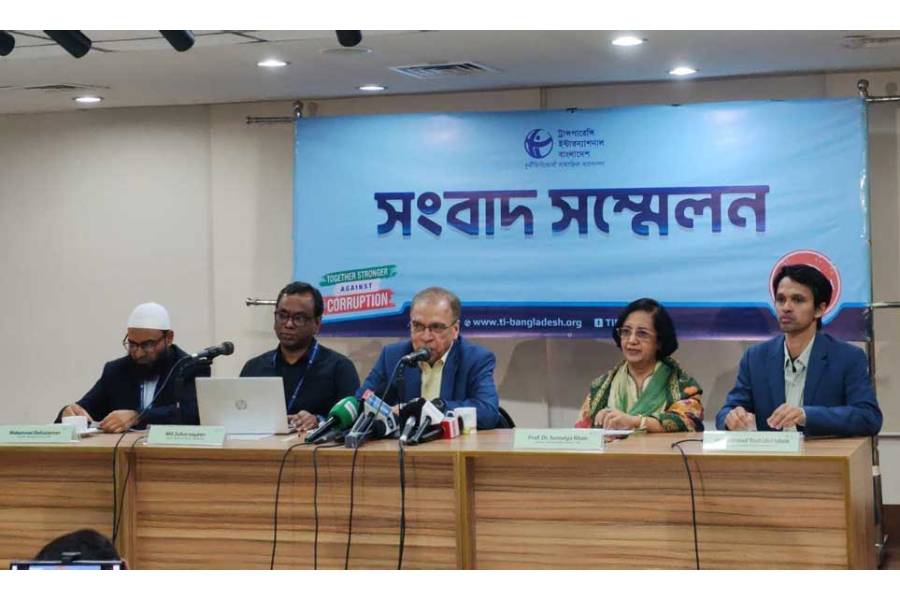
Transparency International Bangladesh chief Iftekharuzzaman has said the interim government failed to take a stand against corruption.

Iftekharuzzaman, executive director of the local chapter of Berlin-based Transparency International, a global anti-corruption organisation, presented topics that the organisation believe should be accommodated in political partiesโ€™ manifestos ahead of the next parliamentary election.

Speaking at a media briefing on Sunday, he said: โ€œTIB does not have data on whether corruption in the country has increased or decreased after Aug 5. We are working on comparative information. However, corruption has continued. We have seen examples of it since the afternoon of August 5.โ€

โ€œTIB cannot say corruption has reduced in the country after Aug 5,โ€ said Iftekharuzzaman.

A section is engaged in corruption through factionalism, land grabbing and extortion, he said. The quarter is abusing political power and governance space to serve its own interest.

Iftekharuzzaman added that there was no denying the fact that the interim government had missed the opportunity to take a strong stand against corruption.

He called on political parties to form an independent bank commission.

The TIB presented 52 recommendations at the press conference. It recommended freeing the bank and financial sector from factional and family control by removing individuals with political and business interests from the boards and management of all commercial banks and Bangladesh Bank.

It also demanded that perpetrators of past fraud, irregularities and corruption be brought to book.

Iftekharuzzaman said the legal framework alone was not enough to ensure transparency and accountability in the sector.

He said the majority of businessmen have suffered losses over the last 15 years.

He pointed out that the government failed to implement the reform commission proposal to incorporate corruption in the business sector in the ACC schedule.​
 
Analyze

Analyze Post

Add your ideas here:
Highlight Cite Respond

President Shahabuddin feeling 'humiliated', wants to resign after February election
Reuters Dhaka
Updated: 11 Dec 2025, 21: 31

1765500747563.webp

Bangladeshi President Mohammed Shahabuddin administers oath-taking ceremony of Nobel laureate Muhammad Yunus as the countryโ€™s head of the interim government in Bangladesh at the Bangabhaban, in Dhaka, Bangladesh, 8 August 2024.Reuters

Bangladeshi President Mohammed Shahabuddin said on Thursday he plans to step down midway through his term after Februaryโ€™s parliamentary election, telling Reuters he has felt humiliated by the interim government, led by Nobel laureate Muhammad Yunus.

As head of state, Shahabuddin is commander-in-chief of the armed forces, but the role is largely ceremonial, and executive power rests with the prime minister and cabinet of the mainly Muslim country of 173 million people.

However, his position gained prominence when a student-led uprising forced long-time premier Sheikh Hasina to flee to New Delhi in August 2024, leaving him as the last remaining constitutional authority after parliament was dissolved.

Shahabuddin, 75, had been elected unopposed for a five-year term in 2023 as a nominee of Hasinaโ€™s Awami League party, which has been barred from contesting the February 12 election.

Bangladesh president says Yunus sidelined him

โ€œI am keen to leave. I am interested to go out,โ€ he said in a WhatsApp interview from his official residence in Dhaka, in what he said was his first media interview since taking office.

โ€œUntil elections are held, I should continue,โ€ Shahabuddin said. โ€œI am upholding my position because of the constitutionally held presidency.โ€

The president said Yunus had not met him for nearly seven months, his press department had been taken away and, in September, his portraits were removed from Bangladeshi embassies around the world.

โ€œThere was the portrait of the president, picture of the president in all consulates, embassies and high commissions, and this has been eliminated suddenly in one night,โ€ he said. โ€œA wrong message goes to the people that perhaps the president is going to be eliminated. I felt very much humiliated.โ€

Shahabuddin said he had written to Yunus about the portraits, but no action was taken. "My voice has been stifled," he added.

Yunusโ€™ press advisers did not immediately respond to a request for comment.

President in contact with army chief

The president said he was in regular touch with Army Chief General Waker-uz-Zaman, whose troops stood aside in August 2024 amid deadly protests against Hasina, sealing the fate of the veteran politician. Shahabuddin said Zaman had made it clear he had no intention of grabbing power.

Bangladesh has a history of military rule, but Zaman has said he wants democracy to return.

Shahabuddin said that, although some student protesters had initially demanded that he resign, no political party had asked him to do so in recent months.

Opinion polls suggest the Bangladesh Nationalist Party (BNP) of former prime minister Khaleda Zia and the hardline Jamaat-e-Islami will be the frontrunners to form the next government. They were part of a coalition that ruled between 2001 and 2006.

Asked if Hasina, who had governed for 20 years, had tried to contact him after fleeing, Shahabuddin declined to answer. He said he had been independent since becoming president, not affiliated to any party.​
 
Analyze

Analyze Post

Add your ideas here:
Highlight Cite Respond

Political parties respond to Chief Adviserโ€™s call for unity to prevent conspiracy

Staff Correspondent Dhaka
Updated: 13 Dec 2025, 16: 59

1765673704066.webp

Leaders of BNP, Jamaat-e-Islami and NCP in a meeting with Chief Advisor Professor Muhammad Yunus at the State Guest House Jamuna on Saturday. From Chief Adviser's press wing

In the wake of the attack on Sharif Osman bin Hadi, a prominent figure of the July uprising, chief adviser professor Muhammad Yunus has called upon leaders of the Bangladesh Nationalist Party (BNP), Jamaat-e-Islami and the National Citizens Party (NCP) to remain united.

He warned the parties that ousted forces are seeking to derail the election. In response, party leaders assured the chief adviser that they would set aside differences and stand united to prevent any conspiracy.

On Saturday, a day after the attack on Osman Hadi, leaders of the BNP, Jamaat-e-Islami and the National Citizen Party met the chief adviser at the state guest house Jamuna. Following the meeting, the office of the chief adviser briefed the media on the discussions.

Osman Hadi, convener of the Inqilab Moncho and a potential independent candidate for the Dhakaโ€“8 constituency, was shot on the streets of the capital yesterday, Friday afternoon, a day after the schedule for the 13th parliamentary election and referendum was announced, with polling set for 12 February.

Hadi sustained a gunshot wound to the head and is currently in critical condition at Evercare Hospital.

After political parties raised concerns over the law and order situation surrounding the election following the shooting of Osman Hadi, professor Yunus held a meeting with leaders of the three parties.

Prior to this meeting, he also met with members of Osman Hadiโ€™s family.

Those present at the meeting included BNP standing committee members Salahuddin Ahmed and Hafiz Uddin Ahmed; Jamaat-e-Islami secretary general Mia Golam Parwar and assistant secretary general Ehsanul Mahbub Zubair; NCP convener Nahid Islam and the partyโ€™s chief organiser for the southern region, Hasnat Abdullah.

Law adviser Asif Nazrul and member secretary of the Inqilab Moncho, Abdullah Al Jaber, were also present.

โ€˜They have deployed trained shootersโ€™

Urging the parties to view the attack on Osman Hadi as a warning, the Chief Adviser said that the incident was part of a premeditated and deep-rooted conspiracy, backed by powerful forces.

The objective of the conspirators, he said, is to prevent the election from taking place. He described the attack as highly โ€œsymbolicโ€.

Professor Yunus stated, โ€œBased on the information available so far, it appears that the conspirators have expanded their network. They have taken to the field with trained shooters.โ€

Calling on both the government and political parties to remain resolute, the Chief Adviser said that these forces are attempting to demonstrate their strength and undermine all preparations for the election. Such attempts must be confronted collectively.

He also urged the parties to move away from the internal conflicts that have recently emerged among the proโ€“July uprising forces ahead of the election.

Political debate will continue, but we must move away from a culture of viewing others as enemies or resorting to attacks. Tensions naturally arise during elections, but it must be kept in mind that these tensions should remain within a controllable limit.โ€

1765673782217.webp

Leaders of BNP, Jamaat-e-Islami and NCP consoled the family of Sharif Osman Hadi during a meeting with Chief Advisor Professor Muhammad Yunus at the State Guest House Jamuna on 13 December, 2025 From Chief Adviser's press wing

Law adviser Asif Nazrul cautioned the political parties, stating that the Awami League regained strength from the moment infighting began among political groups.

He stressed that the parties must remain vigilant not only about their own partisan interests, but also about the national interest.

โ€˜Without unity, no security measures will be effectiveโ€™

Leaders of the political parties who attended the meeting pledged to maintain unity, acknowledging that failure to do so would only pave the way for the return of the ousted Awami League.

BNP leader Salahuddin said, โ€œIn the present situation, we must remain united. Under no circumstances should we engage in mutual blame. Regardless of how much we may disagree politically, in the interest of the nation and in the interest of July, we must remain united.โ€

He also advised strengthening operations to recover illegal weapons and intensifying action against those involved in conspiracies.

Jamaat leader Mia Golam Parwar said, โ€œRecently, our various statements have increased the tendency to blame one another, which has given our opponents an opportunity. In pursuit of narrow party interests, we have turned each other into adversaries. Why should we make statements that divide the nation? We must remain united as before. All parties must uphold their commitments.โ€

NCP convener Nahid Islam pointed to what he described as antiโ€“July uprising propaganda saying, โ€œNarratives are being created in the media and on social media in such a way that it appears those who carried out the uprising committed a crime.โ€

Claiming that various efforts are under way to โ€˜normaliseโ€™ the Awami League and the Jatiya Party, Nahid Islam said, โ€œThey are regularly participating in television talk shows, holding meetings in various offices of the administration, gathering at universities and chanting slogans within court premises.โ€

Nahid called for measures to stop those who are implementing the Awami Leagueโ€™s agenda while posing as intellectuals or cultural activists.

He said, โ€œWe must collectively take ownership of July. The constant debate over how July should be defined is destroying it.

The conspirators are viewing our disunity as our defeat. They are doing whatever they wish while sitting in India, and we are unable to do anything.โ€

Stating that there is no need for any special security for themselves, Nahid said they would not accept it in any case.

Hasnat Abdullah said, โ€œIf we ourselves fail to remain united, no security arrangements will be of any use to us.โ€​
 
Analyze

Analyze Post

Add your ideas here:
Highlight Cite Respond

Managing key state institutions becomes difficult, says Asif Nazrul

bdnews24.com
Published :
Dec 21, 2025 20:43
Updated :
Dec 21, 2025 20:56

1766363156265.webp


Law Advisor Asif Nazrul has said managing key state institutions has become difficult due to their โ€œweakened foundation over the past one and a half decades.โ€

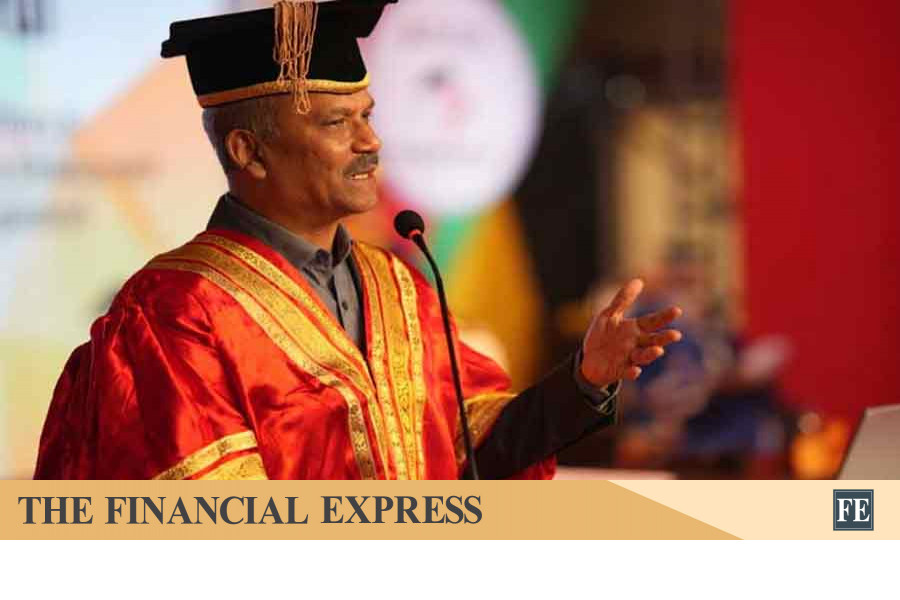
In his speech at the seventh convocation of the State University of Bangladesh (SUB) in Purbachal on Sunday, he said: โ€œDespite many achievements at the individual level in the 54 years of independence, we are lagging behind in building sustainable institutions.

โ€œInstitutions like police, justice, and administration were once progressive, but their foundation has been weakened in the past 15 years. As a result, it has become difficult to manage them effectively.โ€

This information was shared in a media statement by the university.

Reflecting on how Europe's post-World War II progress highlights the crucial role of strong institutions for building a nation, he said: โ€œOnly the nations capable of establishing strong institutions are the ones that have advanced.

โ€œIn our country, however, individuals and families have been prioritised over institutions. Thus, even when accomplishments have occurred, they have not been sustainable.โ€

According to the university administration, this yearโ€™s convocation ceremony was organised in memory of Inqilab Moncho spokesperson Sharif Osman bin Hadi.

Asif paid profound tribute to Hadi and offered prayers for his soul, adding: โ€œI have never seen a funeral of such scale.

โ€œThe tears and prayers of the people I witnessed made me firmly believe that Allah will grant him the highest place in paradise.โ€​
 
Analyze

Analyze Post

Add your ideas here:
Highlight Cite Respond
The interim has failed to curb inflation and unemployment

1767057136545.webp

FILE VISUAL: REHNUMA PROSHOON

If the national election does take place in February, a new government will face dire quandaries for the economy, mainly in the lines of inflation and unemploymentโ€”the two notorious vices for any economy. As economics textbooks suggest, hitting these two culprits simultaneously is a terrible task because of the typical trade-off between them. As the central bank raises the policy interest rate to tame high inflation, high interest rates, in turn, increased unemployment by discouraging investments. If interest rates are slashed to boost investment and decrease unemployment, the ensuing cheap money will fuel the fire of inflation further up.

This situation is akin to reducing the speed of a car to minimse risks and thus enduring delays in hitting your destination. On the other hand, speeding up will increase the risk of accidents. Bangladesh's current situation with high inflation and rising unemployment is thus quite difficult to solve. Bangladesh Bank has raised policy rate to near 10 percent which has made credit expensive because other banks are charging lending rates at around 15 percent or higher. Private credit growth, which supposed to stay at around 15 percent or higher has now fallen to as low as around six percentโ€”never seen in the last two decades. This puzzling conundrum rarely appears in the economy, heralding the advent of stagflation which Bangladesh's economy never saw in the last quarter century since 2000.

The interim government inherited an inflation of 10.87 percent in August 2024. It was 8.29 percent in November 2025. Achieving this drop in inflation after one and a half years cannot be considered as a big success for the interim government, when it is compared to neighbouring countries' success in inflation control. India's inflation, 6.21 percent in October 2024, fell to below one percent in November 2025, suggesting that price hikes are not a concern at all for India's consumers and investors. Pakistan's inflation, which rose to 38 percent in May 2023, fell below one percent in April 2025. Although it was 6.1 percent in November, it ascertains price normalcy given Pakistan's macro situation. Sri Lanka's inflation was 50 percent in March 2023, but its central bank made it fall so precipitously to 1.3 percent within six months. It was 2.1 percent in November 2025.

Despite achieving credible successes in external sector areas particularly foreign reserves, Bangladesh's central bank failed to display a success story similar to other South Asian central banks. Monetary treatments, including high policy rates above 10 percent, almost failed to tame inflation because of other rogue institutional failures such as extortions, mobocracy, fiscal debility, and declining loan recovery. Hence, 2025 has been marked by worsening economic conditions which will pose challenges to the new government's economic management capabilities in 2026.

Since unemployment was the triggering factor for the student-led July-August uprising, the interim government's main attention should have flowed into addressing this issue. That did not happen. Rather, the government's attention was sporadic and thus diluted with regards to economic aspects such as private investment, financial reforms, credit growth, women empowerment, rural opportunities, and above all law and order. According to the General Economic Division's State of the Economy 2025, the overall unemployment situation in 2024 has slightly deteriorated compared to 2023. The highest unemployment rate is 13.54 percent among university graduates as BBS labour force survey reports.

Much to people's disappointment, the trepidation of losing jobs took the centre stage rather than prospects of getting jobs or upliftment in the quality of jobs in the labour market. More than one lakh garment workers in Bangladesh lost their jobs over the past year following the closure of at least 258 factories, according to a new survey by the Asia Floor Wage Alliance (AFWA). Although the pace of job creation was often slow in Bangladesh where 84 percent jobs belong to the informal sector, the pace of job loss during the interim regime was high because of abrupt factory closures.

The new government must work on how to reverse this inauspicious pattern of factory closures and job losses. While the government is pleased to display significant export growth in FY2025, unrest and panic in the whole garments industry have remain prevalent. Agriculture, being only 11.15 percent of GDP, employs over 40 percent of the workforce, and that is not a good sign. Industry is the only sector that can generate high growth in both employment and output, and that side has remained excruciatingly disturbed during the interim regime.

The results of industrial perturbation have been manifested in three areas: i) around six percent growth in private credit; ii) an abrupt rise in unemployment; and finally iii) the unholy reversal in the so-far declining trend of poverty. Reports say that women job creation has been one of the slowest during the interim regime while it should have been the opposite as a nation strides forward.

It is worth mentioning that the interim government of 2007-2008 primarily focused on law and order without publicising big talks on reforms, and it succeeded in maintaining macroeconomic stability and people's deep sense of security. These two aspects are deeply missing in the current interim regime, making it a prime task for the next government of 2026.

Bangladesh's current growth performance, around four percent in FY2025 and expected five percent in FY2026, is much below its potential. The demographic dividend, which will expire for the nation by 2035, must be utilised quite properly to catch the last train of growth acceleration. Otherwise, it will be Bangladesh's both institutional and structural failures for not translating growth into inclusive development and prosperity. The new government's long-term target will be to rediscover the secrets of decent economic growth which will lower income inequality and regional disparity.

Dr Birupaksha Paul is professor of economics at the State University of New York at Cortland in the US.​
 
Analyze

Analyze Post

Add your ideas here:
Highlight Cite Respond

Where interim govt has succeeded and where it has failed

Moinul Islam
Updated: 17 Jan 2026, 18: 10

1768697545213.webp


On 5 August 2024, Sheikh Hasina was ousted from power in a mass uprising and fled to India. On 8 August, an interim government was formed under the leadership of Professor Muhammad Yunus. According to the announced schedule, the national parliamentary election will be held on 12 February 2026. The interim government will end its duties by handing over power to the elected government. If the election is conducted fairly, freely, and impartially, it will be considered the greatest and most historic success of the interim government.

On the same day, a referendum will be held to determine whether the proposed constitutional reform and election system reform "July Charter" are acceptable to the people. If the ''Yes'' vote wins in the referendum, it will create an obligation for the next elected parliament to implement these proposals. Both initiatives are the main historical missions of the interim government. If implemented, the threat of re-establishing autocratic rule in Bangladesh's politics will be significantly reduced.

However, the reality remains that by not allowing the Awami League, whose activities are now banned, to participate in the elections, some questions regarding the electionโ€™s acceptability persist. There is strong opposition among political parties and student leaders who led the mass uprising on this issue. The Awami League shows no remorse. At the same time, the fallen autocrat Sheikh Hasina is desperate to keep the leadership of the Awami League under her control at any cost.

The achievements and limitations of this interim period of the government provide important guidelines for determining the democratic future of Bangladesh. Only by ensuring responsible decisions, institutional stability, and the rule of law can the aspirations of the mass uprising be transformed into sustainable political reality. Otherwise, in this dangerous reality, there is only one message applicable for the nationโ€”beware!

In my opinion, the greatest institutional success of the interim government is the enactment of an ordinance to completely free the judiciary from the control of the executive branch. Furthermore, the power of appointing, promoting, transferring, and relocating judges has been liberated from the executive branch. No government in the 54 years of independent Bangladesh has implemented this constitutional obligation. For this historic decision, the interim government and its advisers undoubtedly deserve praise.

Another significant success of the interim government could have been the initiative to form an independent police commission. However, according to informed circles, various measures have been added to maintain bureaucratic and political control over the proposed structure of the police commission, rendering it practically powerless. Consequently, reconsideration of this ordinance has become essential for the interim government.

The autocrat Sheikh Hasina had turned the police force into her obedient law enforcement unit. In an attempt to preserve Hasina's power, law enforcement agencies, including the police, indiscriminately fired and killed about 1,500 people. Around 20,000 people were injured in the process, a large part of whom have been permanently disabled or blinded. Moreover, the notion that almost all police officers and employees are bribe-takers and corrupt has firmly taken root in the public mind. The interim governmentโ€™s failure to present a clear way out of this crisis is a serious shortcoming.

In restoring the banking sector, the interim government has shown notable success. The banking system, on the brink of bankruptcy, has been brought back to a temporary state of stability. During Sheikh Hasina's 15 and a half years of rule, the banking sector suffered the most atrocious plunder. Of the 61 banks, 11 banks neared bankruptcy. Despite no real necessity, a large number of bank licences were issued to facilitate looting by relatives, party leaders, and her patron oligarchs.

Among these 11, seven banks under the control of Chittagong's notorious bank looter S Alam were included. No other place in the world presents an example of seven banks being controlled by a single clique. Up until 5 August 2024, S Alam misappropriated approximately Tk 200 billion and laundered it abroad. The Land Minister of Sheikh Hasina's government, Saifuzzaman Chowdhury, plundered the United Commercial Bank, while Salman F Rahman's Beximco Group's default loans exceeded Tk 50 billion.

To solve this crisis, it is urgent to establish a special default loan tribunal to quickly bring top defaulters to justice. However, the indecision and inactivity of the interim government on this matter are unacceptable.

The government's biggest failure is in reinstating law and order. In the last 16 months, the government has failed to control mob terrorism. Various extremist forces are systematically targeting liberation war and progressive groups under the guise of mob terrorism. No effective measures have been seen from the government to suppress them. Particularly, the inactivity of the Home Adviser is glaring. The police force mostly remains a silent spectator.

Another major failure of the government is in curbing corruption. Despite the formation of multiple reform commissions after assuming power, there has been no visible progress in anti-corruption reforms. The recommendations of the committee led by Dr. Iftekharuzzaman were disappointing, and the government has failed to implement them. Bangladesh has once again become one of the most corrupt countries in South Asia. There is a clear perception among the public that while the government is keen on constitutional reforms, it shows reluctance towards curbing corruption.

Finally, the most alarming failure is the growing infiltration of extremist groups at various levels of the state apparatus. If this trend continues, Bangladesh risks gradually turning into a failed state. In the upcoming elections, the victorious party could be endangered by violence from these groups, and attempts to render the new government ineffective will be made. Recent attacks on Prothom Alo, The Daily Star, Chhayanaut, and Udichi are proofs of this.

The achievements and limitations of this interim period of the government provide important guidelines for determining the democratic future of Bangladesh. Only by ensuring responsible decisions, institutional stability, and the rule of law can the aspirations of the mass uprising be transformed into sustainable political reality. Otherwise, in this dangerous reality, there is only one message applicable for the nationโ€”beware!

โ— Dr. Moinul Islam is an economist and retired professor, Department of Economics, University of Chittagong.​
 
Analyze

Analyze Post

Add your ideas here:
Highlight Cite Respond

Failures in the education sector mounting

Educationists say delays in textbook delivery are not merely administrative failures; they disrupt the continuity of studentsโ€™ learning.


Mustak Ahmed Dhaka
Updated: 22 Jan 2026, 11: 46

1769130759313.webp


With the exception of one or two years, including the Covid-19 pandemic period, a continuity had been established for more than a decade whereby students at the primary and secondary levels received free textbooks at the very beginning of the academic year.

The excitement of students receiving new books, the relief of guardians, and the festive atmosphere together became a familiar scene marking the start of the academic year. The National Curriculum and Textbook Board (NCTB) had regularly fulfilled this responsibility.

However, that continuity has been disrupted during the tenure of the interim government. Although the current government had the opportunity to distribute free textbooks in two academic years after assuming office, it has failed even once to ensure that all students received all their books at the start of the year.

Even now, the NCTB, under the Ministry of Education, has not been able to supply all secondary-level textbooks. The board had claimed that distribution would be completed by 15 January. But according to information available up to 18 January, 8,641,960 books were still pending delivery.

At the primary level, however, 100 per cent of the textbooks had reached the field before the start of the academic year. Last year, it took nearly three months after the academic year began to distribute all textbooks.

Educationists say delays in textbook delivery are not merely administrative failures; they disrupt the continuity of studentsโ€™ learning. They argue that distributing free textbooks is a routine task.

Tendering, printing, and distribution should all be planned well in advance of the academic year. Failure to do so reflects broader managerial weaknesses within the Ministry of Education.

Beyond the failure to distribute textbooks on time, the interim governmentโ€™s tenure has exposed widespread shortcomings in the education sectorโ€”marked by failure, lack of leadership, and indecision.

Since that incident, instances of โ€œmobโ€ behaviour have increased on campuses. Several teachers have been publicly humiliated. Pressure on teachers, resignations, and administrative instability across institutions have further complicated the situation.

After the fall of the Awami League government during the July mass uprising, there was hope that positive changes would begin in the education sector. In reality, that did not happen.

While commissions were formed in various sectors in the name of reform, no such commission was formed for education, one of the most critical sectors. According to stakeholders, this clearly reflects the governmentโ€™s attitude toward education.

Toward the end of its tenure, the Ministry of Education, like the Ministry of Primary and Mass Education, has formed an advisory committee led by BRAC University emeritus professor Manzoor Ahmed. The committee is expected to submit its report before the 12 February election. However, there is little likelihood that any recommendations will be implemented within the current governmentโ€™s term.

Educationists say that failures extend beyond policymaking to routine administrative work. While the Ministry of Primary and Mass Education has managed to make some progress, the Ministry of Education as a whole is struggling. Due to a lack of proper planning, weak implementation, and indecision, failures in the education sector are steadily piling up.

Flaws from the very beginning

Immediately after the fall of the Awami League government following the July mass uprising, a group of students staged protests inside the secretariat. In response to their demands, the postponed HSC and equivalent examinations were cancelled.

Later, results were published using an โ€œalternative method.โ€ A large section of education stakeholders view this as a major example of administrative weakness within the Ministry of Education.

Experts argue that making such decisions under pressure from a group of students exposes structural weaknesses within the education system. They warn that the impact will be felt in the long term.

Since that incident, instances of โ€œmobโ€ behaviour have increased on campuses. Several teachers have been publicly humiliated. Pressure on teachers, resignations, and administrative instability across institutions have further complicated the situation.

The post of director general at the National Academy for Educational Management (NAEM) is also vacant, with a director performing routine duties. Meanwhile, the Ministry of Education has failed to appoint a regular chairman to the NCTB for more than nine months.

In many cases, the burden of administrative decisions has fallen on teachers, leading to resignations and disciplinary actionsโ€”making the education environment even more fragile. This has also deteriorated teacher-student relationships.

Retreat in the curriculum

In August 2024, then education adviser Wahiduddin Mahmud announced on his very first day at the secretariat that the country would revert to the old curriculum.

This abrupt decision, taken without consultation, sparked debate both for and against it. Given the circumstances at the time, many viewed it as an attempt to restore temporary stability. However, no visible plan followed.

In June last year, current education adviser Chowdhury Rafiqul Abrar (CR Abrar) said a revised curriculum would be introduced from 2027. But no committee has yet been formed, nor has any framework been prepared for drafting the new curriculum.

With very limited time remaining, the interim government is effectively unable to prepare even a basic outline for a new curriculum. An NCTB source said there is little chance of any initiative on this issue during the governmentโ€™s remaining tenure.

Educationists warn that while the world is moving toward skills-based and technology-driven education, Bangladesh is once again confining students within outdated structures, posing long-term risks not only to education but also to future employment and human resource development.

Leaderless institutions, administrative stagnation

One of the most important bodies under the Ministry of Education is the Directorate of Secondary and Higher Education (DSHE). Since 15 October last year, it has had no regular director general. The post of director (planning and development) remained vacant for nearly a month. New directors were appointed to this and another wing on 6 January.

Several DSHE officials told Prothom Alo that a state of stagnation now prevails within the directorate.

Education stakeholders say leaving such key institutions leaderless is not mere negligence; it indicates administrative incompetence. Several educationists point out that the ministryโ€™s biggest problem is the absence of any clear policy framework or direction.

The post of director general at the National Academy for Educational Management (NAEM) is also vacant, with a director performing routine duties. Meanwhile, the Ministry of Education has failed to appoint a regular chairman to the NCTB for more than nine months.

Education stakeholders say leaving such key institutions leaderless is not mere negligence; it indicates administrative incompetence. Several educationists point out that the ministryโ€™s biggest problem is the absence of any clear policy framework or direction.

From one crisis to another

The crisis surrounding Dhakaโ€™s seven major government colleges remains unresolved. Under pressure from student movements, the government announced in January last year that the colleges would once again be separated from Dhaka University.

However, cancelling affiliation before finalising a new university made the situation even more complex. A new structure is now being proposed, but the ordinance is yet to be issued.

A senior education ministry official told Prothom Alo that efforts are underway to place the draft ordinance before the interim governmentโ€™s advisory council as soon as possible.

Even if the ordinance is issued, doubts remain about whether all additional work can be completed in time to begin university operations.

The ministry has also initiated steps to replace the University Grants Commission (UGC) with a Bangladesh Higher Education Commissionโ€”another reform unlikely to materialise during the interim governmentโ€™s remaining tenure.

Retirement benefits crisis persists

More than 600,000 teachers and employees at MPO-enlisted non-government educational institutions nationwide receive government salary support. Their welfare and retirement benefits are managed by two bodies: the Welfare Trust for Non-Government Educational Institution Teachers and Employees, and the Retirement Benefits Board.

According to the latest data from the Retirement Benefits Board, teachers and employees have not received retirement benefits since December 2021. The situation at the Welfare Trust is the same.

Ministry sources say education adviser CR Abrar sent a demi-official letter to finance adviser Salehuddin Ahmed on 12 November, explaining the situation and seeking Tk 71.76 billion for retirement benefits and Tk 28.13 billion for the Welfare Trust.

Even after all this time, the Ministry of Education has failed to form full boards for either institution, both of which continue to operate under temporary arrangements.

โ€˜Expectations were not metโ€™

Some progress has been made: upgrading primary school headteachers to Grade 10, increasing house rent allowances for MPO-enlisted staff, revising manpower structures and MPO policies, addressing stalled promotions and transfers within the education cadre, and initiating MPO enlistment and NTRCA-led recruitment for principals and headteachers at non-government institutions.

Still, overall conditions in the education sector during the interim governmentโ€™s tenure have been disappointing, says BRAC University emeritus professor Manzoor Ahmed.

He told Prothom Alo that expectations existed but were not fulfilled.

โ€œFrom the beginning, education was not truly prioritised through political commitmentโ€”this has been true of all governments,โ€ he said.

Professor Ahmed noted that expectations were particularly high for the interim government to break this pattern, but that hope has failed.

While acknowledging the governmentโ€™s limited capacity to solve all problems, he said it could at least have initiated a comprehensive, long-term vision for education.​
 
Analyze

Analyze Post

Add your ideas here:
Highlight Cite Respond

This interim govtโ€™s character is truly exceptional: Wahiduddin Mahmud

The planning adviser spoke at an ERF seminar
28 January 2026, 17:16 PM
UPDATED 28 January 2026, 17:17 PM
By Star Business

1769648544584.webp

File photo of Wahiduddin Mahmud

Planning Adviser Wahiduddin Mahmud today said the interim government has emerged from the spirit of a mass uprising while also striving to uphold constitutionalism, describing its nature as unprecedented in Bangladesh.

Recalling his experience in the caretaker government of 1996, Mahmud said performing duties at that time was much easier.

โ€œThis time, I did not want to take the role myself, but I had to,โ€ he said while speaking at an event in Dhaka.

โ€œThe character of this government is truly exceptional. It is neither an NGO government nor a fully political one. On the one hand, it is an interim government, and on the other, it is striving to uphold constitutionalism,โ€ he said.

โ€œSuch a government has never come to Bangladesh before,โ€ he added, noting that he still does not fully understand the characteristics of the current administration.

Commenting on the economy, Mahmud said signs of macroeconomic stabilisation are emerging, although several uncertainties remain.

โ€œIn the fiscal year 2024-25, GDP growth was around 4 percent and is expected to move closer to 5 percent this year. But I do not consider GDP growth alone a strong indicator. Other economic markers are more telling,โ€ he said.

He noted that imports of industrial raw materials have increased, indicating a pickup in production activity, while imports of capital machinery have also risen modestly.

Export performance remains stable, foreign exchange reserves are showing slight improvement, and the exchange rate of the taka is relatively stable.

However, inflation remains a concern, he said.

โ€œPoint-to-point inflation has declined from 11 percent to about 8 percent, but it is not falling fast. Due to persistent price expectations, it will take more time to ease,โ€ Mahmud said.

He also underscored the need for a balanced monetary policy, arguing that the current high interest rate may no longer be necessary as credit growth remains low and investment sluggish.

The seminar, titled โ€œEconomic Stability and the Challenges of the Next Governmentโ€ and the โ€œERF Scholarship Award 2026โ€, was held at the National Life Insurance auditorium, organised by the Economic Reportersโ€™ Forum (ERF).​
 
Analyze

Analyze Post

Add your ideas here:
Highlight Cite Respond

Members Online

Latest Posts

Back
PKDefense - Recommended Toggle