[🇨🇳] China vs USA

[🇨🇳] China vs USA
221
8K
More threads by Saif

G   Chinese Defense

China blocks US sanctions on five firms over alleged Iran oil links

FE Online Desk

Published :
May 02, 2026 22:45
Updated :
May 02, 2026 22:45
1777773158832.webp

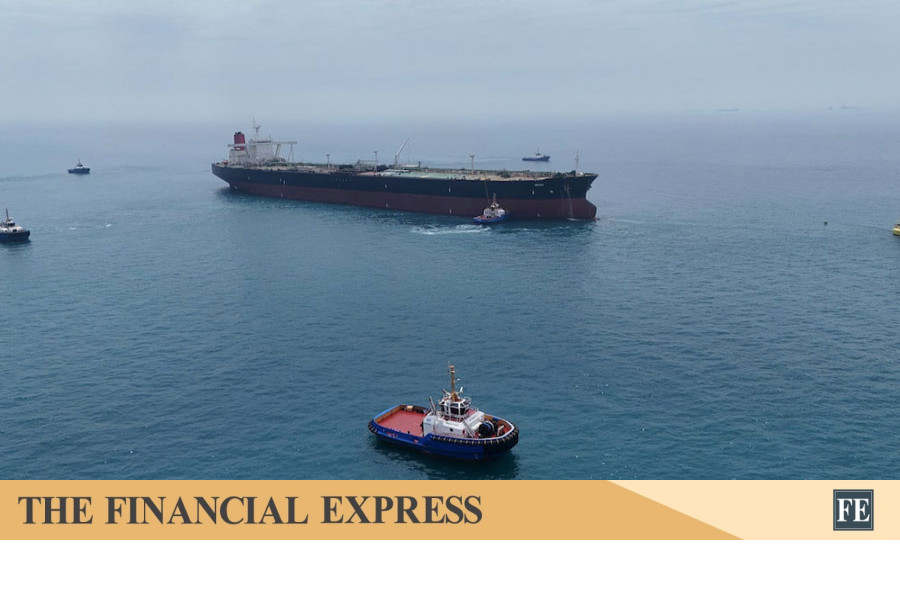
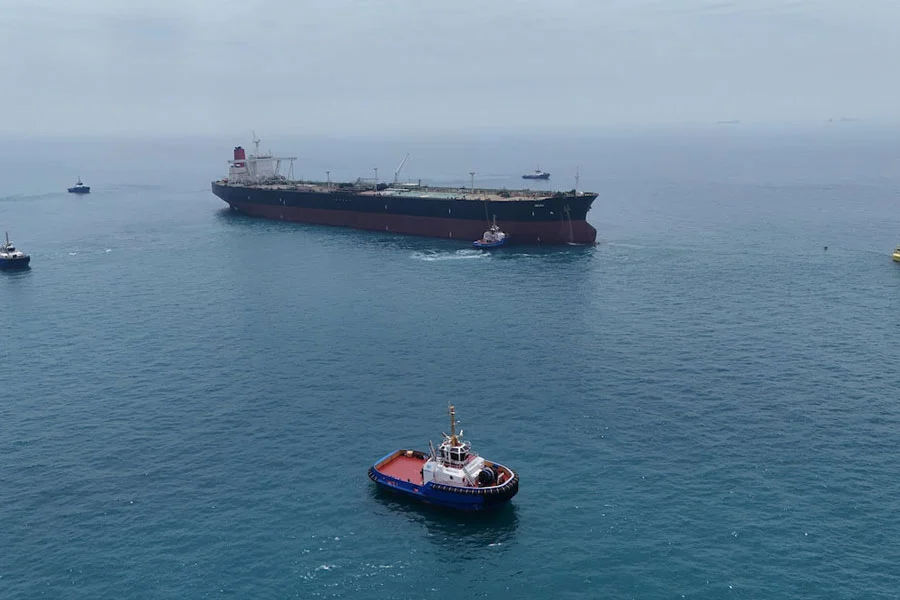
Drone view of oil tanker HELGA berthed at one of Iraq's southern offshore oil terminals near Basra as it prepares to load crude oil, becoming the second vessel to arrive since the closure of the Strait of Hormuz, April 24, 2026. Photo : REUTERS/Mohammed Aty

China’s Ministry of Commerce on Saturday issued a blocking order prohibiting the recognition, enforcement of, or compliance with US sanctions imposed on five Chinese companies over their alleged involvement in Iranian petroleum transactions, reports Xinhua.
FE

The five companies are Hengli Petrochemical (Dalian) Refining Co Ltd, Shandong Shouguang Luqing Petrochemical Co Ltd, Shandong Jincheng Petrochemical Group Co Ltd, Hebei Xinhai Chemical Group Co Ltd and Shandong Shengxing Chemical Co Ltd.

According to a ministry announcement, the US measures include placing the companies on the Specially Designated Nationals List, freezing their assets and banning transactions with them.

Since 2025, the United States, under executive orders targeting other countries, has imposed sanctions on the Chinese firms over their alleged involvement in petroleum transactions with Iran, a spokesperson for the ministry said on Saturday.

The spokesperson said the US measures improperly prohibit or restrict normal economic and trade activities between Chinese companies and third countries, as well as their citizens, legal persons or other organisations, in violation of international law and basic norms governing international relations.

To safeguard national sovereignty, security and development interests, and to protect the legitimate rights and interests of Chinese citizens, legal persons and other organisations, the ministry issued the order under China’s Rules on Counteracting Unjustified Extra-territorial Application of Foreign Legislation and Other Measures, the spokesperson said.

The spokesperson reiterated that the Chinese government consistently opposes unilateral sanctions that lack authorisation from the United Nations and have no basis in international law.

The issuance of the blocking order is a concrete step to implement the rules in accordance with law, the spokesperson said, adding that it does not affect China’s fulfilment of its international obligations or its protection of the legitimate rights and interests of foreign-invested enterprises in accordance with law.

The ministry will continue to closely monitor what it considers the improper extraterritorial application of foreign laws and measures, and will take further action in accordance with law if such situations arise, the spokesperson said.​
 

China confirms Trump's visit this week

AFP

1778467444819.webp

File photo: AFP

President Donald Trump will visit China from May 13 to 15, Beijing confirmed on Monday, with the US leader expected to discuss Iran and trade with his Chinese counterpart.

Washington and Beijing have been at loggerheads over key issues ranging from trade tariffs to the Middle East war and Taiwan, which China claims as part of its territory.

Trump was originally meant to visit in late March or early April, but postponed his trip to focus on the Iran war.

"At the invitation of President Xi Jinping, President of the United States of America Donald J. Trump will pay a state visit to China from May 13 to 15," a Chinese foreign ministry spokesperson said.

Trump is expected to push Xi on Iran while aiming to ease trade tensions, according to US officials.

China is a key customer for Iranian oil, mainly through independent "teapot" refineries that rely on discounted crude from the Islamic republic.

"This will be a visit of tremendous symbolic significance," US Principal Deputy Press Secretary Anna Kelly told reporters on a call.

"But of course, President Trump never travels for symbolism alone. The American people can expect the president to deliver more good deals on behalf of our country."

Trump's first trip to China in his second term will feature pomp and ceremony including a tour of the Temple of Heaven in Beijing and a lavish state banquet, the White House said.

This is the first visit by a US president to China since 2017.​
 

China seeks ‘more stability’ as it confirms Trump-Xi meet
Agence France-Presse . Beijing, China 11 May, 2026, 22:25

Beijing said on Monday it was ready to work with the United States in pursuit of ‘more stability’ and confirmed that Donald Trump will visit China this week, the first US president to do so since 2017.

Washington and Beijing have been at loggerheads over key issues ranging from trade tariffs to the Middle East war and Taiwan, which China claims as part of its territory.

Top trade negotiators from both countries will meet in Seoul a day before Trump’s summit with Chinese leader Xi Jinping to iron out details on trade and economic issues, a sign of the trip’s high stakes.

The White House announced Trump’s visit several weeks ago, and China’s foreign ministry has now confirmed it will go ahead from Wednesday until Friday.

The US leader was originally meant to visit in late March or early April, but postponed his trip to focus on the US-Israel war with Iran.

‘Top-level diplomacy plays an irreplaceable strategic guiding role in China-US relations,’ Beijing’s foreign ministry spokesman Guo Jiakun told a regular news briefing.

‘China is willing to work with the United States in the spirit of equality, respect, and mutual benefit, to expand cooperation, manage differences, and inject more stability and certainty into a volatile and intertwined world,’ he said.

This is the first visit by a US president to China since Trump’s previous visit in 2017, and is expected to include a tour of the Temple of Heaven in Beijing and a lavish state banquet.

The White House has said it is of ‘tremendous symbolic significance’, and promised that Trump will ‘deliver more good deals’ for Americans.

US treasury secretary Scott Bessent will set up the visit during talks with Chinese vice premier He Lifeng in Seoul on Wednesday.

Bessent and He have been the chief negotiators for the United States and China on all trade and economic issues.

Those talks are likely to put the finishing touches on any announcements that will be made during the leaders’ summit.

Bessent will arrive in Seoul after meeting Japanese prime minister Sanae Takaichi in Tokyo on Tuesday.

Takaichi’s comments in November on Taiwan triggered an on-going diplomatic row with Beijing.

‘Economic security is national security, and I look forward to a productive series of engagements as we work to advance President Trump’s America First Economic Agenda,’ Bessent said as he announced both stops on social media.

Trump and Xi last met face-to-face in October on the sidelines of a regional summit in South Korea.

They agreed then to a one-year truce in a blistering trade war that saw tariffs on many goods exceed 100 per cent.

The Middle East war is expected to dominate the agenda this time.

China is one of Iran’s biggest trading partners, with Tehran’s foreign minister visiting Beijing last week.

Foreign minister Wang Yi told his Iranian counterpart that China would play a ‘greater role’ in restoring regional peace.

Trump is expected to push Xi on Beijing’s position on the war, according to US officials.

Asked about US pressure on Monday, foreign ministry spokesman Guo said only that China’s position on Iran was ‘consistent’ and that Beijing would continue to play a ‘positive role’ in promoting a ceasefire and peace talks.

Adding to the tension, the US State Department sanctioned three China-based satellite firms on Friday for enabling Iran’s military operations.

The foreign ministry said on Monday that Beijing ‘firmly opposes illegal unilateral sanctions’.

‘China has repeatedly made clear its solemn position. The most urgent task is to do everything to avoid the resumption of conflict, not to use the conflict to... maliciously smear other countries.’

The US Treasury Department separately sanctioned several mainland China and Hong Kong-based firms for aiding Iran’s weapons supply.​
 

Trump lands in China for Xi summit with Nvidia CEO in tow

REUTERS

Published :
May 13, 2026 18:25
Updated :
May 13, 2026 18:25

1778716115014.webp


US President Donald Trump participates in an arrival ceremony at Beijing Capital International Airport during his visit to the country, in Beijing, China, May 13, 2026. Photo : REUTERS/Evan Vucci

President Donald Trump landed in Beijing accompanied by an entourage that included Nvidia's Jensen Huang and Elon Musk on Wednesday after pledging to urge China's Xi Jinping to "open up" to US business at the start of their two-day summit.

Trump embarks on the first visit by a US president to China in nearly a decade eager to snag some deals, maintain a fragile trade truce with the world's second economy, and prop up public approval ratings bruised by his war with Iran.

The CEOs accompanying Trump are drawn mainly from companies seeking to resolve business issues with China, such as Nvidia, which has struggled to get regulatory permission to sell its powerful H200 artificial intelligence chips there.

Trump asked Huang at the last minute to join the trip, said a source familiar with the matter who spoke on condition of anonymity, and he was spotted boarding Air Force One during a refuelling stop in Alaska en route to Beijing.

"I will be asking President Xi, a Leader of extraordinary distinction, to 'open up' China so that these brilliant people can work their magic," he said in post on ⁠Truth Social, referring to the CEO delegation.

"I will make that my very first request."

Asked about Trump's post, Guo Jiakun, a spokesperson for China's foreign ministry, said Beijing stands ready to "expand cooperation, manage differences and inject more stability and certainty into the turbulent world".

As Trump prepared for the pomp-filled occasion, his trade negotiator Scott Bessent wrapped up three hours of preparatory talks with Chinese officials in South Korea. China's official Xinhua news agency described them as "candid, in-depth and constructive", but officials did not offer any detailed summary.

Trump's two days of meetings will include a grand reception at The Great Hall of the People, a tour of UNESCO heritage site Temple of Heaven and a state banquet.

Apart from trade, the talks will cover a host of sensitive subjects from the Iran war to US arms sales to Taiwan, the democratically governed island claimed by China.

Trump is widely expected to encourage China to convince Tehran to make a deal with Washington to end the conflict, though he has said he did not think he would need its help.

China reiterated on Wednesday its strong opposition to US arms sales to Taiwan, with the status of a $14-billion package awaiting Trump's approval still unclear.

The United States is bound by law to provide Taiwan with the means to defend itself, despite a lack of formal diplomatic ties.

BESSENT PREPS IN ⁠SOUTH KOREA

While Trump rubbed shoulders with executives aboard Air Force One, Bessent held his latest round of trade negotiations with Chinese Vice Premier He Lifeng at a VIP reception room at South Korea's Incheon airport.

The talks ran about three hours to end just before 4 p.m. (0700 GMT), a US official said.

The two sides are eager to maintain a truce struck last October in which Trump suspended triple-digit tariffs on Chinese goods and Xi backed away from choking global supplies of rare earths, vital in making items from electric cars to weapons.

They are also expected to discuss forums to support mutual trade and investment and dialogue on AI issues, while Washington looks to sell Boeing (BA.N), opens new tab airplanes, farm goods and energy to China ⁠to cut a trade deficit that has long irked Trump, US officials have said.

Beijing, for its part, wants the US to ease curbs on exports of chipmaking equipment and advanced semiconductors.

Trump enters the talks with a weakened hand.

Courts have hemmed in his ability to levy tariffs at will on exports from China and other countries.

The Iran war has also boosted inflation at home and escalated the risk that Trump's Republican Party will lose control of one or both legislative branches ⁠in November's midterm elections.

Though the Chinese economy has faltered, Xi does not face comparable economic or political pressure.

"The Trump administration needs this meeting more than China does, as it needs to show to American voters that deals are signed, money is made," said Liu Qian, founder and CEO of Wusawa Advisory, a Beijing-based geopolitical advisory firm.

While Trump has lauded his personal rapport with Xi and respect for China, several Beijing residents told ⁠Reuters they viewed his visit with a mixture of hope and suspicion.

"I don't know if he's genuinely sincere," Lou Huilian, a 44-year-old who works in the oil trade said outside a metro station as she headed to work on Wednesday.

"But speaking as a Chinese person, and as someone working in trade, I just hope some good policies can come out of this."​
 

Xi warns Trump on Taiwan at Beijing summit
Beyond the pomp as he welcomed Trump, Xi in less effusive tones said the two sides “should be partners and not rivals”, while highlighting the issue of self-ruled democratic Taiwan -- which Beijing claims as its territory -- straight off the bat.

AFP
Beijing
Updated: 14 May 2026, 14: 10

1778803788548.webp


The scene as US President Donald Trump participates in events at the Great Hall of the People and does a greeting with the President of the People’s Republic of China Xi Jinping on 14 May 2026, in Beijing China during a trip focused on trade, regional security, and strengthening bilateral ties between the world’s two largest economies. REUTERS

Chinese President Xi Jinping warned his US counterpart Donald Trump that missteps on Taiwan could push their two countries into “conflict”, a stark opening salvo as they met in Beijing on Thursday at a superpower summit.

Trump had arrived in China with accolades for his host, calling Xi a “great leader” and “friend”, as he predicted that their countries would have “a fantastic future together”.

But beyond the pomp as he welcomed Trump, Xi in less effusive tones said the two sides “should be partners and not rivals”, while highlighting the issue of self-ruled democratic Taiwan -- which Beijing claims as its territory -- straight off the bat.

“The Taiwan question is the most important issue in China-US relations,” Xi said, according to remarks published by Chinese state media shortly after talks began.

“If mishandled, the two nations could collide or even come into conflict, pushing the entire China-US relationship into a highly perilous situation,” he added at the opening talks that lasted around two hours 15 minutes.

Can China and the United States transcend the so-called ‘Thucydides Trap’ and forge a new paradigm for major-power relations?... cooperation benefits both sides, while confrontation harms both-------Xi Jinping to Donald Trump.

Trump’s trip to Beijing is the first by a US president in nearly a decade, with the grand reception belying a host of unresolved trade and geopolitical tensions between the two countries.

Xi greeted Trump with a red-carpet welcome at the opulent Great Hall of the People, with military band fanfare, a gun salute and a host of schoolchildren jumping and chanting “welcome!”.

1778803897134.webp

US President Donald Trump participates in an welcome ceremony with Chinese President Xi Jinping at the Great Hall of the People in Beijing, China, on 14 May 2026 REUTERS

Seemingly enjoying the ceremony, Trump said “the relationship between China and the USA is going to be better than ever before”.

Xi instead referenced an ancient Greek political theory about the risks of war when a rising power rivals a ruling power.

“Can China and the United States transcend the so-called ‘Thucydides Trap’ and forge a new paradigm for major-power relations,” Xi asked, adding that “cooperation benefits both sides, while confrontation harms both”.

There has been plenty of the latter since Trump’s last visit in 2017, with the two countries having spent much of 2025 embroiled in a dizzying trade war and at odds on many major global issues.

‘Blunt language’
Taiwan is a longstanding sore point.

The United States recognises only Beijing but under domestic law is required to provide weapons to Taiwan so that it can defend itself.

China has sworn to take the self-ruled democracy and has not ruled out using force, ramping up military pressure in recent years.

1778803951941.webp

US President Donald Trump and Chinese President Xi Jinping tour the Temple of Heaven in Beijing, China, 14 May 2026 REUTERS

Following Xi’s comments on Thursday, Taipei called China the “sole risk” to regional peace, and insisted that “the US side has repeatedly reaffirmed its clear and firm support”.

But Trump said Monday he would speak to Xi about US arms sales to Taiwan, a departure from historic US insistence that it will not consult Beijing on the matter.

Adam Ni, editor of newsletter China Neican, told AFP that while such “blunt language” was not uncommon in Chinese foreign policy, it was unusual coming from Xi himself.

“Xi wants to make it very clear... he thinks the Taiwan issue is the potential powder keg between the two superpowers,” Ni added.

China has been “signalling a desire for US compromise on Taiwan in the lead up to the summit,” the National University of Singapore’s Chong Ja Ian told AFP.

Xi’s demand could suggest “they see some opportunity to convince Trump”, he said.

Iran overshadows
A new addition to the list of contentious issues to be discussed, the Iran war, threatens to weaken Trump’s position, having already forced him to postpone his trip from March.

Adam Ni, editor of newsletter China Neican, told AFP that while such “blunt language” was not uncommon in Chinese foreign policy, it was unusual coming from Xi himself.

The US president said he expected a “long talk” with Xi about Iran, which sells most of its US-sanctioned oil to China, but insisted that “I don’t think we need any help” from Beijing.

1778803999205.webp

China's President Xi Jinping and US President Donald Trump visit the Temple of Heaven in Beijing on 14 May 2026 REUTERS

However, his secretary of state Marco Rubio, historically a fierce opponent of Beijing, said the US side was hoping “to convince (China) to play a more active role”.

Trump is also hoping for business deals on agriculture, aircraft and other sectors.

Elite businessmen in his delegation, including Nvidia’s Jensen Huang and Tesla’s Elon Musk, were on the stairs of the Great Hall of the People on Thursday for the welcome ceremony.

Musk told reporters afterwards the meeting had been “wonderful”, while Huang said the two presidents “were incredible”.

Xi later told the delegation that his country’s “doors to the outside world will open wider and wider” and that US companies would enjoy “even brighter prospects in China”.

1778804043527.webp


China’s President Xi Jinping (2nd R) and US President Donald Trump (2nd L) talk as Eric Trump (R) and his spouse Lara Trump (L) look on during their visit to the Temple of Heaven in Beijing on 14 May 2026 REUTERS

On the eve of the summit, US Treasury Secretary Scott Bessent and Chinese Vice Premier He Lifeng met in South Korea to seek progress in ending a long-simmering trade war between the two.

Xi said the talks “reached results that were generally balanced and positive”, and urged both sides to “safeguard the current hard-won positive momentum”.

Trump and Xi are set to discuss extending a one-year tariff truce reached during their last meeting in South Korea in October.

China’s controls on rare earth exports and AI rivalry are among other topics expected to be taken up.

After their morning meeting, the two men took a break from negotiations, heading to the Temple of Heaven, a World Heritage site where China’s emperors once prayed for good harvests.

The two will return to the Great Hall of the People this evening for a state banquet.​
 

Can the Xi-Trump summit prevent a new Cold War?

Zhu Feng

1778804741331.webp


US President Donald Trump's visit to China, and expected head-of-state meetings, are drawing a lot of attention at a time when the world is seeing conflicts in Ukraine and the Strait of Hormuz. A key task for both Beijing and Washington is to sustain a stable, manageable and enduring bilateral relationship.

Although geopolitical experts often refer to the "Thucydides Trap" theory — a phenomenon whereby a rising power can cause fear in an established power, escalating to war — to interpret Sino-US relations, China has taken a different approach.

This is evident in the strategies it employed to counter the tariff war initiated by Washington last year, and its vision of building a community with a shared future for humanity, which is supported by four global initiatives and guided by principles of mutual respect and win-win cooperation.

This approach has worked, producing steady, positive outcomes in bilateral interactions, while acting as a stabilizing force in a turbulent, ever-changing world.

In this context, Washington should take advantage of the opportunity for dialogue presented by the US leader's visit, to seek closer cooperation with China.

While some in the US who view China as their greatest "strategic competitor" and seek to contain it have done little to conceal their intentions, the broader trend of China-US exchanges and collaboration remains unstoppable.

The US also introduced a series of negative measures concerning China, including the Section 301 investigations, aimed at undermining China's production capacity advantages and reducing dependence on Chinese industry and supply chains. However, Washington should have been aware that, given China's 35 percent share of global industrial output, a rapid and complete decoupling is unattainable.

This disconnect on the US side needs to be addressed with an objective understanding of Beijing.

After the US Supreme Court ruled in February that the US administration's imposition of reciprocal tariffs on trading partners under the International Emergency Economic Powers Act was illegal, the US side levied an additional 10 percent import surcharge on all trading partners under Section 122 of the Trade Act of 1974.

The US also introduced a series of negative measures concerning China, including the Section 301 investigations, aimed at undermining China's production capacity advantages and reducing dependence on Chinese industry and supply chains.

However, Washington should have been aware that, given China's 35 percent share of global industrial output, a rapid and complete decoupling is unattainable.

Although the US administration is trying to keep a relatively low profile on the Taiwan question and disputes in the South China Sea, its arms sales to the Chinese island in late 2025 were the largest since 1979.

Additionally, joint military exercises with the Philippines and other external forces in the South China Sea have significantly increased in frequency.

The US should not treat softened rhetoric as a short-term, tactical measure to stabilize bilateral relations.

A US-led rare earths supply alliance designed to reduce dependence on China's rare earths is closely tied to technological innovation and access to critical resources. The same is true of Washington's ambition to revitalize and expand its manufacturing sector.

Despite some challenges, Sino-US relations have remained generally stable, thanks to head-of-state diplomacy, with the two leaders maintaining frequent communication and dialogue, and recalibrating the direction of ties at critical junctures.

As the Chinese side has repeatedly emphasized, China and the US need to enable each other's success as interests converge, and to pursue mutually beneficial cooperation.

However, the path to "make America great again" is not necessarily contradictory to China's great rejuvenation. China's significant growth potential, as revealed in its 15th Five-Year Plan (2026-30), can offer US enterprises many opportunities to cooperate with their Chinese counterparts.

For China-US relations to continue providing mutual economic benefits, fostering exchanges across various social sectors, and enhancing complementary security through normal engagement and cooperation, the US side needs to foster a correct perception of China within its broader strategic framework.

Despite some challenges, Sino-US relations have remained generally stable, thanks to head-of-state diplomacy, with the two leaders maintaining frequent communication and dialogue, and recalibrating the direction of ties at critical junctures.

As the Chinese side has repeatedly emphasized, China and the US need to enable each other's success as interests converge, and to pursue mutually beneficial cooperation.

Both China and the US should make mutual respect the cornerstone, peaceful coexistence the principle and win-win cooperation the goal.

This approach will help the two countries explore the appropriate way to interact, jointly contributing to global peace and stability.

China will never follow the obsolete model of a country seeking hegemony when growing stronger. It will instead remain committed to peaceful development.

Beijing hopes that Washington can respect China's core interests and work together to properly manage differences.

In a world facing increasing turmoil, a stable China-US relationship not only serves the fundamental interests of both nations but also aligns with the widespread expectations of the international community.

This article was first published under the title “Only cooperation with China serves US interests” in China Daily, on May 14, 2026.

Zhu Feng is the dean and a professor of the School of International Studies, Nanjing University.​
 

Latest Posts

Back