[🇧🇩] Bangladesh Police and Rapid Action Battalion

[🇧🇩] Bangladesh Police and Rapid Action Battalion
178
7K
More threads by Saif

G Bangladesh Defense

Police to get cyber unit
PM asks police to deal with criminals regardless of political identity

Staff Correspondent 11 May, 2026, 15:12

1778547841125.webp

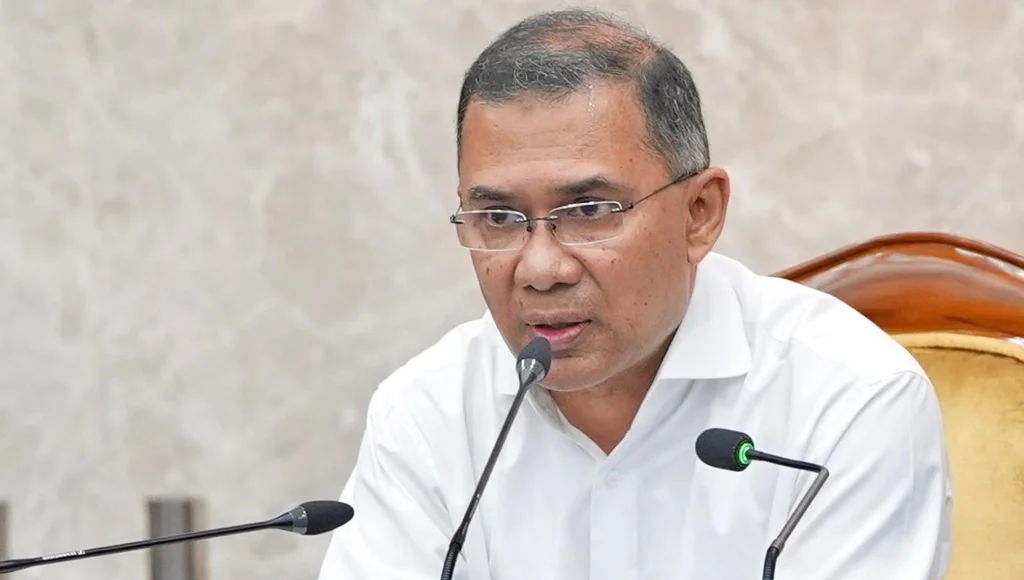
Prime minister Tarique Rahman . | Focus Bangla photo

The government is going to form a specialised cyber police unit to combat cybercrimes, social media rumors, and propaganda.

Besides, two new police training academies will also be established at Jungle Salimpur in Chattogram.

‘The nature and scale of crimes have changed in this era of modern information technology. To combat cybercrimes, social media rumors, and propaganda, a specialised Cyber Police Unit will be established,’ home minister Salahuddin Ahmed said.

He was addressing the ‘Prime Minister’s Directive Speech to Senior Police Officers’ as special guest at the Prime Minister’s Office on Monday in the capital on the second day of the ongoing four-day Police Week 2026 event.

The minister also announced the decision to establish two new police training academies at Jungle Salimpur in Chattogram.

‘One academy will be dedicated to elite forces. The other will be for general forces. To ensure transparency and accountability in elite force operations, a separate legislation will be enacted,’ said Salahuddin.

There is no place for corruption within the police force, he said, adding that the government’s ‘zero tolerance’ policy against corruption would be strictly maintained while there would be no compromise over the chain of command and discipline within the force.

Prime minister Tarique Rahman attended the occasion as the chief guest, where the PM’s principal secretary ABM Abdus Sattar and home ministry senior secretary Manzur Morshed Chowdhury also spoke.

Reaffirming the government’s uncompromising stance against corruption, terrorism, and misrule, prime minister Tarique Rahman directed police officials to treat offenders strictly as criminals, regardless of their political identity, the state-run news agency Bangladesh Sangbad Sangstha reported.

‘While working to combat corruption and terrorism, you may face pressure at times because of their political identity and influence. I want to make it clear today that you should not consider anyone’s political identity. Whoever commits a crime must be treated as a criminal,’ the BSS quoted the PM as saying.

‘The application of laws should be equal for all. You are not the protectors of any individual or political party; rather you are the protectors of the law. You should work to serve the state and the people as well,’ said the premier.

Meanwhile, home minister Salahuddin Ahmed also mentioned that necessary steps would be taken to modernise and increase the capacity of central and divisional police hospitals.Cultural Event Listings

‘Additionally, subject to the availability of land, a full-fledged ‘Police Sports Complex’ will be built,’ he added.

Directing an increase in the use of body-worn cameras to ensure transparency in operational activities, the home minister said, ‘The police are being trained to follow the principle of minimum use of force in accordance with United Nations standards. We must be strategic in combating crimes, but human rights must not be violated under any circumstances.’

The four-day police week began on Sunday and will conclude tomorrow.

On the second day of the police week event, there were other segments, including annual conference of the Police Nari Kalyan Samity (PUNAK) -- a welfare organisation dedicated to the empowerment, welfare, and social development of police families, particularly women -- annual sports competition, and a conference between the higher level police officials and the home minister.​
 

Police Week ends without conferring BPM, PPM awards
Staff Correspondent 13 May, 2026, 23:38

The four-day Police Week 2026 ended on Wednesday without conferring the Bangladesh Police Medal and the President Police Medal for contributions, which is unusual because such awards are usually handed over during the event every year.

The police force placed a number of demands before prime minister Tarique Rahman on the occasion.

Following the demands, the government has decided to form a cybercrime unit within the police to combat cybercrime, social media rumours and propaganda.

The Police Headquarters had made a list of 107 officials for the awards in four categories — BPM (bravery), BPM (service), PPM (bravery) and PPM (service), senior police officials said.

They said that the decision to hand over the awards to the officials was cancelled at the eleventh hour amid controversy over the selection of some officials who held important positions during the Sheikh Hasina-led Awami League regime which was ousted on August 5, 2024, in a mass uprising.

The PHQ, in a statement on the inaugural day of the event on Sunday, said, ‘The police medal gazette could not be issued due to the president’s foreign visit.’

On Sunday, state-run news agency Bangladesh Sangbad Sangstha, quoting a statement from the president’s press wing, reported that no file or summary relating to the issuance or approval of police medals had been available or sent to the president for disposal.

The president’s press wing statement said that several files from different ministries were approved and digitally signed by the president from London on Saturday.

It added that, in the era of modern digital technology, files could be signed from anywhere in the world through e-filing or other digital means.

The theme of this year’s Police Week was ‘Amar police, amar desh, sobar agey Bangladesh (My police, my country, Bangladesh comes first).’

On Tuesday, 341 police personnel bagged the ‘IGP’s Exemplary Good Service Badge’ for their performance from March 2025 to February 2026.

Following the police force’s demands, the government is also considering overtime allowances for personnel from the rank of constable to inspector for performing duties beyond regular working hours, as well as honorary promotions for constables, assistant sub-inspectors and sub-inspectors, since many lower-ranking officers retire after serving 40 years in the same post.

Besides, two new police training academies will be established at Jungle Salimpur in Chattogram.

The government, however, has rejected the proposal to form a specialised aviation unit, saying that it is not viable right now.

The police force’s other proposals included forming an independent pay commission for the police like the judiciary, establishing a Bangladesh Police Medical Service to widen medical services at the Central Police Hospital, division and district levels for the force, establishing two police training centres in Sylhet and Barishal, building a Bangladesh Police Sports Complex, appointing liaison officers at all embassies along with posting police officers at the Anti-Corruption Commission, Department of Narcotics Control, Bangladesh Road Transport Authority and Bangladesh Inland Water Transport Authority, PHQ officials said.​
 

The PM says police don’t belong to any party. Can we establish this in practice?

Mahfuz Anam

1778804361881.webp

VISUAL: BIPLOB CHAKROBORTY

The prime minister’s quote that I use as the headline of this column is music to our ears, constituting the most vital policy directive that this country needs to take. Police are the first point of contact between the people and the state in most rural areas. If that experience is one of respect and dignity, public confidence in the government increases by leaps and bounds.

Contrarily, it is one of those essential law and order institutions in the country that has been most misused by past governments and abused by the ruling parties of the day. If the PM can truly turn it into a non-politically-used institution, he will bring about a magnificent change in how the poor and powerless majority suffer from legal abuse and corruption. This will be one transformation that will change Bangladesh’s governance process in many important ways, and other institutions like the intelligence agencies will become more effective and pro-people.

The PM also spoke about academic excellence in public universities, which too will be addressed in this column.

Before delving into the aforementioned topics, allow me to share a story of the PM that impressed me. A few weeks back, Tarique Rahman invited members of the Newspapers Owners’ Association of Bangladesh (Noab) to exchange views about the industry. He was informal and courteous, and made us all feel relaxed by beginning the session with a personal story. He said it was during the holy month of Ramadan that he assumed office. Working late, he and his staff needed to have iftar in the office. He found that the iftar package supplied by a Parjatan Corporation hotel cost Tk 900 per person. He searched and considered various combinations of iftar items, and finally ended up with a healthy and nutritious option that cost Tk150 only. He selected that iftar package for his office. He then sprang a surprise on us, saying that the lunch he was about to treat us to also cost the same. It consisted of plain rice, vegetables, lau chingri (bottle gourd and prawn—the small variety), and daal, served hot and fresh. It might not have been the most expensive lunch, but it was light, simple, and delicious.

The diligence with which he looked for the most economic and healthy options for iftar and lunch should drive him to find more cost-effective and efficient options for running the government. If one enters our secretariat, the scene that will hit them in the face is how the highest seat of governance has literally been turned into a parking lot with double- and triple-laned rows of highly expensive SUVs and luxury vehicles—each costing crores—that make it difficult to even walk from one ministry to another. These vehicles are not just highly expensive to buy and maintain, but these fuel-guzzling monsters drain the public exchequer daily. Fuel expenses are already high and will definitely rise in the future. Even district officials are supplied with these highly expensive and ego-inflating vehicles that stand in distasteful contrast to the poverty-stricken public they are tasked to serve. This could be the first place that our new PM can look into and use his “simple living” philosophy to reduce the cost of administration. Just ask for the price of these vehicles and the cost of their fuel and maintenance, and the PM will know what we are talking about.

Coming back to his speeches, we want to focus on the two that we started with: police and public universities.

Speaking during the just-concluded Police Week, the PM said, “My message is clear: the police administration does not belong to any political party, and it must be run in accordance with the law.” He further elaborated by asking the police administration to remain neutral and operate strictly as per law so that police stations can be trusted by people as reliable support centres in times of need.

Then, on Tuesday, on his first visit to Dhaka University since taking office, the PM identified the low international ranking of the institution to be “largely due to politically influenced teacher recruitment, insufficient emphasis on academic performance, and a lack of research.”

These comments on the two most crucial institutions of nation building—law enforcement and educational excellence—are both extremely relevant. What he said has greatly enthused us, and, as independent media, we extend our professional cooperation in these areas.

Let’s start with the police. For a sitting PM to say that police do not belong to any political party is most impressive and quite unbelievable. If he really means it, then he must give the police genuine institutional and functional autonomy. It is a fundamental reality that police become an instrument of oppression for the opposition or the dissenting voices, because the government and the ruling party of the day want it that way. If a high official refuses to obey a partisan directive from a ruling party leader, it is inevitable that moves will be made against them, and if they persist, action will follow.

The PM must realise that the main cause of political use—in reality, it is abuse—of police is the government and the ruling party themselves. If it is to be stopped, then that must begin at his doorstep. On what confidence will a police official act independently when a minister or an MP passes a totally unjustified order to harass their political, party, business or family rival? Police officials can only act independently if there is an official process that will protect them. Even their bosses will “advise” them to toe the line. So, if the PM really wants to establish that “police do not belong to any party,” then the onus rests on him to set up an official code of conduct for the police as to how to deal with MPs and ruling party high-ups, and another code of conduct for his party leaders as to how to deal with the police. It must also be remembered that police themselves, especially the high officials who are close to their retirement, use the force to curry favour with the powers of the day, seeing it as an opportunity for last-minute promotions, perks, UN assignments, and postings.

The PM couldn’t have hit the nail on the head more forcefully than when he said the reason why our public universities are ranked so shamefully low is due to the political nature of teacher recruitment and their promotions.

Before we go further, we want to state forcefully that in spite of government pressure, partisanship and crony culture, there are many teachers in public universities who have survived the politicisation and continued their scholarly work, and have earned the respect of their students and of the academic world. Due recognition must be given to them.

Yes, partisan recruitment is hugely responsible for the destruction of academic excellence in our public universities. However, the main culprit here, as we have written before, is the recruitment of vice-chancellors and teachers indulging in party politics. They formed pink, white and blue panels while contesting university elections. These panels link up with student bodies, and together they determine the selection and functioning of the VCs, hall provosts, house tutors, and sometimes even the deans when their party of choice assumes power.

With the change of political power, the public university administrations change colour, and with it, the recruitment process, the academic atmosphere, and the intellectual freedom of teachers. Because of this, over the years, our famous universities have lost their prestige, honour and quality.

We have picked on the PM’s latest two statements because we think they deal with two fundamental areas of Bangladesh’s journey forward: good governance and intellectual capacity building.

Depoliticising the police will require winning two strong battles: first, persuading the ruling party leaders to stop considering the police as an extension of their party cadres; and second, changing the mindset of the police themselves, who are used to serving the power of the day in ways that are far beyond professional norms. It has gone on for so long that they may have forgotten what it is like to be independent.

To restore professionalism in police along with intelligence agencies—our lead story on May 12, 2026 reveals how S Alam, a close ally of Sheikh Hasina, took over the Social Islami Bank by totally abusing the duties of DGFI—a crucial clarity has to be established between how the police will serve the elected government and how it will not serve partisan interests of the ministers and leaders of the ruling party. This clarity is extremely vital and a precondition for restoring professionalism in the police force. We don’t need to invent it but only learn from every democratic country around the world where this exists. The PM’s desire that “police do not belong to any political party” will never be established without the clarity that we have emphasised.

Depoliticisation and restoring academic freedom and excellence in our public universities are another vital task that we must accomplish if we are to become part of the accelerated progress the world is making in science, technology, good governance, and productivity management. Start by appointing VCs based on merit, ethical characteristics, and intellectual honesty. Give them full authority and back them up to run the institutions based on merit, not politics. Persuade teachers to desist from toeing political lines inside the universities. They are welcome to do so as citizens, but not as teachers. We can perhaps communicate with the students that politics is essential for democracy and the progress of the country. But partisan politics within campuses have many damaging aspects, which we have seen and have been victims of in the past.

Fifty-five years have gone by since our independence. Yes, we have built some roads, bridges, factories, and buildings. But we have not built a single public institution that runs on merit, ethics, and fairness. We have, in fact, destroyed those that existed.

The PM’s speeches can start us on a new path. But will it?

Mahfuz Anam is the editor and publisher of The Daily Star.​
 

Latest Posts

Back