[🇧🇩] Evolving partnership between Bangladesh and Malaysia

[🇧🇩] Evolving partnership between Bangladesh and Malaysia
52
2K
More threads by Saif

G Bangladesh Defense

Malaysia’s state Sarawak to recruit Bangladeshi workers

BSS

Published :
Apr 16, 2026 21:16
Updated :
Apr 16, 2026 21:16
1776384296010.webp


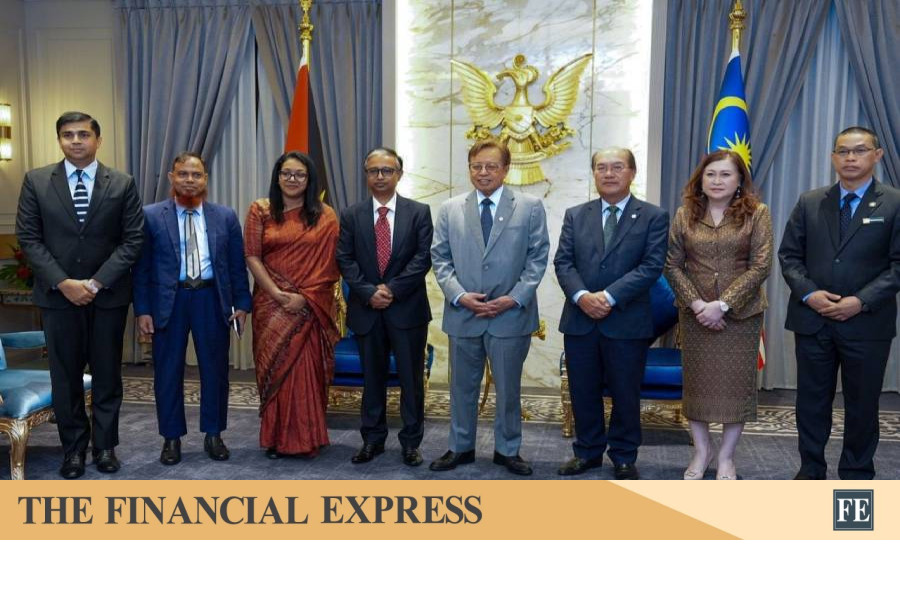
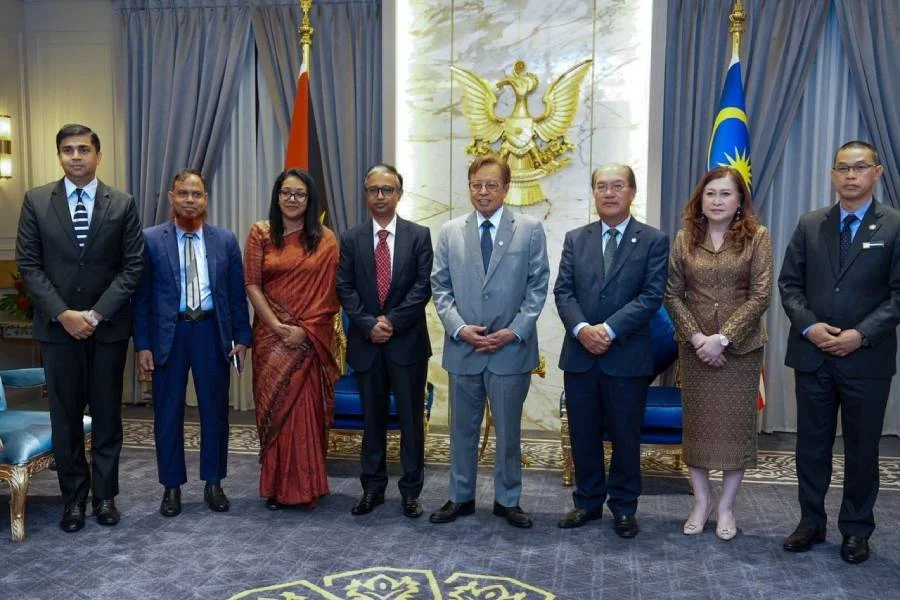
Malaysia’s state Sarawak has agreed in principle to recruit more Bangladeshi workers, appreciating their contribution to the construction sector, while both sides explored expanding cooperation in key economic areas.

The development came during a meeting between Bangladesh High Commissioner to Malaysia Monjurul Karim Khan Chowdhury and Sarawak Premier Abang Haji Abdul Rahman Zohari at the Premier’s Office in Kuching, according to a message received.

During the meeting, both sides emphasised enhancing cooperation in agriculture, renewable energy and labour migration.

The High Commissioner highlighted Bangladesh’s strengths in agriculture and human resources, expressing interest in contributing to Sarawak’s development through increased supply of skilled, semi-skilled and general workers.

The Sarawak Premier welcomed the proposals, particularly in agriculture and renewable energy-key pillars of the region’s development strategy-and praised the role of Bangladeshi workers in the construction sector.

The two sides also discussed signing a Memorandum of Understanding (MoU) to regulate migration and explored another MoU in agriculture. They further discussed potential collaboration in renewable energy, especially solar power, including knowledge and green technology exchange.

Both sides reaffirmed their commitment to strengthening bilateral ties and maintaining regular communication to implement the outcomes of the discussions.​
 

Malaysian firm to be dropped from Jhilmil Residential Project

Arifur Rahman
Dhaka
Published: 21 Apr 2026, 19: 38

1776817831856.webp


A Malaysian firm is set to lose the contract to construct 14,000 flats in the Jhilmil Residential Project in Keraniganj, near Dhaka, as the government moves to cancel the nine-year-old agreement over various irregularities, inconsistencies, and a lack of financial capacity.

A proposal to cancel the agreement will be placed at a meeting of the Cabinet Committee on Economic Affairs, to be held today, Tuesday with Finance Minister Amir Khasru Mahmud Chowdhury in the chair, according to a source at the Ministry of Housing and Public Works.

The Rajdhani Unnayan Kartripakkha (RAJUK) signed the agreement in 2017 during the tenure of the then Awami League government with the Malaysian company BNG Global Holdings and Consortium to implement the flat construction project under a Public-Private Partnership (PPP) arrangement.

According to the agreement, BNG Global was to construct 14,000 flats for middle-income people on 160 acres of land in the Jhilmil residential area.

A total of 85 buildings were planned—60 buildings of 20 storeys (including semi-basement) and 25 buildings of 25 storeys (including basement). In total, 13,720 flats were to be built in three categories: 9,120 flats of ‘A’ category with an area of 1,550 square feet; 2,576 flats of ‘B’ category with 1,750 square feet; and 2,024 flats of ‘C’ category with 2,400 square feet.

The project, located about two kilometres west of the China-Bangladesh Friendship Bridge over the Buriganga River, was estimated to cost Tk 99.79 billion. The entire investment was supposed to be made by BNG Global. However, the company has not invested a single penny, and no construction work has taken place over the past nine years either. As a result, the current government is moving to cancel the agreement.

Documents prepared for submission to the Cabinet Committee on Economic Affairs show that, under the agreement, a total of 12 conditions were to be fulfilled—four by RAJUK and eight by BNG Global. While RAJUK fulfilled three conditions, BNG Global did not fulfil any.

According to the rules, the conditions were to be met within 180 days of signing the PPP agreement. On 18 February 2024, BNG Global was asked through a letter to fulfil its conditions, but it failed to do so.

The documents also show that in October 2023, the Ministry of Housing and Public Works requested the Ministry of Foreign Affairs to verify the information provided by BNG Global.

The Ministry of Foreign Affairs instructed the Bangladesh High Commission in Malaysia to investigate the company. The evaluation report later stated that there were inconsistencies in the company’s financial and other information. According to the report, as of February 2023, the company’s net profit was only $696, indicating that it would not be appropriate for the firm to implement the Jhilmil Residential Park project.

Additionally, the Ministry of Foreign Affairs reported that the office of the project’s financing institution, Boulevard Capital Partner Limited, could not be found at the address it had provided.

At the same time, a report by an international credit rating agency found that Boulevard Capital is a single-owner entity with a paid-up capital of 10,000 Hong Kong dollars, equivalent to Tk 141,000 in Bangladeshi currency—insufficient to finance such a project.

Further document review reveals that a Chinese company, Jiang Construction Engineering Company Limited, filed a complaint against BNG Global at the Chief Metropolitan Magistrate’s Court in Dhaka. The complaint alleges that BNG Global Holdings Limited and SVC Jhilmil Residential Limited jointly raised $24 million in Bangladesh and misappropriated the funds through fraud. The allegation is currently under investigation by the Police Bureau of Investigation (PBI).

Considering these issues, both RAJUK and the Ministry of Housing and Public Works have recommended cancelling the agreement with BNG Global.​
 

Shariah board protection is not enough: lessons from Malaysia

M Kabir Hassan

Published :
Apr 27, 2026 00:09
Updated :
Apr 27, 2026 00:09

1777247835270.webp


Bangladesh Bank Governor Md. Mostaqur Rahman recently pledged “full protection” and functional independence for Shariah board members. It is a refreshing departure from the status quo in the central bank. For the very first time, an in-office governor actually held a discussion with Shariah scholars, acknowledged past supervisory failures, and promised an era where boards can operate meaningfully and fearlessly. This surely matters, but after thirty years of studying Islamic banking governance and serving on the AAOIFI Ethics and Governance Board, I have to be honest: sincere pledges are never a substitute for legally enforceable architecture. Bangladesh’s Islamic banking sector doesn’t need more reassurances; all it needs is a system.

The timing of the governor’s intervention is unsurprising. The sector is just now crawling out from the worst governance crisis in its history. Unfortunately, we witnessed the S. Alam Group systematically capture at least six Shariah-based banks, resulting in an estimated Tk 1.9 lakh crore in irregular lending. Five distressed institutions were forced into a merger, forming what is now called Sammilito Islami Bank. These weren’t just small errors; we are talking about non-performing loans that reached 90 per cent of some of these banks’ portfolios. In 2021, while conducting a study with Mufti Masum regarding defaulted loans in Bangladesh, we documented exactly how this happens. Political interference, regulatory forbearance, and a lack of accountability create a vacuum. These were failures of institutional design in which bank owners treated Shariah boards as decorative appendages rather than real supervisors to guide them.

THE BLUEPRINT FROM MALAYSIA: Malaysia’s Shariah governance was not built overnight. It took them four decades of iterative legal work, starting with the 1983 Islamic Banking Act, and culminating in the 2019 Shariah Governance Policy Document. I have taught at several Malaysian universities and co-authored research on their legal evolution, and I can claim with conviction that their success isn’t just about “good rules.” It is about a layered integration of Shariah principles with uncompromising financial oversight.

There are three specific lessons here for Bangladesh. First, we need the legal supremacy of a central Shariah authority. In Malaysia, the Shariah Advisory Council (SAC) is the final word. Their rulings are binding on courts and banks alike. This stops the “fatwa shopping” I’ve documented in my research (Arab Law Quarterly, 2014), in which banks essentially seek an opinion that suits their bottom line. Bangladesh Bank’s new Shariah Advisory Board is a start, but without statutory teeth, it will just be another committee that powerful borrowers ignore when it suits them best and is convenient.

Second, we must address the internal infrastructure. Malaysia mandates a full ecosystem at every bank, including a dedicated Shariah secretariat and internal audit functions. Most Islamic banks in Bangladesh treat this as an afterthought. My research on board characteristics (International Journal of Islamic and Middle Eastern Finance and Management, 2019) shows a clear link: when Shariah boards are under-resourced, risk-taking goes up. This finding speaks directly to Bangladesh’s predicament. The Governor’s pledge might address the mere symptoms, but it doesn’t build the internal machinery that makes protection sustainable.

Finally, a Shariah violation must be treated as a regulatory violation. The S. Alam crisis wasn’t just a religious failure, a Shariah non-compliance; it was money laundering and fraud hidden behind an Islamic label. A Shariah board cannot be successful in stopping crimes like this unless it has access to the transaction-level data.

FOUR FRONTS FOR REFORM: So, where do we go from here? The path forward requires moving on at least four fronts simultaneously.

The first priority is the Islamic Banking Act. Frankly speaking, it is an anomaly that our Islamic banks have operated for forty years without a dedicated legal framework. I first wrote about this “original sin” of our sector in 2003 (in the Textbook on Islamic Banking), and it remains the biggest hurdle today. We cannot keep relying on central bank circulars to govern a multi-trillion-taka industry.

Then there is the issue of human capital. We cannot simply import a Malaysian framework and expect it to work in Bangladesh without trained professionals. We need a massive investment in scholars, auditors, and compliance officers. In my current role as chair of the AAOIFI Education Board, I’ve seen how standardised certification can transform an institution in just a few years. But this will not come to fruition without money and intent.

We also need to mandate separate core banking systems for Islamic operations. As long as Islamic banks use software designed for interest-based transactions, their Shariah compliance will remain superficial. It’s like trying to run a modern operating system (OS) onobsolete hardware:the system crash is theinevitable, eventual outcome.

Lastly, we must insulate these reforms from our political cycles. Our banking sector has been a playground for political interests for too long. My research on political systems and bank performance (Journal of Financial Stability, 2017) found that Islamic banks outperform their peers only when shielded by robust governance frameworks. We need legislation that can survive a change in government.

A NOTE OF REALISM: We must be realistic; Malaysia built its system during a time of relative stability. Our capital adequacy is below the Basel III minimums, and depositor confidence is on a knife-edge.

Having said that, we must also know that being in a difficult position is no excuse for incrementalism. The Governor’s recent meeting was a necessary, welcome beginning, but it cannot be the end. Shariah boards do not need “protection” in the form of a promise. They need power, the kind of power that is legally defined, institutionally supported, and backed by the full weight of the law.

Kabir Hassan is Professor of Finance and Moffett Chair at the University of New Orleans, the 2016 IDB Prize Laureate in Islamic Banking and Finance, and a member of the AAOIFI Ethics and Governance Board.​
 

PM to visit Malaysia on first foreign trip

bdnews24.com

Published :
Jun 02, 2026 21:52
Updated :
Jun 02, 2026 21:52

1780444013475.webp


Prime Minister Tarique Rahman is scheduled to visit Malaysia for his maiden foreign tour since taking office, according to foreign ministry officials.

Following his trip to Malaysia, he will head to China, ministry officials told bdnews24.com.

They said the schedule for the visit to Kuala Lumpur is being finalised, with Tarique expected to travel between Jun 21 and Jun 22.

After completing the Malaysia visit, he is expected to travel to China between Jun 23 and Jun 26, according to the officials.

They said preparations are under way at the foreign ministry, based on the tentative decision taken during the Eid-ul-Azha holiday period.

However, a final decision has not yet been made on whether the prime minister will travel directly from Kuala Lumpur to Beijing or return to Dhaka first, a foreign ministry official said.

He added that Bangladesh maintains extensive relations with China and Malaysia, and inter-ministerial meetings would be held to finalise the agendas for the two visits.

Tarique’s first foreign destination has been a subject of discussion for the past three months following the BNP government’s return to power after nearly two decades.

Foreign Minister Khalilur Rahman has already visited India and China, but officials had earlier refrained from confirming the prime minister’s first overseas destination, saying it was under consideration.

Speaking after a meeting on May 5, Khalilur did not provide a clear answer on the first visit, but indicated it could be India or China.

When asked whether preparations were under way for the Jun 23 China visit, State Minister for Foreign Affairs Shama Obaed Islam said no final decision had been made.

“Still no decision has been finalised. You will have to wait. When it is confirmed by the Prime Minister’s Office, the spokesperson will inform you,” she said.

She also said Tarique is currently focused on implementing election manifesto commitments and that foreign visits would begin in phases.

Responding to questions about a possible visit to India following an invitation from Indian Prime Minister Narendra Modi, she said visits to neighbouring countries would take place gradually.

“You will have to wait. Not only India, but the prime minister will visit all SAARC countries, and those visits will be important,” she added.

Earlier, India had extended an invitation for Tarque’s visit as part of efforts to strengthen bilateral ties and political understanding.​
 

Significance of PM Tarique's visit to Malaysia

Mir Mostafizur Rahaman

Published :
Jun 15, 2026 23:26
Updated :
Jun 15, 2026 23:26

1781589946427.webp


The choice of a first foreign destination by a newly elected prime minister is never a routine diplomatic decision. It is often laden with symbolism, strategic calculations, and political messaging. In international relations, first visits are closely watched by friends, rivals, investors, and neighbouring countries alike because they offer clues about a government's foreign policy priorities and geopolitical orientation.

Against this backdrop, Prime Minister Tarique Rahman's decision to make Malaysia his first official foreign destination carries significance far beyond the bilateral relationship between Dhaka and Kuala Lumpur. The visit reflects a carefully calibrated diplomatic approach, reinforces his stated commitment to a "Bangladesh First" policy, and sends a message that his government intends to pursue a pragmatic foreign policy driven by national interests rather than geopolitical alignments.

He is scheduled to visit Malaysia from June 21-22 and from there he will fly to Beijing.

The expectations surrounding Tarique Rahman's first overseas trip were immense. As the leader of a new government, his diplomatic choices were under intense scrutiny. Many observers anticipated that his inaugural visit would be to either India or China, Bangladesh's two most influential regional partners. Both New Delhi and Beijing have deep economic, political, and strategic interests in Bangladesh. Both countries closely monitor political developments in Dhaka and seek to maintain strong ties with whichever government is in power.

India remains Bangladesh's largest neighbour and one of its most important development and security partners. China, meanwhile, has emerged as a major source of infrastructure investment, trade, and development financing. Given the importance of these relationships, it was natural for the analysts to speculate that Tarique Rahman's first foreign trip would be directed toward one of these two capitals.

Had he chosen India, critics might have interpreted the move as a signal of excessive dependence on New Delhi. Conversely, a first visit to China could have generated speculation about a strategic shift toward Beijing. In today's highly polarized geopolitical environment, either choice risked creating unnecessary controversy and triggering debates about Bangladesh's foreign policy direction.

By selecting Malaysia instead, Tarique Rahman has demonstrated political prudence and diplomatic sophistication. The decision avoids the perception of favouring one major power over another while underscoring Bangladesh's commitment to maintaining balanced relations with all international partners. It conveys the message that Bangladesh will engage constructively with every country based on mutual interests and respect rather than geopolitical competition.

More importantly, the visit serves as a practical expression of Tarique Rahman's frequently articulated "Bangladesh First" doctrine. The essence of this policy is that Bangladesh's foreign relations should be guided primarily by the interests of its people and economy. Rather than becoming entangled in great-power rivalries, the government aims to focus on securing tangible benefits for citizens through trade, investment, employment, and economic cooperation.

Malaysia represents an ideal destination for advancing such objectives. The relationship between Bangladesh and Malaysia is rooted not only in diplomatic engagement but also in strong people-to-people connections. Hundreds of thousands of Bangladeshi workers have contributed significantly to Malaysia's economic growth over the past several decades. Their remittances, in turn, have played an important role in supporting Bangladesh's economy and improving the livelihoods of countless families.

For many Bangladeshis, Malaysia is more than just a friendly nation; it is a major source of employment and economic opportunity. Consequently, labor migration issues occupy a central place in bilateral relations. In recent years, however, the recruitment of Bangladeshi workers to Malaysia has faced disruptions and restrictions, creating uncertainty for both prospective migrants and employers.

One of the most important outcomes expected from Tarique Rahman's visit is progress toward reopening and streamlining the labour recruitment process. Thousands of Bangladeshi workers continue to seek employment opportunities in Malaysia, while Malaysian industries in sectors such as manufacturing, construction, plantations, and services require a stable workforce.

A renewed labour agreement could therefore produce mutual benefits. For Bangladesh, it would create employment opportunities, increase remittance inflows, and reduce domestic economic pressures. For Malaysia, it would help address labour shortages and sustain economic productivity. By prioritising this issue during his first foreign visit, Tarique Rahman would be demonstrating a clear focus on the welfare of ordinary Bangladeshis rather than merely pursuing symbolic diplomatic engagements.

Beyond labour cooperation, the economic dimension of Bangladesh-Malaysia relations deserves greater attention. Despite cordial political relations and strong human connections, bilateral trade remains below its potential. Bangladesh imports significant quantities of palm oil, industrial raw materials, machinery, and other products from Malaysia, while opportunities exist for expanding Bangladeshi exports.

As Bangladesh prepares for its post-LDC graduation era, export diversification has become a national imperative. Malaysian markets could offer increased opportunities for Bangladeshi products, including garments, pharmaceuticals, leather goods, ceramics, agricultural products, and information technology services. At the same time, Malaysia's experience in industrial development, Islamic finance, digital transformation, and high-value manufacturing presents valuable lessons for Bangladesh.

The visit also opens the door for greater investment cooperation. Malaysia possesses substantial expertise in sectors that align closely with Bangladesh's development priorities. These include renewable energy, port development, logistics, tourism, halal industries, and advanced manufacturing. Enhanced Malaysian investment in Bangladesh could contribute to job creation, technology transfer, and economic modernisation.

Equally important is the broader geopolitical message of the visit. Bangladesh occupies a strategically important location in the Indo-Pacific region and increasingly finds itself at the intersection of competing global interests. Navigating this environment requires diplomatic balance and strategic autonomy.

By choosing Malaysia as his first destination, Tarique Rahman signals that Bangladesh will not define its foreign policy through the lens of any single power relationship. Instead, the government appears committed to diversifying partnerships and expanding engagement across Asia and beyond. Such an approach strengthens Bangladesh's negotiating position and reduces the risks associated with overreliance on any one country.

The visit also highlights the growing importance of middle powers in contemporary international relations. Countries such as Malaysia have demonstrated that they can play constructive roles in promoting economic integration, regional stability, and multilateral cooperation. Strengthening ties with such partners can help Bangladesh broaden its diplomatic horizons and access new opportunities.

Domestically, the symbolism of the visit should not be underestimated. A government's foreign policy is often judged by its ability to deliver practical results for citizens. If the visit leads to renewed labour recruitment, increased investment, expanded trade, and stronger economic cooperation, it will reinforce public confidence in the government's diplomatic strategy.

Ultimately, the significance of Prime Minister Tarique Rahman's first foreign visit lies not merely in where he is going but in what the choice represents. Malaysia is neither a geopolitical battleground nor a controversial diplomatic destination. It is a friendly nation with deep economic and social links to Bangladesh and substantial untapped potential for cooperation.

The decision reflects a desire to avoid unnecessary geopolitical signaling, maintain balanced relations with major powers, and prioritize the economic interests of the Bangladeshi people. It demonstrates a practical and measured approach to foreign policy at a time when many countries are being pressured to take sides in global rivalries.

If the visit succeeds in advancing labour cooperation, boosting trade, attracting investment, and strengthening bilateral ties, it may well be remembered as an early indication of a foreign policy rooted in pragmatism, balance, and national interest. More than a diplomatic trip, it could become a defining statement of the Tarique Rahman government's vision for Bangladesh's place in the world -- a vision in which Bangladesh comes first.​
 

Latest Posts

Back