New Tweets

[🇧🇩] Fate of Bangladeshis In The Middle East Amid Iran-Israel war

G Bangladesh Defense
[🇧🇩] Fate of Bangladeshis In The Middle East Amid Iran-Israel war
14
178
More threads by Saif


Bangladeshi national among two killed after projectile fell on residential location in Saudi Arabia

bdnews24.com
Published :
Mar 09, 2026 00:31
Updated :
Mar 09, 2026 00:31

1773016277395.webp


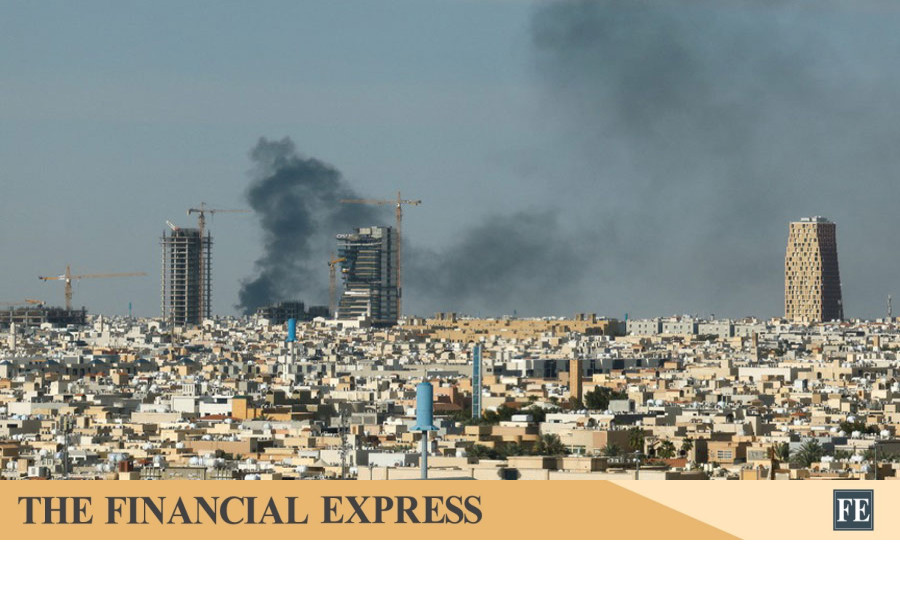
Smoke rises above the city, amid the US-Israeli conflict with Iran, in Riyadh, Saudi Arabia, Mar 5, 2026. Photo : REUTERS/File

Two people have died and 12 injured after a projectile fell on a residential location in Saudi Arabia's Al-Kharj city on Sunday, the Saudi Civil Defense said.

The two people killed were of Indian and Bangladeshi nationalities, it added in a post on X.

Iran's Revolutionary Guards said earlier on Sunday that they targeted radar systems in locations including Saudi's Al-Kharj, according to Reuters.

The 12 injured in the incident were all Bangladeshi, CNN reports.​
 
Analyze

Analyze Post

Add your ideas here:
Highlight Cite Respond
RIP.
 
Analyze

Analyze Post

Add your ideas here:
Highlight Cite Respond
Analyze

Analyze Post

Add your ideas here:
Highlight Cite Respond
  • Like (+1)
Reactions: Bilal9

Bangladeshis’ death toll from ME war reaches 4, Dubai migrant’s body arrives home
Rashad Ahamad 10 March, 2026, 00:29

1773105036834.webp


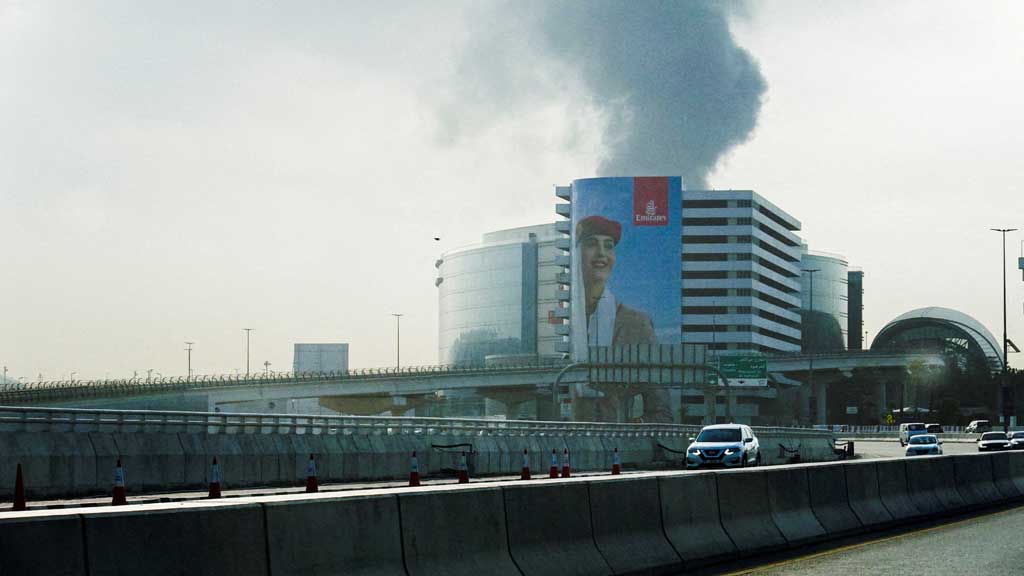
A relative wails after the body of Ahmed Ali, killed in an Iranian missile strike in Dubai recently, reaches Sylhet Osmani International Airport on Monday. | New Age photo

The body of a Bangladeshi migrant killed in a missile strike in Dubai of the United Arab Emirates amid the ongoing Middle East conflict arrived in Bangladesh on Monday when the government confirmed one more death in Saudi Arabia raising the total number of Bangladeshi nationals killed in the war to four.

Government officials said that at least 14 others Bangladeshis were injured in the war until Monday.

The deceased, Ahmed Ali, a resident of Baralekha upazila in Moulvibazar, was also known as Saleh Ahmed. He was killed in an Iranian missile strike in Dubai on March 2.

State minister for expatriates’ welfare and overseas employment Nurul Hoque and state minister for foreign affairs Shama Obaed Islam received the body at the Dhaka airport.

Iran launched the strikes following large-scale attacks on its territory by the United States and Israel on February 28. The hostilities continued on Monday as at least 1,200 people were killed and scores others were injured.

Bangladesh government on Monday confirmed that in a latest strike two Bangladeshis were killed in the Kingdom of Saudi Arabia on Sunday.

The deceased were Bacchu Mia from Katiadi in Kishoreganj and Mosharraf Hossain from Shakhipur in Tangail.

Earlier, Bangladeshi nationals killed in the conflict were Mohammad Tarek, a resident of Azimpur at Sandwip of Cox’s Bazar who died in Bahrain and Ahmed Ali, whose body arrived from Dubai.

Expatriates’ welfare and overseas employment minister Ariful Haque Chowdhury on Monday said that the government would bring back all the bodies of the deceased migrants as quickly as possible.

Officials said that at least 14 Bangladeshi nationals had so far been injured in different Middle Eastern countries during the conflict. Many of them were undergoing treatment at the hospitals in the respective countries.

The Gulf Arab countries remain the most common overseas employment destinations for Bangladeshis, with more than six million nationals working there over the decades, said the foreign ministry.

However, the real number of migrant workers much higher in the Middle East countries, estimated migration experts.

In Kuwait, four Bangladeshi nationals — Aminul Islam from Nabinagar in Brahmanbaria, Rabiul Islam from Sathia in Pabna, Masudur Rahman from Begumganj in Noakhali and Dulal Miah from Chandina in Cumilla — were injured in a drone strike near a civilian airport.

Ariful Haque Chowdhury said that Bangladeshi missions in the affected countries had been instructed to provide necessary support and treatment to the injured migrants.

He added that the government was ready to extend assistance to migrant workers wherever necessary.

The Bangladesh government on Monday again condemned the attacks and the loss of lives, reiterating that it would prioritise ensuring the safety of its nationals abroad.

‘Bangladesh strongly condemns all such attacks that result in the loss of innocent lives and calls upon all parties concerned to exercise maximum restraint. It urges the international community to take urgent and effective measures to de-escalate the situation and prevent further loss of life,’ the foreign affairs ministry said in a statement.

New Age’s staff correspondent in Sylhet reports: expatriates’ welfare and overseas employment minister Ariful Haque Chowdhury handed over the body of Ahmed Ali to his family after it reached Sylhet Osmani International Airport.

Earlier, the body arrived at Hazrat Shahjalal International Airport in Dhaka at about 8:20am on an Emirates Airlines flight. It was later transported to Sylhet by a Biman Bangladesh Airlines flight.

Sylhet divisional commissioner Md Reza-Un-Nabi, Sylhet range deputy inspector general of police Md Mushfequr Rahman, Sylhet deputy commissioner Md Sarower Alam and Sylhet Metropolitan Police commissioner Abdul Quddus Chowdhury, among others, were present at the airport.

Ahmed Ali, who worked as a water-tank driver, had been living in Dubai for about 35 years, his cousin Kamal Ahmed told journalists.

‘His two younger brothers — Zakir Hossain and Burhan Uddin — also work there. They informed the family members in Bangladesh about the incident,’ he said.

Bangladesh missions in the affected countries urged migrant workers to follow the instructions of local authorities and seek assistance from the missions, if necessary.​
 
Analyze

Analyze Post

Add your ideas here:
Highlight Cite Respond
  • Sad (0)
Reactions: Bilal9

Nine more Bangladeshis injured in ME war
Staff Correspondent 14 March, 2026, 01:27

Nine more Bangladeshi nationals have been injured in the continuing conflict in the Middle East, raising the number of injured migrants to 23, while at least four Bangladeshis have been killed since the war began on February 28.

The expatriates’ welfare ministry said on Friday that two of the injured were in critical condition in the Kingdom of Saudi Arabia.

Earlier, on Monday, the government confirmed the deaths of four Bangladeshis and injuries to 14 others in five Gulf countries.

Officials of the Wage Earners’ Welfare Board said that Abdullah Al Mamun, one of the injured in Saudi Arabia, suffered 72 per cent burns in a missile strike and remained in critical condition.

Another victim, Anik Miah, was also in critical condition and undergoing treatment in the intensive care unit in the same country, they said.

In Saudi Arabia, 10 Bangladeshis were injured and two were killed in attacks.

The other two Bangladeshi nationals killed in the conflict died in Dubai of the United Arab Emirates and Bahrain.

Iran launched the strikes following large-scale attacks on its territory by the United States and Israel on February 28. Hostilities continued on Friday, with at least 1,300 people reportedly killed and many others injured across the region.

The body of Ahmed Ali, also known as Saleh Ahmed, a resident of Baralekha upazila in Moulvibazar, who was killed in an Iranian missile strike in Dubai on March 2, arrived in Bangladesh.

The other Bangladeshis killed in the conflict were Mohammad Tarek, a resident of Azimpur at Sandwip of Chattogram, who died in Bahrain, and Bacchu Mia from Katiadi in Kishoreganj and Mosharraf Hossain from Shakhipur in Tangail, both of whom died in Saudi Arabia.

Expatriates’ welfare and overseas employment minister Ariful Haque Chowdhury said that the government was working to bring back the bodies of all the deceased migrants as quickly as possible.

He also assured that the injured Bangladeshis would receive necessary treatment abroad.

The Gulf countries remain the most common overseas employment destinations for Bangladeshis, with more than six million nationals working there over the decades, according to the foreign ministry.

Migration experts, however, estimate that the actual number of Bangladeshi migrant workers in the Middle East is significantly higher.​
 
Analyze

Analyze Post

Add your ideas here:
Highlight Cite Respond

Iran war: Most civilians killed in UAE strikes were from Bangladesh, Pakistan and Nepal

bdnews24.com
Published :
Mar 18, 2026 14:37
Updated :
Mar 18, 2026 14:37

1773880475472.webp


Almost all the civilians killed in Iranian missile and drone attacks in the United Arab Emirates were from Pakistan, Bangladesh and Nepal, with only one victim from outside South Asia.

Authorities in the UAE have released the names of the six civilians killed in the attacks. The list shows that one of them was a Palestinian, while the other five were from Pakistan, Bangladesh and Nepal.

Three of the dead were Pakistani nationals, one was Bangladeshi, one Nepali and one Palestinian. The Bangladeshi victim was identified as Ahmed Ali.

Ali was from Ghaziteka village in Moulvibazar's Barlekha Upazila.

With his death, at least five Bangladeshis are now known to have been killed in the wider Iran war across the Middle East -- one in Dubai, one in Bahrain and three in Saudi Arabia.

Citing the UAE Ministry of Defence, Gulf News reported that the country’s air defence systems intercepted 10 Iranian ballistic missiles and 45 drones on Tuesday.

The report also said that since the war began on Feb 28 with US and Israeli attacks on Iran, the UAE has intercepted 314 ballistic missiles, 15 cruise missiles and 1,672 drones launched toward the country.

Those injured in the attacks include citizens of the UAE, Bangladesh, Egypt, Ethiopia, the Philippines, Pakistan, Iran, India, Sri Lanka, Azerbaijan, Yemen, Palestine, Uganda, Eritrea, Lebanon and Afghanistan.

Amid the missile and drone attacks, a UAE military helicopter crashed on Mar 10, killing two armed forces officers.

The UAE Ministry of Defence said the helicopter went down because of a mechanical fault.​
 
Analyze

Analyze Post

Add your ideas here:
Highlight Cite Respond

Bangladeshi expatriates in Middle East spend Eid in fear
Asif Howladar & S M Jarif
Published: 19 Mar 2026, 22: 30

1773966676223.webp

Smoke rises following a missile attack by Iran in Doha, Qatar. 1 March 2026. Reuters

Fear dominates the minds of Bangladeshi expatriates in the Middle East during this Eid of joy. They have to watch missiles and drones flying overhead, living in constant fear of where the next strike might occur.

The conflict began after the United States and Israel attacked Iran on 28 February. Other Middle Eastern countries have also been affected by retaliatory strikes. Amidst this, Muslims in the Middle East will celebrate Eid-ul-Fitr, the largest religious festival for Muslims, on Friday.

More than 5 million Bangladeshis reside in the war-affected countries of the Middle East, working in various sectors for their livelihood. In the midst of the conflict, several Bangladeshis have been killed in Saudi Arabia, Bahrain, the UAE, and Iraq. Those who remain live with a constant fear of death. This Eid, away from family and friends, lacks the colours of celebration and is filled with anxiety.

Kabir (pseudonym), an expatriate in Qatar, mentioned that he is going to spend a unique Eid this time. He works as an accountant in a bank in the city of Al Shahaniya and has been in the Middle Eastern country for seven years.

Informing about the heightened security in the country due to the war, he said, "There's no festive mood this Eid. The police visit my workplace frequently, issuing us warnings. They have also provided detailed instructions on how to quickly relocate to safety with customers in case of an alert or alarm at the bank."

1773966709566.webp

A group of migrant workers rests on a wall in Dubai, United Arab Emirates. 1 March 2026. AFP

Qatari residents receive frequent text alerts and emergency instructions from the government on their mobile phones. If the situation worsens, people are advised not to leave their homes.

Describing his experiences, Kabir said, "A bomb attack occurred just 10 to 15 kilometers from where I work. There were times when attacks happened two to three times a day. For 10 consecutive days, we had to stay indoors due to the severity of the situation, and those 10 days were extremely painful."

Though restrictions in Kabir's town, Al Shahaniya, have been slightly relaxed, important areas like Ayan Khalid, Al Waab, and Lusail City remain off-limits to public movement due to fears of Iranian attacks.

Regarding Eid, Kabir said, "In previous years, we used to visit friends in other cities on Eid day. However, due to the threat of bombings, free movement is restricted in most cities this time. So, we have to stay where we are."

Even the nature of Eid prayers has changed due to security concerns. Previously, Kabir and others offered Eid prayers in large open fields, but this time, for safety reasons, everyone will have to pray inside mosques.

No festive atmosphere in Kuwait either

Aziz Ahmed (pseudonym), an expatriate in Kuwait, has faced a different experience this Eid. He has been working for a cleaning company in Kuwait's Al Jahra area for nine years. Although not always possible, he had booked a flight early to spend this Eid with his family, but the war disrupted his plans.

Aziz, originally from Narsingdi, had a flight scheduled for 16 March to return home. However, due to the onset of the Middle Eastern conflict and the temporary suspension of airport and flight operations, he couldn't return home. Despite having a ticket to celebrate Eid with his family, he had to spend an uneventful Eid overseas.

Discussing Kuwait's current situation, Aziz mentioned that the local authorities have imposed several strict measures for security reasons. He said, "The Kuwait administration has announced that there will be no open-air Eid congregations or prayers in large fields this year. Everyone has been instructed to perform Eid prayers in mosques."

In previous years, Aziz and 10-15 friends would take a car trip to other cities during the Eid holidays, but this has been halted due to security concerns.

1773966755615.webp

Black smoke billows across the sky following a blast in Manama, Bahrain. 28 February 2026. Reuters

Aziz mentioned that the Kuwaiti police and administration are extremely vigilant to ensure the safety of expatriates in the country. Recently, a special instruction meeting for expatriates was held by the police. There, it was informed in both Arabic and English what to do immediately if a war alert or siren goes off and how to take shelter safely. They also emphasised that expatriates should follow administrative instructions and warnings during regular commutes.

Aziz said that besides the Kuwaiti administration, he and his colleagues are also adhering to emergency instructions received from the Bangladesh Embassy. However, he expressed some relief that there is not a direct threat of warfare in the area where he currently resides.

Similar scenarios in other countries

In addition to Qatar and Kuwait, the festive atmosphere of Eid is being disrupted by the war situation in Saudi Arabia, Bahrain, the UAE, and Oman. Expatriates living in areas with American bases in these countries are in the most terrifying situations.

There is fear in the eastern regions of Saudi Arabia as well. However, the situation remains normal in the country's western cities, including Mecca, Medina, and Jeddah. Bangladeshi expatriates in Mecca and Jeddah told Prothom Alo that although there was some panic initially, it has now subsided. People in cities like Mecca, Medina, and Jeddah are going to work and shopping for Eid.

The expatriates mentioned, based on information from acquaintances, that there is an atmosphere of fear in the eastern regions of the country, especially in areas near the Gulf coast. Extra precautions are also in place in the Saudi capital, Riyadh.

A Bangladeshi expatriate in Bahrain's capital, Manama, reported that a few days ago, an Iranian attack resulted in casualties in Bahrain. Many people refrained from going outside unless necessary. Any loud noise raises the fear further. In such a situation, the joy of Eid for expatriates has significantly diminished.

Speaking over the phone from Manama, the Bangladeshi expatriate said, "Many are being arrested for publishing any war-related topics online in Bahrain. There is a constant fear of what might happen due to Iranian attacks. Additionally, there is the fear of job loss. Many of the expatriate Bangladeshis who returned home are living in fear of losing their jobs. In this situation, how can there be any joy?"

A Bangladeshi expatriate in Sohar, Oman, mentioned that he wanted to celebrate Eid in his home country this time. However, due to the war situation, he couldn't return home. Although the situation in his current city is relatively normal, there is still fear among people that an attack could happen at any time. This expatriate feels that this year's Eid is one of fear and anxiety.

The Bangladesh Embassies in various countries are advising expatriates to refrain from publishing any war-related information, news broadcasts, or other activities on social media.
For instance, the Bangladesh Embassy in Riyadh, Saudi Arabia, issued an emergency notice at the start of March urging expatriates to show respect for Saudi Arabia's local laws and refrain from posting, sharing, liking, or commenting on related photos or videos across social media platforms.​
 
Analyze

Analyze Post

Add your ideas here:
Highlight Cite Respond

Latest Posts

Back
PKDefense - Recommended Toggle