Bangladesh Defense
Saif
Senior Member
- Jan 24, 2024
- 21,419
- 9,743
- Nation

- Residence
- Axis Group


Tax exemptions ‘unlikely’ in FY27 budget: Khasru
Finance minister Amir Khasru Mahmud Chowdhury on Wednesday said that the government’s maiden budget would likely fall short of providing tax breaks demanded by business community during these ‘difficult times.’...
 www.newagebd.net
Tax exemptions ‘unlikely’ in FY27 budget: Khasru
Staff Correspondent 29 April, 2026, 23:19
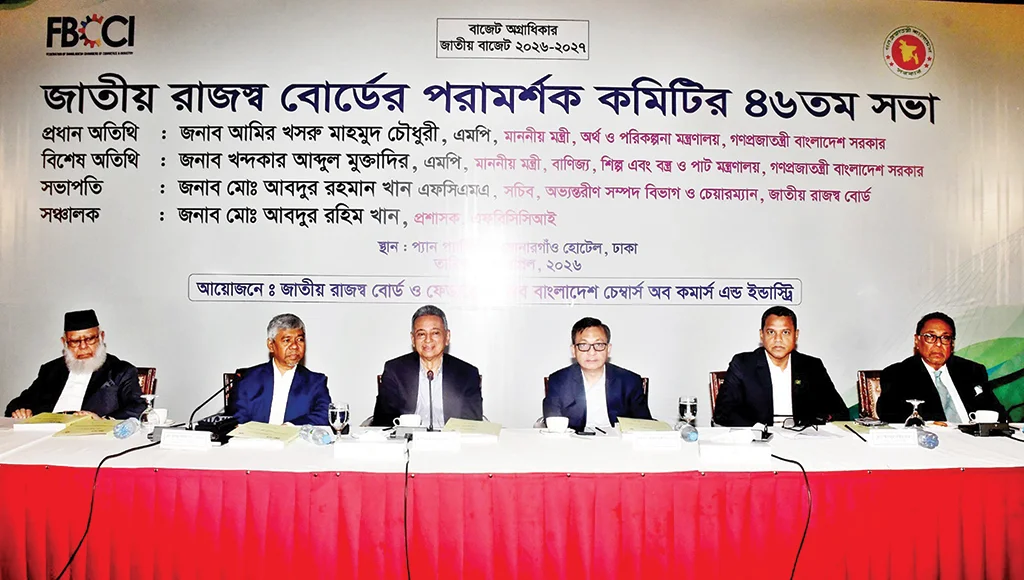
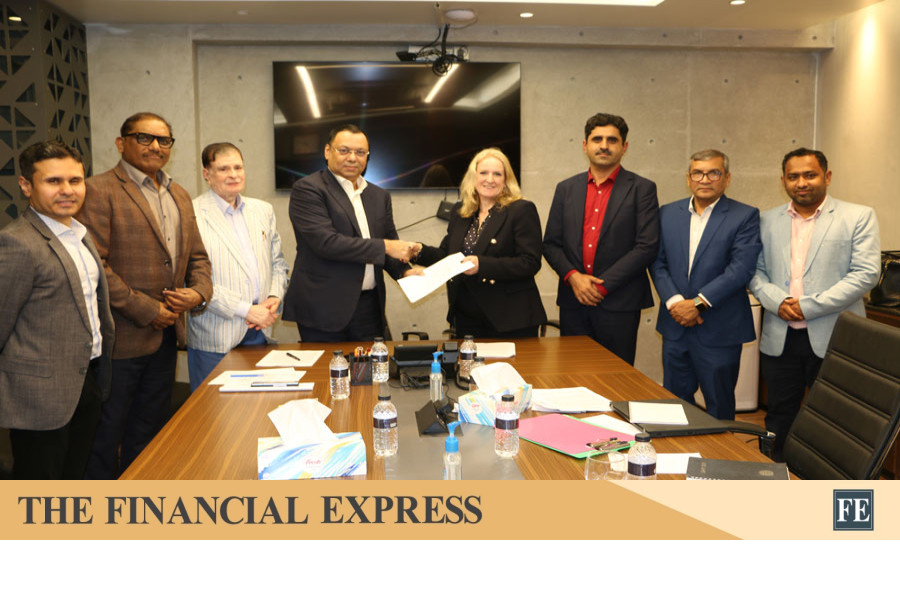
Finance minister Amir Khasru Mahmud Chowdhury and commerce minister Khandakar Abdul Muktadir, among others, are present at a meeting of the National Board of Revenue at a hotel in the capital on Wednesday. | Press release
Finance minister Amir Khasru Mahmud Chowdhury on Wednesday said that the government’s maiden budget would likely fall short of providing tax breaks demanded by business community during these ‘difficult times.’
However, he assured that the legal, institutional and bureaucratic obstacles to doing business and additional costs they impose on business would be removed soon.
He made the remarks at the 46th consultative committee meeting of the National Board of Revenue at a hotel in the capital.
The Federation of Bangladesh Chambers of Commerce and Industry organised the meeting with the presence of major trade bodies of the country. Bangladeshtravel guide
At the meeting, the FBCCI proposed raising the tax-free income threshold to Tk 5 lakh as part of a broader set of recommendations aimed at ensuring macroeconomic stability and to Tk 5.5 lakh for women.
FBCCI administrator Md Abdur Rahim Khan presented the recommendations, highlighting prevailing global and domestic economic challenges, including geopolitical tensions and Bangladesh’s impending graduation from least developed country status.
The apex trade body also called for reducing the corporate tax rate for non-listed companies from 27.5 per cent to 25 per cent, with a long-term target of bringing it down to between 20 and 22 per cent.
It also suggested lowering the minimum tax rate to 0.5 per cent from 1 per cent, with a plan for gradual withdrawal.
It urged the government to reduce advance tax on imported raw materials from 2 per cent to 1 per cent and introducing electronic invoicing systems to enhance transparency and compliance.
The FBCCI emphasised the importance of ensuring the independence of the Bangladesh Bank to strengthen regulatory oversight.
Finance minister Khasru said that while the administration was interested in providing tax benefits, current economic constraints meant such incentives might not be feasible at present.
Instead, he urged businesses to determine specific areas where red tape or rising costs were hindering operations, promising that the government would step in to remove those barriers.
Responding to businesses’ complaint about a 40 per cent rise in port handling charges, the minister said that the claim was correct and that he also opposed the increase.
He questioned the basis for the 40 per cent hike in the charges, saying there was no justification for it.
Khasru also said that corruption at Chattogram Port and other ports added to the cost of doing business, and urged stakeholders to report the issues so that the government could immediately provide solutions, promising within three months.
‘Just inform me where you are being hindered in terms of ease of doing business. I would directly provide solutions within the next three months,’ he added.
The finance minister also said that the economy would need a ‘push on’ for two years to recover from the current situation, including the ongoing conflict in the Middle East.
‘I have told all multilateral bodies, including the International Monetary Fund and the World Bank, that we would need time to recover from where the economy of Bangladesh has been driven today,’ he added.
He said that tax-exemption facilities would be provided to all sectors with export potential, such as the readymade garment sector.
‘Although the RMG sector in Bangladesh is very successful, other sectors such as gold and diamond industries are lagging behind. From now on, if any potential export sector is proposed, we would provide facilities equivalent to the garment industry,’ he added.
Regarding the upcoming budget, he said that a larger budget would be presented in the next financial year, with an emphasis on high-quality infrastructure investment.
However, he said that they would give priority to effective and productive investments instead of unnecessary mega projects.
‘Bangladesh’s fragile economy requires time, higher spending and sustained policy support to recover,’ he added, saying that an expansionary budget was essential to accelerate poverty reduction and stimulate investment.
The adviser noted that the current government was only two months into office but had already faced substantial external pressures, particularly due to the Middle East conflict, which has forced an additional expenditure of almost $4 billion.
To stabilise the economy, the government has sought additional time from the International Monetary Fund, requesting what he described as a ‘two-year cushion.’
‘We have told the IMF that we need a two-year cushion. From the third year, the economy will begin to regain momentum,’ he said, explaining that the cushion referred to a buffer period to withstand economic shocks and restore stability.
On revenue mobilisation, he highlighted plans for comprehensive digitalisation, including initiatives such as ‘one citizen, one card’ and a unified digital wallet system.
According to finance ministry officials, the upcoming budget is expected to exceed Tk 9 lakh crore, significantly higher than the Tk 7.90 lakh crore for the current financial year.
At the event, the businesses said that small industries in the country were going through a difficult time due to VAT burden, urging the government to step forward to save these industries.
In his speech as special guest, commerce minister Khandakar Abdul Muktadir said that they would take the initiatives to align with the government’s broader strategy to jumpstart the economy by revitalising struggling industrial sectors through incorporating private sector proposals in the upcoming national budget.
He also said that high bank interest rates and the ongoing energy crisis were major barriers to investment and business sustainability.
He emphasised reducing logistics costs and improving public debt management to strengthen long-term economic stability.
Calling for a change in mindset among business leaders, he also stressed the importance of increasing the country’s tax-to-GDP ratio, noting that taxpayers benefitted from state-provided security and infrastructure.
NBR chairman Abdur Rahman Khan said that Bangladesh’s economic growth was closely tied to the success of its business community, reaffirming the government’s commitment to creating a more enabling environment for private sector expansion. Bangladeshtravel guide
‘Ongoing budgetary measures would focus on rationalising tariffs and taxes to strengthen the competitiveness of local industries,’ he said.
The revenue authority is working to identify and remove specific regulatory barriers that hinder business operations, he said, adding that they would address each issue individually to ensure regulations do not become obstacles.
Businesses from major trade bodies and local chambers also presented their proposals for the upcoming budget at the event.
Staff Correspondent 29 April, 2026, 23:19
Finance minister Amir Khasru Mahmud Chowdhury and commerce minister Khandakar Abdul Muktadir, among others, are present at a meeting of the National Board of Revenue at a hotel in the capital on Wednesday. | Press release
Finance minister Amir Khasru Mahmud Chowdhury on Wednesday said that the government’s maiden budget would likely fall short of providing tax breaks demanded by business community during these ‘difficult times.’
However, he assured that the legal, institutional and bureaucratic obstacles to doing business and additional costs they impose on business would be removed soon.
He made the remarks at the 46th consultative committee meeting of the National Board of Revenue at a hotel in the capital.
The Federation of Bangladesh Chambers of Commerce and Industry organised the meeting with the presence of major trade bodies of the country. Bangladeshtravel guide
At the meeting, the FBCCI proposed raising the tax-free income threshold to Tk 5 lakh as part of a broader set of recommendations aimed at ensuring macroeconomic stability and to Tk 5.5 lakh for women.
FBCCI administrator Md Abdur Rahim Khan presented the recommendations, highlighting prevailing global and domestic economic challenges, including geopolitical tensions and Bangladesh’s impending graduation from least developed country status.
The apex trade body also called for reducing the corporate tax rate for non-listed companies from 27.5 per cent to 25 per cent, with a long-term target of bringing it down to between 20 and 22 per cent.
It also suggested lowering the minimum tax rate to 0.5 per cent from 1 per cent, with a plan for gradual withdrawal.
It urged the government to reduce advance tax on imported raw materials from 2 per cent to 1 per cent and introducing electronic invoicing systems to enhance transparency and compliance.
The FBCCI emphasised the importance of ensuring the independence of the Bangladesh Bank to strengthen regulatory oversight.
Finance minister Khasru said that while the administration was interested in providing tax benefits, current economic constraints meant such incentives might not be feasible at present.
Instead, he urged businesses to determine specific areas where red tape or rising costs were hindering operations, promising that the government would step in to remove those barriers.
Responding to businesses’ complaint about a 40 per cent rise in port handling charges, the minister said that the claim was correct and that he also opposed the increase.
He questioned the basis for the 40 per cent hike in the charges, saying there was no justification for it.
Khasru also said that corruption at Chattogram Port and other ports added to the cost of doing business, and urged stakeholders to report the issues so that the government could immediately provide solutions, promising within three months.
‘Just inform me where you are being hindered in terms of ease of doing business. I would directly provide solutions within the next three months,’ he added.
The finance minister also said that the economy would need a ‘push on’ for two years to recover from the current situation, including the ongoing conflict in the Middle East.
‘I have told all multilateral bodies, including the International Monetary Fund and the World Bank, that we would need time to recover from where the economy of Bangladesh has been driven today,’ he added.
He said that tax-exemption facilities would be provided to all sectors with export potential, such as the readymade garment sector.
‘Although the RMG sector in Bangladesh is very successful, other sectors such as gold and diamond industries are lagging behind. From now on, if any potential export sector is proposed, we would provide facilities equivalent to the garment industry,’ he added.
Regarding the upcoming budget, he said that a larger budget would be presented in the next financial year, with an emphasis on high-quality infrastructure investment.
However, he said that they would give priority to effective and productive investments instead of unnecessary mega projects.
‘Bangladesh’s fragile economy requires time, higher spending and sustained policy support to recover,’ he added, saying that an expansionary budget was essential to accelerate poverty reduction and stimulate investment.
The adviser noted that the current government was only two months into office but had already faced substantial external pressures, particularly due to the Middle East conflict, which has forced an additional expenditure of almost $4 billion.
To stabilise the economy, the government has sought additional time from the International Monetary Fund, requesting what he described as a ‘two-year cushion.’
‘We have told the IMF that we need a two-year cushion. From the third year, the economy will begin to regain momentum,’ he said, explaining that the cushion referred to a buffer period to withstand economic shocks and restore stability.
On revenue mobilisation, he highlighted plans for comprehensive digitalisation, including initiatives such as ‘one citizen, one card’ and a unified digital wallet system.
According to finance ministry officials, the upcoming budget is expected to exceed Tk 9 lakh crore, significantly higher than the Tk 7.90 lakh crore for the current financial year.
At the event, the businesses said that small industries in the country were going through a difficult time due to VAT burden, urging the government to step forward to save these industries.
In his speech as special guest, commerce minister Khandakar Abdul Muktadir said that they would take the initiatives to align with the government’s broader strategy to jumpstart the economy by revitalising struggling industrial sectors through incorporating private sector proposals in the upcoming national budget.
He also said that high bank interest rates and the ongoing energy crisis were major barriers to investment and business sustainability.
He emphasised reducing logistics costs and improving public debt management to strengthen long-term economic stability.
Calling for a change in mindset among business leaders, he also stressed the importance of increasing the country’s tax-to-GDP ratio, noting that taxpayers benefitted from state-provided security and infrastructure.
NBR chairman Abdur Rahman Khan said that Bangladesh’s economic growth was closely tied to the success of its business community, reaffirming the government’s commitment to creating a more enabling environment for private sector expansion. Bangladeshtravel guide
‘Ongoing budgetary measures would focus on rationalising tariffs and taxes to strengthen the competitiveness of local industries,’ he said.
The revenue authority is working to identify and remove specific regulatory barriers that hinder business operations, he said, adding that they would address each issue individually to ensure regulations do not become obstacles.
Businesses from major trade bodies and local chambers also presented their proposals for the upcoming budget at the event.