Home Watch Videos Wars Login

[🇧🇩] Forming Election Commission/Conducting Elections

[🇧🇩] Forming Election Commission/Conducting Elections
279
6K
More threads by Saif

G Bangladesh Defense

Election roadmap to thwart all conspiracies: BNP
UNB
Published :
Dec 04, 2024 21:33
Updated :
Dec 04, 2024 21:33

1733364397806.webp


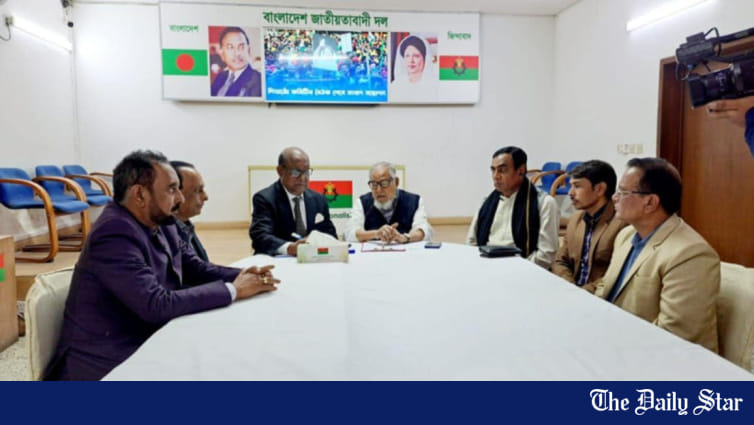
Once the roadmap for the next national election is announced, no one would dare to conspire anymore against Bangladesh, BNP told the interim government on Wednesday.

“We have told (the government) to implement a reform agenda very quickly and announce a roadmap for the election. If people get the roadmap and become election-oriented, no one will dare to hatch conspiracies that you are seeing now,” said BNP standing committee member Khandaker Mosharraf Hossain.

He was talking to reporters after a meeting between Chief Adviser Dr Muhammad Yunus and representatives from different political parties including BNP and Bangladesh Jamaat-e-Islami at the Foreign Service Academy in the capital.

Mosharraf said the responsibility of this interim government is to protect the country’s independence and sovereignty, and establish democracy.

He mentioned that everyone at the meeting said that they are unanimously against the conspiracies being hatched by the fallen government against the country from abroad.

“The fascist government was ousted through the July-August mass uprising. We all together—the students and people of this country—will also confront their conspiracies,” he said.

A five-member BNP delegation, led by Khandaker Mosharraf Hossain, joined the meeting. The four others were Dr Abdul Moyeen Khan, Nazrul Islam Khan, Amir Khosru Mahmud Chowdhury and Dr AZM Zahid Hossain.

Mosharraf said the chief adviser held talks with political parties to seek cooperation in protecting the existence of Bangladesh as different political and social issues are created here from a neighbouring country.​
 
Analyze

Analyze Post

Add your ideas here:
Highlight Cite Fact Check Respond

BNP reveals 10-point proposal for electoral reforms
United News of Bangladesh . Dhaka 09 December, 2024, 21:34

1733793067036.webp

Representational image | Collected photo

The Bangladesh Nationalist Party on Monday called for adopting the latest technology in the task to update the voter list, instead of the traditional door-to-door campaigning ahead of the 12th national parliament election.

‘We want a true and accurate voter list to be prepared. Instead of a door-to-door campaign, we propose using computing, and AI [artificial intelligence] to do the job,’ BNP standing committee member Abdul Moyeen Khan said at a press conference.

BNP’s committee on election commission arranged the press conference at the party chairperson’s Gulshan office in Dhaka.

Moyeen said that if a computerised upgraded system could be adopted, it would help update the voter list accurately without wasting time. ‘A computerised system can easily identify when someone turns 18 and automatically remove the names of those who have passed away. There’s no need for a door-to-door campaign to update the voter list by checking all 18 crore people of Bangladesh.’

The BNP leader also presented a 10-point reform proposal, including amending the RPO, some rules in election management, revising the code of conduct for political parties and candidates, changes to the policy for the registration of political parties, upgrading the election observation policy, increasing the capacity of the election commission, and a separate electoral code of conduct for the media.

He said that they had already submitted those reform proposals to the government-formed election reform commission. ‘We prepared reform proposals aiming to create a level playing field so that people can truly cast their votes and elect their real representatives, not dummy or fake representatives.’

Another BNP standing committee member Nazrul Islam Khan said that the government could arrange the national election quickly by implementing the proposals their party had made.

‘We have talked about strengthening the election commission, setting up an election secretariat, and giving them sufficient powers. We also proposed amending and reforming the existing laws... These do not require much time,’ he said.

BNP standing committee member Salahuddin Ahmed suggested that it should not take more than three or four months to arrange the election by carrying out the necessary reforms related to the election process.​
 
Analyze

Analyze Post

Add your ideas here:
Highlight Cite Fact Check Respond

CA’s polls announcement: BNP seeks specifics, Jamaat okay to wait

BNP leaders welcomed Chief Adviser Prof Muhammad Yunus's announcement on the timeline of national elections but urged a clear and actionable roadmap.

While acknowledging the statement as a step forward, they said that vague ideas cannot replace a structured plan to ensure credible and participatory polls.

Speaking to The Daily Star, BNP Standing Committee Member Amir Khasru Mahmud Chowdhury said, "What the chief adviser said about the timing of the election cannot be described as a roadmap. He [Yunus] has merely provided an idea of when the election might take place."

Meanwhile, Jamaat-e-Islami, in reaction, expressed conditional support for the timeline.

Jamaat's Secretary General Mia Golam Parwar said, "Despite our initial reluctance regarding the delay, we will remain patient as long as the chief adviser honours his commitment to hold the elections.

"In that case, we are ready to cooperate with him," he told The Daily Star.

Salahuddin Ahmed, another BNP standing committee member, urged the interim government to unveil a specific roadmap, including the date.

The party's Standing Committee Member Khandaker Mosharraf said the sooner the election is held, the better it will be for the interim government and the people of the country.

After the fall of the Awami League government on August 5, Prof Yunus delivered a total of five speeches, which BNP leaders criticised for lacking a clear election roadmap.

Some BNP leaders warned that delays could invite conspiracies and harm the election process.

"The country's economy is in a dire state and soaring commodity prices are suffocating people. Until an elected government is in place, these issues cannot be resolved," party's Standing Committee Member Mirza Abbas told reporters after paying tribute to Ziaur Rahman on the occasion of Victory Day.

Attending a programme, BNP Joint Secretary General Syed Emran Saleh Prince said, "Wasting time in the name of reforms will only create opportunities for domestic and foreign conspirators."

Speaking on condition of anonymity, a Standing Committee member said, "Following Tarique Rahman's speech on Sunday, we are waiting for the government's response. Today, the chief adviser's speech provided an idea about the timing of the polls but did not specify a date or outline the process. Once our secretary general is fit, we will announce the party's stance."

Besides, in reaction to the chief adviser's speech, leaders of the Gono Odhikar Parishad, Communist Party of Bangladesh and Ganosamhati Andolon also said the announcement is an indication of progress, but it lacks clarity and details.

Rashed Khan, general secretary of the Gono Odhikar Parishad, said, "This is not a formal roadmap; it's merely a verbal timeframe addressed to the nation by the chief adviser today. It lacks a specific plan for the national election.

"In my opinion, this announcement seems more like a consolation statement for the political parties that have been demanding an election date or a concrete roadmap."

Ruhin Hossain Prince, general secretary of the Communist Party of Bangladesh, said, "In my view, it is a positive step. However, in his speech, he used terms like 'if,' 'but,' and 'maybe,' which failed to address the confusion surrounding the timing of the elections. At the very least, he could have announced a specific timeframe, such as a month, which was the expectation of the citizens. This expectation remained unfulfilled."

He further said, "...currently, we need only minimal reforms to conduct a national election. If they engage in discussions with political parties, it should be possible to hold a free and fair election by 2025, even after implementing necessary reforms."

The chief adviser and his advisory panel should take this route to eliminate all uncertainties, Ruhin added.

Zonayed Saki, chief coordinator of the Ganosamhati Andolon, said, "Primarily, we welcome the indication given by the chief adviser. We expect them to hold discussions with stakeholders and present a more specific roadmap."

"Such discussions with political stakeholders could help finalise the election dates, outline required reforms, and establish a detailed plan. It would also contribute to achieving political stability.​
 
Analyze

Analyze Post

Add your ideas here:
Highlight Cite Fact Check Respond

Chief adviser announces election timeline
All must cooperate to ensure timely reforms and fair elections

1734393436129.webp

VISUAL: STAR

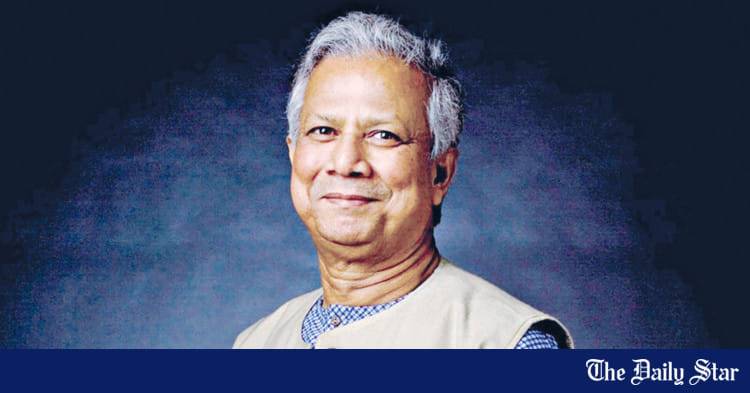
We congratulate Chief Adviser Prof Muhammad Yunus on his timely, appropriate, and clear guidance to the nation during his Victory Day speech. At a time when questions were being raised about the interim government's reform plans and the holding of elections, his address was very well-thought-out.

Prof Yunus addressed the issue of inflation, noting how challenging it has been to tackle due to the actions of the previous regime during its 15-year tenure. As more details have emerged about the former regime's activities—including the vast amounts of wealth it laundered abroad—the fragile state of the economy has become increasingly apparent. He also underscored the importance of holding those responsible for the July-August killings accountable. While emphasising the need for justice, he stressed the importance of ensuring transparent and fair trials to avoid any doubts about the integrity of the justice process.

Regarding reforms, the chief adviser expressed optimism that various commissions would deliver their recommendations on time. He specifically updated the public on the Election Commission, which has already begun preparations for the next elections. Prof Yunus voiced his dismay over how countless young people were denied their voting rights in the past three elections. To address this, he highlighted the need for an accurate voter list to restore citizens' right to vote. Additionally, he announced plans to create a mechanism enabling Bangladeshis living abroad to participate in the elections—an initiative long discussed but never implemented.

Prof Yunus urged all stakeholders to grant the government sufficient time to implement reforms aimed at improving the electoral process. He suggested that elections could be held by late 2025 if the voter list is accurately prepared with minimal reforms. However, if broader reforms requiring national consensus are pursued, the timeline could extend to the first half of 2026. Given that the Election Commission has already been empowered to prepare an accurate voter list and oversee election reforms, we recommend that elections be held by late 2025 or early 2026, as this aligns with the traditional election timeline in Bangladesh.

Ultimately, only an elected government can provide long-term stability for the nation. Prof Yunus has outlined a clear timeline for the next elections and has rightly emphasised that this timeline should be determined through political consensus. To that end, he announced the formation of a crucial commission, which he will personally lead, to foster consensus on reforms.

The Jamaat-e-Islami has already expressed its position regarding the timeline, and we hope other parties will also follow suit. We call on all political parties, citizens, and other stakeholders to cooperate with the interim government in reaching a political consensus on reforms and the election timeline, prioritising the nation's interests above all else.​
 
Analyze

Analyze Post

Add your ideas here:
Highlight Cite Fact Check Respond

Election to boost business confidence: entrepreneurs

1734393737728.webp


Business leaders, economists and professionals have emphasised that an elected government is essential for restoring confidence in the business community, stabilising law and order, and revitalising the business and investment climate.

They also welcomed the speech delivered by Chief Adviser Muhammad Yunus yesterday as he assured that general elections would be held by the end of 2025 or in early 2026, subject to the completion of vital reforms.

Yunus made the much-anticipated announcement about when the interim government, which assumed power in early August, may organise national elections in his address to the nation on Victory Day.

Members of the business community also echoed that vital reforms in different sectors, which the interim government is currently working on, must be completed before holding the next general election.

Bangladesh's economy has been suffering from a slowdown in recent years, depressed by high inflation, reducing purchasing power, rising interest rates, and slowing private sector credit growth. Imports of capital machinery, another key indicator of private investment and job creation, have also been on the downturn.

In October, private sector credit growth slowed to 8.3 percent year-on-year from 10.09 percent. Meanwhile, letter of credit openings for capital machinery imports dipped 33 percent year-on-year to $582 million in the first four months of this fiscal year, according to the Bangladesh Bank data.

"It is better to hold the elections after completing at least the pressing reforms. Of course, free and fair elections will stabilise the law-and-order situation and help restore confidence to businessmen," said Faruque Hassan, a former president of the Bangladesh Garment Manufacturers and Exporters Association.

Abdul Hai Sarker, chairman of the Bangladesh Association of Banks, said the chief adviser's targeted timeline for elections allowed room to implement important reforms.

Sarker said it is generally accepted that businessmen are not critical of the timeline, adding that the move would restore confidence to businessmen.

"The law-and-order situation will have to be controlled gradually. These tasks will be easier for an elected government," Sarker said.

Mohammad Hatem, president of the Bangladesh Knitwear Manufacturers and Exporters Association, echoed Sarker's views.

"State affairs must be managed by an elected government," Hatem said.

However, staging the elections may require more time if reforms take longer to implement.

"I want to say: first reforms, then elections," Hatem told The Daily Star, adding that reforms were ignored during the past government's 15-year tenure.

Kamran T Rahman, president of the Metropolitan Chamber of Commerce and Industry, said businessmen want and expect the interim government to organise free and fair elections.

Mohammed Amirul Haque, managing director and chief executive officer of Premier Cement Mills, said the chief adviser's speech showed a way forward and was very prudent.

"A stable government is very much needed through the people's mandate," Haque said.

The growth of the economy can be ensured by holding free and fair elections, he said, adding that people expect the interim government to stage free and fair elections.

Zaved Akhtar, president of the Foreign Investors' Chamber of Commerce & Industry, said a democratically elected government can foster a good business and investment environment in Bangladesh by implementing some reforms recommended by the interim government.

It also said it is looking forward to discernible improvements from the Bangladesh Investment Development Authority, National Board of Revenue and Bangladesh Bank in terms of policies, processes and systems.

"We believe this can bear fruits for the long term and have a far-reaching impact on fostering a positive investment climate in Bangladesh," he said, adding that longer-term investment and trade policies would also bolster business confidence.

Syed Mahbubur Rahman, a former chairman of the Association of Bankers, Bangladesh, said that it is difficult for an interim government to implement many reforms.

"Entrepreneurs may wait and see how the elections are going to be held. Afterwards, they may invest. The country's economy is going through a rough patch. The year 2025 is going to be a difficult year in terms of the economic situation," he said.

"The projected amount of revenue may not be collected, so the government will go to banks to borrow. Gross domestic product growth may also slow, so money flow to the banking sector may shrink. This may create a liquidity pressure in the banking sector."

Mustafizur Rahman, a distinguished fellow at the Centre for Policy Dialogue, said economic uncertainty will be removed through fair elections while creating a sense of positivity.

"At the same time, the continuation of reforms is similarly important. It is expected that the next elected government will continue the reforms and implement those sincerely."

It is also expected that the political leaders will come to an agreement on the durability and certainty of reform activities, the economist also said.

"Otherwise, the establishment of good governance and transformation to democracy to create an inclusive society and free media might not be possible. The government will have to ensure the sustainability of the reforms," he added.

It is good that the chief adviser set a timeframe, he said, reasoning that it would give political parties the time to reach a consensus on different issues.

Mohammad Abdur Razzaque, chairman of Research and Policy Integration for Development (RAPID), said major economic challenges continue to persist despite the interim government's measures.

"Vital reforms should be implemented on a priority basis and the next elected government should continue the reforms."

A democratic transition is very important, he said, adding that a fair voter list is also important.​
 
Analyze

Analyze Post

Add your ideas here:
Highlight Cite Fact Check Respond

Members Online

Latest Posts

Back
 
G
O
 
H
O
M
E