Bangladesh Defense
Saif
Senior Member
- Jan 24, 2024
- 21,435
- 9,743
- Nation

- Residence
- Axis Group


Politicians must be open to accepting electoral defeats
Discard the mindset that ‘the election is only fair if I win’
Politicians must be open to accepting electoral defeats
Discard the mindset that ‘the election is only fair if I win’

VISUAL: BIPLOB CHAKROBORTY
Three things mark the distinctiveness of the upcoming national election: the resurgence of Jamaat-e-Islami, the rise of Tarique Rahman as a central personality of present-day politics, and something that was unthinkable before August 2024—the sidelining of Awami League from the present election.
Ever since its role in our Liberation War, in which it opposed the birth of Bangladesh and assisted the Pakistan Army in committing genocide and al Badr and al Shams in killing our intellectuals, Jamaat’s presence in the country’s politics has been a deeply controversial matter. The fact that it never apologised for its role and never sought forgiveness from the people of Bangladesh remains something that made its acceptability nearly impossible. Its latest position, as expressed by its chief, Dr Shafiqur Rahman, is that “if we have committed any mistake since 1947 (the year of birth of Pakistan, which Jamaat, led by its founder Abul A’la Maududi, had opposed) till date, we apologise for it.” The party’s refusal to refer to the events of 1971 and apologise for opposing our independence struggle and acting against the ordinary and freedom-loving people remains most tragic.
However, in spite of its past, Jamaat today is a significant presence in the upcoming election. Opinion polls show that it is likely to emerge as the second biggest party in the next parliament. How did it navigate through such a shameful legacy and emerge with such a strength?
The most important reason is its use of the rising consciousness of Muslim identity among the majority of Bangladeshis, and Jamaat positioning itself to be the most authentic representative of that. The utter failure of the two centrist parties—Awami League (AL) in particular and the Bangladesh Nationalist Party (BNP) to some extent—to make a deep, lasting impact of nationalistic and secular politics in voters’ minds created the space for Jamaat’s resurgence. Together, these two parties were in power since 1991, and their performance only distanced the people from them. The corrupt, exploitative, and oppressive role of the Awami League during its 15-plus years of rule that ended in August 2024—a party whose legitimacy and appeal centred around its role in 1971—greatly opened up further space for Jamaat to strengthen its position in our politics.
Jamaat’s ideological consistency in the use of religion, its organisational ability, and the commitment of its grassroots workers have contributed immensely to its present strength. The way its student activists penetrated Chhatra League over the years, and assumed its second-tier leadership roles in some cases, shows the effectiveness of the party’s long-term planning and organisational ability. Shibir’s (Jamaat’s student wing) victory in the student union elections at five public universities that took place recently is evidence of how successful their efforts have been. It is also reported that Jamaat’s grassroots female members have been quite active and effective in their home-to-home campaigning for the party.
In this connection, Jamaat’s electoral ally National Citizen Party (NCP) also deserves a mention. A party that emerged from the July uprising, NCP entered electoral politics with huge expectations but then found itself aligning with the Jamaat-led bloc in a decision that could be consequential for the party’s future, both immediate and distant.
The second unique aspect of this election is the rise of Tarique Rahman. He was the heir apparent from the start, but his phenomenal rise is something quite stunning. The way he kept his party operational from London for so many years while his mother was incarcerated speaks volumes of his ability to use modern communication facilities to keep a political party motivated and, more importantly, disciplined. He was well-known for his connection with local-level leadership through mobile and internet, which young BNP activists at the district and upazila levels found to be a matter of pride. Numerous attempts by the AL to split the party or to lure some important leaders away from it were thwarted by Tarique Rahman’s direct communication and persuasive abilities. Fifteen years is a long period in any country’s politics, especially Bangladesh, and the fact that BNP was kept primarily intact (despite being relentlessly suppressed by the AL government) testifies to his organising capacity.
Many felt that he took too long to return to Bangladesh after the fall of the Awami League government, and that BNP would have been greatly strengthened if he had been here much earlier. Late as he might have come, his return electrified the party, energised the workers, and brought in a new confidence that was absent earlier. Warm acceptance by the public and the overall support exhibited by the huge gatherings in all his public appearances have made him a central factor in Bangladesh’s current electoral politics. So far, he has conducted himself with dignity and maturity. His speeches have been restrained and future-oriented. His detailed enunciation of what he plans to do if elected to power contrasts well with the rhetorical speeches of others. Whether he has been able to organise his party well to campaign effectively or not will be clear after the polls. But so far, he has successfully filled in the shoes of his late mother, whose janaza stood out as the most striking evidence of the love and respect she enjoyed and the sympathy that he has the possibility of inheriting.
The third feature of the upcoming election is the prevention of Awami League from participating in it. The party has not been banned, but its activities are. How could a party that has played such an important role in the birth of Bangladesh and has been a part of it for the last 55 years become so vulnerable as to be sidelined in such a crucial political event as an election?
Awami League’s present debacle has many contributing factors, including extrajudicial killings and forced disappearances, but mainly owes to its brutal killings in the streets of Dhaka and the rest of the country during the last six weeks of its rule. One incident illustrates it all. How could a young university student like Abu Sayed, completely unarmed, standing alone on a street away from other protesters, without posing any threat to anybody, let alone the police who were standing far away, be shot to death? Sheikh Hasina and her government lost everything—the people, credibility, and acceptability—and revealed the mindset of a vicious oppressor. This was further proven by the fact that instead of expressing regret and taking action against the perpetrators, the government fiddled, more than once, with the autopsy report and tried to justify its actions. Then followed the weeks of the killing of demonstrators, which created the ground for banning AL’s activities.
Which party AL voters will tilt towards on February 12 will perhaps have a decisive impact on the outcome of the polls.
There is, of course, an additional feature of this election: the eclipsing of Jatiya Party, which dominated politics under Gen HM Ershad up to 1990, and had the third place in all the elections since then.
Elections are always central to a country’s democratic march forward. But this year, the polls are far more crucial because Bangladesh urgently needs to restart its journey of stability, predictability, ending mobocracy, getting the direly needed investment, and public safety and security. All of these are expected to start with the installation of an elected parliament, accountable government, competent policymakers, and clarity of a vision as to where we are going.
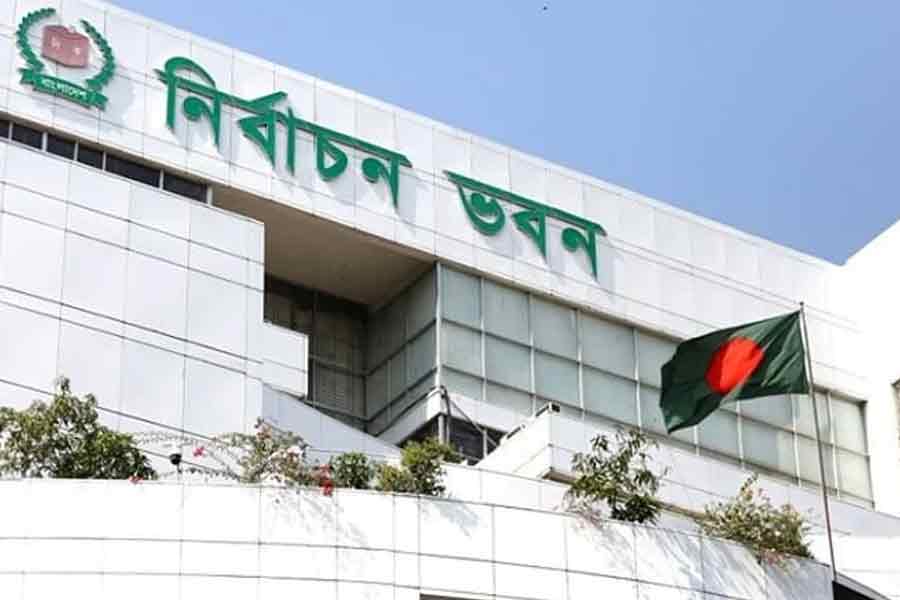
We conclude with a warning drawn from history: that while we are highly enthusiastic about elections, we are terribly reluctant about accepting their results when we lose. The losers are of two categories: individuals who fail to win, and the party that fails to win enough parliamentary seats to form the next government. It is the last category that usually questions the polls and destabilises the transition. We have seen it in all past elections, even under the caretaker system. As we summarised the tendency in a previous article, an election is only free and fair if we win but rigged if we lose! This tendency is something we must move away from. It is our ardent hope and genuine expectation that the result will be accepted with grace and dignity. If there are fact-based grounds for questioning, do so as per the rules laid down by the Election Commission. Do not create unnecessary chaos and disruptions. The country needs to move on urgently and peacefully.
Here’s to a free, fair, and peaceful election.
Mahfuz Anam is the editor and publisher of The Daily Star.
Discard the mindset that ‘the election is only fair if I win’
VISUAL: BIPLOB CHAKROBORTY
Three things mark the distinctiveness of the upcoming national election: the resurgence of Jamaat-e-Islami, the rise of Tarique Rahman as a central personality of present-day politics, and something that was unthinkable before August 2024—the sidelining of Awami League from the present election.
Ever since its role in our Liberation War, in which it opposed the birth of Bangladesh and assisted the Pakistan Army in committing genocide and al Badr and al Shams in killing our intellectuals, Jamaat’s presence in the country’s politics has been a deeply controversial matter. The fact that it never apologised for its role and never sought forgiveness from the people of Bangladesh remains something that made its acceptability nearly impossible. Its latest position, as expressed by its chief, Dr Shafiqur Rahman, is that “if we have committed any mistake since 1947 (the year of birth of Pakistan, which Jamaat, led by its founder Abul A’la Maududi, had opposed) till date, we apologise for it.” The party’s refusal to refer to the events of 1971 and apologise for opposing our independence struggle and acting against the ordinary and freedom-loving people remains most tragic.
However, in spite of its past, Jamaat today is a significant presence in the upcoming election. Opinion polls show that it is likely to emerge as the second biggest party in the next parliament. How did it navigate through such a shameful legacy and emerge with such a strength?
The most important reason is its use of the rising consciousness of Muslim identity among the majority of Bangladeshis, and Jamaat positioning itself to be the most authentic representative of that. The utter failure of the two centrist parties—Awami League (AL) in particular and the Bangladesh Nationalist Party (BNP) to some extent—to make a deep, lasting impact of nationalistic and secular politics in voters’ minds created the space for Jamaat’s resurgence. Together, these two parties were in power since 1991, and their performance only distanced the people from them. The corrupt, exploitative, and oppressive role of the Awami League during its 15-plus years of rule that ended in August 2024—a party whose legitimacy and appeal centred around its role in 1971—greatly opened up further space for Jamaat to strengthen its position in our politics.
Jamaat’s ideological consistency in the use of religion, its organisational ability, and the commitment of its grassroots workers have contributed immensely to its present strength. The way its student activists penetrated Chhatra League over the years, and assumed its second-tier leadership roles in some cases, shows the effectiveness of the party’s long-term planning and organisational ability. Shibir’s (Jamaat’s student wing) victory in the student union elections at five public universities that took place recently is evidence of how successful their efforts have been. It is also reported that Jamaat’s grassroots female members have been quite active and effective in their home-to-home campaigning for the party.
In this connection, Jamaat’s electoral ally National Citizen Party (NCP) also deserves a mention. A party that emerged from the July uprising, NCP entered electoral politics with huge expectations but then found itself aligning with the Jamaat-led bloc in a decision that could be consequential for the party’s future, both immediate and distant.
The second unique aspect of this election is the rise of Tarique Rahman. He was the heir apparent from the start, but his phenomenal rise is something quite stunning. The way he kept his party operational from London for so many years while his mother was incarcerated speaks volumes of his ability to use modern communication facilities to keep a political party motivated and, more importantly, disciplined. He was well-known for his connection with local-level leadership through mobile and internet, which young BNP activists at the district and upazila levels found to be a matter of pride. Numerous attempts by the AL to split the party or to lure some important leaders away from it were thwarted by Tarique Rahman’s direct communication and persuasive abilities. Fifteen years is a long period in any country’s politics, especially Bangladesh, and the fact that BNP was kept primarily intact (despite being relentlessly suppressed by the AL government) testifies to his organising capacity.
Many felt that he took too long to return to Bangladesh after the fall of the Awami League government, and that BNP would have been greatly strengthened if he had been here much earlier. Late as he might have come, his return electrified the party, energised the workers, and brought in a new confidence that was absent earlier. Warm acceptance by the public and the overall support exhibited by the huge gatherings in all his public appearances have made him a central factor in Bangladesh’s current electoral politics. So far, he has conducted himself with dignity and maturity. His speeches have been restrained and future-oriented. His detailed enunciation of what he plans to do if elected to power contrasts well with the rhetorical speeches of others. Whether he has been able to organise his party well to campaign effectively or not will be clear after the polls. But so far, he has successfully filled in the shoes of his late mother, whose janaza stood out as the most striking evidence of the love and respect she enjoyed and the sympathy that he has the possibility of inheriting.
The third feature of the upcoming election is the prevention of Awami League from participating in it. The party has not been banned, but its activities are. How could a party that has played such an important role in the birth of Bangladesh and has been a part of it for the last 55 years become so vulnerable as to be sidelined in such a crucial political event as an election?
Awami League’s present debacle has many contributing factors, including extrajudicial killings and forced disappearances, but mainly owes to its brutal killings in the streets of Dhaka and the rest of the country during the last six weeks of its rule. One incident illustrates it all. How could a young university student like Abu Sayed, completely unarmed, standing alone on a street away from other protesters, without posing any threat to anybody, let alone the police who were standing far away, be shot to death? Sheikh Hasina and her government lost everything—the people, credibility, and acceptability—and revealed the mindset of a vicious oppressor. This was further proven by the fact that instead of expressing regret and taking action against the perpetrators, the government fiddled, more than once, with the autopsy report and tried to justify its actions. Then followed the weeks of the killing of demonstrators, which created the ground for banning AL’s activities.
Which party AL voters will tilt towards on February 12 will perhaps have a decisive impact on the outcome of the polls.
There is, of course, an additional feature of this election: the eclipsing of Jatiya Party, which dominated politics under Gen HM Ershad up to 1990, and had the third place in all the elections since then.
Elections are always central to a country’s democratic march forward. But this year, the polls are far more crucial because Bangladesh urgently needs to restart its journey of stability, predictability, ending mobocracy, getting the direly needed investment, and public safety and security. All of these are expected to start with the installation of an elected parliament, accountable government, competent policymakers, and clarity of a vision as to where we are going.
We conclude with a warning drawn from history: that while we are highly enthusiastic about elections, we are terribly reluctant about accepting their results when we lose. The losers are of two categories: individuals who fail to win, and the party that fails to win enough parliamentary seats to form the next government. It is the last category that usually questions the polls and destabilises the transition. We have seen it in all past elections, even under the caretaker system. As we summarised the tendency in a previous article, an election is only free and fair if we win but rigged if we lose! This tendency is something we must move away from. It is our ardent hope and genuine expectation that the result will be accepted with grace and dignity. If there are fact-based grounds for questioning, do so as per the rules laid down by the Election Commission. Do not create unnecessary chaos and disruptions. The country needs to move on urgently and peacefully.
Here’s to a free, fair, and peaceful election.
Mahfuz Anam is the editor and publisher of The Daily Star.