Home Watch Videos Wars Movies Login

[🇧🇩] ICT Industry in Bangladesh

[🇧🇩] ICT Industry in Bangladesh
164
8K
More threads by Saif

G Bangladesh Defense

Asus launches 6 new laptops in Bangladesh

1715469573576.webp

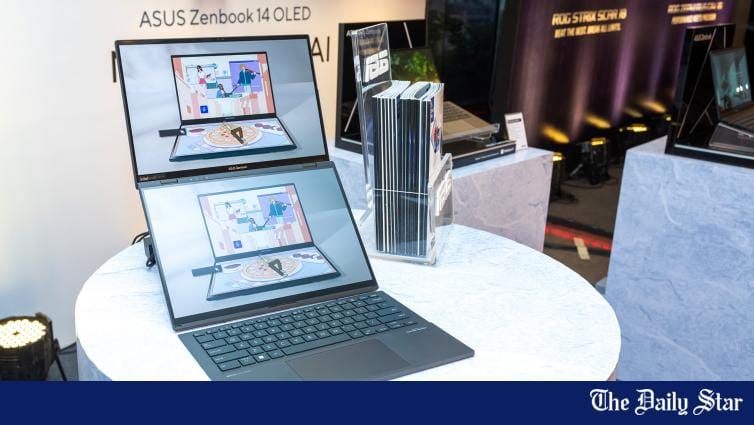
Asus has recently launched six new laptops in Bangladesh, including the new dual-screen Zenbook DUO (UX8406) model. Image: Asus

Asus has recently launched six new laptops in Bangladesh, including the new dual-screen Zenbook DUO (UX8406) model. The other laptops recently released are ZenBook 14 OLED (UX3405), ROG Zephyrus G14 (GA403), ROG Zephyrus G16 (GU605), ROG Strix G16 (G614), and ROG Strix SCAR 18 (G834).

ASUS Zenbook DUO (UX8406), Zenbook 14 OLED (UX3405)

ASUS Zenbook DUO (UX8406) comes with dual-screen 3K 120 Hz OLED displays, an Intel Core Ultra 9 processor, 1.35 kg of weight, and a detachable full-size keyboard, touchpad, and built-in kickstand.

Zenbook 14 OLED (UX3405) features an ASUS Lumina OLED touchscreen, an Intel Core Ultra 7 processor, a 75 Wh battery, and 1.2 kg of weight.

Zenbook DUO (UX8406) is priced at BDT 2,52,000 and Zenbook 14 OLED (UX3405) is priced at BDT 1,60,000.

ROG Zephyrus G14 (GA403), Zephyrus G16 (GU605)

ROG Zephyrus G14 (GA403) and Zephyrus G16 (GU605) are gaming laptops with AMD Ryzen 9 processor and Intel Core Ultra 7 processor respectively, as well as NVIDIA GeForce RTX 4060 to RTX4070 graphics, ROG Nebula OLED display, and in-built neural processing units (NPU).

ROG Zephyrus G14 (GA403) starts at BDT 2,80,000, and ROG Zephyrus G16 (GU605) is priced at BDT 3,62,000.

ROG Strix G16 (G614), ROG Strix SCAR 18 (G834)

ROG Strix G16 (G614) is another gaming laptop with 14th Gen Intel Core i9 processor and NVIDIA GeForce RTX 4060 graphics. It also has a 16-inch display.

ROG Strix SCAR 18 (G834) is a high-end gaming laptop with 14th Gen Intel Core i9 processor, GeForce RTX 4090 graphics, 240 Hz 18-inch display, and advanced cooling technology for sustained performance.

ROG Strix G16 (G614) is priced at BDT 2,56,000 and ROG Strix SCAR 18 (G834) is priced at BDT 5,60,000.

According to Asus, these laptops are now available for purchase across authorised ASUS retailers in Bangladesh.​
 
Analyze

Analyze Post

Add your ideas here:
Highlight Cite Respond
  • Like (+1)
Reactions: Bilal9

Bangladesh saw three internet shutdowns last year: report

1715814767179.webp


Bangladesh saw three internet shutdowns last year, and all of those were executed to crack down on dissent, according to Access Now, an organisation advocating for digital civil rights.

The organisation said this in their latest report, titled "Shrinking Democracy, Growing Violence", which was published on its website today. It said globally internet shutdowns have been used by authorities as a tool to enable and exacerbate violence.

India topped the list with 116 internet shutdowns last year.

"Governments continued to shut down the internet and critical digital communication platforms to muzzle expression, block access to life-saving information, and cover up heinous crimes against humanity," said the report.

It said governments intentionally disrupted internet access to coincide with important national events such as protests and political instability, elections etc with one aim -- to restrict the flow of information and control the narrative.

"Despite the fact that these shutdowns flagrantly violate human rights enshrined in national, regional, and international frameworks, governments deliberately imposed shutdown to advance their own political interests -- harming people and communities and endangering lives," it added.

Bangladesh has experienced shutdowns in five or more consecutive years since 2016, found the report.​
 
Analyze

Analyze Post

Add your ideas here:
Highlight Cite Respond
  • Sad (0)
Reactions: Bilal9

Homegrown apps fail to take off

1715987101633.webp


While it is not an uncommon sight to see people typing messages in Bangla on their smartphones, the familiar colours and user interface make it obvious that they are not using communication apps belonging to local companies.

While mobile financial service providers and nearly all banks have gained traction in digital services in Bangladesh, the same cannot be said of communications apps built by the government or private entities.

In early 2020, a homegrown mobile application with capability to send messages and make voice calls was launched in Bangladesh. At the inauguration ceremony of the app, named 'Kotha', Zunaid Ahmed Palak, state minister for ICT, said it would be Bangladesh's Facebook, PayPal, Netflix, Twitter, and WhatsApp.

But now, almost none remembers the app. Although Kotha has good ratings on Google's Play Store, it has less than 2 lakh downloads.

However, Mahboob Zaman, chairman of Kotha Technologies, said the growth of the app is somewhat steady given their strategy. "We were trying to do organic marketing. Besides, research and development requires huge investment. We are trying to find an investor."

So far, the app has 4 lakh registered users, according to the company.

Sumon Ahmed Sabir, a technology expert, said copying something that has numerous versions, which local apps tend to do, is unlikely to lead to popularity. "Popular apps come with diversity, flexibility, efficiency and global expectancy that cannot be replicated."

"Besides, local apps cannot compete with these platforms due to the scale of their research and investment. Once a sector is monopolistic, it's not easy to break."

The government has also taken the initiative making communication apps at the cost of hundreds of crores, but all of them failed to attract audiences.

The government-funded app 'Baithak', a video-conferencing platform enabling virtual meetings and webinars similar to Zoom, was designed for government officials, but got very little response.

'Alapon', a Viber-like app developed by the government's ICT Division with the aim to streamline messaging and file exchange processes for government officials, was launched in 2016. Eight years later, the app no longer exists.

"Privacy is definitely a concern, if not a major one," Sabir added.

Meanwhile, the use of social media platforms and communication apps in Bangladesh developed by the global tech giants boomed in the past decade and made it one of the largest markets for them in terms of audiences. The top communication apps in terms of users are WhatsApp, Messenger, and Imo.

Facebook has a huge chunk of the audience, with nearly 53 million users in the country, which places Bangladesh among the top 10 Facebook-crazed nations as of January 2024, according to Statista, a German online platform that specialises in data gathering and visualisation.

Facebook also offers Messenger, integrating it as a standalone app for messaging, voice calls, and video chats.

There were more than 6.3 crore Facebook users in Bangladesh in February 2024 that has a population of about 17 crore, according to management and analytics platform NapoleonCat. It put the number of Messenger users at 5.7 crore.

When asked how many people in Bangladesh use WhatsApp, Meta, the parent company of WhatsApp, Facebook and Messenger, said it is unable to share the country-specific data.

Imo is also popular in rural Bangladesh due to low data usage, simplicity, and free voice and video calls. In 2023, a staggering 4 million new users from the country were integrated into Imo's network, the company said.

That took its monthly users in Bangladesh to 50 million, accounting for a quarter of its 200 million total users. Imo users in the country made 91.6 billion audio and video calls in 2023, among which 35.8 billion calls were international.

Bangladeshi users also made 676 million group calls last year through the app. The top five destinations for international calls were Saudi Arabia, the UAE, Oman, Malaysia, and Qatar.​
 
Analyze

Analyze Post

Add your ideas here:
Highlight Cite Respond
  • Like (+1)
Reactions: Bilal9

Women still lag in mobile ownership, internet adoption

1716075808466.webp

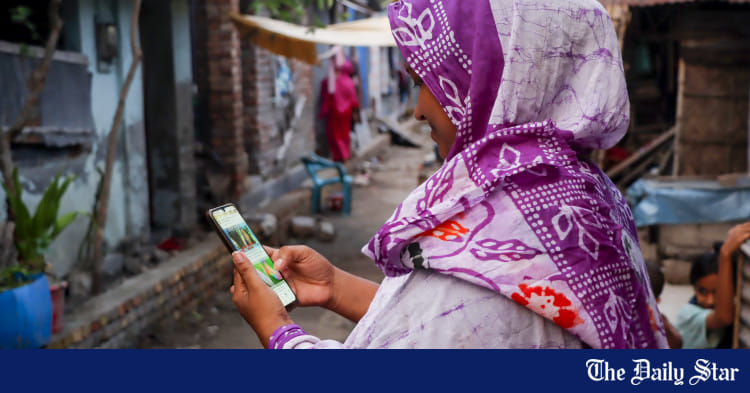
In Bangladesh, mobile internet adoption rates are 40 percent for men and only 24 percent for women, according to Mobile Gender Gap Report 2024 by the GSMA. The photo was taken at Khulna city recently. Photo: Habibur Rahman

Women in Bangladesh are lagging behind men in both mobile ownership and mobile internet adoption, with gender gaps of 20 percent and 40 percent respectively, representing a significant disparity in digital access, according to a global report.

In Bangladesh, 85 percent of adult males own a mobile phone, compared to 68 percent of adult females.

Meanwhile, mobile internet adoption rates are 40 percent for men and only 24 percent for women, according to Mobile Gender Gap Report 2024 by the GSMA, which represents the interests of mobile operators worldwide.

For those who are already aware of mobile internet, the top-reported barriers to adopting it are affordability (primarily of handsets) and literacy and digital skills, it said.

Millions more women than men face these barriers because they are offline. Women also tend to experience these barriers more acutely due to social norms and structural inequalities, such as lower education and income, according to the report.

The findings of the report are based on the results of an annual GSMA Consumer Survey carried out last year, which had more than 13,600 respondents from 12 low and middle-income countries.

In 10 of the 12 countries surveyed for this report, women who use the internet are more likely than men to access it exclusively on a mobile phone.

For example, in Bangladesh, 74 percent of female internet users access it exclusively via mobile, compared to 66 percent of male users.

In most survey countries, women who use mobile internet are more likely than men to report that they would like to use it more than they currently do.

This was true for more than half of female mobile internet users in Ethiopia, Kenya, Bangladesh, India and Pakistan.

According to the survey, Bangladesh has the highest gender gap in mobile internet adoption among Asian countries at 40 percent.

In comparison, the gap is 30 percent in India, 38 percent in Pakistan, and 8 percent in Indonesia.

Although the gender gap in mobile phone ownership and internet usage in Bangladesh has slightly decreased, it remains substantial.

Gender gaps in smartphone ownership also vary across survey countries and are widest in Pakistan (49 percent), Bangladesh (43 percent) and Nigeria (38 percent).

Women in Bangladesh are also falling behind in smartphone ownership. While 40 percent of men own a smartphone, only 22 percent of women have one.

Fahim Mashroor, former president of the Bangladesh Association of Software and Information Services (BASIS), said most women in the country still rely on men for financial support.

"Typically, if there is a smartphone or laptop in the house, it is mainly controlled by male members. Additionally, parents sometimes restrict girls from using devices or the internet due to social reasons in the still very male-dominated society," he added.

Against this backdrop, he said widespread adoption of the internet by women will remain difficult unless their financial independence is ensured.

Still, women in Bangladesh have seen the strongest growth in mobile internet awareness since 2022, from 64 percent to 74 percent.

For the first time since the GSMA started tracking it, women's awareness in Bangladesh is close to that of men (76 percent), highlighting the progress that has been made.

The report said once women start to use mobile internet, they tend to use it less frequently than men and for a narrower range of services.

At the same time, in most of the survey countries, female mobile internet users are more likely than men to report that they would like to use mobile internet more than they currently do.

This was especially the case for more than half of female mobile internet users in Kenya, India, Pakistan, Bangladesh and Ethiopia.

Affordability is another top barrier to further mobile internet use for both male and female mobile internet users in survey countries.

In most countries, affordability of data is more of a barrier than the affordability of handsets.

Data costs are a particular issue for mobile internet users in Kenya, Nigeria, Uganda and Bangladesh, where it is the top individual barrier to further use for both men and women.

For example, in Bangladesh, 24 percent of women and 15 percent of men who use mobile internet reported data costs as their top barrier to further use.

Overall, women's rate of mobile internet adoption increased over the past year.

There are now more women using mobile internet in low and middle-income countries than ever before: 66 percent.

By comparison, 78 percent of men now use mobile internet, but their rate of adoption slowed in 2023.

The gender gap in mobile internet adoption across low and middle-income countries has narrowed for the first time since 2020 due to women adopting it at a faster rate than men.

This reduction was driven primarily by South Asia and brings the overall mobile internet gender gap back to where it was in 2020.

This gender gap also narrowed slightly in Sub-Saharan Africa for the first time in five years, the report said.​
 
Analyze

Analyze Post

Add your ideas here:
Highlight Cite Respond
  • Like (+1)
Reactions: Bilal9

Tax holiday for ICT sector likely to continue: Salman F Rahman
FE ONLINE DESK
Published :
May 21, 2024 20:59
Updated :
May 21, 2024 20:59
1716338099777.webp


The tax holiday facility in the ICT sector of the country will remain in force this year as well, said Salman F Rahman, Private Industry and Investment Adviser to the Prime Minister.

"I had an opportunity to talk to the Prime Minister about the issue of tax exemption. The Prime Minister assured to consider the proposal in view of the request to impose taxes consistently and rationally in different periods. This time the budget will inform how long the tax exemption can be", he said while speaking as the chief guest at an event held at the Hotel Radisson Blu in the capital where the newly elected Executive Council (2024-2026) of Bangladesh Association of Software and Information Services (BASIS) took oath.

"You have to be vocal about what kind of policy support is needed for the domestic ICT sector to keep pace with the pace at which the world's technology is advancing. While tax exemptions are important, what kind of policy do you need for the next level?

AI, block chain, big data need to be looked at because programmers will lose the most jobs in the future. So now they have to train to the next level. The government should be guided in this matter from the BASIS", he added.

To read the rest of the news, please click on the link above.
 
Analyze

Analyze Post

Add your ideas here:
Highlight Cite Respond
  • Like (+1)
Reactions: Bilal9

AI starts to replace entry-level IT jobs in Bangladesh

1716420527557.png


It was a pretty good project for SkyTech Solutions for the last few years: generating earnings of $8.5 per hour for each of over 50 people.

The task was to process the invoice of Uber Freight services and upload the information into customer relationship management, a system that manages customer interactions, enhances satisfaction, and streamlines business processes.

But late last year, artificial intelligence (AI) knocked out more than 80 percent of the jobs in the project in a single blow.

"They informed us that the primary task will be handled by AI automation, leaving only quality control to be performed by humans," said self-made entrepreneur Musnad E Ahmed, founder of SkyTech, a leading business process outsourcing (BPO) company in Bangladesh.

Consequently, the number of employees has decreased from 55 to 10, he said.

To read the rest of the news, please click on the link above.
 
Analyze

Analyze Post

Add your ideas here:
Highlight Cite Respond
  • Like (+1)
Reactions: Bilal9

Bangladesh's reputation as a freelancing powerhouse is on the line

1717025720451.png

VISUAL: ZARIF FAIAZ

Bangladesh has almost always been hailed as a top player in the global freelancing market, and rightfully so as evident from the numerous recognitions the country has earned over the years.

In 2017, according to a study by the Oxford Internet Institute (OII), Bangladesh ranked the second most popular country for supplying online labour. Forbes, in 2019, listed Bangladesh as one of the top 10 countries in the world in terms of income from freelancing.

Our ICT Division estimates the local freelancing sector to be worth nearly $1 billion. According to the "Digital Economy Report-2019" by UN Trade and Development (UNCTAD), Bangladesh is emerging as a significant player in the global freelancing market, with around 650,000 freelancers contributing over $100 million in annual foreign remittances. And just last year, Payoneer ranked Bangladesh eighth amongst the top 10 freelancing countries in the world.

All these data and statistics paint a very optimistic and inspiring picture of the country's freelancing scene. However, given the nature of this profession and the lucrative opportunities it provides, the freelance market is becoming saturated, which would have been somewhat manageable had we the right skills and mindset. Unfortunately, that is not the case. This situation, if it worsens, might slowly impact the country's reputation as a global freelancing powerhouse.

Let us start with the way freelancing is marketed to our common populace. Across Bangladesh, you will find numerous organisations offering skill development and freelancing training. For a certain fee, these organisations promise to turn you into freelancing experts. And to lure you into joining these institutions as students or trainees, they will tell you about the two most lucrative aspects of freelancing—earning from the comfort of your home and earning in foreign currencies.

Every now and then, you will see news articles or social media posts about young men and women from far-flung regions of Bangladesh making four or five times more money than the country's average monthly income through freelancing. These stories are packaged and fed to aspiring freelancers to "motivate" them. This, coupled with the fact that Bangladesh still has an unemployment problem, makes for a very convincing case in support of freelancing to those looking for job opportunities.

To read the rest of the news, please click on the link above.
 
Analyze

Analyze Post

Add your ideas here:
Highlight Cite Respond
  • Like (+1)
Reactions: Bilal9

Meta removes pages linked to Awami League for "inauthentic behaviour"

1717112763814.png

Meta shuts down Bangladeshi political networks for 'coordinated inauthentic behaviour'. Image: Tech & Startup

Meta, the parent company of Facebook, has announced the removal of numerous accounts and pages linked to Bangladesh's ruling Awami League, citing violations of its policy against "coordinated inauthentic behaviour". This action was detailed in Meta's Quarterly Adversarial Threat Report for Q1 2024.

The company removed 50 Facebook accounts and 98 pages originating from Bangladesh. These accounts and pages were found to be targeting domestic audiences using fake identities to post content and manage pages. Some of these pages posed as fictitious news entities, while others used the names of existing news organisations in Bangladesh. A few pages used the name of the Bangladesh Nationalist Party (BNP) and posted content critical of the BNP.

Meta's investigation uncovered that this network had a presence on multiple platforms, including YouTube, X (formerly Twitter), TikTok, Telegram, and their own websites. The network primarily posted content in Bengali, with some posts in English. The content included news and current events in Bangladesh, criticism of the BNP, allegations of BNP corruption and involvement in pre-election violence, as well as supportive commentary about the incumbent government and the ruling party.

The accounts and pages collectively had about 3.4 million followers. Meta reported an ad spend of approximately $60, paid mostly in Bangladeshi takas.​
 

Attachments

  • 1717112182140.webp
    1717112182140.webp
    59.8 KB · Views: 27
Last edited:
Analyze

Analyze Post

Add your ideas here:
Highlight Cite Respond
  • Love (+3)
Reactions: Bilal9

Members Online

No members online now.

Latest Posts

Back
 
G
O
 
H
O
M
E