Home Watch Videos Wars Movies Login

[🇧🇩] ICT Industry in Bangladesh

Latest Posts Countries Wars Q&A

[🇧🇩] ICT Industry in Bangladesh
164
8K
More threads by Saif

G Bangladesh Defense

Trade digitalisation is the way forward
SYED MANSUR HASHIM
Published :
Jul 09, 2024 21:37
Updated :
Jul 09, 2024 21:37
1720575469880.webp


At a recently organised roundtable by the International Chamber of Commerce (ICC) Bangladesh, titled 'Digitalising International Trade in Bangladesh' speakers came up with arguments why Bangladesh should be moving towards digitising its trade operations to seriously boost exports. The event brought together policymakers, business leaders, UN representatives and experts who agreed that eliminating the various (and tedious) process of paperwork could dramatically help expedite trade.

A significant portion of outbound trade is based on shipping. Roughly, 40 per cent of the containerised trade is still based on 'bill of lading' process that is a cause of much delay. According to a UN expert, "Bangladesh could earn $0.6 billion more annually, as the electronic bills of lading could unlock $30-40 billion in global trade volume if these processes went digital."

From what has been shared in the event, it is understood that digitising laborious manual processes can help reduce trade costs significantly, to the tune of 11-23 per cent and also help increase exports by around $600 million per annum.

Digitalisation has been a major stated policy thrust of the present government over the last few terms. However, there has been and continue to be push-back by various agencies which fear a loss of control and the streamlining of these processes (through adoption of new technology) would possibly impede the illicit earning of certain quarters. There is no nice way of saying this, but that is a fact of life in our country, especially given the spate of high-profile graft cases that have been made public over the last few months. But then, it also everything to do with ushering in greater trade efficiency and sustainability. The business community has for years been clamouring for change that not only would help ease up on the cost of doing business in this country, but help expedite lead times leading to more trade.

As pointed out by ICCB president, the Digital Standards Initiative (DSI), which is a part of a global effort in Singapore that is supported by trade and financial entities, including the Asian Development Bank (ADB) and the World Trade Organisation (WTO), remains a prime example of a system that works for the betterment of trade. According to Mr. Rahman, the introduction of bills of lading result in swift transactions, cost efficiency and reduce risks of fraud. Indeed, the advantages of using electronic form of bill of lading has been supported by internationally recognised studies and it is time for Bangladesh to enter into this regime.

As stated before, digitalisation of services remains a top policy priority. Since cost of doing business in the country has not fared well in various international indices, it is high time the government started taking serious steps towards a cashless and digital system. Naturally these call for serious reforms. However, before leaping on to the slated 'digital bandwagon', a host of issues need to be addressed, particularly, cybersecurity. Despite serious efforts to develop ICT resources in-country, the issue of cybersecurity remains a soft underbelly in the country. State entities including those storing sensitive repositories of data have seen their fair share of hacking and security breaches. These are loopholes in the system that need to be plugged.

The first step has been taken and now the hard task begins. Enacting laws, amending rules, addressing reforms highlighted in the national logistics policy, etc. all have to be taken into cognizance and these processes need to be expedited. The good thing is that international bilateral agencies and foreign governments are willing to work with their counterparts in Bangladesh - at the business and state level. One can only hope that the momentum for change is sustained because the country needs to move beyond recent debacles and boost trade as a matter of national priority.​
 
Analyze

Analyze Post

Add your ideas here:
Highlight Cite Respond

Digital trade: Bangladesh could earn $0.6b more in exports
Says UN expert at ICC Bangladesh roundtable
FE REPORT
Published :
Jul 08, 2024 10:31
Updated :
Jul 08, 2024 10:42
1720575648195.webp


Salman Fazlur Rahman, MP (centre), Private Industry and Investment Adviser to the Prime Minister, participated as the chief guest in the ICC Roundtable on 'Digitalizing International Trade in Bangladesh' held in Dhaka on Sunday. Also seen in the picture, among others, are ICC Bangladesh President Mahbubur Rahman, Vice Presidents A K Azad, MP, and Naser Ezaz Bijoy; ADB Country Director Edimon Ginting; UN-ESCAP Director Dr. Rupa Chanda; ITFC Regional Head Iftekhar Alam; ICC-DSI MD Pamela Mar; ICCB Executive Board Member Kutubuddin Ahmed; Banking Commission Chair Muhammad A. (Rumee) Ali and Secretary General Ataur Rahman

Imagine you are a cargo owner in 1450. You hand over your goods to a ship and receive a bill of lading -- a paper document detailing your shipment.

Fast forward to 2024: despite a dramatically changed world, the bill of lading process remains reliant on physical paperwork, used in roughly 40 per cent of containerised trade.

According to a UN expert, Bangladesh could earn $0.6 billion more annually, as the electronic bills of lading could unlock $30-40 billion in global trade volume if these processes went digital.

"Digital trade is crucial not only for Bangladesh but also for global trade efficiency and sustainability," said Rupa Chanda, director at UNESCAP. "The country could reduce trade costs by 11-12 per cent and gain an additional $0.6 billion in exports by embracing digital trade processes."

She made the remarks at a programme on 'Digitalizing International Trade in Bangladesh', organised by the International Chambers of Commerce (ICC) Bangladesh in Dhaka on Sunday.

ICC Bangladesh President Mahbubur Rahman chaired the programme. He said that digitalisation enhances efficiency, reduces costs and broadens market access.

At the roundtable, Mr Rahman introduced the Digital Standards Initiative (DSI) -- a global effort based in Singapore supported by trade and finance entities including the Asian Development Bank and the World Trade Organization.

He said every year, ocean carriers issue about 45 million bills of lading. Many international shipping documents still need to be standardised and mostly paper-based, needing physical exchanges.

In contrast, electronic bills of lading offer swift transactions, cost efficiency and carry less risks of fraud.

Citing a McKinsey study, the ICCB president said that 100 per cent adoption of electronic bills of lading could unlock $30-$40 billion in global trade by reducing trade friction.

He said this shift could also save 28,000 trees annually and cut carbon emissions.

Bangladesh ratified the UNESCAP Framework Agreement on Facilitation of Cross-Border Paperless Trade in 2020.

The roundtable on Sunday marked the first step in introducing the Digital Standards Initiative (DSI), with plans to draft rules and regulations aligned with global digitalization trends by 2027.

At the programme, Adviser to the Prime Minister on Private Industry and Investment Salman Fazlur Rahman said one of the most important components of digitalisation is interoperability.

Highlighting Bangladesh's success in creating an enabling atmosphere for digitalisation, the adviser said Bangladesh is making rapid progress in establishing a digital and cashless Bangladesh.

However successful international digital trade depends on other countries too, he added.

"International trade is not only dependent on Bangladesh but also dependent on the counterparts who also have to make various reforms," he said, adding that there are also some challenges arising from developed countries.

"Now we are seeing more and more protectionism, especially from the United States, even we are seeing that in Europe," he said.

Mr Rahman added that with the rise of technologies, there are growing concerns with cyber defence.

He said artificial intelligence is now evolving faster with exponential growth in its IQ level.

Regarding the export data mismatch among the National Board of Revenue (NBR), the Bangladesh Bank (BB) and the Export Promotion Bureau (EPB), he said the EPB has double-counted the value of merchandise sent abroad from the export processing zones (EPZs).

"The mistake which EPB made was double-counting the export from the export processing zones," he said.

Edimon Ginting, country director, Bangladesh Resident Mission, Asian Development Bank said effective digitalisation of trade will increase growth and create jobs by expanding access to global trade networks for developing economies.

He said there are two key impediments that we need to jointly work on and address. Those include a need for common standards and protocols that will enable effective interoperability among the players in supply chains, from exporters to logistics, customs, warehousing/logistics, finance, etc and the need to enhance legislation supporting the use and enforceability of key documents in trade.

To tackle these two important challenges, ADB, the Government of Singapore, and the International Chamber of Commerce founded the Digital Standards Initiative, he said.

DSI is working on addressing these challenges and helping promote a globally harmonised digital trade environment.

In order to address the lack of recognition of electronic versions of key trade documents such as bills of lading, the United Nations Commission on International Trade Law (UNCITRAL) developed The Model Law on Electronic Transferable Records (MLETR), he informed.

He also said the adoption of MLETR would serve the purpose of further improving domestic legal frameworks and facilitating cross-border trade.

While presenting the keynote, Pamela Mar, managing director, Digital Standard Initiative (DSI), International Chamber of Commerce (ICC) said this is a pivotal moment for Bangladesh as it graduates LDC, expands its international trade profile, and sets targets to become a digital economy.

Digital trade builds on Bangladesh's export manufacturing success while preparing it to compete in the future of trade, she said.

The DSI and our entire network including ICC Bangladesh, stand ready to support the country to make the digital trade transition successful, she added.

Iftekhar Alam, Regional Head for South & South East Asia at the International Islamic Trade Finance Corporation (ITFC), spoke about the ongoing efforts to streamline trade, particularly for major cotton-importing countries like Bangladesh.

Muhammad A (Rumee) Ali, Chairman of ICC Bangladesh Banking Commission, delivered the welcome address, emphasising the critical role of digitalisation in modernising trade infrastructure.

Lawmaker A K Azad, also the vice president of ICC Bangladesh, concluded the event by emphasising the importance of digitalisation for reducing operational costs and enhancing trade efficiency as Bangladesh aims to become a middle-income country by 2026.

Zaidi Sattar, chairman, Policy Research Institute, Mohammad Navid Safiullah, additional decretary, Ministry of Commerce, Mursheda Zaman, joint secretary, Ministry of Commerce, Md Sarwar Hossain, director (Foreign Exchange Policy Department) of Bangladesh Bank, Raich Uddin Khan, first secretary (Customs Automation) National Board of Revenue, Kutubuddin Ahmed, member, ICC Bangladesh Executive Board, Naser Ezaz Bijoy, vice-president, ICC Bangladesh and chief executive officer, Standard Chartered Bank, Md Saiful Islam, former president, MCCI, Muhammad Zahangir Alam, CFO, Square Pharmaceuticals Ltd also spoke, among others.​
 
Analyze

Analyze Post

Add your ideas here:
Highlight Cite Respond

Consider human emotions while developing cybersecurity measures
1721000578580.webp

VISUAL: FREEPIK

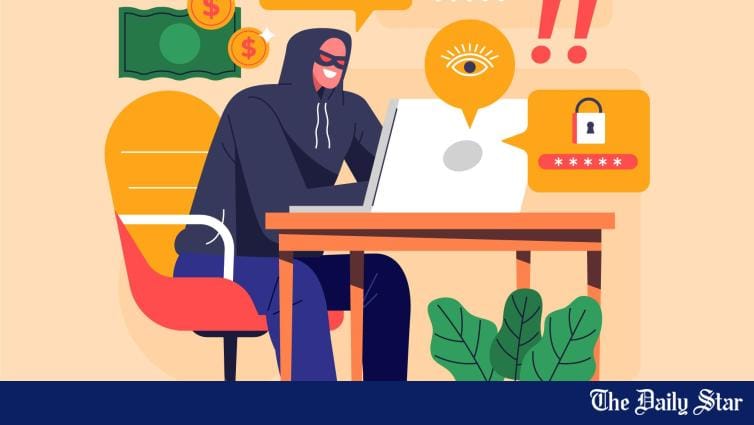
In the increasingly digital world, cybersecurity has become a critical concern for individuals, businesses, and governments alike. While much of the focus is often on technological solutions—there is another crucial aspect that often goes underappreciated: the human emotions involved in cybersecurity.

Fear and anxiety significantly impact cybersecurity. The fear of data breaches, identity theft, and cyberattacks can drive individuals and organisations to adopt more stringent security measures. For instance, after the high-profile Equifax data breach, which exposed the personal information of over 147 million people, there was a significant increase in the number of people signing up for credit monitoring services and identity theft protection. This breach highlighted the vulnerability of even large organisations and instilled fear among consumers about the safety of their personal information.

However, fear and anxiety can also have negative effects. Excessive worry about cyber threats can lead to "security fatigue," where individuals become overwhelmed and desensitised to the constant barrage of warnings and advisories. A study by the National Institute of Standards and Technology (NIST) found that people experiencing security fatigue may neglect basic security practices, such as updating passwords or installing software patches, thereby increasing vulnerability to attacks.

Trust is another pivotal emotion in the cybersecurity landscape. Users must trust that their systems are secure, that the websites they visit are safe, and that their personal information is protected. Unfortunately, trust can be easily exploited by cybercriminals through social engineering tactics such as phishing attacks. During the Covid pandemic, there was a significant increase in phishing attacks where cybercriminals posed as health organisations. These attacks exploited the public's trust in these institutions, tricking individuals into revealing sensitive information or downloading malicious software.
The 2013 Target data breach, where hackers gained access to the retailer's network by exploiting the trust placed in a third-party contractor, underscores how trust in third-party vendors can become a vulnerability if not properly managed.

The stress associated with maintaining cybersecurity can also influence behaviour. Professionals working in cybersecurity roles often face high levels of stress due to the constant threat of attacks and the pressure to protect sensitive information. For instance, the cybersecurity teams at hospitals during ransomware attacks, such as the one on Universal Health Services, experienced immense stress as they worked to secure patient data and restore critical systems while under attack. This stress can lead to burnout, reducing the effectiveness of cybersecurity teams and increasing the likelihood of human error.

For end-users, stress from dealing with complex security protocols and the ever-evolving nature of cyber threats can result in poor security habits. A common example is users resorting to simple, easy-to-remember passwords across multiple accounts, despite knowing the risks, to reduce the cognitive load associated with managing complex security requirements. This behaviour was evident in the aftermath of the Yahoo data breach, where many users admitted to reusing passwords across different sites to simplify their online security management.

Complex security measures often lead to frustration and anger. Managing passwords, dealing with frequent updates, and navigating authentication requirements can be exasperating. The Yahoo data breach underscores the importance of robust security practices, but user frustration can lead to non-compliance, undermining cybersecurity efforts. A survey by the University of California, Berkeley found that many users are frustrated by the complexity and frequency of password changes required by their employers, leading to shortcuts such as writing down passwords or using easily guessable passwords.

Confusion and helplessness often accompany cyber incidents. The rapid evolution of cyber threats and the complexity of security technologies can leave us feeling overwhelmed and powerless. In times of crisis, such as a ransomware attack or data breach, individuals and organisations may struggle to understand what steps to take. Developing clear response plans, conducting regular drills, and seeking assistance from cybersecurity experts can help alleviate confusion and empower us to respond effectively to cyber incidents.

Relief and satisfaction follow successful cybersecurity measures. Implementing robust security protocols, thwarting cyber threats, and safeguarding digital assets bring a sense of accomplishment and peace of mind. Knowing that our sensitive information is protected against malicious actors provides a sense of relief.

However, success in thwarting cyber threats can breed overconfidence and complacency. Believing that we are immune to cyberattacks can lead to lax security practices and vulnerability to future threats. Similarly, organisations may become complacent after implementing security measures, failing to adapt to evolving cyber threats. By staying informed about emerging cyber threats, conducting regular security assessments, and updating security protocols, we can guard against overconfidence and complacency.

Another issue that surfaces after cybersecurity breaches aspect is guilt and shame. Individuals may blame themselves for falling victim to phishing scams or neglecting security best practices. Organisations may feel ashamed of security lapses that compromise customer data or tarnish their reputation. Instead of dwelling on mistakes, they should focus on lessons learned, steps for improvement, open communication and collaboration to foster a culture of shared responsibility in cybersecurity.

To enhance cybersecurity by addressing emotional factors, individuals should be empowered with user-friendly cybersecurity education and practical knowledge. Building of trust by fostering transparency and reliability in digital services, prioritsing employee well-being and stress management to enhance cybersecurity resilience are also crucial along with simplifying security measures to reduce frustration and encouraging compliance.

In Bangladesh's digital journey, understanding and addressing cybersecurity emotions are paramount. By recognising the fears, frustrations, and triumphs inherent in digital defence, we can develop more effective strategies for safeguarding our digital assets. Through education, empathy, and collaboration, we can navigate the complexities of the digital landscape with resilience and confidence.

BM Zahid ul Haque is an experienced CISO and cyber digital transformation strategist.​
 
Analyze

Analyze Post

Add your ideas here:
Highlight Cite Respond

Smart Bangladesh, unsmart cybersecurity measures
1721000752987.webp

For Smart Bangladesh, we need smart cybersecurity measures. VISUAL: STAR

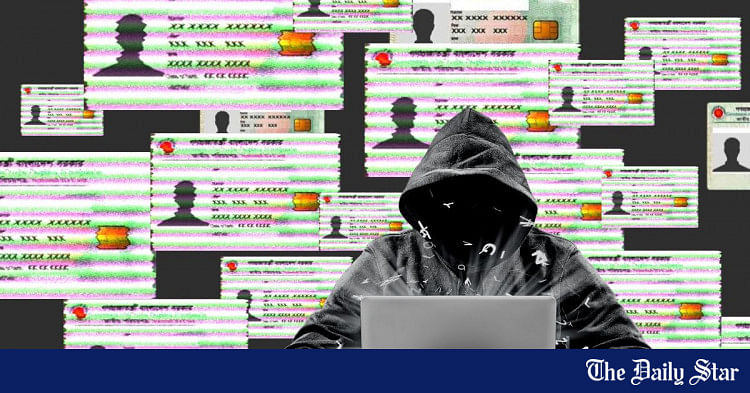
With consistently poor data security and the resultant surge in cyberattacks in recent years, Bangladesh faces major cybersecurity challenges. The latest case of cybersecurity vulnerability was the leakage of sensitive personal data of individuals who have the smart National Identity (NID) cards on a Telegram channel. While the NID database contains personal information of more than 12 crore voters, 5.5 crore of them have Smart NID cards. The custodian of the NID system, the Election Commission (EC), has tried to wash its hands off the issue saying that the data breach occurred through one or some of the 174 institutions and organisations that have access to the NID server. But the fact remains that the EC is sharing sensitive personal data of citizens with various bodies that are not capable of ensuring their web security and integrity, resulting in this leakage.

Earlier in June this year, US-based online publisher of start-up and technology industry news TechCrunch revealed that the personal data of more than five crore Bangladeshi citizens had been exfiltrated and exposed from the website of the Office of the Registrar General, Birth and Death Registration (BDRIS). The exposed data included full names of the victims, their phone numbers, email addresses and NID numbers.

In the recent case, the entire profile of an individual could be obtained from the Telegram channel by just providing two inputs: the NID number and the date of birth.

The Telegram channel leakage raises questions about the integrity of the EC, which provides sensitive personal data of individuals to organisations with little ability to keep them secure. The BDRIS issue should have been a good enough red flag for the NID data custodian to limit access to information for high-risk organisations, like they have done after the Telegram issue surfaced.

What is even more concerning is that, despite identifying BDRIS as a source of data pilferage, no punishable action has yet been recommended against them by the investigating body, and the ICT Division closed the loop saying, "It is not acceptable that personal information of five million people was open to all. However, we cannot deny the claim either."

In other countries, such cases are not treated lightly, and responsible organisations are at least made accountable for their failure with penalties. For instance, the Integrated Health Information System of Singapore, in 2019, was fined $750,000 (around Tk 8 crore) for the incident of pilferage of personal data of its patients. Penalising organisations for such a breach is not about playing the blame game; rather, it is a negative reinforcement, holding them accountable for their negligence and making sure that they are more careful in the future. A simple slap on the wrist – as in the case of BDRIS – only goes to show how lightly this issue is being treated by the authorities here.

The problem with these data breaches means sensitive personal data of the citizens are now exposed – once data is leaked, even if it is taken down from public domain later, it is likely to remain with those nefarious bodies that have downloaded them – and this makes them even more vulnerable to crimes such as identity theft. Personal data could easily be manipulated by criminal groups to carry out fraudulent and criminal activities. What guarantee is there that your and my complete personal profiles are not lying at the disposal of some criminal gang – may be even in a far away, obscure location – for them to exploit and use at their will? And with the general election almost knocking at the door, what guarantee is there that criminals would not leverage these leaked data to manipulate the election results via identity theft?

We are moving towards Vision 2041 at a fast pace to become "Smart Bangladesh." As we move towards this grand vision, launch digital banking to bring the masses under the formal financial umbrella, increasingly leverage Internet of Things (IoT) for easier data exchange and to make life better, bridge the digital divide through digital innovation and sustainable solutions, and embrace 4IR, we are no longer in a position where we can wash our hands off responsibility by pointing fingers at others.

In the Telegram case, it was the EC's responsibility to make sure that only organisations with high security measures could access the personal data of citizens at its disposal, especially in the aftermath of the BDRIS incident. Leakage and exfiltration essentially pose a threat to national security, especially as we are digitalising more and more critical and sensitive services.

The Bangladesh Government's Computer Incident Response Team (BGD e-GOV CIRT), along with the cybercrime investigation team under the police's Counter-Terrorism and Transnational Crime (CTTC) unit and other agencies involved with combating cyberthreats, should be empowered with enhanced knowledge and adequate tools so that they are better capable of averting such risks and threats going forward. Since we are prioritising a smart future, we must also put in place adequate digital infrastructure to keep us safe in the smart world.

Tasneem Tayeb is a columnist for The Daily Star.​
 
Analyze

Analyze Post

Add your ideas here:
Highlight Cite Respond

How the cyberspace is being manipulated

1721001211590.webp

VISUAL: SHAIKH SULTANA JAHAN BADHON

Evgeny Morozov, in his book The Net Delusion: How Not to Liberate The World (Penguin, 2012), defined "cyber-utopianism" as a naive idea that the internet favours the oppressed rather than the oppressor. Contrary to the beliefs of the cyber-utopians, Evgeny showed how the internet has become a useful tool for authoritarian governments for propaganda, censorship, and surveillance—the three main pillars of Orwellian authoritarian control.

In the age of internet and digital technology, these three pillars of authoritarianism have become so interconnected that efforts to undermine one pillar might ruin the efforts to do something about the other two. For example, in order to avoid the control of the traditional censorship, if the people flock to social networking sites, they may fall prey to surveillance and propaganda. The more trust users put in social networks, the easier it is to use the networks to promote carefully disguised government messages and boost the propaganda apparatus.

Bangladeshi netizens are not outside this mechanism, which has become evident from the latest Adversarial Threat Report prepared by Meta, the parent company of Facebook. In its first quarterly report of 2024 published in May, Meta has announced the removal of 50 Facebook accounts and 98 pages with 3.4 million followers which are linked to Bangladesh's ruling Awami League, citing violations of its policy against Coordinated Inauthentic Behaviour (CIB).

According to Meta, CIB refers to coordinated efforts to manipulate public debate for a strategic goal, in which fake accounts are central to the operation. In each case, people coordinate with one another and use fake accounts to mislead others about who they are and what they are doing.

In the chapter titled "Bangladesh-based Network" and appendix, Meta's report exposed the fake accounts which posed as fictitious new entities or existing news organisations in Bangladesh. Some pages used the Bangladesh Nationalist Party (BNP) in their name and posted anti-BNP content. Many of these pages had a corresponding presence across several platforms, including YouTube, X (formerly Twitter), TikTok, and Telegram, in addition to their own websites.

According to Meta, the network posted primarily in Bengali and also in English about news and current events in Bangladesh, including elections, criticism of the BNP, allegations of BNP's corruption and its role in pre-election violence, as well as supporting commentary about the incumbent government, the ruling party and its role in the technological development of Bangladesh.

Meta found this activity as a result of its internal investigation into spammy inauthentic amplification activity in the region. Although the people behind it attempted to conceal their identity and coordination, Meta's investigation found links to individuals associated with the Awami League and the Centre for Research and Information, a non-profit organisation in Bangladesh associated with Awami League.

In the appendix of the report, Meta also gives a list of websites, X accounts, Telegram and YouTube channels, TikTok accounts, and names of fictitious news outlets which are used to spread misinformation with political purpose. According to Meta, the network worked to a regular shift pattern, posting between 07:00 and 21:00 GMT (1pm to 3am Bangladesh time), with a peak between 13:00 and 18:00 GMT (7pm to 12am Bangladesh time), and notably fewer posts on Fridays.

This is not the first time that government propaganda efforts have been exposed by Meta/Facebook. Earlier in December 2018, Facebook published a report titled "Taking Down Coordinated Inauthentic Behavior in Bangladesh'' where it announced removal of nine Facebook pages and six Facebook accounts for engaging in coordinated inauthentic behaviour. Facebook mentioned that after getting a tip from Graphika, a threat intelligence company that it worked with, it discovered that these pages were designed to look like independent news outlets and posted pro-government and anti-opposition content. Facebook directly linked these propaganda activities to individuals associated with the government at that time.

The irony is that on the one hand, the government has enacted cyber security laws in the name of preventing rumours and propaganda, and is asking for support from global technology companies like Facebook, Google, and TikTok to prevent rumours, block user accounts and pages, remove content. On the other hand, the ruling party and its research wing themselves have engaged in organised disinformation campaign against the opposition parties using fake accounts.

According to the latest Google transparency report, the Bangladesh government made 591 content removal requests to Google in the last six months of 2023, of which 310 or 52 percent were related to government criticism and 175 or 30 percent were related to defamation. According to Meta's latest transparency report, from July to December 2023, the Bangladesh government sought information about 2,164 users or accounts. Meta has provided information in 67.81 percent of the cases. In the same period, the government made 3,459 content restriction requests to Meta, of which 2,049 were Facebook posts and 1,357 were Facebook comments.

However, government control over the flow of information is not limited to removing or blocking content. Of course, similar to banning books or newspapers, governments block websites and apps to varying degrees depending on the situation and regime of internet-based communication. But this is not the only way to control the internet. Apart from creating various barriers to the flow of information that is dangerous for the government, there are many other ways to control people's thoughts. Some examples of these mechanisms are keeping people busy with various unimportant issues, publicising government statements or positions as neutral opinions or news, and controlling the content of discussions on social media through hired individuals and organisations, etc.

This type of activities can also be undertaken using traditional media, but by exploiting the various features of the internet and digital technologies, these activities can be implemented on a wider basis much more easily, effectively, and at a lower cost than traditional media.

With new forms of authoritarian and surveillance capitalism developing around the internet and digital technologies, it is important to hold both the government and technology companies accountable to the citizens to ensure privacy and freedom of expression. Just as unaccountable authority is harmful in the real world, it is equally dangerous in the virtual world of the internet—especially when the real and the virtual become one.

Kallol Mustafa is an engineer and writer who focuses on power, energy, environment and development economics.​
 
Analyze

Analyze Post

Add your ideas here:
Highlight Cite Respond

ICT sector: Different figures over actual export revenue
Suhadha AfrinDhaka
Updated: 15 Jul 2024, 12: 35

1721115180760.webp

US dollarFile photo

1721115127828.webp

ICT sector export incomeRepresentational image

As per the government version the country's export income in information and communication technology (ICT) sector has reached USD 2 billion while the businessmen of the sector maintain that the amount can at best be USD 1.5 billion.

However, the government organisations that keep track of the export income said the sector's income is not even USD 1 billion.

Zunaid Ahmed Palak, the state minister for post, telecommunication and ICT has been maintaining the export income in the sector to be around USD 2 billion.

He also expects the amount will reach USD 5 billion in the next five years.

Asked about the information of ICT sector's export income, Palak on Sunday told Prothom Alo that this estimation is based on data from Bangladesh Bank, and information of hardware and freelancing sectors.

Besides, some companies in the Chattogram Export Processing Zone (EPZ) export electronic items.

Some stakeholders of the sector say that the amount would actually be USD 1 billion more, the state minister said adding there are some unofficial exports in the sector.

Palak also states that he gives the estimation of USD 2 billion taking responsibility.

Bangladesh Bank and Export Promotion Bureau (EPB) mainly serve the information of export of goods and services. Service sector makes more exports in the ICT sector.

There is no specific data on the number of freelancers in the ICT sector. A top freelancer of the country, on condition of anonymity, told Prothom Alo that none can correctly tell the export amount in the sector. The number of Bangladeshis freelancers registered with various freelancing platforms will be around Tk 600,000 to Tk 700,000. But the actual number of freelancers is around 150,000.

According to the Bangladesh Bank, the amount of export in telecommunication, computer and information service was USD 531.8 million between July-April in the fiscal year of 2023-24. This is 5.2 per cent less than the corresponding period of the last fiscal year.

Meanwhile, ICT services exports were USD 477 million from July to March of the same fiscal year, according to EPB data.

This amount is USD 6.43 million less than the corresponding period of the previous fiscal year.

According to World Bank data, the ICT sector accounts for 10 per cent of all services exported from Bangladesh in 2023. In the case of India it is 48.2 per cent, 36.2 per cent in Pakistan and 16.9 per cent in Sri Lanka.

Stakeholders say that 80 per cent of the country's ICT sector exports are service-based. And the export of this service is half of one billion dollars. In total, ICT sector exports will be less than a billion dollars.

The exports have been declining for two years. As a result, there are questions as to whether the export target of five billion dollars is achievable in the current situation.

Rasel T Ahmed, president of Bangladesh Association of Software and Information Services (BASIS), thinks that the export of the ICT sector will be about USD 1.5 billion dollars.

He told Prothom Alo that many information of this sector is not added up.

ICT is considered as the most promising sector after the apparel industry but there has been no progress in the last two years, Ahmed said adding expected growth could not be achieved.

The dream of five billion dollar exports will not be achieved this way, he noted, rather proper planning is required for it.
There is no specific data on the number of freelancers in the ICT sector. A top freelancer of the country, on condition of anonymity, told Prothom Alo that none can correctly tell the export amount in the sector. The number of Bangladeshis freelancers registered with various freelancing platforms will be around Tk 600,000 to Tk 700,000. But the actual number of freelancers is around 150,000.

Persons connected with BASIS said the export amount of freelancers in the country can be between USD 200 and 250 million. However, the president of Bangladesh Freelancer Development Society (BFDS) Tanjiba Rahman told Prothom Alo that the amount would be USD 300.

She also thinks that the export of the ICT sector will be USD 2 billion. Apart from services, the ICT sector has various other products. The World Bank does not have any data on Bangladesh's exports of ICT products after 2015.

UN Trade and Development (UNCTAD) gives a list of products that are considered as ICT products. The list includes products such as computer and peripheral equipment, communication equipment, consumer electronic equipment (sound recording, microphone, camera, television camera, headphone, video game equipment, radio broadcasting equipment), electric components and semiconductor media etc.

There is no separate information available for ICT products in Bangladesh's export sector. However, Bangladesh Bank's 2022-23 financial year export earnings report mentions engineering products' export amount would be USD 585.85 million. According to the EPB data, the amount would be USD 479.96 million between July and May in 2023-24 fiscal year.

EPB's list of engineering products includes iron steel, copper ware, stainless steel ware, engineering equipment, electric products, bicycle and other products. None of Bangladesh's engineering products except for electric equipment fall under the category of UNCTAD's definition of ICT products. However, if the total export of engineering products and ICT services sector is calculated, it is more than a billion dollars.

He added that different activities are taking place in the ICT sector in scattered ways but the impact of these are not so visible. The government has to set the target and set up at least 150 big companies.​
 

Attachments

  • 1721115161210.webp
    1721115161210.webp
    21.1 KB · Views: 19
Analyze

Analyze Post

Add your ideas here:
Highlight Cite Respond
  • Sad (0)
Reactions: Bilal9

Internet blackout: Freelancers in trouble
1721866948232.webp

Internet blackout lands freelancers in trouble. Photo: Orchid Chakma

With the complete shutdown of internet services across Bangladesh for the past five days, life on the digital frontier had come to a grinding halt. Mobile internet access was restricted on July 16 amidst country-wide protests against quota reinstatement in government jobs. Following escalating street violence, a complete internet blackout was suddenly imposed on July 18, with no prior warning. Now, the country's freelancers, whose income depends heavily on internet access, are facing significant financial difficulties.

Timely communication is paramount in online freelancing platforms like Fiverr and Upwork. Freelancers typically rely on the platforms' embedded messaging systems to communicate with clients. Unfortunately, the internet shutdown rendered communication entirely impossible.

Shaikh Abdullah, a Dhaka-based motion designer and video editor working for international clients, shared his experience. "I was negotiating a $500 project with a client," he explained. "The internet abruptly cut out during our discussions, with no prior announcement. After four days of complete inactivity, if the client reports my profile as inactive, it will significantly reduce my profile visibility and overall click-through rate. This, in turn, will lead to a loss of potential clients and ultimately, a decrease in my income."

The global freelancing marketplace operates at a fast pace, with clients and workers adhering to strict deadlines for project orders and deliveries. Failure to deliver on time often results in negative client feedback, which can significantly impact a freelancer's earnings if enough negative ratings accumulate.

Sudiptta Apu, a graphic designer and freelancer based in Khulna, expressed similar concerns. "I had eight ongoing projects worth over $1,000 that are now on hold due to the internet blackout. It's highly likely that clients will seek alternative service providers, as most require urgent and ongoing work."

"For my regular clients outside of online marketplaces, I attempted communication through international calls to India and the USA," Sudiptta added. "However, network issues made proper communication impossible. I fear losing most of my regular clients as well."

The internet shutdown also prevented many freelancers from delivering completed projects. Sohag Islam, a UI/UX designer based in Dhaka and founder of the IT firm Designera, recounted his experience. "I had two deliveries scheduled – one for $1200 and another for $660. Just an hour before the final delivery to the client, I lost internet connectivity. Communication with all my regular clients is completely cut off. The internet shutdown has resulted in a minimum loss of $3,000 for me."

Sohag further stated that he works remotely for a US-based firm, but the internet blackout hampered communication with them as well.

However, broadband internet connections were restored on a limited scale yesterday after 5 days of complete countrywide blackout. Md Emdadul Hoque, president of the Internet Service Providers Association of Bangladesh (ISPAB), said earlier today that approximately 40% of broadband connections across the country have been restored, with most lines expected to be operational by the end of the day.​
 
Analyze

Analyze Post

Add your ideas here:
Highlight Cite Respond
  • Like (+1)
Reactions: Bilal9

4 ways to stay online during an internet outage
1721867095905.png

Mobile data internet in various parts of the country are experiencing outage. Image: Tech & Startup

Mobile data internet services across Bangladesh is reportedly experiencing a widespread outage, as per reports. The disruption, assumed to have begun around 10:30 am on July 18, is in continuation for the third consecutive day.

The disruption has particularly affected social media platforms such as Facebook and Messenger. Upon testing, netizens have been unable to send messages through Messenger or access the updated feed of Facebook since today morning. The same restriction has been noticed in platforms like X (formerly Twitter) as well, though tests have shown that, at the time of writing, YouTube has been accessible through normal means.

In light of these events, in any cases of emergency, the following methods can be tried to stay connected to the internet:

Virtual Private Networks (VPNs)

VPNs are widely used to access blocked content or websites. They function by routing the user's connection through a remote server, masking the local IP address and making it appear as though the user is accessing the internet from another location. However, some countries, including Russia and Egypt, employ network management technologies to block VPN traffic. Experts recommend having at least two VPNs to increase the likelihood of bypassing restrictions. Additionally, changing the domain name server (DNS) may be effective in some situations.

It is important to note that while VPNs can help bypass censorship, they do not provide privacy protection during browsing.

Mesh Networks

Mesh network applications like Briar and Bridgefy are particularly useful in dense gatherings such as protests. These apps allow messages to hop between devices using Wi-Fi or Bluetooth, creating a network independent of internet connectivity.

However, mesh networks have limitations, primarily their limited geographical range, which typically restricts communication to nearby devices. Research from the University of London identified vulnerabilities in Bridgefy, such as spoofing attacks, which could compromise the security of these networks.

International SIM Cards

In border regions, it may be possible to connect to networks from neighbouring countries where internet access remains unaffected. Using an international SIM card can help maintain connectivity. This approach has proven effective in Myanmar, where journalists and human rights workers use Thai SIM cards to stay connected, communicate with international colleagues, and facilitate mobile money transfers.

Sideloading Apps

Governments might attempt to restrict access to certain platforms by removing them from app stores. On Android devices, users can sideload apps, downloading them directly to the device without relying on official app stores. This method, however, carries risks, as sideloaded apps are not vetted and may contain malware.​
 
Analyze

Analyze Post

Add your ideas here:
Highlight Cite Respond
  • Like (+1)
Reactions: Bilal9

Members Online

Back
 
G
O
 
H
O
M
E