[🇮🇳] India-USA friendship

[🇮🇳] India-USA friendship
52
2K
More threads by Saif

G   Indian Defense

US sanctions four India-based firms over Iran oil trade
New Age Online 25 August, 2026, 18:45
1787702124052.webp

New Age collage

Four India-based companies have been sanctioned by the US for importing petroleum and petrochemical products from Iran, reported The Telegraph Online citing PTI.

US Treasury Secretary Scott Bessent on Monday announced ‘Operation Economic Outcast’, which essentially involved new sanctions that aim to block all potential sources of revenue for Iran, added the report published on Tuesday.

The US has also told countries to cut economic ties with Tehran or face retaliation.

Bessent described it as an unprecedented campaign to sever Iran’s financial lifelines. It broadens the risk of secondary sanctions for entities—which can be countries, businesses or organisations—continuing to do business with Tehran.

Among the four ‘India-based companies’ facing action is a customs broker identified as Portease Partners LLP and its partners Indrismiya Ashrafmiya Sheikh and Harish Ramachandra Rangi.

Other Indian companies facing action are Sadashiva Overseas Limited; PP Softtech Private Limited, along with its director Prashant Garg; and Prakrutees Infra Impex Private Limited.​
 

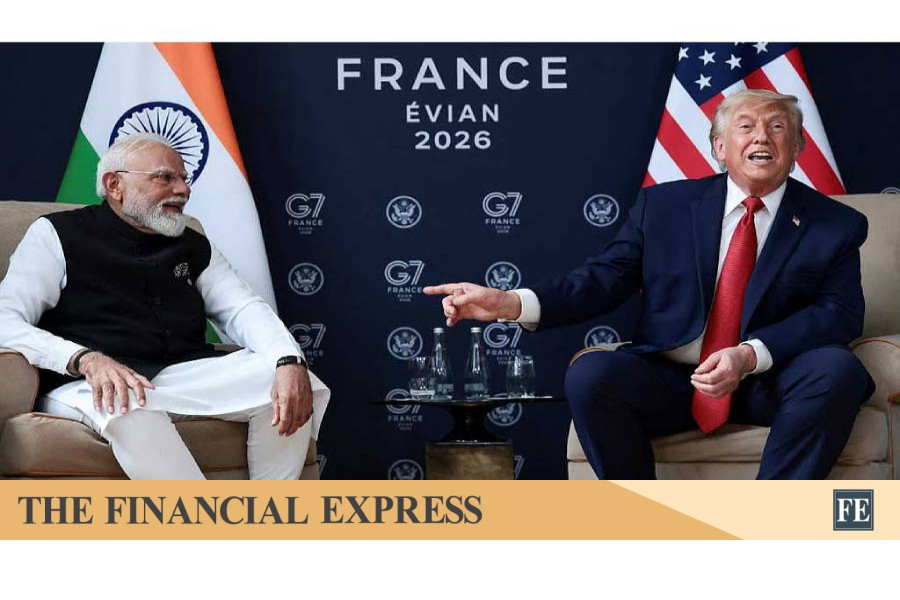
Modi, Trump discuss bilateral ties as India pushes for US trade deal

​
1790810882198.webp

​
US President Donald Trump attends a bilateral meeting with Indian Prime Minister Narendra Modi during the G7 Summit in Evian-les-Bains, France, Jun 17, 2026. REUTERS/Evelyn Hockstein

Indian Prime Minister Narendra Modi and US President Donald Trump agreed to maintain close engagement to advance their countries’ strategic partnership, New Delhi said on Wednesday, as India’s trade minister holds talks in the United States aimed at securing an interim trade deal.

In a telephone conversation, Modi and Trump reviewed bilateral cooperation in trade, defence, energy and critical technologies, the Indian Prime Minister’s Office said.

“The leaders reaffirmed their commitment to advancing the India-US Comprehensive Global Strategic Partnership and agreed to maintain close engagement to deepen cooperation,” the statement said.

They also exchanged views on regional and international developments, including efforts to promote global peace and security, it added.

India’s Trade Minister Piyush Goyal is visiting the United States from Sept 29 to Oct 5 for talks on a proposed bilateral trade agreement and an interim arrangement.

Goyal is due to meet US counterparts as part of efforts to advance a “balanced and mutually beneficial” India-US Bilateral Trade Agreement, New Delhi said earlier this week.

Goyal arrived in Milwaukee on Tuesday for a G20 trade ministers’ meeting and met chief executives and senior executives from US manufacturing and technology companies at a roundtable hosted by the National Association of Manufacturers, India’s trade ministry said.

He was also scheduled to attend a meeting of G20 trade ministers in Wisconsin at the invitation of US Trade Representative Jamieson Greer.

India and the United States have yet to reach an agreement after months of negotiations, with New Delhi seeking improved terms in the proposed deal.

Earlier this month, India said it had told Washington that new US tariff measures linked to India’s purchases of Russian oil could affect bilateral relations.​
 

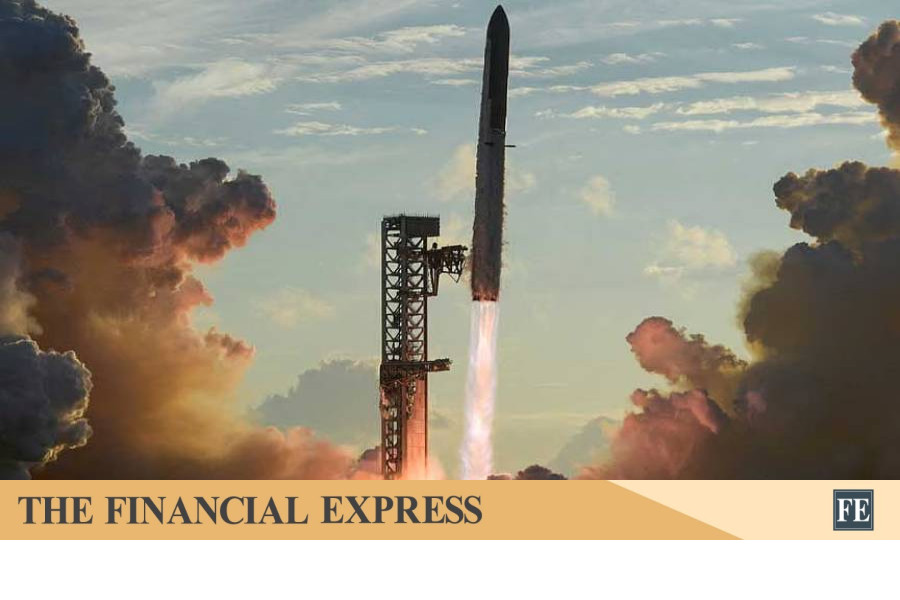
India rejects monopoly claim after Musk accuses Ambani of blocking Starlink launch


1791590288016.webp

The SpaceX Starship and Super Heavy v3 Booster lift off on its 14h test flight from the SpaceX launch complex in Starbase, Texas, US, Sept 28, 2026. The mission is expected to send the vehicle into orbit for the first time and deploy 26 Starlink V3 satellites. REUTERS/Steve Nesius

India’s telecom minister said on Friday the country does not allow monopolies in any sector, pushing back after Elon Musk suggested billionaire Mukesh Ambani was using political influence to block Starlink’s launch in the country.

“India does not allow a monopoly in any sector,” telecom minister Jyotiraditya Scindia said at a media briefing on Friday, addressing Musk’s remarks.

Musk’s SpaceX unit is seeking entry into a telecom market with more than a billion internet users, currently dominated by the mobile networks of Ambani’s Reliance Jio and Sunil Mittal’s Bharti Airtel.

“Is Ambani the real boss of India?”, Musk wrote on X on Thursday, questioning why Starlink still lacked a license despite what he said were years of compliance with Indian requirements. He provided no evidence against Ambani.

Ambani’s Reliance Jio did not respond to a request for comments on Musk’s remarks.

A four-year wait to launch Starlink’s satellite internet services in India has sparked heated exchanges online over business influence and regulatory delays, with Musk targeting Ambani and the political opposition joining the row.

While Starlink has already secured a licence to operate in India, a commercial launch still requires it to meet security compliance conditions and receive a spectrum assignment.

The government said on Thursday that all three licensed satellite operators, including Starlink, were at broadly the same regulatory stage, calling suggestions of an unfair or discriminatory process “baseless and misconceived”.​
 

US trade deal with India soon: Rubio
Agence France Presse . Mumbai, India


1792541787452.webp

US Secretary of State Marco Rubio (L) shakes hands with India's Foreign Minister Subrahmanyam Jaishankar at the Taj Mahal Palace Hotel in Mumbai on Oct. 20, 2026. | AFP photo.


US Secretary of State Marco Rubio said on Tuesday India had made ‘substantial progress’ in diversifying its oil supplies, suggesting a trade deal with New Delhi was ‘very close’.

Rubio arrived in Mumbai for a three-day visit, his second official trip to India this year, as the two countries seek to overcome trade tensions and deepen energy ties.

India is a major importer of Russian oil, and US President Donald Trump’s tariff war launched in April last year has added to friction between Washington and New Delhi.

‘What India has expressed repeatedly is their desire to diversify their energy portfolio, which is a smart thing to do,’ Rubio told reporters in India’s financial capital.


‘It’s not easy to do that from one day to the next, so I think they’ve made substantial progress in that regard, and we’re happy to see that.’

India is wary of US trade measures, including a law allowing tariffs of up to 100 percent on countries buying Russian oil, although Trump signed an executive order last week that waived those threatened sanctions.

Rubio last visited India in May, when he met Prime Minister Narendra Modi.

He is not scheduled to meet Modi this time, but held talks on Tuesday with his counterpart, Foreign Minister Subrahmanyam Jaishankar, and will meet business leaders.

They discussed ‘energy security and defence cooperation while reaffirming the importance of advancing the US-India strategic partnership’, Rubio said on social media after their meeting.

The top US diplomat will visit Jamnagar, in the western state of Gujarat, a port and stronghold of billionaire Mukesh Ambani’s Reliance conglomerate and its flagship refinery, the world’s largest.

‘India is a refining superpower,’ Rubio said, adding that ‘we think we could be a source of some of their energy inputs’.

The two countries reached an interim trade agreement in February aimed at reducing US tariffs on Indian goods.

However, the US Supreme Court struck down Trump’s sweeping tariffs days later, fuelling uncertainty over when the agreement would take effect.

The two sides have been negotiating ever since.

Indian Finance Minister Nirmala Sitharaman said this month the talks had reached ‘a plateau, beyond which giving or taking might be very, very difficult’.

Rubio was more upbeat on Tuesday.

‘We’re very, very close; I would say we’re about as close as you can be without having an executed agreement. I think there’s a small number of items left to wrap up,’ he said.

‘Hopefully have some good news to announce fairly soon, and perhaps the leaders can sign it thereafter.’

Agriculture remains a sensitive area for India, which is reluctant to expose farmers to greater foreign competition.

Washington, meanwhile, wants India to buy more US energy supplies.

Goods exports to the United States jumped 21 percent in August to $8.3 billion compared to the same month a year earlier, when India faced 50 percent tariffs.

The surge in exports has been a bright spot for the Indian economy, which has been roiled by high energy prices due to the Middle East war.

Economists say that a return of higher tariffs would cast a shadow over India’s growth outlook, hurt market sentiment and heap pressure on an already-weak rupee.​
 

Trump confirms US-India trade deal finalisation soon

ANI

1792628478541.webp

US President Donald Trump shakes hands with Indian Prime Minister Narendra Modi during a joint press conference in the East Room of the White House in Washington, DC, on 13 February 2025 AFP file photo

US President Donald Trump has echoed Secretary of State Marco Rubio indicating that the bilateral trade agreement with India was close.

Speaking at a news briefing on Tuesday (local time), Trump was asked if the trade deal with India was close.

The US President replied, " They want to make a deal. We're going to make a deal. Pretty close, yeah. Going to be a much different kind of a deal than we've made in the past."

Earlier, Rubio revealed that the India-US trade deal is “incredibly close”, indicating that finalisation is anticipated shortly.

Speaking to Network18, Rubio noted that while he is not directly engaged in the negotiations, which are handled through the trade representative, he has closely monitored the discussions and expects the agreement to materialise in a matter of weeks, not months.

1792628556686.webp

US Secretary of State Marco Rubio speaks with members of the media at the Taj Mahal Palace hotel in Mumbai, India, October 21, 2026. Reuters

“I’m not personally negotiating it; it’s done through our trade representative, but I know, and I’ve been very involved in watching it happen, that it is something we anticipate seeing in a matter of weeks, not months,” said Rubio.

Elaborating on the meticulous final stages, he highlighted the necessity of absolute precision prior to public announcements to safeguard bilateral ties of such high importance.

“I felt that way before, and with these deals, it’s always important that it would be totally agreed to, every detail of it, before it’s announced because you can’t afford for a relationship of this magnitude to be threatened by announcing a deal and it turning out the deal wasn’t finalised. But it’s incredibly close. I think we are down to some technical details that need to be worked out. Technical details matter because there has to be an agreement; both sides have to agree that the language means the same thing. So, it’s down to that level,” he said.

Addressing queries concerning comparative rates for India alongside other nations, Rubio affirmed that the overarching outcome remains highly advantageous.

“The preponderance of it is good for you. And that’s what we aim to achieve here, and I can’t wait till we do it because we have so many things we can work together on,” Rubio stated.

Commenting on the sheer magnitude and diversity of the nation, the US Secretary of State underscored the necessity of broad exploratory visits rather than confining diplomatic engagements strictly to capitals.

“Well, this is a big country, it’s an important country, and I think like any big country, I say, people, if you want to learn and see what’s happening in the United States, you can’t just go to Washington. You should probably try to go somewhere in the South, maybe somewhere on the West Coast, and you probably need to get to New York, in Chicago. And so, for us, I mean, I don’t pretend that in my time as a Secretary of State I’ll get to see all of India, or learn about every region, but I think it’s important to see a country of this size and magnitude and to learn as much about it as you can,” Rubio remarked.

The India–U.S. Bilateral Trade Agreement marks a major milestone in India’s global trade engagement, securing sustained preferential access for Indian exports in the U.S. market valued at over $30 trillion.

The agreement delivers comprehensive tariff rationalisation, zero-duty access across large product categories, enhanced digital and technology cooperation, and a carefully calibrated framework to safeguard India’s farmers, MSMEs and domestic industry.​
 
Back
Top