| Global Defense, OSINT & Geopolitics Wire

[🇧🇩] Insurgencies in Myanmar. Implications for Bangladesh

[🇧🇩] Insurgencies in Myanmar. Implications for Bangladesh
496
25K
More threads by Saif

G Bangladesh Defense

From judgement to justice for the Rohingya

Quazi Omar Foysal


​
1795396849532.webp

Displaced Rohingya families arrive in Bangladesh in 2017 after fleeing persecution in Myanmar. | Agence France-Presse.

​
THE International Court of Justice’s merits judgement in the Rohingya genocide case comes at a volatile time for multilateralism and international law. Its implementation assumes particular significance because Myanmar’s current military government remains internationally isolated, while its commitment to international law has repeatedly attracted criticism. Yet Myanmar participated throughout the proceedings and vigorously defended itself against the Gambia’s allegations through an experienced international legal team. However, participation in ICJ proceedings does not necessarily indicate that a state will comply with the eventual judgement. Conversely, some states have remained absent from ICJ proceedings but subsequently implemented the judgements against them, sometimes only after considerable time and changes in political circumstances.

Immediately after the judgement, Myanmar described the decision as ‘unfair’, pointing to the fact that the central finding was not adopted unanimously and criticising the Court’s approach to the assessment and weight of evidence. It further emphasised that six judges, including some senior members of the Court, dissented from the majority’s finding. However, neither the disagreement among the judges nor Myanmar’s criticism of the Court’s evidentiary approach affects the binding character or legal authority of the judgement. These reactions nevertheless indicate that the road to implementation may be protracted and uncertain.

The case already occupies a special place in the history of the ICJ. The Gambia instituted proceedings against Myanmar under the Genocide Convention despite not being specially affected by the alleged violations. It relied on the erga omnes partes character of the obligations under the Convention, ie, obligations in whose compliance every state party has a legal interest. The Court has now gone an important step further by ordering Myanmar to provide reparation in the interests of the Rohingya, both as a group and as individual victims. This gives the judgement significance well beyond the traditional bilateral model of inter-state litigation.

There is also a broader international-law dimension. The prohibition of genocide is recognised as a peremptory norm of international law. The Court concluded its discussion of remedies by recalling that all states parties to the Genocide Convention — currently numbering 154 — have a common interest in ensuring the fulfilment of the Convention’s fundamental purposes. Implementation of this judgement should therefore not be viewed as a matter concerning Myanmar alone. At the very least, all states parties have a legitimate collective interest in ensuring respect for the Convention, while the broader international community also has an important stake in its implementation.

The starting point nevertheless remains Myanmar’s own obligation to comply. Article 94(1) of the UN Charter provides that every UN member state undertakes to comply with decisions of the ICJ in cases to which it is a party. Compliance may sometimes take considerable time and may, in practice, be influenced by political changes and wider multilateral considerations. But obligations imposed by a binding judgment do not simply disappear with the passage of time. Article 94(2) also provides for recourse to the UN Security Council where a party fails to perform its obligations under an ICJ judgement. Although states have previously approached the Security Council in cases of non-compliance, the Council has never exercised its power under Article 94(2) to enforce an ICJ judgement.

Before considering implementation, it is important to understand what exactly must be implemented. The Court ordered three broad forms of remedy: cessation of continuing breaches, assurances and guarantees of non-repetition, and reparation. Reparation itself includes restitution and, where restitution cannot fully repair the injury, compensation.

For Bangladesh, perhaps the most consequential element is restitution. The Court ordered Myanmar to allow and facilitate the safe, voluntary and dignified return to their places of residence of the Rohingya displaced by Myanmar’s wrongful acts, whether within Myanmar or abroad. But return is only one part of the remedy. Myanmar must also facilitate family reunification; return or replace lost or damaged individual and collective property; assist in searching for the disappeared and recovering and identifying the dead; provide physical and psychological rehabilitation; and protect the Rohingya against discrimination and persecution.

This fundamentally changes the terms in which Rohingya repatriation should now be discussed. For years, repatriation has largely been approached as a bilateral matter between Bangladesh and Myanmar. After this judgement, it cannot sensibly be reduced to negotiations over how many refugees cross the border and when. International law now provides an authoritative framework against which any return process must be assessed. Return must be safe, voluntary and dignified, and accompanied by conditions capable of making it sustainable.

Bangladesh consequently has an important role. As the country hosting the overwhelming majority of Rohingya displaced by the 2017 violence, it should reframe its diplomatic engagement around the rights and remedies affirmed by the Court. It should work with other states, including Myanmar’s traditional allies, to build international support for implementation. The objective should no longer be repatriation at any cost, but return consistent with the conditions prescribed by the ICJ.

Accountability presents another challenge. The Court found that Myanmar failed to fulfil its obligation to punish genocide and ordered it to take immediate and effective steps to investigate persons reasonably suspected of acts prohibited by Article III of the Genocide Convention and, where warranted, prosecute and punish them. If Myanmar continues to fail to genuinely investigate and prosecute those responsible, other avenues for individual criminal accountability will remain relevant. These may include renewed diplomatic efforts towards a possible UN Security Council referral to the International Criminal Court under Article 13(b) of the Rome Statute.

Finally, compensation may become one of the most complex aspects of implementation. Where restitution cannot fully repair the harm, the Court held that Myanmar must provide adequate compensation to the Rohingya, individually and as a group. Importantly, the judgement does not end the proceedings on this question. Myanmar has two years to report to the Court on the restitution measures it has adopted and, where full restitution is materially impossible, specify the amount and modalities of compensation. The Court has expressly reserved a subsequent phase to determine the nature, form and amount of compensation or other appropriate reparation.

These two years should not be treated simply as a waiting period. They provide an important opportunity to document property losses, displacement, deaths, injuries and other harms suffered by Rohingya victims. Bangladesh, the Gambia, Rohingya representatives and relevant international institutions can contribute to preserving and organising such information, even though the formal parties before the Court remain the Gambia and Myanmar.

The judgement has established Myanmar’s legal responsibility. The more difficult chapter now begins, which is transforming judicial recognition into meaningful remedies for the Rohingya.

Quazi Omar Foysal is a lawyer and legal researcher, currently pursuing a PhD at La Trobe University, Australia.​
 

It's time for branding the Rohingya issue

1795474190314.webp


The International Court of Justice (ICJ) has delivered a landmark judgment on the Rohingya genocide, establishing an important legal and moral milestone in the long struggle for justice for one of the world's most persecuted communities. Yet the ruling against Myanmar is unlikely, by itself, to bring the Rohingya any closer to their homeland. The real test now is whether Bangladesh and its international partners can translate this legal victory into political pressure, accountability and, ultimately, a credible pathway to repatriation.

Myanmar's military authorities have already rejected the judgment, describing it as unjust and politically motivated. Their response was hardly unexpected. For years, Myanmar has denied allegations of genocide, portraying its military operations in northern Rakhine as counter-terrorism measures. But the ICJ's findings have significantly weakened that narrative and strengthened the international legal recognition of the atrocities committed against the Rohingya.

In its November 19 judgment, the court found Myanmar responsible for genocide against the Rohingya population in Rakhine state and ruled that the country had failed to fulfil its obligations under the 1948 Genocide Convention. It directed Myanmar to take effective measures to ensure that those suspected of genocide are investigated and punished, facilitate the safe, voluntary and dignified return of Rohingya refugees, restore confiscated or destroyed property or provide equivalent compensation, and ensure physical and psychological rehabilitation for victims. Myanmar must also report to the court within two years on the measures taken and the arrangements for compensation.

This is a significant victory for the Rohingya, but it is not the end of their struggle.

Under Article 94 of the United Nations Charter, Myanmar is legally obliged to comply with the ICJ judgment. Article 60 of the court's statute makes its decisions final and without appeal. However, the ICJ has no police force or independent enforcement mechanism. If Myanmar refuses to comply, the responsibility for pursuing implementation will largely fall on the international community, particularly the UN Security Council.

That is where the political complications begin.

The Security Council can consider measures to enforce an ICJ judgment when a party fails to comply. But any meaningful action could face resistance from its five permanent members, each of which enjoys veto power. Given Myanmar's strategic and military relationships with influential powers, particularly China and Russia, securing effective action will be difficult.

The experience of Nicaragua's case against the United States in 1984 demonstrates the limitations of international judicial authority when powerful states refuse to cooperate. A legal judgment can establish responsibility, but enforcement remains vulnerable to geopolitical calculations.

This is precisely why Bangladesh must rethink its approach to the Rohingya crisis.

For nearly a decade, Dhaka has carried an extraordinary humanitarian burden, hosting more than a million Rohingya refugees who fled persecution in Myanmar. Bangladesh has repeatedly appealed to the international community, raised the issue at the United Nations and pursued diplomatic initiatives with Myanmar and regional powers. Yet the repatriation process has remained stalled, while conditions in the camps have deteriorated and international attention has gradually shifted elsewhere.

The ICJ judgment provides an opportunity to reverse that trend. Bangladesh must now move beyond the conventional language of humanitarian appeals and develop a coherent international communications and diplomatic strategy to brand the Rohingya issue as a question of genocide, justice, accountability and regional security.

Branding, in this context, does not mean public relations or political marketing. It means establishing a clear, consistent and compelling international narrative that makes it impossible for governments, institutions and global media to treat the Rohingya crisis as an ordinary refugee problem.

For too long, the international conversation has largely revolved around the cost of sheltering refugees, humanitarian assistance and the difficulties of repatriation. These are important issues, but they do not capture the fundamental nature of the crisis. The Rohingya are not simply a displaced population seeking accommodation in a neighbouring country. They are victims of persecution whose rights to identity, citizenship, security and justice have been systematically denied.

Bangladesh needs to make this distinction central to its international campaign.

First, The Gambia, which brought the case against Myanmar, must be supported in preparing the next phase of legal and diplomatic action. It should systematically document Myanmar's compliance or non-compliance with the judgment and be ready to approach the Security Council under Article 94(2) of the UN Charter. Bangladesh should work closely with The Gambia, the Organisation of Islamic Cooperation and other supportive countries to build a broad coalition for implementation.

Second, Dhaka should launch a sustained diplomatic campaign among the permanent and non-permanent members of the Security Council. It must recognise that legal obligations alone will not overcome political interests. China and Russia, in particular, have considerable influence over Myanmar. Rather than relying solely on public criticism, Bangladesh needs persistent diplomatic engagement, backed by the moral and legal authority of the judgment.

Third, Bangladesh should take the issue to the UN General Assembly and other international forums. Even if the Security Council remains paralysed by veto politics, a broad international consensus can increase the reputational and diplomatic costs of Myanmar's non-compliance. Governments should be encouraged to support coordinated statements, targeted accountability measures and practical initiatives to ensure the rights of the Rohingya.

But there is another dimension that cannot be ignored: the changing political and military landscape inside Myanmar.

The Arakan Army has emerged as a powerful actor in Rakhine state. Although it is fighting Myanmar's military authorities, its position towards the Rohingya raises serious concerns. Any future repatriation arrangement that considers only the central authorities in Naypyidaw risks overlooking the realities on the ground.

Bangladesh must therefore engage with all relevant stakeholders, while insisting that no political or military arrangement can legitimise discrimination against the Rohingya. Their safety, citizenship rights and freedom of movement must be guaranteed, irrespective of who exercises administrative or military control over their places of origin.

Myanmar's rejection of the judgment should not be mistaken for the end of the legal process. Nor should the divisions among international powers become an excuse for inaction. The ICJ has provided a framework for accountability. The challenge is to make compliance a political priority.

Bangladesh must also be careful not to allow the urgency of repatriation to overshadow the conditions under which the Rohingya return. A return without citizenship rights, security guarantees, freedom of movement and protection against renewed persecution would simply reproduce the circumstances that forced them to flee.

The Rohingya themselves must remain at the centre of this process. Their representatives and civil society organisations should be meaningfully involved in discussions about their future. International recognition of their suffering must translate into recognition of their right to determine the conditions of their return.

The international community has already witnessed the consequences of prolonged inaction. The camps in Cox's Bazar are under growing pressure, humanitarian resources are constrained, and the prospects of a lost generation are becoming increasingly real. Bangladesh cannot be expected to carry this responsibility indefinitely.

The ICJ judgment has given the Rohingya something they have been denied for decades: an authoritative international recognition of the injustice inflicted upon them. For many refugees, it represents a rare source of hope. But hope must not be confused with a solution.

Bangladesh now needs to seize this diplomatic moment. It should build a coordinated campaign involving The Gambia, the United Nations, influential governments, international legal experts, human rights organisations and the global media. Every opportunity must be used to keep the judgment, its implementation and the Rohingya's right to return in the international spotlight.

The court has delivered its verdict. The world must now decide whether that verdict will remain a historic legal declaration or become the beginning of meaningful justice.

For Bangladesh, the task is clear: turn the ICJ victory into a sustained global campaign. The Rohingya crisis must no longer be branded merely as a refugee burden on Bangladesh. It must be recognised for what it is - an unfinished genocide accountability process and an international responsibility that cannot be abandoned.​
 

The ICJ verdict and the uncertain path to justice


1795562751567.webp


The long-awaited verdict of the International Court of Justice (ICJ) on the Rohingya genocide has marked a significant milestone in the pursuit of justice for one of the world's most persecuted communities. By holding Myanmar responsible for acts of genocide, the court has delivered a powerful legal and moral indictment of the country's authorities. Yet, as the dust settles over the landmark ruling, a fundamental question remains largely unanswered: who will ensure its implementation? The verdict may have established legal responsibility, but the path from judicial pronouncement to tangible justice remains uncertain.

Reached after years of legal proceedings, the ruling carries profound implications for the Rohingya, Bangladesh and the international community. For a community subjected to decades of persecution, violence, displacement and denial of fundamental rights, the verdict represents more than a legal victory. It is an affirmation of their suffering and a recognition that the atrocities committed against them cannot be dismissed, forgotten or justified. The court's findings are likely to reinforce international sympathy for the Rohingya and draw renewed attention to the plight of those who remain in Myanmar, as well as the hundreds of thousands who have sought refuge abroad.

The verdict also strengthens the Rohingya's claim to citizenship, dignity and security in their homeland. It could lend greater weight to their demand for safe and voluntary repatriation to Rakhine State, while discouraging countries from pursuing coercive deportation policies against refugees. Renewed international attention may also translate into greater humanitarian assistance for the refugee camps, where Bangladesh has been bearing an increasingly heavy burden for years.

For Bangladesh, the ruling is particularly significant. It reinforces the legitimacy of its decision to provide shelter to a population fleeing genocidal violence and strengthens its diplomatic position in dealing with Myanmar over repatriation. It may also help Bangladesh mobilise greater international support for the humanitarian responsibilities it has shouldered for far too long. More importantly, the verdict offers a stronger moral and legal basis for insisting that repatriation must be voluntary, safe, dignified and sustainable. Sending the Rohingya back to a place where their lives and rights remain threatened is neither a viable solution nor a legitimate course of action.

The immediate reaction of Myanmar's authorities, however, offers little reason for optimism. A spokesperson for the government reportedly dismissed concerns over the verdict. While the ruling constitutes a diplomatic setback for General Min Aung Hlaing, its actual impact will depend largely on whether the military authorities are prepared to acknowledge their responsibility and take meaningful steps towards justice.

Is Myanmar obliged to act upon the ICJ ruling? The legal answer is 'yes'. Under Article 94(1) of the UN Charter, all member states are obligated to comply with the judgments of the International Court of Justice (ICJ), leaving no scope for appeal. Yet, the question that remains is how the ICJ can ensure the enforcement of its ruling. Unfortunately, the Court has no direct enforcement mechanism of its own. This leaves the way forward uncertain, casting a long shadow over the prospects of justice for the Rohingya and the future of Bangladesh.

The verdict will nevertheless have wider diplomatic repercussions. China, which has maintained close ties with Myanmar's military and substantial strategic interests in Rakhine, may face greater international scrutiny over its continued support for the junta. Indonesia and Malaysia, both regarded as sympathetic to the Rohingya cause, could also press for a stronger position within ASEAN. The ruling may force the regional bloc to revisit its prolonged reluctance in taking decisive action on the crisis. Maintaining diplomatic and commercial engagement with a regime held responsible for genocide could become increasingly difficult to defend, particularly as international pressure mounts.

The Arakan Army, which controls substantial parts of northern Rakhine, cannot remain detached from the implications of the verdict either. Its position on the Rohingya will be crucial to any future repatriation arrangement. Meanwhile, Myanmar's pro-democracy forces have increasingly acknowledged the rights and identity of the Rohingya, with some pledging recognition of them as a distinct ethnic community. Such shifts offer a measure of hope, although translating political commitments into concrete guarantees remains a formidable challenge.

The question of repatriation, therefore, goes far beyond diplomatic assurances. Even if both the Myanmar military and the Arakan Army agree to facilitate the return of the Rohingya, the absence of security, freedom of movement, citizenship rights and protection against renewed persecution would make such a return untenable. Establishing a safe zone in parts of Rakhine may emerge as a possible option, but it would require credible international monitoring and guarantees.

China's position would be pivotal in this regard. Given its strategic interests in Myanmar, particularly in Rakhine, and its influence over the military and other actors, any international initiative to establish a safe zone or facilitate repatriation would be difficult to advance without Beijing's tacit consent. Recognition of the Rohingya as a distinct ethnic group and restoration of their citizenship rights would also be indispensable. Without these fundamental guarantees, repatriation risks becoming little more than a relocation of suffering.

Ultimately, the ICJ verdict has brought the Rohingya closer to international recognition of the injustice inflicted upon them, but recognition alone cannot restore their lives or secure their future. The real test of the ruling lies in whether the international community can turn its moral authority into political pressure, accountability and meaningful protection. A verdict that remains confined to the courtroom, without consequences for the perpetrators or a pathway home for the victims, would leave justice painfully incomplete. For the Rohingya, the world must now move beyond acknowledging the crime and demonstrate that it is prepared to act against impunity.​
 

UK sanctions five Myanmar generals following ICJ genocide ruling on Rohingya

Staff Correspondent


1795565953937.webp


A collected photo of displaced Rohingya children in Bangladesh | Collected Photo

The United Kingdom has imposed fresh sanctions on five senior Myanmar military officers following a landmark ruling by the International Court of Justice on the genocide against the Rohingya, announced the British government on November Monday.

The sanctions target four Major Generals and one Brigadier General over their alleged involvement in serious human rights violations and the military's repression of civilians in Myanmar.

The announcement follows the ICJ's November 19 judgment concerning Myanmar's responsibility for genocide against the Rohingya, particularly in connection with the military's 2017 operations in Rakhine State.

The five officers targeted are Brigadier General Myo Htut Hlaing, Major General Myo Min Tun, Major General Myat Thet Oo, Major General Kyaw Soe and Major General Kyaw Swar Oo.

According to the UK government, the officers are being sanctioned for their alleged roles in human rights abuses, attacks on civilians and the military's operations in different parts of the country, including Rakhine, Chin, Shan and Kayah states.

The sanctions include asset freezes, travel bans and restrictions on holding company directorships in the UK.

Myo Htut Hlaing, Brigadier General and Deputy Commander of Northwestern Regional Command, was sanctioned on basis that there are reasonable grounds to suspect that he has been responsible for engaging in an activity which amounts to a serious abuse of the right of individuals not to be subjected to cruel, inhuman or degrading treatment or punishment, specifically the treatment of prisoners detained in Chin State, Myanmar.

Major General Myo Min Tun of Eastern Military Commander (Shan/Kayah) State was sanctioned on the basis there are reasonable grounds to suspect that he has been involved in repression of the civilian population of Myanmar and activity which threatens the peace, stability and security of Myanmar. He has also held a rank above that of Colonel in the Myanmar military.

Major General Myat Thet Oo, former Commander Northern Command (Kachin) and later ambassador to Laos, reportedly removed and jailed in 2024. He was sanctioned on the basis that he has held numerous senior roles within the government of Myanmar including as Ambassador to Laos, and senior ranks within the military of Myanmar, most recently, as a Major General, and formerly as a Brigadier General. Through his military roles in the Myanmar military authority, he has enabled the military authorities in Myanmar to engage in repression of the civilian population.

Major General Kyaw Soe was sppointed as commander of the Western Command (Rakhine) in June 2026. He sanctioned on the basis that he has been an involved person in the serious repression of the civilian population in Myanmar, principally through airstrikes on populated civilian locations and medical infrastructure.

Major-General Kyaw Swar Oo, former commander of the Western Command (Rakhine) was sanctioned on the basis that there are reasonable grounds to suspect that he is responsible for repression of the civilian population in Myanmar, specifically through the airstrike on Mrauk-U General Hospital in which 33 civilians were killed, including a baby, and many others injured.

UK foreign secretary Ed Miliband said in a statement on Monday, ‘The horrific violence and persecution inflicted on the Rohingya cannot go unanswered. Following the landmark judgment by the International Court of Justice, the UK formally recognises the genocide committed against the Rohingya and is taking decisive action.

Today, we are imposing new sanctions on those suspected of involvement in repression of the civilian population and other serious abuses of human rights in Myanmar, alongside taking steps to tackle the supply of aviation fuel, providing humanitarian support for those affected by the military’s violence.

Across Myanmar, civilians continue to experience horrific forms of violence and human rights abuses at the hands of the military.

There can be no impunity for these atrocities and the gravest violations of international law. We will stand with the Rohingya and remain committed to supporting a stable future for the people of Myanmar.’

The UK has now officially acknowledged 6 instances where genocide has occurred, the Holocaust, Myanmar, Rwanda, Srebrenica and acts of genocide in Cambodia and against the Yazidi people.

The Gambia instituted proceedings against Myanmar in November 2019, alleging violations of the Genocide Convention in relation to the treatment of the Rohingya.

Alongside the sanctions, the British government announced plans to introduce new legislation to restrict the export and supply of aviation fuel to Myanmar, aiming to prevent the military from using such supplies to carry out airstrikes against civilians.

The UK also announced an additional £5 million in humanitarian assistance for approximately 350,000 Rohingya and other vulnerable communities in Rakhine State. The funding will support food assistance, clean water, healthcare and protection services.

A further £3 million will be provided to support accountability and justice initiatives, including the collection and preservation of evidence of human rights violations in Myanmar.

British Foreign Secretary Ed Miliband said the international community must ensure accountability for the atrocities committed against the Rohingya and other communities in Myanmar.

The UK has also called for discussions at the United Nations Security Council and pledged to work with ASEAN, the Organisation of Islamic Cooperation and other international partners to ensure Myanmar complies with the ICJ judgment.

The Gambia filed a case against Myanmar at the ICJ in November 2019, accusing the country of violating the 1948 Genocide Convention through its treatment of the Rohingya.

The latest British measures mark a further step in international efforts to hold Myanmar's military authorities accountable for atrocities committed against the Rohingya and other civilian communities.​
 

The Rohingya genocide verdict and the strategic calculations of the US and China

Md Himel Rahman

“Justice without force is impotent, force without justice is tyrannical.” [Blaise Pascal, Thoughts, 1670]

On 19 November, the International Court of Justice (ICJ) delivered its verdict in the case concerning the Application of the Convention on the Prevention and Punishment of the Crime of Genocide (The Gambia v. Myanmar), commonly known as the Rohingya genocide case. The Gambia, acting informally on behalf of the Organisation of Islamic Cooperation (OIC), had filed the case against Myanmar on 11 November 2019. After seven years of deliberations, the ICJ has concluded that Myanmar has indeed committed genocide against the Rohingya in northern Rakhine State and violated its obligation to prevent and punish genocide. The Hague-based international court has ruled that Naypyidaw must investigate all persons responsible for the genocide and pay compensation to the Rohingya.

The verdict is unique in the sense that the ICJ has, for the first time in its history, directly held a state – Myanmar – responsible for committing genocide, and the Rohingya have accordingly celebrated the ruling. However, while the ICJ has ruled that the perpetrators of the genocide should be punished, it is highly unlikely that the current government of Myanmar will implement the ruling in practice. In fact, the Ministry of Foreign Affairs of the military-controlled Myanmar government has issued a highly diplomatic response to the verdict, expressing its ‘disappointment’ and pointing out some technical complications in an attempt to undermine the legitimacy of the verdict. On the other hand, the Ministry of Foreign Affairs of the opposition National Unity Government (NUG) has accepted the ICJ’s judgment and vowed to ensure ‘justice for the Rohingyas’. However, the NUG, which is embroiled in a brutal civil war against the Tatmadaw-controlled government, currently lacks the capacity to implement the ruling.

In fact, only the United Nations Security Council (UNSC) possesses both the legal and material capacity to enforce the ICJ’s verdict. However, the permanent members of the UNSC have been divided on the Rohingya issue from the outset, with the US, the United Kingdom (UK), and France condemning Myanmar’s ‘cleansing operations’ against the Rohingya in 2017, and China and Russia viewing the issue as a matter of Myanmar’s ‘internal affairs’. In fact, the US, the UK, and France used the term ‘genocide’ long before the ICJ formally identified it as such. However, while the responses of the UK and France to the ICJ’s verdict have been positive, the US has reacted more cautiously. On the other hand, China has criticised the verdict, while Russia has so far refrained from commenting on the issue.
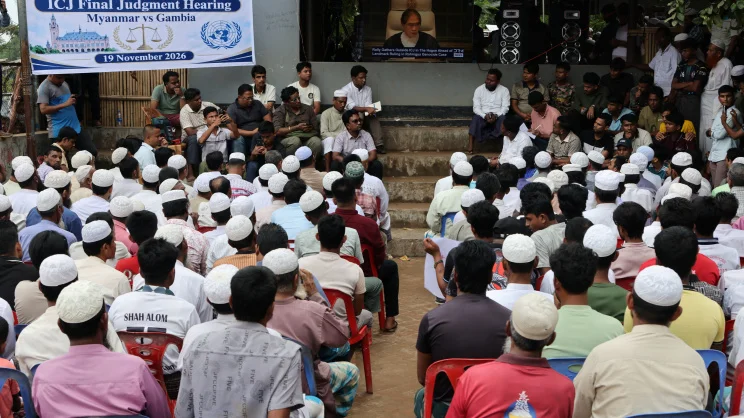

1795651340781.webp

Rohingya refugees watch the live announcement of a verdict by the International Court of Justice (ICJ) in a case accusing Myanmar of committing genocide against the minority Rohingya population, on a big screen at a refugee camp in Cox's Bazar, Bangladesh, November 19, 2026. REUTERS/Mohammad Ponir Hossain

Viewing the US reaction through a geopolitical lens

Interestingly, at present, the US and Chinese views on the verdict are closer than they might appear, and this is directly linked to two distinct issues – the geopolitics of rare-earth minerals and the salience of the US–Israeli alliance.

The geopolitics of rare-earth minerals

Myanmar’s geographical location along China’s southern border and on the Bay of Bengal and the Andaman Sea makes the country particularly important from a US perspective. Moreover, the country is rich in natural resources, including oil, natural gas, and rare-earth minerals. According to the US Geological Survey, Myanmar is the world’s fourth-largest producer of rare-earth minerals, and northern Myanmar is particularly rich in dysprosium and terbium – two rare-earth elements used in electric vehicle (EV) motors, electronics, defence systems, and wind turbines. Rare-earth minerals are crucial for modern technology, particularly for weapons systems and clean energy, but their production causes substantial environmental degradation.

Meanwhile, the US is highly reliant on China for the supply of rare-earth minerals, with 70% of its rare-earth imports originating from China between 2020 and 2023. However, the ongoing Sino–US trade war has led China to impose some restrictions on the export of rare-earth minerals to the US, and consequently, the US is attempting to diversify its sources of rare earths. Myanmar, with its abundant reserves of rare-earth minerals and relatively scant regard for environmental well-being, has the potential to partially replace China as one of the principal US sources of rare earths.


1795651390454.webp

A satellite image taken on 11 November 2025 shows how rare earth mining clusters have scarred the landscape along the Lwe River network in Myanmar’s Shan State. Competition with China for access to these critical minerals has prompted Washington to seek closer ties with Naypyidaw despite the ICJ’s genocide ruling. Photo: 2025 Planet Labs PBC/Handout via Reuters

Thus, while the US has previously undertaken hostile actions against the Myanmar government, including its condemnation of the violence against the Rohingya, its imposition of sanctions on Myanmar, its designation of the violence as genocide, and its support for the NUG in the country’s ongoing civil war, both Washington and Naypyidaw have recently sought to improve their ties. US Assistant Secretary of State for Intelligence and Research Michael Vance visited Myanmar in September and met President Min Aung Hlaing – a person whom the US had sanctioned in 2019 over human rights abuses against the Rohingya. Discreet talks also took place in Tokyo in October. Both meetings focused on potential US investment in Myanmar's rare-earth sector. Meanwhile, Naypyidaw is quietly lobbying the US government for investment in its rare-earth sector, hoping to reduce US support for the insurgents.

As a result, the US, which had designated the violence against the Rohingya as ‘genocide’ several years before the ICJ did so, has responded to the ICJ’s verdict with caution. The US State Department has stated that it is examining the ruling and stressed that the ICJ should not be ‘politicized’. While this may appear paradoxical and contrary to earlier US policies, it is consistent with the Trump administration’s demonstrated disinterest in international law and international institutions, as well as Washington’s recent efforts to achieve a rapprochement with Naypyidaw.

The salience of the US–Israeli alliance

The US has fully backed Israel at the ICJ in the case concerning the Application of the Convention on the Prevention and Punishment of the Crime of Genocide in the Gaza Strip (South Africa v. Israel) and criticised the case as ‘meritless’. Moreover, Washington has imposed sanctions on the International Criminal Court (ICC) over its issuance of an arrest warrant against Israeli Prime Minister Benjamin Netanyahu in 2025, initiated a diplomatic push to dismantle the institution, and imposed new sanctions on it in October 2026. Since the US is currently opposed to the cases against Israel at the ICJ as well as the ICC, it is understandably less than enthusiastic about the ICJ’s verdict in another genocide case.


1795651441424.webp

Indicative route of the proposed Bangladesh-China-Myanmar Economic Corridor.

Viewing the Chinese reaction through a geopolitical lens

China has responded to the ICJ’s verdict in diplomatic language, avoiding direct criticism of the institution while objecting to ‘overreach of jurisdiction’ and ‘expansive interpretation’. It should be noted that Xue Hanqin, the Chinese judge at the ICJ, has supported Myanmar’s position, though Beijing insists that she has acted in an independent capacity. However, the Chinese position on the ruling is consistent with its earlier stance on the Rohingya crisis and is rooted in its long-term strategic imperatives in Myanmar.

Myanmar is crucial to Chinese geostrategy because it provides China with an overland route to the Indian Ocean, enabling it to bypass the narrow Strait of Malacca in a potential crisis scenario. China views Myanmar as a crucial element in realising its Belt and Road Initiative (BRI) through the China–Myanmar Economic Corridor (CMEC) and potentially the Bangladesh–China–Myanmar Economic Corridor (BCMEC). It has undertaken strategically significant infrastructure projects in Myanmar, including the Kyaukphyu deep-sea port and the China–Myanmar Railway. China, along with Russia, is one of the principal suppliers of military equipment to Myanmar. Since the 2021 coup d’état, China has backed the military-controlled government in the civil war, while maintaining substantial ties with many ethnic armed organisations (EAOs) fighting against the government, including the United Wa State Army (UWSA), the Myanmar National Democratic Alliance Army (MNDAA), and the Kachin Independence Army (KIA). Thus, China is pursuing a dual-track policy in Myanmar to protect its economic and strategic interests.

Under such circumstances, the Rohingya crisis is a comparatively marginal issue for Beijing, which has no intention of straining relations with Naypyidaw over the issue. Consequently, China has consistently backed Myanmar on the issue at the United Nations (UN) and shielded it from concrete international action. Hence, the Chinese reaction to the ICJ’s verdict is predictable.


1795651481191.webp

Myanmar's Union Minister for the Ministry of the President's Office Ko Ko Hlaing attends a hearing on the day the International Court of Justice (ICJ) delivers its judgment in the case brought by Gambia accusing Myanmar of genocide against the Rohingya Muslim minority, in The Hague, Netherlands, November 19, 2026. REUTERS/Piroschka van de Wouw

Implications for Bangladesh and the Rohingya

The ICJ’s verdict on the Rohingya genocide is a major symbolic step, but despite its legal force, the ruling is unlikely to be enforced. China seeks to preserve its comprehensive political, security, and economic partnership with Naypyidaw, while the US is trying to achieve some form of rapprochement with Naypyidaw owing to its quest to diversify its sources of rare-earth minerals. As a result, neither of these two permanent members of the UNSC is likely to attempt to enforce the ICJ’s ruling. Moreover, the verdict cannot ensure the safe, sustainable, dignified, and voluntary return of the Rohingya to Myanmar. In any case, more than 90% of Rakhine State is currently outside the control of Myanmar’s central government, and even if Naypyidaw agreed to the repatriation of the Rohingya, it would not be able to implement it under the current circumstances.

Consequently, while the ICJ’s verdict on the Rohingya genocide is a step in the right direction, it is not enough to resolve the protracted Rohingya crisis. Therefore, Bangladesh and the Rohingya community should continue to strive to persuade the international community to enforce the ICJ’s verdict and resolve the protracted humanitarian crisis.

Md. Himel Rahman is currently serving as a lecturer in the Department of International Relations at Gopalganj Science and Technology University.​