[🇧🇩] India's Water Terrorism Against Bangladesh

[🇧🇩] India's Water Terrorism Against Bangladesh
318
15K
More threads by Saif

G Bangladesh Defense

Trans-boundary rivers to be managed based on shared interests: Humaiun
Staff Correspondent . Dhaka
1791510981377.webp

PID photo

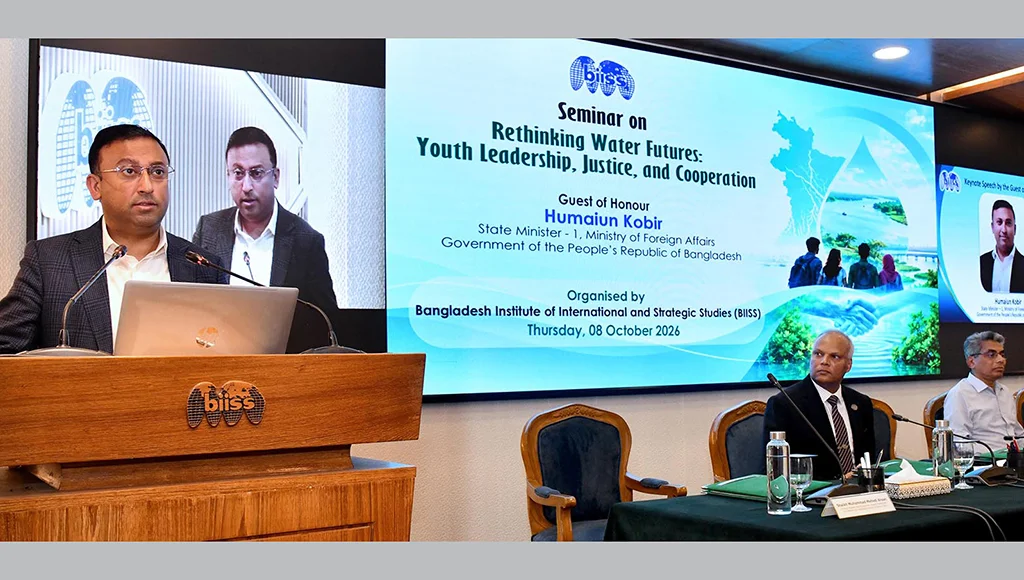
State minister for foreign affairs Humaiun Kobir on Thursday said that Bangladesh had consistently remained committed to the international law with the principle that trans-boundary rivers should be managed on the basis of shared interests.

Delivering his keynote speech at a seminar titled Rethinking Water Futures: Youth Leadership, Justice and Cooperation’, he said that more than 600 million people depended on 57 common rivers connecting Bangladesh with its neighbours and water security remained inseparable from the country’s national security and sustainable development.

Bangladesh Institute of International and Strategic Studies organised the seminar at its auditorium in the Dhaka city.

Humaiun’s remarks came out ahead of the expiry of the 30-year Ganges Water Sharing Treaty signed with India on December 12, 1996.

He said, ‘International water law provides an important foundation supporting equitable and reasonable utilisation, the obligation not to cause significant harm, and peaceful cooperation.’

‘These principles should guide the management of shared water resources,’ he added.

However, principles alone were not enough, Humaiun said, stressing the need for better data, scientific cooperation, regular dialogue, greater transparency and mechanisms through which riverine countries could better manage trans-boundary waters and realise shared benefits.

He said the present government was supporting Kazakhstan’s initiative to establish an international river organisation within the United Nations system.

Chief guest and water resources minister Shahiduddin Chowdhury Anee said Bangladesh would consider not only the quantity of water but also the timing and variability of the Ganges flows, flood management, sedimentation, river ecosystems and the livelihoods of river-dependent communities while proposing a ‘fresh’ version of the Ganges Water Sharing Treaty.

He said the government was working to renew the treaty in due time, incorporating a guarantee clause.

Regarding the Teesta, the minister said the river was extremely important to the people of northern Bangladesh.

‘Water shortages during the dry season and river erosion and flooding during the monsoon are among the major challenges associated with the Teesta,’ he said, adding that the government was prioritising the Teesta project and conducting feasibility studies and technical assessments.

Malik Fida Khan, former executive director of the Center for Environmental and Geographic Information Services, stressed the need for sustained dialogue involving India and China for the sustainable management of the Brahmaputra, Ganges and Meghna river basins.

He also called for greater representation of communities living along the rivers in such discussions.

Chaired by BIISS director general Major General ASM Ridwanur Rahman, urban planner Sheikh Muhammad Mehedi Ahsan, Oxfam International’s former technical coordinator, Zerin Ahmed, also spoke at the event.​
 

MOVE ON TEESTA MANAGEMENT PROJECT
Bangladesh to do feasibility study on its own


1791588593258.webp


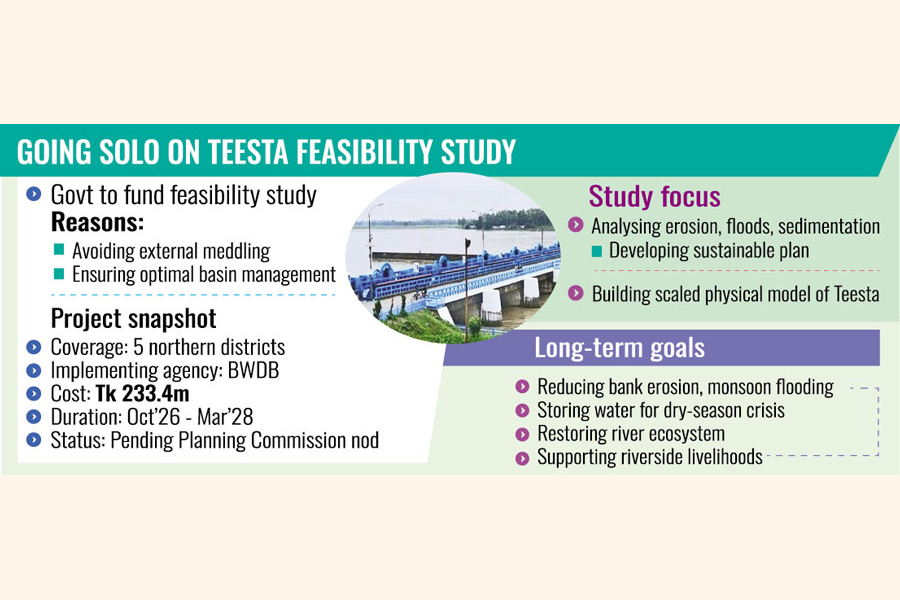
Bangladesh is set to conduct feasibility study on the long-stalled Teesta river-management project on its own to avoid any external meddling and get a better way of managing the cross-border water basin, officials said.

Since the proposed Teesta project is a geopolitically sensitive one, the Bangladesh government wants to conduct the feasibility study with its own funds for finding out viability and justification for the water-management project, they added.

"There some geopolitical issues involved in the Teesta river-management project. This time, the government itself wants to go for the feasibility," a senior official of the Ministry of Water Resources told The Financial Express.

Bangladesh Water Development Board (BWDB) has recently undertaken a Tk 233.40-million project for feasibility study and sent to the Planning Commission (PC) for approval.

"We have undertaken the feasibility-study project before going to develop the water-management system and river-restoration programme in the Teesta basin," said a senior BWDB official.

The proposed project for development of the river waters will cover five northern districts--Nilphamari, Lalmonirhat, Rangpur, Kurigram and Gaibandha.

Bangladesh has a stretch of 120-km water flow out of the total 315 kilometres in the Bangladesh-India cross-border Teesta River. The river originated in Sikkim, India.

The project is among the most closely watched infrastructure initiatives in the country, and it has drawn interest from major regional and global powers.

The past interim government last year sent a Preliminary Development Project Proposal (PDPP) to Chinese seeking necessary funds for the 1st phase of the "Teesta River Comprehensive Management and Restoration Project (TRCMRP)".

The government wanted to start project works in January next and complete the first phase within four years. It ultimately didn't proceed and the current BNP-led government now prepared the feasibility-study project for a better start-off.

Meanwhile, during Prime Minister Tarique Rahman's visit to China in June last, the two countries advanced cooperation on the Teesta project, including a new feasibility-study effort.

Besides, nearly a decade ago in September 2016, a memorandum of understanding (MoU) was signed between BWDB and China's state-owned Power Construction Corporation (Power China). But that project didn't advance either due to "shifting geopolitical circumstances".

Water resources ministry officials have said the fresh study would be crucial to taking the plan toward implementation, and that it would determine the precise locations and scope of the proposed works.

They stress that this is not the end of the planning stage. Environmental-impact assessment, final design, government approval, financing and field-level implementation would have to be done after the feasibility study.

According to the feasibility-study project proposal, the BWDB would conduct the study between October 2026 and March 2028.

Under the component-1 of the study project, the Board will analyse river erosion, flood, sedimentation and water-scarcity problem, and will develop "adaptive, integrated and sustainable plan".

In the componenent-2, the water development board will develop high-quality and scaled physical model representing the Teesta River focusing area under realistic hydrodynamics and sediment-transport condition, and prepare detailed data-sheet to support calibration, validation and performance evaluation of the models.

The Teesta originates in the Himalayas, flows through Sikkim and West Bengal and enters northern Bangladesh before falling into the Jamuna River.

Bangladesh's section of the river supports irrigation, agriculture, fisheries and the livelihoods of communities in the Rangpur region.

The proposed TRCMRP aims to manage the river as a basin-wide infrastructure and restoration project, with several objectives like reducing riverbank erosion and monsoon flooding, dredging sediment and improving river-channel management, storing and managing water to help address dry-season shortages.

Also, the project aims to reclaim land for agriculture and other economic activities; improve embankments, transport links and river access, restore the river ecosystem, and support communities along its banks.

The Teesta plan comes as the government commits heavily to water infrastructure. It recently approved the first phase of the Padma Barrage project, worth over Tk 330 billion.

Bangladesh and India have negotiated a proposed interim water-sharing agreement for years. A draft was finalised in 2011, but it was not signed. India's federal and state-level political considerations, including the position of West Bengal, have been major obstacles to reaching agreement.

In their September 2022 joint statement, the two countries reiterated the need to work towards a Teesta water-sharing agreement. India's official position has also referred to reaching an equitable agreement acceptable to all stakeholders.

The central issue is seasonal water availability. Bangladesh needs sufficient dry-season flow for irrigation and livelihoods, while farmers and water users in India's West Bengal also depend on the river.​
 

New Ganges waters treaty with guarantee clause emerges as priority for Dhaka

Treaty expires in December as Dhaka pushes for assured dry-season flows and stronger cooperation with India on shared rivers

1791592406377.webp

National flags of Bangladesh and India. Photo: Bigstock

Securing its fair share of the transboundary rivers' waters is likely to become a major issue for Bangladesh in the coming days, making effective water diplomacy, international cooperation and constructive engagement with India increasingly important, officials and experts have said.

The urgency is underscored by the Ganges Water Sharing Treaty, signed on December 12, 1996, which is due to expire on the same date this year. The government in Dhaka has been increasingly vocal in recent weeks, communicating a vision that Bangladesh will be seeking a new or revised agreement that safeguards its interests, particularly its share of dry-season flows, with the inclusion of a guarantee clause.

“Water could emerge as one of the major challenges for the entire world, including Bangladesh, in the future,” said Local Government, Rural Development and Co-operatives Minister Dr Abdul Moyeen Khan on Thursday, stressing the need to integrate proper water management into national development planning.

Bangladesh and India share 54 transboundary rivers, but the Ganges remains the only one covered by a bilateral water-sharing agreement between the two countries.

Guarantee clause a key priority

Water Resources Minister Shahiduddin Chowdhury Anee said Bangladesh wants a new or revised Ganges agreement rather than simply renewing the existing treaty, with provisions guaranteeing its required share of water during the dry season.

“Our main priority will be to bring back the guarantee clause that was included in the 1977 agreement,” he said on Thursday.

The 1977 agreement, negotiated by the BNP's founder Ziaur Rahman, included a safeguard stipulating that if the Ganges flow at Farakka fell below the level projected in the treaty to be provided to Bangladesh as its scheduled share during any 10-day period, the release to Bangladesh would not fall below 80% of that share.

An official also referred to Article III of the 1977 agreement, which stipulated that water released to Bangladesh at Farakka should not be reduced below Farakka, except for India's reasonable water uses, not exceeding 200 cusecs, between Farakka and the point where both banks of the Ganges lie within Bangladesh.

State Minister for Foreign Affairs Humaiun Kobir said Bangladesh would seek an outcome that safeguards its national interests and security, including through a possible guarantee clause.

Asked whether the existing treaty would be renewed or replaced with a new agreement, he said, “Whatever is best for Bangladesh’s interest will be done.”

Kobir said Bangladesh’s committee was ready and Dhaka was awaiting a final response from its Indian counterparts.

“Our committee is ready. We are just waiting for the final response from our Indian counterparts. So yes, we are hopeful,” he said.

He also stressed that international law was being taken into consideration in addressing the water-sharing issues.

The Indian government, through its Ministry of External Affairs spokesperson Randhir Jaiswal has said that issues concerning the Ganges treaty and other shared rivers would be discussed through the Joint Rivers Commission (JRC).

“On the Ganga Water Treaty, as also other rivers that we share between Bangladesh and India, we have a Joint Rivers Commission. All matters relating to rivers, river-related matters, will be discussed as part of this Joint Rivers Commission,” he said recently, adding that technical-level meetings on the Ganges treaty had continued.

Kobir said sincerity at the political and official levels in both countries was essential to finding an amicable resolution to the long-standing water-sharing issues.

He expressed optimism that the issues could be resolved positively if the leadership of both countries demonstrated a willingness to cooperate.

Cooperation key to water diplomacy

Anee said water diplomacy should focus on cooperation and mutual benefits rather than competition, stressing the need for sustained dialogue, scientific cooperation, data sharing and inclusive water governance.

“Cooperation should create mutual benefits rather than being framed explicitly as a competition over water,” he said.

He described water as closely linked to Bangladesh’s geography, economy, agriculture, culture, foreign policy and national security.

“We are a delta country shaped by rivers. Yet, we are also a riparian country dependent on water flows originating beyond our borders,” he said.

Anee called for stronger engagement through the JRC and multilateral water governance mechanisms, alongside greater international cooperation and scientific collaboration.

Bangladesh has joined the UN Water Convention, while the Delta Plan 2100 and national river-management initiatives provide a broader framework for addressing long-term water challenges.

“We need cooperation instead of confrontation, evidence instead of assumptions, participation instead of execution, and long-term planning instead of short-term responses,” he said.

“Our goal should not simply be to manage water crises when they occur; our goal should be to build a just, decent, and cooperative water future,” Anee added, calling for greater youth participation in water governance.

Teesta remains a major concern

Turning to the Teesta, Anee said the river was particularly important for people in northern Bangladesh, where seasonal variations cause water shortages during the dry season and erosion and flooding during the monsoon.

He said the government had placed considerable emphasis on the Teesta project, with feasibility studies and technical assistance underway.

State Minister Kobir also highlighted the importance of water diplomacy on multilateral platforms, stronger international partnerships, technology transfer and scientific cooperation to advance Bangladesh’s interests in transboundary water management.

With the Ganges treaty approaching expiry, Bangladesh faces the task of securing an equitable and sustainable water-sharing arrangement while strengthening cooperation on other shared rivers.

“I think it is very important for Bangladesh and India to renew the Ganges Treaty. But it has to be revised. The very simple reason is that the treaty was done almost three decades ago,” international affairs expert Prof Shahab Enam Khan told UNB recently.

Shahab, who is the executive director of Bangladesh Center for Indo-Pacific Affairs, strongly suggested that this should also come with arrangements such as revitalising the JRC and including a much more transparent and accountable data-sharing system, which will definitely build much more confidence over "hydro-diplomacy" and water management and water sharing, most importantly, between the two countries.

“This is very important that we should also go into the diplomatic negotiations not only from the diplomatic perspective, but also from engineering, science, and definitely economic perspectives,” he said.

Foreign Minister Dr Khalilur, while attending the ninth Indian Ocean Conference in Mauritius, said they would like to see that there is an arrangement and a new treaty, or a revised treaty, ensuring the essential needs of their people.

“These are common rivers, and we have common legacies here, common interests and, as I said, there's no other alternative but to seek a solution that is durable and will win public trust. And this will also be very important to lay the basis for the relationship over the next 25 to 50 years,” he told NDTV on the sidelines of the conference.

The foreign minister said they have done 55 years (of bilateral relations) already. “So, I don't think we should look at five years or ten years. We have to look at the very long term. So, mutual climate resilience as a priority in our foreign policies, our people policy, I should say, will actually be a key driver of the future.”​
 

Fast-tracking Teesta project


1791760857323.webp


The fact that the government has reportedly decided to conduct the feasibility study for the Teesta River Management Project on its own is undoubtedly a bold move. For months, there had been speculation that Bangladesh and China would jointly conduct the feasibility study and that the project would be implemented with Chinese funding and engineering and technical expertise in river management. The Teesta project, however, has become a geopolitically sensitive issue, where the involvement of one country could draw the ire of another, creating opportunities for interference in Bangladesh's internal affairs or turning a cooperative river management initiative into a geopolitical rivalry. This is one of the reasons why the project has remained stalled for nearly a decade since it had been conceived in 2016. The previous Awami League government showed little to no interest in implementing it before its ouster on August 5, 2024. The subsequent interim government, however, took up the project in earnest and all the nitty-gritty of inaugurating the feasibility study in January 2026 had been completed. However, it was postponed at the eleventh hour in view of the parliamentary election scheduled in February.

After assuming power, the BNP government's intention to implement the Teesta master plan in cooperation with China was apparent. During his visit to China, Prime Minister Tarique Rahman sought the Chinese government's support for implementing the project and talks of kick-starting a joint feasibility study anytime soon were in the air. Now, however, in an abrupt turn of events, the government is reportedly planning to conduct the feasibility study on its own, citing the need to avoid external interference and find a more effective way to manage the trans-boundary river basin. To this end, the Bangladesh Water Development Board (BWDB) has proposed a Tk 233.40-million project, which is awaiting approval from the Planning Commission. Going it alone in conducting the study is a shrewd move to minimise the risk of geopolitical interference. The question, however, is whether Bangladesh has the wherewithal to implement such a mega project on its own.

Nonetheless, the fact is that the Teesta project cannot wait any longer. For tens of millions of inhabitants of the region, each year of delay means another year of facing the double whammy of drought and flooding. The Teesta runs dry during the dry season due to an embankment built upstream and the diversion of water. Consequently, water shortages badly affect irrigation and crop production. Conversely, during the monsoon, the unexpected release of water from upstream bursts riverbanks, leading to erosion and the destruction of vast areas of settlements each year. The proposed project aims to alter this status quo by adopting an integrated river management approach that incorporates elements such as dredging, embankments, irrigation system improvements, river engineering, urban planning, land reclamation and so on. It is expected that implementation of the project would address the long-standing challenges of water scarcity, severe riverbank erosion and flooding, declining agricultural productivity and ecological degradation across northern Bangladesh.

The incumbent BNP government is pledge-bound to implement the Teesta project. Prior to the election, the BNP's Teesta River protection movement attracted millions of people on both banks of the river, rekindling a ray of hope among the locals about the implementation of the project, which is a life-and-death question for them. No government accountable to its electorate can leave such a vital project hanging in the air due to geopolitical reasons. Execution of the project, therefore, is a major challenge facing the government. It must leave no stone unturned to prove equal to the task.​
 

JS committee discusses Ganges Water Sharing Treaty


1792019792911.webp


A parliamentary standing committee on water resources has discussed Bangladesh’s national interests in the Ganges Water Sharing Treaty and expressed hope that the Padma Barrage project could be inaugurated in February 2027.

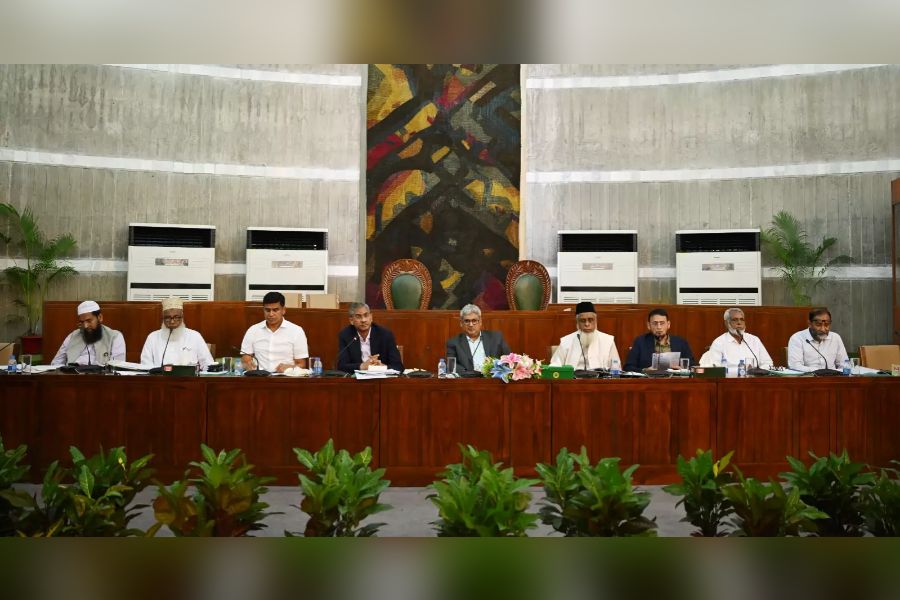
The second meeting of the Parliamentary Standing Committee on the Ministry of Water Resources, chaired by its chairman Mohammad Shafiqul Haque Milon, MP, was held at the Jatiya Sangsad Bhaban on Wednesday.

The meeting discussed whether the existing Ganges treaty would continue or be renewed, but no final decision has yet been taken on the matter, according to a press release.

It was informed that the relevant process was ongoing, reports UNB.

The committee also discussed a proposed inspection of the Padma Barrage project site in Sujanagar upazila of Pabna district on October 25.

At the beginning of the meeting, the minutes of the committee’s first meeting were confirmed subject to amendments.

The committee then reviewed the implementation progress of two riverbank protection projects adopted at its previous meeting.

The projects are aimed at preventing erosion along the Brahmaputra and Jinjiram rivers in Jamalpur district, and protecting the left bank of the Jamuna River, the Old Brahmaputra River and the Alai River as they flow through the district.

Reports were also presented on the Barnoi River Re-excavation, Pollution Prevention and Encroachment Removal Project in Rajshahi and Natore districts.

The committee reviewed the rehabilitation of polders 67/A, 67, 67/B and 68 along the Naf River in Ukhiya and Teknaf upazilas of Cox’s Bazar district. The project aims to improve border security along the Bangladesh-Myanmar frontier and is being implemented under its second revised version.

The emergency maintenance and rehabilitation activities of the Ganges-Kobadak Irrigation Project were also discussed.

The committee examined the implementation progress of all the projects and reviewed the reports presented at the meeting.​
 

Rivers and geopolitics: Is Teesta project turning into a geopolitical game?​
  • While discussions were ongoing about the technical issues of the Power-China Teesta project, the geopolitical tension between India and China regarding this project became apparent.​
  • ​
  • Given the Bangladesh-US trade agreement and the nearly Tk 120 billion budget of this project, it wouldn't be surprising if the US shows interest.​
  • ​

1792020694931.webp


Bangladesh has already faced geopolitical tensions between India and China over the Teesta barrage project. Recently, some interest from the US has also become visible regarding this project. In a two-part series, Nazrul Islam writes about how the Teesta Barrage Project has turned into a geopolitical game and how its detrimental effects can be avoided. The first part was published today.

US Ambassador to Bangladesh, Brent T Christensen, along with his wife, visited the Teesta barrage project sites in Lalmonirhat and Nilphamari on 30 August. Senior economic and political officials from the US Embassy in Dhaka were also part of this delegation. The US Ambassador's visit to the remote Teesta area naturally sparked curiosity among people.

Ambassador Christensen's visit was not limited to the Teesta Barrage; he also visited various economic institutions in the area, including Paragon Dairy of Paragon Group in Gangachara upazila of Rangpur, Green Field Tea Industries Limited in Panchagarh, and the country's largest central railway workshop in Parbatipur.

Visit to the Teesta and the recent Bangladesh-US trade agreement

Many experts see a connection between the recent (9 February 2026) trade agreement signed between Bangladesh and the US and the visit by the US Ambassador and senior officials to the Teesta area. A common goal of this widely discussed agreement is to expand the market for American companies within Bangladesh. Among these, dairy products are specifically mentioned.

However, this market is not limited to goods alone; it also applies to various types of services. One of these is construction contracting. The contract work for large-budget projects implemented with government funding is particularly attractive. This trade agreement emphasises, directly or indirectly, that American companies should also be able to secure such work.

Naturally, the Teesta project comes up in this context. Given the Bangladesh-US trade agreement and the nearly Tk 120 billion budget of this project, it wouldn't be surprising if the US shows interest. But Bangladesh has already encountered geopolitical tensions between India and China over the Teesta project. The involvement of the US would undoubtedly complicate the situation further. The question is, how will Bangladesh manage this complex situation?

The Teesta river, barrage, and crisis

To understand the issue, one must first know some facts about the Teesta River and the project. The Teesta is Bangladesh's fourth-largest river, originating in the Indian state of Sikkim at the foothills of the Himalayas, flowing through West Bengal before entering Bangladesh, and finally merging with the Jamuna near Chilmari in Kurigram. Being close to the Himalayas, this river is swift (with a steep slope), prone to flash floods, seasonal, and carries sediment. Sediment-laden, seasonal rivers are generally braided because, during low-flow seasons, sediment deposition causes sandbars and the river divides into multiple channels around these bars. As a result, braided rivers become wider than their flow.

For a commercial approach to rivers, India constructed multiple dams on the Teesta and its tributaries in Sikkim to harness hydropower potential. Meanwhile, Bangladesh's water authorities saw irrigation potential in the Teesta and considered building a barrage to implement it. Indian authorities were also interested in using Teesta's water to expand irrigation in West Bengal and completed the Gajoldoba barrage by 1987. Although Bangladesh started the barrage idea before India, it fell behind in implementation and completed the barrage at Dalia in 1990.

However, building a barrage at Dalia without any agreement or assurance on how much flow would be available from Teesta during the dry season doesn't turn out to be a wise decision for Bangladesh since India, taking advantage of its upstream position, gradually increases the irrigated area and the amount of water withdrawn from Teesta. As a result, the purpose of the Dalia barrage gets largely thwarted and instead becomes a problem for Bangladesh.

Firstly, during the dry season, there's not enough water in the river for irrigation. Secondly, if the little water reaching the Dalia barrage is diverted, there's no water left in the main part of the Teesta from Dalia to Chilmari, a stretch of 102 kilometers in Bangladesh. Thirdly, during the monsoon season and flash floods, India opens all the gates of the Gajoldoba barrage to avoid potential flooding, and Bangladesh does the same at the Dalia barrage to prevent flooding upstream.

At that time, a huge volume of water rushes downstream, causing floods. Fourthly, another problem arises. During the dry season, due to the riverbed drying up in Bangladesh, many sandbars form, the river becomes shallow, and it can't contain monsoon waters; instead, the riverbanks, laden with stones and sand, erode and widen. As a result, the width of the Teesta has increased by about threefold to around 3.1 kilometers.

Thousands of families have been rendered destitute, becoming refugees in Dhaka's slums or starting anew on sandbars.

The various issues with Power-China's Teesta project

It was the responsibility of Bangladesh's water authorities to find and implement solutions to the human-made crisis of the Teesta. However, they didn't show that capability and instead sought external assistance. This led to the emergence of a project by the Power-China company regarding the Teesta. Power-China arranged for a loan of about one billion dollars on commercial terms from China's Exim Bank for this project.

There's no doubt that China is now the most advanced country in various technological fields, especially in constructing bridges, dams, and barrages over rivers. However, the character of Bangladeshi rivers is very different from that of Chinese rivers. Therefore, understanding the uniqueness of the Teesta River and deriving an effective solution based on that is difficult even for Chinese experts. Initially (according to the 2019 feasibility study), the main features of their proposed project were as follows:

1. Denying Teesta's braided character and transforming it into a single-channel (meandering) river;


2. Reducing the average width of the river from the current nearly 3 kilometers to 816 meters (700 meters from Dalia to Kaunia and 1 kilometer from Kaunia to Chilmari);

3. Increasing the average depth of the river from 5 meters to 10 meters through dredging;

4. Using dredged materials to fill the river bed area and use it for urbanisation, industrialisation, etc. ;

5. Constructing embankments on both sides of the entire Teesta from Dalia to Chilmari to confine the monsoon flow within an 816-meter-wide channel;

6. As part of this process, effectively disconnecting Teesta from all its branches and tributaries by constructing embankments on their banks.

From BAPA (Bangladesh Paribesh Andolon), BEN (Bangladesh Environmental Network), and the Teesta Protection Movement, both I and Professor Khalequzzaman from the University of Pennsylvania in the US closely reviewed the Power-China project design and showed that it's impractical for various reasons.

Firstly, a braided river by natural causes can't be forcibly transformed into a single-channel river; even if all engineering might is used to do that, this unnatural transformation won't be sustainable, and the river will soon revert to its original braided character.

Secondly, the narrow embankments constructed on the river's banks and shores will be prone to erosion, and cities and industries built outside the embankments will be flooded.

Thirdly, the nearly 40 million tonnes of sediment carried annually through the Teesta River will accumulate at the bottom, soon negating any increase in depth achieved through dredging, further reducing the river's monsoon water-holding capacity. Overall, the entire Power-China project will fail, and Teesta's problems will become more complex. (For a more detailed discussion of these issues, see the document titled 'Teesta River in Crisis: Which Way to a Solution'.

Bangladesh's water authorities were annoyed by our criticism because they wanted the project approved and proceeded with its implementation as quickly as possible. They didn't seem too concerned about whether the project would truly solve the Teesta issue. Some residents of the Teesta area were also unhappy, feeling that we were becoming obstacles on the path to solving the Teesta problem.

Of course, we can't really blame them for that, because the government had maintained extreme secrecy regarding the Teesta project. As a result, they had no clear understanding of the detailed design of the project and couldn't arrive at well-considered decisions about its accuracy.

However, it seems that it was impossible for Chinese experts to ignore our analysis. Consequently, they presented a revised project design in 2023. This design maintained the goal of transforming the Teesta from a braided river to a single-channel river and reducing its average width to 816 meters, but introduced significant changes in some areas.

Firstly, instead of constructing embankments parallel to the riverbed, it was proposed to build them at an average distance of about one kilometer from the riverbed (the average distance between embankments on both banks is 2.8 kilometers).

Secondly, instead of increasing the river's depth to 10 meters through dredging, a complex profile was proposed for the river's bed. These changes introduced new issues, such as how urbanisation and industrialisation would be possible if embankments were constructed an average of one kilometer away from the riverbed and if the area within the embankments was subject to biannual flooding. How would they be protected from bank erosion if the river bed width remains at 816 meters?

Thirdly, how would the design of the river bed with narrow, steep gorges survive against the flow of about 40 million tonnes of sand and sediment annually? At a meeting held at the Water Development Board office on 17 July 2025, BAPA, BEN, and the Teesta Protection Movement raised these questions about the revised Power-China project. Power-China couldn't provide satisfactory answers.

India-China tension over the Teesta project

While discussions on the technical issues of Power-China's Teesta project were ongoing, the geopolitical tension between India and China regarding the project came to light. According to various sources, India felt uneasy about this Chinese project being so close to its narrow passageway to its seven northeastern states and proposed to Bangladesh to implement and finance the project itself.

This proposal from India put the then-Awami League government in a quandary; although the government had turned to China precisely because it hadn't received a positive response from India on the Teesta agreement, it was difficult to ignore India's proposal.

This change in stance by the then-Prime Minister angered China, which they communicated during her visit in 2024. Thus, the Teesta Project became a geopolitical issue. The US ’s entry into this project would undoubtedly make the situation more complicated. Now the question is, how can Bangladesh solve the Teesta problem and avoid the harmful effects of geopolitics?

* Nazrul Islam is a professor at the Asian Growth Research Institute and former head of development research at the United Nations.​
 

How can the Teesta project be kept free of geopolitical influence?


Bangladesh has already faced geopolitical tensions between India and China over the Teesta Barrage Project. Recently, some interest in the project has also become apparent on the part of the United States. In a two-part series, Nazrul Islam examines how the Teesta Barrage Project has turned into a geopolitical contest and how its harmful consequences can be avoided. The final installment has been published today, Thursday.

Nazrul Islam


1792106953271.webp


While reviewing PowerChina’s Teesta project, Professor Dr. Khalequzzaman, a professor of geology at the University of Pennsylvania, and I did not limit ourselves to exposing its various shortcomings. We also presented an alternative. The key features of this alternative were as follows:

1. Abandoning the goal of forcibly transforming a braided river into a single-channel river.

2. Discarding the objective of abruptly reducing the river’s average width from approximately 3 kilometers to 816 meters.

3. Prioritising the prevention of riverbank erosion as an immediate measure.

4. Initially establishing a desired “provisional stable bank” along the Teesta by following the points along its banks that have proven stable over approximately the past decade.

5. Using geobags and other appropriate indigenous technologies instead of Western-style rigid structures to establish this provisional stable bank.

6. After establishing the provisional stable bank, gradually reducing the width of those sections of the Teesta considered undesirably wide by adding further layers of geobags.

7. Rather than mechanically imposing a uniform width on the Teesta throughout its course, allowing its width to vary according to the specific conditions of different locations and giving the river’s natural behavior a role in determining its bends and width.

8. Following an open approach to restoring the connections between the Teesta and its floodplain, as well as those between the river and all its distributaries and tributaries; revitalizing the entire Teesta basin and transforming it into a network of dispersed water-storage areas.

9. Making decisions about the chars (riverine islands and sandbars) already formed in the river on the basis of a flexible approach.

10. Fully informing local communities about the envisioned transformation of the Teesta; giving due weight to their opinions when making decisions about the specific aspects of this transformation; and creating as many opportunities as possible for their direct participation in implementing the project.

The suitability of geobag technology over rigid structures for river management in Bangladesh has been conclusively demonstrated. It is worth noting that 15 groynes had previously been constructed to prevent erosion along the banks of the Teesta, but they proved ineffective

The philosophy underlying this alternative proposal is to adopt a nature-based approach to rivers, not to regard them as adversaries or act against them, but to accept them as living entities and manage them in cooperation with them.

Rigid structures versus geobag technology in river management

PowerChina’s proposal to narrow the Teesta to 816 meters relied entirely on groynes. It called for the construction of 50 new groynes along the two banks of the river and the reconstruction of 15 existing ones. A groyne is a rigid structure made of concrete that has been used in Western countries. Other examples of rigid structures include spurs, hard points, and concrete revetments. These structures have been used to prevent riverbank erosion along various rivers in Bangladesh, including the Jamuna, but they have not proved effective.

I have discussed the comparison between rigid structures and geobag technology in detail in two books: Water Development in Bangladesh: Past, Present and Future and Water Development in Bangladesh: The Crisis of the Current Approach and Proposals for Alternative Pathways. There is no need to repeat that discussion here. Briefly, rigid structures are inflexible. Once constructed, they offer no scope for modification, extension, or dismantling. Geobag technology, by contrast, is strong yet flexible, allowing structures to be modified through the addition or removal of components. Both sand and geotextile materials are inexpensive and readily available in Bangladesh. Consequently, geobag technology is far less costly than rigid structures.

Recently, the use of geobags in the Pabna Irrigation Project, the Meghna-Dhonagoda Project, and the Meghna-Jamuna Riverbank Erosion Mitigation Project has produced comparatively good results. Drawing on these experiences, researchers have shown that the cost of constructing concrete-block-based revetments in Sirajganj and spurs at Betil-Enayetpur was 67.8 billion taka and 27.9 billion taka per kilometer, respectively. In contrast, constructing a geobag-based revetment at Kalitala cost only 2.8 billion taka per kilometer.

During the first 10 years after project implementation, the Sirajganj revetment and the Betil-Enayetpur spurs required repairs and reconstruction six and seven times, respectively. The associated expenditures amounted to 30 per cent and 120 per cent, respectively, of their original implementation costs. By contrast, both figures for the Kalitala geobag revetment were zero.

Thus, the suitability of geobag technology over rigid structures for river management in Bangladesh has been conclusively demonstrated. It is worth noting that 15 groynes had previously been constructed to prevent erosion along the banks of the Teesta, but they proved ineffective. Despite this experience, it is surprising that Bangladesh’s water authorities became enthusiastic about PowerChina’s project, which relies entirely on groynes.

The interim government and the Teesta project
Professor Muhammad Yunus’s interim government was not close to India as the previous Awami League government had been. Therefore, from a geopolitical perspective, this government faced relatively few obstacles to moving forward with PowerChina’s project. In fact, the government showed considerable enthusiasm for the PowerChina proposal. During his visit to China, Muhammad Yunus announced that the project would be implemented with China’s assistance. He also urged the Chinese authorities to prepare a 50-year master plan for the rivers of Bangladesh.

The interim government’s adviser for water resources also expressed considerable enthusiasm for PowerChina’s project.

First, however, given the government’s close relationship with the United States, there were certain difficulties associated with becoming overly enthusiastic about expanding ties with China. Second, it was inappropriate for an interim government with a limited tenure to make decisions about a long-term project such as the Teesta. Third, it was during this government’s tenure that we highlighted the problems with PowerChina’s revised project of 2023. For whatever reasons, PowerChina’s project ultimately made little progress under the interim government.

The BNP government and the Teesta project
Before the 13th parliamentary election, the Bangladesh Nationalist Party (BNP) showed considerable enthusiasm for PowerChina’s project. In particular, the party’s leaders from the Rangpur Division organized a massive torchlight procession along the Teesta and a large human chain in Dhaka, demanding implementation of the Teesta Master Plan.

The BNP government is ostensibly not close to India either and is careful in maintaining its relations with the United States. At the same time, however, it is interested in improving relations with China. Amid these three-way geopolitical tensions, it remains unclear what decision the government has made regarding the Teesta. The water resources minister has, however, announced at various forums that the government wants to resolve the Teesta problem by relying on domestic expertise.

It is unclear precisely why the BNP government is emphasising domestic expertise. The geopolitical triangle mentioned above may play a role. Another noteworthy consideration is that, in projects generally designed and implemented by foreign companies, local experts and officials typically serve as “junior partners” and benefit from their involvement.

That prospect did not appear likely with PowerChina’s project, however, because the Chinese were simultaneously responsible for both designing and implementing it. It is said that this was one reason for some dissatisfaction with PowerChina’s project within the Bangladesh Water Development Board (BWDB) and among professionals in Bangladesh’s water sector. It is difficult to say whether this dissatisfaction was another factor behind the government’s change of attitude toward the project.

Whatever the reasons, if the government has genuinely decided to resolve the Teesta problem on the basis of domestic capabilities, that is welcome news. For this effort to succeed, however, it must be grounded in a sound philosophy of rivers and river management.

There are contradictory indications in this regard. One encouraging sign was a symposium organised on September 17 by the Department of Water Resources Engineering at the Bangladesh University of Engineering and Technology (BUET), attended by the water resources minister and government officials. The keynote paper and other presentations at the symposium echoed the ideas underpinning the alternative proposal outlined above, as advocated by the Bangladesh Poribesh Andolon (BAPA), the Bangladesh Environment Network (BEN), and the Teesta River Protection Movement. This is an encouraging development.

On the other hand, various sources indicate that the Institute of Water Modelling (IWM) has been assigned responsibility for preparing the concept paper for an alternative Teesta project. It is difficult to be enthusiastic about this news.

First, this organisation, composed primarily of engineers, continues to adhere largely to a utilitarian approach to rivers. It does not adequately understand their natural functions and views them mainly as mechanical systems rather than as ecological and living entities.

Second, various reports prepared by the organisation suggest that, rather than seeking objective solutions to problems, it is more interested in providing recommendations that suit the preferences of the commissioning agencies.

Therefore, we, representing BAPA, BEN, and the Teesta River Protection Movement, urge the government to ensure that the process of developing an alternative project for the Teesta is conducted transparently rather than in secrecy.

• Disclose the names of the individuals appointed to the 11-member committee.

• Give an appropriate role in the process to organizations that have been campaigning for 20–30 years to resolve the Teesta problem.

• Take steps to benefit from the participation of expatriate Bangladeshi experts who are conducting valuable research on the Teesta and contributing to the struggle to protect the river.

National capacity and appropriate mindset
There is no doubt, therefore, that the Teesta project must be kept free from the harmful effects of geopolitics. The way to achieve this is to design and implement the project on the basis of domestic capabilities. However, the kind of domestic capabilities on which the project will rely is no less important. Sadly, the kind of national capacity that was expected to develop over the more than five decades since independence has failed to materialise.

The expectation was that the Bangladesh Water Development Board (BWDB) would become a “center of excellence” for water-related expertise in Bangladesh. Over time, however, its capacity seems to have diminished rather than grown. For any substantial intellectual or technical undertaking, it has become necessary to turn to external consulting firms. Corruption has compounded the problem.

Many other water-related research and consulting organisations, too, remain largely attached to the thinking of the 1950s and 1960s. A striking example was evident during the previous government’s formulation of the so-called Bangladesh Delta Plan 2100. At a time when the Netherlands itself was moving away from the polder approach and embracing the idea of “Room for the River,” these organisations were enthusiastic about building more polders and embankments in Bangladesh. Therefore, the idea of resolving the Teesta problem on the basis of national capabilities is sound. However, attention must also be paid to identifying and utilizing the right kinds of national capabilities to achieve this objective.

Several factors make it easier to resolve the Teesta problem through domestic capabilities. First, technological simplicity. Stabilizing the banks of the Teesta with geobags does not require sophisticated technology. This is not nuclear power generation! There is, therefore, no need to turn to foreign countries for the necessary technology.

Second, this technological simplicity creates opportunities for public participation in implementing the project, even through voluntary labor. River protection could become a massive patriotic undertaking.

Third, low cost. This work can be completed with a very modest budget. Consequently, there will be no need to turn to foreign countries for loans, either. Those who view projects merely as a means of making money may be disappointed by this prospect. The public, however, will be spared the burden of taking on even more debt.

Whether Bangladesh will move forward along this path in the future remains to be seen.

* Nazrul Islam is a professor at the Asian Growth Research Institute and former head of development research at the United Nations.​
 

Latest Posts

Back