Bangladesh Defense

Saif
Senior Member
- Joined
- Jan 24, 2024
- Messages
- 22,262
- Likes
- 9,869
- Nation

- Axis Group

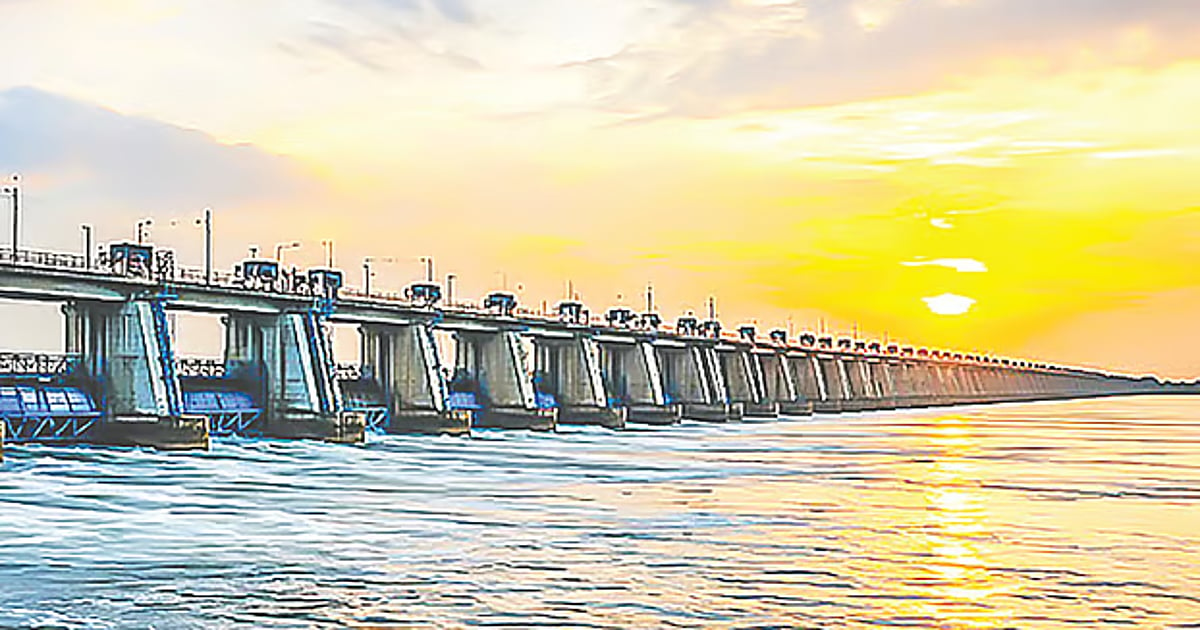
Where are the answers to 10 questions raised about the Ganges Barrage?
On 22 August, a discussion was organised by Bangladesh Poribesh Andolon (BAPA) and Bangladesh Environment Network (BEN) at the CIRDAP auditorium in Dhaka regarding the proposed Ganga Barrage. We raised 10 questions about the barrage: 1. Why such secrecy around this barrage? 2. Will the barrage...
 en.prothomalo.com
Where are the answers to 10 questions raised about the Ganges Barrage?
India’s experience with the Farakka Barrage shows that it has created such serious problems for both upstream and downstream areas that it has now become a trap. Nazrul Islam and Md Khalequzzaman write about whether Bangladesh could face a similar situation
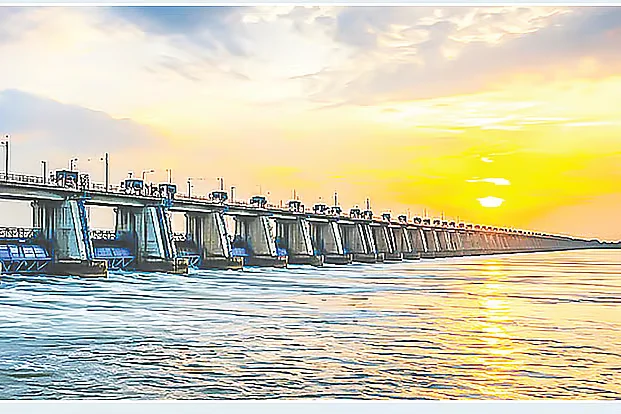
Illustration has been created by AI
10 questions about the proposed Ganges Barrage
On 22 August, a discussion was organised by Bangladesh Poribesh Andolon (BAPA) and Bangladesh Environment Network (BEN) at the CIRDAP auditorium in Dhaka regarding the proposed Ganges Barrage.
We raised 10 questions about the barrage: 1. Why such secrecy around this barrage? 2. Will the barrage only use monsoon water in winter? 3. Where is the discussion on the barrage's impact on downstream areas? 4. Why don't Ganges' monsoon flows reach its branches currently? 5. What is the solution to the waterlogging problem in the southwest? 6. How reassured can we be about sediment deposition, flooding, and bank erosion upstream of the barrage? 7. How reliable are the estimated benefits of the barrage upstream of Pangsa? 8. Will this barrage weaken Bangladesh's position on sharing Ganges waters? 9. Why is the planning based on such outdated data? 10. Is it prudent to undertake such a massive budgetary project in the current fragile economic situation?
No satisfactory answers from relevant agencies
The Bangladesh Water Development Board (BWDB) and the organisations that played key roles in formulating this barrage project should have answered these questions on behalf of the government. However, the BWDB rarely shows interest in discussing their projects in public.
BAPA and BEN have organised numerous conferences on the country’s water resources, yet representatives from BWDB, despite being invited, did not attend to explain and validate the government's position. It appeared that they had no representation at the 22nd August discussion either.
Perhaps BWDB currently lacks sufficient internal technical capacity and relies heavily on external research-consulting firms for these tasks. DCC, along with IWFM (Institute of Water Modelling), CEGIS (Centre for Environmental and Geographic Information Services), and a company named Data Ex, undertook the feasibility study and design of the Ganga Barrage Project for BWDB.
It was BWDB's responsibility to ensure that representatives from these organisations attended the discussion and addressed various project questions. BAPA and BEN had also invited these organisations.
It’s challenging to ascertain if they were encouraged by BWDB or responded directly to BAPA and BEN’s invitation, but two representatives from these organisations attended the discussion. One was a former head of CEGIS, now retired, possibly involved in drafting the project before 2016.
Another was from IWFM, playing a crucial role in the project and still active.
The former head of CEGIS claimed that a section of the feasibility study's annexes discusses the barrage's impact on downstream areas. Based on his statement, almost everyone present requested him to share that annex. Follow-up contact for the annex went unanswered.
Earlier, BAPA formally requested the proposed Ganges Barrage's feasibility study and its annexes be shared. Yet, the authorities ignored the request despite the existence of Right to Information (RTI) laws ensuring public access to important information.
The IWFM representative accused us of not thoroughly reading the executive summary of the feasibility report. It’s a serious accusation, no doubt. However, it’s interesting to see how a representative from an organisation that kept their report confidential and didn’t share it, even after a formal request, accuses others of not reading the report.
Effectiveness of foreign experts
To illustrate the quality of the barrage project, the IWFM representative repeatedly mentioned that many foreign experts were involved. Someone familiar with the history of water development efforts in Bangladesh might not be as enthusiastic about foreign experts. In the 822-page book "Water Development in Bangladesh: Past, Present, and Future," Nazrul Islam detailed the history, highlighting that foreign experts were primarily responsible for the tragedies in Bangladesh's water development. Local engineers who silently assisted them also share considerable responsibility.
Therefore, claiming a project is good simply because many foreign experts were involved seems to indicate that many of our engineers still hold a colonial mentality. Interestingly, among the list that the IWFM engineer boasted about, Pakistan was included. The sudden enthusiasm for Pakistan is also intriguing.
Almost a month has passed since the 22nd August discussion. Neither the government nor BWDB and the related consulting firms have responded to any of the 10 questions raised. The easiest for them would have been to address the first question (why such secrecy?) by opening barrage-related information, such as the feasibility report and its annexes, to the public. If some parts need to be kept confidential for national interests, they can
The recent example of the Teesta project highlights the challenges foreign experts face in accurately understanding and suggesting solutions for Bangladesh’s river problems. Until recently, almost everyone within BWDB and related consulting firms enthusiastically supported the so-called 'Teesta Master Plan' developed by Chinese experts.
When we criticised the project, they were displeased. Yet, eventually, the Chinese withdrew their initial feasibility study and presented a revised design, which we still found lacking. (For more details, enthusiasts can read our pamphlet Teesta River in Crisis—Which Way Forward?')
Our logical criticism led to the abandonment of the Chinese master plan, and the government is now largely seeking solutions for the Teesta River's problems based on local expertise and the directions we proposed. Against this backdrop, the IWFM engineer's citation of foreign experts to validate their barrage project seems inconsistent and unfortunate.
Almost a month has passed since the 22nd August discussion. Neither the government nor BWDB and the related consulting firms have responded to any of the 10 questions raised. The easiest for them would have been to address the first question (why such secrecy?) by opening barrage-related information, such as the feasibility report and its annexes, to the public. If some parts need to be kept confidential for national interests, they can be redacted. However, it's hard to imagine what those parts could be.
Will the proposed Ganges Barrage be 2nd Farakka?
By keeping project-related information secret, the government is fostering various suspicions. The IWFM representative accused us of not thoroughly reading the executive summary of the project’s feasibility report. Perhaps the reality is the opposite. They might not have expected us to read the summary so diligently that the major deception hidden under the name of the barrage would be exposed.
From the outset, the proponents of this barrage have been explaining to the public that its primary purpose is to store monsoon water for use in winter. But based on the statistics provided in the executive summary, we demonstrated that only 1. 53 per cent of the total monsoon flow of the Ganges could be retained by the barrage.
We further showed that to facilitate a total flow of 698 cubic meters per second in five distributaries (Baral, Ichamati, Hisna-Mathabhanga, Gorai-Madhumati, and Chandana-Barasia) and the Godagari and Bheramara pumping stations during the dry season in Bangladesh, only 209 cubic meters per second (30 per cent) could come from the stored monsoon water. The remaining 489 cubic meters per second (70 per cent) must be sourced from the ongoing flow of the Ganges, which is 1, 295 cubic meters per second.
As a result, due to the barrage, the dry season flow of the Ganges at Pangsa would be shared almost 60: 40; meaning the flow towards Goalando would further decrease by approximately 40 per cent compared to now.
The proposed barrage would be another Farakka. Currently, at Farakka, the Ganga's dry season flow is nearly equally divided between India and Bangladesh. Due to the proposed barrage, the flow of the Ganges downstream of Pangsa would decrease to such an extent, possibly explaining why the executive summary of the feasibility report is so silent on its impact on downstream areas. This possibly also explains why the proponents of the barrage are so displeased because what they might have wanted to hide, we have exposed.
We hope that the people of Bangladesh will become aware of the issue and will not be misled by false assurances that the proposed barrage will only store monsoon water for winter use. They should ensure that the same unfortunate outcome from India’s Farakka, leading to a doubled effect from an internal Farakka in Bangladesh, is not repeated.
The ball is now in the government's court
The ball is now in the government's court. They must decide whether knowingly constructing another Farakka within the country is wise or whether they should reconsider. During the 22nd August discussion, we proposed five points to tackle the problems in the southwestern regions caused by India’s Farakka barrage. These proposals should be implemented.
In summary, they are: 1. Remove all obstacles in Ganges' branches to increase monsoon flow. 2. Gradually restore connections between the riverbeds and polders through the expansion of TRM (Tidal River Management) programs. 3. Gradually convert coastal embankments into seasonal embankments. 4. Scatter reservoirs across Bangladesh. 5. Ensure fair shares of the Ganges' water from India.
India's experience with Farakka shows that it created severe problems upstream and downstream, becoming a trap. Public sentiment against this trap is growing in India. If, despite this experience, the government decides to proceed with constructing a second Farakka in Bangladesh, it would be genuinely regrettable.
However, we hope that the people of Bangladesh will become aware of the issue and will not be misled by false assurances that the proposed barrage will only store monsoon water for winter use. They should ensure that the same unfortunate outcome from India’s Farakka, leading to a doubled effect from an internal Farakka in Bangladesh, is not repeated.
*Nazrul Islam is Professor at the Asian Growth Research Institute and Former Head of Development Research at the United Nations
*Md Khalequzzaman is Professor at Commonwealth University, Lock Haven, USA
India’s experience with the Farakka Barrage shows that it has created such serious problems for both upstream and downstream areas that it has now become a trap. Nazrul Islam and Md Khalequzzaman write about whether Bangladesh could face a similar situation
Illustration has been created by AI
10 questions about the proposed Ganges Barrage
On 22 August, a discussion was organised by Bangladesh Poribesh Andolon (BAPA) and Bangladesh Environment Network (BEN) at the CIRDAP auditorium in Dhaka regarding the proposed Ganges Barrage.
We raised 10 questions about the barrage: 1. Why such secrecy around this barrage? 2. Will the barrage only use monsoon water in winter? 3. Where is the discussion on the barrage's impact on downstream areas? 4. Why don't Ganges' monsoon flows reach its branches currently? 5. What is the solution to the waterlogging problem in the southwest? 6. How reassured can we be about sediment deposition, flooding, and bank erosion upstream of the barrage? 7. How reliable are the estimated benefits of the barrage upstream of Pangsa? 8. Will this barrage weaken Bangladesh's position on sharing Ganges waters? 9. Why is the planning based on such outdated data? 10. Is it prudent to undertake such a massive budgetary project in the current fragile economic situation?
No satisfactory answers from relevant agencies
The Bangladesh Water Development Board (BWDB) and the organisations that played key roles in formulating this barrage project should have answered these questions on behalf of the government. However, the BWDB rarely shows interest in discussing their projects in public.
BAPA and BEN have organised numerous conferences on the country’s water resources, yet representatives from BWDB, despite being invited, did not attend to explain and validate the government's position. It appeared that they had no representation at the 22nd August discussion either.
Perhaps BWDB currently lacks sufficient internal technical capacity and relies heavily on external research-consulting firms for these tasks. DCC, along with IWFM (Institute of Water Modelling), CEGIS (Centre for Environmental and Geographic Information Services), and a company named Data Ex, undertook the feasibility study and design of the Ganga Barrage Project for BWDB.
It was BWDB's responsibility to ensure that representatives from these organisations attended the discussion and addressed various project questions. BAPA and BEN had also invited these organisations.
It’s challenging to ascertain if they were encouraged by BWDB or responded directly to BAPA and BEN’s invitation, but two representatives from these organisations attended the discussion. One was a former head of CEGIS, now retired, possibly involved in drafting the project before 2016.
Another was from IWFM, playing a crucial role in the project and still active.
The former head of CEGIS claimed that a section of the feasibility study's annexes discusses the barrage's impact on downstream areas. Based on his statement, almost everyone present requested him to share that annex. Follow-up contact for the annex went unanswered.
Earlier, BAPA formally requested the proposed Ganges Barrage's feasibility study and its annexes be shared. Yet, the authorities ignored the request despite the existence of Right to Information (RTI) laws ensuring public access to important information.
The IWFM representative accused us of not thoroughly reading the executive summary of the feasibility report. It’s a serious accusation, no doubt. However, it’s interesting to see how a representative from an organisation that kept their report confidential and didn’t share it, even after a formal request, accuses others of not reading the report.
Effectiveness of foreign experts
To illustrate the quality of the barrage project, the IWFM representative repeatedly mentioned that many foreign experts were involved. Someone familiar with the history of water development efforts in Bangladesh might not be as enthusiastic about foreign experts. In the 822-page book "Water Development in Bangladesh: Past, Present, and Future," Nazrul Islam detailed the history, highlighting that foreign experts were primarily responsible for the tragedies in Bangladesh's water development. Local engineers who silently assisted them also share considerable responsibility.
Therefore, claiming a project is good simply because many foreign experts were involved seems to indicate that many of our engineers still hold a colonial mentality. Interestingly, among the list that the IWFM engineer boasted about, Pakistan was included. The sudden enthusiasm for Pakistan is also intriguing.
Almost a month has passed since the 22nd August discussion. Neither the government nor BWDB and the related consulting firms have responded to any of the 10 questions raised. The easiest for them would have been to address the first question (why such secrecy?) by opening barrage-related information, such as the feasibility report and its annexes, to the public. If some parts need to be kept confidential for national interests, they can
The recent example of the Teesta project highlights the challenges foreign experts face in accurately understanding and suggesting solutions for Bangladesh’s river problems. Until recently, almost everyone within BWDB and related consulting firms enthusiastically supported the so-called 'Teesta Master Plan' developed by Chinese experts.
When we criticised the project, they were displeased. Yet, eventually, the Chinese withdrew their initial feasibility study and presented a revised design, which we still found lacking. (For more details, enthusiasts can read our pamphlet Teesta River in Crisis—Which Way Forward?')
Our logical criticism led to the abandonment of the Chinese master plan, and the government is now largely seeking solutions for the Teesta River's problems based on local expertise and the directions we proposed. Against this backdrop, the IWFM engineer's citation of foreign experts to validate their barrage project seems inconsistent and unfortunate.
Almost a month has passed since the 22nd August discussion. Neither the government nor BWDB and the related consulting firms have responded to any of the 10 questions raised. The easiest for them would have been to address the first question (why such secrecy?) by opening barrage-related information, such as the feasibility report and its annexes, to the public. If some parts need to be kept confidential for national interests, they can be redacted. However, it's hard to imagine what those parts could be.
Will the proposed Ganges Barrage be 2nd Farakka?
By keeping project-related information secret, the government is fostering various suspicions. The IWFM representative accused us of not thoroughly reading the executive summary of the project’s feasibility report. Perhaps the reality is the opposite. They might not have expected us to read the summary so diligently that the major deception hidden under the name of the barrage would be exposed.
From the outset, the proponents of this barrage have been explaining to the public that its primary purpose is to store monsoon water for use in winter. But based on the statistics provided in the executive summary, we demonstrated that only 1. 53 per cent of the total monsoon flow of the Ganges could be retained by the barrage.
We further showed that to facilitate a total flow of 698 cubic meters per second in five distributaries (Baral, Ichamati, Hisna-Mathabhanga, Gorai-Madhumati, and Chandana-Barasia) and the Godagari and Bheramara pumping stations during the dry season in Bangladesh, only 209 cubic meters per second (30 per cent) could come from the stored monsoon water. The remaining 489 cubic meters per second (70 per cent) must be sourced from the ongoing flow of the Ganges, which is 1, 295 cubic meters per second.
As a result, due to the barrage, the dry season flow of the Ganges at Pangsa would be shared almost 60: 40; meaning the flow towards Goalando would further decrease by approximately 40 per cent compared to now.
The proposed barrage would be another Farakka. Currently, at Farakka, the Ganga's dry season flow is nearly equally divided between India and Bangladesh. Due to the proposed barrage, the flow of the Ganges downstream of Pangsa would decrease to such an extent, possibly explaining why the executive summary of the feasibility report is so silent on its impact on downstream areas. This possibly also explains why the proponents of the barrage are so displeased because what they might have wanted to hide, we have exposed.
We hope that the people of Bangladesh will become aware of the issue and will not be misled by false assurances that the proposed barrage will only store monsoon water for winter use. They should ensure that the same unfortunate outcome from India’s Farakka, leading to a doubled effect from an internal Farakka in Bangladesh, is not repeated.
The ball is now in the government's court
The ball is now in the government's court. They must decide whether knowingly constructing another Farakka within the country is wise or whether they should reconsider. During the 22nd August discussion, we proposed five points to tackle the problems in the southwestern regions caused by India’s Farakka barrage. These proposals should be implemented.
In summary, they are: 1. Remove all obstacles in Ganges' branches to increase monsoon flow. 2. Gradually restore connections between the riverbeds and polders through the expansion of TRM (Tidal River Management) programs. 3. Gradually convert coastal embankments into seasonal embankments. 4. Scatter reservoirs across Bangladesh. 5. Ensure fair shares of the Ganges' water from India.
India's experience with Farakka shows that it created severe problems upstream and downstream, becoming a trap. Public sentiment against this trap is growing in India. If, despite this experience, the government decides to proceed with constructing a second Farakka in Bangladesh, it would be genuinely regrettable.
However, we hope that the people of Bangladesh will become aware of the issue and will not be misled by false assurances that the proposed barrage will only store monsoon water for winter use. They should ensure that the same unfortunate outcome from India’s Farakka, leading to a doubled effect from an internal Farakka in Bangladesh, is not repeated.
*Nazrul Islam is Professor at the Asian Growth Research Institute and Former Head of Development Research at the United Nations
*Md Khalequzzaman is Professor at Commonwealth University, Lock Haven, USA