Bangladesh Defense
Saif
Senior Member
- Jan 24, 2024
- 20,800
- 9,685
- Nation

- Residence
- Axis Group

Bangladesh–India relations: Delhi signals a new chapter after a period of strain
Delhi is keen to embark on a “new chapter” of cooperation with Dhaka, moving past an 18-month “difficult period” in relations between the two countries. By gradually reactivating bilateral mechanisms, India is emphasising the importance of keeping people at the centre of its ties with...
 en.prothomalo.com
Bangladesh–India relations: Delhi signals a new chapter after a period of strain
At the invitation of the Ministry of External Affairs, a 26-member Bangladeshi media delegation comprising editors and journalists visited India from 3 to 9 May. During the visit, Raheed Ejaz spoke with Indian officials at various levels as well as several analysts, and wrote about Bangladesh-India relations.
Raheed Ejaz
Updated: 21 May 2026, 16: 19
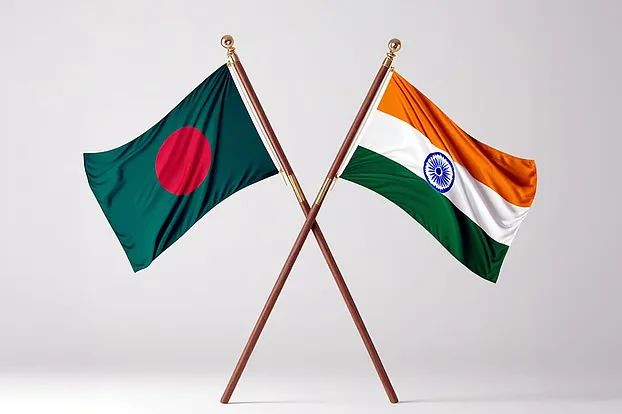
Delhi is keen to embark on a “new chapter” of cooperation with Dhaka, moving past an 18-month “difficult period” in relations between the two countries. By gradually reactivating bilateral mechanisms, India is emphasising the importance of keeping people at the centre of its ties with Bangladesh. However, security will remain a critical cornerstone in advancing this relationship, given that “security” retains its paramount priority in India’s Neighbourhood First policy.
Following the conclusion of the “strained period,” Indian diplomatic analysts highlight Delhi’s focus on this new chapter, noting that it has “not wasted a single moment” since Bangladesh’s February elections. Meanwhile, business and economic analysts argue that, within the context of regional and international stability, the two close neighbours have no alternative but to move forward by maintaining amicable relations. As India focuses on driving the relationship with a people-centric approach, it is imperative to swiftly resolve issues such as last year’s restrictions on Bangladeshi garments and jute exports to the country. Concurrently, the visa process should be streamlined and expedited to foster closer people-to-people contact.
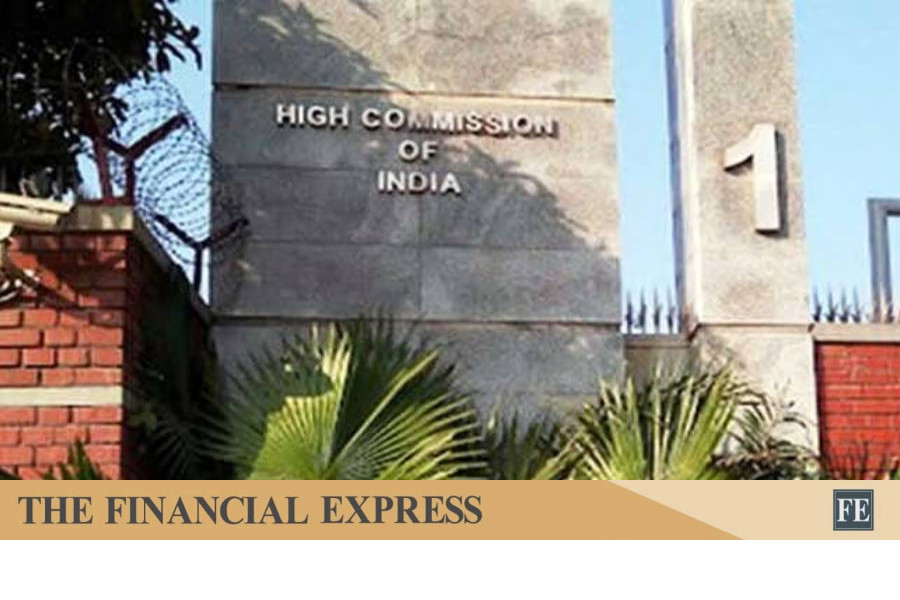
According to diplomatic analysts in Delhi, it is no secret that relations between the two close neighbours deteriorated significantly during the interim government’s tenure. Since the February elections, Delhi has been prioritising the advancement of its ties with Dhaka. Consequently, sending Dinesh Trivedi, a politician with extensive political experience, to Dhaka carries a significant message from Narendra Modi. Being a politician rather than a career diplomat, the new High Commissioner is expected to view the relationship between these two close neighbours through a broader lens, focusing on advancing ties within the wider spheres of people and politics.
This perspective on the future of Bangladesh–India relations emerged following recent exchanges across various government and private echelons during visits to Delhi and Mumbai. Between 3 and 9 May, a 26-member media delegation from Bangladesh, comprising editors and journalists, visited India at the invitation of the Indian Ministry of External Affairs. During the visit, discussions on various bilateral issues were held with India’s Foreign Secretary Vikram Misri, India’s former Deputy National Security Advisor and former High Commissioner to Dhaka Pankaj Saran, as well as several analysts.
No shift in focus from security
During an interaction on 5 May, Pankaj Saran, the coordinator of the Delhi-based strategic and security research institute NatStrat, stated that security is a vital component of India’s neighbourhood policy. India’s objective is to safeguard its security interests and, by excluding Pakistan from its neighbourhood policy, strengthen security for the sake of stability to ensure regional prosperity, development, and connectivity across South Asia.
According to diplomatic analysts in Delhi, it is no secret that relations between the two close neighbours deteriorated significantly during the tenure of the interim government.
The sharing of water from common rivers has always remained at the top of the agenda in relations between Bangladesh and India, and that is unlikely to change in the future.
According to Pankaj Saran, Delhi made no secret of its intention to initiate a “new chapter” in Bangladesh–India relations immediately after the February elections. Without wasting a single moment following the announcement of the election results, Prime Minister Narendra Modi congratulated BNP Chairman Tarique Rahman. He dispatched Lok Sabha Speaker Om Birla to attend the swearing-in ceremony of Bangladesh’s new government. Following the ceremony, Om Birla personally handed over a letter written by Narendra Modi to Tarique Rahman.
Another step towards launching India’s new chapter in Dhaka–Delhi relations is the appointment of former Railway Minister Dinesh Trivedi as the new High Commissioner to Dhaka. Pankaj Saran, India’s former High Commissioner to Dhaka, considers the appointment of a “respected, experienced, and seasoned political figure” like Dinesh Trivedi, who enjoys Prime Minister Modi’s confidence, to be highly significant.
Pankaj Saran believes that by deciding to send him to Bangladesh, Narendra Modi is signalling that he will be an effective communicator who can provide political solutions to difficult problems and transmit a better understanding of Bangladeshi society and politics back to Delhi and neighbouring Indian states. Consequently, the appointment of a politician as High Commissioner to Dhaka for the first time since 1971 can be viewed as a message from Narendra Modi aimed at strengthening bridges within the political spheres of both countries.
Questions surrounding China, Pakistan, and the US
Delhi’s focus on developing relations with Bangladesh is not confined strictly to a bilateral context. This is particularly true given that bitterness between the two close neighbours peaked during the interim government’s tenure, while Bangladesh’s relations with the United States, China, and Pakistan grew considerably closer. Diplomatic analysts note that relations between Bangladesh and the US are currently at their best in five decades, a trajectory that began during Professor Muhammad Yunus’s interim government.
Furthermore, the close ties that the Awami League government shared with China did not negatively impact Dhaka–Beijing relations following the political transition in August. On the contrary, China capitalised on the friction between India and Bangladesh to advance its own ties with Dhaka, fostering relationships with all major political parties, including the BNP, Jamaat-e-Islami, and the NCP.
Meanwhile, Pakistan injected momentum into a relationship that had stagnated during the Awami League administration. Overall, the momentum established during the interim government’s tenure with the US, China, and Pakistan did not falter after the elections; it has continued to progress unabated.
Amit Bhandari believes that, alongside domestic factors, the war in Iran could trigger economic strain in Bangladesh over the next two years. India’s commercial and economic cooperation with Bangladesh will continue to advance.
Former Indian Deputy National Security Advisor Pankaj Saran remarked that how Bangladesh’s new government balances its relations with China, Pakistan, and the US—and where India fits into this equation—will be a major question going forward.
Inquiries within Indian diplomatic circles reveal that a certain degree of tension has emerged between Delhi and Washington in recent months. Hostility with Pakistan persists, while relations with China remain normalised. Consequently, India is keeping a watchful eye on the evolution of Bangladesh’s relationships with these three nations.
Although the US and China were not explicitly mentioned, the equation of Dhaka–Islamabad relations did arise during an exchange between Bangladeshi media personnel and Indian Foreign Secretary Vikram Misri on 4 May. The improvement in relations with Pakistan became visible immediately after the interim government assumed office in Bangladesh. When asked how India views this shift, Vikram Misri stated that it was not for him to say what kind of relationship Bangladesh should maintain with any country. That is for Bangladesh to decide. “I will only say that my focus will be on ensuring that no negative steps disrupt the positive initiatives between our two countries.”
40 years data essential for the Ganges Treaty
The sharing of common river waters always tops the agenda in Bangladesh–India relations, and the future will be no exception. The 30-year Ganges Water Sharing Treaty is set to expire in December this year. When the historic treaty was signed in 1996, the average flow from 1949–1988 was taken into consideration.
When asked about this, Pankaj Saran noted that 40 years’ of data were considered when the treaty was signed in 1996. To renew the treaty now that three decades have passed, fresh data must be taken into account, as the old data will no longer be applicable after the treaty expires in 2026. Therefore, when negotiations on the Ganges commence, it is advisable to consider the average flow of the subsequent 40 years, roughly from 1986 onwards. This is because water levels have depleted due to environmental factors, while water consumption has simultaneously increased. However, the outcome of the bargaining will depend on whether both countries can accept the “new realities.”
According to former Indian diplomats, a transition of power in West Bengal—specifically, the BJP coming to power by defeating the Trinamool Congress—could facilitate the Teesta and Ganges water-sharing treaties. When asked whether a political shift in West Bengal would impact relations between the two neighbouring countries, Indian Foreign Secretary Vikram Misri declined to comment on political matters. However, he noted that the outcome of the West Bengal elections does not directly affect the Teesta Treaty, as foreign policy is directed by the central government.
On the other hand, when asked about China’s proposal to construct a mega project on the shared Teesta River, Vikram Misri stated that they had submitted a proposal to Bangladesh regarding a project on the Teesta. If the new government wishes, they are ready to discuss that proposal.
Intent to work together to eliminate trade restrictions
Despite the strains between the two countries, bilateral trade exceeded US$13 billion in the 2024–25 financial year. In the 2022–23 and 2023–24 financial years, the figures stood at $12.5 billion and $13 billion respectively.
According to senior representatives of the Confederation of Indian Industry (CII), India’s premier business organisation, the proposed Comprehensive Economic Partnership Agreement (CEPA) could significantly expand bilateral trade and investment. This is because CEPA will not be limited solely to trade in goods; it will pave the way for encompassing the services sector, investment facilitation, technological cooperation, and skill development.
When asked about this, Pankaj Saran noted that 40 years’ of data were considered when the treaty was signed in 1996. To renew the treaty now that three decades have passed, fresh data must be taken into account, as the old data will no longer be applicable after the treaty expires in 2026.
During the visit to Delhi, the Bangladeshi media delegation interacted with CII representatives at their headquarters. Speaking at the event, Pankaj Saran, Senior Vice-President (International Business) of the CII, stated that the current phase of Bangladesh–India relations is crucial not just for sustaining existing ties, but also for shaping the next phase of economic partnership to support Bangladesh’s long-term growth and competitiveness.
When asked about potential areas of cooperation to boost trade and commerce, Pankaj Saran identified medical tourism, food processing, agricultural value chains, the digital economy, startups, energy cooperation, and MSMEs as promising fields. He added that India’s experiences in digital public infrastructure, fintech, renewable energy, manufacturing excellence, and sustainable development could assist in Bangladesh’s economic transformation.
No alternative to holding hands
According to Amit Bhandari, a Senior Fellow at the Mumbai-based research institute Gateway House: Indian Council on Global Relations, the current regional and international context leaves Bangladesh and India with no alternative but to move forward hand in hand. Consequently, moving past the bitter phase of the preceding 18 months, relations between the two neighbours are expected to progress along a positive trajectory.
Speaking during a discussion at the Jio World Centre in Mumbai on 7 May, Amit Bhandari explained that, within the context of South Asian stability, it is crucial for India to maintain good relations with Bangladesh, Nepal, Sri Lanka, and the Maldives. India is actively focusing on this. India can overcome the challenges it faces regarding Pakistan by maintaining robust relations with these four countries.
Amit Bhandari believes that, alongside domestic factors, the war in Iran could trigger economic strain in Bangladesh over the next two years. India’s commercial and economic cooperation with Bangladesh will continue to advance. However, he also noted that employment in India has begun to feel the impact of AI (Artificial Intelligence), the repercussions of which will reverberate across the economy. In such a scenario, the question of how much financial assistance India can extend to Bangladesh cannot be overlooked.
* Raheed Ejaz is the Diplomatic Correspondent for Prothom Alo.
At the invitation of the Ministry of External Affairs, a 26-member Bangladeshi media delegation comprising editors and journalists visited India from 3 to 9 May. During the visit, Raheed Ejaz spoke with Indian officials at various levels as well as several analysts, and wrote about Bangladesh-India relations.
Raheed Ejaz
Updated: 21 May 2026, 16: 19
Delhi is keen to embark on a “new chapter” of cooperation with Dhaka, moving past an 18-month “difficult period” in relations between the two countries. By gradually reactivating bilateral mechanisms, India is emphasising the importance of keeping people at the centre of its ties with Bangladesh. However, security will remain a critical cornerstone in advancing this relationship, given that “security” retains its paramount priority in India’s Neighbourhood First policy.
Following the conclusion of the “strained period,” Indian diplomatic analysts highlight Delhi’s focus on this new chapter, noting that it has “not wasted a single moment” since Bangladesh’s February elections. Meanwhile, business and economic analysts argue that, within the context of regional and international stability, the two close neighbours have no alternative but to move forward by maintaining amicable relations. As India focuses on driving the relationship with a people-centric approach, it is imperative to swiftly resolve issues such as last year’s restrictions on Bangladeshi garments and jute exports to the country. Concurrently, the visa process should be streamlined and expedited to foster closer people-to-people contact.
According to diplomatic analysts in Delhi, it is no secret that relations between the two close neighbours deteriorated significantly during the interim government’s tenure. Since the February elections, Delhi has been prioritising the advancement of its ties with Dhaka. Consequently, sending Dinesh Trivedi, a politician with extensive political experience, to Dhaka carries a significant message from Narendra Modi. Being a politician rather than a career diplomat, the new High Commissioner is expected to view the relationship between these two close neighbours through a broader lens, focusing on advancing ties within the wider spheres of people and politics.
This perspective on the future of Bangladesh–India relations emerged following recent exchanges across various government and private echelons during visits to Delhi and Mumbai. Between 3 and 9 May, a 26-member media delegation from Bangladesh, comprising editors and journalists, visited India at the invitation of the Indian Ministry of External Affairs. During the visit, discussions on various bilateral issues were held with India’s Foreign Secretary Vikram Misri, India’s former Deputy National Security Advisor and former High Commissioner to Dhaka Pankaj Saran, as well as several analysts.
No shift in focus from security
During an interaction on 5 May, Pankaj Saran, the coordinator of the Delhi-based strategic and security research institute NatStrat, stated that security is a vital component of India’s neighbourhood policy. India’s objective is to safeguard its security interests and, by excluding Pakistan from its neighbourhood policy, strengthen security for the sake of stability to ensure regional prosperity, development, and connectivity across South Asia.
According to diplomatic analysts in Delhi, it is no secret that relations between the two close neighbours deteriorated significantly during the tenure of the interim government.
The sharing of water from common rivers has always remained at the top of the agenda in relations between Bangladesh and India, and that is unlikely to change in the future.
According to Pankaj Saran, Delhi made no secret of its intention to initiate a “new chapter” in Bangladesh–India relations immediately after the February elections. Without wasting a single moment following the announcement of the election results, Prime Minister Narendra Modi congratulated BNP Chairman Tarique Rahman. He dispatched Lok Sabha Speaker Om Birla to attend the swearing-in ceremony of Bangladesh’s new government. Following the ceremony, Om Birla personally handed over a letter written by Narendra Modi to Tarique Rahman.
Another step towards launching India’s new chapter in Dhaka–Delhi relations is the appointment of former Railway Minister Dinesh Trivedi as the new High Commissioner to Dhaka. Pankaj Saran, India’s former High Commissioner to Dhaka, considers the appointment of a “respected, experienced, and seasoned political figure” like Dinesh Trivedi, who enjoys Prime Minister Modi’s confidence, to be highly significant.
Pankaj Saran believes that by deciding to send him to Bangladesh, Narendra Modi is signalling that he will be an effective communicator who can provide political solutions to difficult problems and transmit a better understanding of Bangladeshi society and politics back to Delhi and neighbouring Indian states. Consequently, the appointment of a politician as High Commissioner to Dhaka for the first time since 1971 can be viewed as a message from Narendra Modi aimed at strengthening bridges within the political spheres of both countries.
Questions surrounding China, Pakistan, and the US
Delhi’s focus on developing relations with Bangladesh is not confined strictly to a bilateral context. This is particularly true given that bitterness between the two close neighbours peaked during the interim government’s tenure, while Bangladesh’s relations with the United States, China, and Pakistan grew considerably closer. Diplomatic analysts note that relations between Bangladesh and the US are currently at their best in five decades, a trajectory that began during Professor Muhammad Yunus’s interim government.
Furthermore, the close ties that the Awami League government shared with China did not negatively impact Dhaka–Beijing relations following the political transition in August. On the contrary, China capitalised on the friction between India and Bangladesh to advance its own ties with Dhaka, fostering relationships with all major political parties, including the BNP, Jamaat-e-Islami, and the NCP.
Meanwhile, Pakistan injected momentum into a relationship that had stagnated during the Awami League administration. Overall, the momentum established during the interim government’s tenure with the US, China, and Pakistan did not falter after the elections; it has continued to progress unabated.
Amit Bhandari believes that, alongside domestic factors, the war in Iran could trigger economic strain in Bangladesh over the next two years. India’s commercial and economic cooperation with Bangladesh will continue to advance.
Former Indian Deputy National Security Advisor Pankaj Saran remarked that how Bangladesh’s new government balances its relations with China, Pakistan, and the US—and where India fits into this equation—will be a major question going forward.
Inquiries within Indian diplomatic circles reveal that a certain degree of tension has emerged between Delhi and Washington in recent months. Hostility with Pakistan persists, while relations with China remain normalised. Consequently, India is keeping a watchful eye on the evolution of Bangladesh’s relationships with these three nations.
Although the US and China were not explicitly mentioned, the equation of Dhaka–Islamabad relations did arise during an exchange between Bangladeshi media personnel and Indian Foreign Secretary Vikram Misri on 4 May. The improvement in relations with Pakistan became visible immediately after the interim government assumed office in Bangladesh. When asked how India views this shift, Vikram Misri stated that it was not for him to say what kind of relationship Bangladesh should maintain with any country. That is for Bangladesh to decide. “I will only say that my focus will be on ensuring that no negative steps disrupt the positive initiatives between our two countries.”
40 years data essential for the Ganges Treaty
The sharing of common river waters always tops the agenda in Bangladesh–India relations, and the future will be no exception. The 30-year Ganges Water Sharing Treaty is set to expire in December this year. When the historic treaty was signed in 1996, the average flow from 1949–1988 was taken into consideration.
When asked about this, Pankaj Saran noted that 40 years’ of data were considered when the treaty was signed in 1996. To renew the treaty now that three decades have passed, fresh data must be taken into account, as the old data will no longer be applicable after the treaty expires in 2026. Therefore, when negotiations on the Ganges commence, it is advisable to consider the average flow of the subsequent 40 years, roughly from 1986 onwards. This is because water levels have depleted due to environmental factors, while water consumption has simultaneously increased. However, the outcome of the bargaining will depend on whether both countries can accept the “new realities.”
According to former Indian diplomats, a transition of power in West Bengal—specifically, the BJP coming to power by defeating the Trinamool Congress—could facilitate the Teesta and Ganges water-sharing treaties. When asked whether a political shift in West Bengal would impact relations between the two neighbouring countries, Indian Foreign Secretary Vikram Misri declined to comment on political matters. However, he noted that the outcome of the West Bengal elections does not directly affect the Teesta Treaty, as foreign policy is directed by the central government.
On the other hand, when asked about China’s proposal to construct a mega project on the shared Teesta River, Vikram Misri stated that they had submitted a proposal to Bangladesh regarding a project on the Teesta. If the new government wishes, they are ready to discuss that proposal.
Intent to work together to eliminate trade restrictions
Despite the strains between the two countries, bilateral trade exceeded US$13 billion in the 2024–25 financial year. In the 2022–23 and 2023–24 financial years, the figures stood at $12.5 billion and $13 billion respectively.
According to senior representatives of the Confederation of Indian Industry (CII), India’s premier business organisation, the proposed Comprehensive Economic Partnership Agreement (CEPA) could significantly expand bilateral trade and investment. This is because CEPA will not be limited solely to trade in goods; it will pave the way for encompassing the services sector, investment facilitation, technological cooperation, and skill development.
When asked about this, Pankaj Saran noted that 40 years’ of data were considered when the treaty was signed in 1996. To renew the treaty now that three decades have passed, fresh data must be taken into account, as the old data will no longer be applicable after the treaty expires in 2026.
During the visit to Delhi, the Bangladeshi media delegation interacted with CII representatives at their headquarters. Speaking at the event, Pankaj Saran, Senior Vice-President (International Business) of the CII, stated that the current phase of Bangladesh–India relations is crucial not just for sustaining existing ties, but also for shaping the next phase of economic partnership to support Bangladesh’s long-term growth and competitiveness.
When asked about potential areas of cooperation to boost trade and commerce, Pankaj Saran identified medical tourism, food processing, agricultural value chains, the digital economy, startups, energy cooperation, and MSMEs as promising fields. He added that India’s experiences in digital public infrastructure, fintech, renewable energy, manufacturing excellence, and sustainable development could assist in Bangladesh’s economic transformation.
No alternative to holding hands
According to Amit Bhandari, a Senior Fellow at the Mumbai-based research institute Gateway House: Indian Council on Global Relations, the current regional and international context leaves Bangladesh and India with no alternative but to move forward hand in hand. Consequently, moving past the bitter phase of the preceding 18 months, relations between the two neighbours are expected to progress along a positive trajectory.
Speaking during a discussion at the Jio World Centre in Mumbai on 7 May, Amit Bhandari explained that, within the context of South Asian stability, it is crucial for India to maintain good relations with Bangladesh, Nepal, Sri Lanka, and the Maldives. India is actively focusing on this. India can overcome the challenges it faces regarding Pakistan by maintaining robust relations with these four countries.
Amit Bhandari believes that, alongside domestic factors, the war in Iran could trigger economic strain in Bangladesh over the next two years. India’s commercial and economic cooperation with Bangladesh will continue to advance. However, he also noted that employment in India has begun to feel the impact of AI (Artificial Intelligence), the repercussions of which will reverberate across the economy. In such a scenario, the question of how much financial assistance India can extend to Bangladesh cannot be overlooked.
* Raheed Ejaz is the Diplomatic Correspondent for Prothom Alo.