[🇧🇩] New Government (BNP) in Bangladesh

[🇧🇩] New Government (BNP) in Bangladesh
78
2K
More threads by Saif

G Bangladesh Defense

Who are Bangladesh’s new ministers and state ministers?
1787353810227.webp


Six months into the BNP government’s tenure, Prime Minister Tarique Rahman has added to his cabinet.

Three new ministers and two state ministers have joined, while a former state minister has also been elevated to the rank of full minister.

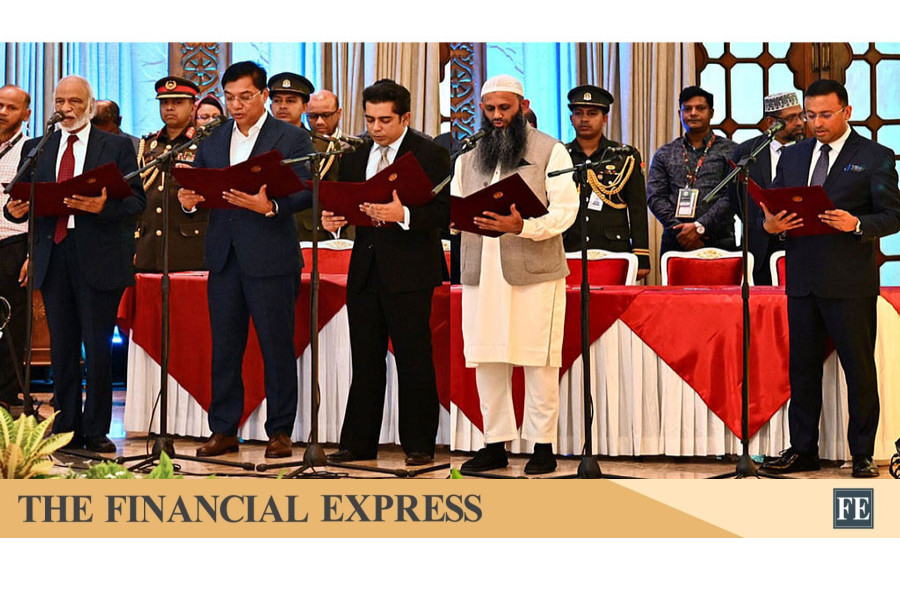
New President Mirza Fakhrul Islam Alamgir administered their oaths of office at the Bangabhaban on Friday evening.

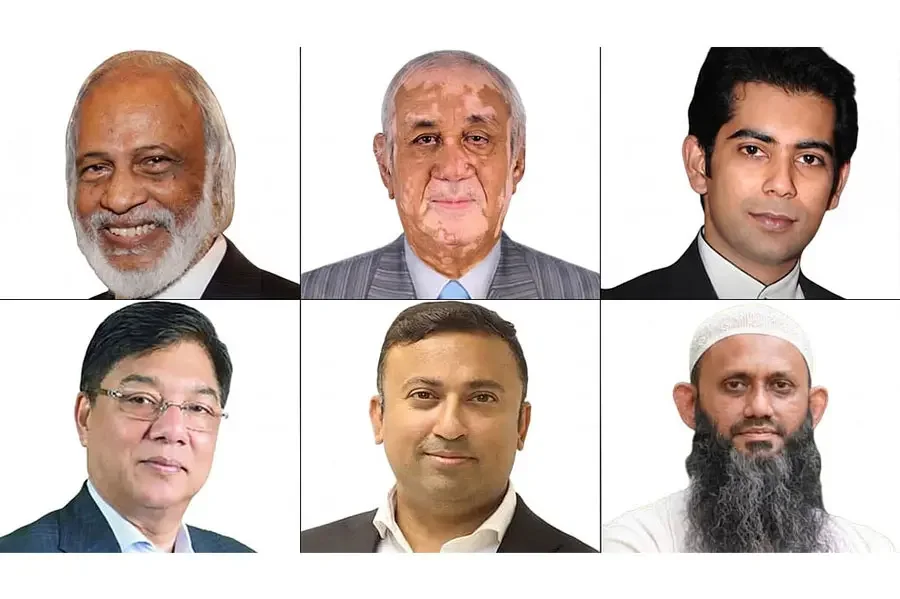
BNP Standing Committee Member and Narsingdi-2 MP Abdul Moyeen Khan, Bangladesh Jatiya Party (BJP) Chairman and Bhola-1 MP Andaleeve Rahman Partho, and Bandarban MP Sa Ching Prue Jerry took their oaths as ministers, while State Minister for Aviation and Tourism Rashiduzzaman Millat was promoted to the rank of minister.

Meanwhile, Prime Minister's Foreign Affairs Advisor Humaiun Kobir and Gaibandha-4 MP Mohammad Shamim Kaiser Lincoln took oaths as state ministers.

Abdul Moyeen Khan

Abdul Moyeen Khan won the Narsingdi-2 seat in the 13th parliamentary election. In December 2009, he became a member of the BNP's highest policy-making forum, the National Standing Committee.

Moyeen was born on Jan 1, 1947 in Charnagardi village in Narsingdi’s Palash Upazila to parents Abdul Momen Khan and Khorsheda Begum.

Momen was the food minister in Ziaur Rahman’s government and Moyeen’s political journey began under his father’s guidance. He served as the information minister from 2001 to 2002, during the Khaleda Zia administration.

Sa Ching Prue Jerry

Bandarban MP Sa Ching Prue Jerry is a member of the BNP's National Executive Committee. He is also the convener of the BNP's Bandarban district unit.

He became a member of parliament from Bandarban in the sixth parliamentary election in 1996. Over the course of a long political career, he also contested elections in 2001, 2009 and 2018.

He was elected to parliament in February. He also serves as the chairman of Bandarban Sadar Upazila and the Bandarban Hill District Council.

Sa Ching Prue was born on Jan 15, 1953 in the Kangvita area of Bandarban Municipality. His father, Aung Shai Prue Chowdhury, was the king of Bohmong Circle. He also served as a member of parliament. His maternal aunt, Ma Ma Ching, is a former member of parliament from a reserved women's seat.

Andaleeve Rahman Partho

Partho’s BJP took part in the 13th parliamentary election in alliance with the BNP. He was elected as a member of parliament from the Bhola-1 constituency.

It is his second time in the seat. He first became an MP from the constituency after winning the seat in the 2008 election.

Partho was born on Apr 20, 1974. His father, BJP founder Naziur Rahman Manju, was a member of parliament during the Ershad government in 1986.

He has previously served as the minister of local government, rural development and cooperatives and is a former mayor of the Dhaka City Corporation.

M Rashiduzzaman Millat

State Minister for Civil Aviation and Tourism Millat is the treasurer of the Central Executive Committee of the BNP.

He is also the president of the party’s Dewanganj Upazila unit in Jamalpur. He is also a former president of the Jamalpur District BNP.

Millat became a member of parliament for the first time in 2001. He was also elected to parliament in February’s general election.

He was born on Jan 14, 1961 in Kalikapur village in Dewanganj.

Humaiun Kobir

Humaiun is serving as the prime minister's advisor on the Ministry of Foreign Affairs, the Ministry of Disaster Management and Relief, and the Ministry of Civil Aviation and Tourism. In the posts, he had the equivalent status of a state minister.

On Oct 22, 2025, he became the joint secretary general (international affairs) of the BNP.

Humaiun worked as a “strategic assistant” in the Mayor's Office in London. Later, he served as a cabinet advisor in the Office of the Executive Mayor of Lewisham.

He earned a Bachelor of Arts (Hons) in International Relations from the University of Sussex. He completed three post-graduate degrees from the London School of Economics and Political Science, the University of Cambridge, and Leeds Law School.

Humaiun was born in Habashpur village in Sylhet’s Osmaninagar Upazila.

Shamim Kaiser Lincoln

Mohammad Shamim Kaiser Lincoln is a two-time member of parliament from the Gaibandha-4 (Gobindaganj) constituency.

Lincoln was born on Feb 23, 1980 to Abdul Mottalib Akand and Afroza Anar Bilkis.

Mottalib was elected as a member of parliament from the same constituency in 2001. After his death, Lincoln was elected MP in the by-election for the constituency.

He passed his SSC from Motijheel Ideal School and College in 1995 and his HSC from Dhaka College in 1997. He completed his BBA in 2003 and MBA in 2006 from North South University.

Then he obtained a Master's degree in ICT from IIF, Malaysia. Later, he completed a two-year diploma in “Network Finance and MIS” from NIIT in 2000.​
 

First cabinet reshuffle: Who gets which ministry?

1787353981098.webp


Six months after the formation of his government, Prime Minister Tarique Rahman has reshuffled his cabinet for the first time.

Four new ministers have joined, one of whom was previously a state minister.

Two others have been sworn in as new state ministers, one of whom was previously an advisor to the prime minister.

BNP Standing Committee Member and Narsingdi-2 MP Abdul Moyeen Khan, Bangladesh Jatiya Party Chairman and Bhola-1 MP Andaleeve Rahman, and Bandarban MP Sa Ching Prue Jerry took their oaths as ministers, while State Minister for Aviation and Tourism Rashiduzzaman Millat was promoted to the rank of minister.

Meanwhile, Prime Minister's Foreign Affairs Advisor Humaiun Kobir and Gaibandha-4 MP Mohammad Shamim Kaiser Lincoln took oaths as state ministers.

Mirza Fakhrul Islam Alamgir was sworn in as the new president at a Bangabhaban event on Friday evening. Immediately afterwards, he administered the oaths to four ministers and two state ministers.

Cabinet Secretary Nasimul Ghani said the portfolios of the new ministers and state ministers have been distributed and a notification will be issued shortly.

Senior BNP leader Moyeen has been given the responsibility of the Ministry of Local Government, Rural Development, and Cooperatives vacated by Fakhrul.

Moyeen had served as the information minister from 2001 to 2002 during the Khaleda Zia government. He is currently the MP from Narsingdi-2.

Partho was elected as the MP from the Bhola-1 constituency after allying with the BNP in the 13th parliamentary election. He is now taking charge of the Ministry of Information and Broadcasting, replacing Zahir Uddin Swapon.

Swapon, in turn, has been appointed as an advisor to the prime minister with status equivalent to a minister, the cabinet secretary said.

BNP Executive Committee Member Sa Ching Prue Jerry has been appointed as the minister of Chittagong Hill Tracts affairs, a seat that has been vacant for the past two and a half months. He had previously been elected as an MP in the 6th parliamentary election in 1996. He has also served as the chairman of Bandarban Sadar Upazila and Bandarban Hill Tracts District Council.

The cabinet secretary said that Millat, who was promoted from state minister to full minister, is now in charge of the Ministry of Civil Aviation and Tourism. The current minister, Afroza Khanam Rita, has been transferred to take charge of the Ministry of Food.

New State Minister Lincoln has been appointed to the Ministry of Religious Affairs, where Kazi Shah Mofazzal Hossain Kaikobad is the minister.

Humaiun, who had been serving as the prime minister's foreign affairs advisor, with status equivalent to a state minister, has been made the minister of state for foreign affairs.

Shama Obaed Islam is currently the state minister for foreign affairs. Asked about this, the cabinet secretary said: "There is no problem if there are two state ministers at one ministry."​
 

Do not expect overnight progress in crime control: minister
Staff Correspondent 26 August, 2026, 14:42

1787787725378.webp

Salahuddin Ahmed | New Age collage

Home minister Salahuddin Ahmed on Wednesday said the government was following a policy of ‘suppressing the wicked and protecting the virtuous’ in combating crime, but noted that expecting a revolutionary change in the country’s law-and-order situation overnight would be unrealistic.

He said this while speaking as chief guest at a doa and discussion organised in front of the Bangladesh Nationalist Party (BNP) central office at Naya Paltan in the capital. The BNP organised the event to observe Eid-e-Miladunnabi, marking the birth and death anniversary of Prophet Muhammad (PBUH).

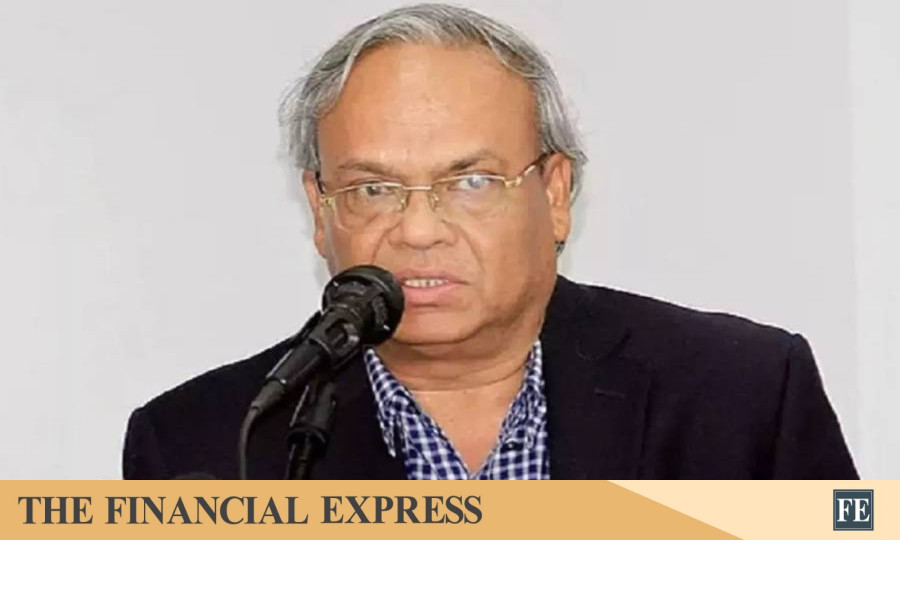
Before the home minister’s speech, BNP acting secretary general Ruhul Kabir Rizvi referred to four recent murders in Rangpur, stating that the public wanted all criminals brought to justice under the leadership of the home minister.

He added that while the current law-and-order situation could not be described as worse than before, people expected further improvement.

In response, Ahmed said those involved in various crimes, including the widely discussed Rangpur killings, had been brought under the law within a reasonable timeframe.

‘From the child rape and murder in Mirpur to nationally discussed or less publicised crimes, action has been taken in every case, and the accused have been produced before courts through due legal process,’ he said.

The minister added that law enforcement personnel were being rewarded with certificates and medals for good performance, while agencies other than the police were being brought under accountability and transparency mechanisms.

Ahmed noted that law enforcement agencies had been found in a fragile state following the 2024 student-led mass uprising, but their morale had been recovering over the past six months. He urged citizens to follow the life and teachings of Prophet Muhammad (PBUH) in governance and daily life.

Water resources minister Shahid Uddin Chowdhury Annie, Dhaka South City Corporation administrator Abdus Salam, BNP lawmaker Khairul Kabir Khokon, former Jatiyatabadi Chhatra Dal president Habib-un-Nabi Khan Sohel, and leaders and activists of BNP-affiliated organisations were also present at the programme.​
 

BNP wants to repay people’s love by establishing accountable state: Tarique


1788217863166.webp


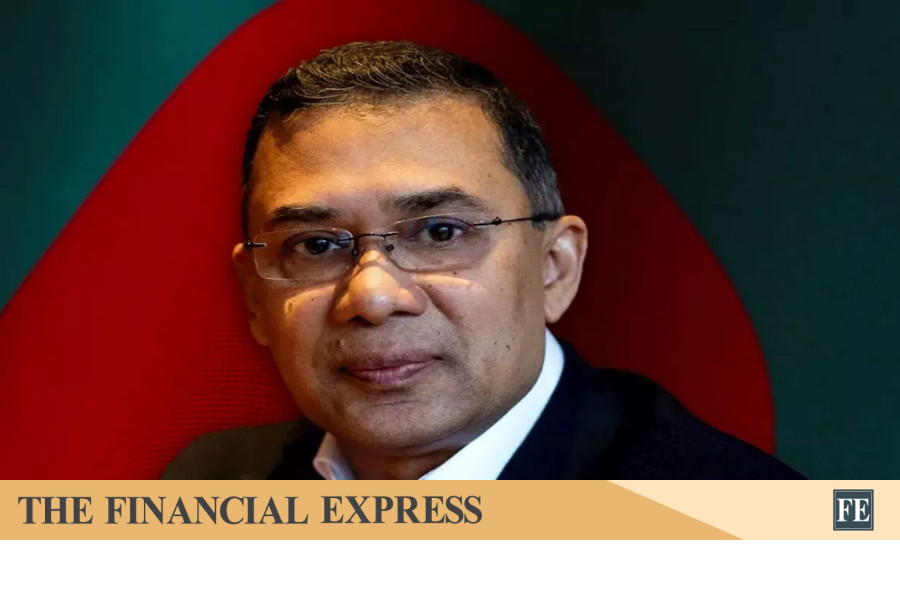
BNP Chairman and Prime Minister Tarique Rahman on Monday said his party wants to repay the people’s love by establishing an accountable state.

In a message marking BNP’s 48th founding anniversary, he also said the people once again entrusted BNP with the task of running the state through a free, fair and neutral election after the end of one-and-a-half decades of fascist rule and exploitation.

“BNP wants to repay the people’s love by establishing an accountable state. With this goal, the BNP government is working tirelessly to establish Bangladesh as a welfare state,” Tarique Rahman said.

He urged BNP leaders, activists, supporters and well-wishers to continue dedicating themselves to serving the country while maintaining the people’s trust and confidence.

The Prime Minister greeted the people of Bangladesh as well as BNP leaders, activists, supporters and well-wishers on the party’s 48th founding anniversary, describing the occasion as a source of joy, enthusiasm and inspiration for the people.

BNP was founded by then President Ziaur Rahman on September 1, 1978.

Recalling the party’s founding, Tarique Rahman said its establishment was a landmark event in the history of restoring democracy in Bangladesh.

He said Ziaur Rahman restored democracy after assuming the responsibility of running the country and restored the right of banned political parties to conduct politics.

“BNP was established in response to the needs of the time. As a result, a new journey towards pluralistic democracy began in Bangladesh,” the Prime Minister said.

He paid tribute to Ziaur Rahman, whom he described as the proclaimer of independence, successful statesman and architect of modern Bangladesh.

Tarique Rahman also remembered former Prime Minister and BNP Chairperson Khaleda Zia, saying she took BNP to every household in Bangladesh through her charismatic personality and leadership.

He said his party also played the role of a vigilant guardian in protecting the country’s independence and sovereignty while standing alongside the people. “Whenever the country’s independence, sovereignty and democracy came under threat, BNP leaders, supporters and well-wishers sacrificed their lives alongside the pro-democracy people,” he said.

The BNP chief also paid tribute to BNP leaders and activists at all levels who had been killed or injured in the struggle to establish democracy and good governance in the country.

He said BNP was given the opportunity to govern whenever people were able to cast their votes freely in fair elections.

During its various terms in office, Tarique Rahman said, BNP governments took important initiatives to strengthen and institutionalise democracy, including restoring the parliamentary system and expanding women’s education.

He said BNP’s efforts and initiatives to uphold democracy and achieve economic prosperity made it the country’s most popular political party.

“BNP believes that the pro-democracy people of Bangladesh are the source of all its political power. BNP is synonymous with the struggle to build a welfare-oriented, democratic and self-reliant Bangladesh,” he said.​
 

Bangladesh will bounce back under PM Tarique’s leadership: Rizvi


1788305326629.webp


BNP acting Secretary General Ruhul Kabir Rizvi on Tuesday said Bangladesh will bounce back under the leadership of Prime Minister Tarique Rahman, despite all conspiracies to undermine their party.

“Despite various conspiracies, BNP could not be defeated and it will not be defeated in the future either. Rather, Bangladesh will bounce back under the leadership of Prime Minister Tarique Rahman and become self-sufficient in all economic indicators,” he said.

Rizvi made the remarks at a brief rally organised in Uttara in the evening marking the 48th founding anniversary of BNP.

Recalling the country's economic condition in the early years after independence, he said Bangladesh was a hungry, poor and famine-stricken country where people had to eat mango leaves between 1972 and 1975.

Rizvi said then President Ziaur Rahman, a patriotic leader who wanted to protect the country's national independence and sovereignty and refused to act at the behest of any “master”, was killed in a conspiracy involving domestic and foreign actors.

“Why did they kill this patriotic leader? He wanted to protect national independence. He wanted to protect sovereignty. He did not want to act at the behest of any master. That is why Ziaur Rahman was killed as part of a domestic and foreign conspiracy,” he said.

The BNP leader said a political party founded by a patriot and freedom fighter could not be wiped out.

He also recalled former Prime Minister and BNP Chairperson Khaleda Zia, saying despite facing repression and persecution, she could not be driven out of the country and remained with the people, speaking for them until her death.

“A party that stood by the people and whose leader remained with the people and spoke for them until her death can never be destroyed,” Rizvi said.

“Naturally, this party could not be defeated despite various conspiracies, and it will not be defeated in the future either. Rather, Bangladesh will bounce back under Prime Minister Tarique Rahman’s leadership and become self-sufficient in all economic indicators,” he said.​
 

TIB urges asset disclosure by govt employees for new pay scale


1788305921459.webp


Transparency International Bangladesh (TIB) has welcomed the cabinet’s approval of the new national pay scale for government employees, congratulating those who will benefit from it.

In a statement on Tuesday, the organisation renewed its call for making the implementation of the pay scale conditional on government employees and their dependent family members updating and disclosing their income and expenditure records annually.

TIB Executive Director Iftekharuzzaman said the decision to implement the pay scale in three phases was reasonable despite severe financial constraints.

He said salaries and allowances must be aligned with the cost of living to ensure professional excellence and corruption-free services.

“In other words, the new increase in salaries and allowances should apply only to those employees who update and disclose their income, expenditure, and asset declarations every year.

“The new pay scale should only be applied to people who disclose this information. Putting this requirement into practice would make it simpler to guarantee accountability and transparency as well as public services free from harassment and corruption,” he was quoted as saying by TIB.

“It must be recognised that many government employees perform their professional duties honestly, remain free from irregularities and corruption, and lead honest lives. For them, the new pay scale is entirely justified and essential.

“On the other hand, for those engaged in acquiring illicit wealth and assets through dishonesty, irregularities, corruption, and abuse of power, such benefits are not only unjustified but entirely unnecessary.

“Their appetite for wealth is so insatiable that if the new pay scale is implemented across the board without ensuring effective accountability mechanisms, the level of corruption in the public sector will increase further.”

The TIB chief also referred to the government’s expectation that the new pay structure would improve employees’ financial security and motivation and help build an efficient, dynamic, and people-oriented public administration.

The organisation also warned that higher salaries and allowances could further increase the prices of essential goods and contribute to inflation, worsening the situation for everyone, particularly the low-income working population already facing rising prices.

TIB urged the government to take measures with foresight and ensure that the disclosure condition is enforced alongside the new salaries and allowances.​
 

The risks posed by 3 'fault lines' of BNP govt

Asif Mohammad Shahan

1788478747773.webp

The BNP’s stance on institutional reforms, including the Commission of Inquiry on Enforced Disappearances and the National Human Rights Commission, has raised questions. File photo

It is good to acknowledge from the outset that six months is by no means sufficient to evaluate the performance of a government. However, in this piece, I will focus on whether there are any 'fault lines' or significant weaknesses in governance during these six months that could lead to major problems in the future. Additionally, I will try to analyze whether the government is giving importance to these issues or taking appropriate steps to address them.

Before delving into this analysis, let's resolve two questions. In what situation did the government come to power, and how strong is its legitimacy? The answer to the first question is that the government has assumed responsibility in a fragile situation. From a political perspective, we could say the government took charge at a time when the institutions essential for maintaining democracy are either extremely weak or have undergone processes that have significantly reduced their ability to function.

The second aspect is a huge opportunity for the government because it has come to power with a two-thirds majority. This is a substantial political asset for any government. With such significant public support and legitimacy, a government can make many difficult decisions that may seem unpopular in the short term but could yield positive outcomes for the people in the long run. Therefore, in evaluating the current government's performance, the most important aspect is whether the government is using its political capital appropriately. Based on this, three criteria for evaluation can be determined.

Firstly, when we talk about creating a liberal democratic framework, it doesn't solely depend on elections. Here, elections only ensure democratic transition. The biggest challenge during the period between two elections is to establish fragile institutions and create institutional balance. How successful the government has been in this regard is a point of consideration. Secondly, the method of the government's work: How is the government addressing the challenges it faces, and is there public participation in these matters? Thirdly, every government in any state has a crucial role in ensuring some fundamental rights for everyone, irrespective of religion, caste, ethnicity, or gender. Whether this government is able to do so or not.

Very clearly, there are significant weaknesses in these three areas. If we come to the issue of institutional balance, we see a very peculiar picture. There is a sign in the government's actions that the government is establishing institutions to increase its own power. There seems to be no attention from the government to whether these institutions are becoming strong enough to curtail public rights.

This means the government is walking the path of creating a strong government on the one hand, and on the other, not creating any institution to keep that strong government in control. Instead, the government seems more focused on weakening existing institutions. The draft laws for the Disappearance Commission and the Human Rights Commission are major examples of this.

In both cases, we see that the government is not paying any attention to ensuring that the state cannot deprive citizens of their rights. The government is trying to say that it has good intentions, so it won't do this. But a state does not run on good intentions. A structure of balance needs to be created in the state so that even if the government wants, it cannot infringe on citizens' rights.

We see many indications of the government's reliance on the bureaucracy. This means on one hand the government is increasing the power of the bureaucracy, and on the other hand, a process to prevent the bureaucracy and government institutions from becoming overly powerful to infringe on people's rights is not being created. This is a terrible fault line. Because no government becomes authoritarian in one day. The signs gradually emerge. Institutions are gradually arranged in a way that makes the government authoritarian. The outcome is seen towards the end of the government's tenure, i. e. , in the fourth or fifth year.

In a democratic state, it is not acceptable for people to remain 'inactive citizens' only by voting. To consolidate democracy, people's participation in policy-making must be ensured. For this, there needs to be such a channel through which people can express their opinions. People's participation is essentially 'two-way communication'. Just as people will let the government know their demands, the government must also inform people about what it is doing, why, and how.

1788478792197.webp

Traditional boat race took place in Sonai River ignoring 'Towhidi Janata'.

It appears that in the current economic crisis, including electricity and gas, the government is neither taking opinions from the public nor providing sufficient information about the issues. This is another major 'fault line'. Because if a democratically elected government cannot maintain effective communication with its people, the distance between the government and the people continues to grow. The more this distance increases, the more frustrated the people become. As a result, the fundamental difference between democracy and authoritarianism may gradually become blurred among the people. For the democratic future, this is an extremely serious crisis.

In a democratic state, everyone has the right to live regardless of religion, caste, ethnic group, identity, or gender, and to practice their own religion and culture. In this regard, we see the emergence of a kind of 'social authoritarianism'. One group is trying to impose its views on another group. And the government is also failing to take any reasonable actions in this case.

Here, the term 'Towhidi Janata' is being used as an 'umbrella term'. Analyzing it, we find it doesn't include only Islamist political parties. Recently, in the initiative to stop an Urs in Savar, the involvement of leaders from BNP, Jamaat-e-Islami, Islami Oikya Jote, and Khilafat Majlis has been observed.

The concern is that 'Towhidi Janata' seems to be becoming a kind of consensus among different political parties. If someone from the ruling party is part of it or if party leaders and workers assist in such activities and the party or government takes no position on it, then the government's promise to protect everyone's rights comes into serious question.

In this case, not just the ruling party, but all political parties need to clarify their positions. Since people from different political parties are involved in 'Towhidi Janata', whether they agree with activities like stopping concerts, film screenings, or boat races must be clarified. If they do not agree, then what measures have they taken to prevent their leaders and workers from engaging in such activities must also be made clear to the public.

In conclusion, these three major 'fault lines' could drive our future democratic journey into a deep crisis. The unfortunate thing is that there seems to be a kind of hesitation or unwillingness on the part of the government to address these issues, which might not lead to good outcomes.

#Asif Mohammad Shahan is a professor at the Department of Development Studies, University of Dhaka.​
 

Latest Posts

Back