Home Watch Videos Wars Movies Login

[🇧🇩] Indo-Bangla Relation: India's Regional Ambition, Geopolitical Reality, and Strategic Options For Bangladesh

[🇧🇩] Indo-Bangla Relation: India's Regional Ambition, Geopolitical Reality, and Strategic Options For Bangladesh
685
33K
More threads by Saif

G Bangladesh Defense

PM’s India visit to advance key bilateral issues: envoy
Diplomatic Correspondent 30 July, 2026, 00:26

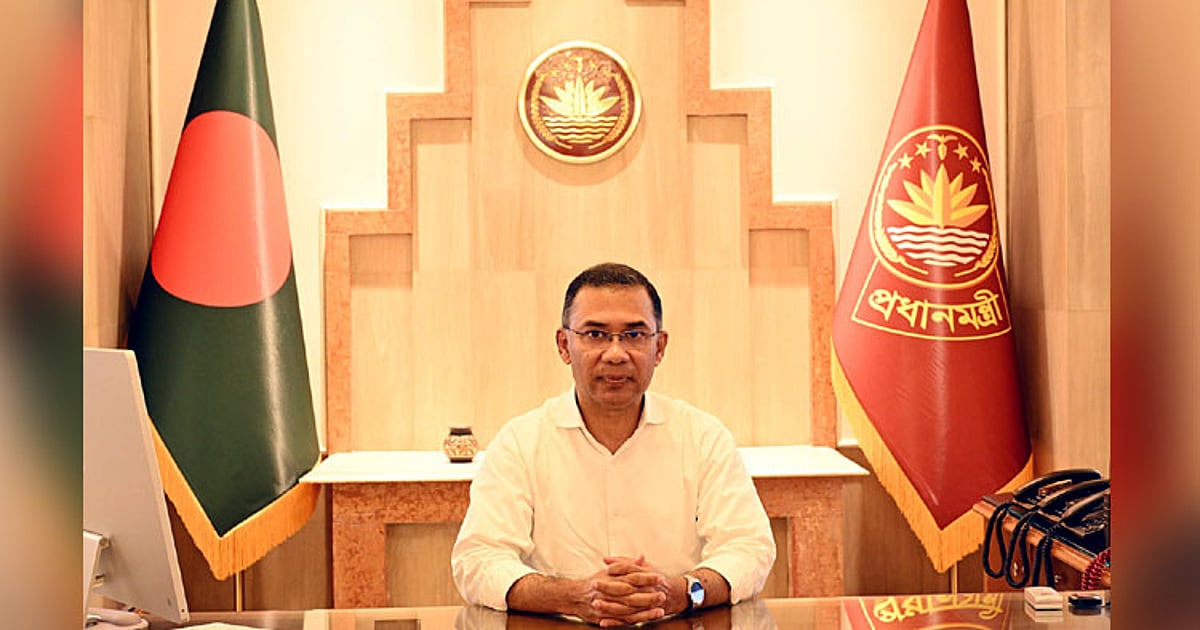
Indian high commissioner to Bangladesh Dinesh Trivedi on Wednesday expressed optimism that prime minister Tarique Rahman’s proposed visit to India would help advance key bilateral issues.

Speaking to reporters after separate courtesy meetings with foreign minister Khalilur Rahman and state minister for foreign affairs Shama Obaed Islam at the foreign ministry, Trivedi said that India was eagerly awaiting the Bangladesh prime minister’s visit.

Responding to a question about the invitation extended by India to prime minister Tarique Rahman, the high commissioner said the decision ultimately rested with the prime minister.

‘From our end, I can assure you that we are looking forward to welcoming the prime minister of Bangladesh to India. We are very hopeful that this visit will take place in the near future,’ he said.

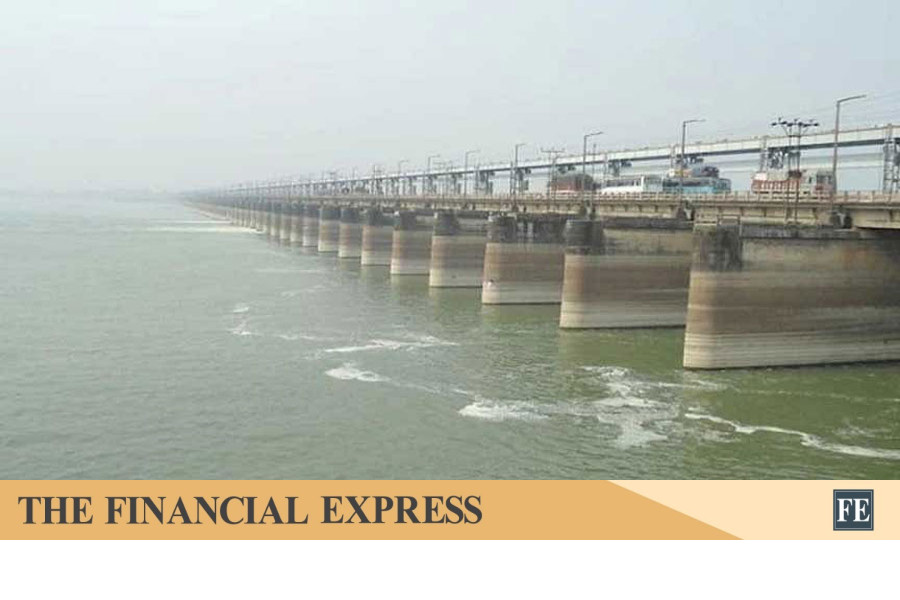
Asked about pending bilateral issues, including the Teesta and Ganges water-sharing treaties, Trivedi said the day’s meetings were primarily courtesy calls but stressed that all outstanding issues could be resolved through dialogue.

‘There is no issue that cannot be sorted out through mutual understanding. Ultimately, it is about the people. Whatever is beneficial for both democracies and their citizens will be prioritised,’ he said, noting that

India and Bangladesh had active joint working groups on treaty-related matters.

‘These working groups will certainly meet and deliberate,’ the high commissioner further said, adding, ‘as I mentioned, there is no problem that cannot be resolved. Once the prime minister visits India, things will move forward constructively.’

India has invited prime minister Tarique Rahman to attend the 18th BRICS Summit in New Delhi on September 12–13 it is going to host for the platform’s 11 member states—Brazil, China, Egypt, Ethiopia, India, Indonesia, Iran, Russia, Saudi Arabia, South Africa, and the United Arab Emirates.

Saying that his meetings at the foreign ministry were held in a warm and positive atmosphere, the Indian high commissioner stated, ‘I am looking forward to everything positively. We had a great meeting filled with immense positivity.’

‘Historically, culturally, and even in sports such as cricket, our connections run deep. This relationship is truly historic. We share not only our borders but also our history, culture and aspirations. We discussed all these aspects.’

‘This is just the beginning,’ Trivedi continued, ‘and I am confident we will continue to engage more deeply with each other moving forward.’

Deputy high commissioner Pawan Badhe and other officials of the Indian High Commission were also present.

After the meeting, foreign minister Khalilur Rahman acknowledged that certain issues continued to affect bilateral ties.

‘There are some irritations in the relationship that are very important to resolve,’ he said.

Describing his meeting with the Indian envoy as a courtesy call, Khalilur said no specific bilateral issues had been discussed.

‘This was our first courtesy meeting. We did not discuss any specific issue, and that is the norm,’ he said, and added, ‘There will be plenty of opportunities to discuss substantive matters in the future.’

Having noted that both sides agreed on the need to reset bilateral relations, the foreign minister added, ‘We have said before that the relationship between the two countries should be reset, and we both agree on this issue.’

Bangladesh and India would move forward on the basis of sovereign equality, Khalilur stressed.

‘Bangladesh and India will advance bilateral relations on the basis of sovereign equality, with due consideration for their mutual interests and Bangladesh’s national interests,’ he said.

Asked about the prime minister’s proposed visit to India, the foreign minister said the government was still reviewing the invitation.

When asked about disputes between the two neighbours, he reiterated that no specific issues had been discussed during the Wednesday meeting.

‘There are some irritations. He knows it, and I know it too. It is very important to resolve them. Everyone understands that need,’ he again said.

The foreign minister also said that during recent a visit to the Philippines he had met Indian external affairs minister S Jaishankar, who was aware of his meeting with the Indian high commissioner.

‘We both expressed the hope that, in the coming days, both sides will work to further strengthen our relations,’ he added.​
 
Analyze

Analyze Post

Add your ideas here:
Highlight Cite Respond

India’s parliamentary panel seeks fresh Bangladesh ties amid China concerns, water disputes
1785452467146.webp


An Indian parliamentary committee has called for a diplomatic reset with Bangladesh, urging deeper engagement with Prime Minister Tarique Rahman’s administration while addressing concerns over China’s growing footprint.

The Committee on External Affairs, chaired by Shashi Tharoor, presented its 15th Action Taken Report to the Lok Sabha on Jul 30, recommending a “robust engagement” with Dhaka after the return of an elected government.

The panel welcomed India’s high-level representation at the swearing-in ceremony of the new administration, saying the political transition offered an opportunity to build a stable and mutually beneficial partnership rooted in the shared legacy of 1971.

A major focus of the report was Bangladesh’s growing economic alignment with China.

The committee flagged Beijing’s expanding presence in Bangladesh, including a $370 million expansion project at Mongla Port, and warned of possible trade distortions for India if Chinese goods enter its market through Bangladesh.

The panel expressed particular concern over Bangladesh’s potential accession to the Regional Comprehensive Economic Partnership (RCEP), which could create a free trade framework between Dhaka and Beijing.

It warned that Chinese fabrics and manufactured goods could potentially reach Indian markets through transshipment or value-addition loopholes under SAFTA rules.

The committee recommended stricter rules-of-origin checks to protect Indian industries.

The concerns come amid deeper Dhaka-Beijing engagement. During Tarique’s recent visit to China, Chinese Premier Li Qiang and President Xi Jinping backed Bangladesh’s application to join RCEP.

During the visit, Bangladesh and China signed 13 memoranda of understanding covering trade expansion, a dedicated Chinese Economic Zone in Chattogram, Mongla Port modernisation and possible cooperation on Teesta River projects.

The Indian panel also highlighted the urgency of renewing the 1996 Ganges Water Treaty before it expires in December 2026.

It urged New Delhi to complete its internal assessment, including reviews of hydrological data, climate projections and consultations with West Bengal and Bihar, so formal negotiations with Bangladesh can begin without delay.

The report reviewed India’s development cooperation with Bangladesh as well. Twelve pre-execution Line of Credit projects were removed after joint reviews, while eight ongoing connectivity projects involving railways, power transmission and road expansion were prioritised for completion within a fixed timeline.

On security, the committee recommended completing unfenced sections of the India-Bangladesh border and using smart technologies alongside regular coordination between the Border Security Force (BSF) and Border Guard Bangladesh (BGB).

The report said a stable, democratic and inclusive Bangladesh was vital for regional security and recommended restarting structured parliamentary exchanges and expanding educational and skill-development programmes between the two countries.​
 
Analyze

Analyze Post

Add your ideas here:
Highlight Cite Respond

Prime Minister almost certain not to attend BRICS summit

Multiple high-level sources say the prime minister is unlikely to attend the BRICS summit following recent developments.

Diplomatic Correspondent
Dhaka

1786318494304.webp

Prime Minister Tarique Rahman File photo
  • The BRICS summit will be held in Delhi on 12–13 September.​
  • Narendra Modi had invited Tarique Rahman to the outreach session of the summit.​
  • India’s newly appointed high commissioner is scheduled to make his first courtesy call on the prime minister on Monday.​

Fresh tensions have emerged in Bangladesh–India relations after ousted prime minister Sheikh Hasina was given an opportunity to speak directly to journalists in Delhi. Against this backdrop, it has become almost certain that Prime Minister Tarique Rahman will not attend the outreach session of the BRICS summit, scheduled to be held in Delhi on 12–13 September.

Several high-level sources of the Bangladesh government told Prothom Alo yesterday, Saturday, that following the recent developments, the possibility of the prime minister attending the BRICS outreach session has effectively vanished.

Indian Prime Minister Narendra Modi had invited Tarique Rahman in his capacity as the current chair of BIMSTEC to attend the session. The invitation was conveyed in a diplomatic letter sent to Bangladesh’s Ministry of Foreign Affairs through the Indian High Commission in Dhaka on 14 July.

BRICS is an alliance of 11 emerging economies. BIMSTEC is a regional organisation for cooperation among countries around the Bay of Bengal. The outreach session of BRICS generally allows leaders of selected non-member countries and regional organisations to participate.

You cannot play the Hasina card and seek friendly relations with Bangladesh; the two are contradictory. I hope the Indian authorities and the Indian government will understand this.
Salahuddin Ahmed, home minister

Diplomatic sources in Dhaka and Delhi say the two countries are looking for ways to restore normal relations so that the recent tensions do not develop into a prolonged crisis. Both sides have continued communicating on how to manage the situation and rebuild mutual trust.

Against this backdrop, the first courtesy call by India’s newly appointed High Commissioner to Bangladesh, Dinesh Trivedi, on Prime Minister Tarique Rahman in Dhaka is being viewed as significant. The meeting is scheduled for tomorrow, Monday. Before that, India’s high commissioner is expected to meet Foreign Minister Khalilur Rahman today, Sunday.

According to diplomatic sources, the meetings may discuss the two sides’ positions on the recent developments and the steps to be taken next.

Diplomatic observers say the possibility of putting Bangladesh–India relations on a new footing after the February election has not gained the expected momentum. Although there had been talk of a new chapter in relations, observers believe there was a lack of political and diplomatic initiatives needed to build mutual trust.

Following the recent tensions, how to overcome these shortcomings and move the relationship forward is now a major challenge for both countries, they say.

According to government sources, Bangladesh formally conveyed its strong stance to India after Sheikh Hasina’s event in Delhi last Wednesday. Dhaka made it clear to New Delhi that the government did not view positively the opportunity given to the ousted prime minister to interact directly with journalists in Delhi.

In a statement the Ministry of Foreign Affairs said that Bangladesh was outraged by New Delhi’s decision to allow fugitive and convicted genocider Sheikh Hasina to speak directly to the media in Delhi. It said she and her henchmen launched venomous vitriol against the State of Bangladesh and her people.

Dhaka, meanwhile, has viewed positively the remarks made by Indian Foreign Ministry spokesperson Randhir Jaiswal at the ministry’s regular briefing on Friday. Responding to a question, Jaiswal said that the Indian government did not endorse anything said at the forum, especially with regard to the duly constituted Government of Bangladesh.

According to members of Bangladesh’s diplomatic community, India’s position indicates that, despite the recent tensions, neither country is interested in allowing relations to deteriorate further. There is still an opportunity to take the relationship forward on the basis of mutual respect, dignity, shared interests and sensitivity towards each other’s concerns.

Home Minister’s warning

Home Minister Salahuddin Ahmed has warned India over the political activities of ousted prime minister Sheikh Hasina, who is currently staying in Delhi.

Speaking at an event at Dhaka University Saturday, the home minister said India would have to rethink its pursuit of friendly relations with Bangladesh if it allows ousted prime minister Sheikh Hasina, who fled the country in the face of the July mass uprising, to engage in political activities from Indian soil.

Speaking as the chief guest at an event marking the anniversary of the July mass uprising, Salahuddin Ahmed said, “You cannot play the Hasina card and seek friendly relations with Bangladesh; the two are contradictory. I hope the Indian authorities and the Indian government will understand this.”

The home minister urged India not to allow Sheikh Hasina to make political statements or support activities against Bangladesh. He said Bangladesh wants to maintain friendly diplomatic relations with neighbouring India based on mutual interdependence and respect for sovereignty.

Meanwhile, Suhasini Haidar, diplomatic editor of India’s influential English-language daily The Hindu, argued in an explainer on X Saturday that the two countries should seek a positive way forward amid the current tensions.

In her view, whether ousted prime minister Sheikh Hasina returns to her own country or goes to a third country is entirely her own decision. However, she believes India needs to look beyond the current tensions and focus on maintaining good relations with Bangladesh.​
 
Analyze

Analyze Post

Add your ideas here:
Highlight Cite Respond

Indian envoy briefs PM Modi in Delhi after meetings with Bangladesh leadership

1786489701737.webp


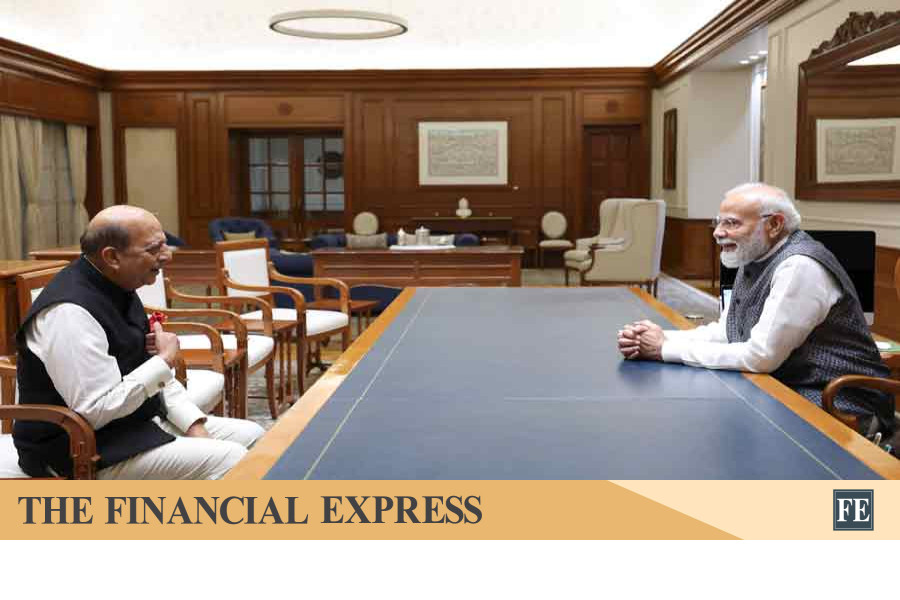
Indian High Commissioner to Bangladesh Dinesh Trivedi on Tuesday met Indian Prime Minister Narendra Modi in New Delhi and shared the message that he carried from Dhaka after his three important meetings with the Bangladesh leadership.

“Yes, he had the meeting with Prime Minister Narendra Modi today (Tuesday). They discussed Bangladesh-India relations,” a diplomatic source in New Delhi told UNB.

The High Commissioner reached New Delhi on Monday after holding three meetings in Dhaka, which were seen as further consultations amid efforts to engage constructively to take forward relations between the two neighbours.

He met Foreign Minister Dr Khalilur Rahman on Sunday at State Guest House Padma, while he had separate courtesy meetings with Prime Minister Tarique Rahman and Home Minister Salahuddin Ahmed at the Secretariat on Monday.

During the courtesy meeting with the Prime Minister, Dinesh Trivedi conveyed greetings from Indian Prime Minister Narendra Modi to Tarique Rahman and the intent to work together with the government and the people of Bangladesh in a "positive, constructive and forward-looking" manner.

They exchanged views on matters of mutual interest and discussed avenues for further strengthening bilateral relations between India and Bangladesh with a people-centric approach.

During his meeting with Home Minister Salahuddin, they discussed areas of common interest, including security cooperation between the two countries, and ways to further strengthen bilateral relations.

The High Commissioner conveyed India’s willingness to strengthen people-centric cooperation in all domains, based on mutual interest, mutual benefit and mutual sensitivities.​
 
Analyze

Analyze Post

Add your ideas here:
Highlight Cite Respond

Tarique Rahman invited for bilateral visit as well as BRICS summit: Randhir Jaiswal

Correspondent
New Delhi
1786490552464.webp

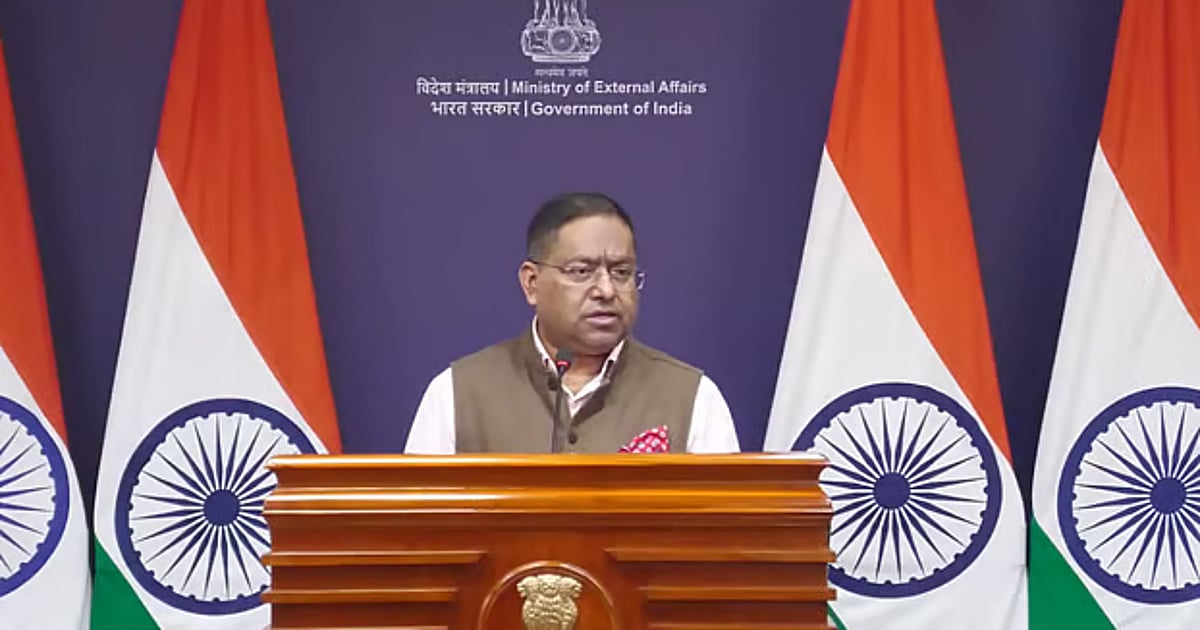
Spokesperson of India's Ministry of External Affairs, Randhir Jaiswal

Spokesperson of India's Ministry of External Affairs, Randhir JaiswalTaken from a video available on the website of India's Ministry of External Affairs
Bangladesh's Prime Minister Tarique Rahman has been invited to India for a bilateral visit as well as to participate as the Chairperson of BIMSTEC in the outreach session of the upcoming BRICS summit.

This information was shared by the spokesperson of the Ministry of External Affairs, Randhir Jaiswal, in response to questions from journalists during the weekly briefing at India's Ministry of External Affairs on Tuesday.

During the briefing, a journalist raised a question about the meeting between India's High Commissioner to Bangladesh, Dinesh Trivedi, and Prime Minister Tarique Rahman, which took place on Monday.

The journalist wanted to know what topics were discussed and whether Prime Minister Tarique Rahman had agreed to visit India.

In response, India's Ministry of External Affairs spokesperson, Jaiswal, stated, "Our High Commissioner had a meeting with Bangladesh's Prime Minister yesterday, Monday. Both parties discussed matters of mutual interest."

Regarding the invitation to Prime Minister Tarique Rahman, he mentioned, "We have invited him for a bilateral visit, and at the same time, for participation in the BRICS outreach session in Delhi. If there are any updates on this matter, we will inform you."

The 18th BRICS summit is scheduled to be held in Delhi on 12-13 September. India’s Prime Minister, Narendra Modi, has invited Bangladesh’s Prime Minister, Tarique Rahman, to attend the summit’s outreach session as the Chairperson of BIMSTEC.

Previously, India extended its first invitation in February, soon after Tarique Rahman assumed office as Bangladesh's Prime Minister. According to diplomatic sources in New Delhi, South Block is keen on seeing Tarique Rahman visit India, and efforts are ongoing in this regard.

Meanwhile, on 5 August, marking the second anniversary of the July protests, fugitive former Prime Minister Sheikh Hasina, who was sentenced to death for crimes against humanity in Bangladesh, participated in a conversation with journalists via audio call at an event in New Delhi. Bangladesh vehemently objected to India allowing Sheikh Hasina to speak with journalists despite its protests.

Recent official-level meetings between India’s High Commissioner Dinesh Trivedi and the Bangladesh government included renewed demands for the extradition of Sheikh Hasina and the transfer of the murderers of Shaheed Sharif Osman Bin Hadi.

Foreign Minister Khalilur Rahman reported that all information regarding the murder of Osman Hadi and his murderers has been provided to India.

All the information requested by India has been given. In the briefing, journalists sought India's stance on these two extradition requests.

In response, Jaiswal stated that India’s position on Hasina’s extradition is clear. All procedures from India’s side are being thoroughly examined.

Regarding the extradition of Osman Hadi’s murderers, the spokesperson noted that it is a legal matter and is being scrutinised. Alongside, the investigation continues.

A journalist also questioned the two-day visit of India's intelligence agency, the Research and Analysis Wing (RAW), chief Parag Jain to Bangladesh during the briefing.

The journalist asked whether the RAW chief met with Bangladesh's Prime Minister's defense advisor, Brigadier General (Retd.) AKM Shamsul Islam, and what the purpose of the visit was.

Jaiswal evaded the question, stating that he has "no information” regarding this and suggested that the relevant ministry might provide clarification.​
 
Analyze

Analyze Post

Add your ideas here:
Highlight Cite Respond

Why Dhaka-Delhi relations demand equal footing
M Sakhawat Hossain
Updated: 11 Aug 2026, 17: 29

1786490873719.webp


India is considered a major determining power in the geopolitics of South Asia. Despite major changes in the political map of the region with the end of British rule in 1947 and the emergence of Bangladesh in 1971, India's geographic position and military-political capabilities have allowed it to maintain influence over neighbouring countries for a long time. Many South Asian countries have operated within India's sphere of influence either directly or indirectly at various times. However, indications of change in this situation have been observed in recent years. This change, which began in Sri Lanka and the Maldives, later became more apparent in Bangladesh and Nepal through the political and social rise of a new generation, particularly Generation-Z (Gen-Z).

In the context of Bangladesh, this change is particularly significant. The fall of the Awami League government, which had been in power for 15 years, occurred primarily due to an anti-discrimination movement led by the younger generation. When the movement reached its peak, Sheikh Hasina was ousted from power on 5 August 2024, and later, many leaders of her party took refuge in India. This course of events revived for many the old notion that India has always sought to keep Bangladesh a close yet dependent state since its independence, a notion that became more consolidated in the past decade and a half. Sheikh Hasina's widely discussed statement, "What I have given to India, they will remember for a lifetime, " further reinforced this idea in the public mind.

To understand the history of Bangladesh's independence, one must start from the very inception of the state of Pakistan. From the creation of Pakistan in 1947, the Bengalis of East Pakistan faced various types of discrimination. The Language Movement of 1952 was the first major protest against this deprivation, which laid the foundation for the national consciousness of the Bengalis. Subsequently, the Jukto Front election of 1954 and the imposition of military rule in 1958 further restricted the political rights of the Bengalis. Despite being the majority population, they were deprived of the opportunity to participate in state power, gradually strengthening the demand for independence.

Various analyses suggest that India strategically monitored the internal dissatisfaction and political instability in East Pakistan. Many believe that since 1948, India was looking for a possible opportunity to separate East Pakistan. Recently, Priyanka Gandhi, in her address in the Lok Sabha, mentioned that her grandmother, Indira Gandhi, divided the country in 1971 with the intent of weakening Pakistan. Although she did not mention the long struggle and sacrifices of the people of Bangladesh, her statement reignited the debate over India’s role in South Asia's geopolitics.

In this context, several important studies and books have analyzed India's geopolitical strategy, such as Srinath Raghavan's "1971: A Global History of the Creation of Bangladesh," Avinash Paliwal's "India’s Near East," and S. Jaishankar's "The India Way, " which have discussed India's strategic decisions and regional interests in detail.

According to analysts, by creating a new state and weakening Pakistan, India aimed to ensure its eastern security. The security of the insurgency-prone regions of Northeast India was particularly challenging for India. This perspective was further strengthened after the Sino-Indian war of 1962, where India faced significant military setbacks. The Indian forces had to retreat in some parts of Arunachal Pradesh (then NEFA), and the town of Tezpur in Assam was under threat. This experience profoundly impacted India’s security policy.

At that time, East Pakistan was considered a strategic challenge for India. Particularly, the security of the Siliguri Corridor (known as the ''Chicken's Neck''), the only land connection between Northeast India and the main landmass, was critically important for India, and East Pakistan’s position could have affected that security. Furthermore, the closeness between China and Pakistan and Pakistan's alleged support for separatist movements in Northeast India further heightened India's concerns.

According to Avinash Paliwal, this situation created a ‘two-and-a-half-front’ challenge in India’s military strategic considerations: the two complete fronts encircling China and Pakistan and the use of military forces to suppress the Naga and Mizo insurgencies in Northeast India, which he described as a ‘half-front.’

Pakistan had provided refuge to Naga leader AZ Fhizo and Mizo leader Laldenga. Various sources mention that the Hill Tracts were used for training the Mizo insurgents from the 1960s to 1971. After 1971, these activities moved to Myanmar, and stability returned to Mizoram through a peace agreement in 1986. In this context, the idea of transforming East Pakistan into a separate state became strategically significant for India’s policymakers. However, India did not attack East Pakistan during the Indo-Pakistan war of 1965, even though it was relatively vulnerable. Many analysts believe this situation created a favourable environment for the subsequent independence movement in East Pakistan.

On the other hand, Pakistan never gave East Pakistan equal importance. The dismissal of the Jukto Front government, which won the 1954 election and the imposition of military rule in 1958 centralised power in West Pakistan's hands. This intensified the sense of deprivation among the Bengalis and strengthened nationalist consciousness.

Although the Awami League won an absolute majority in the general elections of 1970, there was a delay in transferring power. This led to a severe political crisis and the start of the Liberation War in 1971. During this time, India provided support to the freedom fighters of Bangladesh and ultimately intervened militarily. This resulted in Bangladesh achieving independence, which is undoubtedly a significant event in South Asian history.

However, the question remains—how strategic and how humanitarian was India's role in this entire process? Many analysts believe that alongside humanitarian aid, India’s own security and geopolitical interests also played a crucial role here. As a result, India managed to reduce the security risks in its eastern region and transitioned from a ''two-and-a-half front'' to a ''two-front'' situation.

India reaped the strategic advantages for a long time after 1971. In recent years, particularly, the Bangladesh-India relationship has been criticised for being unequal and one-sided in many areas. A large section of Bangladesh's population sees such a relationship as hegemonic, posing a great challenge in maintaining the balance of relations in the future.

Bangladesh certainly wishes to maintain friendly relations with India. However, this relationship must be based on equality, mutual respect, and sovereignty. A relationship that undermines the dignity of an independent state is unacceptable in any way. The most important point is that Bangladesh's independence is not a gift from an external power. It is the fruit of the long struggle, sacrifice, and self-sacrifice of the Bengali nation. The independence achieved through the blood, suffering, and sacrifice of millions is a unique example in history.

Therefore, it is not correct to explain the Liberation War of 1971 solely as an outcome of regional geopolitical strategy. It was a struggle for the independence of a nation. India's assistance was undoubtedly important, but that assistance was not the primary driving force behind Bangladesh's independence.

Bangladesh wants to maintain good relations with India in the future as well. But this should be based on equal respect and mutual interests—based on cooperation, not domination.

#M Sakhawat Hossain is a former advisor to the interim government.​
 
Analyze

Analyze Post

Add your ideas here:
Highlight Cite Respond

Latest Posts

Back
 
G
O
 
H
O
M
E