Home Watch Videos Wars Movies Login

[🇮🇷] Iran news/views

[🇮🇷] Iran news/views
69
3K
More threads by Saif

G   Iranian Defense

Iran eyes 'permanent split' from global internet, say digital rights activists

Published :
Jan 17, 2026 15:44
Updated :
Jan 17, 2026 15:44

View attachment 23850

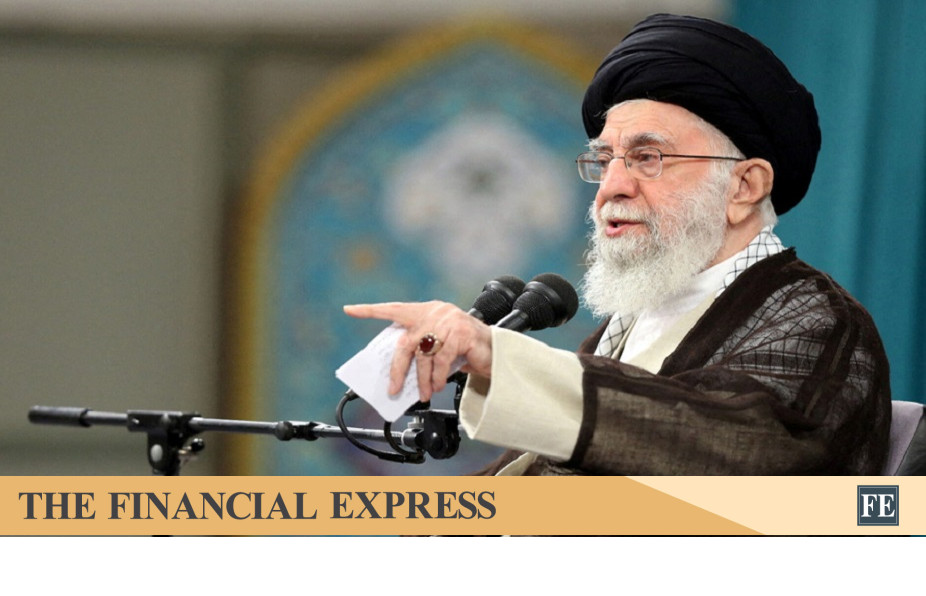
Iran has planned a “permanent break” from the global internet, allowing only individuals vetted by the regime to connect online, according to digital rights activists.

Bdnews24.com, citing The Guardian, reported that a confidential plan is underway to make international internet access a “governmental privilege”, citing several sources in Iran.

The US-based newspaper said state media and government spokespersons have indicated that unrestricted access will not return after 2026.

Under the plan, Iranians with security clearance or government checks would access a filtered version of the global internet, while all others would be restricted to the national internet: a domestic network cut off from the wider world, said Amir Rashidi, head of Filterwatch, an organisation monitoring Iran’s internet censorship.

Rashidi told the British daily that authorities “appear satisfied with the current level of internet connectivity, which has helped them control the situation.”

Iran’s ongoing internet shutdown began on Jan 8 after 12 days of anti-regime protests. Thousands of people have been killed, though demonstrations appear to have slowed under a brutal crackdown.

Only limited information has been filtered out due to the blackout, described as one of the most severe in history, exceeding Egypt’s 2011 shutdown during the Tahrir Square protests.

A government spokesperson reportedly told Iranian media that international internet access would remain cut off until at least Nowruz on Mar 20.

A former US State Department official cited by The Guardian said the idea of a permanent break from the global internet is “plausible and terrifying”, while noting the economic and cultural costs would be enormous.

Rashidi added that the ongoing shutdown is the result of a 16-year plan to cement regime control over the country’s internet. The strategy includes sophisticated filtering equipment, enabling whitelisted access to select individuals and blocking others entirely.

The Guardian said researchers at Project Ainita and Outline Foundation, who asked not to be named, noted that China-exported technology likely enables Iran to filter internet traffic, monitor users, and block websites, protocols, and VPNs.

The newspaper noted that Iran’s national internet, accessible only inside the country, allows use of regime-approved apps and services, including messaging, search, navigation, and a video streaming platform.

Iran’s pursuit of a national internet began after 2009, following the brief internet shutdown during protests after Mahmoud Ahmadinejad’s re-election, which revealed the costs of a total blackout, it added.

By 2012, Iran had established the Supreme Council of Cyberspace and refined shutdowns, blocking Facebook, Twitter, and Google during protests while keeping economically vital services running.

As per The Guardian, authorities also pressured online businesses, banks, and ISPs to move infrastructure inside Iran through tax incentives and regulatory measures.

In 2015, researchers using Bitcoin to buy server space inside Iran discovered the country had built a completely domestic internet, similar to internal corporate networks, inaccessible from outside.

The national internet has remained operational throughout the protests, providing the only online access for most Iranians while remaining disconnected from the global internet.

The former US official cited by the daily noted Iran’s current capabilities surpass those of some other authoritarian regimes, but whether a permanent break is feasible remains uncertain.

“The digital rights community is right to raise the alarm. But the impacts of this will be really severe for Iranian authorities, who will bear responsibility for that harm to their economy,” the official said.​
Chainda and Rhusshia have da same curbs too. Hendu-pak k colludz baasturd converts are all about da internet no?
 
Analyze

Analyze Post

Add your ideas here:
Highlight Cite Respond
  • Haha (0)
Reactions: Vsdoc
希望伊朗和它的儿子们理解。伊朗只是伊朗。一个贫穷落后的第三世界国家。没有空军,没有海军。陆军打不赢伊拉克。所有的吹嘘结束了。

现在伊朗迫切地想舔美国人的大鸡巴。但被美国人拒绝了。希望战争能让伊朗理解自己真正的位置。
 
Analyze

Analyze Post

Add your ideas here:
Highlight Cite Respond
  • Khamenei (+4)
Reactions: Egyptian

Iran sentences Nobel peace laureate Mohammadi to six years in prison: lawyer

To be exiled for two years to the city of Khosf in the eastern province of South Khorasan, says lawyer


1770599282590.webp

Reuters File Photo

An Iranian court sentenced Nobel Peace Prize winner Narges Mohammadi to a six-year prison term, her lawyer told AFP on Sunday.

"She has been sentenced to six years in prison for gathering and collusion to commit crimes," lawyer Mostafa Nili said, adding that she had also received a two-year ban on leaving the country.

Mohammadi was also handed a one-and-a-half-year prison sentence for propaganda activities and is to be exiled for two years to the city of Khosf in the eastern province of South Khorasan, the lawyer stated.

Under Iranian law, jail sentences run concurrently.

Nili expressed hope that due to Mohammadi's health issues, she could be temporarily "released on bail to receive treatment".

He added that the verdict issued was not final and could be appealed.

Over the past quarter-century, Mohammadi, 53, has been repeatedly tried and jailed for her vocal campaigning against Iran's use of capital punishment and the mandatory dress code for women.

Mohammadi has spent much of the past decade behind bars and has not seen her twin children, who live in Paris, since 2015.

In December 2024, she was released on medical grounds, initially for three weeks, due to "her physical condition after the removal of a tumour and a bone graft", according to her lawyer.

However, she ultimately spent much of last year outside of custody, continuing to make statements in spite of her lawyers' fears she could be sent back to prison any time.

On December 12, Mohammadi was arrested in the northeastern city of Mashhad with other activists after speaking at a ceremony honouring a lawyer who had been found dead.

Even behind bars, the Nobel laureate has not been silent, staging protests in the prison yard and going on hunger strikes.

Born in the northwestern city of Zanjan in 1972, Mohammadi studied physics and pursued a career in engineering alongside work as a journalist for several reformist media outlets.

In the 2000s, she joined the Defenders of Human Rights Center set up by 2003 Nobel Peace Prize winner Shirin Ebadi, an organisation of which Mohammadi remains vice president.

She was jailed from May 2015 to October 2020 for "forming and leading an illegal group", campaigning for the abolition of the death penalty in Iran.

Mohammadi won the peace prize in 2023, primarily for her advocacy against capital punishment. Her children collected the award on her behalf, as she was in prison at the time.

Human rights groups, including Amnesty International, say Iran carries out more executions each year than any other country except China, for which no reliable figures are available.​
 
Analyze

Analyze Post

Add your ideas here:
Highlight Cite Respond

US may ‘unsanction’ Iran oil already being shipped: treasury chief
Agence France-Presse . Washington, United States 19 March, 2026, 19:29

1773968756081.webp


The US treasury secretary, Scott Bessent, addresses journalists during a press statement with US Trade Representative Jamieson Greer (unseen) following a new round of trade discussions with Chinese officials at the OECD Headquarters in Paris on March 16, 2026.

US treasury secretary Scott Bessent said on Thursday that Washington might ‘unsanction’ Iranian oil that was already being shipped, as energy prices soared due to the US-Israel war on Iran.

Bessent’s comments to Fox Business came as oil and gas prices made a renewed surge after Iran hit the world’s biggest liquefied natural gas facility in Qatar and threatened to destroy the region’s energy infrastructure.

Bessent added in the interview that the US government could also release more oil from its strategic reserves.

The administration of the US president, Donald Trump, has been scrambling to rein in rocketing energy costs after US-Israeli strikes on Iran on February 28.

Tehran’s retaliation brought commercial shipping through the Strait of Hormuz to a virtual halt, snarling energy supply chains.

Around a fifth of global crude oil and liquefied natural gas passes through the critical waterway during peacetime.

Already, international benchmark Brent surged 10 per cent earlier before easing to a 5 per cent increase at $112.76 per barrel.

Recently, the United States also temporarily allowed the sale of sanctioned Russian oil that is at sea. On Wednesday, Trump temporarily waived a century-old maritime shipping law in an attempt to help ease energy prices.​
 
Analyze

Analyze Post

Add your ideas here:
Highlight Cite Respond

Iranians celebrate Eid amid Natanz strike, Trump considers winding down war
Agence France – Presse . Jerusalem, Undefined 21 March, 2026, 16:19

1774141254863.webp

Donald Trump | AFP photo

Thousands of Iranians held Eid-ul-Fitr prayers on Saturday to mark the end of the Ramadan fast amid war with the United States and Israel, which reportedly carried out a strike on Iran’s Natanz nuclear site.

Iran’s supreme leader traditionally leads Eid prayers but Ayatollah Mojtaba Khamenei, who came to power earlier this month after his father was killed in a US-Israeli strike, has remained out of the public eye.

Instead, the head of the judiciary, Gholam Hossein Mohseni Ejei, attended prayers at central Tehran’s Imam Khomeini grand mosque, named after the founder of the Islamic republic, which was filled to overflowing, with worshippers in the streets outside.

Iran’s key ally Russian President Vladimir Putin sent greetings to Khamenei, ‘wished the Iranian people strength on overcoming these severe trials and emphasised that during this difficult time, Moscow remained a loyal friend and reliable partner of Tehran’.

According to Iran’s atomic energy organisation, the US and Israel targeted a plant at Natanz in Isfahan province, which hosts underground centrifuges to enrich uranium for Iran’s disputed nuclear programme and was already damaged in last year’s June war.

‘Following the criminal attacks by the United States and the usurping Zionist regime against our country, the... Natanz enrichment complex was targeted this morning,’ the agency said, in a statement carried by the Tasnim news agency.

No leakage of nuclear materials was reported, it added.

After three weeks of a conflict that has sent world energy prices soaring, blocked the Strait of Hormuz oil export route and strained Washington’s ties with its closest allies, US President Donald Trump said once again that he was thinking of pulling back.

‘We are getting very close to meeting our objectives as we consider winding down our great military efforts in the Middle East,’ Trump posted on social media.

The White House press secretary said the Pentagon was looking at four to six weeks to complete its mission.

Nevertheless, according to US media reports, Washington is deploying thousands more marines to the Middle East, in a possible sign of a ground operation, and Iran continues to carry out strikes on both Israel and its oil and gas-rich Gulf neighbours.

After Iranian missile fire at Israel overnight, the Israeli military said it had carried out strikes on what it called ‘regime targets’ in Iran’s capital, which has been under bombardment since a US-Israeli attack started the war on February 28.

Beyond the Gulf, the war has spread to Lebanon where the Israeli military has carried out regular bombardments in response to rocket fire by Iran ally Hezbollah.

The Israeli military said it launched a wave of strikes against ‘Hezbollah terrorist organisation targets’ in the Lebanese capital early Saturday.

It had called on residents to evacuate parts of Beirut’s southern suburbs, a Hezbollah stronghold.

In southern Lebanon, close to the border, state media reported an ‘extensive’ Israeli operation around the town of Khiam and said an Israeli airstrike killed at least one person.

Lebanon’s health ministry says the war has killed more than 1,000 people and displaced more than one million, while Israel’s army says two soldiers have been killed in southern Lebanon.

As concerns grow over oil prices and global supply shortages, the US Treasury said it was temporarily lifting sanctions on Iranian oil already loaded onto vessels.

The authorisation allows for the delivery and sale of Iranian crude oil and other petroleum products loaded onto ships before March 20 and will last through April 19.

As energy analysts and consumers count the cost of attacks on oil and gas facilities in the Gulf, including the world’s largest liquefied natural gas hub, Trump slammed NATO allies as ‘cowards’ and called on them to secure the Strait of Hormuz.

Iran has choked the channel, which is crucial for around a fifth of the world’s crude oil and liquefied natural gas during peacetime.

‘The Hormuz Strait will have to be guarded and policed, as necessary, by other Nations who use it -- The United States does not!’ he said.

Iran’s Foreign Minister Abbas Araghchi said Tehran had imposed restrictions on vessels from countries involved in attacks against Iran but would offer assistance to others.

The standoff has sent crude oil prices soaring, with a barrel of North Sea Brent crude up more than 50 percent over the past month and now comfortably more than $105 a barrel.​
 
Analyze

Analyze Post

Add your ideas here:
Highlight Cite Respond

Iran, North Korea and the new logic of deterrence


1789702378536.webp


Six months of war against Iran have demonstrated an uncomfortable proposition about modern military power. The United States (US) and Israel possess overwhelming advantages in aircraft, surveillance, precision weapons, intelligence and military expenditure, yet conventional superiority has not produced an equally overwhelming political result. Iran has suffered extensive damage, but the regime remains in power, retaliatory capacity survives, the Strait of Hormuz remains a source of leverage, and the conflict resembles an expensive strategic stalemate. Military superiority can destroy targets; it cannot automatically manufacture surrender.

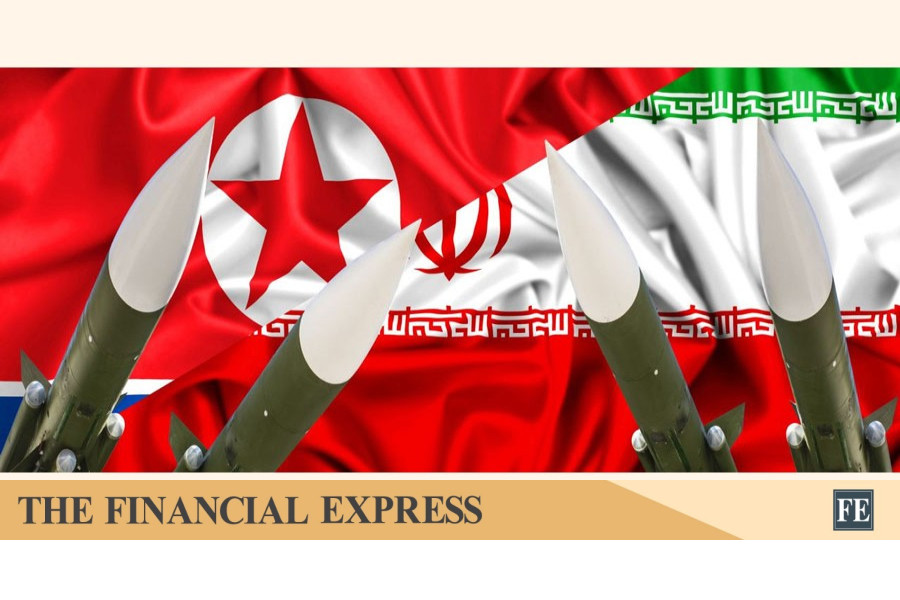
Professor Jiang Xueqin has approached this paradox through a provocative comparison: Iran, he argues, has been learning from the North Korean playbook. The analogy is not literal. North Korea possesses nuclear weapons while Iran officially does not, and the two differ substantially in geography, political structure and strategic environment. Yet Jiang identifies a deeper commonality. Both confront adversaries they cannot defeat conventionally, so the objective is not battlefield superiority. It is to create a threshold beyond which attacking, occupying or overthrowing them becomes prohibitively costly.

SURVIVAL BEFORE VICTORY: North Korea's strategic achievement is not that it could defeat the US conventionally. Its achievement is that destroying the North Korean state now carries potentially catastrophic consequences. Nuclear weapons transformed vulnerability into retaliatory uncertainty, and retaliatory uncertainty became regime insurance. Iraq's nuclear ambitions were dismantled before Saddam Hussein's regime was overthrown; Libya abandoned its nuclear program and Muammar Gaddafi's government later fell; Ukraine relinquished inherited Soviet nuclear weapons and subsequently suffered invasion despite security assurances. North Korea chose the opposite course, endured sanctions, developed nuclear weapons and survived.

These cases do not prove that nuclear weapons guarantee regime survival or that every outcome had a single cause. They do, however, create a powerful incentive for vulnerable governments. A weaker state may conclude that compliance does not eliminate external danger, while credible retaliation changes an adversary's calculation. The lesson is not simply, "Build a bomb." The deeper lesson is: become too costly to destroy. Iran appears to be pursuing that objective through other instruments.

IRAN'S DETERRENCE MATRIX: Iran's strategy combines underground facilities, dispersion, missiles, drones, strategic geography and economic leverage. Underground installations complicate targeting; dispersed assets reduce the benefits of a decapitation strike; missiles and drones preserve retaliatory options; and Iran's position beside the Strait of Hormuz converts geography into global economic leverage. None gives Iran parity with the US or Israel. Together, however, they create an architecture intended to prevent military defeat from becoming political extinction.

This is where Iran differs from North Korea. Pyongyang crossed the nuclear threshold and made retaliation explicit. Tehran has remained below it while accumulating technological knowledge, enriched material and asymmetric capabilities. Iran therefore occupies an intermediate position between non-nuclear power and North Korean-style nuclear deterrence. Deterrence can arise not only from deployed weapons but also from uncertainty about what may survive, what knowledge cannot be destroyed and how rapidly latent capability could change after an attack.

NUCLEAR LATENCY AND THE 60 PER CENT THRESHOLD: Before inspection continuity was lost, the IAEA estimated that Iran had accumulated 440.9 kilograms of uranium enriched up to 60 per cent U-235, of which 432.9 kilograms had been verified. The distinction between 60-per cent enrichment and conventional weapons-grade uranium must be maintained. The IAEA classifies uranium enriched to 20 per cent or more as highly enriched uranium, while weapons-grade material is conventionally associated with enrichment above roughly 90 per cent. Iran's stockpile is not a finished nuclear weapon, but 60-per cent enrichment is far removed from ordinary reactor fuel and represents an advanced position of nuclear latency.

From a nuclear-engineering standpoint, the conventional weapons-grade benchmark should not be treated as a magical line between explosive potential and none. The strategic point is simpler: uranium already enriched to 60 per cent places Iran much closer to the nuclear threshold than a state operating only civilian reactors. Iran has demonstrated that capability and created uncertainty about the material's present disposition. An adversary contemplating regime change must therefore consider what knowledge, material or facilities might survive an attack and how quickly the strategic environment could change afterward.

ISRAEL IN EQUATION: Any discussion of Iran's nuclear calculus that excludes Israel is incomplete. Israel does not publicly acknowledge nuclear weapons, yet it is widely counted among the world's nuclear-armed states. From Tehran's perspective, the regional balance is already asymmetric. Iran faces overwhelming American power and an Israeli adversary possessing technological superiority, sophisticated delivery capabilities and a widely presumed nuclear arsenal. Even if never used, such weapons affect escalation by providing an ultimate strategic backstop.

This explains why simply counting aircraft, missiles or defense expenditures gives an incomplete picture. Israel and the U.S. can inflict enormous physical damage on Iran, but the political question is whether they can eliminate retaliation, suppress economic disruption, prevent continuing resistance and guarantee the desired postwar outcome. If they cannot, military superiority encounters diminishing political returns. Iran's subterranean strategy reinforces this problem because an adversary may know what it has attacked without knowing what has survived. In deterrence, uncertainty itself has strategic value.

PAKISTAN & MECCA DETERRENCE SHADOW: The Mecca Joint Defence Agreement adds another layer to this strategic geometry. On August 7, 2026, Saudi Arabia, Türkiye and Pakistan signed an agreement stating that an armed attack against one would be regarded as an attack against all. The arrangement is less institutionalized than NATO, but its language matters. Saudi Arabia contributes financial and energy power; Türkiye contributes conventional military strength, strategic geography and a growing defense industry; Pakistan contributes something its partners do not possess nuclear weapons.

It would be careless to claim that the agreement provides Saudi Arabia or Türkiye with a Pakistani nuclear umbrella. Yet nuclear deterrence operates partly through uncertainty, and a nuclear-armed founding member creates what may be called a nuclear deterrent shadow. Once a nuclear state is embedded in a broader defense framework, adversaries cannot erase its arsenal from escalation calculations. The significance lies not in promised nuclear use but in uncertainty about where an expanding conflict might lead.

A MATRIX PARADIGM OF DETERRENCE: Professor Jiang's North Korean analogy identifies the starting point: weaker states study how other vulnerable states survived. But Iran's strategy is more multidimensional. One axis is survivability through underground installations, dispersion and redundancy; another is retaliation through missiles, drones and regional reach. Geography adds strategic depth and the Strait of Hormuz, while nuclear latency adds uncertainty at the highest level. Russia and China complicate isolation, Pakistan alters the wider regional equation, Israel's undeclared arsenal shapes Iranian perceptions, and global dependence on energy flows turns local war into international economic consequences.

No single component gives Iran parity with the US. However, deterrence does not always require parity; the weaker state needs enough surviving cells in the matrix to deny the stronger power an acceptable victory. An air force may be destroyed while missiles survive. Missile launchers may be eliminated while underground facilities remain. Nuclear sites may be struck while scientific knowledge survives. Economic infrastructure may be devastated while the Strait of Hormuz continues transmitting costs to the world economy. Political leadership may suffer losses while the state refuses to capitulate.

THE NEW STRATEGIC EQUATION: This is deterrence not by the promise of victory but by the denial of decisive victory. North Korea represents deterrence through nuclear possession: attack us, and the consequences may become unacceptable. Iran is attempting something different: attack us, and destruction may still fail to produce submission. The Mecca alliance framework potentially adds a third layer: attack one member, and you may confront capabilities distributed across several states, including nuclear-armed Pakistan. Nuclear deterrence, asymmetric deterrence, subterranean defense, economic leverage and collective defense are increasingly occupying the same strategic ecosystem.

The historical paradox is striking. Nuclear weapons were created to deliver strategic superiority, yet proliferation eventually constrained the freedom of action of the powers that first possessed them. Precision weapons were developed to make destruction more decisive, yet dispersion and subterranean defense make decisive destruction more difficult. Iran's importance lies within this transition. It need not become another North Korea to show that a weaker state can combine survivability, nuclear latency, retaliation, geography, economic leverage and external relationships sufficiently well to frustrate military power.

The emerging logic of twenty-first-century deterrence may therefore be less about who has the strongest military than whether the weaker state can survive, retaliate, disrupt and connect itself to enough outside power that defeating it becomes more expensive than living with it. North Korea answered that question with nuclear weapons. Iran is attempting to answer it through a matrix of capabilities near the nuclear threshold. Pakistan adds collective deterrence, while Israel's undeclared arsenal remains central to the imbalance. The nuclear age began with monopoly, evolved through proliferation and may now be entering a third phase: multipolar deterrence in which nuclear possession, nuclear latency, asymmetric survival and collective security increasingly intersect.

Dr Abdullah A Dewan, a former physicist and nuclear engineer at Bangladesh Atomic Energy Commission, is a professor emeritus of economics at Eastern Michigan University, USA. The writer is also a senior fellow of the Policy Research Institute (PRI), Dhaka.​
 
Analyze

Analyze Post

Add your ideas here:
Highlight Cite Respond

Latest Posts

Back
 
G
O
 
H
O
M
E