Home Watch Videos Wars Movies Login

[🇮🇷] Iran's Nuclear Program

[🇮🇷] Iran's Nuclear Program
143
5K
More threads by Saif

G   Iranian Defense
Many saying the old dead wood is gone! with guys who came into being back in the 80's and 90's......

Younger Iranians will take over now and form a new Persian identity no?

So dead wood was removed.

If you don't constantly innovate/ change/ adapt doc........yous not goin last......not on dis planet.

Irans gotta stop colludz infiltration......that is da biggest threat.....not that Israeli semite joker.
86 Khamenei is still.there. With his Basij and IRGC. The nation is still the Islamic Republic. And while the post war cleanup is happening, no one is going to be poking their necks out. Because more than deadwood, this is the perfect opportunity for a lot of dissent to be magically vanished.
 
Analyze

Analyze Post

Add your ideas here:
Highlight Cite Respond

Iran to respond to reimposition of UN sanctions
Says ministry spokesperson on its nuclear programme

Iran will react to any reimposition of United Nations sanctions over its nuclear programme, the country's foreign ministry spokesperson said yesterday, without elaborating on what actions Tehran might take.

A French diplomatic source told Reuters last week that European powers would have to restore UN sanctions on Iran under the so-called "snapback mechanism" if there were no nuclear deal that guaranteed European security interests.

The "snapback mechanism" is a process that would reimpose UN sanctions on Tehran under a 2015 nuclear deal that lifted the measures in return for restrictions on Iran's nuclear programme.

"The threat to use the snapback mechanism lacks legal and political basis and will be met with an appropriate and proportionate response from the Islamic Republic of Iran," Foreign Ministry spokesperson Esmaeil Baghaei told a press conference, without giving further details.

The 2015 deal with Britain, Germany, France, the US, Russia and China - known as JCPOA - states that if the parties cannot resolve accusations of "significant non-performance" by Iran, the "snapback mechanism" process can be triggered by the 15-member UN Security Council.​
 
Analyze

Analyze Post

Add your ideas here:
Highlight Cite Respond

UN nuclear watchdog deputy chief to visit Tehran

FE ONLINE DESK
Published :
Aug 11, 2025 13:40
Updated :
Aug 11, 2025 13:40

1754961222104.webp


The deputy director general of the International Atomic Energy Agency (IAEA) will visit Iran on Monday, reported the semi-official Tasnim news agency on Sunday, citing Iran's Foreign Minister Seyed Abbas Araghchi.

According to the report, the foreign minister made the remarks in an address to reporters on the sidelines of a cabinet meeting, reports Xinhua.

Araghchi stressed that the visit would be aimed at holding negotiations between Iran and the agency, noting that Iran had already provided the IAEA with the necessary explanations about a new framework for bilateral cooperation in view of a law passed in late June by the country's parliament and Constitutional Council on the suspension of collaborations.

He emphasized that no inspection or visit of the Iranian nuclear facilities had been planned during the trip by the IAEA's deputy director general, saying, "We have not yet reached a new agreement and the cooperation would not begin."

Iran decided to suspend cooperation with the IAEA in the aftermath of the Israeli-U.S. attacks on its nuclear facilities and Israel's assassination of Iranian nuclear scientists in June. Iran has announced that it would uphold the decision unless the security of its nuclear sites and scientists were ensured.

In an earlier report, the semi-official Fars news agency said that Massimo Aparo, IAEA's deputy director general and head of the Department of Safeguards, will visit Iran.​
 
Analyze

Analyze Post

Add your ideas here:
Highlight Cite Respond

UN nuclear watchdog deputy chief to visit Tehran

FE ONLINE DESK
Published :
Aug 11, 2025 13:40
Updated :
Aug 11, 2025 13:40

1755045630484.webp


The deputy director general of the International Atomic Energy Agency (IAEA) will visit Iran on Monday, reported the semi-official Tasnim news agency on Sunday, citing Iran's Foreign Minister Seyed Abbas Araghchi.

According to the report, the foreign minister made the remarks in an address to reporters on the sidelines of a cabinet meeting, reports Xinhua.

Araghchi stressed that the visit would be aimed at holding negotiations between Iran and the agency, noting that Iran had already provided the IAEA with the necessary explanations about a new framework for bilateral cooperation in view of a law passed in late June by the country's parliament and Constitutional Council on the suspension of collaborations.

He emphasized that no inspection or visit of the Iranian nuclear facilities had been planned during the trip by the IAEA's deputy director general, saying, "We have not yet reached a new agreement and the cooperation would not begin."

Iran decided to suspend cooperation with the IAEA in the aftermath of the Israeli-U.S. attacks on its nuclear facilities and Israel's assassination of Iranian nuclear scientists in June. Iran has announced that it would uphold the decision unless the security of its nuclear sites and scientists were ensured.

In an earlier report, the semi-official Fars news agency said that Massimo Aparo, IAEA's deputy director general and head of the Department of Safeguards, will visit Iran.​
 
Analyze

Analyze Post

Add your ideas here:
Highlight Cite Respond

Iran says ready for nuclear compromise if US lifts sanctions
AFP Tehran
Published: 16 Feb 2026, 10: 38

1771289735828.webp


Iranian Ambassador to the United Nations Majid Takht-Ravanchi speaks to the media outside Security Council chambers at the UN headquarters in New York, US, 24 June. 2019. Reuters

Iran is ready to compromise on its stockpile of highly enriched uranium in exchange for US sanctions being lifted, its deputy foreign minister said in a BBC interview published Sunday.

Majid Takht-Ravanchi's remarks followed a resumption of nuclear talks between Iran and the United States in Oman on 6 February.

Switzerland on Saturday announced that a new round of talks would take place in Geneva next week, but without specifying which day.

Iran has not yet officially confirmed the new round of talks, but Takht-Ravanchi, who was in Iran's Oman delegation led by Foreign Minister Abbas Araghchi, said they would be on Tuesday, the BBC reported.

Western countries, led by the United States as well as by Israel, Iran's arch-enemy and considered by experts to be the only nuclear power in the Middle East, accuse the Islamic republic of seeking to acquire nuclear weapons.

Tehran denies having such military ambitions, but insists on its right to this technology for civilian purposes.

Iran is ready to compromise to reach an agreement with the United States including diluting its highly enriched uranium, but Washington must lift its sanctions which are crippling Iran's economy, Takht-Ravanchi said, according to the BBC.

"If we see the sincerity on their (American) part, I am sure we will be on a road to have an agreement," he said, speaking in English.

The BBC said he was also questioned about the possibility of Tehran agreeing to ship its stockpile of more than 400 kilos of highly enriched uranium out of the country and did not rule out a compromise, staying "it is too early to say" what will happen at the talks.

Several countries, including Russia, have offered to take responsibility for the stockpile, an offer Iran has so far refused.

Considerable uncertainty surrounds the fate of Iran's stockpile of more than 400 kilos of 60-per cent enriched uranium that was last seen by nuclear watchdog inspectors last June 10, before Israeli and US strikes against Iranian nuclear sites.

Iran had been enriching uranium to 60 per cent, well above the 3.67 per cent limit allowed by the now-defunct 2015 nuclear agreement and close to 90 per cent needed to make a bomb, according to the International Atomic Energy Agency.

US President Donald Trump has repeatedly called for zero enrichment in Iran.

"The issue of zero enrichment is not an issue any more and as far as Iran is concerned, it is not on the table any more," Takht-Ravanchi told the BBC.

The Fars news agency, citing a foreign ministry official, reported on Sunday that the talks would also cover potential American investments in Iran's energy sector.​
 
Analyze

Analyze Post

Add your ideas here:
Highlight Cite Respond

Iran says ready for nuclear compromise if US lifts sanctions

AFP Tehran
Published: 16 Feb 2026, 10: 38

1771463067787.webp


Iranian Ambassador to the United Nations Majid Takht-Ravanchi speaks to the media outside Security Council chambers at the UN headquarters in New York, US, 24 June. 2019. Reuters

Iran is ready to compromise on its stockpile of highly enriched uranium in exchange for US sanctions being lifted, its deputy foreign minister said in a BBC interview published Sunday.

Majid Takht-Ravanchi's remarks followed a resumption of nuclear talks between Iran and the United States in Oman on 6 February.

Switzerland on Saturday announced that a new round of talks would take place in Geneva next week, but without specifying which day.

Iran has not yet officially confirmed the new round of talks, but Takht-Ravanchi, who was in Iran's Oman delegation led by Foreign Minister Abbas Araghchi, said they would be on Tuesday, the BBC reported.

Western countries, led by the United States as well as by Israel, Iran's arch-enemy and considered by experts to be the only nuclear power in the Middle East, accuse the Islamic republic of seeking to acquire nuclear weapons.

Tehran denies having such military ambitions, but insists on its right to this technology for civilian purposes.

Iran is ready to compromise to reach an agreement with the United States including diluting its highly enriched uranium, but Washington must lift its sanctions which are crippling Iran's economy, Takht-Ravanchi said, according to the BBC.

"If we see the sincerity on their (American) part, I am sure we will be on a road to have an agreement," he said, speaking in English.

The BBC said he was also questioned about the possibility of Tehran agreeing to ship its stockpile of more than 400 kilos of highly enriched uranium out of the country and did not rule out a compromise, staying "it is too early to say" what will happen at the talks.

Several countries, including Russia, have offered to take responsibility for the stockpile, an offer Iran has so far refused.

Considerable uncertainty surrounds the fate of Iran's stockpile of more than 400 kilos of 60-per cent enriched uranium that was last seen by nuclear watchdog inspectors last June 10, before Israeli and US strikes against Iranian nuclear sites.

Iran had been enriching uranium to 60 per cent, well above the 3.67 per cent limit allowed by the now-defunct 2015 nuclear agreement and close to 90 per cent needed to make a bomb, according to the International Atomic Energy Agency.

US President Donald Trump has repeatedly called for zero enrichment in Iran.

"The issue of zero enrichment is not an issue any more and as far as Iran is concerned, it is not on the table any more," Takht-Ravanchi told the BBC.

The Fars news agency, citing a foreign ministry official, reported on Sunday that the talks would also cover potential American investments in Iran's energy sector.​
 
Analyze

Analyze Post

Add your ideas here:
Highlight Cite Respond

Iran promises flexibility at nuclear talks amid threat of US strikes

REUTERS
Published :
Feb 26, 2026 19:06
Updated :
Feb 26, 2026 19:06

1772153208711.webp


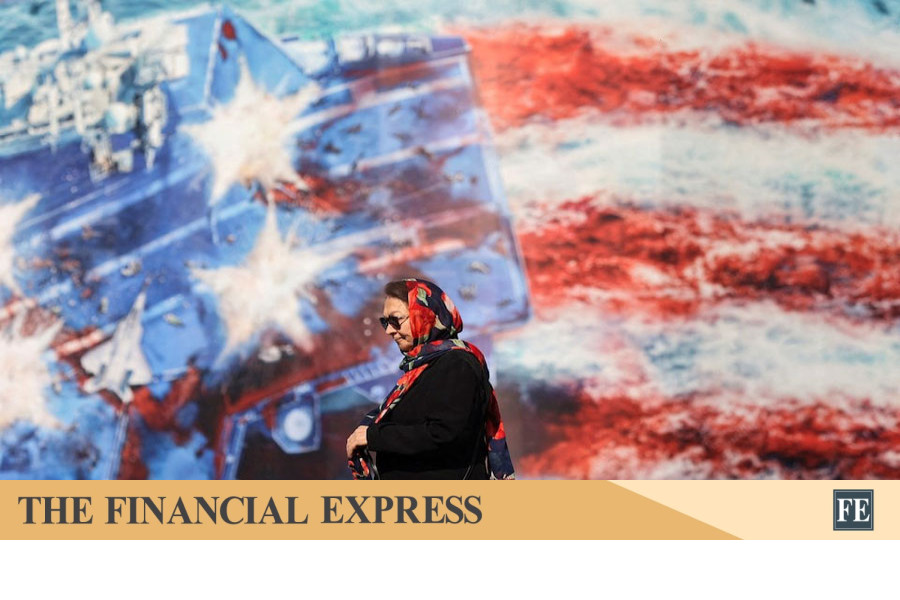
An Iranian woman walks past an anti-US billboard in Tehran, Iran, February 26, 2026. Photo : Majid Asgaripour/WANA (West Asia News Agency) via REUTERS

Iran pledged to show flexibility at indirect talks with the United States on their longstanding nuclear dispute on Thursday, with Tehran under pressure to agree to a deal or face US military strikes.

The third round of talks in Geneva, which began on Thursday morning, will discuss Iran's nuclear programme against the backdrop of a huge US military buildup in the Middle East ordered by President Donald Trump.

US Secretary of State Marco Rubio said on Wednesday Iran's refusal to discuss its ballistic missile programme was a "major problem" that would have to be addressed eventually, as the missiles were "designed solely to strike America" and pose a threat to regional stability.

"If you can't even make progress on the nuclear program, it's going to be hard to make progress on the ballistic missiles as well," Rubio told reporters in Saint Kitts.

Iranian foreign ministry spokesperson Esmaeil Baghaei told Press TV on Thursday that the negotiations would focus solely on nuclear topics and the lifting of sanctions, and said Tehran goes into them with "seriousness and flexibility".

IMPASSE ON NUCLEAR PROGRAM

The two countries renewed negotiations this month, seeking to break a decades-long impasse over Tehran's nuclear program, which Washington, other Western states and Israel believe is aimed at building nuclear arms. Tehran denies this.

US Special Envoy Steve Witkoff and Trump's son-in-law, Jared Kushner, were due to attend the indirect talks with Iranian Foreign Minister Abbas Araqchi, a US official said. The meeting follows discussions in Geneva last week and will again be mediated by Oman's Foreign Minister Badr Albusaidi.

Trump briefly laid out his case for a possible attack on Iran in his State of the Union speech on Tuesday, underlining that while he preferred a diplomatic solution, he would not allow Tehran to obtain a nuclear weapon.

He has deployed fighter jets, aircraft carrier strike groups as well as destroyers and cruisers in the region, hoping to pressure Iran into concessions.

On Wednesday evening, Araqchi and Albusaidi discussed the proposals Iran will put forward to reach an agreement, according to a statement posted on X by Oman's foreign ministry.

PRESSURE INSIDE AND OUTSIDE IRAN

The biggest US military deployment in the Middle East since the invasion of Iraq in 2003 has raised fears of a wider regional conflict. In June last year, the US joined Israel in hitting Iranian nuclear sites. Iran has threatened to retaliate fiercely if attacked again.

The USS Gerald R. Ford, the biggest US aircraft carrier, left port near the Greek island of Crete on Thursday bound for shores near Haifa in northern Israel, where it is expected to arrive on Friday.The US has also sent around a dozen F-22 fighter jets to Israel - the first time Washington has deployed combat aircraft to the country for potential wartime operations, a US official said.

The Trump administration has not formally announced the deployment. The Pentagon declined to comment.

Trump said on February 19 that Iran must make a deal in 10 to 15 days, warning that "really bad things" would otherwise happen.

Oil prices inched up on Thursday as investors gauged whether the talks could avert a military conflict that risks supply disruptions, though gains were capped by higher US crude inventories.

Saudi Arabia is increasing its oil production and exports as part of a contingency plan in case any US strike on Iran disrupted supplies from the Middle East, two sources said on Wednesday.

Araqchi said on Tuesday Iran aimed to achieve a fair, swift deal, but reiterated that it would not forgo its right to peaceful nuclear technology. Washington views nuclear enrichment inside Iran as a potential pathway to nuclear weapons.

"A deal is within reach, but only if diplomacy is given priority," Araqchi said in a statement on X.

Reuters reported on Sunday that Tehran was offering new concessions in return for removal of sanctions and recognition of its right to enrich uranium.

But the sides remain sharply divided - even over the scope and sequencing of relief from crippling US sanctions - a senior Iranian official told Reuters.

Within Iran, Supreme Leader Ayatollah Ali Khamenei faces the gravest crisis of his 36-year tenure, with an economy buckling under tightened sanctions and renewed protests following major unrest and crackdown in January.

President Masoud Pezeshkian said on Thursday that Khamenei has banned weapons of mass destruction, which "clearly means Tehran won't develop nuclear weapons," reiterating a fatwa issued in the early 2000s.​
 
Analyze

Analyze Post

Add your ideas here:
Highlight Cite Respond
UN/ IAEA/ NPT........all in the toilet bowl of history. Very nice bhai........

Everybody lets make nuke bumms now...... :ROFLMAO:

Attacking Iran on fraudulent charges is going to be the worst decision of the west. Mark my words.

Kaun si technology? Pav pav wale bam?
 
Analyze

Analyze Post

Add your ideas here:
Highlight Cite Respond

Members Online

No members online now.

Latest Posts

Back
 
G
O
 
H
O
M
E