[🇧🇩] Israel and Hamas war in Gaza-----Can Bangladesh be a peace broker?

[🇧🇩] Israel and Hamas war in Gaza-----Can Bangladesh be a peace broker?
984
33K
More threads by Saif

G Bangladesh Defense

But not for you, Palestinian
Jonathan Woodrow Martin 21 August, 2024, 00:00
1724199032535.webp

| Counter Punch/Nasser Nawaj’ah, B’Tselem

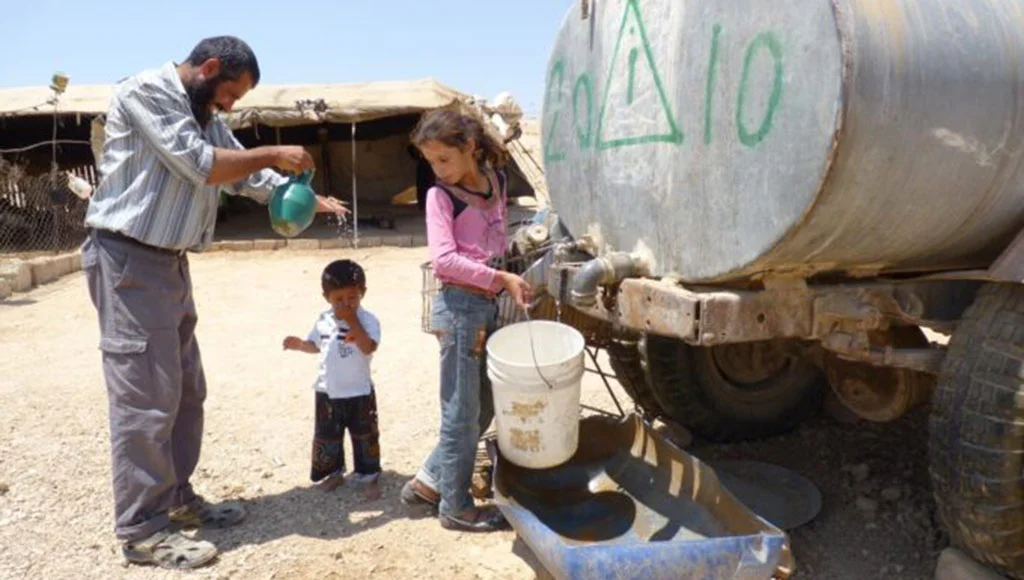
I HAVE a very intense relationship with water. As a result of a long-term health condition, I am often feeling very thirsty and drained. I cannot go more than perhaps 15 minutes without having a sup of water until I start to feel uncomfortable. On average people in the UK use 149 litres of water per-day, and although there is poverty in this country, and the water system is privatised, access to water is seen as a fundamental human right and cannot, by law, be cut off to domestic residences, even if bills are not paid.

In comparison, in Gaza right now, there is a war on the people, and their access to water. The occupying state has systematically destroyed and dismantled access to water. An Oxfam report has laid out the catastrophic drop in the level of water access and quality since the genocide began:

‘Since the Israeli offensive began following October 7, 2023, people in Gaza have had only 4.74 litres of water per person per day for all uses including drinking, cooking, and washing, which is a dramatic 94 per cent reduction in the amount of water available before. This is significantly below the internationally accepted minimum standard of 15 litres of water per person per day for basic survival in emergencies.’

The Palestinians in Gaza were already forced to rely on the occupation for much of their water supplies due to the illegal siege placed on them since 2006. The apartheid state are now using this construct to weaponise water to such an extreme level that people are being dehydrated to death and preventable and deadly diseases are spreading throughout the population. The occupation announced their intentions to the world, very early and very clearly on, in the genocide. On October 9, 2023, defence minister Yoav Gallant said: ‘I have ordered a complete siege on the Gaza Strip. There will be no electricity, no food, no fuel, everything is closed.’ This included the cutting off of the water supplies and has expanded to the bombing and destruction of every attempt by Palestinians to alleviate this. In July alone, the genocidal forces blew up over 30 water wells in Khan Younis and Rafah in the south of Gaza and have almost completely destroyed the sanitation and sewage system throughout Gaza.

This is all meticulously detailed in the Oxfam report:

‘External supply from Israel’s national water company Mekorot fell by 78 per cent. Israel has destroyed 70 per cent of all sewage pumps and 100 per cent of all wastewater treatment plants, as well as the main water quality testing laboratories in Gaza.’

These are clear and defined wanton acts of genocide, being funded and supported to the hilt by the US, UK and other western countries who so dearly want us all to believe that they respect and value ‘human rights’.

We, the people of the UK, are supporting the building and operation of a water well in Deir Al-Balah, in central Gaza. Please donate and share to support the Palestinian people to have access to this fundamental and basic necessity to survival and life. The well may be targeted and attacked, but we must support Palestinians to stay in place, on their land. The occupying and genocidal state will not destroy the Palestinians or create an inch of space between us in our steadfast support for them.

We as allies must listen to Palestinians and stand with them. We must continue to support Palestinians to support themselves and stand with them in lockstep until they win their full liberation, and we must believe that day is coming, because it is coming.

CounterPunch.org, August 20. Jonathan Woodrow Martin is a graduate of HCRI institute at The University of Manchester.​
 

Why Israel-Hamas ceasefire keeps failing

1724282996001.webp

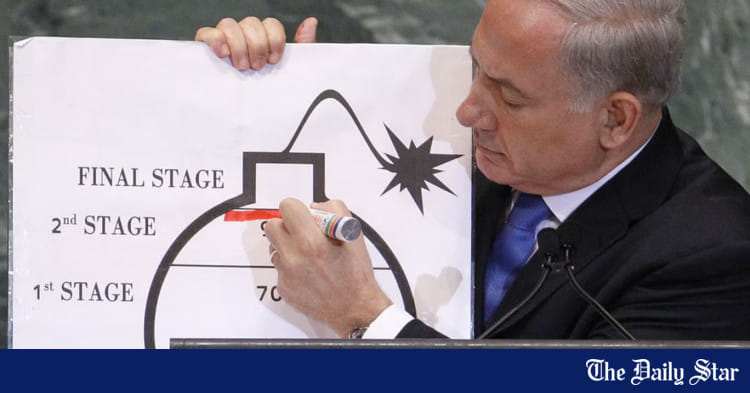
Israel's Prime Minister Benjamin Netanyahu draws a red line on the graphic of a bomb during his address at the 67th United Nations General Assembly in New York on September 27, 2012. FILE PHOTO: REUTERS

Yet again, another ceasefire deal for Gaza in Doha has been rejected to pardon a sliver of misery for the Palestinians suffering through the most devastating genocide in Gaza. US President Joe Biden had touted that the latest ceasefire deal was "closer than ever" to being achieved as risks of a wider war in the region sparked fear. But if one knows Benjamin Netanyahu, and the simple fact that he faces political death if the war ends, then hopeful words regarding any ceasefire deals should always be taken with a grain of salt. It was absolutely no coincidence that Netanyahu put five new conditions on the deal and thwarted the possibility of de-escalation in the region.

Hamas has opposed a continuing presence of Israelis in Gaza, and maintained that it will not accept a deal that is not permanent. And it is well-known that Netanyahu's extremist government does not want a permanent ceasefire. Hamas has rejected the latest deal, blaming it mainly on Netanyahu, stating that he is fully "responsible for the lives of his prisoners, who are exposed to the same danger that our [Palestinian] people are exposed to due to his continued aggression and systemic targeting of all aspects of life in the Gaza Strip."

Netanyahu's efforts to smash any efforts for a truce is so blatant that Israeli citizens have been regularly protesting against him, calling for his resignation and a ceasefire deal, which seem to now be synonyms. The families of hostages, as well as the opposition, members of the army and so on, have protested, and even Defence Minister Yoav Gallant bashed Netanyahu's lack of a "post-war" Gaza plan, admitting that it is Israel who has been the disrupter of the deals so far.

For the ninth time in 10 months, US Secretary of State Antony Blinken is visiting the Middle East as talks will resume again in Cairo. All these visits have mainly been to meet Israeli ministers, and all the energy spent has led to nothing tangible except the continuation of hellish extermination of Palestinians. Former US President Barack Obama's Secretary of State John Kerry also made a record number of visits to the region, but after his realisations, he delivered a blistering speech attacking Israel's settlement policy and Netanyahu's extremist government in 2016, stating, "The policies of this government—which the prime minister himself just described as 'more committed to settlements than any in Israel's history'—are leading… towards one state." His remarks were met with criticism, as Netanyahu and the apartheid regime of Israel prevailed in the US establishment.

Netanyahu has handcuffed every mediator of ceasefire deals, especially the US, by imposing conditions that Hamas will not accept, and conditions that he knows Hamas will not accept. The US has failed time and again to exert any real pressure—under a weak president—to make Israel agree to a ceasefire deal; Joe Biden remarked in the Time magazine, as recent as in early June, that there is "every reason" to draw the conclusion that Netanyahu is prolonging the war for his own political self-preservation. Everything that has happened in the past few years has proven a fact that the US cannot deny, which is that the main weapon in Netanyahu's hand is the laxity in US diplomacy towards Israel, which has now morphed into a culture of deference.

The war, however, in many ways, is considered an "American war" with the US's involvement, backing and major backtracking from any solution proposed beforehand. But political calculations regarding the dynamics with Netanyahu suggest that it is now increasingly unobtainable for the US, under this administration, to end the war. One could argue that Blinken's efforts at so-called "peace" would have been more successful had he carried bags of rice and flour in his giant jet and given it to starving Palestinians in Gaza, instead of flying thousands of kilometres to talk and have expensive yet futile conversations.

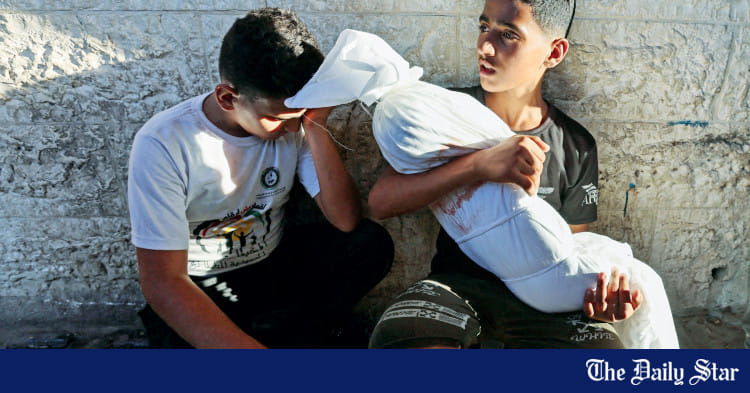
Netanyahu and his cabinet were very clear in their aims to deliver a multi-dimensional blow, when they decided to assassinate Haniyeh, the head of Hamas' political bureau in Tehran, right after Netanyahu's controversial visit to Washington, where he garnered shameless applause from members of Congress. Iran has maintained that it will retaliate, leaving the US in another precarious situation to deal with a wider eruption in the Middle East. Once again, the US is flexing muscle power with its fleet, sending stealthy fighters, dozens of F-22 Raptors, even a guided missile submarine along with a squadron of Marine Corps, not to mention bolstering US forces in its bases in the region—only to show its support for Israel. As the Democrats face a high-stake elections against Donald Trump where their support for Israel's genocide can play a "make or break" role for Vice-President Kamala Harris's election bid, Biden recently approved a further $3.5 billion of military aid to Israel, as Israel bombed a religious school, Al-Tabieen, and a mosque in Gaza, and parents and family members mourned hundreds of their lost ones, many of whose bodies were dismembered and collected in plastic bags—highlighting unspeakable brutality.

Anyone who has followed the biography of Benjamin Netanyahu knows that he has always held a dream of starting a war with Iran and dragging the US into it. US presidents, including Bush, Obama, Trump and now Biden, have largely never shared Netanyahu's enthusiasm. Netanyahu has long considered Iran as Israel's primary threat to security; even in his address in Congress, he called protesters calling for a ceasefire "Iran's useful idiots," and said, "When we fight Iran, we are fighting the most radical and murderous enemy of the United States." Similarly, in 2012, Netanyahu took a paper showing a graphic bomb to the United Nations General Assembly, and ridiculously made drawings on it on the podium, to demonstrate the grave threats of Iran's nuclear capabilities.

He had waged a public campaign and failed to convince former President Obama to withdraw the US from the Iran nuclear deal, which he achieved later in 2018 with Donald Trump, convincing him to also adopt a policy of "maximum pressure" on Iran, placing it under severe sanctions.

By eschewing reaching ceasefire deals in Gaza now, Netanyahu continues to feed his disturbing obsession with Iran; Netanyahu's "Iranian file is the file of life" is an age-old title by journalists in the region that he achieved for his scorched-earth policy towards Iran since becoming the prime minister of Israel. Even when Netanyahu faced trials and charges of corruption in 2021, he escalated half-covert attacks on Iran's facilities and attacks on Iranian shipping in the Persian Gulf. The political timing of the security crisis of immense "Iranian threats" came not-so-subtly with the goal of making it easier for Netanyahu to form another government under his leadership.

Netanyahu knows that a ceasefire deal would grant safety to Israeli citizens as well, but it conflicts with his aim to provoke a wider war with Iran. He has been touting messianic beliefs since October 7, 2023, because he has one aim: to use this unprecedented opportunity to rebuild the Israel that Ben-Gurion created, which can only and delusionally be done through the destruction of Iran and its axis. This warped logic is the only way to understand Netanyahu's politics.

By taking ceasefire deals off the table, manipulating the US and the West, Netanyahu may just be poised to engineer his dreams professionally. Iran is aware of the depth of the impasse and that the US carriers have been sent with the aim of messaging, not with the aim of igniting a war. But Netanyahu's actions have left Iran with very little options: to respond or not to respond. The wolf has managed to trap everyone in his sadistic quest to become a historical wartime figure. As invincible as he might think he is with a crown on his arrogant head, Iran and Hezbollah are significant powers, and no one knows the scale of Russia's involvement if Israel were to use "unconventional" weapons. Netanyahu is venturing into dangerous territories, putting Israel, the US, and the world on the brink of catastrophe.

Yousef SY Ramadan is the Palestinian ambassador to Bangladesh.​
 

Death ‘the only certainty’ for Palestinians in Gaza
Says UN official as Israeli strikes continue in enclave


1724283897914.webp


In Gaza, death appears to be the "only certainty" for 2.4 million Palestinians with no way to escape Israel's relentless bombardment, a UN official said Tuesday, recounting the growing desperation across the territory.

"It does feel like people are waiting for death. Death seems to be the only certainty in this situation," Louise Wateridge, a spokeswoman for the UN agency for Palestinian refugees, also known as UNRWA, told AFP from Gaza.

For the past two weeks, Wateridge has been in the Gaza Strip, witnessing the humanitarian crisis, fear of death and spread of disease as the offensive rages on.

"Nowhere in the Gaza Strip is safe, absolutely nowhere is safe. It's absolutely devastating," Wateridge said from the Nuseirat area of central Gaza -- a regular target of Israel's aerial assaults.

Since fighting broke out in October, Israeli forces have pounded the besieged territory from the air, land and sea, reducing much of it to rubble.

Now in its eleventh month, the offensive has created an acute humanitarian crisis, with hundreds of thousands of people, most of whom have been displaced several times, running out of basic food and clean drinking water.

"We are facing unprecedented challenges when it comes to the spread of disease, when it comes to hygiene. Part of this is because of the Israeli imposed siege on the Gaza Strip," Wateridge said.

Israel's military campaign has killed at least 40,223 people, according to the health ministry in the Hamas-run territory. Most of the dead in Gaza are women and children, according to the UN human rights office.

Tens of thousands of people have taken refuge in schools across the Gaza Strip, an increasingly regular target of Israeli missiles. Israel's military says these schools have been used as command and control centres by Hamas, a charge the group denies.

"Even a school is not anymore a safe place," said Wateridge. "It feels like you're never more than a few blocks away from the front line now." Tired of reacting to the Israeli military's "continuous" evacuation orders, more and more Gazans are reluctant to keep moving from place to place, Wateridge said.​
 

Israel kills top Fatah commander
Agence France-Presse . Sidon, Lebanon 22 August, 2024, 00:17

Israel killed a senior commander from Fatah’s armed wing on Wednesday in a strike on Lebanon, leading to accusations from the Palestinian movement that Israel is trying to ‘ignite a regional war’.

Fatah, the Palestinian movement based in the Israeli-occupied West Bank, said Khalil Maqdah was killed in a strike near the southern Lebanese city of Sidon.

The Israeli military said it targeted the brother of Mounir Maqdah, who heads the Lebanese branch of Fatah’s armed wing. It accused them both of ‘directing attacks and smuggling weapons’ to the West Bank and collaborating with Iran’s Revolutionary Guards.

In response, the slain commander’s Fatah movement, which is headed by Palestinian president Mahmud Abbas and rivals the Gaza Strip’s Islamist rulers Hamas, accused Israel of bidding to trigger a wider regional war.

Maqdah’s killing marks the first such attack on a senior Fatah member in more than 10 months of cross-border clashes between Israel and Lebanon’s Hezbollah movement following the Gaza war.

The ‘assassination of a Fatah official is further proof that Israel wants to ignite a full-scale war in the region,’ Tawfiq Tirawy, a member of Fatah’s central committee, said in Ramallah.

It came only hours after US secretary of state Antony Blinken left empty-handed after a tour of the Middle East aimed at reaching a ceasefire in the Israel-Hamas war in Gaza.

Blinken appealed to Hamas to urgently accept a US-backed truce proposal, while also entering into a public spat with Israel over its future presence in the besieged Palestinian territory.

‘Time is of the essence,’ Blinken said before flying out of Doha after stops in Qatar, Egypt and Israel on his ninth regional tour seeking to halt the Gaza war.

‘This needs to get done, and it needs to get done in the days ahead, and we will do everything possible to get it across the finish line,’ he said of the truce proposal.

The United States has presented ideas to bridge gaps and, through Qatar and Egypt, pressed Hamas to return to talks this week in Cairo.

But a day after Blinken said US ally Israel was on board, prime minister Benjamin Netanyahu was quoted by Israeli media as disagreeing on a key sticking point.

Netanyahu insisted Israel maintain control of the Philadelphi Corridor, the border between Gaza and Egypt that Israeli forces seized from Hamas, whom Israel says relies on secret tunnels to bring in weapons.

Blinken said Israel had already agreed on the ‘schedule and location’ of troop withdrawals from Gaza.

Since the conflict began, it was made ‘very clear that the United States does not accept any long-term occupation of Gaza by Israel’, Blinken said when asked about Netanyahu’s remarks.

A senior US official called Netanyahu’s ‘maximalist statements’ unhelpful for reaching a truce.

Blinken acknowledged differences and called for ‘maximum flexibility’ from both Israel and Hamas.

Egypt, the first Arab nation to make peace with Israel, has been infuriated by the border takeover.

Hamas said it was ‘keen to reach a ceasefire’ but protested ‘new conditions’ from Israel in the latest US proposal.

On the ground, Gaza was again rocked by air strikes, AFP reporters, first responders and witnesses said.

The Israeli military said it struck about 30 targets throughout Gaza and that troops ‘eliminated dozens’ of militants.

The UN agency for Palestinian refugees said death appeared to be the ‘only certainty’ for Gaza’s 2.4 million people, with no way to escape Israel’s bombardment.

‘Absolutely nowhere is safe,’ said UNRWA spokeswoman Louise Wateridge. ‘People... feel like they’re being chased around in circles.

‘Death seems to be the only certainty,’ she told AFPTV.

As tensions escalated, Lebanon’s health ministry said earlier Israeli strikes in the country’s east killed one person and wounded 20, hours after four were killed in the south.

Cross-border skirmishes have taken place almost daily between Israel and Lebanon’s Hezbollah, but fears of a greater crisis soared when Hamas’s political leader, Ismail Haniyeh, was killed on a visit to Tehran on July 31.

Iran has vowed retaliation, blaming Israel for the assassination, but has held off so far, with the United States sending additional forces and warning a wider war could destroy prospects for a Gaza ceasefire.

Israel and Hamas have blamed each other for delays in agreeing a deal to end fighting, free Israeli hostages and allow vital humanitarian aid into Gaza.

Netanyahu has faced public protests in Israel urging him to accept a truce, which would bring back hostages whose plight has plagued Israelis.

The Israeli military said Tuesday it had retrieved the bodies of six hostages from tunnels in Gaza, some of whom were killed in its operations.

The October 7 attack resulted in the deaths of 1,199 people in Israel, most of them civilians, according to an AFP tally based on Israeli official figures.

Out of 251 people taken hostage that day, 105 are still being held hostage inside the Gaza Strip, including 34 the military says are dead.

Israel’s retaliatory military campaign has killed 40,223 Palestinians in Gaza, according to the Hamas-run territory’s health ministry, which does not give details of civilian and militant deaths.

In a stark reminder of what’s at stake for Netanyahu, a young Israeli woman symbolising the 251 hostages called for their swift return.

‘Avinatan, my boyfriend, is still there, and we need to bring them back before it’s going to be too late. We don’t want to lose more people than we already lost,’ Noa Argamani said while visiting Japan.​
 

Ceasefire hopes fade as Gaza fighting rages
Agence France-Presse . Palestinian Territories 22 August, 2024, 23:51

Hopes were dwindling on Thursday for a ceasefire in the Gaza Strip, where fighting raged despite pressure from the United States on Israel and Palestinian militants Hamas to reach an agreement.

After more than 10 months of war, officials from the United States and Arab mediators Egypt and Qatar had been set to meet in Cairo for a new round of talks this week, but confirmation was still pending.

The war triggered by Hamas’s unprecedented October 7 attack on Israel has devastated Gaza, displaced nearly all its population at least once and triggered a humanitarian crisis.

Diplomatic efforts have intensified amid the risk of a wider war following killings, widely blamed on Israel, that sparked threats of reprisals from Iran and its allies.

US secretary of state Antony Blinken on Wednesday ended his latest tour of the Middle East, aimed at finalising a ceasefire, without a breakthrough.

In a phone call later, president Joe Biden pushed Israeli prime minister Benjamin Netanyahu to accept a deal, amid pressure from pro-Palestinian protesters at the US Democratic party’s convention ahead of a November presidential election.

‘The president stressed the urgency of bringing the ceasefire and hostage release deal to closure and discussed upcoming talks in Cairo to remove any remaining obstacles,’ the White House said.

Biden also reassured him of the efforts of the United States — Israel’s main ally and weapons supplier — to support it against threats from Iran and its proxies.

Vice president Kamala Harris, the Democratic party’s candidate in the US presidential election, also took part in the call.

Netanyahu, a hawkish political veteran leading a fragile right-wing coalition, has reportedly disagreed on a key sticking point — the removal of Israeli troops from the border between Gaza and Egypt.

His office confirmed the phone conversation, without elaborating on its content.

Israel’s Yedioth Ahronoth newspaper quoted ‘officials knowledgeable about the negotiations’ as saying ‘the chances for a deal are slim’ but attempts were being made to hold talks in Cairo on Friday and Saturday.

It said, quoting the same source, that Netanyahu insisted on an Israeli army ‘presence along the Philadelphi Corridor’ and that the United States ‘demanded a significant withdrawal of troops’ in two stages.

The daily said ‘the Americans understood the mistake’ made by Blinken when he announced during his visit to Israel that Netanyahu had accepted a US proposal to bring the two sides closer together and that ‘the ball was now in Hamas’s court’.

It said US Middle East envoy Brett McGurk had been sent to Cairo to prepare for the meeting and to seek to resolve the Philadelphi Corridor issue.

Hamas on Sunday said the US proposal ‘responds to Netanyahu’s conditions’ and accused him of ‘obstructing an agreement.’

In its statement, Hamas cited Netanyahu’s ‘insistence on continuing to occupy’ the Philadelphi corridor and two other areas, which Israel sees as important for preventing the flow of weapons into Gaza.

The Islamist group said it was keen to reach a ceasefire but protested ‘new conditions’ from Israel in the latest US proposal.

The October 7 attack on southern Israel resulted in the deaths of 1,199 people, most of them civilians, according to an AFP tally based on Israeli official figures.

Israel’s retaliatory military campaign has killed 40,265 Palestinians in Gaza, according to the Hamas-run territory’s health ministry, which does not give details of civilian and militant deaths. The UN rights office says most dead are women and children.

Palestinian militants also seized 251 hostages, of whom 105 remain in Gaza including 34 the military says are dead.

On the ground, Gaza’s civil defence agency said at least three people were killed and 10 children wounded in an Israeli strike Wednesday on a school-turned-shelter in Gaza City.

The Israeli military said Thursday that it ‘conducted a precise strike on a weapons storage facility’ near a Hamas command-and-control centre inside a compound that previously served as a school.

The United Nations says Israel has struck at least 23 schools sheltering displaced people in Gaza since July 4

Troops ‘eliminated’ more than 50 militants in the past 24 hours and intensified operations in the Khan Yunis area and the outskirts of Deir el-Balah, the military said.

A civil defence spokesperson reported bombings in the Nuseirat and Maghazi refugee camps, and east of Khan Yunis.

Witnesses reported seeing heavy Israeli shelling in Khan Yunis as well as clashes between Palestinian militants and the army in the Netzarim junction further north.

Violence has also escalated in the Israeli-occupied West Bank.

The Palestinian territory’s health ministry said three people were killed in an Israeli strike on a house in Tulkarem refugee camp on Thursday.​
 

Israeli negotiators in Cairo for Gaza talks
Hamas slams Netanyahu’s ‘refusal’ to reach final truce deal; 18 more Palestinians killed in strikes

1724456232913.webp

Palestinians stand on the balcony of a damaged flat in the vicinity of a building which was levelled by Israeli bombing in the Nuseirat refugee camp in the central Gaza Strip. The photo was taken on Thursday. Photo: AFP

Israeli negotiators were in Cairo yesterday for talks on a Gaza truce, a spokesman said, but a dispute over the presence of Israeli troops on Gaza's southern border remained among sticking points.

Mossad spy agency chief David Barnea and Ronen Bar, head of the Shin Bet domestic security service, were in the Egyptian capital and "negotiating to advance a hostage (release) agreement", Prime Minister Benjamin Netanyahu's spokesman Omer Dostri told AFP.

Egypt with fellow mediators Qatar and the United States are trying to reach a deal that would end more than 10 months of offensive in the enclave.

A Hamas official yesterday accused Israel's prime minister of refusing to agree to a final truce accord for Gaza. But Hamas representatives were not taking part and an official from the movement, Hossam Badran, told AFP that Netanyahu's insistence that troops remain on the Philadelphi border strip reflects "his refusal to reach a final agreement".

Witnesses yesterday reported combat in the Gaza Strip's north, heavy shelling in the centre, and tank fire in the far south near Rafah city. Israeli attacks have killed 18 Palestinians since yesterday morning in Gaza, as it continues to expand its ground operation in Khan Younis and Deir el-Balah.

Israel's military campaign has killed 40,283 Palestinians in Gaza, according to the Hamas-run territory's health ministry. The UN rights office says most of the dead are women and children.

The United Nations said tens of thousands of civilians have been on the move again this week from Deir el-Balah and the southern city of Khan Yunis after Israeli military evacuation orders, which precede military operations.

The offensive has displaced about 90 percent of Gaza's population, often multiple times, leaving them deprived of shelter, clean water and other essentials as disease spreads, the UN said.

"Civilians are exhausted and terrified, running from one destroyed place to another, with no end in sight," Muhannad Hadi, the UN humanitarian coordinator for the Palestinian territories, said late Thursday. "This cannot continue," he said.

Israel's military yesterday said that over the past day troops had "eliminated dozens of militants" around Khan Yunis and Deir el-Balah, in central Gaza.

In April the military had pulled troops out of Khan Yunis after months of devastating fighting, yet has found itself having to resume operations there, leaving civilians feeling they have nowhere to turn.

"Every time we arrive somewhere, we get a new evacuation order two days later. This is no way to live," said Haitham Abdelaal.

The Israeli military recovered the remains of six hostages from a tunnel in the Khan Yunis area this week, and on Thursday said bullets had been found in their bodies.​
 

Border corridor becomes sticking point in Gaza truce talks
Agence France-Presse . Jerusalem 24 August, 2024, 01:28


1724457713711.webp


Pro-Palestine protesters march in the street near the United Centre where the Democratic National Convention is being held on Thursday in Chicago, Illinois. Tension between police and protesters is heightened due to violent protests in downtown Chicago earlier this week. | AFP photo

A narrow stretch of land along the Gaza Strip’s border with Egypt has emerged as the main stumbling block in negotiations for a ceasefire between Israel and Hamas.

Israeli prime minister Benjamin Netanyahu wants his country to permanently control the Philadelphi — or Salaheddin — Corridor, which it seized during the war sparked by Hamas’s October 7 attack.

The patrol road protected by barbed wire runs for 14 kilometres along the border and is about 100 metres wide at its narrowest point, with tunnels said to be dug under it and used for smuggling.

It was built by the Israeli military when Gaza was under its direct occupation between 1967 and 2005, and has become a key target in Israel’s current offensive against Hamas.

As Israeli negotiators hold talks in Cairo on a potential Gaza truce and hostage release deal, the Philadelphi Corridor has become the primary sticking point.

Netanyahu contends that Israeli control is necessary ‘in order to prevent Hamas from rearming itself’, a statement from his office said on Thursday.

Hamas, which is not attending the latest round of talks in Egypt, demands a complete Israeli withdrawal from Gaza.

A high-ranking Egyptian official this week similarly called for a ‘complete withdrawal of Israeli troops from the Philadelphi Corridor and the Palestinian Rafah terminal’ — a key crossing on Gaza’s border with Egypt.

A 2005 agreement between Israel and Egypt established the corridor as a buffer zone, as part of Israel’s unilateral withdrawal from the Gaza Strip that year.

It was meant to facilitate control over movement in and out of Gaza and discourage incursions and smuggling.

Some houses had to be demolished to make way for the corridor, which has also accentuated the division between the Gaza side of Rafah, in the territory’s far south, and the town’s Egyptian side — a remnant of British colonial policies.

When Israeli troops withdrew from Gaza in September 2005, Egypt set up a force dedicated to guarding the border with around 750 personnel.

To avoid breaching demilitarisation clauses in the 1979 Israeli-Egyptian peace treaty, the Egyptian force’s stated purpose was to fight ‘terrorism’ in the area.

On the Gaza side, Palestinian president Mahmud Abbas — whose Palestinian Authority ruled the territory at the time — deployed guards to secure the Philadelphi Corridor.

But in June 2007, militant group Hamas seized control of the Gaza Strip after rivalry with Abbas’s Fatah party prevented the Islamist movement from assuming the leadership despite a landslide election win.

The border area subsequently became the focus of growing concern about arms trafficking, which fed the arsenal of local armed groups.

Hundreds of tunnels are said to have been dug under the Philadelphi Corridor that have been used for smuggling everything from weapons to cars, drugs and even food like Kentucky Fried Chicken.

According to international organisations, armed fighters have criss-crossed through these underground routes, while smugglers have facilitated the travel of civilians for varied reasons — including medical appointments and attending weddings.

For Palestinians, the tunnels have been a way of getting around the Israeli land, sea and air blockade imposed on the entire Gaza Strip when Hamas seized power.

When Egyptian president Abdel Fattah al-Sisi came to power in 2013, Cairo moved to destroy many of the tunnels, accusing Palestinian militants of using them to smuggle arms and fighters to jihadist groups in the neighbouring Sinai Peninsula.

Last week the Israeli military announced it had destroyed some 50 tunnels under the Philadelphi Corridor.

Since the start of the Israel-Hamas war after the October 7 attack, Netanyahu has stressed the strategic importance of the border area.

In May, the Israeli military said it had assumed ‘operational control’ of the route.

Diaa Rashwan, head of the Egyptian government’s State Information Service, in January told pan-Arab news channel Al-Ghad that such an ‘occupation’ was ‘forbidden by virtue of the agreement’ between the two countries.

It would even constitute a ‘threat of violation of the Israeli-Egyptian peace treaty’, Rashwan said.

The US-brokered 1979 agreement was the first peace treaty between Israel and an Arab country.​
 

Gaza talks set to resume in Cairo as fighting rages
Agence France-Presse . Cairo 24 August, 2024, 22:06

1724545487784.webp

This handout picture released by the Israeli army on August 23, 2024 reportedly shows Israeli soldiers operating in the Gaza Strip. | AFP photo.

Negotiators geared up for a crucial weekend of Gaza ceasefire talks Saturday, as Hamas said it was sending delegates to Cairo but would not participate in the discussions, and fighting raged in the Palestinian territory.

The United States, Egypt and Qatar have spent months trying to broker an end to the war in Gaza between Hamas Palestinian militants and Israel.

The war, sparked by Hamas’s unprecedented October 7 attack on Israel, has devastated Gaza, displaced nearly all of its population at least once and triggered a humanitarian crisis.

The White House said progress had been made at the latest round this week, although the possible permanent presence of Israeli troops along the Gaza-Egypt border has emerged as a major sticking point.

Previous bouts of optimism during months of on-off ceasefire and hostage release negotiations have always proven unfounded.

A senior Hamas official said a delegation from the Islamist group was heading to Cairo, but that they would not engage in the talks. Instead, they would meet with senior Egyptian officials for updates on the negotiations.

The delegation would ‘be briefed... but this does not mean it will take part in the negotiations’, the official told AFP, speaking on condition of anonymity.

The official said Hamas would insist Israel withdraw all its forces from all of Gaza, including ‘from the border area with Egypt’, known as the Philadelphi Corridor.

The basis of the talks is a framework which US President Joe Biden outlined on May 31, and which he described as an Israeli proposal.

A second Hamas official on Saturday reiterated that ‘the leadership of Hamas, including its leader Yahya Sinwar’ had already agreed to the Biden plan and want it put into effect without ‘amendment of its wording.’

The three-phase plan outlined by Biden and endorsed by the UN Security Council would initially see hostages exchanged for Palestinians in Israeli jails during what Biden called a ‘full and complete ceasefire’ lasting six weeks.

Israeli Prime Minister Benjamin Netanyahu has since insisted on keeping troops along the corridor, arguing Israel needs to prevent Hamas from rebuilding its strength by smuggling in arms from Egypt.

The White House said CIA chief William Burns was among US officials taking part in the Cairo talks, alongside the heads of Israel’s spy agency and domestic security service.

An Egyptian source close to the talks said the United States was ‘discussing with mediators new proposals to bridge the gap between Israel and Hamas’.

The source said Sunday’s ‘enlarged round of negotiations’ would be a ‘pivotal step in formulating an agreement that will be announced if Washington can pressure Netanyahu.’

Fighting raged in Gaza on Saturday, with AFP correspondents and civil defence rescue sources reporting ongoing Israeli artillery fire and air strikes across the Hamas-run territory.

In Gaza City’s Zeitun neighbourhood, gunfire and explosions echoed as Palestinian militants clashed with Israeli soldiers, an AFP correspondent added.

An overnight strike on a house west of Khan Yunis in southern Gaza killed 11 people, including a woman and four children, a doctor at Nasser Hospital said.

Hamas-run Gaza’s health ministry on Saturday reported 69 deaths in the previous 48 hours.

The Israeli military said it ‘eliminated’ dozens of militants in close-quarters combat and strikes in the Tal al-Sultan area of Rafah over the past day.

Tens of thousands of civilians were on the move from Deir el-Balah and Khan Yunis after Israeli evacuation orders, which precede military operations, the United Nations said on Thursday.

Hamas’s October 7 attack on southern Israel resulted in the deaths of 1,199 people, most of them civilians, according to an AFP tally based on Israeli official figures.

Israel’s retaliatory military campaign has killed 40,334 Palestinians in Gaza, according to Gaza’s health ministry, which does not give details of civilian and militant deaths.

The UN rights office says most of the dead are women and children.

Palestinian militants also seized 251 hostages, of whom 105 remain in Gaza, including 34 the military says are dead.

Israel’s military recovered the remains of six hostages from a tunnel in the Khan Yunis area this week, and said bullets were found in their bodies.

Netanyahu faces regular protests by hostage supporters demanding a deal to bring them home.

Efforts to reach a Gaza truce and avert a wider war intensified after the killings of two senior Iran-backed militants last month sparked threats of reprisals from Tehran and allies including Lebanon’s Hezbollah movement, who blamed Israel.

As the threats rise, some Israelis have taken matters into their own hands by building bomb shelters at home, after putting it off for years.

‘We now worry more, because Hezbollah can reach us with their missiles,’ said 79-year-old Jeff Lederer, a family doctor in Tel Mond, north of Tel Aviv. ‘We are also afraid of being shot at by Iran.’

Gazans said they were desperate for an end to the war.

‘We are tired and hope that the negotiations persist, the siege is lifted, and the war stops,’ Umm Muhammad Wadi, a displaced woman in Deir el-Balah, told AFP.​
 

Posts you haven't read yet..

Latest Posts

Back