Bangladesh Defense
Saif
Senior Member
- Joined
- Jan 24, 2024
- Messages
- 21,840
- Likes
- 9,807
- Nation

- Residence
- Axis Group


Post-LDC trade challenge
BANGLADESH stands less than six months away from one of the most significant milestones in its economic history. In November 2026, the country is set to graduate from the Least Developed Country category, marking the culmination of decades of progress in industrialisation, poverty reduction and...
 www.newagebd.net
BEYOND TARIFF WALLS
Post-LDC trade challenge
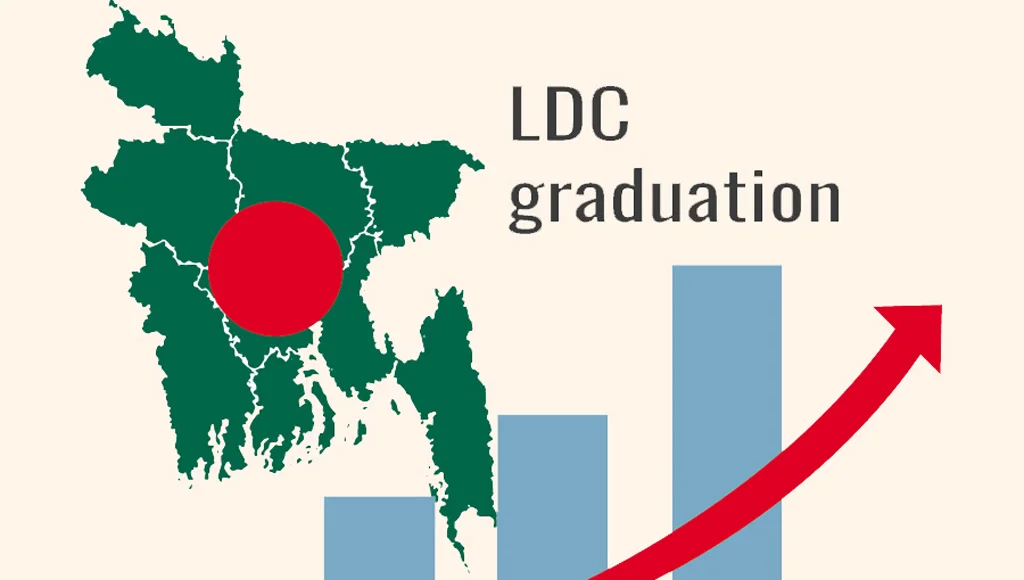
BANGLADESH stands less than six months away from one of the most significant milestones in its economic history. In November 2026, the country is set to graduate from the Least Developed Country category, marking the culmination of decades of progress in industrialisation, poverty reduction and export growth. Yet graduation also marks the end of a period during which Bangladesh benefited from preferential trade arrangements that helped make the ‘Made in Bangladesh’ label a familiar presence in markets around the world.
The timing is challenging. The global trading system that supported Bangladesh’s rise is undergoing profound change. Protectionism has returned to major economies. Industrial subsidies are reshaping production patterns. Environmental standards are becoming trade requirements. Supply chains are increasingly organised around geopolitical considerations rather than simply cost efficiency. In this changing environment, Bangladesh faces a difficult question. Should it continue relying on tariff protection and import restrictions to shield domestic industries, or should it pursue deeper integration with global markets through reforms that improve competitiveness and attract investment?
The temptation to retreat behind tariff barriers is understandable. For policymakers concerned about import surges, pressure on local industries and rising international competition, protection appears to offer a measure of security. Yet experience from both Bangladesh and abroad suggests that protection can easily become a substitute for competitiveness rather than a pathway towards it. Industries that remain sheltered for too long often become dependent on that shelter. Instead of gaining strength, they lose incentives to innovate, improve productivity and compete internationally.
Recent developments across Asia illustrate this dilemma. In India, higher import duties on textile machinery were introduced partly to encourage domestic production of capital equipment. However, the policy also increased costs for garment manufacturers that rely on modern machinery to remain competitive in export markets. The result highlights a broader reality of contemporary manufacturing: industries are no longer isolated national sectors but components of highly interconnected value chains. Measures intended to protect one segment of production can inadvertently weaken another.
Bangladesh faces similar risks as it prepares for life after LDC graduation. Proposals aimed at protecting domestic backward-linkage industries may provide short-term relief to certain producers, but they also collide with evolving trade requirements in key export markets. The European Union’s forthcoming GSP+ framework places increasing emphasis on local value addition and compliance standards. Other major markets are also tightening rules of origin and scrutinising supply chains more closely. In such an environment, competitiveness cannot be achieved merely by restricting imports. It depends on productivity, quality, compliance and the ability to integrate efficiently into global production networks.
The challenge extends beyond tariffs. Bangladesh’s export success was built on a model that combined low labour costs with preferential market access. Both advantages are becoming less certain. Labour-intensive manufacturing remains important, but buyers increasingly demand speed, reliability, sustainability and technological sophistication. Meanwhile, the gradual erosion of trade preferences means exporters will face tougher competition from countries that enjoy stronger logistics, better infrastructure and more diversified industrial bases.
The country’s recent export performance reflects some of these pressures. Rising energy costs, supply-side constraints and global economic uncertainty have exposed structural weaknesses that cannot be addressed through protectionist measures. When production costs rise because of unreliable energy supply, inadequate infrastructure or inefficient logistics, tariffs provide little relief. They merely shift costs elsewhere in the economy.
Global trade itself is changing. International firms are reassessing supply chains in response to geopolitical tensions, climate-related risks and economic uncertainty. Rather than concentrating production in a limited number of locations, many are diversifying sourcing strategies and seeking countries that offer stability, predictability and efficient business environments. For Bangladesh, this shift presents both a threat and an opportunity. Countries that improve their competitiveness can attract new investment. Those that fail to adapt risk marginalisation.
Vietnam’s experience deserves attention in this regard. Since graduating from LDC status, Vietnam has pursued an aggressive strategy of economic integration through free trade agreements, investment promotion and regulatory reform. Its success cannot be attributed solely to trade liberalisation; improvements in infrastructure, governance and industrial policy have also played critical roles. Nevertheless, the broader lesson remains significant. Vietnam sought competitiveness through integration rather than insulation. It positioned itself as a reliable participant in global value chains and consequently attracted investment in higher-value manufacturing sectors, including technical textiles, electronics and advanced consumer goods.
Bangladesh cannot simply replicate Vietnam’s path. The two countries possess different economic structures, institutional capacities and geopolitical circumstances. However, Vietnam demonstrates that sustained competitiveness depends on creating conditions that attract investment and encourage industrial upgrading. Openness alone is insufficient, but protection without reform is even less likely to succeed.
The geopolitical dimension of trade policy adds another layer of complexity. Recent debates surrounding Bangladesh’s engagement with major powers illustrate the risks of excessive dependence on any single market or strategic partner. In an increasingly fragmented global economy, trade agreements often carry implications that extend beyond commerce. For a country such as Bangladesh, preserving policy autonomy while maintaining market access requires careful balancing rather than alignment with any particular bloc.
This makes diversification more important than ever. Dependence on a small number of export products and destination markets leaves the economy vulnerable to external shocks. The ready-made garment sector will remain central to Bangladesh’s economy for the foreseeable future, but future growth cannot rely solely on cotton apparel. Expanding into synthetic textiles, technical garments, sportswear, electronics, pharmaceuticals and other higher-value sectors will be essential if the country is to sustain export growth after graduation.
Achieving this transition requires a different policy mindset. The objective should not be the indiscriminate removal of protections, nor the preservation of existing barriers for their own sake. Instead, Bangladesh needs a strategy centred on competitiveness. Temporary and targeted support may be justified where it promotes technological upgrading, innovation or compliance with international standards. However, such support should be linked to measurable performance rather than becoming a permanent entitlement.
Financial sector reform must also become a priority. Investors are attracted not only by low production costs but by stable financial systems, predictable regulations and transparent institutions. Likewise, improvements in energy security, transport infrastructure and customs procedures are no longer optional. They are prerequisites for participation in modern supply chains.
The country’s small and medium-sized enterprises deserve particular attention. CMSMEs contribute substantially to economic activity and employment but often remain disconnected from export markets. Strengthening digital infrastructure, improving access to finance and supporting quality certification would do far more to enhance their competitiveness than broad tariff protections. If properly supported, these firms could become important participants in regional and global value chains.
Bangladesh’s forthcoming Economic Partnership Agreement with Japan offers a useful example of the kind of engagement that should be pursued. Such arrangements can expand market access while encouraging domestic reforms and preserving policy flexibility. More broadly, Bangladesh should continue seeking diversified economic partnerships that reduce dependence on any single market and create opportunities across multiple regions.
As LDC graduation approaches, the country’s trade policy choices will help determine the character of its next phase of development. Tariff protection may offer short-term political comfort, but it cannot substitute for competitiveness in a world shaped by technological change, decarbonisation and increasingly demanding trade standards. The challenge facing Bangladesh is not whether it should protect or liberalise. It is whether it can build an economy capable of competing without relying indefinitely on special treatment.
The lesson emerging from the experiences of neighbouring countries is clear. Industries thrive not because they are sheltered from competition, but because they are prepared for it. Bangladesh has reached a stage in its development where sustained prosperity will depend less on preferential access and more on productivity, efficiency and innovation. The transition will not be painless. Yet delaying it would be far more costly. The window for preparing the post-LDC economy remains open, but it will not remain open indefinitely.
Imran Hossain is a lecturer of business administration Bangladesh Army International University of Science and Technology.
Post-LDC trade challenge
BANGLADESH stands less than six months away from one of the most significant milestones in its economic history. In November 2026, the country is set to graduate from the Least Developed Country category, marking the culmination of decades of progress in industrialisation, poverty reduction and export growth. Yet graduation also marks the end of a period during which Bangladesh benefited from preferential trade arrangements that helped make the ‘Made in Bangladesh’ label a familiar presence in markets around the world.
The timing is challenging. The global trading system that supported Bangladesh’s rise is undergoing profound change. Protectionism has returned to major economies. Industrial subsidies are reshaping production patterns. Environmental standards are becoming trade requirements. Supply chains are increasingly organised around geopolitical considerations rather than simply cost efficiency. In this changing environment, Bangladesh faces a difficult question. Should it continue relying on tariff protection and import restrictions to shield domestic industries, or should it pursue deeper integration with global markets through reforms that improve competitiveness and attract investment?
The temptation to retreat behind tariff barriers is understandable. For policymakers concerned about import surges, pressure on local industries and rising international competition, protection appears to offer a measure of security. Yet experience from both Bangladesh and abroad suggests that protection can easily become a substitute for competitiveness rather than a pathway towards it. Industries that remain sheltered for too long often become dependent on that shelter. Instead of gaining strength, they lose incentives to innovate, improve productivity and compete internationally.
Recent developments across Asia illustrate this dilemma. In India, higher import duties on textile machinery were introduced partly to encourage domestic production of capital equipment. However, the policy also increased costs for garment manufacturers that rely on modern machinery to remain competitive in export markets. The result highlights a broader reality of contemporary manufacturing: industries are no longer isolated national sectors but components of highly interconnected value chains. Measures intended to protect one segment of production can inadvertently weaken another.
Bangladesh faces similar risks as it prepares for life after LDC graduation. Proposals aimed at protecting domestic backward-linkage industries may provide short-term relief to certain producers, but they also collide with evolving trade requirements in key export markets. The European Union’s forthcoming GSP+ framework places increasing emphasis on local value addition and compliance standards. Other major markets are also tightening rules of origin and scrutinising supply chains more closely. In such an environment, competitiveness cannot be achieved merely by restricting imports. It depends on productivity, quality, compliance and the ability to integrate efficiently into global production networks.
The challenge extends beyond tariffs. Bangladesh’s export success was built on a model that combined low labour costs with preferential market access. Both advantages are becoming less certain. Labour-intensive manufacturing remains important, but buyers increasingly demand speed, reliability, sustainability and technological sophistication. Meanwhile, the gradual erosion of trade preferences means exporters will face tougher competition from countries that enjoy stronger logistics, better infrastructure and more diversified industrial bases.
The country’s recent export performance reflects some of these pressures. Rising energy costs, supply-side constraints and global economic uncertainty have exposed structural weaknesses that cannot be addressed through protectionist measures. When production costs rise because of unreliable energy supply, inadequate infrastructure or inefficient logistics, tariffs provide little relief. They merely shift costs elsewhere in the economy.
Global trade itself is changing. International firms are reassessing supply chains in response to geopolitical tensions, climate-related risks and economic uncertainty. Rather than concentrating production in a limited number of locations, many are diversifying sourcing strategies and seeking countries that offer stability, predictability and efficient business environments. For Bangladesh, this shift presents both a threat and an opportunity. Countries that improve their competitiveness can attract new investment. Those that fail to adapt risk marginalisation.
Vietnam’s experience deserves attention in this regard. Since graduating from LDC status, Vietnam has pursued an aggressive strategy of economic integration through free trade agreements, investment promotion and regulatory reform. Its success cannot be attributed solely to trade liberalisation; improvements in infrastructure, governance and industrial policy have also played critical roles. Nevertheless, the broader lesson remains significant. Vietnam sought competitiveness through integration rather than insulation. It positioned itself as a reliable participant in global value chains and consequently attracted investment in higher-value manufacturing sectors, including technical textiles, electronics and advanced consumer goods.
Bangladesh cannot simply replicate Vietnam’s path. The two countries possess different economic structures, institutional capacities and geopolitical circumstances. However, Vietnam demonstrates that sustained competitiveness depends on creating conditions that attract investment and encourage industrial upgrading. Openness alone is insufficient, but protection without reform is even less likely to succeed.
The geopolitical dimension of trade policy adds another layer of complexity. Recent debates surrounding Bangladesh’s engagement with major powers illustrate the risks of excessive dependence on any single market or strategic partner. In an increasingly fragmented global economy, trade agreements often carry implications that extend beyond commerce. For a country such as Bangladesh, preserving policy autonomy while maintaining market access requires careful balancing rather than alignment with any particular bloc.
This makes diversification more important than ever. Dependence on a small number of export products and destination markets leaves the economy vulnerable to external shocks. The ready-made garment sector will remain central to Bangladesh’s economy for the foreseeable future, but future growth cannot rely solely on cotton apparel. Expanding into synthetic textiles, technical garments, sportswear, electronics, pharmaceuticals and other higher-value sectors will be essential if the country is to sustain export growth after graduation.
Achieving this transition requires a different policy mindset. The objective should not be the indiscriminate removal of protections, nor the preservation of existing barriers for their own sake. Instead, Bangladesh needs a strategy centred on competitiveness. Temporary and targeted support may be justified where it promotes technological upgrading, innovation or compliance with international standards. However, such support should be linked to measurable performance rather than becoming a permanent entitlement.
Financial sector reform must also become a priority. Investors are attracted not only by low production costs but by stable financial systems, predictable regulations and transparent institutions. Likewise, improvements in energy security, transport infrastructure and customs procedures are no longer optional. They are prerequisites for participation in modern supply chains.
The country’s small and medium-sized enterprises deserve particular attention. CMSMEs contribute substantially to economic activity and employment but often remain disconnected from export markets. Strengthening digital infrastructure, improving access to finance and supporting quality certification would do far more to enhance their competitiveness than broad tariff protections. If properly supported, these firms could become important participants in regional and global value chains.
Bangladesh’s forthcoming Economic Partnership Agreement with Japan offers a useful example of the kind of engagement that should be pursued. Such arrangements can expand market access while encouraging domestic reforms and preserving policy flexibility. More broadly, Bangladesh should continue seeking diversified economic partnerships that reduce dependence on any single market and create opportunities across multiple regions.
As LDC graduation approaches, the country’s trade policy choices will help determine the character of its next phase of development. Tariff protection may offer short-term political comfort, but it cannot substitute for competitiveness in a world shaped by technological change, decarbonisation and increasingly demanding trade standards. The challenge facing Bangladesh is not whether it should protect or liberalise. It is whether it can build an economy capable of competing without relying indefinitely on special treatment.
The lesson emerging from the experiences of neighbouring countries is clear. Industries thrive not because they are sheltered from competition, but because they are prepared for it. Bangladesh has reached a stage in its development where sustained prosperity will depend less on preferential access and more on productivity, efficiency and innovation. The transition will not be painless. Yet delaying it would be far more costly. The window for preparing the post-LDC economy remains open, but it will not remain open indefinitely.
Imran Hossain is a lecturer of business administration Bangladesh Army International University of Science and Technology.